| Size | Price | Stock | Qty |
|---|---|---|---|
| 10mg |
|
||
| 25mg |
|
||
| 50mg |
|
||
| 100mg |
|
||
| 250mg |
|
||
| 500mg |
|
||
| Other Sizes |


Purity: ≥98%
| Targets |
Beta-2 adrenergic receptor ( Kd = 2.9 nM )
Arformoterol targets the β2-adrenergic receptor (β2-AR) with a Kd of 2.9 nM. As a long-acting β2-agonist, it binds to β2-ARs on airway smooth muscle cells, activating adenylate cyclase and increasing intracellular cyclic AMP (cAMP) levels. Elevated cAMP leads to relaxation of bronchial smooth muscle, bronchodilation, and inhibition of release of pro-inflammatory mediators from mast cells and other inflammatory cells. |
|---|---|
| ln Vitro |
Arformoterol causes the accumulation of cAMP in human bronchial epithelial cells in culture[1].
In vitro, arformoterol maleate induces cAMP accumulation in cultured human bronchial epithelial cells. As a β2-AR agonist with a Kd of 2.9 nM, it demonstrates potent receptor binding affinity. The compound's activity has been characterized in cellular assays measuring cAMP production and bronchial smooth muscle relaxation. Specific IC50 values for inhibition of bronchoconstriction are not detailed in the available sources. |
| ln Vivo |
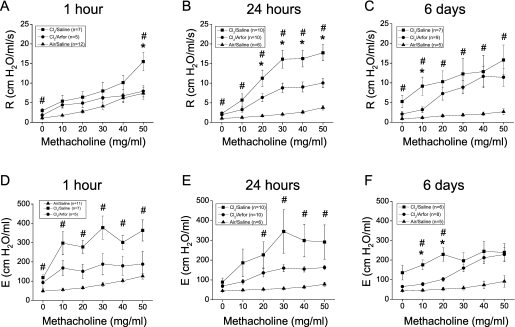
Arformoterol (10 ng in 0.1 ml saline/20 g body weight; intranasal instillation) reduces the respiratory system elastance and resistance that Cl2-induced increases in mice exhibit[3].
Arformoterol reverses the bronchoconstriction caused by ovalbumin and histamine in guinea pigs (ED50s=1 and 40 nmol/kg, respectively)[1]. In vivo, arformoterol maleate (10 ng in 0.1 ml saline/20 g body weight; intranasal instillation) mitigates Cl₂-induced increases of respiratory system resistance and elastance in mice. It reverses histamine- and ovalbumin-induced bronchoconstriction in guinea pigs (ED50 = 1 and 40 mmol/kg, respectively). The compound increases cAMP in the lungs of Cl₂-exposed mice. |
| Enzyme Assay |
Formoterol(Arformoterol) is a brand-new, highly selective β2-adrenergic agonist that shows potential as a β2-agonist with selectively advantageous metabolic effects.
The β2-AR binding assay for arformoterol involves incubating the compound with membrane preparations from cells expressing the human β2-AR and a radiolabeled antagonist ligand (such as [¹²⁵I]-iodocyanopindolol). After incubation, bound and free ligands are separated by filtration, and the radioactivity is counted. The Ki or Kd for displacement of the radioligand is calculated from the competition curve. Functional agonism is assessed by measuring cAMP accumulation in cells expressing β2-AR. |
| Cell Assay |
To evaluate the cellular activity of arformoterol, cells expressing the human β2-AR (such as CHO cells or human bronchial epithelial cells) are seeded in 96-well plates. Cells are treated with varying concentrations of arformoterol, and intracellular cAMP levels are measured using a cAMP assay kit. The EC50 for cAMP accumulation is calculated. The compound's ability to induce bronchodilation can be assessed in isolated tracheal ring preparations by measuring relaxation of pre-contracted smooth muscle.
|
| Animal Protocol |
Wild-type and iNOS−/− mice were exposed to Cl2 gas
10 ng in 0.1 ml saline/20 g body weight Intranasal instillation in the external nares at 10 minutes and every 24 hours after exposure The in vivo efficacy of arformoterol is evaluated in guinea pig models of bronchoconstriction. Guinea pigs are anesthetized and ventilated, and bronchoconstriction is induced by histamine or ovalbumin aerosol challenge. Arformoterol is administered via intranasal instillation at various doses. Airway resistance and dynamic compliance are measured using a whole-body plethysmograph. The ED50 for reversal of bronchoconstriction is calculated. In mouse models of chlorine-induced airway hyperreactivity, arformoterol is administered intranasally and airway resistance is measured. |
| ADME/Pharmacokinetics |
Arformoterol is administered via nebulization and has a pharmacokinetic profile characterized by rapid onset and long duration of action, supporting twice-daily dosing. Specific pharmacokinetic parameters (e.g., Cmax, Tmax, half-life, AUC) are not detailed in the available sources. The compound has a molecular weight of 460.48 and is formulated as a nebulizer solution for inhalation.
|
| Toxicity/Toxicokinetics |
Arformoterol is generally well-tolerated, with common adverse effects including tremor, nervousness, and headache. As a long-acting β2-agonist, it carries a boxed warning for increased risk of asthma-related death. The compound is approved by the FDA for the maintenance treatment of COPD and is available as a nebulizer solution. Specific toxicity data from preclinical studies are not detailed in the available sources.
|
| References | |
| Additional Infomation |
Arformoterol Maleate is also known as (R,R)-Formoterol maleate. It is a long-acting β2-adrenergic receptor agonist with a Kd of 2.9 nM. The compound is indicated for the long-term, twice-daily maintenance treatment of bronchoconstriction in patients with COPD. It is administered via a standard jet nebulizer.
|
| Molecular Formula |
C23H28N2O8
|
|---|---|
| Molecular Weight |
460.477026939392
|
| Exact Mass |
460.18
|
| Elemental Analysis |
C, 59.99; H, 6.13; N, 6.08; O, 27.80
|
| CAS # |
1254575-18-2
|
| Related CAS # |
Arformoterol; 67346-49-0; Formoterol-1; 73573-87-2; (S,S)-Formoterol; 67346-48-9; Arformoterol tartrate; 200815-49-2
|
| PubChem CID |
49821151
|
| Appearance |
Solid powder
|
| Hydrogen Bond Donor Count |
6
|
| Hydrogen Bond Acceptor Count |
9
|
| Rotatable Bond Count |
10
|
| Heavy Atom Count |
33
|
| Complexity |
507
|
| Defined Atom Stereocenter Count |
2
|
| SMILES |
C[C@H](CC1=CC=C(C=C1)OC)NC[C@@H](C2=CC(=C(C=C2)O)NC=O)O.C(=C\C(=O)O)\C(=O)O
|
| InChi Key |
ZDUPYZMAPCZGJO-QVVSPZKGSA-N
|
| InChi Code |
InChI=1S/C19H24N2O4.C4H4O4/c1-13(9-14-3-6-16(25-2)7-4-14)20-11-19(24)15-5-8-18(23)17(10-15)21-12-22;5-3(6)1-2-4(7)8/h3-8,10,12-13,19-20,23-24H,9,11H2,1-2H3,(H,21,22);1-2H,(H,5,6)(H,7,8)/b;2-1-/t13-,19+;/m1./s1
|
| Chemical Name |
(Z)-but-2-enedioic acid;N-[2-hydroxy-5-[(1R)-1-hydroxy-2-[[(2R)-1-(4-methoxyphenyl)propan-2-yl]amino]ethyl]phenyl]formamide
|
| Synonyms |
Arformoterol Maleate; (-)-Formoterol; Arformoterol; (R,R)-Formoterol Maleate; Formoterol; arformoterol; (R,R)-Formoterol; BD 40A; eformoterol; Foradil; Trade names: Atock, Atimos/Atimos Modulite, Foradil/Foradile; Oxeze/Oxis; Perforomist
|
| HS Tariff Code |
2934.99.9001
|
| Storage |
Powder -20°C 3 years 4°C 2 years In solvent -80°C 6 months -20°C 1 month |
| Shipping Condition |
Room temperature (This product is stable at ambient temperature for a few days during ordinary shipping and time spent in Customs)
|
| Solubility (In Vitro) |
DMSO: ≥ 50 mg/mL
Water: 1 mg/mL (Insoluble) Ethanol: N/A |
|---|---|
| Solubility (In Vivo) |
Note: Listed below are some common formulations that may be used to formulate products with low water solubility (e.g. < 1 mg/mL), you may test these formulations using a minute amount of products to avoid loss of samples.
Injection Formulations
Injection Formulation 1: DMSO : Tween 80: Saline = 10 : 5 : 85 (i.e. 100 μL DMSO stock solution → 50 μL Tween 80 → 850 μL Saline)(e.g. IP/IV/IM/SC) *Preparation of saline: Dissolve 0.9 g of sodium chloride in 100 mL ddH ₂ O to obtain a clear solution. Injection Formulation 2: DMSO : PEG300 :Tween 80 : Saline = 10 : 40 : 5 : 45 (i.e. 100 μL DMSO → 400 μLPEG300 → 50 μL Tween 80 → 450 μL Saline) Injection Formulation 3: DMSO : Corn oil = 10 : 90 (i.e. 100 μL DMSO → 900 μL Corn oil) Example: Take the Injection Formulation 3 (DMSO : Corn oil = 10 : 90) as an example, if 1 mL of 2.5 mg/mL working solution is to be prepared, you can take 100 μL 25 mg/mL DMSO stock solution and add to 900 μL corn oil, mix well to obtain a clear or suspension solution (2.5 mg/mL, ready for use in animals). View More
Injection Formulation 4: DMSO : 20% SBE-β-CD in saline = 10 : 90 [i.e. 100 μL DMSO → 900 μL (20% SBE-β-CD in saline)] Oral Formulations
Oral Formulation 1: Suspend in 0.5% CMC Na (carboxymethylcellulose sodium) Oral Formulation 2: Suspend in 0.5% Carboxymethyl cellulose Example: Take the Oral Formulation 1 (Suspend in 0.5% CMC Na) as an example, if 100 mL of 2.5 mg/mL working solution is to be prepared, you can first prepare 0.5% CMC Na solution by measuring 0.5 g CMC Na and dissolve it in 100 mL ddH2O to obtain a clear solution; then add 250 mg of the product to 100 mL 0.5% CMC Na solution, to make the suspension solution (2.5 mg/mL, ready for use in animals). View More
Oral Formulation 3: Dissolved in PEG400 (Please use freshly prepared in vivo formulations for optimal results.) |
| Preparing Stock Solutions | 1 mg | 5 mg | 10 mg | |
| 1 mM | 2.1716 mL | 10.8582 mL | 21.7165 mL | |
| 5 mM | 0.4343 mL | 2.1716 mL | 4.3433 mL | |
| 10 mM | 0.2172 mL | 1.0858 mL | 2.1716 mL |
*Note: Please select an appropriate solvent for the preparation of stock solution based on your experiment needs. For most products, DMSO can be used for preparing stock solutions (e.g. 5 mM, 10 mM, or 20 mM concentration); some products with high aqueous solubility may be dissolved in water directly. Solubility information is available at the above Solubility Data section. Once the stock solution is prepared, aliquot it to routine usage volumes and store at -20°C or -80°C. Avoid repeated freeze and thaw cycles.
Calculation results
Working concentration: mg/mL;
Method for preparing DMSO stock solution: mg drug pre-dissolved in μL DMSO (stock solution concentration mg/mL). Please contact us first if the concentration exceeds the DMSO solubility of the batch of drug.
Method for preparing in vivo formulation::Take μL DMSO stock solution, next add μL PEG300, mix and clarify, next addμL Tween 80, mix and clarify, next add μL ddH2O,mix and clarify.
(1) Please be sure that the solution is clear before the addition of next solvent. Dissolution methods like vortex, ultrasound or warming and heat may be used to aid dissolving.
(2) Be sure to add the solvent(s) in order.
| NCT Number | Recruitment | interventions | Conditions | Sponsor/Collaborators | Start Date | Phases |
| NCT00583947 | Completed | Drug: arformoterol Drug: levalbuterol |
Asthma | Sumitomo Pharma America, Inc. | January 2008 | Phase 2 |
| NCT00773786 | Completed | Drug: Arformoterol (Brovana) Drug: Placebo |
COPD | Trinity Health Of New England | October 2008 | Phase 4 |
| NCT00064415 | Completed | Drug: arformoterol Drug: Salmeterol |
Emphysema Chronic Bronchitis |
Sumitomo Pharma America, Inc. | June 2002 | Phase 3 |
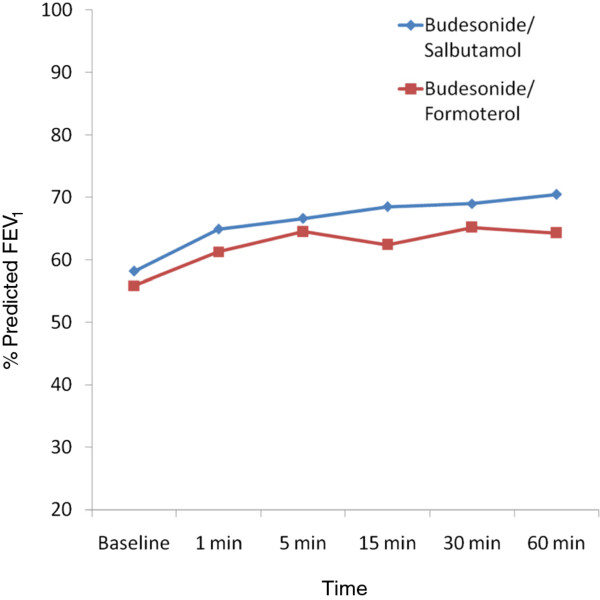
% predicted FEV1at different time points in the 2 groups.BMC Pediatr.2012 Mar 7;12:21. |
|---|
Chlorine (Cl2) exposure increases respiratory resistance and elastance, which are mitigated by arformoterol (Arfor).Am J Respir Cell Mol Biol. 2011 Jul; 45(1): 88–94. |
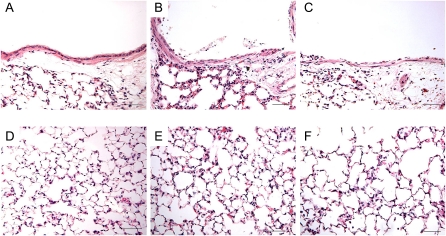
Lung histology after Cl2exposure and treatment of Arfor: Airway cross-sections of mice breathing air (A), or exposed to Cl2treated with saline (B) or Arfor (C),Am J Respir Cell Mol Biol. 2011 Jul; 45(1): 88–94. |
Products are for research use only; We do not sell to patients
Copyright 2020 InvivoChem LLC | All Rights Reserved


 COA
COA