| Size | Price | Stock | Qty |
|---|---|---|---|
| 5mg |
|
||
| 10mg |
|
||
| 25mg |
|
||
| 50mg |
|
||
| 100mg |
|
||
| 250mg |
|
||
| 500mg |
|
||
| Other Sizes |
Purity: ≥98%
| Targets |
The target of SNS-314 is the Aurora kinase family (Aurora-A, Aurora-B, Aurora-C), acting as a pan-Aurora kinase inhibitor. It is an ATP-competitive inhibitor with potent and selective inhibitory activity against Aurora kinases. [1,2]
|
|---|---|
| ln Vitro |
SNS-314 inhibits the growth of a wide range of tumor cell lines, including HeLa, PC-3, A2780, MDA-MB-231, H-1299, and HT29. The IC50 values of these cell lines range from 1.8 nM in ovarian cancer cells to 24 nM in colon cancer cells, A2780, and HT29[2].
1. Inhibition of cellular proliferation: SNS-314 potently inhibits cellular proliferation in a broad range of tumor cell lines (including HCT116, HT29, HeLa cells). The inhibitory effect is correlated with the inhibition of Aurora kinase activity [2] 2. Inhibition of histone H3 phosphorylation: SNS-314 inhibits histone H3 phosphorylation in tumor cells, a hallmark of Aurora-B kinase activity inhibition. This inhibition is consistent with the phenotypic changes induced by Aurora kinase inhibition [2] 3. Effects on cell cycle and cellular phenotypes: SNS-314 disrupts cell-cycle progression, increases nuclear content and cell size, reduces cell viability, and induces apoptosis in tumor cells. These phenotypes are consistent with Aurora kinase inhibition [1,2] 4. Induction of apoptosis: SNS-314 induces apoptosis in tumor cells, as evidenced by increased levels of caspase-3 activity in treated cells [2] |
| ln Vivo |
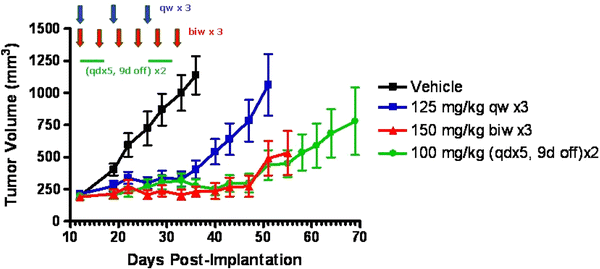
The treatment of 50 and 100 mg/kg SNS-314 causes dose-dependent suppression of histone H3 phosphorylation in the HCT116 human colon cancer xenograft model, which lasts for at least 10 hours. SNS-314 exhibits dose-dependent substantial tumor growth inhibition when administered according to a range of regimens, such as weekly, biweekly, or five days on and nine days off[2].
1. Efficacy in HCT116 human colon cancer xenograft model: Administration of SNS-314 at doses of 50 and 100 mg/kg to nude mice bearing HCT116 xenografts resulted in dose-dependent inhibition of histone H3 phosphorylation for at least 10 hours, demonstrating effective in vivo inhibition of Aurora-B kinase [2] 2. Tumor tissue changes: HCT116 tumors from SNS-314-treated mice showed potent and sustained biological responses, including reduced levels of phosphorylated histone H3, increased caspase-3 expression, and the appearance of cells with increased nuclear size [2] 3. Tumor growth inhibition: SNS-314 exhibited significant dose-dependent tumor growth inhibition in HCT116 xenograft models under various dosing schedules, including weekly, bi-weekly, and 5 days on/9 days off regimens [1,2] 4. Dosing flexibility: SNS-314 showed dosing flexibility in vivo, with anti-tumor activity maintained across different administration schedules, indicating its potential for clinical dosing optimization [2] |
| Enzyme Assay |
1. Biochemical potency and selectivity assay for Aurora kinases: Recombinant Aurora-A, Aurora-B, and Aurora-C kinases were used to evaluate the inhibitory activity of SNS-314. The assay was designed to measure the ATP-competitive inhibitory effect of SNS-314 on each Aurora kinase isoform, assessing kinase activity through substrate phosphorylation detection. The results confirmed that SNS-314 is a potent and selective inhibitor of Aurora kinases (Aurora-A, Aurora-B, Aurora-C), with no significant inhibitory effects on other serine/threonine kinases (no specific data on other kinases provided) [2]
|
| Cell Assay |
1. Tumor cell proliferation assay: A broad range of tumor cell lines (HCT116, HT29, HeLa, etc.) were cultured in vitro and treated with different concentrations of SNS-314. Cell proliferation was evaluated using standard cell viability assays over a set time course. The results showed that SNS-314 potently inhibited the proliferation of these tumor cell lines, with the inhibitory effect correlating with the concentration of SNS-314 [2]
2. Histone H3 phosphorylation assay: Tumor cells were treated with SNS-314 in vitro, and cell lysates were prepared at different time points. Western blotting was performed using phospho-specific antibodies against histone H3 to measure the level of histone H3 phosphorylation, a readout of Aurora-B kinase activity. The assay confirmed that SNS-314 inhibited histone H3 phosphorylation in a dose-dependent manner [2] 3. Cell cycle and nuclear phenotype analysis: Tumor cells treated with SNS-314 were stained to analyze cell-cycle progression (using flow cytometry for cell-cycle phase distribution) and nuclear morphology (using microscopy to assess nuclear size and content). The results showed that SNS-314 disrupted normal cell-cycle progression, leading to an increase in nuclear content and cell size, consistent with Aurora kinase inhibition [2] 4. Apoptosis assay: Tumor cells treated with SNS-314 were evaluated for apoptosis by measuring caspase-3 activity and cell viability. Caspase-3 activity was detected using specific substrates or antibodies, and cell viability was assessed using standard viability dyes. The results demonstrated that SNS-314 induced apoptosis in tumor cells, as shown by increased caspase-3 activity and reduced cell survival [2] |
| Animal Protocol |
Dissolved in 20% Captisol R.; 42 mg/kg; i.p. injection
HCT116 cells are injected s.c. into the right flank of nu/nu mice 1. HCT116 human colon cancer xenograft model: Female nude mice were implanted with HCT116 human colon cancer cells to establish xenograft tumors. Once tumors reached a measurable size, mice were randomized into treatment groups and administered SNS-314 at doses of 50 mg/kg and 100 mg/kg via an unspecified route (not described in the literature). The dosing schedules included weekly, bi-weekly, and 5 days on/9 days off regimens. Tumor volumes were measured regularly to evaluate tumor growth inhibition. At the end of the treatment period, tumors were harvested to analyze biological markers (phosphorylated histone H3, caspase-3, nuclear size) [2] 2. Pharmacodynamic assessment in xenograft models: Mice treated with SNS-314 were euthanized at different time points (up to 10 hours post-administration) to collect tumor tissues and blood samples (no blood sample analysis described). Tumor lysates were prepared to measure histone H3 phosphorylation levels, assessing the duration of Aurora-B inhibition in vivo [2] |
| References | |
| Additional Infomation |
1-(3-Chlorophenyl)-3-[5-[2-(4-thieno[3,2-d]pyrimidinylamino)ethyl]-2-thiazolyl]urea belongs to the urea class of compounds. SNS-314 is a potent and selective inhibitor of Aurora kinases A, B, and C. Proliferating cells treated with SNS-314 bypass the mitotic spindle checkpoint, are unable to undergo cytokinesis, leading to multiple rounds of intracellular replication and ultimately cell death. SNS-314 has inhibited tumor growth in various preclinical models and is currently undergoing a phase I single-agent clinical trial in patients with advanced solid tumors. The Aurora kinase inhibitor SNS-314 is a synthetic small-molecule Aurora kinase (AK) inhibitor with potential antitumor activity. SNS-314 selectively binds to and inhibits AKA and AKB, thereby inhibiting cell division and proliferation in AK-overexpressing tumor cells. AK is a serine/threonine kinase that plays a crucial role in mitotic checkpoint control during mitosis.
Drug Indications It has been investigated in the treatment of solid tumors. Mechanism of Action Cell division (or mitosis) plays a key role in uncontrolled proliferation, a hallmark of cancer. During mitosis, cells align copies of their DNA onto the spindle apparatus and divide via cytokinesis, producing two identical daughter cells. In cancer, this process is often poorly regulated, leading to rapid proliferation and tissue growth. Aurora kinases (A, B, and C) play important but distinct roles in mitosis. Aurora A controls spindle formation, while Aurora B ensures proper DNA alignment, thus guaranteeing successful cytokinesis. Less is known about Aurora C, but it is generally believed to share many of the same functions as Aurora B. Aurora A expression levels are significantly elevated in colon cancer, breast cancer, ovarian cancer, gastric cancer, and pancreatic cancer. Aurora B and C are also highly expressed in primary tumors. Given the central role of these three Aurora kinases in regulating mitosis and the association between their overexpression and tumorigenesis, they are being evaluated as potential targets for cancer therapy. SNS-314 is a potent Aurora kinase inhibitor. Cells treated with SNS-314 are able to replicate additional DNA but are unable to form functional spindles or replicate. As a result, these cells cannot continue to proliferate and eventually die through a variety of mechanisms. Since most normal cells do not undergo mitosis under normal circumstances, it is expected that SNS-314 will only affect highly proliferating tissues, particularly tumor tissues. SNS-314 is currently undergoing a phase I clinical trial in patients with advanced solid tumors. 1. SNS-314 (compound 21 in reference [1]) is a novel small molecule pan-Aurora kinase inhibitor that has been developed as an anticancer therapeutic. It is an ATP-competitive inhibitor with potent and selective activity against Aurora-A, Aurora-B, and Aurora-C kinases [1,2]. 2. Aurora kinases (Aurora-A, Aurora-B, and Aurora-C) play a crucial role in the orderly progression of mitosis in cells. High expression of Aurora kinase has been detected in various tumors, including melanoma, colon cancer, breast cancer, ovarian cancer, gastric cancer, and pancreatic cancer, making it a highly attractive target for anticancer therapy [2]. 3. The phenotype induced by SNS-314 in tumor cells is consistent with that of Aurora kinase inhibition (inhibition of proliferation, disruption of cell cycle, and induction of apoptosis), and it has shown significant antitumor activity in preclinical in vivo tumor models. Moreover, the dosing regimen is flexible, supporting its potential for treating various human malignancies [1,2]. 4. The key structure-activity relationship (SAR) and key binding elements of SNS-314 and its analogues were studied, and SNS-314 was finally determined to be a highly efficient and selective Aurora kinase inhibitor with preclinical antitumor activity [1]. |
| Molecular Formula |
C18H15CLN6OS2
|
|---|---|
| Molecular Weight |
430.93
|
| Exact Mass |
430.043
|
| CAS # |
1057249-41-8
|
| Related CAS # |
SNS-314 mesylate;1146618-41-8
|
| PubChem CID |
24995524
|
| Appearance |
Typically exists as solid at room temperature
|
| Density |
1.6±0.1 g/cm3
|
| Index of Refraction |
1.815
|
| LogP |
5.36
|
| Hydrogen Bond Donor Count |
3
|
| Hydrogen Bond Acceptor Count |
7
|
| Rotatable Bond Count |
6
|
| Heavy Atom Count |
28
|
| Complexity |
532
|
| Defined Atom Stereocenter Count |
0
|
| SMILES |
ClC1=CC=CC(=C1)NC(NC1=NC=C(CCNC2=C3C(C=CS3)=NC=N2)S1)=O
|
| InChi Key |
FAYAUAZLLLJJGH-UHFFFAOYSA-N
|
| InChi Code |
InChI=1S/C18H15ClN6OS2/c19-11-2-1-3-12(8-11)24-17(26)25-18-21-9-13(28-18)4-6-20-16-15-14(5-7-27-15)22-10-23-16/h1-3,5,7-10H,4,6H2,(H,20,22,23)(H2,21,24,25,26)
|
| Chemical Name |
N-(3-Chlorophenyl)-N'-[5-[2-(thieno[3,2-d]pyrimidin-4-ylamino)ethyl]-2-thiazolyl]urea.
|
| Synonyms |
SNS314; SNS-314; SNS 314
|
| HS Tariff Code |
2934.99.9001
|
| Storage |
Powder -20°C 3 years 4°C 2 years In solvent -80°C 6 months -20°C 1 month |
| Shipping Condition |
Room temperature (This product is stable at ambient temperature for a few days during ordinary shipping and time spent in Customs)
|
| Solubility (In Vitro) |
|
|||
|---|---|---|---|---|
| Solubility (In Vivo) |
Note: Listed below are some common formulations that may be used to formulate products with low water solubility (e.g. < 1 mg/mL), you may test these formulations using a minute amount of products to avoid loss of samples.
Injection Formulations
Injection Formulation 1: DMSO : Tween 80: Saline = 10 : 5 : 85 (i.e. 100 μL DMSO stock solution → 50 μL Tween 80 → 850 μL Saline)(e.g. IP/IV/IM/SC) *Preparation of saline: Dissolve 0.9 g of sodium chloride in 100 mL ddH ₂ O to obtain a clear solution. Injection Formulation 2: DMSO : PEG300 :Tween 80 : Saline = 10 : 40 : 5 : 45 (i.e. 100 μL DMSO → 400 μLPEG300 → 50 μL Tween 80 → 450 μL Saline) Injection Formulation 3: DMSO : Corn oil = 10 : 90 (i.e. 100 μL DMSO → 900 μL Corn oil) Example: Take the Injection Formulation 3 (DMSO : Corn oil = 10 : 90) as an example, if 1 mL of 2.5 mg/mL working solution is to be prepared, you can take 100 μL 25 mg/mL DMSO stock solution and add to 900 μL corn oil, mix well to obtain a clear or suspension solution (2.5 mg/mL, ready for use in animals). View More
Injection Formulation 4: DMSO : 20% SBE-β-CD in saline = 10 : 90 [i.e. 100 μL DMSO → 900 μL (20% SBE-β-CD in saline)] Oral Formulations
Oral Formulation 1: Suspend in 0.5% CMC Na (carboxymethylcellulose sodium) Oral Formulation 2: Suspend in 0.5% Carboxymethyl cellulose Example: Take the Oral Formulation 1 (Suspend in 0.5% CMC Na) as an example, if 100 mL of 2.5 mg/mL working solution is to be prepared, you can first prepare 0.5% CMC Na solution by measuring 0.5 g CMC Na and dissolve it in 100 mL ddH2O to obtain a clear solution; then add 250 mg of the product to 100 mL 0.5% CMC Na solution, to make the suspension solution (2.5 mg/mL, ready for use in animals). View More
Oral Formulation 3: Dissolved in PEG400 (Please use freshly prepared in vivo formulations for optimal results.) |
| Preparing Stock Solutions | 1 mg | 5 mg | 10 mg | |
| 1 mM | 2.3206 mL | 11.6028 mL | 23.2056 mL | |
| 5 mM | 0.4641 mL | 2.3206 mL | 4.6411 mL | |
| 10 mM | 0.2321 mL | 1.1603 mL | 2.3206 mL |
*Note: Please select an appropriate solvent for the preparation of stock solution based on your experiment needs. For most products, DMSO can be used for preparing stock solutions (e.g. 5 mM, 10 mM, or 20 mM concentration); some products with high aqueous solubility may be dissolved in water directly. Solubility information is available at the above Solubility Data section. Once the stock solution is prepared, aliquot it to routine usage volumes and store at -20°C or -80°C. Avoid repeated freeze and thaw cycles.
Calculation results
Working concentration: mg/mL;
Method for preparing DMSO stock solution: mg drug pre-dissolved in μL DMSO (stock solution concentration mg/mL). Please contact us first if the concentration exceeds the DMSO solubility of the batch of drug.
Method for preparing in vivo formulation::Take μL DMSO stock solution, next add μL PEG300, mix and clarify, next addμL Tween 80, mix and clarify, next add μL ddH2O,mix and clarify.
(1) Please be sure that the solution is clear before the addition of next solvent. Dissolution methods like vortex, ultrasound or warming and heat may be used to aid dissolving.
(2) Be sure to add the solvent(s) in order.
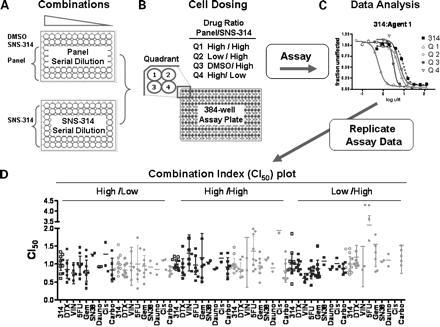
CI50screening process of SNS-314 with cytotoxic anticancer agents.Mol Cancer Ther.2009 Apr;8(4):930-9. |
|---|
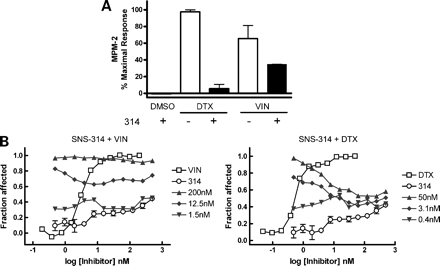
SNS-314 combined with spindle toxins vincristine (VIN) or docetaxel (DTX) compromises the spindle checkpoint.Mol Cancer Ther.2009 Apr;8(4):930-9. |
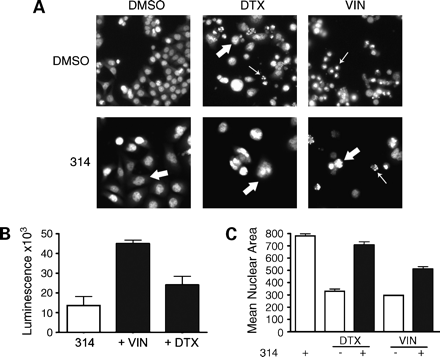
Effects of SNS-314 combinations with docetaxel (DTX) or vincristine (VIN) under a sequential administration schedule.Mol Cancer Ther.2009 Apr;8(4):930-9. |
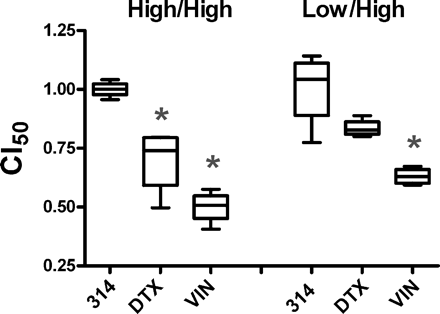
Combination of SNS-314 with spindle toxins results in synergistic inhibition of cell growth.Mol Cancer Ther.2009 Apr;8(4):930-9. |
|---|
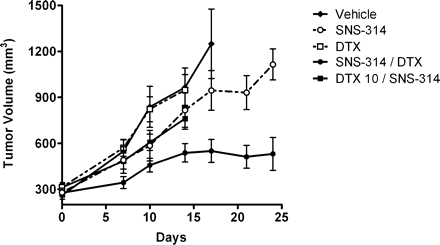
Sequential SNS-314/docetaxel dosing results in significant antitumor activity.Mol Cancer Ther.2009 Apr;8(4):930-9. |
SNS-314 demonstrates significant and prolonged anti-tumor activity using flexible dosing schedules in HCT116 colon cancer xenografts.Cancer Chemother Pharmacol.2010 Mar;65(4):707-17. |
Products are for research use only; We do not sell to patients
Copyright 2020 InvivoChem LLC | All Rights Reserved


 COA
COA