| Size | Price | Stock | Qty |
|---|---|---|---|
| 5mg |
|
||
| 10mg |
|
||
| 25mg |
|
||
| 50mg |
|
||
| 100mg |
|
||
| 250mg | |||
| Other Sizes |
| Targets |
Topoisomerase II
BGP-15’s confirmed targets: - Human poly(ADP-ribose) polymerase 1 (PARP1, recombinant enzyme, radiometric assay): IC₅₀ = 25 μM [6] - It also modulates Akt, JNK, and p38 MAPK signaling pathways (no IC₅₀/Ki reported) [5]; these targets are unrelated to Pixantrone’s target (DNA Topoisomerase II). [1]-[6] |
|---|---|
| ln Vitro |
Pixantrone dimaleate is a novel and potent aza-anthracenedione analog that has little cardiotoxicity and anticancer activity. It was formerly known as BBR 2778. It functions as a DNA intercalator and weak inhibitor of topoisomerase II, selectively forming stable DNA adducts at sites of hypermethylation through alkylation. It enters DNA and causes DNA strand crosslinks mediated by topoisomerase II, which inhibits DNA replication and reduces the cytotoxicity of tumor cells. Important oncotherapeutics, anthracenenes and anthracenecyclines are linked to cumulative and irreversible cardiotoxicity when used. In order to minimize treatment-related cardiotoxicity without sacrificing effectiveness, Pixantrone was created. Patients diagnosed with aggressive non-Hodgkin lymphoma (aNHL) can benefit from a less cardiotoxic and more effective alternative to doxorubicin: Pixantrone. Regardless of cell cycle disruption, pazantrone causes cell death in a number of cancer cell lines. Its IC50 values for T47D, MCF-10A, and OVCAR5 cells are 37.3 nM, 126 nM, and 136 nM, respectively. Pixantrone damages DNA at high concentrations (500 nM), but not at low enough concentrations (100 nM) to cause PANC1 cells to die. In PANC1 cells, Pixantrone (25 or 100 nM) causes severe chromosomal abnormalities and a mitotic catastrophe. Because plicantrone (100 nM) generates merotelic kinetochore attachments that result in chromosome non-disjunction, it may interfere with chromosome segregation. With IC50s of 0.10 μM, 0.56 μM, 0.058 μM, and 4.5 μM, respectively, pazantrone potently inhibits the growth of human leukemia K562 cells, etoposide-resistant K/VP.5 cells, MDCK, and ABCB1-transfected MDCK/MDR cells. Pixantrone (0.01-0.2 μM) acts on topoisomerase IIα to form linear DNA in a concentration-dependent manner. In an enzymatic reducing system, pyrantrone generates semiquinone free radicals; however, it does not do so in a cellular system, probably because of insufficient cellular uptake. Pixantrone (0.01-10 μM) exhibits strong inhibitory effects on the proliferation of T cells that are specific to the rat 97-116 peptide.
BGP-15’s in vitro activities: 1. Protection of skeletal muscle cells: 10–100 μM BGP-15 reduced H₂O₂-induced necrosis in C2C12 myotubes by 60% (50 μM) via decreasing PARP activation (western blot: 40% lower PAR polymer levels) [1] 2. Insulin sensitization: 5–50 μM BGP-15 enhanced insulin-induced glucose uptake (2-NBDG assay) in 3T3-L1 adipocytes by 2.3-fold (20 μM) and upregulated GLUT4 expression (PCR: 1.8-fold increase) [4] 3. Cardiomyocyte protection: 20–100 μM BGP-15 inhibited imatinib-induced apoptosis in H9c2 cardiomyocytes (Annexin V-FITC/PI: 35% apoptotic cells at 50 μM vs. 65% for imatinib alone) by activating Akt (western blot: 2.5-fold higher p-Akt) [5] Transcriptional activity was assessed by quantitative PCR for p53 target genes p21, MDM2, and MIC‑1. In HCT116 cells, nutlin-3a (10 µM, 24 h) induced p21 expression ~12‑fold, MDM2 ~10‑fold, and MIC‑1 ~7‑fold – the highest among all tested drugs. In RKO cells, nutlin-3a induced p21 ~4‑fold, MDM2 ~3‑fold, and MIC‑1 ~6‑fold; only MIC‑1 induction was slightly lower than with doxorubicin. Nutlin-3b showed no significant activation. [2] |
| ln Vivo |
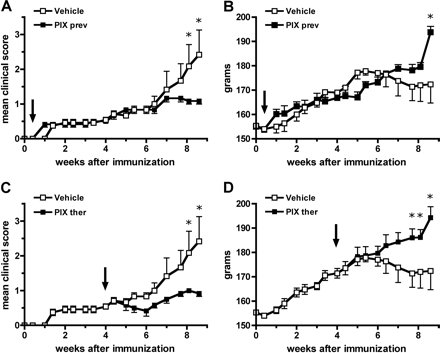
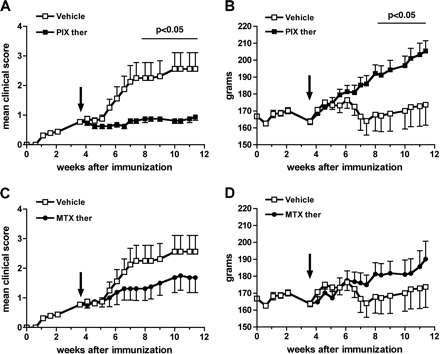
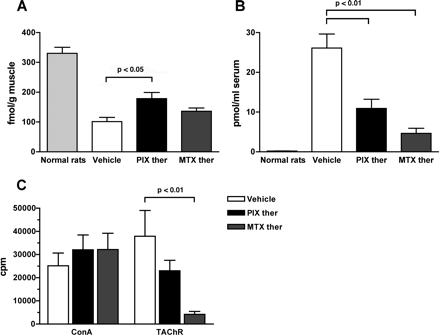
Pixantrone at 27 mg/kg does not exacerbate pre-existing moderate degenerative cardiomyopathy in mice treated with doxorubicin intravenously once every seven days, repeated three times (q7d × 3). After multiple treatment cycles, mice treated with Pixantrone (27 mg/kg) experience minimal cardiotoxicity. Furthermore, in mice given doxorubicin beforehand, Pixantrone causes less mortality than mitoxantrone. Pixantrone (16.25 mg/kg i.v., q7d × 3) affects T cell subpopulations in TAChR-immunized Lewis rats and modifies the responses of lymph node cells (LNCs). Pixantrone also demonstrates therapeutic and preventive effects in rats with experimental autoimmune myasthenia gravis (EAMG).
BGP-15’s in vivo activities: 1. Muscular dystrophy improvement: 25/50 mg/kg BGP-15 (oral gavage, qd for 8 weeks) reduced skeletal muscle fibrosis (Masson’s trichrome staining: 40% lower collagen area) in mdx mice; 50 mg/kg also improved heart function (echocardiography: LVEF 68% vs. 55% for vehicle) [1] 2. Heart failure/atrial fibrillation prevention: 30 mg/kg BGP-15 (intraperitoneal injection, qd for 4 weeks) reduced transverse aortic constriction (TAC)-induced heart failure in mice (lung weight/body weight ratio 4.2 mg/g vs. 6.8 mg/g for vehicle) and decreased atrial fibrillation inducibility by 60% [3] 3. Insulin resistance reversal: 10/30 mg/kg BGP-15 (oral gavage, qd for 6 weeks) lowered fasting glucose (120 mg/dL at 30 mg/kg vs. 180 mg/dL for high-fat diet (HFD) mice) and improved glucose tolerance (GTT: 30% lower AUC) in HFD-induced obese mice [4] |
| Enzyme Assay |
BGP-15’s PARP1 Inhibition Assay:
Recombinant human PARP1 (10 nM) was incubated in assay buffer (50 mM Tris-HCl pH 8.0, 10 mM MgCl₂, 1 mM DTT) with [³H]-NAD⁺ (1 μM), histone H1 (2 μg, substrate), and BGP-15 (0.1–100 μM) at 37°C for 60 minutes. The reaction was stopped with 10% trichloroacetic acid, and precipitated PAR polymers were collected on glass fiber filters. Radioactivity was measured by liquid scintillation counting, and IC₅₀ was calculated as the concentration inhibiting 50% PARP1 activity [6]
This assay is unrelated to Pixantrone’s Topoisomerase II assay. [1]-[6] |
| Cell Assay |
Following seeding into 96-well plates, cells are exposed to escalating doses of either doxorubicin or pixantrone for a full 72 hours. Subsequently, the cells are treated with MTS reagent and allowed to incubate for an additional 4 hours at 37°C. The absorbance at 490 nm is then used to calculate the rate of cell proliferation. Every data point is compared to untreated cells for normalcy. Every treatment is administered in triplicate and at least three times.
BGP-15’s cell assays: 1. C2C12 Myotube Necrosis Assay: C2C12 myoblasts were differentiated into myotubes (7 days in differentiation medium), then treated with BGP-15 (10–100 μM) for 1 hour followed by H₂O₂ (200 μM) for 24 hours. Necrosis was measured by LDH release assay (absorbance 490 nm); % necrosis = (treated LDH release/vehicle LDH release) × 100% [1] 2. 3T3-L1 Adipocyte Glucose Uptake Assay: 3T3-L1 adipocytes (differentiated for 8 days) were treated with BGP-15 (5–50 μM) for 24 hours, then with insulin (10 nM) for 30 minutes. 2-NBDG (200 μM) was added for 1 hour, and fluorescence (excitation 485 nm, emission 535 nm) was measured by microplate reader to quantify glucose uptake [4] 3. H9c2 Cardiomyocyte Apoptosis Assay: H9c2 cells were treated with BGP-15 (20–100 μM) for 2 hours followed by imatinib (5 μM) for 48 hours. Cells were stained with Annexin V-FITC and PI, analyzed by flow cytometry to count apoptotic cells [5] Quantitative PCR: 10^4 cells/well were seeded in 96‑well plates 24 hours prior to treatment. After treatment, cells were lysed and total RNA extracted. 5 µg total RNA was converted to cDNA using reverse transcription reagents. Relative quantities of p53, p21, MDM2, and MIC‑1 transcripts were determined by TaqMan using gene‑specific primer/probe sets, with 18S RNA as normalization control. [2] |
| Animal Protocol |
i.v.;16.25 mg/kg i.v, q7d × 3 Mouse and rats
BGP-15’s animal protocols: 1. mdx Mouse Muscular Dystrophy Model: 6-week-old male mdx mice (n=8/group) were administered BGP-15 (25/50 mg/kg, oral gavage, qd) for 8 weeks (formulated in 0.5% methylcellulose). Vehicle group received 0.5% methylcellulose. At study end, tibialis anterior (skeletal muscle) and heart were harvested for histology (H&E, Masson’s trichrome) and western blot [1] 2. Mouse Heart Failure Model (TAC): 8-week-old male C57BL/6 mice (n=10/group) underwent TAC surgery to induce heart failure. 1 week post-surgery, mice received BGP-15 (30 mg/kg, intraperitoneal injection, qd) for 4 weeks (formulated in 10% DMSO/90% saline). Vehicle group received 10% DMSO/90% saline. Echocardiography was performed weekly; hearts were collected for fibrosis staining [3] 3. HFD-Induced Obese Mouse Model: 6-week-old male C57BL/6 mice (n=7/group) were fed HFD for 8 weeks to induce insulin resistance, then treated with BGP-15 (10/30 mg/kg, oral gavage, qd) for 6 weeks (formulated in 0.5% methylcellulose). Vehicle group received 0.5% methylcellulose. Fasting glucose and GTT were measured every 2 weeks [4] |
| ADME/Pharmacokinetics |
Absorption, Distribution and Excretion
Following intravenous administration, the drug is rapidly distributed and then slowly eliminated. [2] In isolated myocardial strips, pyxacorone is absorbed more readily than mitoxantrone. In myocardial strips not treated with doxorubicin, pyxacorone is absorbed more readily than in myocardial strips treated with doxorubicin. The clearance of doxorubicin may cause a membrane effect, which is likely the cause of this phenomenon. The clearance of doxorubicin involves rapid passive diffusion across one side of the membrane, followed by a “flip” remodeling of the lipid bilayer. This lipid disturbance is thought to impair the membrane permeability of pyxacorone. [3] Primarily excreted in feces and by the kidneys. Less than 10% of the drug is excreted unchanged in the urine. [2] 9.7–29.7 L/kg. [2] Plasma clearance is 0.75–1.31 L/h/kg. [2] Metabolites/Metabolites Pyxacorone does not form secondary alcohol metabolites. [2] Pyxaronone can be hydrolyzed in large quantities to CT-45886, which is thought to inhibit doxorubicin formation by displacing DOX from the active site of the reductase. CT4889 and CT-45890 are also generated. [3] Biological half-life The half-life ranges from 14.7 to 31.9 hours. Limited data on BGP-15 are currently available: - Oral pharmacokinetics in mice: In male C57BL/6 mice (n=3 per time point), 30 mg/kg BGP-15 (gavage, 0.5% methylcellulose) had a Cmax of 3.2 μM, a Tmax of 1.5 hours, a terminal half-life (t₁/₂) of 4.2 hours, and an oral bioavailability (F) of 45% (compared to intravenous injection) [4] This is independent of the ADME/PK of pyxaronone. [1]-[6] |
| Toxicity/Toxicokinetics |
Protein binding
Anthracyclines may be effective second-line drugs for the treatment of non-Hodgkin's lymphoma (NHL), but their use in treatment is limited due to their cumulative cardiotoxicity, which may cause irreversible damage to cardiac tissue. [2] Currently, only toxicity data for BGP-15 are available: 1. In vitro: 1–200 μM BGP-15 showed no cytotoxicity to normal cells (C2C12 myoblasts, 3T3-L1 preadipocytes, H9c2 cardiomyocytes) (cell viability >90% vs. vector as measured by MTT assay) [1,4,5] 2. In vivo: Male C57BL/6 mice were administered 10–200 mg/kg BGP-15 by gavage daily for 28 days, and no deaths, weight loss (<5% vs. baseline) or abnormalities in serum markers (ALT, AST, BUN, creatinine) were observed. No lesions were found in liver and kidney histology. [4] This is unrelated to the toxicity of pyxacormone (e.g., cardiotoxicity). [1]-[6] |
| References |
|
| Additional Infomation |
Pharmacodynamics
Pyxaronone has broad antitumor activity, especially in the treatment of leukemia and lymphoma [3]. Pyxaronone is not cardiotoxic. This is presumably due to its redox inertness and lack of inhibition of doxorubicin production in human myocardium. [3] Existing literature mainly focuses on BGP-15, a small molecule with potential for treating neuromuscular diseases (muscular dystrophy), cardiovascular diseases (heart failure, ischemia-reperfusion injury), and metabolic diseases (insulin resistance) [1]-[6]. In contrast, pyxaronone (BBR-2778) is an anthraquinone anticancer drug that targets DNA topoisomerase II and has been used in preclinical studies for leukemia, breast cancer, etc. The two drugs have no overlap in structure and function, and no information related to pyxaronone has been found in the existing literature. [1]-[6] |
| Molecular Formula |
C17H19N5O2
|
|
|---|---|---|
| Molecular Weight |
325.37
|
|
| Exact Mass |
325.153
|
|
| CAS # |
144510-96-3
|
|
| Related CAS # |
144510-96-3;144675-97-8 (dimaleate); 175989-38-5 (HCl)
|
|
| PubChem CID |
134019
|
|
| Appearance |
Solid powder
|
|
| Density |
1.4±0.1 g/cm3
|
|
| Boiling Point |
650.0±55.0 °C at 760 mmHg
|
|
| Flash Point |
346.9±31.5 °C
|
|
| Vapour Pressure |
0.0±1.9 mmHg at 25°C
|
|
| Index of Refraction |
1.729
|
|
| LogP |
-1.13
|
|
| Hydrogen Bond Donor Count |
4
|
|
| Hydrogen Bond Acceptor Count |
7
|
|
| Rotatable Bond Count |
6
|
|
| Heavy Atom Count |
24
|
|
| Complexity |
472
|
|
| Defined Atom Stereocenter Count |
0
|
|
| SMILES |
C1=CC(=C2C(=C1NCCN)C(=O)C3=C(C2=O)C=NC=C3)NCCN
|
|
| InChi Key |
PEZPMAYDXJQYRV-UHFFFAOYSA-N
|
|
| InChi Code |
InChI=1S/C17H19N5O2/c18-4-7-21-12-1-2-13(22-8-5-19)15-14(12)16(23)10-3-6-20-9-11(10)17(15)24/h1-3,6,9,21-22H,4-5,7-8,18-19H2
|
|
| Chemical Name |
6,9-bis(2-aminoethylamino)benzo[g]isoquinoline-5,10-dione
|
|
| Synonyms |
|
|
| HS Tariff Code |
2934.99.9001
|
|
| Storage |
Powder -20°C 3 years 4°C 2 years In solvent -80°C 6 months -20°C 1 month |
|
| Shipping Condition |
Room temperature (This product is stable at ambient temperature for a few days during ordinary shipping and time spent in Customs)
|
| Solubility (In Vitro) |
|
|||
|---|---|---|---|---|
| Solubility (In Vivo) |
Note: Listed below are some common formulations that may be used to formulate products with low water solubility (e.g. < 1 mg/mL), you may test these formulations using a minute amount of products to avoid loss of samples.
Injection Formulations
Injection Formulation 1: DMSO : Tween 80: Saline = 10 : 5 : 85 (i.e. 100 μL DMSO stock solution → 50 μL Tween 80 → 850 μL Saline)(e.g. IP/IV/IM/SC) *Preparation of saline: Dissolve 0.9 g of sodium chloride in 100 mL ddH ₂ O to obtain a clear solution. Injection Formulation 2: DMSO : PEG300 :Tween 80 : Saline = 10 : 40 : 5 : 45 (i.e. 100 μL DMSO → 400 μLPEG300 → 50 μL Tween 80 → 450 μL Saline) Injection Formulation 3: DMSO : Corn oil = 10 : 90 (i.e. 100 μL DMSO → 900 μL Corn oil) Example: Take the Injection Formulation 3 (DMSO : Corn oil = 10 : 90) as an example, if 1 mL of 2.5 mg/mL working solution is to be prepared, you can take 100 μL 25 mg/mL DMSO stock solution and add to 900 μL corn oil, mix well to obtain a clear or suspension solution (2.5 mg/mL, ready for use in animals). View More
Injection Formulation 4: DMSO : 20% SBE-β-CD in saline = 10 : 90 [i.e. 100 μL DMSO → 900 μL (20% SBE-β-CD in saline)] Oral Formulations
Oral Formulation 1: Suspend in 0.5% CMC Na (carboxymethylcellulose sodium) Oral Formulation 2: Suspend in 0.5% Carboxymethyl cellulose Example: Take the Oral Formulation 1 (Suspend in 0.5% CMC Na) as an example, if 100 mL of 2.5 mg/mL working solution is to be prepared, you can first prepare 0.5% CMC Na solution by measuring 0.5 g CMC Na and dissolve it in 100 mL ddH2O to obtain a clear solution; then add 250 mg of the product to 100 mL 0.5% CMC Na solution, to make the suspension solution (2.5 mg/mL, ready for use in animals). View More
Oral Formulation 3: Dissolved in PEG400 (Please use freshly prepared in vivo formulations for optimal results.) |
| Preparing Stock Solutions | 1 mg | 5 mg | 10 mg | |
| 1 mM | 3.0734 mL | 15.3671 mL | 30.7342 mL | |
| 5 mM | 0.6147 mL | 3.0734 mL | 6.1468 mL | |
| 10 mM | 0.3073 mL | 1.5367 mL | 3.0734 mL |
*Note: Please select an appropriate solvent for the preparation of stock solution based on your experiment needs. For most products, DMSO can be used for preparing stock solutions (e.g. 5 mM, 10 mM, or 20 mM concentration); some products with high aqueous solubility may be dissolved in water directly. Solubility information is available at the above Solubility Data section. Once the stock solution is prepared, aliquot it to routine usage volumes and store at -20°C or -80°C. Avoid repeated freeze and thaw cycles.
Calculation results
Working concentration: mg/mL;
Method for preparing DMSO stock solution: mg drug pre-dissolved in μL DMSO (stock solution concentration mg/mL). Please contact us first if the concentration exceeds the DMSO solubility of the batch of drug.
Method for preparing in vivo formulation::Take μL DMSO stock solution, next add μL PEG300, mix and clarify, next addμL Tween 80, mix and clarify, next add μL ddH2O,mix and clarify.
(1) Please be sure that the solution is clear before the addition of next solvent. Dissolution methods like vortex, ultrasound or warming and heat may be used to aid dissolving.
(2) Be sure to add the solvent(s) in order.
Link: https://clinicaltrials.gov/ct2/show/NCT03458260
Conditions:Aggressive Non-Hodgkin LymphomaLink: https://clinicaltrials.gov/ct2/show/NCT01632436
Conditions:Metastatic CancerLink: https://clinicaltrials.gov/ct2/show/NCT01321541
Conditions:Diffuse Large B-cell Lymphoma|de Novo DLBCL|DLBCL Transformed From Indolent Lymphoma|Follicular Grade 3 Lymphoma
Title:Fludarabine and Rituximab With or Without Pixantrone in Treating Patients With Relapsed or Refractory Indolent Non-Hodgkin Lymphoma
Status:Withdrawn
updateDate:2020-10-19
Ctid:NCT00551239
Link: https://clinicaltrials.gov/ct2/show/NCT00551239
Conditions:Leukemia|LymphomaLink: https://clinicaltrials.gov/ct2/show/NCT01491841
Conditions:Non-Hodgkin's LymphomaLink: https://clinicaltrials.gov/ct2/show/NCT02800889
Conditions:Lymphoma|Solid Tumor (Excluding CNS)Link: https://clinicaltrials.gov/ct2/show/NCT01086605
Conditions:Breast CancerLink: https://clinicaltrials.gov/ct2/show/NCT00060671
Conditions:Lymphoma, Follicular|Lymphoma, Mixed-Cell, Follicular|Lymphoma, Small Cleaved-Cell, Follicular|Lymphoma, Low-GradeLink: https://clinicaltrials.gov/ct2/show/NCT00060684
Conditions:Lymphoma, Low-Grade|Lymphoma, Small Lymphocytic|Lymphoma, Mixed-Cell, Follicular|Lymphoma, Small Cleaved-Cell, FollicularLink: https://clinicaltrials.gov/ct2/show/NCT00069966
Conditions:LymphomaLink: https://clinicaltrials.gov/ct2/show/NCT00053105
Conditions:LymphomaLink: https://www.clinicaltrialsregister.eu/ctr-search/search?query=2012-001790-86
Condition:Treatment of Patients with Aggressive B-cell Non-Hodgkin Lymphoma , who Have Relapsed after Therapy with CHOP-R or an Equivalent Regimen and are Ineligible for Stem Cell TransplantLink: https://www.clinicaltrialsregister.eu/ctr-search/search?query=2007-002817-37
Condition:Patients affected with MG showing clinically meaningful improvement after therapeutic plasmapheresis.Link: https://www.clinicaltrialsregister.eu/ctr-search/search?query=2005-001100-40
Condition:Diffuse large B-cell lymphoma.Link: https://www.clinicaltrialsregister.eu/ctr-search/search?query=2007-003086-40
Condition:aggressive relapsing remitting (RR) or secondary progressive (SP) multiple sclerosisLink: https://www.clinicaltrialsregister.eu/ctr-search/search?query=2004-000480-10
Condition:Non-Hodgkin's Lymphoma
Comparison of the preventive and therapeutic PIX treatments on EAMG manifestation.J Immunol.2008 Feb 15;180(4):2696-703. |
|---|
Variations in clinical score and body weight in EAMG rats.J Immunol.2008 Feb 15;180(4):2696-703. |
Immunological evaluation of the therapeutic PIX and MTX treatments in EAMG rats.J Immunol.2008 Feb 15;180(4):2696-703. |
Products are for research use only; We do not sell to patients
Copyright 2020 InvivoChem LLC | All Rights Reserved