| Size | Price | Stock | Qty |
|---|---|---|---|
| 1mg |
|
||
| 5mg |
|
||
| 10mg |
|
||
| 25mg |
|
||
| 50mg |
|
||
| 100mg |
|
||
| 250mg |
|
||
| Other Sizes |


Purity: ≥98%
LY2584702 is a novel, selective, orally bioavailable, and ATP-competitive inhibitor of p70S6K (ribosomal p70 S6 kinase) with potential antitumor activity. It inhibits p70S6K with an IC50 of 4 nM. By inhibiting ribosomal protein S6 kinase (p70S6K) and preventing the phosphorylation of the S6 subunit of ribosomes, LY2584702 demonstrated strong antiproliferative activity in vitro and high antitumor efficacy in vivo. This inhibition of normal ribosomal function within tumor cells results in a reduction in protein synthesis and cellular proliferation.
| Targets |
p70S6K (IC50 = 4 nM)
|
|---|---|
| ln Vitro |
LY2584702 inhibits the phosphorylation of the S6 ribosomal protein (pS6) in HCT116 colon cancer cells with an IC50 of 0.1-0.24 M.[1] LY2584702 inhibits the phosphorylation of the S6 ribosomal protein (pS6) in HCT116 colon cancer cells with an IC50 of 0.1-0.24 M. [2]
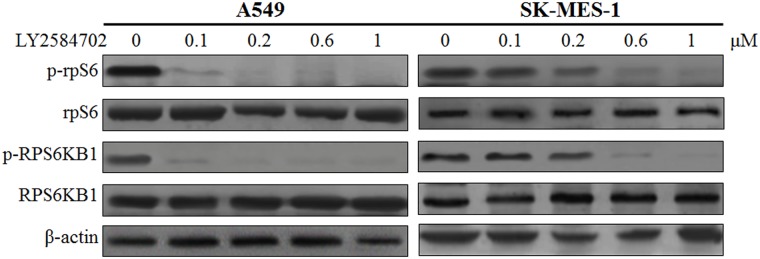
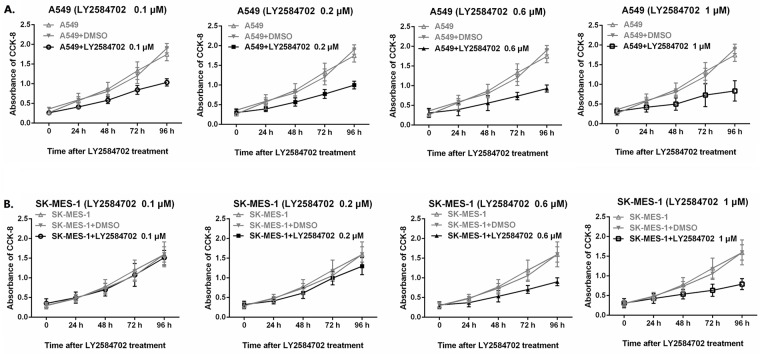
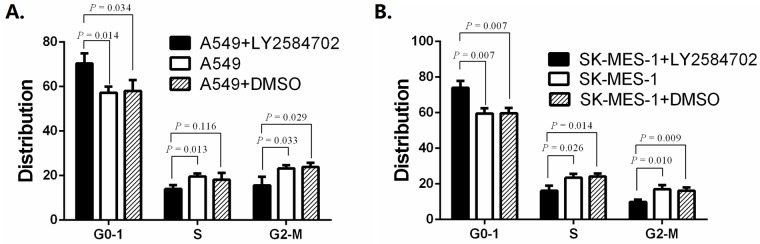
The inhibitor of RPS6KB1, LY2584702, significantly reduced the phosphorylation of RPS6KB1 and rpS6 in NSCLC cell lines [4] LY2584702 was used to inhibit the phosphorylation of RPS6KB1 in pulmonary adenocarcinoma cell line A549 and squamous cell carcinoma cell line SK-MES-1. As expected, after the treatment for 24 h, phosphorylation of RPS6KB1 in A549 was markedly reduced even at 0.1 μM (Fig 4, P < 0.001); while the expression of p-RPS6KB1 in SK-MES-1 seemed to start decreasing at 0.2 μM and showed a continous down-regulation with increased drug concentrations (Fig 4, all P < 0.05). The phosphorylation of rpS6, generally accepted target of RPS6KB1, was also synchronously declined (Fig 4, all P < 0.05). However, there was no significant difference in total protein level of neither RPS6KB1 nor S6, no matter with the drug concentration (Fig 4, all P > 0.05). Proliferation of A549 was significantly inhibited by LY2584702 treating over 24 h at 0.1 μM (Fig 5A, P < 0.05); and the trend of decline was more conspicuous with longer treatment and/or with the increased drug concentration (Fig 5A, all P < 0.05). Similar results were also observed in SK-MES-1, although the obvious inhibition was led by LY2584702 at 0.6 μM (Fig 5B, all P < 0.05), much higher than that of A549. Based on the results above, A549 treated by LY2584702 at 0.2 μM for 72 h were collected for cell cycle assay and apoptosis analysis. A549 cell lines cultured only by medium or medium added with DMSO for 72 h were used as controls. Not surprisingly, more cells with LY2584702 treatment were arrested in G0-G1 phase (Fig 6A, both P < 0.05); and cells in S or G2-M phase decreased correspondingly (Fig 6A, both P < 0.05). In addition, LY2584702 induced more apoptotic A549 cell by Annexin V-APC/7-AAD apoptosis detection (Fig 7A, both P < 0.05). Because of the less sensitivtiy of SK-MES-1 for LY2584702, SK-MES-1 treated at 1 μM for 72 h were employed for the cell cycle and apoptosis analysis. Silimarly, compared with controls, LY2584702 treatment also led to SK-MES-1 G0-G1 arrest and synchronous reduction in S and G2-M phase (Fig 6B, all P < 0.05). However, LY2584702 showed a limited effect on SK-MES-1 apoptosis, in spite of a vague increase trend (Fig 7B, both P > 0.05). |
| ln Vivo |
In the xenograft models of U87MG glioblastoma and HCT116 colon carcinoma, LY2584702 (12.5 mg/kg BID) exhibits significant antitumor efficacy. [1]
Thirty-four patients were enrolled onto this phase I study and treated with LY2584702 on a QD (once-daily) or BID (twice-daily) dosing schedule. Part A dose escalation (n=22) began with 300 mg BID (n=2). Due to toxicity, this was scaled back to doses of 25mg (n=3), 50 mg (n=8), 100mg (n=3), and 200 mg (n=6) QD. Part B dose escalation (n=12) included 50 mg (n=3), 75 mg (n=3), and 100 mg (n=6) BID. Seven patients experienced dose-limiting toxicity (DLT). All DLTs were Grade 3 and included vomiting, increased lipase, nausea, hypophosphataemia, fatigue and pancreatitis. Conclusion: The MTD was determined to be 75 mg BID or 100mg QD. No responses were observed at these levels. Pharmacokinetic analysis revealed substantial variability in exposure and determined that LY2584702 treatment was not dose proportional with increasing dose.[1] Twenty-nine patients were enrolled, 17 in Arm A and 12 in Arm B. Dose limiting toxicities (DLTs) in cycle 1 were observed in Arm A in four patients and consisted of Grade 3 vomiting, hypophosphataemia, pulmonary embolism and decreased clotting factor V. No DLTs were observed in Arm B at cycle 1, and the most frequent treatment-emergent adverse events related to study drug were: fatigue, anorexia, diarrhoea, nausea and vomiting. Seven patients received ≥4 cycles (3 in A, 4 in B). Best overall response was stable disease. Exposure accumulation of LY2584702 occurred with BID (twice daily) dosing. Exposure of erlotinib increased when administered in combination with LY2584702. Conclusion: LY2584702 was not well tolerated when administered with erlotinib, therefore this combination is not feasible. The combination with everolimus was better tolerated but yielded very limited clinical benefit [2]. |
| Enzyme Assay |
LY2584702 Tosylate (also known as LYS6K2) is a novel, selective, orally bioavailable, ATP-competitive p70S6K inhibitor with IC50 of 4 nM.
RPS6KB1 is the kinase of ribosomal protein S6 which is 70 kDa and is required for protein translation. Although the abnormal activation of RPS6KB1 has been found in types of diseases, its role and clinical significance in non-small cell lung cancer (NSCLC) has not been fully investigated. In this study, we identified that RPS6KB1 was over-phosphorylated (p-RPS6KB1) in NSCLC and it was an independent unfavorable prognostic marker for NSCLC patients. In spite of the frequent expression of total RPS6KB1 and p-RPS6KB1 in NSCLC specimens by immunohistochemical staining (IHC), only p-RPS6KB1 was associated with the clinicopathologic characteristics of NSCLC subjects. Kaplan-Meier survival analysis revealed that the increased expression of p-RPS6KB1 indicated a poorer 5-year overall survival (OS) for NSCLC patients, while the difference between the positive or negative RPS6KB1 group was not significant. Univariate and multivariate Cox regression analysis was then used to confirm the independent prognostic value of p-RPS6KB1. To illustrate the underlying mechanism of RPS6KB1 phosphorylation in NSCLC, LY2584702 was employed to inhibit the RPS6KB1 phosphorylation specifically both in lung adenocarcinoma cell line A549 and squamous cell carcinoma cell line SK-MES-1. As expected, RPS6KB1 dephosphorylation remarkably suppressed cells proliferation in CCK-8 test, and promoted more cells arresting in G0-G1 phase by cell cycle analysis. Moreover, apoptotic A549 cells with RPS6KB1 dephosphorylation increased dramatically, with an elevating trend in SK-MES-1, indicating a potential involvement of RPS6KB1 phosphorylation in inducing apoptosis. In conclusion, our data suggest that RPS6KB1 is over-activated as p-RPS6KB1 in NSCLC, rather than just the total protein overexpressing. The phosphorylation level of RPS6KB1 might be used as a novel prognostic marker for NSCLC patients[4].
|
| Cell Assay |
LY-2584702 is completely dissolved in 20 mL of 10% DMSO and stored at -80°C. When conducting the experiments in vitro, LY-2584702 is further diluted in 0.5% Tween 80, 5% propylene glycol, and 30% PEG400 to achieve various DMSO concentrations of 0.1 μM, 0.2 μM, 0.6 μM, and 1.0 μM. In vitro cell proliferation is assessed using the Cell Counting Kit-8 (CCK-8). A549 and SK-MES-1 cell lines that have been exposed to LY-2584702 at various concentrations for 24 hours are seeded in 96-well plates at a density of 5 103 cells per well with six repetitions. The concentration of LY-2584702 at zero is used as a negative control, or DMSO treated. Every 24 hours after seeding, cells' absorbance at 450 nm is measured to gauge their proliferative activities.
|
| Animal Protocol |
Mice; LY-2584702 is prepared in 0.25% Tween-80 and 0.05% antifoam, and administered orally to mice (12.5 mg/kg twice daily). Injections of EOMA cells (0.3×10⁶) are made subcutaneously into nu/nu female mice aged 6 to 8 weeks (2 sites/mouse, 4-5 mice/group). Every day, the tumor's size is determined. Animals are either given a vehicle control or the drug LY-2584702 (12.5 mg/kg twice daily, oral dosing) for treatment when tumors grow to a size of 0.01 cm3. Every 3–4 days, tumor size is determined.[3]
|
| ADME/Pharmacokinetics |
Pharmacokinetics [1]
Pharmacokinetic analysis was performed on both Part A and Part B, and the data are summarized in Table 4. The initial regimen started with a dose of 300 mg twice daily, but two patients taking 300 mg BID experienced severe nausea and vomiting. Analysis of plasma LY2584702 exposure levels indicated that we had exceeded the predicted range of effective target inhibition. In addition, the metabolic clearance was 10 L/h, while the predicted value was 26 L/h. Therefore, we implemented a new once-daily dosing regimen with a dose range of 25 to 200 mg. After analyzing the exposure of the once-daily dosing regimen, we established a twice-daily dosing group to determine whether twice-daily dosing could increase the total daily exposure. In the twice-daily dosing group, the maximum tolerated dose (MTD) was determined to be 75 mg. The maximum tolerated dose in the once-daily dosing group was 100 mg. The half-life remained stable at 5.96 hours in all groups, but there were differences in exposure (AUC) and Cmax. Exposure to LY2584702 was not dose-dependent, but increased with increasing dose. With the once-daily dosing regimen, no cumulative exposure to LY2584702 was observed, with a median cumulative ratio [Day 8 AUC(0–24)/Day 1 AUC(0–24)] of 0.61 (range: 0.52–1.7). With the twice-daily dosing regimen, drug accumulation was observed, with a median accumulation ratio of 1.98 (range: 1.1–2.69), but there was no evidence of time-dependent exposure. The median time dependence (AUC(0–24)/AUC(0–∞)) for the once-daily dosing regimen was 0.45 (range: 0.41–1.03), and the median time dependence (AUC(0–24)/AUC(0–∞)) for the twice-daily dosing regimen was 1.12 (range: 0.61–1.34). Pharmacokinetics [2] The pharmacokinetic parameters of LY2584702 were analyzed, and the results are summarized in Table 4. When LY2584702 was used in combination with erlotinib, the exposure increased in a dose-proportional manner. The dose-standardized AUCs for once-daily 50 mg and twice-daily 50 mg were 88.73 ng·h/mL/mg and 86.16 ng·h/mL/mg, respectively. The AUC increased slightly at twice-daily 75 mg (107.89 ng·h/mL/mg), but decreased at twice-daily 100 mg (86.11 ng·h/mL/mg). When LY2584702 was used in combination with everolimus, the exposure also increased in a dose-proportional manner. The dose-standardized AUC values for 50 mg twice daily, 50 mg once daily, and 100 mg once daily were 121.95, 114.00, and 114.10 ng·h/mL/mg, respectively. For erlotinib and everolimus dosing regimens, the median cumulative ratios for the once-daily dosing regimen were 1.09 and 1.07 (range 0.98–1.16), respectively, while the median cumulative ratios for the twice-daily dosing regimen were 2.16 and 1.98 (range 1.85–3.41), respectively. There was a significant difference in LY2584702 exposure between the once-daily and twice-daily dosing regimens (p = 0.0145, t-test), with cumulative ratios of 1.08 and 2.46, respectively. The V/F ratio showed high variability across all dose groups, at 34.52 L (coefficient of variation 47%). |
| Toxicity/Toxicokinetics |
Toxicity[1]
34 patients received at least one dose of LY2584702, of whom 13 (38%) experienced serious adverse events (SAEs) during treatment. Of the 13 patients who experienced SAEs, 3 were related to the study drug. One patient experienced grade 3 hypophosphatemia, one patient experienced grade 3 vomiting and grade 3 pancreatitis, and another patient experienced grade 3 pancreatitis. 3 patients (9%) discontinued treatment due to adverse events. One patient died during a 30-day follow-up period following discontinuation of the study drug (at the physician's discretion). This patient received one dose of 100 mg twice daily of the study drug but withdrew from the study due to disease progression prior to death. Five patients in Part A and two patients in Part B experienced dose-limiting toxicities (DLTs). All DLTs were grade 3 and included vomiting, elevated lipase, nausea, hypophosphatemia, fatigue, and pancreatitis (Table 2). Of the 34 patients, 31 reported at least one treatment-adverse event (TEAE), of which 21 (62%) reported TEAEs that were likely related to the study drug. The most common TEAEs that were likely related to the study drug were nausea (26%), fatigue (18%), and vomiting (15%) (Table 3). Of the 55 adverse events related to the study drug, 22 were grade ≥ 3. Toxicity[2] 29 patients were enrolled, of whom 4 experienced grade ≥ 3 dose-limiting toxicities (DLT): 1 case of hypophosphatemia, 1 case of vomiting, 1 case of thromboembolic event, and 1 case of decreased coagulation factor V level (Table 2). 8 patients (47%) in group A experienced serious adverse events (SAEs), and 6 patients (50%) in group B experienced SAEs. Possible treatment-related adverse events (TEAEs) associated with the study drug included: grade 3 nausea, grade 3 vomiting, grade 3 anorexia, grade 3 gastritis, grade 3 pulmonary embolism, grade 3 elevated international normalized ratio (INR), grade 2 interstitial lung disease, and grade 2 deep vein thrombosis. Three patients (17.6%, n = 17) in group A and two patients (16.7%, n = 12) in group B discontinued treatment due to adverse events. The most common treatment-related adverse events (TEAEs) associated with the drug in group A were fatigue (88%), anorexia (71%), diarrhea (65%), nausea (53%), acne-like rash (53%), and vomiting (41%); in group B (Table 3), the incidence of fatigue (83%), anorexia (67%), nausea (58%), diarrhea (50%), and stomatitis (50%) was higher. In group A (n=17), 11 patients and in group B (n=12), 8 patients experienced grade 3/4 treatment-induced adverse events (TEAEs). Three patients in group A and one patient in group B experienced coagulation abnormalities. One patient in group A experienced a thromboembolic event (pulmonary embolism), and one patient in group B experienced a potentially related serious adverse event (SAE)—deep vein thrombosis. The third patient experienced a decrease in coagulation factor V levels during the first treatment cycle, from 60% on day 1 to 24% on day 8, then recovered to 85% on day 15, before decreasing again to 35% on day 22. No clinically significant changes were observed in intrinsic coagulation pathway factors IX, XI, XII, and thromboplastin (TP). The fourth patient in group A experienced a dose-limiting toxicity (DLT) manifested as hypophosphatemia with elevated INR and decreased levels of coagulation factors II, V, VII, and X (Figure 1). These changes were treatment-induced and improved upon discontinuation of the drug. Several patients in both groups experienced weight loss during treatment, ranging from 3% to 10% in group A and 4% to 11% in group B. Three patients (18%) in group A and six patients (50%) in group B experienced weight loss ≥10% (Figure 2). Dose escalation was discontinued in group B following the occurrence of thromboembolic events and the observation of other toxicities (fatigue and weight loss) in both groups. |
| References | |
| Additional Infomation |
LY2584702 has been used in research for the treatment of various diseases, including cancer, advanced cancer, renal cell carcinoma, metastatic tumors, tumors, and neuroendocrine tumors.
LY2584702, a p70S6K inhibitor, is an orally administered p70S6K signaling pathway inhibitor with potential anti-tumor activity. LY2584702 inhibits ribosomal protein S6 kinase (p70S6K) and prevents phosphorylation of the ribosomal S6 subunit, thereby inhibiting normal ribosomal function in tumor cells, leading to reduced protein synthesis and cell proliferation. P70S6K is a serine/threonine kinase downstream of PIP3 and phosphatidylinositol-dependent kinase-1 in the PI3 kinase pathway. It is frequently upregulated in various cancer cells and participates in the regulation of cell growth, proliferation, migration, and survival. Background: LY2584702 tosylate (hereinafter referred to as LY2584702) is a potent and highly selective competitive inhibitor of adenosine triphosphate (ATP) that inhibits p70 S6 kinase, a downstream component of the phosphatidylinositol-3-kinase signaling pathway that regulates cell proliferation and survival. LY2584702 has shown antitumor activity in preclinical analysis. [1] Methods: Patients with advanced solid tumors received oral LY2584702 for 28 days until the maximum tolerated dose (MTD) was reached. Skin biopsy samples were collected for pharmacodynamic analysis and phosphorylated S6 protein levels were measured. The primary objective was to determine the dose and dosing regimen for the Phase II clinical trial, and the secondary objective was to observe safety and tolerability. Dose escalation was based on the Common Terminology Standard for Adverse Events version 3.0. [1] Results: A total of 34 patients were enrolled in this Phase I clinical trial and treated with LY2584702 with a dosing regimen of once daily (QD) or twice daily (BID). Part A dose escalation (n=22) started with a dose of 300 mg twice daily (BID) (n=2). Due to toxicity, the dose was adjusted to 25 mg once daily (n=3), 50 mg once daily (n=8), 100 mg once daily (n=3) and 200 mg once daily (n=6). Part B dose escalation trial (n=12) included 50 mg twice daily (n=3), 75 mg once daily (n=3) and 100 mg once daily (n=6). Seven patients experienced dose-limiting toxicities (DLT). All DLTs were grade 3, including vomiting, elevated lipase, nausea, hypophosphatemia, fatigue and pancreatitis. [1] Conclusion: The maximum tolerated dose (MTD) was determined to be 75 mg twice daily or 100 mg once daily. No therapeutic effect was observed at these dose levels. Pharmacokinetic analysis showed significant differences in exposure and determined that the dose of LY2584702 treatment was not proportional to the exposure. Trial registration number: ClinicalTrials.gov NCT01394003. [1] Background: LY2584702 tosylate (hereinafter referred to as LY2584702) is an orally administered selective ATP-competitive p70 S6 kinase inhibitor. Preclinical studies of LY2584702 have shown significant synergistic effects with erlotinib and everolimus. The primary objective of this study was to determine the dose and dosing regimen for a phase II clinical trial. Secondary objectives included evaluating the safety, toxicity, and pharmacokinetics of LY2584702 in combination with erlotinib or everolimus. [2] Methods: Patients with advanced solid tumors received a total daily dose of 50-200 mg of LY2584702 in combination with erlotinib 150 mg once daily (Group A) or everolimus 10 mg once daily (Group B). Dose escalation was performed using a 3+3 design and the Common Terminology Criteria for Adverse Events (CTCA) version 4.0 was used. [2] Results: A total of 29 patients were enrolled, with 17 in Group A and 12 in Group B. Four patients in Group A experienced dose-limiting toxicities (DLTs) during the first treatment cycle, including grade 3 vomiting, hypophosphatemia, pulmonary embolism, and decreased coagulation factor V. No DLTs were observed in Group B during the first treatment cycle. The most common adverse events associated with the study drug during treatment were fatigue, anorexia, diarrhea, nausea, and vomiting. Seven patients received ≥4 treatment cycles (3 in Group A and 4 in Group B). The best overall response was stable disease. Exposure to LY2584702 was cumulative with a twice-daily (BID) dosing regimen. Erlotinib exposure increased when erlotinib was used in combination with LY2584702. [2] Conclusion: The combination of LY2584702 and erlotinib was poorly tolerated and therefore not feasible. The combination with everolimus was well tolerated, but the clinical benefit was very limited. [2] Trial registration number: ClinicalTrials.gov NCT01115803. [2] Angiomas are endothelial cell tumors, and their tumorigenesis mechanism is not well understood. Furthermore, current treatments, especially those targeting malignant lesions, have little clinical efficacy. This study shows that endothelial cell activation of Akt1 kinase is sufficient to drive tumorigenesis. Mechanistic studies revealed that different Akt subtypes play opposing roles in this regulation, with Akt1 promoting angiomas growth and Akt3 inhibiting them. Akt3 negatively impacts the growth and migration of tumor endothelial cells by regulating Rictor expression and inhibiting the activation of translation-regulated kinase S6 kinase (S6K). S6K, in turn, inhibits Akt3 expression through a negative feedback loop. Conversely, in angiogenic tumor cells where Akt3 is silenced, the S6K signaling pathway is enhanced, and novel S6K inhibitors inhibit the growth of these tumor cells. In conclusion, our findings provide a basis for preclinical proof-of-concept studies using S6K inhibitors to treat angiogenic tumors, such as angiosarcoma. [3] |
| Molecular Formula |
C21H19F4N7
|
|---|---|
| Molecular Weight |
445.4256
|
| Exact Mass |
445.163
|
| Elemental Analysis |
C, 56.63; H, 4.30; F, 17.06; N, 22.01
|
| CAS # |
1082949-67-4
|
| Related CAS # |
LY-2584702 tosylate salt;1082949-68-5;LY-2584702 hydrochloride;1082948-81-9
|
| PubChem CID |
25118925
|
| Appearance |
Light yellow to yellow solid powder
|
| Density |
1.5±0.1 g/cm3
|
| Boiling Point |
665.3±55.0 °C at 760 mmHg
|
| Flash Point |
356.2±31.5 °C
|
| Vapour Pressure |
0.0±2.0 mmHg at 25°C
|
| Index of Refraction |
1.683
|
| LogP |
3.37
|
| Hydrogen Bond Donor Count |
1
|
| Hydrogen Bond Acceptor Count |
9
|
| Rotatable Bond Count |
3
|
| Heavy Atom Count |
32
|
| Complexity |
644
|
| Defined Atom Stereocenter Count |
0
|
| SMILES |
CN1C=C(C2=CC=C(F)C(C(F)(F)F)=C2)N=C1C3CCN(C4=C5C(NN=C5)=NC=N4)CC3
|
| InChi Key |
FYXRSVDHGLUMHB-UHFFFAOYSA-N
|
| InChi Code |
InChI=1S/C21H19F4N7/c1-31-10-17(13-2-3-16(22)15(8-13)21(23,24)25)29-19(31)12-4-6-32(7-5-12)20-14-9-28-30-18(14)26-11-27-20/h2-3,8-12H,4-7H2,1H3,(H,26,27,28,30)
|
| Chemical Name |
4-[4-[4-[4-fluoro-3-(trifluoromethyl)phenyl]-1-methylimidazol-2-yl]piperidin-1-yl]-1H-pyrazolo[3,4-d]pyrimidine
|
| Synonyms |
LYS6K2; LY 2584702; LY-2584702; LY2584702; LYS 6K2; LYS-6K2; LY-2584702 free base; 4-[4-[4-[4-fluoro-3-(trifluoromethyl)phenyl]-1-methylimidazol-2-yl]piperidin-1-yl]-1H-pyrazolo[3,4-d]pyrimidine; LY-2584702 (free base); UNII-I4965C6W4O;
|
| HS Tariff Code |
2934.99.03.00
|
| Storage |
Powder -20°C 3 years 4°C 2 years In solvent -80°C 6 months -20°C 1 month |
| Shipping Condition |
Room temperature (This product is stable at ambient temperature for a few days during ordinary shipping and time spent in Customs)
|
| Solubility (In Vitro) |
DMSO: ~1 mg/mL (~2.2 mM)
Water: <1 mg/mL (Insoluble) Ethanol: <1 mg/mL |
|---|---|
| Solubility (In Vivo) |
Note: Listed below are some common formulations that may be used to formulate products with low water solubility (e.g. < 1 mg/mL), you may test these formulations using a minute amount of products to avoid loss of samples.
Injection Formulations
Injection Formulation 1: DMSO : Tween 80: Saline = 10 : 5 : 85 (i.e. 100 μL DMSO stock solution → 50 μL Tween 80 → 850 μL Saline)(e.g. IP/IV/IM/SC) *Preparation of saline: Dissolve 0.9 g of sodium chloride in 100 mL ddH ₂ O to obtain a clear solution. Injection Formulation 2: DMSO : PEG300 :Tween 80 : Saline = 10 : 40 : 5 : 45 (i.e. 100 μL DMSO → 400 μLPEG300 → 50 μL Tween 80 → 450 μL Saline) Injection Formulation 3: DMSO : Corn oil = 10 : 90 (i.e. 100 μL DMSO → 900 μL Corn oil) Example: Take the Injection Formulation 3 (DMSO : Corn oil = 10 : 90) as an example, if 1 mL of 2.5 mg/mL working solution is to be prepared, you can take 100 μL 25 mg/mL DMSO stock solution and add to 900 μL corn oil, mix well to obtain a clear or suspension solution (2.5 mg/mL, ready for use in animals). View More
Injection Formulation 4: DMSO : 20% SBE-β-CD in saline = 10 : 90 [i.e. 100 μL DMSO → 900 μL (20% SBE-β-CD in saline)] Oral Formulations
Oral Formulation 1: Suspend in 0.5% CMC Na (carboxymethylcellulose sodium) Oral Formulation 2: Suspend in 0.5% Carboxymethyl cellulose Example: Take the Oral Formulation 1 (Suspend in 0.5% CMC Na) as an example, if 100 mL of 2.5 mg/mL working solution is to be prepared, you can first prepare 0.5% CMC Na solution by measuring 0.5 g CMC Na and dissolve it in 100 mL ddH2O to obtain a clear solution; then add 250 mg of the product to 100 mL 0.5% CMC Na solution, to make the suspension solution (2.5 mg/mL, ready for use in animals). View More
Oral Formulation 3: Dissolved in PEG400 (Please use freshly prepared in vivo formulations for optimal results.) |
| Preparing Stock Solutions | 1 mg | 5 mg | 10 mg | |
| 1 mM | 2.2450 mL | 11.2251 mL | 22.4502 mL | |
| 5 mM | 0.4490 mL | 2.2450 mL | 4.4900 mL | |
| 10 mM | 0.2245 mL | 1.1225 mL | 2.2450 mL |
*Note: Please select an appropriate solvent for the preparation of stock solution based on your experiment needs. For most products, DMSO can be used for preparing stock solutions (e.g. 5 mM, 10 mM, or 20 mM concentration); some products with high aqueous solubility may be dissolved in water directly. Solubility information is available at the above Solubility Data section. Once the stock solution is prepared, aliquot it to routine usage volumes and store at -20°C or -80°C. Avoid repeated freeze and thaw cycles.
Calculation results
Working concentration: mg/mL;
Method for preparing DMSO stock solution: mg drug pre-dissolved in μL DMSO (stock solution concentration mg/mL). Please contact us first if the concentration exceeds the DMSO solubility of the batch of drug.
Method for preparing in vivo formulation::Take μL DMSO stock solution, next add μL PEG300, mix and clarify, next addμL Tween 80, mix and clarify, next add μL ddH2O,mix and clarify.
(1) Please be sure that the solution is clear before the addition of next solvent. Dissolution methods like vortex, ultrasound or warming and heat may be used to aid dissolving.
(2) Be sure to add the solvent(s) in order.
| NCT Number | Status | Interventions | Conditions | Sponsor/Collaborators | Start Date | Phases |
| NCT01241461 | Completed | Drug: LY2584702 | Cancer | Eli Lilly and Company | November 2010 | Phase 1 |
| NCT01372085 | Completed | Drug: Placebo Drug: LY2584702 Test Formulation |
Healthy Participants | Eli Lilly and Company | June 2011 | Phase 1 |
Protein expression of RPS6KB1, p-RPS6KB1, rpS6 and p-rpS6 after the treatment by various LY2584702 concentrations for 24 h.PLoS One.2017 Aug 9;12(8):e0182891. |
Proliferation alteration of NSCLC cell lines with RPS6KB1 dephosphorylation by LY2584702 (CCK-8 analysis).PLoS One.2017 Aug 9;12(8):e0182891. |
Cell cycle distribution of NSCLC cell lines with RPS6KB1 dephosphorylation by LY2584702.PLoS One.2017 Aug 9;12(8):e0182891. |
Products are for research use only; We do not sell to patients
Copyright 2020 InvivoChem LLC | All Rights Reserved


 COA
COA