| Size | Price | Stock | Qty |
|---|---|---|---|
| 5mg |
|
||
| 10mg |
|
||
| 25mg |
|
||
| 50mg |
|
||
| 100mg |
|
||
| 250mg |
|
||
| 500mg |
|
||
| Other Sizes |


Purity: ≥98%
| Targets |
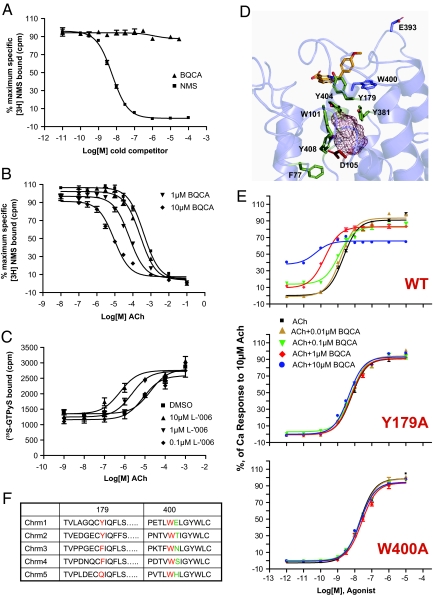
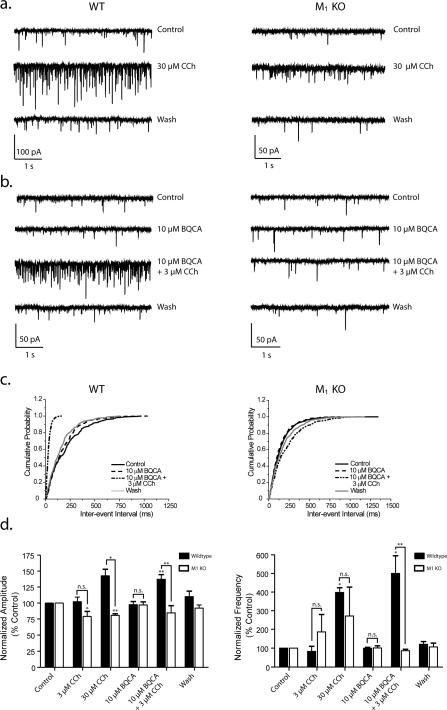
BQCA can 129-fold lower the concentration of ACh needed to activate M1 with an inflection point value of 845 nM. Up to 100 μM, there is no evidence of agonism, antagonism, or potentiation on other mAChRs[1]. BQCA raises acetylcholine affinity at the M1 receptor. In medial prefrontal cortex (mPFC) pyramidal cells, BQCA-induced M1 receptor activation results in a strong inward current and an increase in spontaneous excitatory postsynaptic currents[2].
|
|---|---|
| ln Vitro |
BQCA can 129-fold lower the concentration of ACh needed to activate M1 with an inflection point value of 845 nM. Up to 100 μM, there is no evidence of agonism, antagonism, or potentiation on other mAChRs[1]. BQCA raises acetylcholine affinity at the M1 receptor. In medial prefrontal cortex (mPFC) pyramidal cells, BQCA-induced M1 receptor activation results in a strong inward current and an increase in spontaneous excitatory postsynaptic currents[2].
In CHO cells stably expressing human M₁, BQCA (100 µM) potentiated ACh-induced calcium mobilization, shifting the ACh EC₅₀ leftward by up to 128.8-fold. In primary mouse cortical neurons, BQCA (10 µM) potentiated ACh-induced accumulation of the IP₃ metabolite IP₁ by 23.3-fold. This potentiation was absent in neurons from M₁⁻/⁻ mice. In CHO cells expressing human M₁, BQCA potentiated ACh-induced recruitment of β-arrestin, as measured by an enzyme complementation assay. [1] |
| ln Vivo |
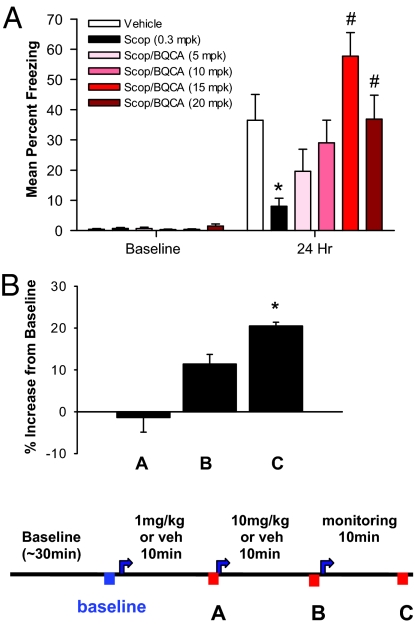
BQCA necessary for M1 to enhance c-fos and arc RNA expression, ERK phosphorylation, and inositol phosphate turnover in primary neurons. BQCA increases cerebral cortex blood flow, increases wakefulness while decreasing delta sleep, and reverses the memory deficits caused by scopolamine in contextual fear conditioning. A role for this signal transduction mechanism in the cholinergic modulation of memory is suggested by BQCA's induction of β-arrestin recruitment to M1[1]. In vivo, BQCA promotes mPFC pyramidal cell firing. In a transgenic mouse model of Alzheimer's disease, BQCA also reinstates discrimination reversal learning[2].
In a mouse contextual fear conditioning model, intraperitoneal administration of BQCA (15 or 20 mg/kg) reversed memory deficits induced by scopolamine (0.3 mg/kg). In anesthetized rats, intravenous infusion of BQCA (10 mg/kg) increased cerebral blood flow by 20.5% without affecting arterial pressure. In rats, intraperitoneal administration of BQCA (10 mg/kg) administered before the light cycle increased time spent in active wake and light sleep while reducing delta sleep during the first 90 minutes. In mice, intraperitoneal administration of BQCA (10 and 30 mg/kg) repressed amphetamine-induced locomotion. [1] |
| Enzyme Assay |
In 96-well deep-well plates, competition binding reactions were conducted using 25 μg human M1 CHO membrane protein, BQCA or vehicle, and 0.15 nM [3H]NMS. Fast filtration stops binding reactions that take place at 30 °C for two to three hours. To measure nonspecific binding, 10 μM atropine is added. Ice-cold filter plates are ished 4x. using a 96-well harvester, 20 mM HEPES, 100 mM NaCl, and 5 mM MgCl2, pH 7.4. After drying the plates, a microplate scintillation counter is used to count the radioactivity on them[1].
Radioligand binding assays were performed using membranes from CHO cells expressing human M₁. Competition binding reactions contained membrane protein, test compounds or vehicle, and 0.15 nM [³H]-N-methyl-scopolamine (NMS). Reactions were incubated, terminated by rapid filtration, and radioactivity was counted after washing. Non-specific binding was determined with atropine. GTPγS binding assays measured G protein activation. Reactions contained M₁ CHO membrane protein, GDP, and 0.1 nM [³⁵S]-GTPγS, followed by incubation, filtration, and scintillation counting. IP₁ accumulation in primary neurons was measured using a homogeneous time-resolved fluorescence (HTRF) assay. Neurons were treated with LiCl to block inositol phosphate degradation, then incubated with BQCA followed by ACh before HTRF measurement. [1] |
| Cell Assay |
Calcium mobilization was measured using a fluorometric imaging plate reader (FLIPR). CHO cells expressing muscarinic receptors were loaded with Fluo-4 AM dye. After dye removal, calcium flux was measured following sequential addition of test compound and a submaximal concentration of ACh.
β-arrestin recruitment was assessed using an enzyme complementation assay. CHO cells stably expressing human M₁ fused to one fragment of β-galactosidase and β-arrestin fused to a complementary fragment were treated with ligands. Recruitment was monitored by measuring restored β-galactosidase activity. Primary cortical/hippocampal neurons from wild-type or M₁⁻/⁻ mice were cultured and used for IP₁ accumulation assays using HTRF. [1] |
| Animal Protocol |
Rats: Male Sprague-Dawley rats weighing between 225 and 250 g are given an intraperitoneal injection (10 mg/kg) of a BQCA microsuspension containing 10% tween 80. Samples of whole brain tissue and blood are taken at 0.5, 1, 2, 4, and 8 hours. Using a cardiac puncture, blood samples are drawn into EDTA vacutainer tubes. After centrifugation, the plasma is separated and kept at -80°C until analysis. The animals are beheaded, and their entire brain tissue is extracted and frozen on dry ice right away[2].
Mice: 30 minutes before being placed in a chamber for 2 minutes and subjected to 2 tone-footshock pairings (3 kHz, 85 dB tone for 30 s co-terminated with a 0.5 mA, 1 s shock) 2 minutes apart, mice are given an intraperitoneal injection of BQCA in 5% beta-cyclodextrin and/or 0.3 mg/kg scopolamine in 0.9% saline. After 30 seconds of the last pairing, the mice are returned to their home cage. Mice are placed in the same chamber 24 hours later, and Video Freeze is used to measure the freezing point[1]. For contextual fear conditioning, B6SJL mice were injected intraperitoneally with BQCA (dissolved in 5% betacyclodextrin) and/or scopolamine (in saline) 30 minutes before training. Training involved placement in a chamber followed by tone-footshock pairings. Freezing behavior was measured 24 hours later in the same chamber. For cerebral blood flow measurement, Sprague-Dawley rats were anesthetized, and physiological parameters were monitored. BQCA was infused intravenously. A laser Doppler probe was placed over a burr hole in the skull to record cortical blood flow changes. For sleep EEG studies, Sprague-Dawley rats with implanted telemetric monitors were dosed intraperitoneally with BQCA (10 mg/kg) 30 minutes before the light cycle for 7 days. Electrocorticogram and electromyogram activities were recorded and sleep stages were analyzed. For amphetamine-induced locomotor activity, B6SJL mice were dosed intraperitoneally with BQCA, placed in an open field, and then given amphetamine. Locomotion was tracked using infrared motion sensors. [1] |
| ADME/Pharmacokinetics |
In male Sprague-Dawley rats, intraperitoneal injection of BQCA (10 mg/kg, dissolved in a microsuspension containing 10% Tween 80) resulted in a peak plasma concentration of approximately 10 µg/mL at 2 hours post-administration (Tmax). The compound exhibited good brain permeability, with peak brain tissue concentrations reaching 30 minutes to 1 hour post-administration and remaining stable for approximately 4 hours. Brain tissue concentrations were lower than plasma concentrations. [2]
|
| References |
|
| Additional Infomation |
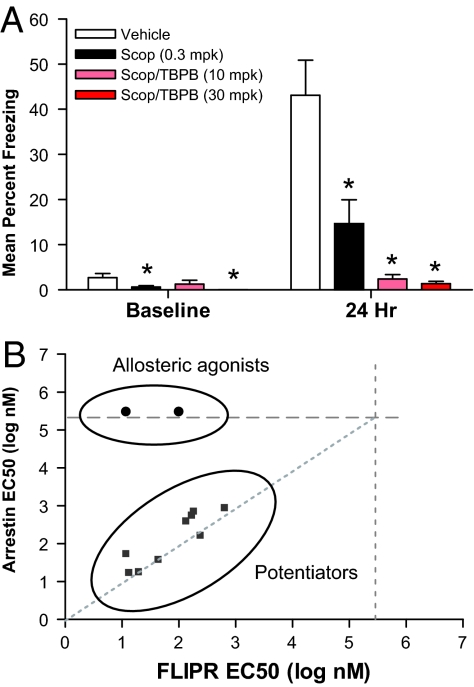
BQCA (1-(4-methoxybenzyl)-4-oxo-1,4-dihydroquinoline-3-carboxylic acid) is a drug-like molecule (331.3 Da) that acts as a positive allosteric modulator rather than a direct agonist of the M₁ receptor. It binds to allosteric sites in the extracellular region of the M₁ receptor involving the Y179 and W400 residues, which contributes to its selectivity. Unlike the allosteric agonists TBPB and AC-42, BQCA effectively promotes the recruitment of β-arrestin to the M₁ receptor, which may be related to its efficacy in reversing scopolamine-induced memory impairment. It is considered a potential strategy for treating cognitive impairments associated with central cholinergic dysfunction, such as Alzheimer's disease. [1]
|
| Molecular Formula |
C18H15NO4
|
|
|---|---|---|
| Molecular Weight |
309.32
|
|
| Exact Mass |
309.1
|
|
| Elemental Analysis |
C, 69.89; H, 4.89; N, 4.53; O, 20.69
|
|
| CAS # |
338747-41-4
|
|
| Related CAS # |
|
|
| PubChem CID |
1476756
|
|
| Appearance |
White to off-white solid powder
|
|
| Density |
1.3±0.1 g/cm3
|
|
| Boiling Point |
492.6±45.0 °C at 760 mmHg
|
|
| Flash Point |
251.7±28.7 °C
|
|
| Vapour Pressure |
0.0±1.3 mmHg at 25°C
|
|
| Index of Refraction |
1.649
|
|
| LogP |
2.83
|
|
| Hydrogen Bond Donor Count |
1
|
|
| Hydrogen Bond Acceptor Count |
5
|
|
| Rotatable Bond Count |
4
|
|
| Heavy Atom Count |
23
|
|
| Complexity |
493
|
|
| Defined Atom Stereocenter Count |
0
|
|
| SMILES |
O=C1C(C(=O)O[H])=C([H])N(C2=C([H])C([H])=C([H])C([H])=C21)C([H])([H])C1C([H])=C([H])C(=C([H])C=1[H])OC([H])([H])[H]
|
|
| InChi Key |
BZBBTGCKPRSPGF-UHFFFAOYSA-N
|
|
| InChi Code |
InChI=1S/C18H15NO4/c1-23-13-8-6-12(7-9-13)10-19-11-15(18(21)22)17(20)14-4-2-3-5-16(14)19/h2-9,11H,10H2,1H3,(H,21,22)
|
|
| Chemical Name |
1-[(4-methoxyphenyl)methyl]-4-oxoquinoline-3-carboxylic acid
|
|
| Synonyms |
|
|
| HS Tariff Code |
2934.99.9001
|
|
| Storage |
Powder -20°C 3 years 4°C 2 years In solvent -80°C 6 months -20°C 1 month |
|
| Shipping Condition |
Room temperature (This product is stable at ambient temperature for a few days during ordinary shipping and time spent in Customs)
|
| Solubility (In Vitro) |
|
|||
|---|---|---|---|---|
| Solubility (In Vivo) |
Note: Listed below are some common formulations that may be used to formulate products with low water solubility (e.g. < 1 mg/mL), you may test these formulations using a minute amount of products to avoid loss of samples.
Injection Formulations
Injection Formulation 1: DMSO : Tween 80: Saline = 10 : 5 : 85 (i.e. 100 μL DMSO stock solution → 50 μL Tween 80 → 850 μL Saline)(e.g. IP/IV/IM/SC) *Preparation of saline: Dissolve 0.9 g of sodium chloride in 100 mL ddH ₂ O to obtain a clear solution. Injection Formulation 2: DMSO : PEG300 :Tween 80 : Saline = 10 : 40 : 5 : 45 (i.e. 100 μL DMSO → 400 μLPEG300 → 50 μL Tween 80 → 450 μL Saline) Injection Formulation 3: DMSO : Corn oil = 10 : 90 (i.e. 100 μL DMSO → 900 μL Corn oil) Example: Take the Injection Formulation 3 (DMSO : Corn oil = 10 : 90) as an example, if 1 mL of 2.5 mg/mL working solution is to be prepared, you can take 100 μL 25 mg/mL DMSO stock solution and add to 900 μL corn oil, mix well to obtain a clear or suspension solution (2.5 mg/mL, ready for use in animals). View More
Injection Formulation 4: DMSO : 20% SBE-β-CD in saline = 10 : 90 [i.e. 100 μL DMSO → 900 μL (20% SBE-β-CD in saline)] Oral Formulations
Oral Formulation 1: Suspend in 0.5% CMC Na (carboxymethylcellulose sodium) Oral Formulation 2: Suspend in 0.5% Carboxymethyl cellulose Example: Take the Oral Formulation 1 (Suspend in 0.5% CMC Na) as an example, if 100 mL of 2.5 mg/mL working solution is to be prepared, you can first prepare 0.5% CMC Na solution by measuring 0.5 g CMC Na and dissolve it in 100 mL ddH2O to obtain a clear solution; then add 250 mg of the product to 100 mL 0.5% CMC Na solution, to make the suspension solution (2.5 mg/mL, ready for use in animals). View More
Oral Formulation 3: Dissolved in PEG400 (Please use freshly prepared in vivo formulations for optimal results.) |
| Preparing Stock Solutions | 1 mg | 5 mg | 10 mg | |
| 1 mM | 3.2329 mL | 16.1645 mL | 32.3290 mL | |
| 5 mM | 0.6466 mL | 3.2329 mL | 6.4658 mL | |
| 10 mM | 0.3233 mL | 1.6164 mL | 3.2329 mL |
*Note: Please select an appropriate solvent for the preparation of stock solution based on your experiment needs. For most products, DMSO can be used for preparing stock solutions (e.g. 5 mM, 10 mM, or 20 mM concentration); some products with high aqueous solubility may be dissolved in water directly. Solubility information is available at the above Solubility Data section. Once the stock solution is prepared, aliquot it to routine usage volumes and store at -20°C or -80°C. Avoid repeated freeze and thaw cycles.
Calculation results
Working concentration: mg/mL;
Method for preparing DMSO stock solution: mg drug pre-dissolved in μL DMSO (stock solution concentration mg/mL). Please contact us first if the concentration exceeds the DMSO solubility of the batch of drug.
Method for preparing in vivo formulation::Take μL DMSO stock solution, next add μL PEG300, mix and clarify, next addμL Tween 80, mix and clarify, next add μL ddH2O,mix and clarify.
(1) Please be sure that the solution is clear before the addition of next solvent. Dissolution methods like vortex, ultrasound or warming and heat may be used to aid dissolving.
(2) Be sure to add the solvent(s) in order.
 Potentiation Activity of BQCA.Proc Natl Acad Sci U S A.2009 Sep 15;106(37):15950-5. |
 Selectivity of BQCA.Proc Natl Acad Sci U S A.2009 Sep 15;106(37):15950-5. |
BQCA is an allosteric potentiator.Proc Natl Acad Sci U S A.2009 Sep 15;106(37):15950-5. |
Physiological effects of BQCA.Proc Natl Acad Sci U S A.2009 Sep 15;106(37):15950-5. |
Allosteric agonists do not reverse scopolamine deficits in contextual fear conditioning or recruit β-arrestin.Proc Natl Acad Sci U S A.2009 Sep 15;106(37):15950-5. |
BQCA has no effect and does not potentiate the CCh effect on sEPSCs in M1receptor KO mice.J Neurosci.2009 Nov 11;29(45):14271-86. |
Products are for research use only; We do not sell to patients
Copyright 2020 InvivoChem LLC | All Rights Reserved


 COA
COA