| Size | Price | Stock | Qty |
|---|---|---|---|
| 5mg |
|
||
| 1g | |||
| Other Sizes |
| Targets |
MMP-1 (IC50 = 3 nM); MMP-2 (IC50 = 4 nM); MMP-9 (IC50 = 4 nM); MMP-7 (IC50 = 6 nM); MMP-7 (IC50 = 6 nM)
Broad-spectrum matrix metalloproteinase (MMP) inhibitor. The literature states it is a potent inhibitor of MMP-1, MMP-2, MMP-3, MMP-7, and MMP-9, with reported IC50 values of 3, 4, 4, 6, and 20 nM, respectively (citing reference 13). Other studies cited in the literature report IC50 values of 25, 32, 67, 27, 23, 19, and 29 nM for MMP-1, -2, -3, -8, -9, -14 (MT1-MMP), and -16 (MT3-MMP), respectively (citing reference 21). [1] Broad-spectrum matrix metalloproteinase (MMP) inhibitor. The IC50 values reported for batimastat (BB-94) are: 4 nM for gelatinase A (MMP-2), 10 nM for gelatinase B (MMP-9), 3 nM for MMP-1 (interstitial collagenase), 20 nM for MMP-3 (stromelysin-1), and 6 nM for the snake venom MMP atrolysin C (Ht-d) which is structurally similar to mammalian MMPs. [2] The Ki for the active (S,R,S) enantiomer of batimastat against atrolysin C (Ht-d) is 6 nM. Its less potent enantiomer (R,S,R), referred to as BB-1268, is 670-fold less active. [2] |
|---|---|
| ln Vitro |
Batimastat (BB-94) is a strong inhibitor of matrix metalloproteinase that binds in an unusual way. Batimastat has an IC50 of 4 nM for gelatinases A and 10 nM for gelatinases B. Comparable to the results for MMP-1 (3 nM), MMP-8 (10 nM), and MMP-3 (20 nM)[2], the IC50 with the structurally identical collagenase Ht-d is 6 nM. This metalloproteinase inhibitor, Batimastat (BB-94, IC50=230 nM), is based on hydroxamic acid and successfully inhibits CD30 shedding from the cell line Karpas299[3].
In uterine strips from pregnant rats (mid-pregnant, day 12 and late-pregnant, day 19), which exhibited reduced contraction, the addition of batimastat (BB-94) at a concentration of 10⁻⁶ M enhanced oxytocin-induced contraction. Specifically, in late-pregnant rats, pretreatment with BB-94 (10⁻⁶ M) for 30 minutes significantly enhanced the contractile response to oxytocin. This effect was part of a study demonstrating that MMP inhibitors can reverse the pregnancy-associated reduction in uterine contraction. [1] Batimastat is a potent inhibitor of MMP activity. The inhibitory concentrations (IC50) are provided in the Target field. [2] X-ray crystallography at 2.0-Å resolution revealed an unexpected binding mode of batimastat within the active site of the matrix metalloproteinase atrolysin C (Ht-d). Instead of the anticipated hydroxamate group ligating the catalytic zinc ion, the methylamide terminus of the inhibitor was found to coordinate the zinc. The thiophene ring of the inhibitor was deeply inserted into the large, hydrophobic primary specificity (S1') pocket of the enzyme. This binding geometry is dominated by van der Waals interactions within the S1' pocket, especially under the high-salt crystallization conditions used. Hydrogen bonds are also formed between the inhibitor and enzyme backbone atoms. [2] Molecular docking and modeling studies using GRID energy maps indicated that the active enantiomer of batimastat can be accommodated in the binding site, while the inactive enantiomer (BB-1268) experiences unfavorable steric repulsions, explaining the large difference in potency. [2] |
| ln Vivo |
In an orthotopic model of human breast cancer, intrathecal treatment of Batimastat (BB-94) significantly inhibits the growth of human ovarian carcinoma xenografts and murine melanoma metastasis while delaying the growth of primary tumors without causing cytotoxicity or altering mRNA levels[2]. Antineoplastic and antiangiogenic properties have been demonstrated by the synthetic matrix metalloproteinase inhibitor batimastat (BB) -94 in a number of tumor types. All animals are alive and well on day 200 after receiving treatment with Batimastat (60 mg/kg ip every other day, for a total of eight injections) and Cisplatin (4 mg/kg iv, every seven days, for a total of three injections), which totally stops the growth and spread of both xenografts[4]. When compared to controls (75%), animals treated with Batimastat (BB-94) had higher survival rates (95.2%) according to Kaplan-Meier analysis of survival (at 48 hours), and these changes are nearly statistically significant (p=0.064)[5]. Four hours after E2 administration—the period at which collagen density is seen to be at its lowest following hormone treatment—matrix density is assessed in animals that have been pretreated with saline or Batimastat (40 mg/kg)[6].
The literature cites (but does not describe in detail within its own experimental results) that intraperitoneal administration of batimastat effectively blocked the growth of human ovarian carcinoma xenografts, inhibited murine melanoma metastasis, and delayed primary tumor growth in an orthotopic model of human breast cancer, without observed cytotoxicity or effects on mRNA levels. These findings are referenced from other studies (references 15, 16, and personal communication). [2] |
| Enzyme Assay |
In vitro, batimastat IC50s are calculated using enzyme assays against various metalloproteinases.Matrix metalloproteinase enzymes have been implicated in degenerative processes like tumor cell invasion, metastasis, and arthritis. Specific metalloproteinase inhibitors have been used to block tumor cell proliferation. We have examined the interaction of batimastat (BB-94) with a metalloproteinase [atrolysin C (Ht-d), EC 3.4.24.42] active site at 2.0-angstroms resolution (R = 16.8%). The title structure exhibits an unexpected binding geometry, with the thiophene ring deeply inserted into the primary specificity site. This unprecedented binding geometry dramatizes the significance of the cavernous primary specificity site, pointing the way for the design of a new generation of potential antitumor drugs.
The primary experimental method in this study is X-ray crystallography, not a solution-based enzyme activity assay. The inhibitory potency (IC50/Ki) data are cited from other work. The crystallographic experiment involved co-crystallization/soaking: a single crystal of the enzyme atrolysin C (Ht-d) was placed in a capillary in the presence of a buffer saturated with solid batimastat. The buffer consisted of 0.1 M imidazole (pH 6.8) and 2.4 M ammonium sulfate. Diffraction data were collected to 2.0-Å resolution using an area detector with Cu-Kα radiation. The structure was solved by molecular replacement using the native enzyme coordinates and refined. [2] Molecular modeling studies were performed to analyze the binding. The interaction energies between the enzyme's empty binding site and various chemical probes (amide NH, carbonyl O, methyl group) were calculated using the GRID program on a 3D grid. The molecular surfaces and electrostatic potentials of the inhibitor and binding pockets were calculated using programs like GRASP and DELPHI. Docking of both active and inactive enantiomers into the active site was performed based on the calculated energy maps. [2] |
| Cell Assay |
The IC50 was determined after incubating the cells for 22 hours at various concentrations of batimastat that had been dissolved in absolute ethanol.
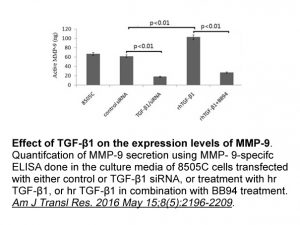
Cell growth assays The cell lines were seeded in 24-well multidishes in growth medium and allowed to adhere for two days. When experiments were initiated (day 0), growth medium containing fulvestrant (0.1 μM), HER ligands (10 ng/ml), gefitinib, CI-1033, TAPI-2, Batimastat (BB94) or GM6001 were added at concentrations indicated in the figure. The control cells were added similar amount of vehicle as the treated cells. Growth medium was replaced on day three, and cell number was determined on day five, using a crystal violet colorimetric assay as previously described. Each experiment was performed in quadruplicate and repeated at least twice. Int J Oncol. 2014 Jul;45(1):393-400. |
| Animal Protocol |
Dissolved in PBS containing 0.01% Tween 2O; 30 mg/kg; i.p. injection
Nude mice Mice: Female BALB/c mice six weeks of age are employed. One hour prior to and twenty-four hours following infection, mice receive intraperitoneal injections of Batimastat (BB-94, 50 mg/kg). 50 mg/mL of batimastat is suspended in DMSO and kept frozen at -20°C. It is diluted 20 times in phosphate buffered saline (PBS) before use, and 500 μL is injected into the animals. A 500 μL injection of 5% DMSO in PBS is given to control mice. 48 hours after the ic challenge, animals are sacrificed. Rats: Sprague-Dawley female rats receive an intraperitoneal (i.p.) injection of a single physiological dose of E2 (40 μg/kg in a 0.9% NaCl, 0.4% EtOH vehicle) at predetermined intervals before tissue is collected during necropsy. It has been demonstrated that the uterine wet weight, tissue architecture, and gene expression changes that are indicative of estrogen receptor activation are brought about by this in vivo dose level of estrogen. In each study, the animals are given a single 40 μg/kg bolus of E2 intraperitoneally four hours before tissue collection, and the control group is given only a vehicle. In vivo MMP inhibition has been demonstrated by batimastat when given intraperitoneally (i.p.) at a dose of 40 mg/kg in a 1× PBS, 0.1% Tween-20 vehicle, 4 hours before E2 or saline control. |
| References |
|
| Additional Infomation |
Batimastat is a secondary amide formed by the condensation of the carboxyl group of (2S,3R)-5-methyl-3-{[(2S)-1-(methylamino)-1-oxo-3-phenylprop-2-yl]carbamoyl}-2-[(thiophene-2-ylthio)methyl]hexanoic acid with the amino group of hydroxylamine. It is a broad-spectrum matrix metalloproteinase inhibitor. It possesses the functions of a matrix metalloproteinase inhibitor, an antitumor drug, and an angiogenesis inhibitor. It is an L-phenylalanine derivative, belonging to the thiophene class of compounds, organosulfur compounds, triamides, hydroxamic acids, and secondary amides. Batimastat is a synthetic hydroxamic acid drug with potential antitumor activity. Batimastat covalently binds to zinc ions at the active sites of matrix metalloproteinases (MMPs), thereby inhibiting MMP activity, inducing extracellular matrix degradation, and inhibiting angiogenesis, tumor growth, invasion, and metastasis. Batimastat is an anticancer drug belonging to the angiogenesis inhibitor class of drugs. It is a matrix metalloproteinase inhibitor.
Matrix metalloproteinases are closely associated with the growth and spread of metastatic tumors. This study investigated this role of matrix metalloproteinases using the inhibitor BB-94 (batimasta) in a nude mouse orthotopic transplantation model of human colon cancer. Human colon cancer tissue blocks of 1–1.5 mm were surgically orthotopically transplanted into the colon of 40 athymic nu/nu mice. Seven days after tumor implantation, BB-94 or a carrier (phosphate-buffered saline, pH 7.4, containing 0.01% Tween 80) was administered (n=20 per group). Animals received intraperitoneal injections of BB-94 once daily at a dose of 30 mg/kg for the first 60 days, followed by three injections per week thereafter. BB-94 treatment reduced the median weight of the primary tumor from 293 mg in the control group to 144 mg in the BB-94 treatment group (P < 0.001). BB-94 treatment also reduced the incidence of local and regional invasion, from 12 out of 18 mice (67%) in the control group to 7 out of 20 mice (35%) in the treatment group. Six mice in the control group were found to have liver, lung, peritoneum, abdominal wall, or local lymph node metastases. Only two mice in the BB-94 group showed evidence of metastatic disease, and both metastases were confined to the abdominal wall. The slowed tumor progression observed in the BB-94 treatment group translated into prolonged survival, with a median survival of 140 days in the treatment group compared to 110 days in the control group (P < 0.01). No significant toxicity was observed with BB-94 treatment, and these results suggest that this class of drugs may be effective as adjuvant cancer therapy. We tested the ability of the synthetic matrix metalloproteinase inhibitor beatimastat to inhibit the growth and metastasis of B16-BL6 mouse melanoma in homologous C57BL/6N mice. Intraperitoneal injection of beatimastat significantly inhibited the number of metastatic lesions formed in the lungs following intravenous injection of B16-BL6 cells. Researchers examined the effect of batimaxistat on spontaneous metastasis after inoculating mice with B16-BL6 melanoma in their hind paw pads. The primary tumor was surgically removed 26–28 days later. Batimaxistat was administered twice daily from day 14 to day 28 (preoperative) or from day 26 to day 44 (postoperative). Neither dosing regimen significantly affected the median number of lung metastases, but both significantly reduced the weight of the metastases. Finally, the researchers also examined the effect of batimaxistat on subcutaneous growth of B16-BL6 melanoma. Daily administration of batimaxistat from the day of tumor transplantation significantly delayed tumor growth; however, treatment starting in advanced stages only slightly inhibited tumor growth. Our results suggest that matrix metalloproteinase inhibitors can not only prevent the invasion of secondary organs by B16-BL6 cells but also limit the growth of solid tumors. In this study, we used 10⁻⁶ M of batimastatine (BB-94) as a pharmacological tool to inhibit MMP activity in isolated rat uterine tissue strips. Batimastatine was prepared as a stock solution (10⁻² M) in DMSO, and the final concentration of DMSO in the experimental bath was maintained below 0.1%. [1] This study hypothesizes that increased uterine dilation during pregnancy upregulates the expression of specific MMPs (such as MMP-2 and MMP-9), thereby inhibiting myometrial contraction. Batimastatine enhances uterine contraction in pregnant rats, which supports the involvement of MMPs in this relaxation pathway. [1] Batimasitine is a synthetic peptide-mimicking matrix metalloproteinase inhibitor. [2] This study elucidates another binding mode of batimastatine, in which the methylamide group, rather than the hydroxamic acid group, acts as a zinc ligand under high salt conditions. This suggests that van der Waals interactions within the large S1' pocket may be the primary driving force for binding, providing insights into designing novel inhibitors that could potentially avoid the partial toxicity of hydroxamic acid. [2] The conserved, cavity-like S1' pocket in MMPs is considered a key target for achieving high-affinity inhibition. [2] |
| Molecular Formula |
C23H30N3O4S2-.NA+
|
|---|---|
| Molecular Weight |
499.6218
|
| Exact Mass |
499.158
|
| CAS # |
130464-84-5
|
| Related CAS # |
Batimastat;130370-60-4
|
| PubChem CID |
59955182
|
| Appearance |
White to off-white solid
|
| LogP |
4.378
|
| Hydrogen Bond Donor Count |
3
|
| Hydrogen Bond Acceptor Count |
6
|
| Rotatable Bond Count |
12
|
| Heavy Atom Count |
33
|
| Complexity |
621
|
| Defined Atom Stereocenter Count |
3
|
| SMILES |
[O-]NC([C@@H](CSC1=CC=CS1)[C@@H](CC(C)C)C(N[C@@H](CC2=CC=CC=C2)C(NC)=O)=O)=O.[Na+]
|
| InChi Key |
VWABIWQKZWQAKG-UHFFFAOYSA-N
|
| InChi Code |
InChI=1S/C23H30N3O4S2.Na/c1-15(2)12-17(18(22(28)26-30)14-32-20-10-7-11-31-20)21(27)25-19(23(29)24-3)13-16-8-5-4-6-9-16;/h4-11,15,17-19H,12-14H2,1-3H3,(H3-,24,25,26,27,28,29,30);/q-1;+1
|
| Chemical Name |
sodium;N-[1-(methylamino)-1-oxo-3-phenylpropan-2-yl]-2-(2-methylpropyl)-N'-oxido-3-(thiophen-2-ylsulfanylmethyl)butanediamide
|
| Synonyms |
Batimastat (sodium salt); BB-94 sodium salt; Batimastat Sodium; 130464-84-5; sodium;(2R,3S)-N-[(2S)-1-(methylamino)-1-oxo-3-phenylpropan-2-yl]-2-(2-methylpropyl)-N'-oxido-3-(thiophen-2-ylsulfanylmethyl)butanediamide; BatimastatSodium; (2S,3R)-N-Hydroxy-N'-[(2S)-1-methylamino-1-oxo-3-phenylpropan-2-yl]-3-(2-methylpropyl)-2-(thiophen-2-ylsulfanylmethyl)butanediamide sodium salt; PD118565
|
| HS Tariff Code |
2934.99.9001
|
| Storage |
Powder -20°C 3 years 4°C 2 years In solvent -80°C 6 months -20°C 1 month Note: Please store this product in a sealed and protected environment, avoid exposure to moisture. |
| Shipping Condition |
Room temperature (This product is stable at ambient temperature for a few days during ordinary shipping and time spent in Customs)
|
| Solubility (In Vitro) |
DMSO: ~3.6 mg/mL (~7.2 mM; with ultrasonication and warming by heating to 60°C)
|
|---|---|
| Solubility (In Vivo) |
Note: Listed below are some common formulations that may be used to formulate products with low water solubility (e.g. < 1 mg/mL), you may test these formulations using a minute amount of products to avoid loss of samples.
Injection Formulations
Injection Formulation 1: DMSO : Tween 80: Saline = 10 : 5 : 85 (i.e. 100 μL DMSO stock solution → 50 μL Tween 80 → 850 μL Saline)(e.g. IP/IV/IM/SC) *Preparation of saline: Dissolve 0.9 g of sodium chloride in 100 mL ddH ₂ O to obtain a clear solution. Injection Formulation 2: DMSO : PEG300 :Tween 80 : Saline = 10 : 40 : 5 : 45 (i.e. 100 μL DMSO → 400 μLPEG300 → 50 μL Tween 80 → 450 μL Saline) Injection Formulation 3: DMSO : Corn oil = 10 : 90 (i.e. 100 μL DMSO → 900 μL Corn oil) Example: Take the Injection Formulation 3 (DMSO : Corn oil = 10 : 90) as an example, if 1 mL of 2.5 mg/mL working solution is to be prepared, you can take 100 μL 25 mg/mL DMSO stock solution and add to 900 μL corn oil, mix well to obtain a clear or suspension solution (2.5 mg/mL, ready for use in animals). View More
Injection Formulation 4: DMSO : 20% SBE-β-CD in saline = 10 : 90 [i.e. 100 μL DMSO → 900 μL (20% SBE-β-CD in saline)] Oral Formulations
Oral Formulation 1: Suspend in 0.5% CMC Na (carboxymethylcellulose sodium) Oral Formulation 2: Suspend in 0.5% Carboxymethyl cellulose Example: Take the Oral Formulation 1 (Suspend in 0.5% CMC Na) as an example, if 100 mL of 2.5 mg/mL working solution is to be prepared, you can first prepare 0.5% CMC Na solution by measuring 0.5 g CMC Na and dissolve it in 100 mL ddH2O to obtain a clear solution; then add 250 mg of the product to 100 mL 0.5% CMC Na solution, to make the suspension solution (2.5 mg/mL, ready for use in animals). View More
Oral Formulation 3: Dissolved in PEG400 (Please use freshly prepared in vivo formulations for optimal results.) |
| Preparing Stock Solutions | 1 mg | 5 mg | 10 mg | |
| 1 mM | 2.0015 mL | 10.0076 mL | 20.0152 mL | |
| 5 mM | 0.4003 mL | 2.0015 mL | 4.0030 mL | |
| 10 mM | 0.2002 mL | 1.0008 mL | 2.0015 mL |
*Note: Please select an appropriate solvent for the preparation of stock solution based on your experiment needs. For most products, DMSO can be used for preparing stock solutions (e.g. 5 mM, 10 mM, or 20 mM concentration); some products with high aqueous solubility may be dissolved in water directly. Solubility information is available at the above Solubility Data section. Once the stock solution is prepared, aliquot it to routine usage volumes and store at -20°C or -80°C. Avoid repeated freeze and thaw cycles.
Calculation results
Working concentration: mg/mL;
Method for preparing DMSO stock solution: mg drug pre-dissolved in μL DMSO (stock solution concentration mg/mL). Please contact us first if the concentration exceeds the DMSO solubility of the batch of drug.
Method for preparing in vivo formulation::Take μL DMSO stock solution, next add μL PEG300, mix and clarify, next addμL Tween 80, mix and clarify, next add μL ddH2O,mix and clarify.
(1) Please be sure that the solution is clear before the addition of next solvent. Dissolution methods like vortex, ultrasound or warming and heat may be used to aid dissolving.
(2) Be sure to add the solvent(s) in order.
|
|---|
|
|
Products are for research use only; We do not sell to patients
Copyright 2020 InvivoChem LLC | All Rights Reserved