| Size | Price | |
|---|---|---|
| 500mg | ||
| 1g | ||
| Other Sizes |


Purity: ≥98%
Azeliragon 2HCl (formerly TTP-488 dihydrochloride; PF04494700) is an orally bioactive RAGE (Receptor for Advanced Glycation End products) inhibitor that has the potential for the treatment of mild-to-moderate AD/Alzheimer's disease and cerebral amyloid angiopathy. RAGE is a pattern recognition receptor that affects the movement of amyloid (a biomarker for Alzheimer's disease) into the brain. In preclinical studies, azeliragon decreased brain amyloid in mice and improved their performance on behavior tests. Azeliragon has been shown to be involved in adaptive immune responses. It is currently in Phase 3 clinical trial.
| Targets |
RAGE (receptor for advanced glycation end products)
|
|
|---|---|---|
| ln Vitro |
|
|
| ln Vivo |
|
|
| Enzyme Assay |
Using serum from uremic pigs with chronic renal insufficiency, our results show that KLF2 expression is suppressed by the uremic milieu and individual uremic solutes in vitro. Specifically, KLF2 expression is significantly decreased in human umbilical vein endothelial cells after treatment with uremic porcine serum or carboxymethyllysine‐modified albumin, an advanced glycation end product (AGE) known to induce endothelial dysfunction. AGE‐mediated suppression of KLF2 is dependent on activation of the receptor for AGE, as measured by small interfering RNA knockdown of the receptor for AGE. Furthermore, KLF2 suppression promotes endothelial dysfunction, because adenoviral overexpression of KLF2 inhibits reactive oxygen species production and leukocyte adhesion in human umbilical vein endothelial cells. In addition, the application of hemodynamic shear stress, prolonged serum dialysis, or treatment with the receptor for AGE antagonist azeliragon (TTP488) is sufficient to prevent KLF2 suppression in vitro. [4]
|
|
| Cell Assay |
Cell Viability Assay[3]
Cell Types: Purified T cells from RAGE-/- or WT B6 mice. Tested Concentrations: 4 nM Incubation Duration: 16 hrs (hours) Experimental Results: Inhibited of WT but not RAGE-/- T cells, and Dramatically decreased the level of IFN-γ. |
|
| Animal Protocol |
Animal/Disease Models: Prediabetic NOD/LtJ (6-7 week old) mice, NOD mice with spontaneous diabetes, WT balb/c (Bagg ALBino) mouse (8-10 week old ) and B6 mice with diabetes [3].
Doses: 100 mcg/d Route of Administration: intraperitoneal (ip)injection; every day Experimental Results: Prolonged islet auto and allograft survival. |
|
| References |
|
|
| Additional Infomation |
Azeliragon is an orally bioavailable receptor for advanced glycation end products (RAGE) inhibitor with potential antitumor activity. After oral administration, azeliprin targets and binds to RAGE, thereby preventing RAGE ligands from binding to RAGE and blocking RAGE-mediated signaling. This may inhibit the proliferation of tumor cells with overactivated RAGE pathways and induce their apoptosis. RAGE is a receptor belonging to the immunoglobulin superfamily, playing a crucial role in inflammation and being overexpressed in various cancers. It plays a key role in tumor cell proliferation, survival, and metastasis. Azeliprin is an RAGE receptor inhibitor currently under development for the treatment of Alzheimer's disease. This study aimed to evaluate the relationship between plasma azeliprin concentration and QT interval. This study pooled QT interval and plasma concentration data from 711 participants (6236 records) from 5 healthy volunteer studies, 2 studies of patients with mild to moderate Alzheimer's disease, and 1 study of patients with type 2 diabetes and persistent proteinuria. A nonlinear mixed-effects model was used to describe azerilagon concentration-related QT interval changes after adjusting for heart rate, utilizing the Fridricilia criteria (QTcF) and sex differences in baseline QTcF. Two methods were employed to predict azerilagon-related QTcF changes: simulation and bias-corrected 90% confidence interval method. Results showed a weak positive correlation between azerilagon plasma concentration and QTcF, with a slope of 0.059 ms/ng/mL. Simulations predicted a mean change in QTcF (90% prediction interval) of 0.733 ms (0.32–1.66 ms) at a phase 3 dose (5 mg once daily, steady state); and a mean change in QTcF of 4.32 ms (1.7–8.74 ms) at supratherapeutic doses (20 mg once daily, steady state or 60 mg once daily for 6 days). After bias correction, the upper limits of the 90% confidence intervals for the therapeutic dose and the supertherapeutic dose were 0.88 ms and 5.01 ms, respectively. Model-based analysis showed that there was a weak, clinically insignificant positive correlation between azelliragon plasma concentration and QTcF, with a slope close to zero. The upper limits of both the prediction interval and the 90% confidence interval did not reach 10 ms, indicating that no clinically significant drug-related effects were observed in the QTcF interval at the expected therapeutic dose and the supertherapeutic dose of azelliragon. [1] The receptor for advanced glycation end products (RAGE) is a ubiquitous transmembrane immunoglobulin-like receptor that exists in multiple subtypes and can bind to a variety of endogenous extracellular ligands and intracellular effector molecules. After the extracellular domain of RAGE binds to the ligand, it initiates a complex intracellular signaling cascade, leading to the production of reactive oxygen species (ROS), immune inflammatory responses, cell proliferation or apoptosis, and accompanied by the upregulation of RAGE self-expression. To date, research has focused on the correlation between RAGE activity and pathological conditions such as cancer, diabetes, cardiovascular disease and neurodegenerative diseases. Because RAGE plays a role in a variety of pathological processes, it has become an ideal target for the development of extracellular and intracellular inhibitors. This review describes the role of endogenous RAGE ligands/effect molecules in normal and pathophysiological processes, summarizes the current research status of exogenous small molecule RAGE inhibitors, and summarizes key strategies for future therapeutic interventions. [2]
Pattern recognition receptor RAGE has been shown to be involved in adaptive immune responses, but its role in the various components of these responses is not fully understood. We investigated the effects of small molecule RAGE inhibitors and receptor deficiency (RAGE-/- mice) on T cell responses in autoimmunity and allogeneic transplant rejection. In NOD and B6 mice treated with the small molecule RAGE inhibitor TTP488, both syngeneic islet transplant rejection and islet allogeneic transplant rejection were significantly reduced (p < 0.001). Compared to wild-type (WT) mice, streptozotocin-induced diabetic RAGE-/- mice exhibited delayed islet transplant rejection (p < 0.02). This in vivo response was associated with reduced proliferation of RAGE-/- T cells in mixed lymphocyte response (MLR) and with WT T cells co-cultured with TTP488. Overall T cell proliferation was similar in RAGE-/- and WT cells after activation with anti-CD3 and anti-CD28 monoclonal antibodies, but RAGE-/- T cells did not respond to co-stimulation with anti-CD28 monoclonal antibodies. Furthermore, compared to WT T cells, RAGE-/- T cells showed higher levels of IL-10, IL-5, and TNF-α in the culture supernatant co-cultured with anti-CD3 and anti-CD28 monoclonal antibodies, while WT T cells showed reduced IFN-γ production in the presence of TTP488, suggesting that RAGE may play an important role in T cell differentiation. In fact, through real-time PCR, we found that the expression level of RAGE mRNA was higher on clonal T cells activated under Th1 differentiation conditions. We concluded that the activation of RAGE on T cells is involved in early events leading to Th1(+) T cell differentiation. [3] |
| Molecular Formula |
C32H40CL3N3O2
|
|
|---|---|---|
| Molecular Weight |
605.14
|
|
| Exact Mass |
603.218
|
|
| Elemental Analysis |
C, 63.52; H, 6.66; Cl, 17.58; N, 6.95; O, 5.29
|
|
| CAS # |
1284150-65-7
|
|
| Related CAS # |
1284150-65-7 (2HCl);603148-36-3;
|
|
| PubChem CID |
67202797
|
|
| Appearance |
Typically exists as solid at room temperature
|
|
| Hydrogen Bond Donor Count |
2
|
|
| Hydrogen Bond Acceptor Count |
4
|
|
| Rotatable Bond Count |
14
|
|
| Heavy Atom Count |
40
|
|
| Complexity |
626
|
|
| Defined Atom Stereocenter Count |
0
|
|
| SMILES |
ClC1C=CC(=CC=1)OC1C=CC(=CC=1)N1C=C(C2C=CC(=CC=2)OCCCN(CC)CC)N=C1CCCC.Cl.Cl
|
|
| InChi Key |
CQAGJWKITXAOAM-UHFFFAOYSA-N
|
|
| InChi Code |
InChI=1S/C32H38ClN3O2.2ClH/c1-4-7-9-32-34-31(25-10-16-28(17-11-25)37-23-8-22-35(5-2)6-3)24-36(32)27-14-20-30(21-15-27)38-29-18-12-26(33)13-19-29;;/h10-21,24H,4-9,22-23H2,1-3H3;2*1H
|
|
| Chemical Name |
3-[4-[2-butyl-1-[4-(4-chlorophenoxy)phenyl]imidazol-4-yl]phenoxy]-N,N-diethylpropan-1-amine;dihydrochloride
|
|
| Synonyms |
|
|
| HS Tariff Code |
2934.99.9001
|
|
| Storage |
Powder -20°C 3 years 4°C 2 years In solvent -80°C 6 months -20°C 1 month |
|
| Shipping Condition |
Room temperature (This product is stable at ambient temperature for a few days during ordinary shipping and time spent in Customs)
|
| Solubility (In Vitro) |
DMSO: 10 mM
Water: 1 mg/mL (Insoluble) Ethanol: N/A |
|---|---|
| Solubility (In Vivo) |
Note: Listed below are some common formulations that may be used to formulate products with low water solubility (e.g. < 1 mg/mL), you may test these formulations using a minute amount of products to avoid loss of samples.
Injection Formulations
Injection Formulation 1: DMSO : Tween 80: Saline = 10 : 5 : 85 (i.e. 100 μL DMSO stock solution → 50 μL Tween 80 → 850 μL Saline)(e.g. IP/IV/IM/SC) *Preparation of saline: Dissolve 0.9 g of sodium chloride in 100 mL ddH ₂ O to obtain a clear solution. Injection Formulation 2: DMSO : PEG300 :Tween 80 : Saline = 10 : 40 : 5 : 45 (i.e. 100 μL DMSO → 400 μLPEG300 → 50 μL Tween 80 → 450 μL Saline) Injection Formulation 3: DMSO : Corn oil = 10 : 90 (i.e. 100 μL DMSO → 900 μL Corn oil) Example: Take the Injection Formulation 3 (DMSO : Corn oil = 10 : 90) as an example, if 1 mL of 2.5 mg/mL working solution is to be prepared, you can take 100 μL 25 mg/mL DMSO stock solution and add to 900 μL corn oil, mix well to obtain a clear or suspension solution (2.5 mg/mL, ready for use in animals). View More
Injection Formulation 4: DMSO : 20% SBE-β-CD in saline = 10 : 90 [i.e. 100 μL DMSO → 900 μL (20% SBE-β-CD in saline)] Oral Formulations
Oral Formulation 1: Suspend in 0.5% CMC Na (carboxymethylcellulose sodium) Oral Formulation 2: Suspend in 0.5% Carboxymethyl cellulose Example: Take the Oral Formulation 1 (Suspend in 0.5% CMC Na) as an example, if 100 mL of 2.5 mg/mL working solution is to be prepared, you can first prepare 0.5% CMC Na solution by measuring 0.5 g CMC Na and dissolve it in 100 mL ddH2O to obtain a clear solution; then add 250 mg of the product to 100 mL 0.5% CMC Na solution, to make the suspension solution (2.5 mg/mL, ready for use in animals). View More
Oral Formulation 3: Dissolved in PEG400 (Please use freshly prepared in vivo formulations for optimal results.) |
| Preparing Stock Solutions | 1 mg | 5 mg | 10 mg | |
| 1 mM | 1.6525 mL | 8.2626 mL | 16.5251 mL | |
| 5 mM | 0.3305 mL | 1.6525 mL | 3.3050 mL | |
| 10 mM | 0.1653 mL | 0.8263 mL | 1.6525 mL |
*Note: Please select an appropriate solvent for the preparation of stock solution based on your experiment needs. For most products, DMSO can be used for preparing stock solutions (e.g. 5 mM, 10 mM, or 20 mM concentration); some products with high aqueous solubility may be dissolved in water directly. Solubility information is available at the above Solubility Data section. Once the stock solution is prepared, aliquot it to routine usage volumes and store at -20°C or -80°C. Avoid repeated freeze and thaw cycles.
Calculation results
Working concentration: mg/mL;
Method for preparing DMSO stock solution: mg drug pre-dissolved in μL DMSO (stock solution concentration mg/mL). Please contact us first if the concentration exceeds the DMSO solubility of the batch of drug.
Method for preparing in vivo formulation::Take μL DMSO stock solution, next add μL PEG300, mix and clarify, next addμL Tween 80, mix and clarify, next add μL ddH2O,mix and clarify.
(1) Please be sure that the solution is clear before the addition of next solvent. Dissolution methods like vortex, ultrasound or warming and heat may be used to aid dissolving.
(2) Be sure to add the solvent(s) in order.
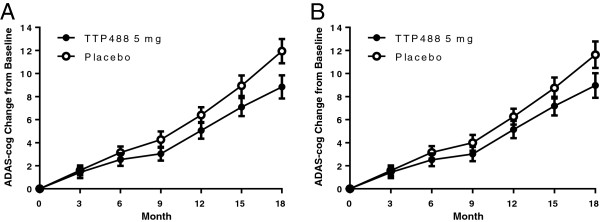
Estimated mean change from baseline over time on Alzheimer’s Disease Assessment Scale-Cognitive subscale (ADAS-cog 11).Increasing values represent worsening. Error bars represent one standard error.(A)ADAS-cog Observed cases all data. Treatment-placebo difference at 18 months = 3.1, p BMC Neurol.2014 Jan 15;14:12. |
|---|
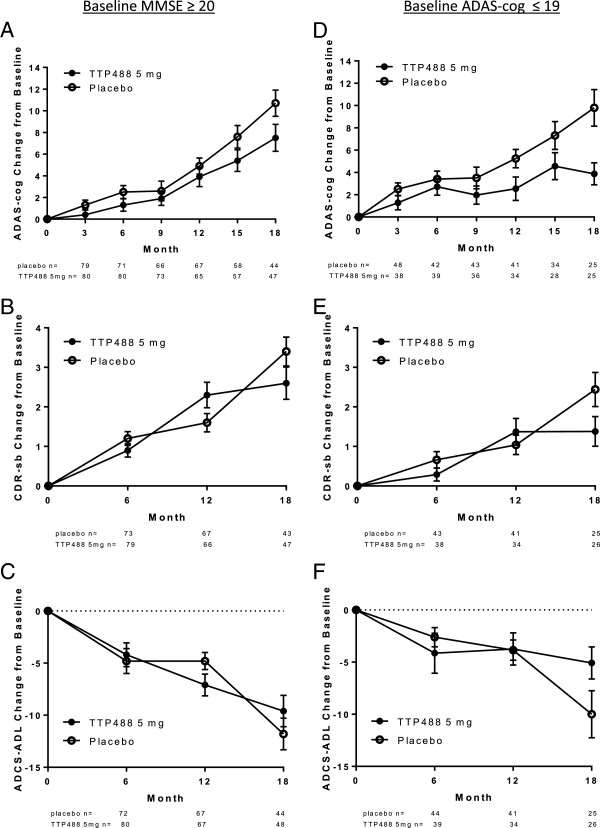
Estimated mean change from baseline over time on ADAS-cog 11, CDR-sb and ADCS-ADL for patients with mild Alzheimer’s disease defined as either MMSE ≥20 (Panels A, B and C) or ADAS-cog ≤19 (Panels D, E, F) at baseline.BMC Neurol.2014 Jan 15;14:12. |
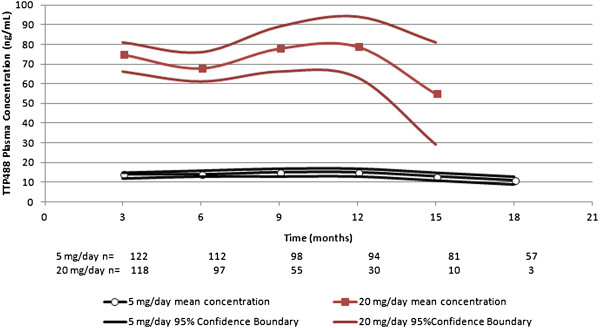
TTP488 plasma concentration over time.On-treatment data where on-treatment is defined as plasma concentrations measured within 45 days of last administered dose. Data presented as mean values with 95% confidence boundary. For the 20mg/day group data presented through Month 15 after which there were too few observations.BMC Neurol.2014 Jan 15;14:12. |
Products are for research use only; We do not sell to patients
Copyright 2020 InvivoChem LLC | All Rights Reserved


 COA
COA