| Size | Price | Stock | Qty |
|---|---|---|---|
| 5mg |
|
||
| 10mg |
|
||
| 25mg |
|
||
| 50mg |
|
||
| 100mg |
|
||
| 250mg |
|
||
| 500mg | |||
| Other Sizes |
Purity: ≥98%
| Targets |
SphK2 ( IC50 = 60 μM )
Sphingosine kinase 2 (SK2) (Ki = 4.4 nM, human; IC50 = 7.6 nM for enzyme activity inhibition) [1][2] - Sphingosine kinase 1 (SK1) (Ki = 360 nM, human; >80-fold lower affinity than SK2) [1][2] - No significant affinity for other kinases (e.g., PI3K, ERK, Akt) (Ki > 10000 nM) [1] |
|---|---|
| ln Vitro |
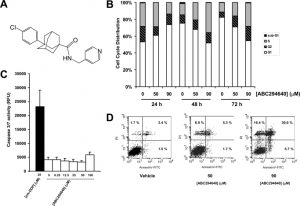
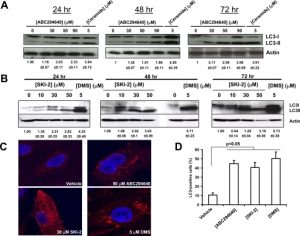
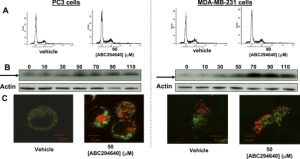
In vitro activity: ABC294640 significantly modifies the ceramide/S1P ratio, which is consistent with the suppression of SK activity in MDA-MB-231 cells. ABC294640 has been shown to suppress tumor cell proliferation, with IC50 values ranging from roughly 6 to 48 μM. It also simultaneously reduces tumor cell migration and causes microfilament loss. ABC294640 causes A-498, PC-3, and MDA-MB-231 cells to undergo nonapoptotic cell death, lysosome morphological changes, autophagosome formation, and an increase in acidic vesicles. ABC294640 reduces E2-stimulated ERE-luciferase activity in MCF-7 and ER-transfected HEK293 cells.
Opaganib (ABC294640) is a potent, selective inhibitor of sphingosine kinase 2 (SK2), with weak activity against SK1 [1][2] - In recombinant human SK2 enzyme assays, Opaganib (0.01-100 nM) dose-dependently inhibited SK2 activity with an IC50 of 7.6 nM, reducing S1P production by 85% at 100 nM [1][2] - In human prostate cancer (PC-3) and breast cancer (MDA-MB-231) cells, Opaganib (5-40 μM) inhibited cell proliferation with IC50 values of 12.3 μM and 15.7 μM, respectively, and induced apoptosis via caspase-3/7 activation (apoptosis rate up to 45% at 40 μM) [1] - In human ovarian cancer (SKOV3) cells, Opaganib (10-30 μM) downregulated SK2-mediated Akt and NF-κB phosphorylation, suppressing cell migration by 50-65% [2] - In murine macrophages (RAW 264.7), Opaganib (5-20 μM) reduced LPS-induced nitric oxide (NO) and TNF-α production by 40-60%, inhibiting inflammatory signaling [2] - It had no significant cytotoxicity in normal human fibroblasts at concentrations up to 50 μM [1] |
| ln Vivo |
ABC294640 (100 mg/kg, p.o.) significantly reduces tumor growth in mice with mammary adenocarcinoma xenografts; this effect is linked to S1P depletion. ABC294640 increases autophagy markers and delays tumor growth in mice with severe combined immunodeficiency carrying A-498 xenografts. ABC294640 enhances liver function and survival by preventing inflammation brought on by liver transplantation and the interaction between innate and adaptive immunity, two key processes that cause and exacerbate graft injury.
The antitumor activity of Opaganib (ABC294640)·HCl was tested in a syngeneic tumor model that uses the mouse JC mammary adenocarcimona cell line growing subcutaneously in immunocompetent BALB/c mice (Lee et al., 2003). Because of the excellent oral absorption described above, we determined the ability of orally delivered ABC294640·HCl to reduce tumor growth in vivo. The SK inhibitor was administered to fasted mice on odd days at doses ranging from 3.5 to 100 mg/kg. Body weights and tumor volumes were monitored daily. As demonstrated in Fig. 7, ABC294640·HCl caused dose-dependent reductions in the growth of the mammary adenocarcinoma xenografts. Body weights in each treatment group remained unchanged from vehicle-treated mice during the course of the study (data not shown). Comparison with the potencies in the tumor studies with the toxicity data described above reveals that ABC294640·HCl has a therapeutic index of greater than 7 (250 mg/kg nontoxic dose / 35 mg/kg antitumor activity). Thus, this SK2 inhibitor has an excellent therapeutic index.[1]
To ensure that the antitumor effect of Opaganib (ABC294640)·HCl administration is mediated by the compound, its accumulation in tumors was quantified by LC/MS. In these experiments, mice bearing JC tumor xenografts were treated with 100 mg/kg ABC294640·HCl by intraperitoneal injection, and the concentrations of the compound in the plasma and the tumor were measured at 2 and 5 h. As indicated in Fig. 8A, approximately 75 μg/ml (197 μM) ABC294640 was present in the plasma at 2 h, and this decreased to 56 μg/ml (147 μM) at 5 h. The amounts of ABC294640 in the tumor at 2 and 5 h were determined to be 36 and 54 μg/g wet weight, respectively, corresponding to approximately 94 and 140 μM (assuming that 1 g approximately equals 1 ml). Therefore, amounts of ABC294640 well above those needed to block cell proliferation are accumulated in the tumors of intact mice.[1] Daily administration of 50 mg/kg Opaganib (ABC294640) led to a statistically significant delay in tumor growth over the 4 weeks of treatment. After 28 days, tumor tissues were excised, fixed, and sectioned, and slides were immunostained to assess the levels of beclin 1 and LC3 and stained by TUNEL to establish the number of apoptotic cells (Fig. 6B). As shown in Fig. 6C, the intensity of staining of both beclin 1 and LC3 was increased in the tumors from mice that were exposed to ABC294640 compared with the vehicle-treated mice. [2] In nude mice bearing PC-3 prostate cancer xenografts, oral Opaganib (50-200 mg/kg/day for 28 days) dose-dependently reduced tumor volume by 40-70% and increased intratumoral apoptosis (TUNEL-positive cells) by 2.5-3.6 fold [1] - In BALB/c mice with LPS-induced acute inflammation, Opaganib (25-100 mg/kg, p.o.) reduced serum TNF-α and NO levels by 35-55% and alleviated lung and liver inflammation [2] - In PC-3 xenograft mice, Opaganib (200 mg/kg/day) downregulated tumor tissue SK2 activity by 70% and S1P levels by 65%, suppressing Akt phosphorylation [1] |
| Enzyme Assay |
An HPLC-based SK activity assay that was recently developed is used to determine the IC50 values for ABC294640 and DMS. The test compounds are, in short, incubated with recombinant SK1 or SK2 and NBD-Sph in the isozyme-selective assay buffers described below, containing 400 μM MgCl2, 100 μM ATP, and 1 mg/ml fatty acid-free bovine serum albumin. The following is how HPLC separates the product, or NBD-S1P, from NBD-Sph: Utilizing a Waters 2495 fluorescence detector, a C8 Chromolith RP-8e column (100 × 4.6 mm) and a 1 ml/min mobile phase (pH 2.5 sodium phosphate buffer with acetonitrile/20 mM) at 45:55 make up the Waters 2795 HPLC system. Fluorescence is observed with excitation at 465 nm and emission at 531 nm. The NBD-S1P/(NBD-Sph + NBD-S1P) ratio is used to calculate the level of SK activity. 20 mM Tris, pH7.4, 5 mM EDTA, 5 mM EGTA, 3 mM β-mercaptoethanol, 5% glycerol, 1× protease inhibitors, and 1× phosphatase inhibitors were all present in each SK-isozyme selective assay buffer. 0.25% (final) Triton X-100 is added to the SK1 assay buffer, and 1 M (final) KCl is added to the SK2 buffer. The kinase reaction is stopped by adding 1.5 volumes of methanol after the assays have been running for two hours at room temperature. The samples are centrifuged at 20,000 g for 10 minutes to remove the precipitated protein, and the supernatants are then subjected to HPLC analysis. The ADP Quest assay system is used to measure kinase activity in the presence of different concentrations of sphingosine and ABC294640 in experiments to determine the Ki for inhibition of SK2 by ABC294640. In order to ascertain the impact of ABC294640 on cellular SK activity, near-confluent MDA-MB-231 cells undergo an overnight serum starvation protocol followed by exposure to different concentrations of ABC294640. Next, [3H]sphingosine is added to the cells at a final concentration of 1 μM. The cells take up the exogenous sphingosine, which is converted to S1P via SK activity, and [3H]S1P is separated from [3H]sphingosine by extraction and quantified by scintillation counting.
SK2/SK1 enzyme activity assay: Recombinant human SK2/SK1 was incubated with sphingosine (10 μM), ATP (1 mM), and Opaganib (0.01-1000 nM) at 37°C for 30 minutes. Generated S1P was quantified by HPLC-MS/MS to determine IC50 and Ki values [1][2] - Kinase selectivity assay: Opaganib (1 μM) was incubated with a panel of 60+ kinases (including PI3K, ERK, Akt) at 37°C for 60 minutes. Kinase activity was measured by radioactive ATP incorporation assay to assess selectivity [1] - S1P production inhibition assay: PC-3 cells were preincubated with Opaganib (1-40 μM) for 1 hour, then stimulated with sphingosine (5 μM) for 2 hours. Intracellular S1P was extracted and quantified by ELISA [1][2] |
| Cell Assay |
Cell Cycle, Apoptosis, and Mitochondrial Membrane Integrity Analyses.[2]
For cell cycle analyses, cells were exposed to various concentrations of Opaganib (ABC294640) for 24, 48, or 72 h, washed twice with PBS, and incubated in 0.5 ml of PI staining solution (50 μg/ml propidium iodide, 40 μg/ml RNase A in PBS) for 30 min at 37°C. Cell cycle distributions were analyzed in the Medical University of South Carolina Flow Cytometry Facility with a Becton Dickinson FACSCalibur Analytical Flow Cytometer. The activities of caspases 3 and 7 were measured by the caspase-Glo 3/7 Assay according to the manufacturer's instructions. In brief, A-498 cells were grown in white 96-well plates at a density of 10,000 cells per well. After incubation with Opaganib (ABC294640), 100 μl of the caspase reagent was added and plates were incubated at room temperature for 30 min. After incubation, luminescence levels were determined by using a SpectraMax M5 plate reader. Cells exposed to cisplatin were used as positive controls for apoptosis. For Annexin-V staining, after exposure to Opaganib (ABC294640), cells were trypsinized, resuspended in 10% fetal bovine serum-containing media, washed twice in PBS, and resuspended in Annexin binding buffer (10 mM HEPES, 140 mM NaCl, and 2.5 mM CaCl2, pH 7.4). To 100 μl of the cell suspension, 5 μl of Annexin-V solution was added and the mixture was kept at room temperature for 15 min. After incubation, 400 μl of Annexin buffer was added and cells were immediately analyzed by flow cytometry. For the analysis of mitochondrial membrane function, cells exposed to Opaganib (ABC294640) or cisplatin (positive control) were stained with 100 nM tetramethyrhodamine for 30 min in growth medium, and after washing with PBS, cells were immediately analyzed by flow cytometry. Both adherent and floating cells were collected for the apoptosis and flow cytometry analyses. In order to ascertain the impact of the test compounds on proliferation, 96-well microtiter plates are seeded with cells (1025LU, Hep-G2, A-498, MCF-7, Caco-2, MDA-MB-231, HT-29, Panc-1, DU145, T24, and SK-OV-3 cell lines) and left to adhere for a full day. Separate wells are filled with varying concentrations of ABC294640, and the cells are incubated for a further 72 hours. Using the sulforhodamine-binding assay, the number of viable cells is ascertained at the conclusion of this time. As a percentage of sulforhodamine-binding compared to control cultures, the percentage of cells killed is computed. GraphPad Prism is used to perform regression analyses of inhibition curves. Tumor cell proliferation assay: PC-3/MDA-MB-231/SKOV3 cells were seeded in 96-well plates, treated with Opaganib (1-50 μM) for 72 hours. Cell viability was measured by MTT assay, and IC50 values were calculated [1][2] - Apoptosis assay: PC-3 cells were treated with Opaganib (5-40 μM) for 48 hours, stained with annexin V-FITC and propidium iodide, and apoptosis rate was analyzed by flow cytometry. Caspase-3/7 activity was measured by luminescent assay [1] - Macrophage inflammatory response assay: RAW 264.7 cells were seeded in 24-well plates, pretreated with Opaganib (5-20 μM) for 1 hour, then stimulated with LPS (1 μg/mL) for 24 hours. NO production was measured by Griess reagent, and TNF-α levels were quantified by ELISA [2] - Tumor cell migration assay: SKOV3 cells were pretreated with Opaganib (10-30 μM) for 30 minutes, added to Transwell upper chambers, and fetal bovine serum (10%) was added to lower chambers. Migrated cells were counted after 24 hours [2] |
| Animal Protocol |
Dissolved in 0.375% Polysorbate-80 in PBS; 100 mg/kg; oral givage Female BALB/c mice bearing JC tumors Quantification of Opaganib (ABC294640) in Plasma and Tumors. [1]
Plasma samples were prepared by centrifugation (5000g, 5 min at 4°C) of whole blood that was collected into syringes containing EDTA as an anticoagulant. Samples were spiked with 10 μg of an internal standard {3-(4-chlorophenyl)adamantane-1-carboxylic acid [2-(3,4-dihydroxyphenyl)ethyl]amide}, brought to 1 ml with water and extracted three times with 2 ml of ethyl acetate. Extracts were dried over nitrogen at 35°C, reconstituted in 0.2 ml of 0.1% formic acid in water/methanol (50:50, phase A), filtered, and transferred to vials. Analyses were performed by use of an Agilent 1100 binary pump HPLC system coupled to a Finnigan LCQ Classic ion trap quadrupole mass spectrometer running in electrospray ionization positive ion mode. Sample (10 μl) was injected and resolved by use of a Supelco Discovery C18 column (2.1 × 20 mm, 5-mm particle size) connected to a Zorbax precolumn with a mobile phase consisting of 0.1% formic acid in water/methanol (50:50). The flow rate was 0.3 ml/min, and samples were eluted by a linear gradient increasing from 50 to 100% methanol over 3 min. Opaganib (ABC294640) and the internal standard were detected at 5.1 min and 5.5 min, respectively, by use of a selected ion monitoring mode (m/z = 381 and 426, respectively). Peak areas were integrated by use of Xcalibur software, and Opaganib (ABC294640) concentrations were determined from a standard curve, which was linear in range of all plasma levels observed in these studies. Oral Bioavailability and Pharmacokinetic Studies.[1] Formulations of Opaganib (ABC294640)·HCl were administered orally or intravenously to fasted female Swiss-Webster mice at a dose of 100 mg/kg in 0.1 ml of the indicated solvents. Blood samples were removed at 1 and 7 h after dosing, and the plasma concentration of Opaganib (ABC294640) was determined by reverse-phase LC/MS running in SIM mode as described above. For pharmacokinetic studies, female Swiss-Webster mice (6–8 weeks old) were fasted overnight and administered a bolus dose of 0.1 ml of Opaganib (ABC294640)·HCl either orally or intravenously. After dosing, mice were anesthetized with halothane, and blood was removed via intracardiac puncture at the indicated times. Plasma samples were processed, and Opaganib (ABC294640) levels were determined as described above. Noncompartmental pharmacokinetic analyses were performed with use of WinNolin software package. Toxicology Studies.[1] Acute (7-day) and chronic (28-day) toxicology studies were conducted with Opaganib (ABC294640)·HCl. In the first study, Sprague-Dawley male rats (7–8 weeks old) were orally dosed with 0, 100, or 250 mg of Opaganib (ABC294640)·HCl/kg in 0.375% Polysorbate-80 in PBS daily for 7 days. The animals were observed daily for viability, signs of gross toxicity, and behavioral changes, and a battery of detailed observations were performed on study days 1 and 7. Blood was sampled from all animals on day 8 of the study for hematology, clinical biochemistry, and serology assessments, and the animals were sacrificed. Gross necropsies were performed on all study rats, and selected organs and tissues were evaluated in the control and high-dose level groups. In the second study, C57BL/6 mice were orally dosed with 0, 100, or 250 mg of Opaganib (ABC294640)·HCl/kg daily exactly as indicated above, and sacrificed at either day 7 or day 28 for hematology studies. Antitumor Evaluation.[1] A syngeneic mouse tumor model that uses a transformed murine mammary adenocarcinoma cell line and BALB/c mice (Charles River, Wilmington, MA) was performed as described previously (Lee et al., 2003). Animal care and procedures were in accordance with guidelines and regulations of the Institutional Animal Care and Use Committee of the Penn State College of Medicine. Animals were housed under 12-h light/dark cycles, with food and water provided ad libitum. Tumor cells (1 × 10⁶) were implanted subcutaneously, and tumor volume was calculated by use of the equation: (L × W2)/2. On detection of tumors, mice were randomly assigned to treatment groups. Treatment was then administered every other day thereafter, consisting of oral doses of 3.5, 10, 35, or 100 mg of Opaganib (ABC294640)·HCl/kg body weight or vehicle (0.375% Polysorbate-80). Whole body weights and tumor volume measurements were performed each day of treatment. On day 15, mice were dosed and euthanized 1 h later; tumors were excised and immediately frozen. p values were determined by use of one-way analysis of variance using GraphPad InStat. Pharmacodynamic Studies and Tumor Accumulation of Opaganib (ABC294640).[1] Apoptosis was measured in sections from tumors treated with Opaganib (ABC294640)·HCl using a TUNEL detection kit according to the manufacturer's instructions (In situ cell death detection kit; Roche Diagnostics). In brief, tumor sections were incubated with permeabilization solution (0.1% Triton X-100, 0.1% sodium citrate, freshly prepared) for 8 min at room temperature and then washed twice with PBS. Sections were incubated with TUNEL reaction mixture in a humid atmosphere at 37°C for 60 min and mounted with crystal mounting medium. The amount of apoptosis was calculated for an average of 10 microscopic fields in each sample (magnification, 100×) and expressed as the percentage of cells that were TUNEL-positive. For the analyses of sphingolipids, frozen tumor slices were homogenized in ice-cold PBS to a final concentration of 10 mg/ml. A 0.5-ml aliquot of the homogenate was combined with 0.5 ml of methanol, 0.25 ml of chloroform, and 375 pmol each of internal standards C17-sphingosine and C17-S1P. Blank samples spiked with known amounts of sphingosine, S1P, and the internal standards were processed in parallel to provide a standard curve for quantification. After sonication, samples were incubated overnight at 48°C, followed by addition of 75 μl of 1 N potassium hydroxide in methanol. The samples were then sonicated and incubated at 37°C for 2 h. A portion (0.4 ml) of each sample was then transferred to a new tube, dried, reconstituted in 0.25 ml of phase A, filtered, and transferred to a vial. HPLC was performed as described above. Elution was performed at 0.45 ml/min with 65% phase B for 2 min followed by a linear gradient to 100% phase B over 5 min. Ions for C17-sphingosine, sphingosine, C17-S1P, and S1P were monitored at m/z 286 (parent ion) → 268 (daughter ion), 300 → 282, 366 → 250, and 380 → 264, respectively. Likewise, extracts of tumors from Opaganib (ABC294640)-treated mice were prepared and levels of Opaganib (ABC294640) were quantified by LC/MS as described above. SCID mice (6–8 weeks old) were injected with 3 × 10⁶ A-498 cells per mouse, and after 3 to 4 weeks, mice bearing tumors of 100 to 150 mg were treated with either vehicle or 50 mg/kg Opaganib (ABC294640) 5 days/week for 4 weeks (eight mice per cohort). Tumors were measured twice per week, and volumes were calculated by using the following formula: volume = 1/2 × length × width2. At the end of the treatment, four animals from each cohort were sacrificed, and the paraffin-embedded tumor sections were stained with hematoxylin/eosin. Additional sections were deparaffinized and rehydrated in graded alcohols using standard procedures, and then subjected to TUNEL according to the manufacturer's instructions. The percentage of TUNEL-positive cells was determined by counting at least 100 cells each from at least three randomly selected fields. Additional sections were blocked with 10% normal goat serum in a humid chamber for 30 min, and then incubated antibodies for beclin 1 or LC3 overnight at 4°C, followed by secondary antibody for 60 min at room temperature.[2] PC-3 prostate cancer xenograft model: Male nude mice (18-22 g) were subcutaneously inoculated with PC-3 cells (5×10⁶ cells/mouse). When tumors reached 100 mm³, Opaganib suspended in 0.5% CMC-Na was administered orally at 50, 100, 200 mg/kg/day for 28 days. Tumor volume, weight, and apoptosis were evaluated [1] - LPS-induced acute inflammation mouse model: BALB/c mice (20-25 g) were intraperitoneally injected with LPS (5 mg/kg). Opaganib (25, 50, 100 mg/kg) suspended in 0.5% CMC-Na was administered orally 1 hour before LPS injection. Serum cytokines and organ histopathology were analyzed [2] |
| ADME/Pharmacokinetics |
Absorption of ABC294640. [1]
Multigram-scale ABC294640 hydrochloride (ABC294640·HCl) has been synthesized to characterize its toxicity, pharmacokinetics, and in vivo efficacy. Formulation analysis was performed to identify suitable drug compositions for in vivo studies. We selected five different oral formulations from the Drug Information Resource (DIRR) Guide to Inactive Ingredients (which compiles all currently marketed drug products approved for human use) to evaluate their ability to support the oral absorption of ABC294640. No precipitation was observed in aqueous solution, 90% propylene glycol solution, 100% polyethylene glycol 400 (PEG400) solution, 50% PEG400 solution, or 0.375% polysorbate-80 solution of ABC294640·HCl (measured by turbidity at 590 nm), and therefore fasted female Swiss-Webster mice were given a dose of 100 mg/kg. Blood samples were collected 1 hour and 7 hours after administration, and the concentration of ABC294640 in plasma was determined by internal standard method and reversed-phase high performance liquid chromatography-ion trap quadrupole mass spectrometry (positive ion selected ion monitoring mode). As shown in Table 3, a large amount of ABC294640 was detected in the blood 1 hour after oral administration, with the highest concentration in 90% propylene glycol solution. It is noteworthy that these ABC294640 concentrations were sufficient to inhibit SK activity and tumor cell proliferation. After 7 hours, the plasma concentration decreased by about 50% in most cases. Effective absorption was observed in the sample prepared with 0.375% polysorbate-80, and this solvent was used for subsequent pharmacokinetic and efficacy analysis of ABC294640·HCl due to its low toxicity. [1] To further understand the absorption characteristics of ABC294640·HCl, we investigated the relationship between plasma concentration and dose. Mice were orally administered ABC294640 at doses of 10, 35, or 100 mg/kg, and plasma concentrations were measured at 30 minutes. As shown in Figure 5, plasma ABC294640 values showed a good linear relationship with doses up to 100 mg/kg. Pharmacokinetics of ABC294640. [1] Detailed pharmacokinetic studies were conducted on ABC294640·HCl dissolved in 0.375% polysorbate-80. Female Swiss-Webster mice were intravenously or orally administered ABC294640. Mice were divided into groups of 3, anesthetized, and blood was collected by cardiac puncture at different time points from 1 minute to 7 hours. The concentration of ABC294640 in plasma was determined by liquid chromatography-mass spectrometry (LC/MS), and pharmacokinetic parameters were calculated using WinNolin software (Table 4). Following intravenous injection of ABC294640, high plasma drug concentrations were observed, with a half-life of 1.4 hours. Although peak plasma levels of ABC294640 were lower after oral gavage administration, the compound exhibited significantly greater persistence, likely reflecting sustained gastrointestinal absorption; therefore, a calculated elimination half-life of 4.5 hours was obtained. Notably, a comparison of the pharmacokinetics of ABC294640 administered orally versus intravenously demonstrated excellent oral bioavailability, reaching 66% (F = AUCoral/AUCiv). Oral bioavailability: Approximately 65% after oral administration of 100 mg/kg to mice [1] - Elimination half-life: 8.7 hours in mice [1] - Plasma protein binding: 92-95% in human plasma (concentration range: 0.1-10 μg/mL) [1] - Distribution: Volume of distribution (Vd) in mice = 2.1 L/kg, mainly distributed in tumor tissue and liver [1] |
| Toxicity/Toxicokinetics |
Toxicity of ABC294640. [1] Preliminary toxicity studies were conducted to determine the appropriate dose for in vivo efficacy studies. No immediate or delayed toxicity was observed in female Swiss-Webster mice after intraperitoneal injection of ABC294640·HCl at a dose of at least 250 mg/kg. Repeated injections every other day for 15 days in the same group of mice showed no toxicity at a dose of at least 250 mg/kg. A dose-escalation toxicity study was conducted by gavage in which ABC294640·HCl was dissolved in 0.375% polysorbate-80 solution, and no toxic effects were observed at doses up to 1000 mg/kg. Therefore, this compound is considered suitable for more detailed in vivo studies.
The acute toxicology study, conducted without proper laboratory procedures, was commissioned to Eurofins|Product Safety Laboratory. In this study, ABC294640·HCl was dissolved in 0.375% polysorbate-80 and administered orally to rats at doses of 0, 100, or 250 mg/kg/day for 7 consecutive days. No clinical symptoms or gross abnormalities were observed, and these symptoms or abnormalities were not caused by ABC294640·HCl administration or any other cause. Although the weight gain in the high-dose group rats was slightly decreased (consistent with a slight decrease in food intake), the total weight of all test animals did not change significantly. Hematological studies (Table 5) showed that animals given daily doses of 100 or 250 mg/kg experienced a decrease of approximately 20% in red blood cell count and hematocrit; the treatment group rats showed a slight increase in neutrophils and a slight decrease in basophils. These changes were classified as Grade 0 toxicity according to the National Cancer Institute (NCI) Clinical Trial Toxicity Assessment Criteria. Notably, no decrease in lymphocyte, platelet, or granulocyte counts was observed, indicating that the compound does not induce the immunotoxicity common to other anticancer drugs. Similarly, the drug did not cause any changes in a range of clinical chemistry or coagulation parameters. At the end of the 7-day observation period, necropsy was performed on all euthanized animals, and no gross abnormalities were found. Likewise, in the high-dose group, no treatment-related microscopic changes were found in any examined organs, except for a slight decrease in extramedullary hematopoietic background levels in the spleen (which may have contributed to the slight decrease in hematocrit). To further characterize the hematological changes observed in the acute study, mice were treated daily with 0, 100, or 250 mg/kg of ABC294640·HCl for 28 days. As shown in Figure 6A, mice treated with 250 mg/kg showed a 20% decrease in red blood cell count and hematocrit on day 7, with a slight increase in circulating neutrophils, which is generally consistent with previous findings in rats. However, after 28 days of treatment (Figure 6B), these parameters returned to normal levels, indicating that the animals had fully recovered from any transient hematopoietic dysfunction. In addition, there was no change in brain and spleen weight in the treated mice, while the liver weight of mice treated with 250 mg/kg decreased slightly (12%). Acute toxicity: oral LD50 in mice > 500 mg/kg; in rats > 400 mg/kg [1] - Subchronic toxicity (oral administration in mice over 28 days): no significant hepatotoxicity or nephrotoxicity was observed at doses up to 200 mg/kg/day; no change in body weight or hematological parameters [1] - No significant abnormalities were observed in serum creatinine, blood urea nitrogen, and alanine aminotransferase/aspartate aminotransferase levels at the therapeutic dose [1][2] - No significant drug interactions were found with chemotherapy drugs (e.g., docetaxel) in preclinical studies [1] |
| References | |
| Additional Infomation |
3-(4-chlorophenyl)-N-(pyridin-4-ylmethyl)-1-adamantane carboxamide is an organochlorine compound. Opaganib, also known as ABC294640, is a selective sphingosine kinase-2 (SK2) inhibitor that can be administered orally. This drug has potential anticancer, anti-inflammatory, and antiviral activities and shows potential value in the treatment of oncology, inflammation, gastrointestinal diseases, and COVID-19. Opaganib is an orally effective aromatic adamantane compound and a selective sphingosine kinase-2 (SK2) inhibitor with potential antitumor activity. After administration, opaganib competitively binds to and inhibits the activity of SK2, thereby preventing the phosphorylation of the pro-apoptotic amino alcohol sphingosine to sphingosine-1-phosphate (S1P). S1P is a lipid mediator that promotes survival and is crucial for immune regulation. This may ultimately lead to apoptosis and potentially inhibit the proliferation of SK2-overexpressing cancer cells. SK2 and its isoenzyme SK1 are overexpressed in various cancer cell types.
Mechanism of Action Opaganib selectively inhibits sphingosine kinase-2 (SK2). This inhibitor blocks the synthesis and activity of sphingosine-1-phosphate (S1P), including regulation of fundamental biological processes such as cell proliferation, migration, immune cell transport, angiogenesis, immunomodulation, and suppression of the innate immune response of T cells. This drug possesses dual anti-inflammatory and antiviral activities, targets host cellular components, and is unaffected by viral mutations, thus helping to minimize the possibility of drug resistance. Currently, this drug is being investigated for the treatment of COVID-19 because studies have shown its activity against SARS-CoV-2. Sphingolipid metabolic enzymes control the dynamic balance of important intracellular bioactive lipid levels, including the pro-apoptotic compound ceramide and the pro-proliferative compound sphingosine-1-phosphate (S1P). Many growth factors and inflammatory cytokines promote the cleavage of sphingosine and ceramide through the action of sphingosine kinases (SK1 and SK2), leading to a rapid increase in S1P levels. SK1 and SK2 are overexpressed in various human cancers, making them potential molecular targets for cancer therapy. We discovered an aromatic adamantane compound, named ABC294640 [3-(4-chlorophenyl)-adamantane-1-carboxylic acid (pyridin-4-ylmethyl)amide], which selectively inhibits SK2 activity in vitro as a competitive inhibitor of sphingosine, with a Ki value of 9.8 μM, and attenuates S1P generation in intact cells. In tissue culture, ABC294640 inhibits the proliferation of various tumor cell lines and suppresses tumor cell migration, accompanied by microfilament loss. In vivo experiments showed that ABC294640 has excellent oral bioavailability, with a plasma clearance half-life of 4.5 hours in mice. Acute and chronic toxicology studies showed that ABC294640 caused a transient, slight decrease in hematocrit in rats and mice; however, hematocrit returned to normal after 28 days of treatment. Treatment with ABC294640 did not cause any other hematological parameters or macroscopic or microscopic histopathological changes. Oral administration of ABC294640 to mice with xenografts of breast adenocarcinoma produced dose-dependent antitumor activity, accompanied by a decrease in intratumoral S1P levels and progressive apoptosis of tumor cells. Therefore, this newly developed SK2 inhibitor provides an orally effective candidate for the treatment of cancer and other diseases. [1] Sphingolipids ceramide, sphingosine, and sphingosine-1-phosphate (S1P) regulate cell signaling, proliferation, apoptosis, and autophagy. Sphingosine kinases-1 and-2 (SK1 and SK2) phosphorylate sphingosine to generate S1P, shifting the activity balance of these lipids toward cell proliferation. We have previously reported that pharmacological inhibition of SK activity can delay tumor growth in vivo. This study demonstrates that the SK2 selective inhibitor 3-(4-chlorophenyl)-adamantane-1-carboxylic acid (pyridin-4-ylmethyl)amide (ABC294640) induces non-apoptotic cell death in A-498 renal cell carcinomas. This death process precedes the cleavage of microtubule-associated protein light chain 3, morphological changes in lysosomes, the formation of autophagosomes, and the increase of acidic vesicles. ABC294640 also induced similar autophagy responses in PC-3 prostate cancer cells and MDA-MB-231 breast cancer cells. When A-498 cells were simultaneously exposed to ABC294640 and the autophagy inhibitor 3-methyladenine, the toxic mechanism shifted to apoptosis, but the potency of the SK2 inhibitor decreased, indicating that autophagy is the primary mechanism by which this compound kills tumor cells. The unfolded protein response induced by the proteasome inhibitor N-(benzyloxycarbonyl)leucylleucylleucylaldehyde Z-Leu-Leu-Leu-al (MG-132) or the heat shock protein 90 inhibitor geldmycin synergistically enhances the in vitro cytotoxicity of ABC294640. In severely immunocompromised mice carrying A-498 xenografts, daily administration of ABC294640 delayed tumor growth and increased autophagy marker levels, but did not increase the number of dUTP nick-terminal marker-positive cells mediated by terminal deoxynucleotidyltransferase in the tumor. These data suggest that ABC294640 promotes tumor cell autophagy, ultimately leading to non-apoptotic cell death and delaying tumor growth in vivo. Therefore, ABC294640 can effectively assist anticancer drugs that induce tumor cell apoptosis. [2] Opaganib (ABC294640) is a potent, selective SK2 inhibitor used to study SK2-mediated sphingolipid signaling and potential antitumor/anti-inflammatory therapies. [1][2] - Its core mechanisms include specific inhibition of SK2-mediated sphingosine phosphorylation, reduction of intracellular and extracellular S1P levels, and blocking of S1P-dependent signaling pathways (Akt, NF-κB) involved in cell proliferation, survival, and inflammation. [1][2] - Research applications include inhibiting tumor growth (prostate cancer, breast cancer, ovarian cancer) and alleviating acute inflammation by inhibiting macrophage activation. [1][2] - It can induce tumor cell apoptosis and inhibit the production of inflammatory mediators, suggesting its potential as a dual-effect drug for cancer and inflammatory diseases. [1][2] - The high selectivity of SK2 for SK1 and other kinases minimizes off-target effects, thus making it a specific tool for elucidating the specific biological functions of SK2. [1] |
| Molecular Formula |
C23H25CLN2O
|
|---|---|
| Molecular Weight |
380.91
|
| Exact Mass |
380.165
|
| CAS # |
915385-81-8
|
| Related CAS # |
1185157-59-8 (HCl); 915385-81-8
|
| PubChem CID |
15604015
|
| Appearance |
White solid powder
|
| Density |
1.3±0.1 g/cm3
|
| Boiling Point |
589.5±50.0 °C at 760 mmHg
|
| Flash Point |
310.3±30.1 °C
|
| Vapour Pressure |
0.0±1.7 mmHg at 25°C
|
| Index of Refraction |
1.632
|
| LogP |
4.16
|
| Hydrogen Bond Donor Count |
1
|
| Hydrogen Bond Acceptor Count |
2
|
| Rotatable Bond Count |
4
|
| Heavy Atom Count |
27
|
| Complexity |
551
|
| Defined Atom Stereocenter Count |
0
|
| SMILES |
C1C2CC3(CC(CC1C3)(C2)C1C=CC(=CC=1)Cl)C(NCC1C=CN=CC=1)=O
|
| InChi Key |
CAOTVXGYTWCKQE-UHFFFAOYSA-N
|
| InChi Code |
InChI=1S/C23H25ClN2O/c24-20-3-1-19(2-4-20)22-10-17-9-18(11-22)13-23(12-17,15-22)21(27)26-14-16-5-7-25-8-6-16/h1-8,17-18H,9-15H2,(H,26,27)
|
| Chemical Name |
3-(4-chlorophenyl)-N-(pyridin-4-ylmethyl)adamantane-1-carboxamide
|
| Synonyms |
ABC294640; ABC 294640; ABC-294640; 3-(4-chlorophenyl)-N-(pyridin-4-ylmethyl)adamantane-1-carboxamide; CHEMBL2158685; Trade name Yeliva
|
| HS Tariff Code |
2934.99.9001
|
| Storage |
Powder -20°C 3 years 4°C 2 years In solvent -80°C 6 months -20°C 1 month |
| Shipping Condition |
Room temperature (This product is stable at ambient temperature for a few days during ordinary shipping and time spent in Customs)
|
| Solubility (In Vitro) |
DMSO: ~76 mg/mL (~199.5 mM)
Water: 1 mg/mL (Insoluble) Ethanol: ~28 mg/mL (~73.5 mM) |
|---|---|
| Solubility (In Vivo) |
Solubility in Formulation 1: ≥ 2.5 mg/mL (6.56 mM) (saturation unknown) in 10% DMSO + 40% PEG300 + 5% Tween-80 + 45% Saline (add these co-solvents sequentially from left to right, and one by one), Clear solution.
For example, if 1 mL of working solution is to be prepared, you can add 100 μL of DMSO stock solution (25.0 mg/mL) to 400 μL of PEG300 and mix well; then add 50 μL of Tween-80 and mix well; finally add 450 μL of physiological saline and adjust the volume to 1 mL. Preparation of saline: Dissolve 0.9 g of sodium chloride in 100 mL ddH₂ O to obtain a clear solution. Solubility in Formulation 2: ≥ 2.5 mg/mL (6.56 mM) (saturation unknown) in 10% DMSO + 90% (20% SBE-β-CD in Saline) (add these co-solvents sequentially from left to right, and one by one), Clear solution. For example, if 1 mL of working solution is to be prepared, you can add 100 μL of DMSO stock solution (25.0 mg/mL) to 900 μL of 20% SBE-β-CD saline and mix well. Preparation of 20% SBE-β-CD in Saline (4°C,1 week): Dissolve 2 g SBE-β-CD in 10 mL saline to obtain a clear solution. Solubility in Formulation 3: ≥ 2.5 mg/mL (6.56 mM) (saturation unknown) in 10% DMSO + 90% Corn Oil (add these co-solvents sequentially from left to right, and one by one), Clear solution. For example, if 1 mL of working solution is to be prepared, you can add 100 μL of DMSO stock solution (25.0 mg/mL) to 900 μL of corn oil and mix well. (Please use freshly prepared in vivo formulations for optimal results.) |
| Preparing Stock Solutions | 1 mg | 5 mg | 10 mg | |
| 1 mM | 2.6253 mL | 13.1265 mL | 26.2529 mL | |
| 5 mM | 0.5251 mL | 2.6253 mL | 5.2506 mL | |
| 10 mM | 0.2625 mL | 1.3126 mL | 2.6253 mL |
*Note: Please select an appropriate solvent for the preparation of stock solution based on your experiment needs. For most products, DMSO can be used for preparing stock solutions (e.g. 5 mM, 10 mM, or 20 mM concentration); some products with high aqueous solubility may be dissolved in water directly. Solubility information is available at the above Solubility Data section. Once the stock solution is prepared, aliquot it to routine usage volumes and store at -20°C or -80°C. Avoid repeated freeze and thaw cycles.
Calculation results
Working concentration: mg/mL;
Method for preparing DMSO stock solution: mg drug pre-dissolved in μL DMSO (stock solution concentration mg/mL). Please contact us first if the concentration exceeds the DMSO solubility of the batch of drug.
Method for preparing in vivo formulation::Take μL DMSO stock solution, next add μL PEG300, mix and clarify, next addμL Tween 80, mix and clarify, next add μL ddH2O,mix and clarify.
(1) Please be sure that the solution is clear before the addition of next solvent. Dissolution methods like vortex, ultrasound or warming and heat may be used to aid dissolving.
(2) Be sure to add the solvent(s) in order.
| NCT Number | Recruitment | interventions | Conditions | Sponsor/Collaborators | Start Date | Phases |
| NCT04207255 | Active Recruiting |
Drug: Opaganib Drug: Abiraterone |
Prostate Cancer | Medical University of South Carolina |
March 27, 2020 | Phase 2 |
| NCT04414618 | Completed | Drug: Opaganib Drug: Placebo |
Coronavirus Infections | RedHill Biopharma Limited | July 2, 2020 | Phase 2 |
| NCT04435106 | Completed | Drug: Opaganib Drug: Standard of Care |
Coronavirus Infections | Shaare Zedek Medical Center | April 3, 2020 | N/A |
| NCT04467840 | Completed | Drug: Opaganib Drug: Placebo |
COVID-19 Lung Infection |
RedHill Biopharma Limited | August 21, 2020 | Phase 2 Phase 3 |
| NCT03377179 | Completed | Drug: ABC294640 Drug: Hydroxychloroquine Sulfate 200 MG |
Cholangiocarcinoma Cholangiocarcinoma, Perihilar |
RedHill Biopharma Limited | March 7, 2018 | Phase 2 |
|
|---|
|
|
Products are for research use only; We do not sell to patients
Copyright 2020 InvivoChem LLC | All Rights Reserved


 COA
COA