
| Size | Price | Stock | Qty |
|---|---|---|---|
| 1mg |
|
||
| 5mg | |||
| Other Sizes |


| Targets |
MicroRNA[1]
RGLS4326 targets microRNA-17 (miR-17), a small non-coding RNA that negatively regulates the expression of multiple genes involved in kidney development, cell proliferation, and cyst formation. It binds to miR-17 via complementary base pairing, thereby inhibiting miR-17 function and relieving its repression on target mRNAs. |
|---|---|
| ln Vitro |
The miR-17 seed sequence is completely complementary to RGLS4326, a single-stranded, chemically altered 9-nt short oligonucleotide. In ADPKD, RGLS4326 suppresses the miR-17 family's pathogenic activity [1]. According to miR-17 PD-Sig, RGLS4326 administration reduces miR-17 function in renal collecting duct cells in culture, with an EC50 value of 77.2 ± 20.2 nM [1]. Human autosomal dominant polycystic kidney disease (ADPKD) cysts are inhibited from growing by RGLS4326 [1].
In vitro, RGLS4326 treatment reduces miR-17 function in renal collecting duct cells in culture with an EC50 value of 77.2 +/- 20.2 nM. In HeLa cells, it inhibits miR-17 function with an EC50 of 28.3 nM. These effects are measured by a miR-17 PD assay reporter system. |
| ln Vivo |
RGLS4326 distributes to renal tubules and cysts more selectively. With a half-life of less than four hours in wild-type mice and a Tmax of less than one hour and a Cmax of 8.5 μg/mL, RGLS4326 (single 30 mg/kg subcutaneous injection) is quickly absorbed into plasma [1]. The direct miR-17 target genes Pkd1 and Pkd2 are likewise upregulated in expression when RGLS4326 is administered in vivo[1].
|
| Enzyme Assay |
For miR-17 binding and inhibition assays, cultured cells are treated with RGLS4326 (0.1-1000 nM) for 24-48 h. After lysis, miR-17 activity is quantified using a luciferase reporter construct containing miR-17 complementary binding sites in the 3‘-UTR, or by measuring the expression of miR-17 target genes via qPCR. EC50 values are calculated by curve fitting.
|
| Cell Assay |
Cell Proliferation Assay[1]
Cell Types: Primary cysts in 3D Matrigel Tested Concentrations: 5, 20, 100, and 300 nM Incubation Duration: 9 days Experimental Results: diminished in cyst epithelial cell proliferation. HeLa cells or primary renal collecting duct cells are seeded in 96-well plates and treated with RGLS4326 (0.1-1000 nM) for 48 h. Cells are lysed, and miR-17 activity is measured using a dual-luciferase reporter system or by qPCR quantification of miR-17-specific target gene de-repression. EC50 values are derived from dose-response curves. |
| Animal Protocol |
Animal/Disease Models: Pkd2-KO mice[1]
Doses: 20 mg/kg Route of Administration: SC injection Experimental Results: Compared to non-cystic control kidneys, polycystic kidneys of PBS-treated Pkd2-KO mice exhibit an age-dependent progressive decline in miR-17 PD-Sig, indicative of increasing miR-17 activity with disease progression. Administration of RGLS4326 reversed this decline in miR-17 PD-Sig, indicating a sustained functional inhibition of miR-17. In preclinical animal models (e.g., Pkd1 mutant ADPKD mice), RGLS4326 is administered via subcutaneous injection at 1-10 mg/kg once daily or every other day for 2-4 weeks. Efficacy is assessed by measuring kidney weight/body weight ratio, cyst volume, and fibrotic markers. RGLS4326 treatment reduces miR-17 function in kidney collecting duct cells in vivo as measured by PD assays. |
| ADME/Pharmacokinetics |
Pharmacokinetic properties of RGLS4326 include favorable bioavailability following subcutaneous administration, with plasma concentrations sufficient for target engagement in kidney tissue. It shows dose-dependent exposure and a prolonged half-life (t1/2) characteristic of oligonucleotide therapeutics (typically 2-5 days in rodents), allowing less frequent dosing.
|
| Toxicity/Toxicokinetics |
Preclinical toxicology studies of RGLS4326 in animal models have not demonstrated significant off-target toxicity. In ADPKD mouse models, treatment is well-tolerated without notable body weight loss or organ toxicity. Standard oligonucleotide safety endpoints include monitoring liver enzymes (ALT/AST), kidney function (BUN/creatinine), and injection site reactions.
|
| References | |
| Additional Infomation |
RGLS4326 is a first-in-class miR-17 inhibitor oligonucleotide for ADPKD research. It is chemically modified for enhanced stability and target affinity. The compound remains in preclinical research and has not yet received regulatory approval for human use. It is intended for research purposes only.
|
| Molecular Formula |
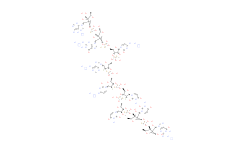
C95H115F3N32O51P8S8
|
|---|---|
| Molecular Weight |
3082.42
|
| CAS # |
2229964-07-0
|
| Related CAS # |
RGLS4326 sodium
|
| Sequence |
5’-AsGsCmAfCfUfUmUsGs-3‘
|
| Appearance |
White to off-white solid powder
|
| SMILES |
S=P(O)(OC[C@@]12[C@H](C)O[C@@]([H])([C@H](N3C=NC4C(NC(N)=NC3=4)=O)O1)[C@@H]2OP(=O)(OC[C@@H]1[C@H]([C@H]([C@H](N2C(N=C(C=C2)N)=O)O1)OC)OP(O)(OC[C@@H]1[C@H]([C@H]([C@H](N2C=NC3=C(N)N=CN=C23)O1)F)OP(O)(OC[C@@H]1[C@H]([C@H]([C@H](N2C(N=C(C=C2)N)=O)O1)F)OP(O)(OC[C@@H]1[C@H]([C@H]([C@H](N2C=CC(NC2=O)=O)O1)F)OP(O)(OC[C@@H]1[C@H]([C@H]([C@H](N2C=CC(NC2=O)=O)O1)OC)OP(O)(OC[C@@]12[C@H](C)O[C@@]([H])([C@H](N3C=CC(NC3=O)=O)O1)[C@@H]2OP(O)(OC[C@@]12[C@H](C)O[C@@]([H])([C@H](N3C=NC4C(NC(N)=NC3=4)=O)O1)[C@@H]2O)=S)=S)=S)=S)=S)=S)S)O[C@H]1[C@]2([H])[C@H](N3C=NC4=C(N)N=CN=C34)O[C@@]1(CO)[C@H](C)O2
|
| HS Tariff Code |
2934.99.9001
|
| Storage |
Powder -20°C 3 years 4°C 2 years In solvent -80°C 6 months -20°C 1 month Note: Please store this product in a sealed and protected environment (e.g. under nitrogen), avoid exposure to moisture. |
| Shipping Condition |
Room temperature (This product is stable at ambient temperature for a few days during ordinary shipping and time spent in Customs)
|
| Solubility (In Vitro) |
H2O : ≥ 100 mg/mL (32.44 mM)
|
|---|---|
| Solubility (In Vivo) |
Note: Listed below are some common formulations that may be used to formulate products with low water solubility (e.g. < 1 mg/mL), you may test these formulations using a minute amount of products to avoid loss of samples.
Injection Formulations
Injection Formulation 1: DMSO : Tween 80: Saline = 10 : 5 : 85 (i.e. 100 μL DMSO stock solution → 50 μL Tween 80 → 850 μL Saline)(e.g. IP/IV/IM/SC) *Preparation of saline: Dissolve 0.9 g of sodium chloride in 100 mL ddH ₂ O to obtain a clear solution. Injection Formulation 2: DMSO : PEG300 :Tween 80 : Saline = 10 : 40 : 5 : 45 (i.e. 100 μL DMSO → 400 μLPEG300 → 50 μL Tween 80 → 450 μL Saline) Injection Formulation 3: DMSO : Corn oil = 10 : 90 (i.e. 100 μL DMSO → 900 μL Corn oil) Example: Take the Injection Formulation 3 (DMSO : Corn oil = 10 : 90) as an example, if 1 mL of 2.5 mg/mL working solution is to be prepared, you can take 100 μL 25 mg/mL DMSO stock solution and add to 900 μL corn oil, mix well to obtain a clear or suspension solution (2.5 mg/mL, ready for use in animals). View More
Injection Formulation 4: DMSO : 20% SBE-β-CD in saline = 10 : 90 [i.e. 100 μL DMSO → 900 μL (20% SBE-β-CD in saline)] Oral Formulations
Oral Formulation 1: Suspend in 0.5% CMC Na (carboxymethylcellulose sodium) Oral Formulation 2: Suspend in 0.5% Carboxymethyl cellulose Example: Take the Oral Formulation 1 (Suspend in 0.5% CMC Na) as an example, if 100 mL of 2.5 mg/mL working solution is to be prepared, you can first prepare 0.5% CMC Na solution by measuring 0.5 g CMC Na and dissolve it in 100 mL ddH2O to obtain a clear solution; then add 250 mg of the product to 100 mL 0.5% CMC Na solution, to make the suspension solution (2.5 mg/mL, ready for use in animals). View More
Oral Formulation 3: Dissolved in PEG400 (Please use freshly prepared in vivo formulations for optimal results.) |
| Preparing Stock Solutions | 1 mg | 5 mg | 10 mg | |
| 1 mM | 0.3244 mL | 1.6221 mL | 3.2442 mL | |
| 5 mM | 0.0649 mL | 0.3244 mL | 0.6488 mL | |
| 10 mM | 0.0324 mL | 0.1622 mL | 0.3244 mL |
*Note: Please select an appropriate solvent for the preparation of stock solution based on your experiment needs. For most products, DMSO can be used for preparing stock solutions (e.g. 5 mM, 10 mM, or 20 mM concentration); some products with high aqueous solubility may be dissolved in water directly. Solubility information is available at the above Solubility Data section. Once the stock solution is prepared, aliquot it to routine usage volumes and store at -20°C or -80°C. Avoid repeated freeze and thaw cycles.
Calculation results
Working concentration: mg/mL;
Method for preparing DMSO stock solution: mg drug pre-dissolved in μL DMSO (stock solution concentration mg/mL). Please contact us first if the concentration exceeds the DMSO solubility of the batch of drug.
Method for preparing in vivo formulation::Take μL DMSO stock solution, next add μL PEG300, mix and clarify, next addμL Tween 80, mix and clarify, next add μL ddH2O,mix and clarify.
(1) Please be sure that the solution is clear before the addition of next solvent. Dissolution methods like vortex, ultrasound or warming and heat may be used to aid dissolving.
(2) Be sure to add the solvent(s) in order.
Products are for research use only; We do not sell to patients
Copyright 2020 InvivoChem LLC | All Rights Reserved


