| Size | Price | Stock | Qty |
|---|---|---|---|
| 5mg |
|
||
| 10mg |
|
||
| 25mg |
|
||
| 50mg |
|
||
| 100mg |
|
||
| 250mg |
|
||
| 500mg | |||
| Other Sizes |


Purity: ≥98%
| Targets |
p53-MDM2 interaction
YH239-EE is a specific antagonist of the p53-MDM2 protein-protein interaction, with a Ki value of 1.6 nM as determined by surface plasmon resonance (SPR) assay [1]; - In a homogeneous time-resolved fluorescence (HTRF) assay for p53-MDM2 binding inhibition, YH239-EE exhibited an IC50 of 9.6 nM [1]. |
|---|---|
| ln Vitro |
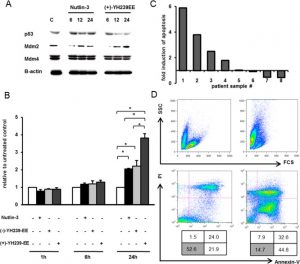
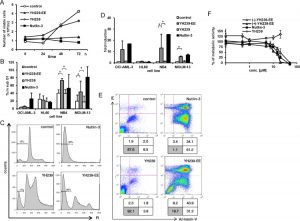
By preventing the interaction between p53 and MDM2, YH239-EE reduces the growth of OCI-AML-3 cells that have wild type p53. Four AML cells—OCI-AML-3 and MOLM-13 with wild-type p53, NB4 with a p53 mutation, and HL60 with a p53 deletion—are sensitive to the cell cycle arrest and potent cell apoptosis caused by YH239-EE by activating p53 and downstream targets.[1]
Anti-proliferative activity in AML cell lines: - OCI-AML3 (wild-type TP53): YH239-EE inhibited cell proliferation with an IC50 of 120 nM after 72-hour treatment (CellTiter-Glo viability assay) [1]; - MV4-11 (wild-type TP53): YH239-EE showed an IC50 of 210 nM for proliferation inhibition after 72-hour treatment (CellTiter-Glo viability assay) [1]; - K562 (TP53-null): YH239-EE had no significant anti-proliferative effect even at concentrations up to 10 μM, indicating TP53-dependent activity [1]; - p53 pathway activation: - OCI-AML3 cells treated with YH239-EE (200 nM, 24 hours) showed a ~5-fold increase in p53 protein level and a ~4-fold increase in p21 (a p53 target gene) protein level as detected by Western blot [1]; - Quantitative real-time PCR (qPCR) analysis revealed that YH239-EE (200 nM, 24 hours) upregulated p21 mRNA expression by ~6-fold and PUMA mRNA by ~5.5-fold in OCI-AML3 cells [1]; - Apoptosis induction: - OCI-AML3 cells treated with YH239-EE (500 nM, 48 hours) showed an apoptotic rate of ~35% as measured by Annexin V-FITC/PI double staining and flow cytometry, compared to ~5% in the vehicle control [1]; |
| ln Vivo |
Subcutaneous xenograft model of OCI-AML3:
- Male nude mice (6-8 weeks old) were subcutaneously inoculated with 5×10⁶ OCI-AML3 cells. When tumors reached ~150 mm³, mice were randomized into groups. YH239-EE was administered intraperitoneally at 25 mg/kg once daily for 14 consecutive days [1];
- Tumor volume in the YH239-EE-treated group was reduced by ~60% compared to the vehicle group at the end of treatment. Tumor weight was also decreased by ~55% in the drug-treated group [1]; - IHC staining of tumor tissues showed a ~3.5-fold increase in p53-positive cells and a ~3-fold increase in p21-positive cells in the YH239-EE group compared to the vehicle group [1]; |
| Enzyme Assay |
SPR assay for p53-MDM2 binding affinity:
1. MDM2 protein (residues 1-125) was covalently immobilized on a CM5 sensor chip via amine coupling. The running buffer was HEPES-buffered saline (pH 7.4) containing 0.05% surfactant [1];
2. Serial dilutions of YH239-EE (0.1-100 nM) were injected over the chip surface at a flow rate of 30 μL/min. The association phase lasted for 120 seconds, and the dissociation phase lasted for 600 seconds [1]; 3. Sensorgrams were fitted with a 1:1 binding model using analysis software to calculate the Ki value (1.6 nM) [1]; - HTRF assay for p53-MDM2 interaction inhibition: 1. Reaction mixtures contained biotinylated p53 peptide (residues 17-29), His-tagged MDM2 protein (residues 1-125), Eu-labeled anti-His antibody, streptavidin-XL665, and serial concentrations of YH239-EE (1-1000 nM) in assay buffer [1]; 2. Mixtures were incubated at room temperature for 2 hours in 384-well plates. Fluorescence was measured at 620 nm and 665 nm using an HTRF-compatible microplate reader [1]; 3. The ratio of 665 nm/620 nm fluorescence was calculated, and the IC50 value (9.6 nM) was determined by fitting the dose-response curve [1]; |
| Cell Assay |
Cell lines are exposed to p53-MDM2 antagonists before being harvested during log-phase growth and seeded. Trypan blue 0.4% staining and Countess slide counting are used to count cells and determine their viability.
Cell proliferation assay (CellTiter-Glo): 1. AML cells (OCI-AML3, MV4-11, K562) were seeded in 384-well plates at a density of 2×10³ cells/well and incubated overnight at 37°C with 5% CO₂ [1]; 2. Serial dilutions of YH239-EE (0.01 nM-10 μM) were added to the wells, and cells were cultured for an additional 72 hours [1]; 3. CellTiter-Glo reagent was added to each well, and after 10 minutes of incubation at room temperature, luminescence was measured. IC50 values were calculated using GraphPad Prism software [1]; - Western blot analysis for p53 and target proteins: 1. OCI-AML3 cells were seeded in 6-well plates (2×10⁵ cells/well) and treated with YH239-EE (50-500 nM) or vehicle for 24 hours [1]; 2. Cells were lysed in RIPA buffer containing protease and phosphatase inhibitors. Protein concentrations were determined using a BCA assay [1]; 3. Equal amounts of protein (30 μg) were separated by 12% SDS-PAGE and transferred to PVDF membranes. Membranes were blocked with 5% non-fat milk for 1 hour at room temperature, then incubated with primary antibodies against p53, p21, and GAPDH overnight at 4°C [1]; 4. After incubation with HRP-conjugated secondary antibodies for 1 hour at room temperature, bands were visualized using ECL substrate, and band intensities were quantified with ImageJ software [1]; - Apoptosis assay (Annexin V-FITC/PI): 1. OCI-AML3 cells were treated with YH239-EE (500 nM) or vehicle for 48 hours, then harvested and washed twice with cold PBS [1]; 2. Cells were resuspended in binding buffer and stained with Annexin V-FITC and PI according to the assay protocol. Stained cells were analyzed by flow cytometry within 1 hour [1]; |
| Animal Protocol |
OCI-AML3 subcutaneous xenograft experiment:
1. Animals: Male nude mice (6-8 weeks old, n=6 per group) were housed under SPF conditions with a 12-hour light/dark cycle and ad libitum access to food and water [1];
2. Tumor inoculation: OCI-AML3 cells (5×10⁶ cells in 100 μL of PBS mixed with Matrigel at 1:1 ratio) were injected subcutaneously into the right flank of each mouse [1]; 3. Drug formulation: YH239-EE was dissolved in a mixture of 10% DMSO, 40% PEG400, and 50% saline. The solution was sonicated to ensure complete dissolution [1]; 4. Treatment: When tumors reached ~150 mm³, YH239-EE (25 mg/kg) was administered via intraperitoneal injection once daily for 14 days. The vehicle group received the same solvent mixture without the drug [1]; 5. Monitoring: Tumor volume (calculated as length × width² / 2) and body weight were measured every 2 days. At the end of the experiment, tumors were excised, weighed, and fixed for IHC analysis [1]; |
| Toxicity/Toxicokinetics |
In vivo toxicity in nude mice: - Mice treated with YH239-EE (25 mg/kg, intraperitoneal injection, 14 days) did not show significant weight loss (carrier group: ~23 g vs. drug group: ~22.5 g) [1]
|
| References | |
| Additional Infomation |
YH239-EE is an ethyl ester derivative of YH239 designed to enhance its cellular permeability compared to the parent compound [1];
- Structural basis of YH239-EE binding to MDM2: X-ray crystallography shows that YH239-EE binds to the p53 binding pocket (PDB code: 4LXZ) of MDM2 and forms hydrogen bonds with the Tyr67, Gln72 and Leu86 residues of MDM2 [1]; - YH239-EE is highly selective for MDM2 and hardly binds to MDMX (a homolog of MDM2) even at concentrations up to 10 μM [1]; |
| Molecular Formula |
C25H27CL2N3O4
|
|
|---|---|---|
| Molecular Weight |
504.41
|
|
| Exact Mass |
503.137
|
|
| Elemental Analysis |
C, 59.53; H, 5.40; Cl, 14.06; N, 8.33; O, 12.69
|
|
| CAS # |
1364488-67-4
|
|
| Related CAS # |
|
|
| PubChem CID |
56943013
|
|
| Appearance |
White to off-white solid powder
|
|
| Density |
1.3±0.1 g/cm3
|
|
| Boiling Point |
763.3±60.0 °C at 760 mmHg
|
|
| Flash Point |
415.4±32.9 °C
|
|
| Vapour Pressure |
0.0±2.6 mmHg at 25°C
|
|
| Index of Refraction |
1.615
|
|
| LogP |
4.85
|
|
| Hydrogen Bond Donor Count |
2
|
|
| Hydrogen Bond Acceptor Count |
4
|
|
| Rotatable Bond Count |
9
|
|
| Heavy Atom Count |
34
|
|
| Complexity |
723
|
|
| Defined Atom Stereocenter Count |
0
|
|
| SMILES |
O=C(C(N1)=C(C(N(CC2=CC=C(Cl)C=C2)C=O)C(NC(C)(C)C)=O)C3=C1C=C(Cl)C=C3)OCC
|
|
| InChi Key |
OTUBDDRFPQLPKD-UHFFFAOYSA-N
|
|
| InChi Code |
InChI=1S/C25H27Cl2N3O4/c1-5-34-24(33)21-20(18-11-10-17(27)12-19(18)28-21)22(23(32)29-25(2,3)4)30(14-31)13-15-6-8-16(26)9-7-15/h6-12,14,22,28H,5,13H2,1-4H3,(H,29,32)
|
|
| Chemical Name |
ethyl 3-[2-(tert-butylamino)-1-[(4-chlorophenyl)methyl-formylamino]-2-oxoethyl]-6-chloro-1H-indole-2-carboxylate
|
|
| Synonyms |
YH239-EE; YH239EE; YH239 EE; YH239 Ethylester
|
|
| HS Tariff Code |
2934.99.03.00
|
|
| Storage |
Powder -20°C 3 years 4°C 2 years In solvent -80°C 6 months -20°C 1 month |
|
| Shipping Condition |
Room temperature (This product is stable at ambient temperature for a few days during ordinary shipping and time spent in Customs)
|
| Solubility (In Vitro) |
DMSO: ~100 mg/mL (~198.3 mM)
Water: 1 mg/mL (Insoluble) Ethanol: ~18 mg/mL (~35.7 mM) |
|---|---|
| Solubility (In Vivo) |
Note: Listed below are some common formulations that may be used to formulate products with low water solubility (e.g. < 1 mg/mL), you may test these formulations using a minute amount of products to avoid loss of samples.
Injection Formulations
Injection Formulation 1: DMSO : Tween 80: Saline = 10 : 5 : 85 (i.e. 100 μL DMSO stock solution → 50 μL Tween 80 → 850 μL Saline)(e.g. IP/IV/IM/SC) *Preparation of saline: Dissolve 0.9 g of sodium chloride in 100 mL ddH ₂ O to obtain a clear solution. Injection Formulation 2: DMSO : PEG300 :Tween 80 : Saline = 10 : 40 : 5 : 45 (i.e. 100 μL DMSO → 400 μLPEG300 → 50 μL Tween 80 → 450 μL Saline) Injection Formulation 3: DMSO : Corn oil = 10 : 90 (i.e. 100 μL DMSO → 900 μL Corn oil) Example: Take the Injection Formulation 3 (DMSO : Corn oil = 10 : 90) as an example, if 1 mL of 2.5 mg/mL working solution is to be prepared, you can take 100 μL 25 mg/mL DMSO stock solution and add to 900 μL corn oil, mix well to obtain a clear or suspension solution (2.5 mg/mL, ready for use in animals). View More
Injection Formulation 4: DMSO : 20% SBE-β-CD in saline = 10 : 90 [i.e. 100 μL DMSO → 900 μL (20% SBE-β-CD in saline)] Oral Formulations
Oral Formulation 1: Suspend in 0.5% CMC Na (carboxymethylcellulose sodium) Oral Formulation 2: Suspend in 0.5% Carboxymethyl cellulose Example: Take the Oral Formulation 1 (Suspend in 0.5% CMC Na) as an example, if 100 mL of 2.5 mg/mL working solution is to be prepared, you can first prepare 0.5% CMC Na solution by measuring 0.5 g CMC Na and dissolve it in 100 mL ddH2O to obtain a clear solution; then add 250 mg of the product to 100 mL 0.5% CMC Na solution, to make the suspension solution (2.5 mg/mL, ready for use in animals). View More
Oral Formulation 3: Dissolved in PEG400 (Please use freshly prepared in vivo formulations for optimal results.) |
| Preparing Stock Solutions | 1 mg | 5 mg | 10 mg | |
| 1 mM | 1.9825 mL | 9.9126 mL | 19.8251 mL | |
| 5 mM | 0.3965 mL | 1.9825 mL | 3.9650 mL | |
| 10 mM | 0.1983 mL | 0.9913 mL | 1.9825 mL |
*Note: Please select an appropriate solvent for the preparation of stock solution based on your experiment needs. For most products, DMSO can be used for preparing stock solutions (e.g. 5 mM, 10 mM, or 20 mM concentration); some products with high aqueous solubility may be dissolved in water directly. Solubility information is available at the above Solubility Data section. Once the stock solution is prepared, aliquot it to routine usage volumes and store at -20°C or -80°C. Avoid repeated freeze and thaw cycles.
Calculation results
Working concentration: mg/mL;
Method for preparing DMSO stock solution: mg drug pre-dissolved in μL DMSO (stock solution concentration mg/mL). Please contact us first if the concentration exceeds the DMSO solubility of the batch of drug.
Method for preparing in vivo formulation::Take μL DMSO stock solution, next add μL PEG300, mix and clarify, next addμL Tween 80, mix and clarify, next add μL ddH2O,mix and clarify.
(1) Please be sure that the solution is clear before the addition of next solvent. Dissolution methods like vortex, ultrasound or warming and heat may be used to aid dissolving.
(2) Be sure to add the solvent(s) in order.
|
|---|
|
Products are for research use only; We do not sell to patients
Copyright 2020 InvivoChem LLC | All Rights Reserved


 COA
COA