| Size | Price | Stock | Qty |
|---|---|---|---|
| 5mg |
|
||
| 10mg |
|
||
| 25mg |
|
||
| 50mg |
|
||
| 100mg |
|
||
| 250mg |
|
||
| 500mg |
|
||
| Other Sizes |


Purity: ≥98%
| Targets |
JAK
From [1] (JAK-focused assays): - S-Ruxolitinib (INCB-018424) is a selective ATP-competitive inhibitor of Janus kinase 1 (JAK1) and Janus kinase 2 (JAK2); - IC50 for recombinant human JAK1 = 3.3 nM; IC50 for recombinant human JAK2 = 2.8 nM; - No significant inhibition of JAK3 (IC50 > 200 nM) or TYK2 (IC50 > 180 nM) [1] - From [2]: No information related to S-Ruxolitinib (INCB-018424) was reported; the study focused on the role of hematopoietic stem cell niche neuropathy in myeloproliferative neoplasms (MPNs) [2] |
|---|---|
| ln Vitro |
The S enantiomer of rufolitinib (S-Ruxolitinib; 10μM; 12 hours) suppresses the production of ISG, IFIT, and IFITM that is stimulated by IFNβ [1].
Inhibition of IFN-stimulated ACE2 transcription in human airway epithelial cells (from [1]): - In human airway epithelial cell lines (Calu-3: lung adenocarcinoma-derived; HBECs: primary human bronchial epithelial cells) and primary human nasal epithelial cells (HNECs): 1. IFN-α (1000 U/mL) or IFN-γ (20 ng/mL) stimulation increased ACE2 (full-length ACE2a and truncated ACE2b) mRNA expression by 3.5–4.2-fold (qPCR) vs. unstimulated cells; 2. S-Ruxolitinib (100 nM, 500 nM) pretreatment (1 h before IFN stimulation) dose-dependently suppressed this upregulation: - 500 nM S-Ruxolitinib reduced IFN-α-induced ACE2a mRNA by 70% and ACE2b mRNA by 65% (Calu-3 cells); - 500 nM S-Ruxolitinib reduced IFN-γ-induced ACE2a mRNA by 68% and ACE2b mRNA by 62% (HBECs); 3. Western blot analysis: 500 nM S-Ruxolitinib inhibited IFN-α/γ-induced phosphorylation of STAT1 (Tyr701) by 85% and STAT2 (Tyr690) by 80% (Calu-3 cells), with no effect on total STAT1/STAT2 expression; 4. No significant effect on cell viability (MTT assay): Calu-3/HBECs treated with S-Ruxolitinib (≤1 μM) for 48 h showed >90% viability vs. vehicle [1] |
| ln Vivo |
Ruxolitinib (S enantiomer) (S-Ruxolitinib; oral gavage; 30 mg/kg; twice daily, 10–12 hours apart, for 8 weeks) inhibits the growth of hematopoietic cells in MPN [2].
|
| Cell Assay |
RT-PCR[1]
Cell Types: Human small airway epithelial cells (SAECs) Tested Concentrations: 10 μM Incubation Duration: 12 hrs (hours) Experimental Results: Suppressed IFNβ-induced expression of ISG, IFIT, and IFITM. Calu-3/HBEC IFN-stimulated ACE2 expression assay (qPCR, from [1]): 1. Calu-3 cells were cultured in DMEM supplemented with 10% FBS; HBECs were cultured in bronchial epithelial growth medium (BEGM) at 37°C (5% CO₂); 2. Cells (2×10⁵ cells/well) were seeded in 6-well plates and incubated overnight until 80% confluence; 3. Serial concentrations of S-Ruxolitinib (100 nM, 500 nM) or vehicle were added, and cells were pre-incubated for 1 h; 4. IFN-α (1000 U/mL) or IFN-γ (20 ng/mL) was added, and cells were cultured for an additional 24 h; 5. Total RNA was extracted, reverse-transcribed to cDNA, and qPCR was performed using ACE2a/ACE2b-specific primers (GAPDH as internal control). Relative mRNA expression was calculated via the 2⁻ΔΔCt method [1] - Calu-3 STAT phosphorylation assay (western blot, from [1]): 1. Calu-3 cells (5×10⁵ cells/well) were seeded in 6-well plates, serum-starved for 4 h, then pre-treated with 500 nM S-Ruxolitinib or vehicle for 1 h; 2. Cells were stimulated with IFN-α (1000 U/mL) or IFN-γ (20 ng/mL) for 30 min, then lysed in RIPA buffer containing protease/phosphatase inhibitors; 3. 30 μg of total protein was separated by 10% SDS-PAGE, transferred to PVDF membranes, and probed with primary antibodies against p-STAT1 (Tyr701), p-STAT2 (Tyr690), and total STAT1/STAT2 (loading controls) overnight at 4°C; 4. Membranes were incubated with HRP-conjugated secondary antibodies, and bands were visualized via enhanced chemiluminescence (ECL). Densitometry was used to quantify p-STAT levels relative to total STAT [1] |
| Animal Protocol |
Animal/Disease Models: Female wild-type C57BL/6J or Nes-gfp27 mice with myeloproliferative neoplasms (MPNs) in peripheral blood[2]
Doses: 30 mg/kg (in 0.5% hydroxypropylmethylcellulose after solubilisation in DMSO) Route of Administration: po (oral gavage); twice per day separated 10-12 h for 8 weeks Experimental Results: decreased haematopoietic cell expansion in MPN but it did not rescue bone marrow (BM) mesenchymal stem cells (MSCs). |
| Toxicity/Toxicokinetics |
Safety in normal cells in vitro (cited from [1]): - After treatment with S-ruxolitinib (≤1 μM) for 48 hours, primary human bronchial epithelial cells (HBECs) and normal lung fibroblasts (MRC-5) showed cell viability >90% (MTT method) and no significant apoptosis (Annexin V/PI staining: <7% positive cells) [1]
|
| References | |
| Additional Infomation |
See also: Ruxothinib (note moved to).
|
| Molecular Formula |
C17H18N6
|
|---|---|
| Molecular Weight |
306.365022182465
|
| Exact Mass |
306.159
|
| Elemental Analysis |
C, 66.65; H, 5.92; N, 27.43
|
| CAS # |
941685-37-6
|
| Related CAS # |
Ruxolitinib;941678-49-5;Ruxolitinib phosphate;1092939-17-7;(Rac)-Ruxolitinib-d9;2469553-67-9;Ruxolitinib sulfate;1092939-16-6
|
| PubChem CID |
50878566
|
| Appearance |
Typically exists as white to off-white solids at room temperature
|
| Density |
1.4±0.1 g/cm3
|
| Boiling Point |
592.6±50.0 °C at 760 mmHg
|
| Flash Point |
312.2±30.1 °C
|
| Vapour Pressure |
0.0±1.7 mmHg at 25°C
|
| Index of Refraction |
1.747
|
| LogP |
1.69
|
| Hydrogen Bond Donor Count |
1
|
| Hydrogen Bond Acceptor Count |
4
|
| Rotatable Bond Count |
4
|
| Heavy Atom Count |
23
|
| Complexity |
453
|
| Defined Atom Stereocenter Count |
1
|
| SMILES |
[C@H](C1CCCC1)(N1N=CC(C2N=CN=C3NC=CC=23)=C1)CC#N
|
| InChi Key |
HFNKQEVNSGCOJV-HNNXBMFYSA-N
|
| InChi Code |
InChI=1S/C17H18N6/c18-7-5-15(12-3-1-2-4-12)23-10-13(9-22-23)16-14-6-8-19-17(14)21-11-20-16/h6,8-12,15H,1-5H2,(H,19,20,21)/t15-/m0/s1
|
| Chemical Name |
(3S)-3-Cyclopentyl-3-[4-(7H-pyrrolo[2,3-d]pyrimidin-4-yl)pyrazol-1-yl]propanenitrile
|
| Synonyms |
S Ruxolitinib; INCB-018424, INCB 018424, INCB018424; INC424, INC424, INC-424; INCB18424, INCB 18424, INCB-18424; Jakafi and Jakavi (trade name); (S)-INCB018424; S-Ruxolitinib; SRuxolitinib;
|
| HS Tariff Code |
2934.99.9001
|
| Storage |
Powder -20°C 3 years 4°C 2 years In solvent -80°C 6 months -20°C 1 month |
| Shipping Condition |
Room temperature (This product is stable at ambient temperature for a few days during ordinary shipping and time spent in Customs)
|
| Solubility (In Vitro) |
|
|||
|---|---|---|---|---|
| Solubility (In Vivo) |
Solubility in Formulation 1: ≥ 2.5 mg/mL (8.16 mM) (saturation unknown) in 10% DMSO + 40% PEG300 + 5% Tween80 + 45% Saline (add these co-solvents sequentially from left to right, and one by one), clear solution.
For example, if 1 mL of working solution is to be prepared, you can add 100 μL of 25.0 mg/mL clear DMSO stock solution to 400 μL PEG300 and mix evenly; then add 50 μL Tween-80 to the above solution and mix evenly; then add 450 μL normal saline to adjust the volume to 1 mL. Preparation of saline: Dissolve 0.9 g of sodium chloride in 100 mL ddH₂ O to obtain a clear solution. Solubility in Formulation 2: ≥ 2.5 mg/mL (8.16 mM) (saturation unknown) in 10% DMSO + 90% (20% SBE-β-CD in Saline) (add these co-solvents sequentially from left to right, and one by one), clear solution. For example, if 1 mL of working solution is to be prepared, you can add 100 μL of 25.0 mg/mL clear DMSO stock solution to 900 μL of 20% SBE-β-CD physiological saline solution and mix evenly. Preparation of 20% SBE-β-CD in Saline (4°C,1 week): Dissolve 2 g SBE-β-CD in 10 mL saline to obtain a clear solution. View More
Solubility in Formulation 3: ≥ 2.5 mg/mL (8.16 mM) (saturation unknown) in 10% DMSO + 90% Corn Oil (add these co-solvents sequentially from left to right, and one by one), clear solution. Solubility in Formulation 4: 0.5% CMC+0.25% Tween 80:30mg/mL |
| Preparing Stock Solutions | 1 mg | 5 mg | 10 mg | |
| 1 mM | 3.2640 mL | 16.3201 mL | 32.6403 mL | |
| 5 mM | 0.6528 mL | 3.2640 mL | 6.5281 mL | |
| 10 mM | 0.3264 mL | 1.6320 mL | 3.2640 mL |
*Note: Please select an appropriate solvent for the preparation of stock solution based on your experiment needs. For most products, DMSO can be used for preparing stock solutions (e.g. 5 mM, 10 mM, or 20 mM concentration); some products with high aqueous solubility may be dissolved in water directly. Solubility information is available at the above Solubility Data section. Once the stock solution is prepared, aliquot it to routine usage volumes and store at -20°C or -80°C. Avoid repeated freeze and thaw cycles.
Calculation results
Working concentration: mg/mL;
Method for preparing DMSO stock solution: mg drug pre-dissolved in μL DMSO (stock solution concentration mg/mL). Please contact us first if the concentration exceeds the DMSO solubility of the batch of drug.
Method for preparing in vivo formulation::Take μL DMSO stock solution, next add μL PEG300, mix and clarify, next addμL Tween 80, mix and clarify, next add μL ddH2O,mix and clarify.
(1) Please be sure that the solution is clear before the addition of next solvent. Dissolution methods like vortex, ultrasound or warming and heat may be used to aid dissolving.
(2) Be sure to add the solvent(s) in order.
| NCT Number | Recruitment | interventions | Conditions | Sponsor/Collaborators | Start Date | Phases |
| NCT06310304 | Active, not recruiting NEW |
Drug: Ruxolitinib IR Drug: Ruxolitinib XR |
Healthy Participants | Incyte Corporation | March 26, 2024 | Phase 1 |
| NCT05034822 | Completed | Drug: Ruxolitinib cream | Atopic Dermatitis | Incyte Corporation | December 16, 2021 | Phase 1 |
| NCT04530344 | Completed Has Results | Drug: ruxolitinib Drug: Vehicle |
Vitiligo | Incyte Corporation | September 24, 2020 | Phase 3 |
| NCT04839380 | Completed Has Results | Drug: ruxolitinib cream | Atopic Dermatitis | Incyte Corporation | October 12, 2021 | Phase 2 |
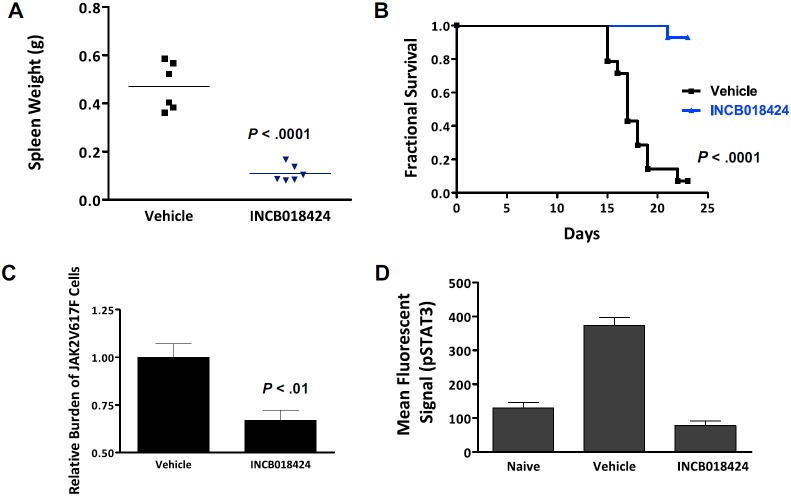
INCB018424 (Ruxolitinib) treatment improves viability and splenomegaly in a JAK2V617F-driven model of malignant disease.Blood.2010 Apr 15;115(15):3109-17.
|
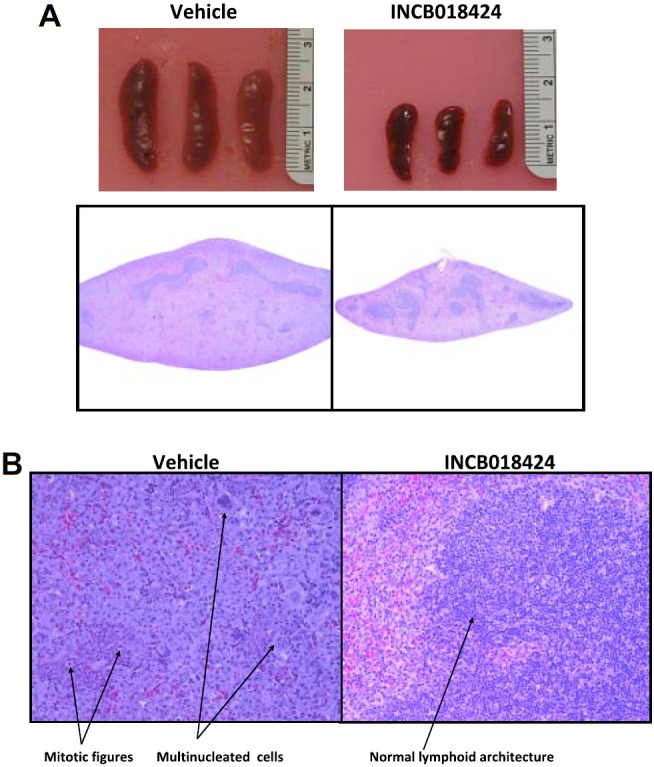
Macroscopic and microscopic effects of INCB018424 on spleens from mice inoculated with Ba/F3-EpoR-JAK2V617F cells.Blood.2010 Apr 15;115(15):3109-17. |
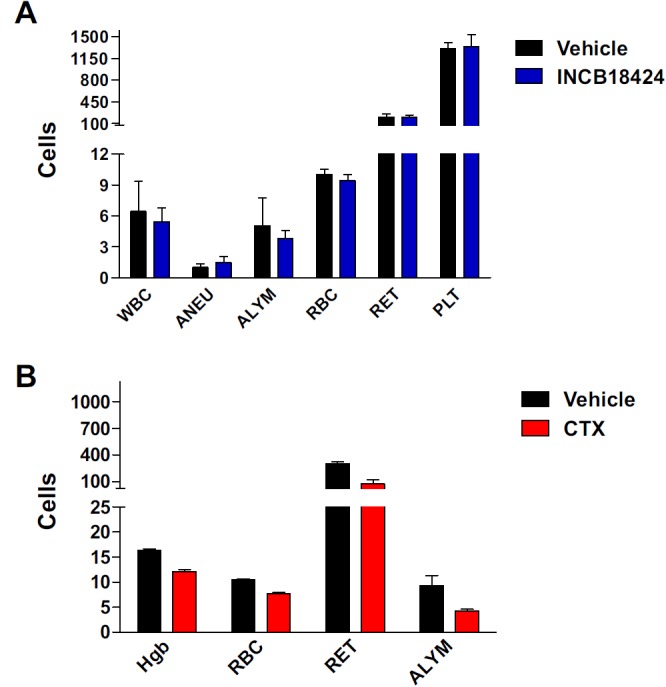
INCB018424 does not affect normal hematologic parameters.Blood.2010 Apr 15;115(15):3109-17. |
Products are for research use only; We do not sell to patients
Copyright 2020 InvivoChem LLC | All Rights Reserved


 COA
COA