| Size | Price | Stock | Qty |
|---|---|---|---|
| 10mg |
|
||
| 25mg |
|
||
| 50mg |
|
||
| 100mg |
|
||
| 250mg |
|
||
| 500mg |
|
||
| 1g |
|
||
| Other Sizes |


Purity: ≥98%
Ruxolitinib (formerly INC424, INCB18424, INCB018424; trade name Jakafi and Jakavi) is the first-in class, potent, selective, and orally bioavailabe JAK1/2 (Janus-associated kinase) inhibitor with IC50 of 3.3 nM/2.8 nM in cell-free assays, it exhibits >130-fold selectivity for JAK1/2 versus JAK3. Ruxolitinib has potential antineoplastic and immunomodulating activities. It was approved in 2011 by FDA for the treatment of intermediate or high-risk myelofibrosis, a type of myeloproliferative disorder that affects the bone marrow, and for polycythemia vera (PCV) when there has been an inadequate response to or intolerance of hydroxyurea. It selectively binds to and inhibits protein tyrosine kinases JAK 1 and 2, which may lead to a reduction in inflammation and an inhibition of cellular proliferation.
| Targets |
JAK2 (IC50 = 2.8 nM); JAK1 (IC50 = 3.3 nM); Tyk2 (IC50 = 19 nM); JAK3 (IC50 = 428 nM); JAK1 (IC₅₀ = 3.3 nM) and JAK2 (IC₅₀ = 2.8 nM), with >130-fold selectivity over JAK3 [1]
|
|---|---|
| ln Vitro |
Ruxolitinib produces a dose-dependent increase in apoptosis, a doubling of cells with depolarized mitochondria in Ba/F3 cells, and a powerful and specific inhibition of JAK2V617F-mediated signaling and proliferation. Ruxolitinib reduced the proliferation of erythroid progenitor cells from normal donors and polycythemia vera patients with IC50 values of 407 nM and 223 nM, respectively, and demonstrated substantial anti-erythroid colony formation with an IC50 of 67 nM [1].
1. JAK2V617F-Mediated Signaling Inhibition: - In Ba/F3 cells expressing JAK2V617F, ruxolitinib potently inhibits proliferation (IC₅₀ = 127 nM) and induces apoptosis in a dose-dependent manner. At 64 nM, it doubles the population of cells with depolarized mitochondria, indicating mitochondrial dysfunction [1] 2. Erythroid Progenitor Suppression: - In primary cultures from polycythemia vera (PV) patients, ruxolitinib suppresses erythroid colony formation (IC₅₀ = 67 nM), with higher potency in PV-derived progenitors (IC₅₀ = 223 nM) compared to normal donors (IC₅₀ = 407 nM) [1] 3. Cytokine Signaling Modulation: - Inhibits interleukin-6 (IL-6)-mediated STAT3 phosphorylation (IC₅₀ = 281 nM) and reduces downstream inflammatory cytokine production in myeloid cells [1] |
| ln Vivo |
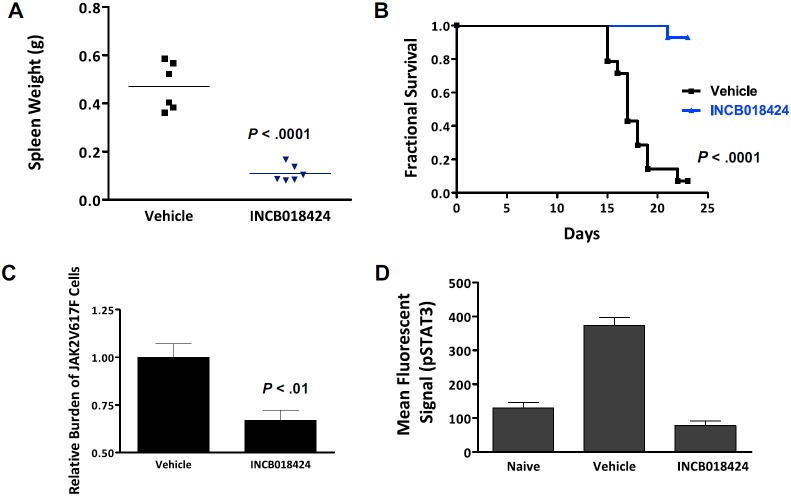
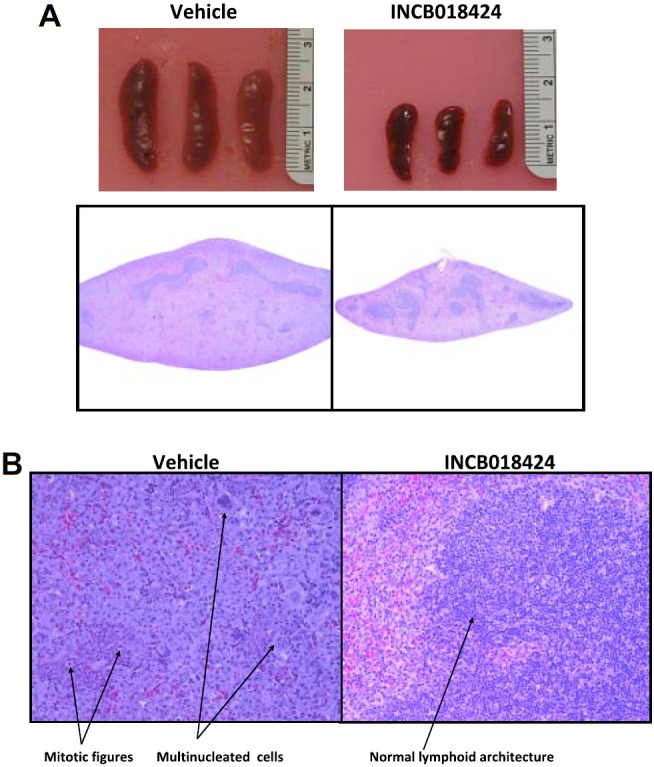
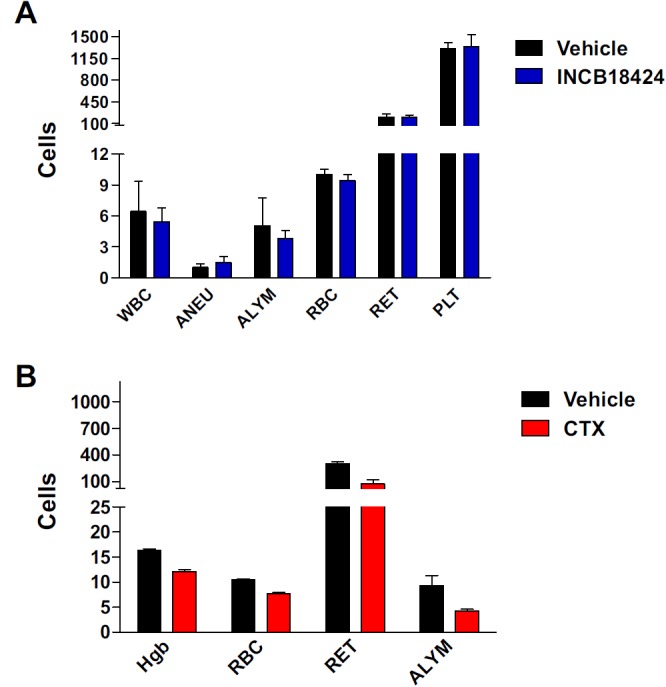
In JAK2V617F-driven mouse models, rufolitinib (180 mg/kg, PO, twice daily) did not cause myelosuppression or immunosuppression, but it did significantly prolong survival by reducing splenomegaly and circulating levels of inflammatory cytokines and preferentially eliminating tumor cells. At day 22, survival rates were above 90% [1]. In the myelofibrosis double-blind trial, 41.9% of patients in the ruxolitinib group and 0.7% of patients in the placebo group achieved the primary endpoint. Ruxolitinib improves overall symptom scores by 50% or more while maintaining spleen volume reduction [2].
1. Myelofibrosis (MF) Mouse Model: - Oral administration of ruxolitinib (180 mg/kg twice daily) in JAK2V617F-driven mice significantly reduces splenomegaly, decreases circulating levels of IL-6 and TNF-α, and prolongs survival without causing myelosuppression or immunosuppression. By day 22, >90% of treated mice survive, compared to rapid mortality in control groups [1] 2. Phase III Clinical Trial (COMFORT-I): - In 309 MF patients, ruxolitinib (15–25 mg twice daily) achieves a 35% reduction in spleen volume (primary endpoint) in 41.9% of patients versus 0.7% in the placebo group. Median symptom score improvement ≥50% is maintained for over 12 months [2] 3. Solid Tumor Synergy: - In a murine colon cancer model, ruxolitinib combined with anti-PD-1 therapy enhances tumor infiltration by activated CD8⁺ T cells and reduces myeloid-derived suppressor cell (MDSC) immunosuppressive activity, leading to durable tumor regression [3] |
| Enzyme Assay |
Biochemical assays[1]
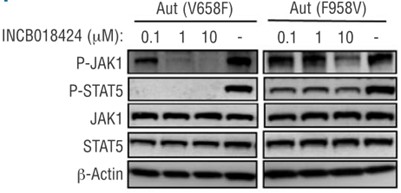
The kinase domains of human JAK1 (837-1142), JAK2 (828-1132), JAK3 (781-1124), and Tyk2 (873-1187) were cloned by PCR with N-terminal epitope tags. Recombinant proteins were expressed using Sf21 cells and baculovirus vectors and purified with affinity chromatography. JAK kinase assays used a homogeneous time-resolved fluorescence assay with the peptide substrate (-EQEDEPEGDYFEWLE). Each enzyme reaction was carried out with test compound or control, JAK enzyme, 500nM peptide, adenosine triphosphate (ATP; 1mM), and 2.0% dimethyl sulfoxide (DMSO) for 1 hour. The 50% inhibitory concentration (IC50) was calculated as the compound concentration required for inhibition of 50% of the fluorescent signal. Biochemical assays for CHK2 and c-MET enzymes were performed using standard conditions (Michaelis constant [Km] ATP) with recombinantly expressed catalytic domains from each protein and synthetic peptide substrates. An additional panel of kinase assays (Abl, Akt1, AurA, AurB, CDC2, CDK2, CDK4, CHK2, c-kit, c-Met, EGFR, EphB4, ERK1, ERK2, FLT-1, HER2, IGF1R, IKKα, IKKβ, JAK2, JAK3, JNK1, Lck, MEK1, p38α, p70S6K, PKA, PKCα, Src, and ZAP70) was performed using standard conditions (CEREP; www.cerep.com) using 200nM INCB018424. Significant inhibition was defined as more than or equal to 30% (average of duplicate assays) compared with control values. 1. JAK1/JAK2 Kinase Activity: - Recombinant JAK1/JAK2 enzymes (expressed in Sf21 cells) are incubated with ATP (1 mM) and a fluorescent peptide substrate (-EQEDEPEGDYFEWLE). Ruxolitinib inhibits kinase activity in a dose-dependent manner, with IC₅₀ values measured via homogeneous time-resolved fluorescence (HTRF) [1] 2. STAT Phosphorylation Assay: - In Ba/F3 cells stimulated with IL-6, ruxolitinib (0–1000 nM) blocks STAT3 phosphorylation in a concentration-dependent manner, assessed by Western blot analysis [1] |
| Cell Assay |
Cell proliferation assay[1]
Cells were seeded at 2000/well of white bottom 96-well plates, treated with compounds from DMSO stocks (0.2% final DMSO concentration), and incubated for 48 hours at 37°C with 5% CO2. Viability was measured by cellular ATP determination using the Cell-Titer Glo luciferase reagent or viable cell counting. Values were transformed to percent inhibition relative to vehicle control, and IC50 curves were fitted according to nonlinear regression analysis of the data using PRISM GraphPad. Apoptosis[1] Annexin V staining. Cells were treated for 20 to 24 hours and stained with annexin V and propidium iodide for analysis of early apoptotic and dead cells, respectively. Analysis was performed using a FACSCaliber flow cytometer. Mitochondrial membrane potential. Cells were treated for 24 hours and then incubated with 2μM of the dye JC-1. Analysis was performed by flow cytometry using 488-nm excitation and 530-nm and 585-nm emission filters. JC-1 exhibits potential-dependent accumulation in the mitochondria where its emission is in the red spectrum (590nM). A fluorescence shift from red (590nM) to green (530nM) indicates redistribution of the dye to the cytoplasm resulting from loss of mitochondrial membrane potential, an early marker for apoptosis. Colony-forming assay[1] Mononuclear cells were isolated from peripheral blood from patients with PV or normal control persons by centrifugation through Ficoll. A total of 2 × 10⁵ cells from control or patients with PV were plated onto methocult H88434 supplemented with recombinant cytokines (50 ng/mL stem cell factor, 10 ng/mL granulocyte-macrophage colony-stimulating factor, 10 ng/mL granulocyte colony-stimulating factor, 10 ng/mL IL-3, and 3 U/mL erythropoietin) and with indicated concentrations of INCB018424 or DMSO vehicle. For evaluation of endogenous erythroid colony growth, 3 to 4 × 10⁵ cells from PV patients were plated onto minimal methocult medium with INCB018424 or vehicle. Each condition was performed in triplicate. Colonies derived from erythroid (burst-forming units [BFU] and colony-forming units [CFU]-E) and myeloid (CFU-granulocyte macrophage) progenitor cells were counted after 14 days. 1. Proliferation and Apoptosis: - Ba/F3-JAK2V617F cells are treated with ruxolitinib (0–2000 nM) for 48 hours. Cell viability is measured via ATP quantification (Cell-Titer Glo), and apoptosis is detected by Annexin V staining. IC₅₀ for proliferation inhibition is 127 nM, with maximal apoptosis at 1000 nM [1] 2. Colony Formation Assay: - Erythroid progenitors from PV patients and healthy donors are cultured in methylcellulose media containing ruxolitinib (0–1000 nM). Colony counts are scored after 14 days, revealing preferential inhibition in PV-derived colonies [1] |
| Animal Protocol |
JAK2V617F-driven mouse model
In vivo treatment with INCB018424 in a myeloproliferative neoplasm mouse model All of the procedures were conducted in accordance with the US Public Health Service Policy on Humane Care and Use of Laboratory Animals. Mice were fed standard rodent chow and provided with water ad libitum. Ba/F3-JAK2V617F cells (105 per mouse) were inoculated intravenously into 6- to 8-week-old female BALB/c mice. Survival was monitored daily, and moribund mice were humanely killed and considered deceased at time of death. Treatment with vehicle (5% dimethyl acetamide, 0.5% methocellulose) or INCB018424 began within 24 hours of cell inoculation, twice daily by oral gavage. Hematologic parameters were measured using a Bayer Advia120 analyzed, and statistical significance was determined using Dunnett testing[1]. 1. JAK2V617F Mouse Model: - Dosing: Ruxolitinib is dissolved in 5% dimethylacetamide/0.5% methylcellulose and administered orally (180 mg/kg) twice daily. - Monitoring: Splenic weight, peripheral blood counts, and cytokine levels are measured weekly. Survival is tracked until humane endpoints [1] 2. Toxicity Assessment in Rats: - Single-dose oral administration of ruxolitinib (up to 1000 mg/kg) in Sprague-Dawley rats shows no significant acute toxicity. Subchronic studies (28 days) at 100 mg/kg daily reveal reversible hepatic enzyme elevation and lymphoid organ atrophy [2] |
| ADME/Pharmacokinetics |
Absorption, Distribution and Excretion
Following oral administration, ruxotinib is rapidly absorbed, reaching peak plasma concentrations within 1 hour of administration. The mean maximum plasma concentration (Cmax) increases proportionally with a single dose ranging from 5 mg to 200 mg. Cmax ranges from 205 nM to 7100 nM, and AUC ranges from 862 nM·h to 30700 nM·h. The time to peak concentration (Tmax) after oral administration is 1 to 2 hours. Oral bioavailability is at least 95%. Following a single oral dose of radiolabeled ruxotinib, the drug is primarily eliminated through metabolism. Approximately 74% of the total dose is excreted in the urine and 22% in the feces, mainly as ruxotinib's hydroxyl and oxytocin metabolites. Unmetabolized parent drug accounts for less than 1% of the total radioactive excretion. In patients with myelofibrosis, the mean volume of distribution at steady state (coefficient of variation %) was 72 L (29%), and in patients with polycythemia vera, it was 75 L (23%). It is unclear whether ruxotinib crosses the blood-brain barrier. In female patients with myelofibrosis, the clearance of ruxotinib (coefficient of variation %) was 17.7 L/h, and in male patients, it was 22.1 L/h. In patients with polycythemia vera, the clearance was 12.7 L/h (42%), and in patients with acute graft-versus-host disease, it was 11.9 L/h (43%). After oral administration, ruxotinib is absorbed at approximately 95%, and the mean systemic bioavailability is estimated to be approximately 80%. Peak plasma concentrations are reached within 1–2 hours after oral administration of ruxotinib. …In healthy subjects, after a single oral administration of radiolabeled ruxotinib, the drug is primarily eliminated through metabolism, with 74% and 22% of the radioactive material excreted in urine and feces, respectively. Less than 1% of the total excreted radioactivity is unmetabolized. Metabolisms/Metabolites Over 99% of orally administered ruxotinib is metabolized via CYP3A4, with less metabolism via CYP2C9. The major circulating metabolites in human plasma are M18, generated by 2-hydroxylation, and M16 and M27 (stereoisomers), generated by 3-hydroxylation. Other identified metabolites include M9 and M49, formed by hydroxylation and ketone bodies, respectively. The structures of not all metabolites have been fully characterized; it is presumed that many metabolites exist in stereoisomer form. Ruxotinib metabolites exhibit lower inhibitory activity against JAK1 and JAK2 than their parent drug. Cytochrome P-450 (CYP) isoenzyme 3A4 is the major enzyme responsible for ruxotinib metabolism. Two major active metabolites were identified in the plasma of healthy individuals; all active metabolites contribute 18% of the overall pharmacodynamic activity of ruxotinib. Ruxotinib is primarily metabolized by cytochrome P-450 (CYP) isoenzyme 3A4. Biological Half-Life The mean elimination half-life of ruxotinib is approximately 3 hours, and the mean half-life of its metabolites is approximately 5.8 hours. After a single oral administration, the mean half-life of ruxotinib is approximately 3 hours, and the mean half-life of ruxotinib and its metabolites is approximately 5.8 hours. 1. Absorption and Distribution: - It is rapidly absorbed after oral administration (Tₘₐₓ = 1-2 hours), with 95% plasma protein binding. Tissue distribution includes the brain (3-5% of plasma concentration) and skin [1][2]. 2. Metabolism and Excretion: - It is primarily metabolized by CYP3A4 (70%) and CYP2C9 (20%). The major metabolite (INCB028050) exhibits very low JAK inhibitory activity. The elimination half-life is 3-4 hours, with 60% excreted in urine (mainly as metabolites) and 30% in feces [2]. 3. Food effects: - A high-fat meal can reduce Cₘₐₓ by 23%, but has no significant effect on AUC, so the administration is not affected by food [2]. |
| Toxicity/Toxicokinetics |
Toxicity Summary
Identification and Use: Ruxotinib phosphate is indicated for the treatment of intermediate- or high-risk myelofibrosis, including primary myelofibrosis, post-polycythemia vera myelofibrosis, and post-essential thrombocythemia myelofibrosis. Ruxotinib has been designated an orphan drug by the U.S. Food and Drug Administration (FDA) for the treatment of these conditions. Human Exposure and Toxicity: Adverse reactions reported in more than 10% of patients treated with ruxotinib included thrombocytopenia, anemia, neutropenia, bruising, dizziness, and headache. Patients treated with ruxotinib experienced clinically meaningful improvements in myelofibrosis-related symptoms and quality of life, but patients receiving placebo reported worsening symptoms and other patients reported worsening outcomes. Compared with placebo, ruxotinib significantly improved clinical symptoms in patients with myelofibrosis, including reducing spleen volume, alleviating myelofibrosis-related symptoms, and improving overall survival. However, these benefits come at the cost of an increased incidence of early-stage anemia and thrombocytopenia. In vitro data showed that, at clinically relevant concentrations, ruxolitinib and its metabolite M18 did not inhibit P-glycoprotein (P-gp), breast cancer resistance protein (BCRP), organic anion transport peptides (OATP) 1B1 and 1B3, organic cation transporters (OCT) 1 and 2, or organic anion transporters (OAT) 1 and 3. Ruxolitinib is also not a substrate for P-gp. In in vitro chromosome aberration assays (cultured human peripheral blood lymphocytes), ruxolitinib did not induce chromosome breakage. Animal studies: Ruxolitinib did not show mutagenicity in bacterial mutagenicity assays (Ames assay) or in vivo chromosome breakage in vivo in rat bone marrow micronucleus assays. In a 6-month Tg.rasH2 transgenic mouse model study and a 2-year rat carcinogenicity study, ruxolitinib did not show carcinogenicity. In a rat prenatal and postnatal developmental study, pregnant animals received ruxolitinib from implantation to lactation at doses up to 30 mg/kg/day. At the highest dose assessed (equivalent to 34% of the maximum clinically recommended dose of 25 mg twice daily), no adverse effects were observed in pup fertility parameters, maternal or embryonic survival, or growth and development parameters. During organogenesis, pregnant rats and rabbits were orally administered ruxolitinib at doses of 15, 30, or 60 mg/kg/day in rats and 10, 30, or 60 mg/kg/day in rabbits. No teratogenicity was observed. However, at the highest dose (i.e., the maternally toxic dose) of 60 mg/kg/day, fetal weight decreased by approximately 9% in rats. The drug exposure (AUC) at this dose was approximately twice that of the maximum clinically recommended dose (25 mg twice daily). In rabbit models, the highest dose (60 mg/kg/day) also showed a decrease in fetal weight of approximately 8% and increased late absorption, which is maternally toxic. Hepatotoxicity In large clinical trials, 25% to 48% of subjects treated with ruxolitinib experienced elevated serum ALT levels, compared to 7% to 9% in the placebo group. ALT elevations were typically self-limiting, asymptomatic, and mild, with only 1.3% of patients having ALT levels exceeding five times the upper limit of normal. No clinically manifested cases of liver injury have been reported in premarket clinical trials. In a trial of ruxolitinib for myelofibrosis, one death was attributed to liver failure; however, this case was considered unrelated to ruxolitinib. Since the approval and widespread use of ruxolitinib, although there have been rare reports of clinically significant ruxolitinib-induced acute liver injury, these reports lacked documentation of clinical characteristics and did not carefully rule out other causes. Notably, several published reports have indicated hepatitis B virus reactivation in patients with or without HBsAg (but with anti-HBc). Within 1 to 6 months after starting ruxolitinib, HBV DNA levels increased, with some patients also experiencing elevated ALT levels and jaundice. After initiating entecavir for anti-HBV treatment, HBV DNA levels rapidly decreased, and all patients recovered. In one study, HBV DNA levels decreased with decreasing ruxolitinib doses, but increased again with increasing doses. To date, reports on ruxolitinib for COVID-19 treatment include only a small number of patients, and information on adverse liver events or the risk of hepatitis B virus reactivation is scarce. Probability score: C (Possible cause of hepatitis B virus reactivation in susceptible patients). Pregnancy and Lactation Effects ◉ Overview of Use During Lactation There is currently no information on the clinical use of ruxolitinib during lactation. Due to the high plasma protein binding rate of ruxolitinib (up to 97%), its concentration in breast milk is likely to be low. The manufacturer recommends discontinuing breastfeeding during ruxolitinib treatment and within 2 weeks of the last dose of oral tablets and within 4 weeks of the last dose of topical cream. ◉ Effects on breastfed infants No published information found as of the revision date. ◉ Effects on lactation and breast milk No published information found as of the revision date. Protein binding Ruxolitinib binds to approximately 97% of plasma proteins, primarily albumin. Drug interactions Fluconazole: Concomitant use with the CYP3A4 and CYP2C9 combination inhibitors fluconazole (100 mg and 400 mg once daily, respectively) is expected to increase the AUC of ruxolitinib by approximately 100% to 300%, respectively. Avoid concomitant use with Jakafi and fluconazole at daily doses exceeding 200 mg. Concomitant use of ruxolitinib (50 mg once daily) with rifampin (600 mg once daily for 10 days) resulted in a 32% decrease in peak plasma concentration (PPS) and a 61% decrease in AUC. Dose adjustment is not recommended when ruxolitinib is used concomitantly with a CYP3A4 inducer. Concomitant use of ruxolitinib (10 mg once daily) with erythromycin (500 mg twice daily for 4 days) resulted in an 8% increase in PPS and a 27% increase in AUC. Dose adjustment is not recommended when ruxolitinib is used concomitantly with a weak or intermediate-acting CYP3A4 inhibitor (e.g., erythromycin). Clinicians should exercise caution when initiating treatment with an intermediate-acting CYP3A4 inhibitor in patients receiving a stable dose of ruxolitinib, especially in patients with low platelet counts. Concomitant use of ruxolitinib (10 mg once daily) with ketoconazole (200 mg twice daily for 4 days) increased peak plasma concentration (PPS) and AUC of ruxolitinib by 33% and 91%, respectively. Simultaneously, the half-life of ruxolitinib was prolonged from 3.7 hours to 6 hours. When ruxolitinib is used concomitantly with potent CYP3A4 inhibitors (such as ketoconazole), a dose reduction is recommended. Concomitant use of ruxolitinib with potent CYP3A4 inhibitors (such as bosavirin, clarithromycin, conivovatan, grapefruit juice, indinavir, itraconazole, ketoconazole, lopinavir/ritonavir, mibedinil [discontinued in the US], nefazodone, nelfinavir, posaconazole, ritonavir, saquinavir, telaprevir, telithromycin, voriconazole) results in increased peak plasma concentration and area under the serum concentration-time curve (AUC) of ruxolitinib. When ruxolitinib is used in combination with a potent CYP3A4 inhibitor, a dose reduction is recommended. 1. Myelosuppression: - MF patients may develop dose-dependent anemia (96.1%) and thrombocytopenia (69.7%), with a median onset time of 6-12 weeks. A dose reduction or temporary discontinuation of the drug is required when the platelet count is <50 × 10⁹/L [2] 2. Risk of infection: - 8% of treated patients may experience a recurrence of herpes zoster, requiring antiviral prophylaxis. There have been reports of Pneumocystis carinii pneumonia and tuberculosis relapse in immunocompromised patients[2][12]. 3. Metabolic effects: - 30-40% of patients have elevated total cholesterol (up to 25%) and triglycerides (up to 30%), which can be controlled with statin therapy[2]. 4. Cardiovascular events: - In a phase III trial, ruxolitinib was associated with a 2.1% incidence of major adverse cardiovascular events (MACE), including thrombosis and arrhythmias, especially in patients ≥65 years of age[2]. |
| References |
|
| Additional Infomation |
Therapeutic Uses
ClinicalTrials.gov is a registry and results database that lists human clinical studies funded by public and private institutions worldwide. The website is maintained by the National Library of Medicine (NLM) and the National Institutes of Health (NIH). Each record on ClinicalTrials.gov contains summary information about the study protocol, including: the disease or condition; the intervention (e.g., the medical product, behavior, or procedure under investigation); the title, description, and design of the study; participation requirements (eligibility criteria); the location of the study; contact information for the study location; and links to relevant information from other health websites, such as the NLM's MedlinePlus (for providing patient health information) and PubMed (for providing citations and abstracts of academic articles in the medical field). Ruxotinib is listed in the database. Jakafi is indicated for the treatment of patients with polycythemia vera who have an inadequate response to or are intolerant of hydroxyurea. /Listed under US Product Label/ Jakafi is indicated for the treatment of intermediate- or high-risk myelofibrosis, including primary myelofibrosis, post-polycythemia vera myelofibrosis, and post-essential thrombocythemia vera myelofibrosis. /Listed under US Product Label/ Ruxotinib phosphate is indicated for the treatment of intermediate- or high-risk myelofibrosis, including primary myelofibrosis, post-polycythemia vera myelofibrosis, and post-essential thrombocythemia vera myelofibrosis. Ruxotinib has been designated an orphan drug by the US Food and Drug Administration (FDA) for the treatment of these conditions. Ruxotinib is a Janus kinase (JAK) 1 and 2 inhibitor. A Phase II study demonstrated clinical benefit in patients with polycythemia vera. We conducted a Phase III open-label study to evaluate the efficacy and safety of ruxotinib compared to standard therapy in patients with polycythemia vera who had an inadequate response to hydroxyurea or experienced unacceptable side effects. Patients with splenomegaly who required phlebotomy were randomly assigned 1:1 to the ruxolitinib group (n=110) or the standard therapy group (n=112). The primary endpoint was hematocrit control at week 32 and a spleen volume reduction of at least 35% (as assessed by imaging) at week 32. 21% of patients in the ruxolitinib group met the primary endpoint, compared to only 1% in the standard therapy group (P<0.001). 60% of patients in the ruxolitinib group and 20% in the standard therapy group achieved hematocrit control; 38% and 1% of patients in the ruxolitinib and standard therapy groups, respectively, achieved a spleen volume reduction of at least 35%. 24% of patients in the ruxolitinib group and 9% in the standard therapy group achieved complete hematologic remission (P=0.003); at week 32, 49% of patients in the ruxolitinib group and 5% in the standard therapy group experienced a reduction of at least 50% in total symptom score. In the ruxolitinib group, 2% of patients experienced grade 3 or 4 anemia, and 5% experienced grade 3 or 4 thrombocytopenia. The corresponding percentages in the standard treatment group were 0% and 4%, respectively. Herpes zoster infection was reported in 6% of patients in the ruxolitinib group, compared to 0% in the standard treatment group (all cases were grade 1 or 2). Thromboembolic events occurred in 1 patient in the ruxolitinib group and 6 patients in the standard treatment group. For patients who did not respond well to hydroxyurea or experienced unacceptable side effects, ruxolitinib was superior to standard treatment in controlling hematocrit, reducing spleen volume, and improving symptoms related to polycythemia vera. Drug Warnings Ruxolitinib can cause adverse hematological reactions, including thrombocytopenia, anemia, and neutropenia. A complete blood count (CBC) must be performed before initiating ruxolitinib treatment. Patients should be assessed for the risk of serious bacterial, mycobacterial, fungal, and viral infections. Active, severe infections should be cured before ruxolitinib treatment is initiated. Clinicians should closely monitor patients receiving ruxolitinib, noting signs and symptoms of infection and initiating appropriate treatment promptly. In one clinical study, 1.9% of patients receiving ruxolitinib developed herpes zoster. Clinicians should inform patients of early signs and symptoms of herpes zoster and advise them to seek medical attention as soon as possible. Symptoms of myelofibrosis usually return to pre-treatment levels within approximately one week after ruxolitinib treatment is interrupted or discontinued. Some patients have reported withdrawal symptoms after discontinuing ruxolitinib, characterized by acute relapse of disease symptoms, accelerated splenomegaly, worsening of blood cell counts, and occasional hemodynamic decompensation (including septic shock-like syndrome with severe hypoxemia, hypotension, fever, and confusion). Some experts recommend that the dose of ruxolitinib be gradually reduced over two weeks under close medical supervision. For more complete data on drug warnings (9 in total) for ruxolitinib, please visit the HSDB record page. Pharmacodynamics Ruxolitinib is an anti-tumor drug that inhibits cell proliferation, induces apoptosis in malignant cells, and reduces plasma levels of pro-inflammatory cytokines by inhibiting JAK-induced phosphorylation of signal transduction and activating transcription factor (STAT). Ruxolitinib inhibits STAT3 phosphorylation (a marker of JAK activity) within two hours of administration and returns to near-baseline levels after 10 hours in patients with myelofibrosis and polycythemia vera. Clinical trials have shown that ruxolitinib reduces splenomegaly and improves symptoms of myelofibrosis. In mouse models of myeloproliferative neoplasms, ruxolitinib administration is associated with prolonged survival. Ruxolitinib inhibits mutant and wild-type JAK2; however, the JAK2V617F mutation (common in approximately 50% of myelofibrosis patients) has been shown to reduce sensitivity to ruxolitinib, which may also be related to resistance to JAK inhibitor therapy. FDA Approval: - Approved in 2011 for the treatment of myelofibrosis (MF) and polycythemia vera (PV), and in 2014 for the treatment of steroid-refractory acute graft-versus-host disease (GVHD) [2]. 2. Resistance Mechanism: - In MF, secondary mutations in exon 12 of the JAK2 gene or deletion of the wild-type JAK2 allele may reduce sensitivity to ruxolitinib. Strategies for combination therapy with BET inhibitors are currently being explored [3]. 3. Dosage Adjustment: - For patients with impaired liver function (Child-Pugh B/C), the starting dose should be reduced to 5 mg twice daily. Co-administration with potent CYP3A4 inhibitors (e.g., ketoconazole) should be avoided unless the benefits outweigh the risks [2]. |
| Molecular Formula |
C17H18N6
|
|---|---|
| Molecular Weight |
306.3650
|
| Exact Mass |
306.159
|
| Elemental Analysis |
C, 66.65; H, 5.92; N, 27.43
|
| CAS # |
941678-49-5
|
| Related CAS # |
Ruxolitinib (S enantiomer);941685-37-6;Ruxolitinib phosphate;1092939-17-7;(Rac)-Ruxolitinib-d9;2469553-67-9;Deuruxolitinib-d8;1513883-39-0;Ruxolitinib sulfate;1092939-16-6
|
| PubChem CID |
25126798
|
| Appearance |
Colorless oil
|
| Density |
1.4±0.1 g/cm3
|
| Boiling Point |
592.6±50.0 °C at 760 mmHg
|
| Flash Point |
312.2±30.1 °C
|
| Vapour Pressure |
0.0±1.7 mmHg at 25°C
|
| Index of Refraction |
1.747
|
| LogP |
1.69
|
| Hydrogen Bond Donor Count |
1
|
| Hydrogen Bond Acceptor Count |
4
|
| Rotatable Bond Count |
4
|
| Heavy Atom Count |
23
|
| Complexity |
453
|
| Defined Atom Stereocenter Count |
1
|
| SMILES |
[C@@H](C1CCCC1)(N1N=CC(C2N=CN=C3NC=CC=23)=C1)CC#N
|
| InChi Key |
HFNKQEVNSGCOJV-OAHLLOKOSA-N
|
| InChi Code |
InChI=1S/C17H18N6/c18-7-5-15(12-3-1-2-4-12)23-10-13(9-22-23)16-14-6-8-19-17(14)21-11-20-16/h6,8-12,15H,1-5H2,(H,19,20,21)/t15-/m1/s1
|
| Chemical Name |
(R)-3-(4-(7H-pyrrolo[2,3-d]pyrimidin-4-yl)-1H-pyrazol-1-yl)-3-cyclopentylpropanenitrile
|
| Synonyms |
INCB-018424, INCB 018424, INCB 18424, INCB-18424; INCB018424; INC424, INC424, INC-424; INCB18424, Jakafi and Jakavi (trade name)
|
| HS Tariff Code |
2934.99.9001
|
| Storage |
Powder -20°C 3 years 4°C 2 years In solvent -80°C 6 months -20°C 1 month |
| Shipping Condition |
Room temperature (This product is stable at ambient temperature for a few days during ordinary shipping and time spent in Customs)
|
| Solubility (In Vitro) |
DMSO: 61 mg/mL (199.1 mM)
Water: <1 mg/mL (Insoluble) Ethanol: <1 mg/mL |
|---|---|
| Solubility (In Vivo) |
Solubility in Formulation 1: 5 mg/mL (16.32 mM) in 5% DMAC in 0.5% methylcellulose aqueous solution (add these co-solvents sequentially from left to right, and one by one), suspension solution; with sonication.
Solubility in Formulation 2: ≥ 2.08 mg/mL (6.79 mM) (saturation unknown) in 10% DMSO + 40% PEG300 + 5% Tween80 + 45% Saline (add these co-solvents sequentially from left to right, and one by one), clear solution. For example, if 1 mL of working solution is to be prepared, you can add 100 μL of 20.8 mg/mL clear DMSO stock solution to 400 μL PEG300 and mix evenly; then add 50 μL Tween-80 to the above solution and mix evenly; then add 450 μL normal saline to adjust the volume to 1 mL. Preparation of saline: Dissolve 0.9 g of sodium chloride in 100 mL ddH₂ O to obtain a clear solution. View More
Solubility in Formulation 3: ≥ 2.08 mg/mL (6.79 mM) (saturation unknown) in 10% DMSO + 90% (20% SBE-β-CD in Saline) (add these co-solvents sequentially from left to right, and one by one), clear solution. Solubility in Formulation 4: ≥ 2.08 mg/mL (6.79 mM) (saturation unknown) in 10% DMSO + 90% Corn Oil (add these co-solvents sequentially from left to right, and one by one), clear solution. For example, if 1 mL of working solution is to be prepared, you can add 100 μL of 20.8 mg/mL clear DMSO stock solution to 900 μL corn oil and mix evenly. Solubility in Formulation 5: 2% DMSO+30% PEG 300+ddH2O:5mg/mL Solubility in Formulation 6: 5 mg/mL (16.32 mM) in 0.5% Methylcellulose/saline water (add these co-solvents sequentially from left to right, and one by one), clear solution; with ultrasonication. Preparation of saline: Dissolve 0.9 g of sodium chloride in 100 mL ddH₂ O to obtain a clear solution. |
| Preparing Stock Solutions | 1 mg | 5 mg | 10 mg | |
| 1 mM | 3.2640 mL | 16.3201 mL | 32.6403 mL | |
| 5 mM | 0.6528 mL | 3.2640 mL | 6.5281 mL | |
| 10 mM | 0.3264 mL | 1.6320 mL | 3.2640 mL |
*Note: Please select an appropriate solvent for the preparation of stock solution based on your experiment needs. For most products, DMSO can be used for preparing stock solutions (e.g. 5 mM, 10 mM, or 20 mM concentration); some products with high aqueous solubility may be dissolved in water directly. Solubility information is available at the above Solubility Data section. Once the stock solution is prepared, aliquot it to routine usage volumes and store at -20°C or -80°C. Avoid repeated freeze and thaw cycles.
Calculation results
Working concentration: mg/mL;
Method for preparing DMSO stock solution: mg drug pre-dissolved in μL DMSO (stock solution concentration mg/mL). Please contact us first if the concentration exceeds the DMSO solubility of the batch of drug.
Method for preparing in vivo formulation::Take μL DMSO stock solution, next add μL PEG300, mix and clarify, next addμL Tween 80, mix and clarify, next add μL ddH2O,mix and clarify.
(1) Please be sure that the solution is clear before the addition of next solvent. Dissolution methods like vortex, ultrasound or warming and heat may be used to aid dissolving.
(2) Be sure to add the solvent(s) in order.
| NCT Number | Recruitment | interventions | Conditions | Sponsor/Collaborators | Start Date | Phases |
| NCT06213831 | Recruiting | Drug: Ruxolitinib Cream 1.5% | Prurigo Nodularis | Incyte Corporation | February 27, 2024 | Phase 1 |
| NCT06310304 | Active, not recruiting NEW |
Drug: Ruxolitinib IR Drug: Ruxolitinib XR |
Healthy Participants | Incyte Corporation | March 26, 2024 | Phase 1 |
| NCT05034822 | Completed | Drug: Ruxolitinib cream | Atopic Dermatitis | Incyte Corporation | December 16, 2021 | Phase 1 |
| NCT05456529 | Active, not recruiting | Drug: Ruxolitinib Cream | Atopic Dermatitis (AD) | Incyte Corporation | September 1, 2022 | Phase 3 |
INCB018424 (Ruxolitinib)treatment improves viability and splenomegaly in a JAK2V617F-driven model of malignant disease.Blood.2010 Apr 15;115(15):3109-17.
|
Macroscopic and microscopic effects of INCB018424 on spleens from mice inoculated with Ba/F3-EpoR-JAK2V617F cells.Blood.2010 Apr 15;115(15):3109-17. |
INCB018424 does not affect normal hematologic parameters.Blood.2010 Apr 15;115(15):3109-17. |
Products are for research use only; We do not sell to patients
Copyright 2020 InvivoChem LLC | All Rights Reserved


 COA
COA