| Size | Price | Stock | Qty |
|---|---|---|---|
| 25mg |
|
||
| 50mg |
|
||
| 100mg |
|
||
| 250mg |
|
||
| 500mg |
|
||
| 1g | |||
| Other Sizes |


Purity: ≥98%
Ruxolitinib sulfate, the sulfate salt of ruxolitinib which is also known as Jakafi, Jakavi, INC-424, INCB-18424 or INCB-018424, is the first-in class, potent, selective, and orally bioavailable JAK1/2 (Janus-associated kinase) inhibitor with IC50 of 3.3 nM/2.8 nM in cell-free assays, it exhibits >130-fold selectivity for JAK1/2 versus JAK3. Ruxolitinib has potential antineoplastic and immunomodulating activities. It was approved in 2011 by FDA for the treatment of intermediate or high-risk myelofibrosis.
| Targets |
JAK2 (IC50 = 2.8 nM); JAK1 (IC50 = 3.3 nM); Tyk2 (IC50 = 19 nM); JAK3 (IC50 = 428 nM)
|
||
|---|---|---|---|
| ln Vitro |
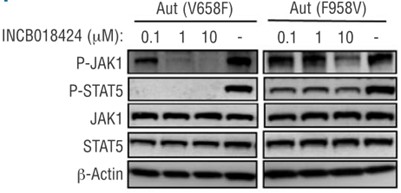
Ruxolitinib sulfate (INCB018424 sulfate) significantly and selectively enhances apoptosis in a dose-dependent manner, potently and selectively inhibits JAK2V617F-mediated signaling and proliferation, and causes a doubling of cells with depolarized mitochondria in Ba/F3 cells at 64 nM. With an IC50 of 67 nM, roxolitinib exhibits significant effectiveness against the development of erythroid colonies. It also suppresses the proliferation of erythroid progenitors from both normal donors and patients with polycythemia vera, with IC50 values of 407 nM and 223 nM, respectively[1].
|
||
| ln Vivo |
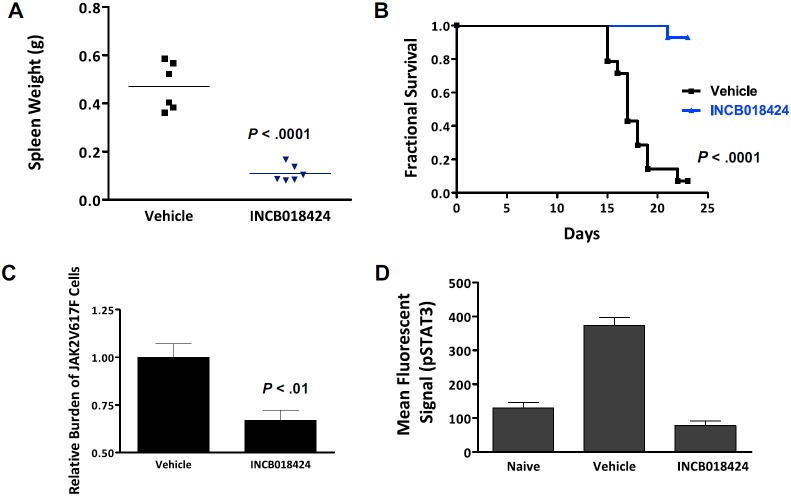
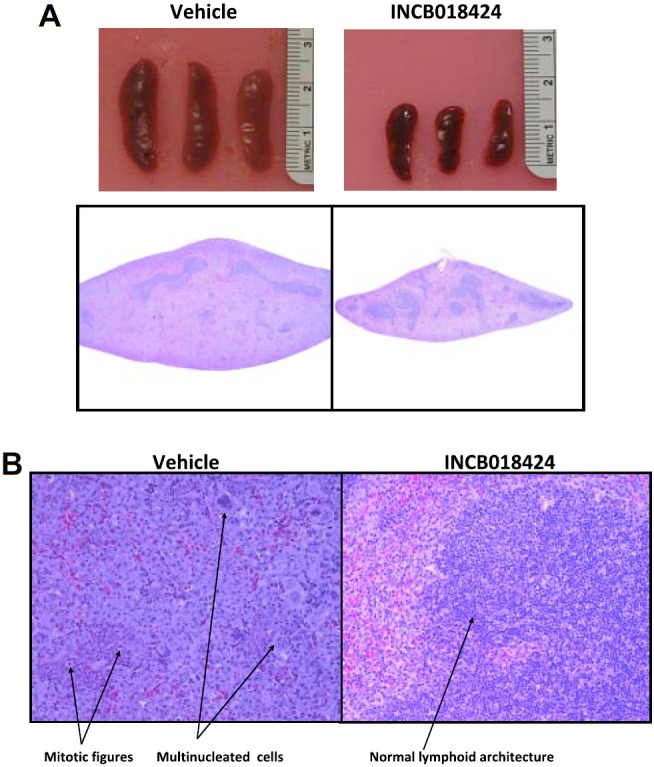
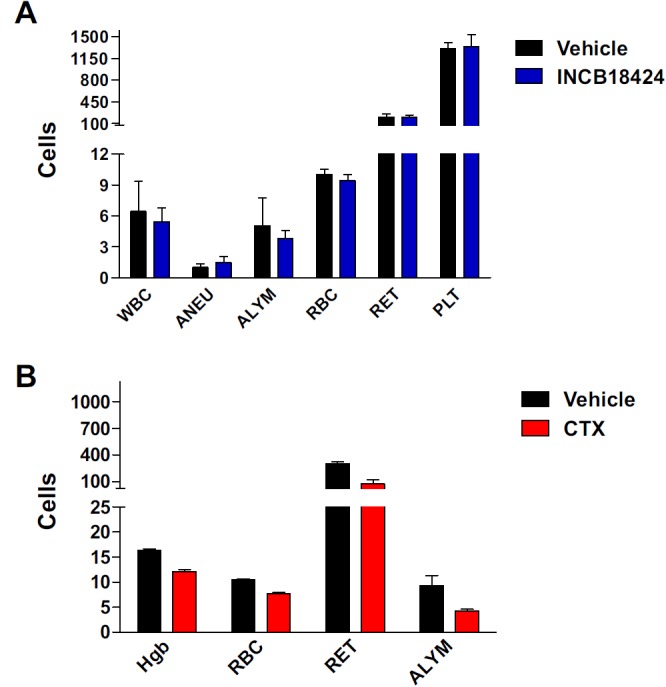
Ruxolitinib (INCB018424 sulfate; 180 mg/kg, orally, twice a day) causes a JAK2V617F-driven mouse model to exhibit a significantly prolonged survival without myelosuppressive or immunosuppressive effects. By day 22, it also significantly reduces inflammatory cytokine levels and splenomegaly and preferentially eliminates neoplastic cells[1]. In the double-blind trial of myelofibrosis, 41.9% of patients in the Ruxolitinib group and 0.7% in the placebo group reach the primary end point. Ruxolitinib causes the overall symptom score to improve by 50% or more while maintaining the reduction in spleen volume[2]. When given roxolitinib (15 mg twice daily), patients with myelofibrosis had a reduction in spleen volume of at least 35% in 28% of cases by week 48, compared to 0% in the group receiving the best available therapy. By week 48, the mean palpable spleen length had increased by 4% with the best available therapy, but had dropped by 56% with Ruxolitinib. Patients receiving ruxolitinib showed improvements in overall quality-of-life metrics as well as a decrease in myelofibrosis-related symptoms[3].
|
||
| Enzyme Assay |
Biochemical assays[1]
The kinase domains of human JAK1 (837-1142), JAK2 (828-1132), JAK3 (781-1124), and Tyk2 (873-1187) were cloned by PCR with N-terminal epitope tags. Recombinant proteins were expressed using Sf21 cells and baculovirus vectors and purified with affinity chromatography. JAK kinase assays used a homogeneous time-resolved fluorescence assay with the peptide substrate (-EQEDEPEGDYFEWLE). Each enzyme reaction was carried out with test compound or control, JAK enzyme, 500nM peptide, adenosine triphosphate (ATP; 1mM), and 2.0% dimethyl sulfoxide (DMSO) for 1 hour. The 50% inhibitory concentration (IC50) was calculated as the compound concentration required for inhibition of 50% of the fluorescent signal. Biochemical assays for CHK2 and c-MET enzymes were performed using standard conditions (Michaelis constant [Km] ATP) with recombinantly expressed catalytic domains from each protein and synthetic peptide substrates. |
||
| Cell Assay |
Apoptosis[1]
Annexin V staining. Cells were treated for 20 to 24 hours and stained with annexin V and propidium iodide for analysis of early apoptotic and dead cells, respectively. Analysis was performed using a FACSCaliber flow cytometer. Mitochondrial membrane potential. Cells were treated for 24 hours and then incubated with 2μM of the dye JC-1. Analysis was performed by flow cytometry using 488-nm excitation and 530-nm and 585-nm emission filters. JC-1 exhibits potential-dependent accumulation in the mitochondria where its emission is in the red spectrum (590nM). A fluorescence shift from red (590nM) to green (530nM) indicates redistribution of the dye to the cytoplasm resulting from loss of mitochondrial membrane potential, an early marker for apoptosis.
|
||
| Animal Protocol |
|
||
| ADME/Pharmacokinetics |
1. Absorption and distribution: It is rapidly absorbed after oral administration (Tₘₐₓ = 1-2 hours) and has a plasma protein binding rate of up to 95%. Tissue distribution includes the brain (accounting for 3-5% of plasma concentration) and skin [1][2]. 2. Metabolism and excretion: It is mainly metabolized by CYP3A4 (70%) and CYP2C9 (20%). The major metabolite (INCB028050) has very low JAK inhibitory activity. The elimination half-life is 3-4 hours, with 60% excreted in the urine (mainly in the form of metabolites) and 30% excreted in the feces [2]. 3. Food effects: A high-fat meal can reduce Cₘₐₓ by 23%, but has no significant effect on AUC, so administration is not affected by food [2].
|
||
| Toxicity/Toxicokinetics |
1. Bone marrow suppression: - MF patients develop dose-dependent anemia (96.1%) and thrombocytopenia (69.7%), with a median onset time of 6-12 weeks. When platelet count is <50 × 10⁹/L, dose reduction or temporary discontinuation of the drug is required [2]. 2. Risk of infection: - 8% of treated patients experience recurrence of herpes zoster, requiring antiviral prophylaxis. Recurrence of Pneumocystis carinii pneumonia and tuberculosis has been reported in immunocompromised patients [2][12]. 3. Metabolic effects: - 30-40% of patients experience elevated total cholesterol (up to 25%) and triglycerides (up to 30%), which can be controlled with statin therapy [2]. 4. Cardiovascular events: - In a phase III trial, ruxolitinib was associated with a 2.1% incidence of major adverse cardiovascular events (MACE), including thrombosis and arrhythmias, especially in patients ≥65 years of age [2].
|
||
| References |
|
||
| Additional Infomation |
Background: Ruxotinib is a selective Janus kinase (JAK) 1 and 2 inhibitor with significant clinical efficacy in myelofibrosis. Methods: In this double-blind trial, patients with intermediate-2 or high-risk myelofibrosis were randomized to receive twice-daily oral ruxotinib (n=155) or placebo (n=154). The primary endpoint was the proportion of patients with a spleen volume reduction of 35% or more at 24 weeks, assessed by magnetic resonance imaging. Secondary endpoints included durability of efficacy, change in symptom burden (assessed by total symptom score), and overall survival. Results: 41.9% of patients in the ruxotinib group met the primary endpoint, compared to only 0.7% in the placebo group (P<0.001). The efficacy of spleen volume reduction in patients receiving ruxotinib was maintained; 67.0% of responding patients maintained efficacy for 48 weeks or longer. In patients treated with ruxotinib, 45.9% achieved a 50% or greater improvement in total symptom score at week 24, compared to only 5.3% in the placebo group (P<0.001). There were 13 deaths in the ruxotinib group and 24 deaths in the placebo group (hazard ratio, 0.50; 95% confidence interval, 0.25 to 0.98; P=0.04). The proportion of patients discontinuing the study drug due to adverse events was 11.0% in the ruxotinib group and 10.6% in the placebo group. Anemia and thrombocytopenia were the most common adverse events in patients treated with ruxotinib, but rarely led to discontinuation (each adverse event resulted in only one patient discontinuing the drug). Two patients converted to acute myeloid leukemia; both were in the ruxotinib group. Conclusion: Compared with placebo, ruxolitinib provided significant clinical benefits to patients with myelofibrosis by reducing spleen volume, improving severe myelofibrosis-related symptoms, and increasing overall survival. These benefits came at the cost of an increased incidence of early-stage anemia and thrombocytopenia. (Sponsored by Incyte; COMFORT-I Clinical Trial Registration No.: NCT00952289.)
|
| Molecular Formula |
C17H18N6.H2O4S
|
|---|---|
| Molecular Weight |
404.4435
|
| Exact Mass |
404.127
|
| CAS # |
1092939-16-6
|
| Related CAS # |
Ruxolitinib;941678-49-5;Ruxolitinib (S enantiomer);941685-37-6;Ruxolitinib phosphate;1092939-17-7
|
| PubChem CID |
25127111
|
| Appearance |
Typically exists as off-white to gray solids at room temperature
|
| LogP |
3.894
|
| Hydrogen Bond Donor Count |
3
|
| Hydrogen Bond Acceptor Count |
8
|
| Rotatable Bond Count |
4
|
| Heavy Atom Count |
28
|
| Complexity |
535
|
| Defined Atom Stereocenter Count |
1
|
| SMILES |
[H][C@@](C1CCCC1)(N2N=CC(C3=C4C=CNC4=NC=N3)=C2)CC#N.O=S(O)(O)=O
|
| InChi Key |
LGJWVXWQCTZSGC-UHFFFAOYSA-N
|
| InChi Code |
InChI=1S/C17H18N6.H2O4S/c18-7-5-15(12-3-1-2-4-12)23-10-13(9-22-23)16-14-6-8-19-17(14)21-11-20-16;1-5(2,3)4/h6,8-12,15H,1-5H2,(H,19,20,21);(H2,1,2,3,4)
|
| Chemical Name |
3-cyclopentyl-3-[4-(7H-pyrrolo[2,3-d]pyrimidin-4-yl)pyrazol-1-yl]propanenitrile;sulfuric acid
|
| Synonyms |
INCB-018424 sulfate, INCB 018424, INCB018424; INC424, INC424, Ruxolitinib (sulfate); 1092939-16-6; (betaR)-beta-Cyclopentyl-4-(7H-pyrrolo[2,3-d]pyrimidin-4-yl)-1H-pyrazole-1-propanenitrile sulfate; INCB018424 sulfate; 8PFR3FDT6X; SCHEMBL2358209; SCHEMBL29661013; INC-424; INCB18424, INCB 18424, INCB-18424; Jakafi and Jakavi (trade name)
|
| HS Tariff Code |
2934.99.9001
|
| Storage |
Powder -20°C 3 years 4°C 2 years In solvent -80°C 6 months -20°C 1 month Note: Please store this product in a sealed and protected environment, avoid exposure to moisture. |
| Shipping Condition |
Room temperature (This product is stable at ambient temperature for a few days during ordinary shipping and time spent in Customs)
|
| Solubility (In Vitro) |
DMSO: 50 mg/mL
Water: 1 mg/mL (Insoluble) Ethanol: 1 mg/mL |
|
|---|---|---|
| Solubility (In Vivo) |
|
| Preparing Stock Solutions | 1 mg | 5 mg | 10 mg | |
| 1 mM | 2.4726 mL | 12.3628 mL | 24.7255 mL | |
| 5 mM | 0.4945 mL | 2.4726 mL | 4.9451 mL | |
| 10 mM | 0.2473 mL | 1.2363 mL | 2.4726 mL |
*Note: Please select an appropriate solvent for the preparation of stock solution based on your experiment needs. For most products, DMSO can be used for preparing stock solutions (e.g. 5 mM, 10 mM, or 20 mM concentration); some products with high aqueous solubility may be dissolved in water directly. Solubility information is available at the above Solubility Data section. Once the stock solution is prepared, aliquot it to routine usage volumes and store at -20°C or -80°C. Avoid repeated freeze and thaw cycles.
Calculation results
Working concentration: mg/mL;
Method for preparing DMSO stock solution: mg drug pre-dissolved in μL DMSO (stock solution concentration mg/mL). Please contact us first if the concentration exceeds the DMSO solubility of the batch of drug.
Method for preparing in vivo formulation::Take μL DMSO stock solution, next add μL PEG300, mix and clarify, next addμL Tween 80, mix and clarify, next add μL ddH2O,mix and clarify.
(1) Please be sure that the solution is clear before the addition of next solvent. Dissolution methods like vortex, ultrasound or warming and heat may be used to aid dissolving.
(2) Be sure to add the solvent(s) in order.
| NCT Number | Recruitment | interventions | Conditions | Sponsor/Collaborators | Start Date | Phases |
| NCT04807777 | Active, not recruiting | Drug: Ruxolitinib | Advanced Cutaneous Squamous Cell Carcinoma |
Columbia University | July 8, 2021 | Phase 2 |
| NCT05456529 | Active, not recruiting | Drug: Ruxolitinib Cream | Atopic Dermatitis (AD) | Incyte Corporation | September 1, 2022 | Phase 3 |
| NCT02131584 | Active, not recruiting | Other: Questionnaire Administration Drug: Ruxolitinib Phosphate |
Chronic Lymphocytic Leukemia | M.D. Anderson Cancer Center | September 2, 2014 | Phase 2 |
| NCT02493530 | Active, not recruiting | Drug: TGR-1202 Drug: ruxolitinib | Myelofibrosis Polycythemia Vera | Vanderbilt-Ingram Cancer Center | July 2015 | Phase 1 |
INCB018424 (Ruxolitinib)treatment improves viability and splenomegaly in a JAK2V617F-driven model of malignant disease.Blood.2010 Apr 15;115(15):3109-17.
|
Macroscopic and microscopic effects of INCB018424 on spleens from mice inoculated with Ba/F3-EpoR-JAK2V617F cells.Blood.2010 Apr 15;115(15):3109-17. |
INCB018424 does not affect normal hematologic parameters.Blood.2010 Apr 15;115(15):3109-17. |
Products are for research use only; We do not sell to patients
Copyright 2020 InvivoChem LLC | All Rights Reserved


 COA
COA