| Size | Price | Stock | Qty |
|---|---|---|---|
| 5mg |
|
||
| 10mg |
|
||
| 25mg |
|
||
| 50mg |
|
||
| 100mg |
|
||
| 250mg |
|
||
| 500mg |
|
||
| Other Sizes |
Purity: ≥98%
| Targets |
PRE-084 targets the sigma-1 (σ1) receptor, an intracellular chaperone protein that modulates multiple cellular functions, including calcium signaling, cell survival, and neurotransmitter release. The compound acts as a high-affinity agonist at this receptor with a Ki of 2.2 nM. Its selectivity for σ1 over σ2 receptors is >5,900-fold (Ki of 2.2 nM vs. 13091 nM). By activating σ1 receptors, PRE-084 modulates various cellular processes, including neuroprotection, anti-inflammatory responses, and regulation of ion channels.
|
|---|---|
| ln Vitro |
PRE-084 (0.1-100 µM; 24 hours) lowers the levels of the pro-apoptotic protein Bax at 10 µM and shields cultured cortical neurons from beta-amyloid damage (maximum neuroprotection at 10 µM) [1].
In vitro, PRE-084 is a potent and selective σ1 receptor agonist with a Ki of 2.2 nM for σ1 and 13091 nM for σ2. Its activity is characterized by its ability to activate σ1 receptor-mediated signaling pathways. The compound has been shown to have neuroprotective effects in various in vitro models of neuronal injury. Its selectivity for σ1 over σ2 and other receptors makes it a valuable tool for studying the role of σ1 receptors in neuroprotection and other physiological processes. |
| ln Vivo |
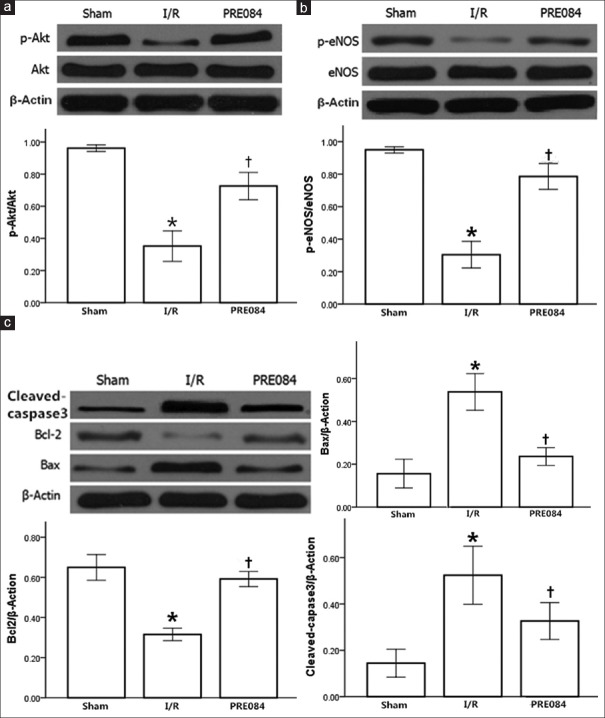
PRE-084 (0.25 mg/kg; i.p.; 3 times per week for 8 weeks) exhibited favorable effects on locomotor performance (increased motor neuron survival, decreased paw abnormalities, and grip strength performance) in wobbler mice, and Shows neuroprotective properties (increased BDNF levels in gray matter) [2]. PRE-084 (1 mg/kg; i.p.; single dosage) protects the heart via activating the Akt-eNOS pathway in a myocardial infarction model [3].
In vivo, PRE-084 has demonstrated beneficial effects on motor performance in wobbler mice (a model of motor neuron degeneration) at 0.25 mg/kg (i.p.). It protects the heart by activating the Akt-eNOS pathway in a myocardial infarction model at 1 mg/kg (i.p.). PRE-084 has demonstrated neuroprotective/restorative effects in brain injury and neurodegenerative conditions. Its ability to cross the blood-brain barrier and activate σ1 receptors in the central nervous system makes it a valuable tool for studying neuroprotection and neurodegenerative diseases. |
| Enzyme Assay |
The in vitro activity of PRE-084 is assessed using radioligand binding assays and functional assays. For receptor binding, membrane preparations from cells expressing σ1 receptors are incubated with a radiolabeled σ1 receptor ligand (e.g., [³H](+)-pentazocine) in the presence of varying concentrations of PRE-084. The displacement of the radiolabeled ligand is measured to determine the Ki. For functional assays, cells expressing σ1 receptors are treated with PRE-084, and the activation of downstream signaling pathways (e.g., calcium mobilization, modulation of ion channels) is measured.
|
| Cell Assay |
Cell Viability Assay[1]
Cell Types: Cortical cells (βAP(25-35) induced neurotoxicity model) Tested Concentrations: 0.1-100 µM Incubation Duration: 24 hrs (hours) Experimental Results: diminished neuronal toxicity in a bell-shaped manner and at 10 µM . Western Blot Analysis[1] Cell Types: Cortical cells (βAP(25-35)-induced neurotoxicity model) Tested Concentrations: 10 µM Incubation Duration: 24 h Experimental Results: βAP(25--induced pro-apoptotic protein Bax in cortical neurons Level diminished by 35). For cellular assays, cell lines expressing σ1 receptors (e.g., neuronal cell lines) are cultured in appropriate media. Cells are treated with various concentrations of PRE-084 (typically 1 nM to 10 µM) for defined periods. The activation of σ1 receptor-mediated signaling is assessed by measuring changes in intracellular calcium levels using fluorescent dyes (e.g., Fluo-4) or by measuring the modulation of ion channel activity using patch-clamp electrophysiology. Cell viability and neuroprotective effects are assessed using standard assays. |
| Animal Protocol |
Animal/Disease Models: Wobbler mouse (4 weeks old) [2].
Doses: 0.25 mg/kg Route of Administration: intraperitoneal (ip) injection; 3 times a week for 8 weeks. Experimental Results: Paw abnormalities were Dramatically improved from week 4 onwards, and paw grip strength was Dramatically improved by week 5. The number of reactive astrocytes diminished, while the number of panmacrophage markers CD68-positive cells and CD206+ cells involved in tissue repair increased. The average number of large-sized NISSL-positive motor neurons increased by 26.5%. Animal/Disease Models: Adult male SD (SD (Sprague-Dawley)) rat (220-250 g; myocardial infarction model) [3]. Doses: 1 mg/kg Route of Administration: intraperitoneal (ip) injection; single. Experimental Results: The degree of cardiomyocyte apoptosis was Dramatically diminished. Resulting in a significant increase in p-Akt and p-eNOS expression. In vivo, PRE-084 is typically administered intraperitoneally to animal models. In the wobbler mouse model of motor neuron degeneration, the compound is administered at 0.25 mg/kg, and motor performance, paw abnormality, and grip strength are assessed. In the myocardial infarction model, the compound is administered at 1 mg/kg (i.p.), and cardiac function and infarct size are assessed. In models of brain injury or neurodegenerative disease, the compound is administered, and neuroprotective effects are assessed by measuring neurological function and tissue damage. |
| ADME/Pharmacokinetics |
PRE-084 has a molecular weight of 317.42 g/mol and a molecular formula of C19H27NO3. It is soluble in DMSO and should be stored as a powder at -20°C under desiccated conditions. Specific pharmacokinetic parameters such as bioavailability, half-life, and volume of distribution are not detailed in the provided search results. The compound's ability to cross the blood-brain barrier is supported by its in vivo neuroprotective effects.
|
| Toxicity/Toxicokinetics |
Specific toxicity data for PRE-084 is not available in the provided search results. As a σ1 receptor agonist, it is generally well-tolerated in animal studies at therapeutic doses. The compound is intended for research purposes only and is not approved for human or veterinary use. Standard laboratory safety precautions should be followed when handling the compound. Comprehensive toxicological studies are required to establish its full safety profile.
|
| References |
|
| Additional Infomation |
1-Phenylacetic-1-cyclohexanecarboxylic acid 2-(4-morpholino)ethyl ester is a member of the morpholino group of compounds.
PRE-084 is a research compound that has been developed as a selective σ1 receptor agonist. σ1 receptors are emerging as important targets for neuroprotection, pain management, and the treatment of neurodegenerative diseases. PRE-084 has been used in numerous studies to investigate the role of σ1 receptors in neuroprotection, motor neuron disease, and cardiac protection. The compound is not approved for clinical use and is intended for research purposes only. It is available from chemical suppliers for research applications. |
| Molecular Formula |
C19H27NO3
|
|---|---|
| Molecular Weight |
317.42
|
| Exact Mass |
317.199
|
| CAS # |
138847-85-5
|
| Related CAS # |
PRE-084 hydrochloride;75136-54-8
|
| PubChem CID |
126402
|
| Appearance |
White to off-white solid powder
|
| Density |
1.103g/cm3
|
| Boiling Point |
446.6ºC at 760mmHg
|
| Flash Point |
223.9ºC
|
| Vapour Pressure |
3.61E-08mmHg at 25°C
|
| Index of Refraction |
1.532
|
| LogP |
3.3
|
| Hydrogen Bond Donor Count |
0
|
| Hydrogen Bond Acceptor Count |
4
|
| Rotatable Bond Count |
6
|
| Heavy Atom Count |
23
|
| Complexity |
367
|
| Defined Atom Stereocenter Count |
0
|
| SMILES |
C1CCC(CC1)(C2=CC=CC=C2)C(=O)OCCN3CCOCC3
|
| InChi Key |
RQHKZUBCUZVZEF-UHFFFAOYSA-N
|
| InChi Code |
InChI=1S/C19H27NO3/c21-18(23-16-13-20-11-14-22-15-12-20)19(9-5-2-6-10-19)17-7-3-1-4-8-17/h1,3-4,7-8H,2,5-6,9-16H2
|
| Chemical Name |
2-morpholin-4-ylethyl 1-phenylcyclohexane-1-carboxylate
|
| Synonyms |
PRE 084 PRE-084 PRE-084 PRE084. PRE-084 hydrochloride
|
| HS Tariff Code |
2934.99.9001
|
| Storage |
Powder -20°C 3 years 4°C 2 years In solvent -80°C 6 months -20°C 1 month |
| Shipping Condition |
Room temperature (This product is stable at ambient temperature for a few days during ordinary shipping and time spent in Customs)
|
| Solubility (In Vitro) |
May dissolve in DMSO (in most cases), if not, try other solvents such as H2O, Ethanol, or DMF with a minute amount of products to avoid loss of samples
|
|---|---|
| Solubility (In Vivo) |
Note: Listed below are some common formulations that may be used to formulate products with low water solubility (e.g. < 1 mg/mL), you may test these formulations using a minute amount of products to avoid loss of samples.
Injection Formulations
Injection Formulation 1: DMSO : Tween 80: Saline = 10 : 5 : 85 (i.e. 100 μL DMSO stock solution → 50 μL Tween 80 → 850 μL Saline)(e.g. IP/IV/IM/SC) *Preparation of saline: Dissolve 0.9 g of sodium chloride in 100 mL ddH ₂ O to obtain a clear solution. Injection Formulation 2: DMSO : PEG300 :Tween 80 : Saline = 10 : 40 : 5 : 45 (i.e. 100 μL DMSO → 400 μLPEG300 → 50 μL Tween 80 → 450 μL Saline) Injection Formulation 3: DMSO : Corn oil = 10 : 90 (i.e. 100 μL DMSO → 900 μL Corn oil) Example: Take the Injection Formulation 3 (DMSO : Corn oil = 10 : 90) as an example, if 1 mL of 2.5 mg/mL working solution is to be prepared, you can take 100 μL 25 mg/mL DMSO stock solution and add to 900 μL corn oil, mix well to obtain a clear or suspension solution (2.5 mg/mL, ready for use in animals). View More
Injection Formulation 4: DMSO : 20% SBE-β-CD in saline = 10 : 90 [i.e. 100 μL DMSO → 900 μL (20% SBE-β-CD in saline)] Oral Formulations
Oral Formulation 1: Suspend in 0.5% CMC Na (carboxymethylcellulose sodium) Oral Formulation 2: Suspend in 0.5% Carboxymethyl cellulose Example: Take the Oral Formulation 1 (Suspend in 0.5% CMC Na) as an example, if 100 mL of 2.5 mg/mL working solution is to be prepared, you can first prepare 0.5% CMC Na solution by measuring 0.5 g CMC Na and dissolve it in 100 mL ddH2O to obtain a clear solution; then add 250 mg of the product to 100 mL 0.5% CMC Na solution, to make the suspension solution (2.5 mg/mL, ready for use in animals). View More
Oral Formulation 3: Dissolved in PEG400 (Please use freshly prepared in vivo formulations for optimal results.) |
| Preparing Stock Solutions | 1 mg | 5 mg | 10 mg | |
| 1 mM | 3.1504 mL | 15.7520 mL | 31.5040 mL | |
| 5 mM | 0.6301 mL | 3.1504 mL | 6.3008 mL | |
| 10 mM | 0.3150 mL | 1.5752 mL | 3.1504 mL |
*Note: Please select an appropriate solvent for the preparation of stock solution based on your experiment needs. For most products, DMSO can be used for preparing stock solutions (e.g. 5 mM, 10 mM, or 20 mM concentration); some products with high aqueous solubility may be dissolved in water directly. Solubility information is available at the above Solubility Data section. Once the stock solution is prepared, aliquot it to routine usage volumes and store at -20°C or -80°C. Avoid repeated freeze and thaw cycles.
Calculation results
Working concentration: mg/mL;
Method for preparing DMSO stock solution: mg drug pre-dissolved in μL DMSO (stock solution concentration mg/mL). Please contact us first if the concentration exceeds the DMSO solubility of the batch of drug.
Method for preparing in vivo formulation::Take μL DMSO stock solution, next add μL PEG300, mix and clarify, next addμL Tween 80, mix and clarify, next add μL ddH2O,mix and clarify.
(1) Please be sure that the solution is clear before the addition of next solvent. Dissolution methods like vortex, ultrasound or warming and heat may be used to aid dissolving.
(2) Be sure to add the solvent(s) in order.
|
Products are for research use only; We do not sell to patients
Copyright 2020 InvivoChem LLC | All Rights Reserved


 COA
COA