| Size | Price | Stock | Qty |
|---|---|---|---|
| 5mg |
|
||
| 10mg | |||
| Other Sizes |
| Targets |
Pirlindole targets the enzyme monoamine oxidase A (MAO-A). It acts as a selective and reversible inhibitor of this enzyme. By inhibiting MAO-A, it prevents the breakdown of serotonin and norepinephrine, thereby enhancing their levels in the brain.
|
|---|---|
| ln Vitro |
In vitro, Pirlindole is a selective and reversible inhibitor of MAO-A. Its inhibitory activity is characterized by its ability to bind to and block the active site of the MAO-A enzyme, but specific IC50 values are not detailed in the available literature.
|
| ln Vivo |
In vivo, Pirlindole's antidepressant effects are attributed to its inhibition of MAO-A, which leads to increased levels of monoamine neurotransmitters like serotonin and norepinephrine in the brain. It has shown efficacy in treating major depressive disorder and neuropathic pain.
|
| Enzyme Assay |
The inhibitory activity of Pirlindole against MAO-A is determined using standard enzyme activity assays. These assays measure the compound's ability to inhibit the oxidation of a substrate by the MAO-A enzyme in a cell-free system.
|
| Cell Assay |
Cell-based assays are not the primary focus for MAO inhibitors. The compound's activity is typically characterized in enzymatic assays, and its effects on neurotransmitter levels are studied in vivo or in ex vivo tissue preparations.
|
| Animal Protocol |
In vivo efficacy is demonstrated in animal models of depression and in clinical studies for the treatment of major depressive disorder. Pirlindole has been approved in several European and non-European countries for this indication.
|
| ADME/Pharmacokinetics |
Absorption, Distribution and Excretion
Absorbed well, with a bioavailability of 90%. Primarily excreted via the kidneys, approximately 0.4-0.5% is excreted unchanged in the urine of healthy men. Renal excretion is the main route of elimination for metabolites in the human body. One study showed a high plasma clearance rate (450-1000 L/h). Metabolism/Metabolites This drug is primarily metabolized by the liver. Studies in dogs and mice have shown that the bioavailability of pyrazindole is between 20% and 30% due to the first-pass effect of the liver. Rats primarily eliminate the unbound drug, while dogs primarily eliminate the bound drug. Biological Half-Life A study in healthy volunteers showed a biological half-life of 0.7 ± 0.3 months. Pharmacokinetic data for Pirlindole is not detailed in the available literature. As an approved drug, its PK properties would be well-characterized, but specific values are not provided here. |
| Toxicity/Toxicokinetics |
Protein Binding
The binding rate to plasma proteins reached 97%. Specific toxicity data is not provided. However, as an approved antidepressant, Pirlindole has a known safety profile. Common adverse effects of MAO inhibitors can include dizziness, headache, and gastrointestinal disturbances. |
| References |
|
| Additional Infomation |
LSM-1636 belongs to the carbazole class of compounds. This drug is classified as a reversible monoamine oxidase A (MAO) inhibitor (also known as a RIMA drug). Developed in Russia, it is currently used as an antidepressant in Russia. Its chemical structure and pharmacological properties are similar to methimdole. Pirinindole is a selective, reversible monoamine oxidase (MAO) A subtype (MAO-A) inhibitor, approved in several European and non-European countries for the treatment of major depressive disorder. The antidepressant efficacy and safety of pirinindole have been confirmed in numerous studies and supported by years of clinical experience in treating depression. Pirinindole has also shown efficacy and safety in the treatment of fibromyalgia. Drug Indications: For the treatment of major depressive disorder. Its efficacy in the treatment of fibromyalgia pain syndrome is currently under investigation. One study showed that pirinindole's effects on sensorimotor function while driving have many similarities to placebo. This drug appears to stimulate the central nervous system rather than producing a sedative effect like many antidepressants. Due to its selective, reversible inhibition of monoamine oxidase A (MAO-A) and short half-life, it avoids the unpleasant "cheese effect." The "cheese effect" refers to the severe headache and high blood pressure that can result from consuming tyramine-rich foods (such as cheese) while taking a MAO-A inhibitor. Current evidence supports pirlinindole as a safe and effective option for treating depression and fibromyalgia syndrome. Mechanism of Action This drug is a selective, reversible inhibitor of monoamine oxidase A (also known as MAO-A). Its primary mechanism of action is the selective and reversible inhibition of MAO-A. A secondary mechanism of action is the inhibition of the reuptake of norepinephrine and serotonin. Pharmacodynamics Pirlinindole regulates the metabolism of norepinephrine and catecholamines, thereby alleviating depressive symptoms. Inhibiting the breakdown of these neuromodulators is thought to improve mood.
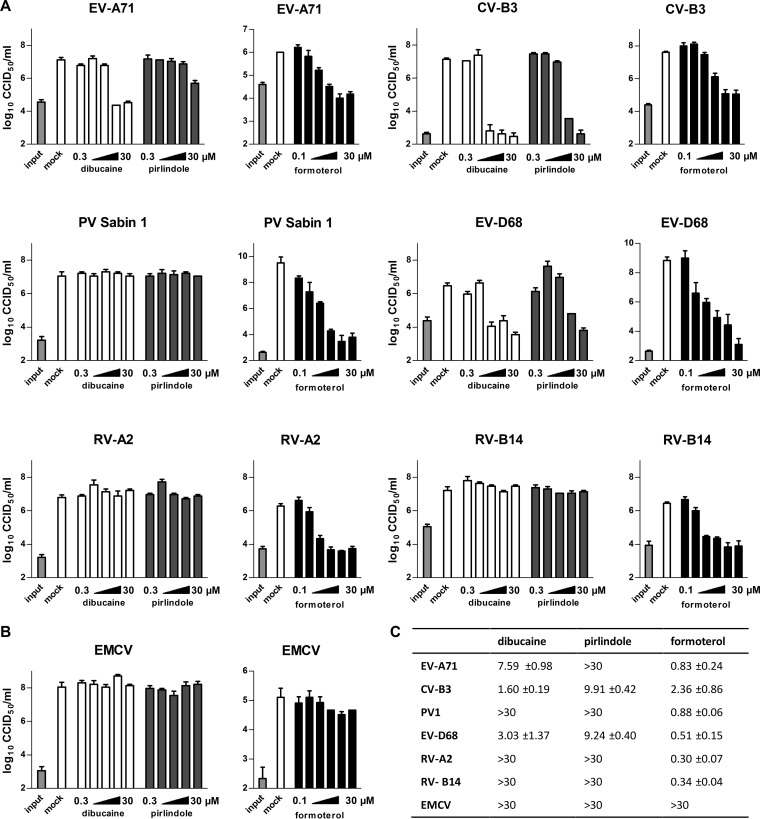
Pirlindole is an approved antidepressant in several countries, including Russia. It is used for the treatment of major depression and has also shown efficacy in fibromyalgia. Additionally, it has been identified as an inhibitor of enterovirus D68 and coxsackievirus B3. |
| Molecular Formula |
C15H18N2.CH4O3S
|
|---|---|
| Molecular Weight |
322.42248
|
| Exact Mass |
322.135
|
| CAS # |
60762-57-4
|
| Related CAS # |
Pirlindole mesylate;207572-66-5;Pirlindole-d4;1801646-26-3
|
| PubChem CID |
68802
|
| Appearance |
Off-white to light yellow solid powder
|
| Density |
1.29 g/cm3
|
| Boiling Point |
422.6ºC at 760 mmHg
|
| Flash Point |
209.4ºC
|
| LogP |
3.843
|
| Hydrogen Bond Donor Count |
1
|
| Hydrogen Bond Acceptor Count |
1
|
| Rotatable Bond Count |
0
|
| Heavy Atom Count |
17
|
| Complexity |
303
|
| Defined Atom Stereocenter Count |
0
|
| SMILES |
CC1=CC2=C(C=C1)N3C4=C2CCCC4NCC3
|
| InChi Key |
IWVRVEIKCBFZNF-UHFFFAOYSA-N
|
| InChi Code |
InChI=1S/C15H18N2/c1-10-5-6-14-12(9-10)11-3-2-4-13-15(11)17(14)8-7-16-13/h5-6,9,13,16H,2-4,7-8H2,1H3
|
| Chemical Name |
12-methyl-1,4-diazatetracyclo[7.6.1.05,16.010,15]hexadeca-9(16),10(15),11,13-tetraene
|
| HS Tariff Code |
2934.99.9001
|
| Storage |
Powder -20°C 3 years 4°C 2 years In solvent -80°C 6 months -20°C 1 month Note: Please store this product in a sealed and protected environment, avoid exposure to moisture. |
| Shipping Condition |
Room temperature (This product is stable at ambient temperature for a few days during ordinary shipping and time spent in Customs)
|
| Solubility (In Vitro) |
May dissolve in DMSO (in most cases), if not, try other solvents such as H2O, Ethanol, or DMF with a minute amount of products to avoid loss of samples
|
|---|---|
| Solubility (In Vivo) |
Note: Listed below are some common formulations that may be used to formulate products with low water solubility (e.g. < 1 mg/mL), you may test these formulations using a minute amount of products to avoid loss of samples.
Injection Formulations
Injection Formulation 1: DMSO : Tween 80: Saline = 10 : 5 : 85 (i.e. 100 μL DMSO stock solution → 50 μL Tween 80 → 850 μL Saline)(e.g. IP/IV/IM/SC) *Preparation of saline: Dissolve 0.9 g of sodium chloride in 100 mL ddH ₂ O to obtain a clear solution. Injection Formulation 2: DMSO : PEG300 :Tween 80 : Saline = 10 : 40 : 5 : 45 (i.e. 100 μL DMSO → 400 μLPEG300 → 50 μL Tween 80 → 450 μL Saline) Injection Formulation 3: DMSO : Corn oil = 10 : 90 (i.e. 100 μL DMSO → 900 μL Corn oil) Example: Take the Injection Formulation 3 (DMSO : Corn oil = 10 : 90) as an example, if 1 mL of 2.5 mg/mL working solution is to be prepared, you can take 100 μL 25 mg/mL DMSO stock solution and add to 900 μL corn oil, mix well to obtain a clear or suspension solution (2.5 mg/mL, ready for use in animals). View More
Injection Formulation 4: DMSO : 20% SBE-β-CD in saline = 10 : 90 [i.e. 100 μL DMSO → 900 μL (20% SBE-β-CD in saline)] Oral Formulations
Oral Formulation 1: Suspend in 0.5% CMC Na (carboxymethylcellulose sodium) Oral Formulation 2: Suspend in 0.5% Carboxymethyl cellulose Example: Take the Oral Formulation 1 (Suspend in 0.5% CMC Na) as an example, if 100 mL of 2.5 mg/mL working solution is to be prepared, you can first prepare 0.5% CMC Na solution by measuring 0.5 g CMC Na and dissolve it in 100 mL ddH2O to obtain a clear solution; then add 250 mg of the product to 100 mL 0.5% CMC Na solution, to make the suspension solution (2.5 mg/mL, ready for use in animals). View More
Oral Formulation 3: Dissolved in PEG400 (Please use freshly prepared in vivo formulations for optimal results.) |
| Preparing Stock Solutions | 1 mg | 5 mg | 10 mg | |
| 1 mM | 3.1015 mL | 15.5077 mL | 31.0154 mL | |
| 5 mM | 0.6203 mL | 3.1015 mL | 6.2031 mL | |
| 10 mM | 0.3102 mL | 1.5508 mL | 3.1015 mL |
*Note: Please select an appropriate solvent for the preparation of stock solution based on your experiment needs. For most products, DMSO can be used for preparing stock solutions (e.g. 5 mM, 10 mM, or 20 mM concentration); some products with high aqueous solubility may be dissolved in water directly. Solubility information is available at the above Solubility Data section. Once the stock solution is prepared, aliquot it to routine usage volumes and store at -20°C or -80°C. Avoid repeated freeze and thaw cycles.
Calculation results
Working concentration: mg/mL;
Method for preparing DMSO stock solution: mg drug pre-dissolved in μL DMSO (stock solution concentration mg/mL). Please contact us first if the concentration exceeds the DMSO solubility of the batch of drug.
Method for preparing in vivo formulation::Take μL DMSO stock solution, next add μL PEG300, mix and clarify, next addμL Tween 80, mix and clarify, next add μL ddH2O,mix and clarify.
(1) Please be sure that the solution is clear before the addition of next solvent. Dissolution methods like vortex, ultrasound or warming and heat may be used to aid dissolving.
(2) Be sure to add the solvent(s) in order.
|
Products are for research use only; We do not sell to patients
Copyright 2020 InvivoChem LLC | All Rights Reserved