| Size | Price | Stock | Qty |
|---|---|---|---|
| 1mg |
|
||
| 5mg |
|
||
| 10mg | |||
| 50mg | |||
| Other Sizes |


| ln Vitro |
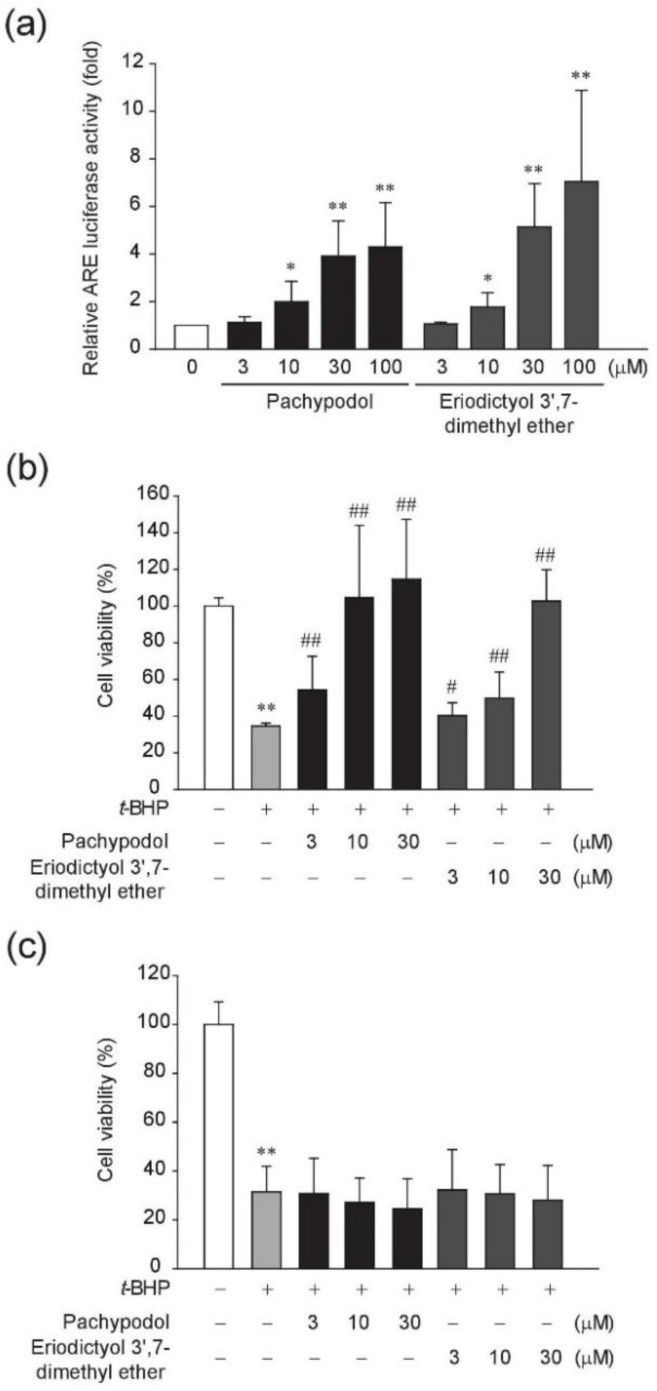
Enhances ARE-driven luciferase activity in a concentration-dependent manner in HepG2 cells; significant increase observed from 10 μM [1].
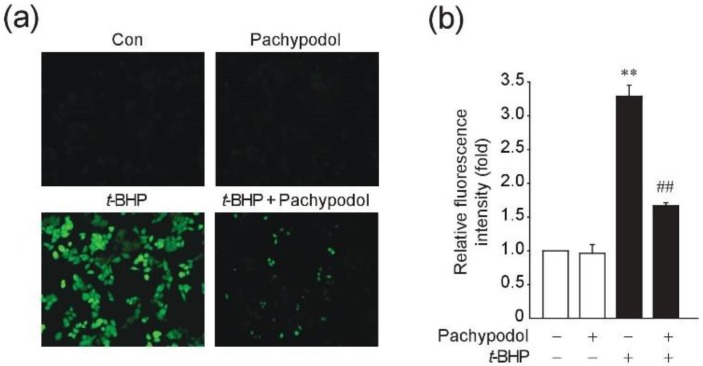
- Prevents tert-butylhydroperoxide (t-BHP, 500 μM, 4 h)-induced cell death in HepG2 cells after 12 h pretreatment (concentration-dependent); 1 h pretreatment shows no cytoprotective effect [1]. - Reduces intracellular ROS production induced by t-BHP (500 μM, 30 min) in HepG2 cells [1]. - Induces nuclear accumulation of Nrf2 in HepG2 cells (observed from 6 h exposure, concentration-dependent) [1]. - Upregulates mRNA and protein levels of antioxidant enzymes: catalytic subunit of glutamate-cysteine ligase (GCLC), modifier subunit of glutamate-cysteine ligase (GCLM), and NAD(P)H:quinone oxidoreductase 1 (NQO1) in HepG2 cells [1]. - Increases intracellular glutathione (GSH) content (~5-fold after 12 h) in HepG2 cells [1]. - Increases ERK phosphorylation (from 10 min up to 6 h) in HepG2 cells; ERK inhibition by PD98059 (10 μM) completely abolishes ARE-luciferase activity, nuclear Nrf2 accumulation, GCLC/GCLM mRNA upregulation, and cytoprotective effect [1]. - Inhibits growth of CaCo-2 colon cancer cells with IC50 = 185.6 μM (24 h treatment followed by 24 h recovery, MTT assay) [2]. |
|---|---|
| Cell Assay |
ARE-luciferase reporter assay: HepG2 cells stably transfected with pGL4.37 plasmid (containing four copies of an ARE) were seeded at 2×10⁵ cells/well in 12-well plates. After overnight serum starvation, cells were treated with pachypodol for 12 h. Cells were lysed with passive lysis buffer, and luciferase activity was measured using a luciferase assay system in a luminometer [1].
- Cell viability assay (MTT): HepG2 cells were seeded at 5×10⁴ cells/well in 48-well plates. After overnight serum starvation, cells were pretreated with pachypodol for 1 h or 12 h, then exposed to 500 μM t-BHP for 4 h. MTT (0.3 mg/mL) was added for the last 1 h, formazan crystals dissolved in DMSO, and absorbance measured at 570 nm [1]. - Intracellular ROS measurement: HepG2 cells pretreated with pachypodol for 12 h were exposed to 500 μM t-BHP for 30 min, then incubated with 10 μM CM-H₂DCFDA for 25 min. Cells were fixed with 4% paraformaldehyde and examined by fluorescence microscopy; fluorescence intensity was quantified using a microplate reader (excitation 485 nm, emission 520 nm) and normalized to protein concentration [1]. - Nuclear extraction and Western blot: HepG2 cells were plated at 5×10⁵ cells/well in 6-well plates. After treatment, cells were lysed with hypotonic buffer, and nuclear fractions were extracted. Proteins were resolved by SDS-PAGE, transferred to nitrocellulose membranes, blocked with 5% skim milk, incubated with primary antibodies (anti-Nrf2, anti-lamin A/C, anti-α-tubulin, anti-phospho-ERK, anti-ERK, etc.) overnight at 4°C, then with HRP-conjugated secondary antibodies, and developed using ECL chemiluminescence [1]. - Real-time PCR: Total RNA extracted from HepG2 cells using Trizol, reverse transcribed to cDNA using oligo-d(T)16 primers and AMV reverse transcriptase. Real-time PCR performed with SYBR Green I Master mix using primers for GCLC, GCLM, NQO1, and GAPDH (internal control) on a LightCycler 480 II instrument [1]. - Intracellular GSH measurement: HepG2 cell pellets were resuspended in ice-cold 5% metaphosphoric acid, sonicated, centrifuged, and supernatant used for colorimetric assay using a commercial GSH kit; absorbance measured at 400 nm [1]. - CaCo-2 cytotoxicity assay (MTT-based, Promega CellTiter 96 non-radioactive cell proliferation assay): CaCo-2 cells were seeded at 8000 cells/well in 96-well plates and incubated for 48 h. Medium replaced with fresh medium containing pachypodol at final concentrations 0, 0.5, 1, 2.5, 5, 10, 15, 20, 25, 30 μM and incubated for 24 h. Medium removed, cells washed with PBS, fresh medium added, and incubated for another 24 h. MTT dye solution (15 μL) added and incubated for 4 h, then solubilization/stop solution (100 μL) added and incubated overnight. Absorbance recorded at 570 nm (reference 650 nm) [2]. |
| Animal Protocol |
Brine shrimp lethality assay: Brine shrimp eggs were hatched. Test compound (pachypodol) was applied at various concentrations. Mortality was recorded after 24 h. LD50 value (435.8 μM) was determined by Probit analysis. Percentage mortalities were adjusted using Abbott’s formula: P = (Pi - C) / (1 - C), where P = observed nonzero mortality rate, C = control mortality rate [2].
|
| Toxicity/Toxicokinetics |
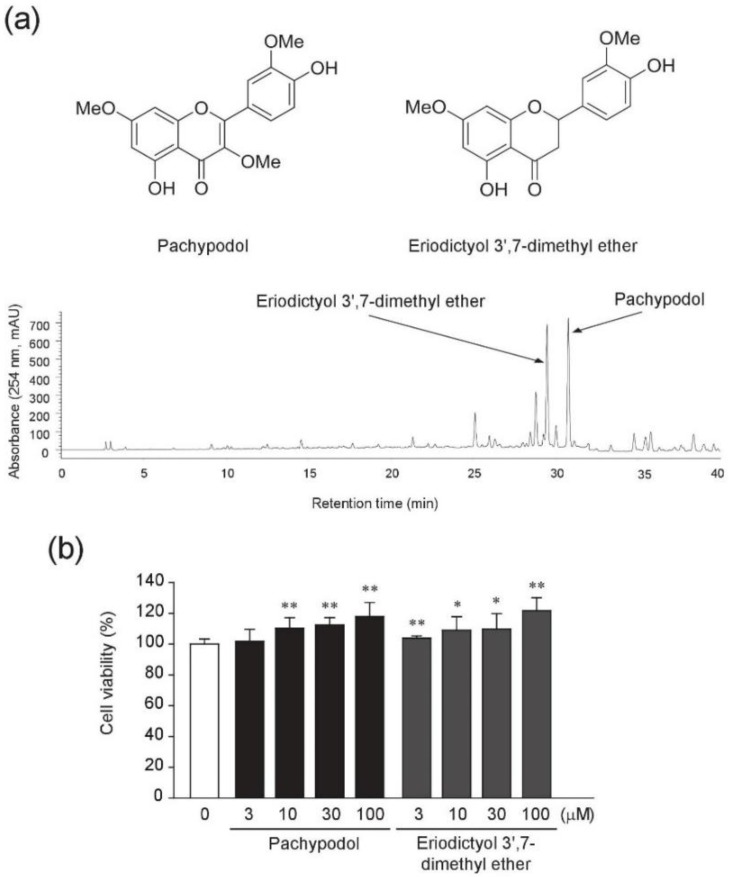
In HepG2 cells, pachypodol showed no cytotoxicity at concentrations of 3–100 μM for 24 h (MTT assay) [1].
- Brine shrimp lethality assay: LD50 = 435.8 μM after 24 h exposure [2]. - CaCo-2 colon cancer cells: IC50 = 185.6 μM (24 h treatment followed by 24 h recovery) [2]. |
| References |
|
| Additional Infomation |
Pachypodol is a trimethoxyflavonoid, a derivative of quercetin, with its hydroxyl groups at the 3, 7, and 3' positions replaced by methoxy groups. It has been isolated from Combretum quadrangulare and Euodia elleryana. Pachypodol functions as a plant metabolite and an antiemetic. It is a dihydroxyflavonoid and a trimethoxyflavonoid, functionally related to quercetin. Pachypodol has been reported in Melicope triphylla, Melicope semecarpifolia, and other organisms with relevant data.
This is the first study to evaluate the antioxidant and cytoprotective effects of pachypodol in HepG2 cells and the underlying molecular mechanism (ERK-dependent Nrf2 activation) [1]. - Pachypodol (5,4′-dihydroxy-3,7,3′-trimethoxyflavone) was isolated from Pogostemon cablin Bentham (methanol extract, n-hexane fraction, centrifugal partition chromatography) and from Calycopteris floribunda Lam. (dichloromethane-methanol extract, silica gel column chromatography) [1,2]. |
| Molecular Formula |
C18H16O7
|
|---|---|
| Molecular Weight |
344.31
|
| Exact Mass |
344.089
|
| CAS # |
33708-72-4
|
| Related CAS # |
Pachypodol; 33708-72-4
|
| PubChem CID |
5281677
|
| Appearance |
White to yellow solid powder
|
| Density |
1.5±0.1 g/cm3
|
| Boiling Point |
598.8±50.0 °C at 760 mmHg
|
| Flash Point |
220.7±23.6 °C
|
| Vapour Pressure |
0.0±1.8 mmHg at 25°C
|
| Index of Refraction |
1.654
|
| Source |
Originated from plants: other families
|
| LogP |
2.56
|
| Hydrogen Bond Donor Count |
2
|
| Hydrogen Bond Acceptor Count |
7
|
| Rotatable Bond Count |
4
|
| Heavy Atom Count |
25
|
| Complexity |
532
|
| Defined Atom Stereocenter Count |
0
|
| SMILES |
O=C1C(OC)=C(C2=CC(OC)=C(O)C=C2)OC3=CC(OC)=CC(O)=C13
|
| InChi Key |
KQFUXLQBMQGNRT-UHFFFAOYSA-N
|
| InChi Code |
InChI=1S/C18H16O7/c1-22-10-7-12(20)15-14(8-10)25-17(18(24-3)16(15)21)9-4-5-11(19)13(6-9)23-2/h4-8,19-20H,1-3H3
|
| Chemical Name |
5-hydroxy-2-(4-hydroxy-3-methoxyphenyl)-3,7-dimethoxy-4H-chromen-4-one
|
| Synonyms |
Pachypodol Ro-09-0179 Ro09-0179Ro 09-0179
|
| HS Tariff Code |
2934.99.9001
|
| Storage |
Powder -20°C 3 years 4°C 2 years In solvent -80°C 6 months -20°C 1 month Note: Please store this product in a sealed and protected environment (e.g. under nitrogen), avoid exposure to moisture and light. |
| Shipping Condition |
Room temperature (This product is stable at ambient temperature for a few days during ordinary shipping and time spent in Customs)
|
| Solubility (In Vitro) |
DMSO : ~100 mg/mL (~290.43 mM)
|
|---|---|
| Solubility (In Vivo) |
Note: Listed below are some common formulations that may be used to formulate products with low water solubility (e.g. < 1 mg/mL), you may test these formulations using a minute amount of products to avoid loss of samples.
Injection Formulations
Injection Formulation 1: DMSO : Tween 80: Saline = 10 : 5 : 85 (i.e. 100 μL DMSO stock solution → 50 μL Tween 80 → 850 μL Saline)(e.g. IP/IV/IM/SC) *Preparation of saline: Dissolve 0.9 g of sodium chloride in 100 mL ddH ₂ O to obtain a clear solution. Injection Formulation 2: DMSO : PEG300 :Tween 80 : Saline = 10 : 40 : 5 : 45 (i.e. 100 μL DMSO → 400 μLPEG300 → 50 μL Tween 80 → 450 μL Saline) Injection Formulation 3: DMSO : Corn oil = 10 : 90 (i.e. 100 μL DMSO → 900 μL Corn oil) Example: Take the Injection Formulation 3 (DMSO : Corn oil = 10 : 90) as an example, if 1 mL of 2.5 mg/mL working solution is to be prepared, you can take 100 μL 25 mg/mL DMSO stock solution and add to 900 μL corn oil, mix well to obtain a clear or suspension solution (2.5 mg/mL, ready for use in animals). View More
Injection Formulation 4: DMSO : 20% SBE-β-CD in saline = 10 : 90 [i.e. 100 μL DMSO → 900 μL (20% SBE-β-CD in saline)] Oral Formulations
Oral Formulation 1: Suspend in 0.5% CMC Na (carboxymethylcellulose sodium) Oral Formulation 2: Suspend in 0.5% Carboxymethyl cellulose Example: Take the Oral Formulation 1 (Suspend in 0.5% CMC Na) as an example, if 100 mL of 2.5 mg/mL working solution is to be prepared, you can first prepare 0.5% CMC Na solution by measuring 0.5 g CMC Na and dissolve it in 100 mL ddH2O to obtain a clear solution; then add 250 mg of the product to 100 mL 0.5% CMC Na solution, to make the suspension solution (2.5 mg/mL, ready for use in animals). View More
Oral Formulation 3: Dissolved in PEG400 (Please use freshly prepared in vivo formulations for optimal results.) |
| Preparing Stock Solutions | 1 mg | 5 mg | 10 mg | |
| 1 mM | 2.9044 mL | 14.5218 mL | 29.0436 mL | |
| 5 mM | 0.5809 mL | 2.9044 mL | 5.8087 mL | |
| 10 mM | 0.2904 mL | 1.4522 mL | 2.9044 mL |
*Note: Please select an appropriate solvent for the preparation of stock solution based on your experiment needs. For most products, DMSO can be used for preparing stock solutions (e.g. 5 mM, 10 mM, or 20 mM concentration); some products with high aqueous solubility may be dissolved in water directly. Solubility information is available at the above Solubility Data section. Once the stock solution is prepared, aliquot it to routine usage volumes and store at -20°C or -80°C. Avoid repeated freeze and thaw cycles.
Calculation results
Working concentration: mg/mL;
Method for preparing DMSO stock solution: mg drug pre-dissolved in μL DMSO (stock solution concentration mg/mL). Please contact us first if the concentration exceeds the DMSO solubility of the batch of drug.
Method for preparing in vivo formulation::Take μL DMSO stock solution, next add μL PEG300, mix and clarify, next addμL Tween 80, mix and clarify, next add μL ddH2O,mix and clarify.
(1) Please be sure that the solution is clear before the addition of next solvent. Dissolution methods like vortex, ultrasound or warming and heat may be used to aid dissolving.
(2) Be sure to add the solvent(s) in order.
|
|
|
Products are for research use only; We do not sell to patients
Copyright 2020 InvivoChem LLC | All Rights Reserved