| Size | Price | Stock | Qty |
|---|---|---|---|
| 5mg |
|
||
| 10mg |
|
||
| 25mg |
|
||
| 50mg |
|
||
| Other Sizes |


| Targets |
Nitroaspirin targets cyclooxygenase (COX), acting as a direct and irreversible inhibitor of COX-1. It also functions as a dual inhibitor of arginase and iNOS, with immunomodulatory activity. The nitric oxide released from the compound contributes to its vasodilatory and gastric protective effects.
|
|---|---|
| ln Vitro |
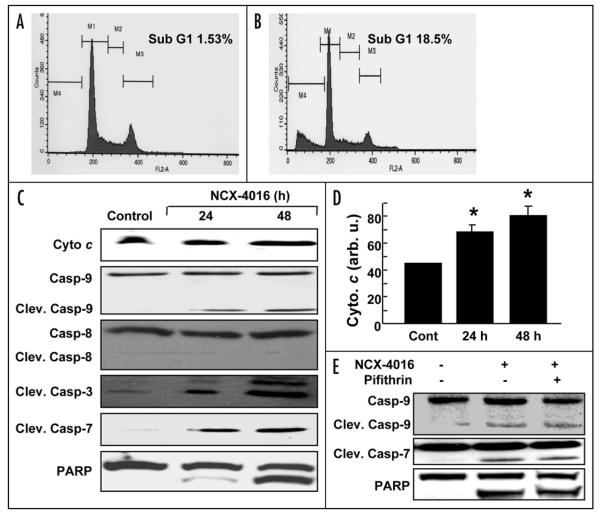
In vitro, nitroaspirin inhibits the activity of cyclooxygenase (COX) I and II, thereby preventing the production of prostaglandins and thromboxanes. In tumor cells, the NO donor portion may arrest the cell cycle in G1 and G2 phases and induce apoptosis through a caspase-mediated mechanism. It has antithrombotic and antiplatelet properties.
|
| ln Vivo |
In vivo, the nitric oxide (NO) released from nitroaspirin may protect the gastric mucosa from aspirin derivative damage by regulating prostaglandins. It has been investigated for the treatment of intermittent claudication. The compound's dual mechanism—COX inhibition and NO donation—provides anti-inflammatory, analgesic, antipyretic, antithrombotic, and gastric protective effects.
|
| Enzyme Assay |
The activity of nitroaspirin can be assessed using COX enzyme inhibition assays. The enzyme is incubated with a substrate and the compound, and the production of prostaglandins is measured. The nitric oxide release can be measured using the Griess reaction or a chemiluminescence-based assay. The IC50 for COX inhibition and NO release are determined.
|
| Cell Assay |
The cellular effects of nitroaspirin are evaluated using various cell lines, including cancer cells and platelets. The compound's effects on cell cycle progression, apoptosis, and platelet aggregation are measured. The IC50 for these effects is determined. The compound's ability to inhibit COX activity in cells is assessed by measuring prostaglandin levels.
|
| Animal Protocol |
In vivo studies with nitroaspirin involve animal models of thrombosis, inflammation, and cancer. The compound is typically administered via oral or intravenous routes. Parameters such as platelet aggregation, tumor growth, and gastric mucosal integrity are measured. The compound's pharmacokinetic profile and tolerability are also assessed.
|
| ADME/Pharmacokinetics |
Nitroaspirin has a molecular formula of C16H13NO7 and a molecular weight of 331.28. It has a melting point of 61-62°C and a logP of 3.062. It is a solid at room temperature with a density of 1.347 g/cm3.
|
| Toxicity/Toxicokinetics |
Specific toxicology data for nitroaspirin are not detailed in the available literature. However, as a derivative of aspirin, it may share some of the gastrointestinal and bleeding risks associated with aspirin. The nitric oxide moiety is designed to mitigate the gastric toxicity of aspirin.
|
| References |
|
| Additional Infomation |
2-Acetoxybenzoic acid [3-(nitrooxymethyl)phenyl] ester is a carbonyl compound. Nitroaspirin has been investigated for the treatment of intermittent claudication. The nitric oxide-releasing acetylsalicylic acid derivative is a nitric oxide (NO) donor derivative of acetylsalicylic acid with anti-inflammatory, analgesic, antipyretic, antithrombotic, gastric protective, and potential antitumor activities. The acetylsalicylic acid derivative portion of this drug inhibits the activity of cyclooxygenase (COX) I and II, thereby preventing the production of prostaglandins and thromboxanes. The reduction in prostaglandin synthesis is the reason for the drug's anti-inflammatory, antipyretic, and analgesic effects; the reduction in thromboxane A2 synthesis leads to irreversible inhibition of platelet aggregation. The nitric oxide (NO) released in vivo from the cleavage of the acetylsalicylic acid derivative may protect the gastric mucosa from aspirin derivative damage by regulating prostaglandins. In tumor cells, this NO donor portion may arrest the cell cycle in G1 and G2 phases and induce apoptosis through a caspase-mediated mechanism.
Nitroaspirin (NCX 4016) is a nitric oxide-releasing derivative of acetylsalicylic acid that has been investigated for the treatment of intermittent claudication. It has anti-inflammatory, analgesic, antipyretic, antithrombotic, gastric protective, and potential antitumor activities. It represents a research effort to improve the safety profile of aspirin by adding a nitric oxide donor moiety. |
| Molecular Formula |
C16H13NO7
|
|---|---|
| Molecular Weight |
331.28
|
| Exact Mass |
331.069
|
| CAS # |
175033-36-0
|
| PubChem CID |
119032
|
| Appearance |
Typically exists as solid at room temperature
|
| Density |
1.347g/cm3
|
| Boiling Point |
499.3ºC at 760mmHg
|
| Melting Point |
61-62ºC
|
| Flash Point |
214.3ºC
|
| Vapour Pressure |
4.21E-10mmHg at 25°C
|
| Index of Refraction |
1.58
|
| LogP |
3.062
|
| Hydrogen Bond Donor Count |
0
|
| Hydrogen Bond Acceptor Count |
7
|
| Rotatable Bond Count |
7
|
| Heavy Atom Count |
24
|
| Complexity |
462
|
| Defined Atom Stereocenter Count |
0
|
| SMILES |
O=[N+](OCC1C=CC=C(OC(C2=CC=CC=C2OC(=O)C)=O)C=1)[O-]
|
| InChi Key |
SGYYAQBLQPNUIL-UHFFFAOYSA-N
|
| InChi Code |
InChI=1S/C16H13NO7/c1-11(18)23-15-9-5-3-7-13(15)16(19)24-14-8-4-2-6-12(14)10-22-17(20)21/h2-9H,10H2,1H3
|
| Chemical Name |
2-((nitrooxy)methyl)phenyl 2-acetoxybenzoate
|
| Synonyms |
NCX-4016 NO-ASA NCX 4016m-NO-ASA NCX4016 NOASA mNOASA m-NO-aspirinNO ASA m NO ASA
|
| HS Tariff Code |
2934.99.9001
|
| Storage |
Powder -20°C 3 years 4°C 2 years In solvent -80°C 6 months -20°C 1 month |
| Shipping Condition |
Room temperature (This product is stable at ambient temperature for a few days during ordinary shipping and time spent in Customs)
|
| Solubility (In Vitro) |
May dissolve in DMSO (in most cases), if not, try other solvents such as H2O, Ethanol, or DMF with a minute amount of products to avoid loss of samples
|
|---|---|
| Solubility (In Vivo) |
Note: Listed below are some common formulations that may be used to formulate products with low water solubility (e.g. < 1 mg/mL), you may test these formulations using a minute amount of products to avoid loss of samples.
Injection Formulations
Injection Formulation 1: DMSO : Tween 80: Saline = 10 : 5 : 85 (i.e. 100 μL DMSO stock solution → 50 μL Tween 80 → 850 μL Saline)(e.g. IP/IV/IM/SC) *Preparation of saline: Dissolve 0.9 g of sodium chloride in 100 mL ddH ₂ O to obtain a clear solution. Injection Formulation 2: DMSO : PEG300 :Tween 80 : Saline = 10 : 40 : 5 : 45 (i.e. 100 μL DMSO → 400 μLPEG300 → 50 μL Tween 80 → 450 μL Saline) Injection Formulation 3: DMSO : Corn oil = 10 : 90 (i.e. 100 μL DMSO → 900 μL Corn oil) Example: Take the Injection Formulation 3 (DMSO : Corn oil = 10 : 90) as an example, if 1 mL of 2.5 mg/mL working solution is to be prepared, you can take 100 μL 25 mg/mL DMSO stock solution and add to 900 μL corn oil, mix well to obtain a clear or suspension solution (2.5 mg/mL, ready for use in animals). View More
Injection Formulation 4: DMSO : 20% SBE-β-CD in saline = 10 : 90 [i.e. 100 μL DMSO → 900 μL (20% SBE-β-CD in saline)] Oral Formulations
Oral Formulation 1: Suspend in 0.5% CMC Na (carboxymethylcellulose sodium) Oral Formulation 2: Suspend in 0.5% Carboxymethyl cellulose Example: Take the Oral Formulation 1 (Suspend in 0.5% CMC Na) as an example, if 100 mL of 2.5 mg/mL working solution is to be prepared, you can first prepare 0.5% CMC Na solution by measuring 0.5 g CMC Na and dissolve it in 100 mL ddH2O to obtain a clear solution; then add 250 mg of the product to 100 mL 0.5% CMC Na solution, to make the suspension solution (2.5 mg/mL, ready for use in animals). View More
Oral Formulation 3: Dissolved in PEG400 (Please use freshly prepared in vivo formulations for optimal results.) |
| Preparing Stock Solutions | 1 mg | 5 mg | 10 mg | |
| 1 mM | 3.0186 mL | 15.0930 mL | 30.1859 mL | |
| 5 mM | 0.6037 mL | 3.0186 mL | 6.0372 mL | |
| 10 mM | 0.3019 mL | 1.5093 mL | 3.0186 mL |
*Note: Please select an appropriate solvent for the preparation of stock solution based on your experiment needs. For most products, DMSO can be used for preparing stock solutions (e.g. 5 mM, 10 mM, or 20 mM concentration); some products with high aqueous solubility may be dissolved in water directly. Solubility information is available at the above Solubility Data section. Once the stock solution is prepared, aliquot it to routine usage volumes and store at -20°C or -80°C. Avoid repeated freeze and thaw cycles.
Calculation results
Working concentration: mg/mL;
Method for preparing DMSO stock solution: mg drug pre-dissolved in μL DMSO (stock solution concentration mg/mL). Please contact us first if the concentration exceeds the DMSO solubility of the batch of drug.
Method for preparing in vivo formulation::Take μL DMSO stock solution, next add μL PEG300, mix and clarify, next addμL Tween 80, mix and clarify, next add μL ddH2O,mix and clarify.
(1) Please be sure that the solution is clear before the addition of next solvent. Dissolution methods like vortex, ultrasound or warming and heat may be used to aid dissolving.
(2) Be sure to add the solvent(s) in order.
|
|
|
Products are for research use only; We do not sell to patients
Copyright 2020 InvivoChem LLC | All Rights Reserved