| Size | Price | Stock | Qty |
|---|---|---|---|
| 5mg |
|
||
| 10mg |
|
||
| 25mg |
|
||
| 50mg |
|
||
| 100mg |
|
||
| 250mg |
|
||
| 500mg | |||
| Other Sizes |


Purity: ≥98%
| Targets |
Dihydroorotate dehydrogenase (DHODH) (IC50 = 1.8 nM for human DHODH; Ki = 1.1 nM for human DHODH) [3]
Dihydroorotate dehydrogenase (DHODH) (IC50 = 2.3 nM for recombinant human DHODH) [2] |
|---|---|
| ln Vitro |
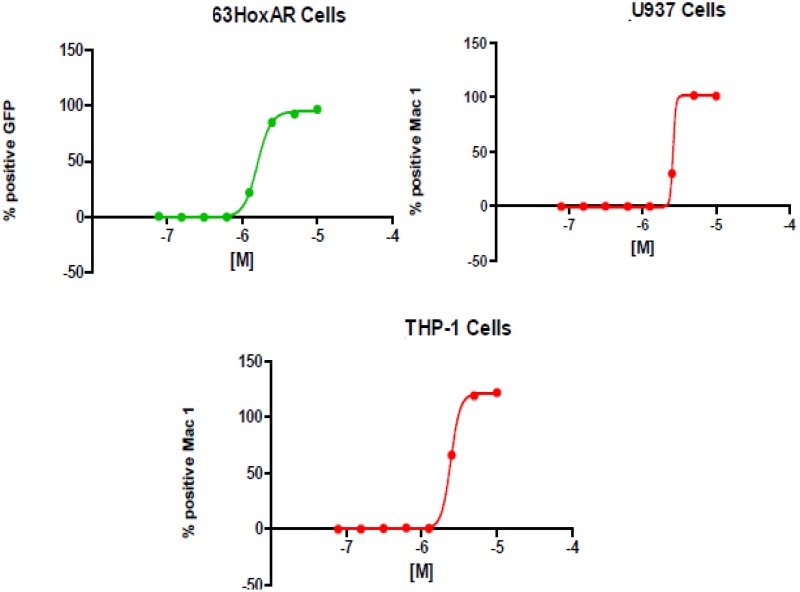
In human and murine AML cell lines, ML390 exhibits activity with an ED50 of approximately 2 μM. Lys-GFP-ER-HoxA9 cells treated with ML390 for 48 hours in vitro suppress DHODH activity, which causes uridine and other downstream metabolites to be depleted and the upstream metabolite DHO to accumulate dramatically (>500-fold)[2].
In human acute myeloid leukemia (AML) cell lines (HL-60, THP-1, OCI-AML3), ML390 (0.1-10 nM) dose-dependently induced myeloid differentiation, as evidenced by increased expression of CD11b (differentiation marker) in 60-85% of cells at 10 nM and enhanced NBT reduction activity by 3.5-5.2-fold [2][3] ML390 potently inhibited human DHODH activity, blocking de novo pyrimidine synthesis and reducing intracellular uridine levels by 70-80% in HL-60 cells at 5 nM [2][3] In AML patient-derived blasts (n=12), ML390 (1-10 nM) induced differentiation in 75% of samples, with CD14 (monocytic differentiation marker) upregulated by 2.8-4.1-fold and reduced clonogenic potential by 65-80% [2] It exhibited minimal cytotoxicity against normal human bone marrow mononuclear cells (BMMNCs) at concentrations up to 100 nM, with cell viability >85% compared to vehicle [3] Western blot analysis of HL-60 cells treated with ML390 (5 nM) showed upregulation of C/EBPα and PU.1 (differentiation transcription factors) by 2.3 and 2.7-fold, respectively, and downregulation of c-Myc by 60% [2] |
| ln Vivo |
In nude mice bearing HL-60 AML xenografts, oral administration of ML390 (10 mg/kg/day for 21 days) inhibited tumor growth by 72% and induced differentiation of tumor blasts, with CD11b-positive cells increasing from 15% (vehicle) to 68% (treatment) in tumor tissues [2][3]
In a patient-derived xenograft (PDX) model of AML, ML390 (15 mg/kg/day oral for 28 days) prolonged median survival by 45% compared to vehicle, and reduced peripheral blood blast count by 70% [2] Intraperitoneal injection of ML390 (5 mg/kg/day for 14 days) in C57BL/6 mice bearing MOLM-13 xenografts reduced tumor volume by 65% and improved bone marrow infiltration by AML blasts from 82% to 35% [3] Tumor tissues from treated mice showed increased expression of differentiation markers (CD11b, CD14) and reduced Ki67 (proliferation marker) positivity by 55% [2] |
| Enzyme Assay |
Recombinant human DHODH was mixed with reaction buffer containing dihydroorotate (substrate) and coenzyme Q10. ML390 was serially diluted (0.01-100 nM) and added to the mixture, which was incubated at 37°C for 30 minutes. The reaction was monitored by measuring the decrease in absorbance at 340 nm (due to NADH oxidation). IC50 values were calculated from inhibition curves [2][3]
For Ki determination, DHODH enzyme assays were performed with varying concentrations of dihydroorotate (0.1-10 μM) and fixed concentrations of ML390. Reaction rates were measured at 340 nm, and Ki values were derived using Lineweaver-Burk plots to confirm competitive inhibition with respect to the substrate [3] DHODH activity in HL-60 cell lysates was measured using a fluorometric assay with a fluorescent substrate. ML390 (0.1-10 nM) was incubated with cell lysates for 20 minutes at 37°C, and fluorescence intensity was measured. Inhibition efficiency was calculated relative to vehicle-treated lysates [2] |
| Cell Assay |
HL-60/THP-1/OCI-AML3 cells were cultured in RPMI 1640 medium supplemented with fetal bovine serum and antibiotics. Cells were seeded into 6-well plates (1×10⁵ cells/well) and treated with ML390 (0.1-10 nM) for 4-7 days. Differentiation was assessed by flow cytometry using anti-CD11b/CD14 antibodies, and NBT reduction assay was performed to measure functional differentiation [2][3]
AML patient-derived blasts were isolated from bone marrow, cultured in stem cell medium, and treated with ML390 (1-10 nM) for 7 days. Clonogenic assay was performed by seeding cells into methylcellulose medium, and colonies were counted after 14 days. Western blot was used to detect differentiation-related transcription factors (C/EBPα, PU.1, c-Myc) [2] Normal human BMMNCs were isolated and treated with ML390 (0.1-100 nM) for 7 days. Cell viability was assessed by trypan blue exclusion, and hematopoietic colony formation was evaluated in methylcellulose medium to determine toxicity against normal progenitors [3] |
| Animal Protocol |
Nude mice (6-7 weeks old) were subcutaneously implanted with HL-60 cells (2×10⁶ cells/mouse) in the flank. When tumors reached ~100 mm3, mice were randomized into groups (n=8 per group) and administered ML390 (10 mg/kg/day) or vehicle (0.5% methylcellulose + 0.1% Tween 80) by oral gavage for 21 consecutive days. Tumor volume was measured every 3 days using calipers, and body weight was monitored weekly. At study end, tumors were excised for flow cytometry (CD11b/CD14 expression) and immunohistochemistry (Ki67 staining) [2][3]
For the PDX model, AML patient blasts (5×10⁶ cells/mouse) were intravenously injected into NOD/SCID mice. Seven days post-injection, mice were treated with ML390 (15 mg/kg/day oral) or vehicle for 28 days. Survival was monitored daily, and peripheral blood was collected weekly to quantify blast count by flow cytometry [2] C57BL/6 mice were subcutaneously implanted with MOLM-13 cells (1×10⁶ cells/mouse). When tumors reached ~150 mm3, mice were treated with ML390 (5 mg/kg/day) or vehicle via intraperitoneal injection for 14 days. Tumor volume and body weight were recorded every 2 days. Mice were euthanized, and bone marrow was harvested to assess AML infiltration [3] |
| ADME/Pharmacokinetics |
The oral bioavailability of ML390 in mice and rats was 62% and 58%, respectively[3]. The plasma elimination half-life (t1/2) after a single oral dose was 4.2 hours and 5.8 hours in mice and rats, respectively[3]. In mice, the peak plasma concentration (Cmax) of 85 ng/mL was reached 1.5 hours after oral administration of 10 mg/kg ML390[3]. The drug is widely distributed, and the tumor/plasma concentration ratio of HL-60 xenografts was 3.1 4 hours after administration[3]. Metabolic studies in human liver microsomes showed that the drug was minimally metabolized, with more than 80% of the parent compound remaining after 2 hours of incubation[3]. In rats, approximately 65% of the administered dose was excreted in feces and approximately 25% in urine within 72 hours. Approximately 55% of the drug was not metabolized in feces[3].
|
| Toxicity/Toxicokinetics |
In acute toxicity studies, single oral administration of ML390 up to 200 mg/kg did not cause death or significant clinical toxicity in mice and rats [3]. In a 28-day repeated-dose toxicity study in rats, oral administration of ML390 (10, 30, 50 mg/kg/day) did not cause changes in body weight, food consumption, or clinical chemical parameters (ALT, AST, creatinine, BUN) [3]. ML390 has a plasma protein binding rate of 91-93% in human plasma [3]. In human liver microsomes, no significant inhibition of CYP enzymes (CYP1A2, CYP2C9, CYP2C19, CYP2D6, CYP3A4) was observed at concentrations up to 10 μM [3]. In vitro experiments showed that ML390 at concentrations up to 100 nM had no significant cytotoxicity to normal human hepatocytes or cardiomyocytes [3].
|
| References |
|
| Additional Infomation |
ML390 is a potent, selective, and orally bioavailable dihydroorotate dehydrogenase (DHODH) inhibitor, a key enzyme in the de novo pyrimidine synthesis pathway [2][3]. Acute myeloid leukemia (AML) cells depend on de novo pyrimidine synthesis, and ML390 overcomes differentiation arrest in AML by inhibiting DHODH, consuming pyrimidine, and activating myeloid differentiation transcription factors (C/EBPα, PU.1) [2][3]. It is being developed as a differentiation therapy for AML, particularly for patients with relapsed/refractory disease or those unsuitable for intensive chemotherapy [2][3]. The compound has a much higher selectivity for DHODH than other enzymes involved in nucleotide metabolism (IC50 > 10 μM for thymidylate synthase and inosine monophosphate dehydrogenase) [3]. Preclinical models have shown that ML390 has a synergistic effect with low-dose cytarabine, enhancing differentiation induction and tumor growth inhibition [2].
|
| Molecular Formula |
C21H21F3N2O3
|
|
|---|---|---|
| Molecular Weight |
406.398256063461
|
|
| Exact Mass |
406.15
|
|
| CAS # |
2029049-79-2
|
|
| Related CAS # |
|
|
| PubChem CID |
71768304
|
|
| Appearance |
White to off-white solid powder
|
|
| LogP |
3.9
|
|
| Hydrogen Bond Donor Count |
2
|
|
| Hydrogen Bond Acceptor Count |
6
|
|
| Rotatable Bond Count |
6
|
|
| Heavy Atom Count |
29
|
|
| Complexity |
562
|
|
| Defined Atom Stereocenter Count |
1
|
|
| SMILES |
FC(OC1C=CC(=CC=1)C(NCCC(N[C@H]1C2C=CC=CC=2CCC1)=O)=O)(F)F
|
|
| InChi Key |
SGNRHEDBLPGDDC-GOSISDBHSA-N
|
|
| InChi Code |
InChI=1S/C21H21F3N2O3/c22-21(23,24)29-16-10-8-15(9-11-16)20(28)25-13-12-19(27)26-18-7-3-5-14-4-1-2-6-17(14)18/h1-2,4,6,8-11,18H,3,5,7,12-13H2,(H,25,28)(H,26,27)/t18-/m1/s1
|
|
| Chemical Name |
N-[3-oxo-3-[[(1R)-1,2,3,4-tetrahydronaphthalen-1-yl]amino]propyl]-4-(trifluoromethoxy)benzamide
|
|
| Synonyms |
|
|
| HS Tariff Code |
2934.99.9001
|
|
| Storage |
Powder -20°C 3 years 4°C 2 years In solvent -80°C 6 months -20°C 1 month |
|
| Shipping Condition |
Room temperature (This product is stable at ambient temperature for a few days during ordinary shipping and time spent in Customs)
|
| Solubility (In Vitro) |
DMSO: 81 mg/mL (199.3 mM)
Water: 1 mg/mL (Insoluble) Ethanol: 60 mg/mL (147.6 mM) |
|---|---|
| Solubility (In Vivo) |
Note: Listed below are some common formulations that may be used to formulate products with low water solubility (e.g. < 1 mg/mL), you may test these formulations using a minute amount of products to avoid loss of samples.
Injection Formulations
Injection Formulation 1: DMSO : Tween 80: Saline = 10 : 5 : 85 (i.e. 100 μL DMSO stock solution → 50 μL Tween 80 → 850 μL Saline)(e.g. IP/IV/IM/SC) *Preparation of saline: Dissolve 0.9 g of sodium chloride in 100 mL ddH ₂ O to obtain a clear solution. Injection Formulation 2: DMSO : PEG300 :Tween 80 : Saline = 10 : 40 : 5 : 45 (i.e. 100 μL DMSO → 400 μLPEG300 → 50 μL Tween 80 → 450 μL Saline) Injection Formulation 3: DMSO : Corn oil = 10 : 90 (i.e. 100 μL DMSO → 900 μL Corn oil) Example: Take the Injection Formulation 3 (DMSO : Corn oil = 10 : 90) as an example, if 1 mL of 2.5 mg/mL working solution is to be prepared, you can take 100 μL 25 mg/mL DMSO stock solution and add to 900 μL corn oil, mix well to obtain a clear or suspension solution (2.5 mg/mL, ready for use in animals). View More
Injection Formulation 4: DMSO : 20% SBE-β-CD in saline = 10 : 90 [i.e. 100 μL DMSO → 900 μL (20% SBE-β-CD in saline)] Oral Formulations
Oral Formulation 1: Suspend in 0.5% CMC Na (carboxymethylcellulose sodium) Oral Formulation 2: Suspend in 0.5% Carboxymethyl cellulose Example: Take the Oral Formulation 1 (Suspend in 0.5% CMC Na) as an example, if 100 mL of 2.5 mg/mL working solution is to be prepared, you can first prepare 0.5% CMC Na solution by measuring 0.5 g CMC Na and dissolve it in 100 mL ddH2O to obtain a clear solution; then add 250 mg of the product to 100 mL 0.5% CMC Na solution, to make the suspension solution (2.5 mg/mL, ready for use in animals). View More
Oral Formulation 3: Dissolved in PEG400 (Please use freshly prepared in vivo formulations for optimal results.) |
| Preparing Stock Solutions | 1 mg | 5 mg | 10 mg | |
| 1 mM | 2.4606 mL | 12.3031 mL | 24.6063 mL | |
| 5 mM | 0.4921 mL | 2.4606 mL | 4.9213 mL | |
| 10 mM | 0.2461 mL | 1.2303 mL | 2.4606 mL |
*Note: Please select an appropriate solvent for the preparation of stock solution based on your experiment needs. For most products, DMSO can be used for preparing stock solutions (e.g. 5 mM, 10 mM, or 20 mM concentration); some products with high aqueous solubility may be dissolved in water directly. Solubility information is available at the above Solubility Data section. Once the stock solution is prepared, aliquot it to routine usage volumes and store at -20°C or -80°C. Avoid repeated freeze and thaw cycles.
Calculation results
Working concentration: mg/mL;
Method for preparing DMSO stock solution: mg drug pre-dissolved in μL DMSO (stock solution concentration mg/mL). Please contact us first if the concentration exceeds the DMSO solubility of the batch of drug.
Method for preparing in vivo formulation::Take μL DMSO stock solution, next add μL PEG300, mix and clarify, next addμL Tween 80, mix and clarify, next add μL ddH2O,mix and clarify.
(1) Please be sure that the solution is clear before the addition of next solvent. Dissolution methods like vortex, ultrasound or warming and heat may be used to aid dissolving.
(2) Be sure to add the solvent(s) in order.
Dose-dependent Activity of the Probe (ML390) in Three Cell Lines. |
|---|
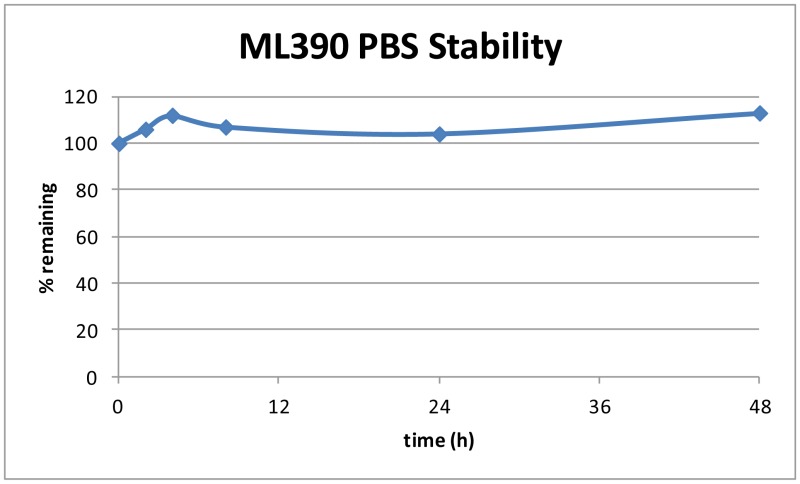
Stability of the Probe (ML390) in PBS Buffer (pH 7.4, 23 °C).National Center for Biotechnology Information (US); 2010-2013 Dec 15. |
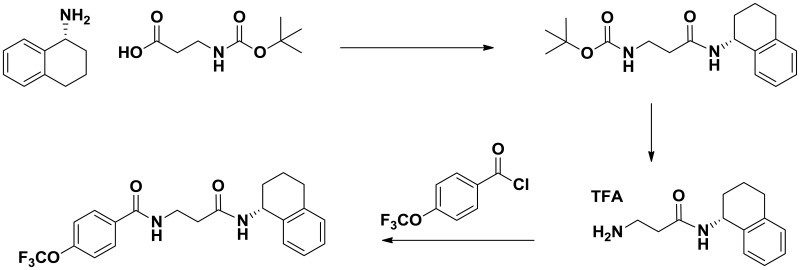
Synthesis of ML390.National Center for Biotechnology Information (US); 2010-2013 Dec 15. |
Products are for research use only; We do not sell to patients
Copyright 2020 InvivoChem LLC | All Rights Reserved


 COA
COA