| Size | Price | Stock | Qty |
|---|---|---|---|
| 5mg |
|
||
| 10mg |
|
||
| 25mg |
|
||
| 50mg |
|
||
| 100mg |
|
||
| 250mg | |||
| 500mg | |||
| Other Sizes |


Purity: ≥98%
| Targets |
Ribosome rescue pathway [1]
|
|---|---|
| ln Vitro |
KL-10 is a small-molecule ribosome rescue inhibitor that possesses a broad-spectrum of antimicrobial activity against bacteria. KKL-10 exhibited exceptional antimicrobial activity against both attenuated and fully virulent strains of F. tularensis in vitro and during ex vivo infection. Addition of KKL-10 to macrophages or liver cells at any time after infection by F. tularensis prevented further bacterial proliferation. When macrophages were stimulated with the proinflammatory cytokine gamma interferon before being infected by F. tularensis, addition of KKL-10 reduced intracellular bacteria by >99%, indicating that the combination of cytokine-induced stress and a nonfunctional ribosome rescue pathway is fatal to F. tularensis. KKL-10 was not cytotoxic to eukaryotic cells in culture. Therefore, KKL-10 is a good lead compound for antibiotic development.
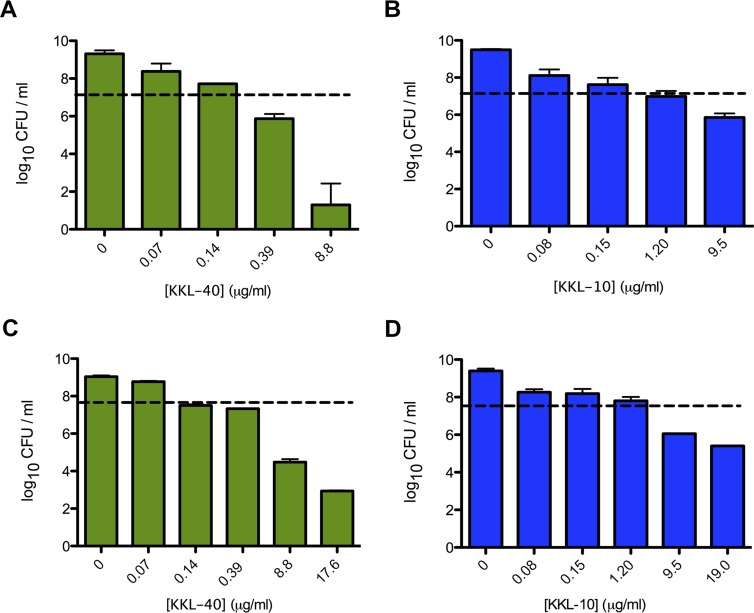
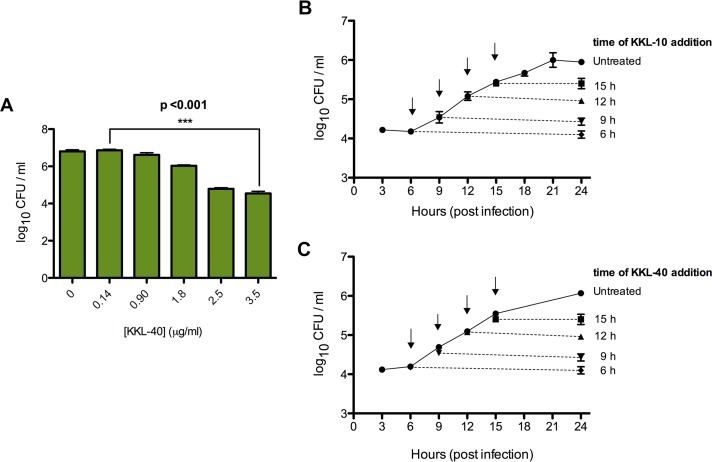
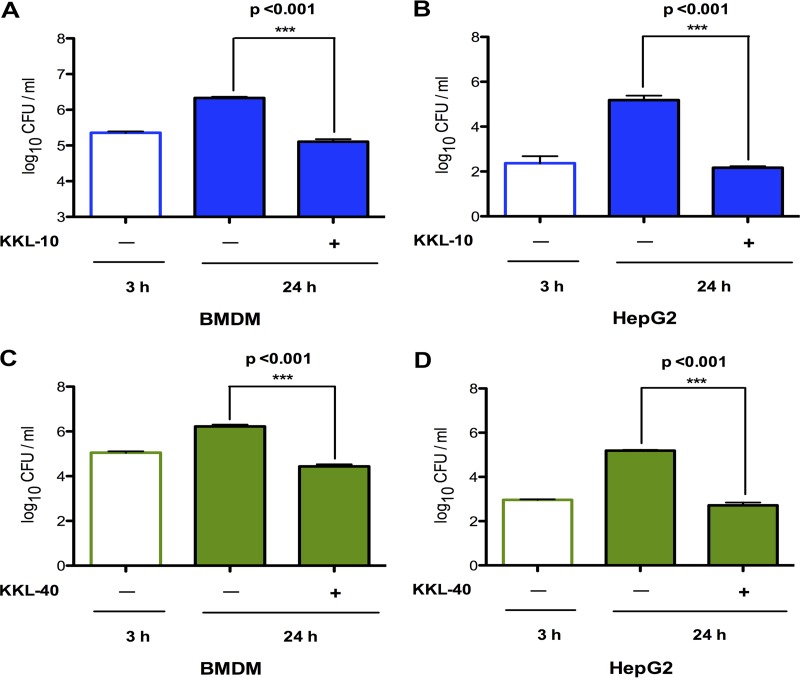
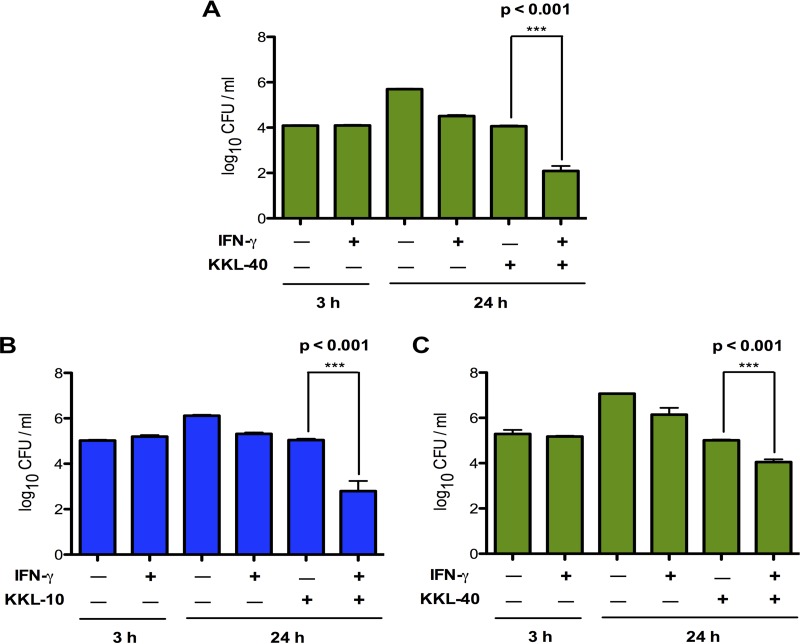
Exhibited exceptional antimicrobial activity against both attenuated (LVS) and fully virulent (Schu S4) strains of Francisella tularensis in vitro. After 24-hour exposure to KKL-10, the growth of F. tularensis cells was significantly inhibited compared to the initial bacterial inocula (CFU per milliliter). The assay included 3 biological replicates, with standard deviations reported [1] - When added to macrophages (RAW 264.7 cells, BMDMs) or liver cells (HepG2 cells) at any time after infection by F. tularensis, KKL-10 prevented further bacterial proliferation. Specifically, in BMDMs and HepG2 cells infected with LVS, addition of KKL-10 3 hours post-infection effectively inhibited intracellular bacterial growth. Statistical analysis was performed using one-way ANOVA with Tukey's post hoc test [1] - When macrophages were prestimulated with the proinflammatory cytokine gamma interferon (IFN-γ) for 12 hours before F. tularensis infection, addition of KKL-10 (2.5 μg/ml) 3 hours post-infection reduced intracellular bacteria by >99%, indicating a synergistic fatal effect on F. tularensis from cytokine-induced stress and nonfunctional ribosome rescue pathway [1] - Showed potent antimicrobial activity against both attenuated (LVS) and fully virulent (Schu S4) F. tularensis strains in vitro. After 24-hour treatment with KKL-10, bacterial proliferation was remarkably suppressed relative to the initial inocula (CFU per milliliter), with 3 biological replicates and standard deviations recorded [2] - KKL-10 inhibited F. tularensis growth at multiple stages of the infection cycle in vitro. When administered to F. tularensis-infected macrophages (RAW 264.7 cells, BMDMs) or liver cells (HepG2 cells) at any time post-infection, it halted further bacterial proliferation. In LVS-infected BMDMs and HepG2 cells, 3-hour post-infection administration of KKL-10 demonstrated significant intracellular antibacterial activity, analyzed via one-way ANOVA with Tukey's post hoc test [2] - In macrophages prestimulated with IFN-γ for 12 hours prior to F. tularensis LVS infection, treatment with KKL-10 (2.5 μg/ml) at 3 hours post-infection resulted in a >99% reduction in intracellular bacteria, reflecting the synergistic toxicity of cytokine-induced stress and ribosome rescue pathway inhibition [2] |
| ln Vivo |
The hind legs of euthanized C57 mice were skinned and removed at the hip joint, and feet and excess muscle tissue were removed. Marrow was liberated by removing the femurs proximal to each joint and crushing them in a 70-μm nylon mesh filter in 5 ml phosphate-buffered saline (PBS) using a sterile pestle. The marrow was added to conical tubes and centrifuged at 400 × g for 10 min at room temperature. The supernatant was discarded, and the pellet was resuspended in Dulbeccos modified Eagle medium (DMEM) (ThermoFisher, USA). The cells were plated in 100-mm petri dishes at a density of 4 × 10⁵ cells/ml in 10 ml complete macrophage differentiation medium (DMEM plus 20% L929 cell supernatant containing macrophage colony-stimulating factor [M-CSF]). The cells were supplemented with an additional 5 ml of medium on days 1 and 3, and bone marrow-derived macrophages (BMDMs) were harvested on day 7.
|
| Enzyme Assay |
For MIC assays, triplicate 2-fold serial dilutions of each compound were made in cation-adjusted Mueller-Hinton broth (CAMHB) and added to a 96-well microtiter plate. Stocks of each compound were prepared in 100% dimethyl sulfoxide (DMSO). Overnight cultures of LVS or Schu S4 were diluted to an OD600 of 0.05 in CAMHB to a final volume of 0.1 ml and added directly to the diluted compounds. The microtiter plates were incubated overnight (∼18 h) at 37°C in a humidified incubator with 5% CO2. Bacterial growth was monitored by measuring the optical density at 600 nm. The MIC was determined by observing the lowest concentration at which the compound prevented a significant increase in the optical density. To enumerate F. tularensis after exposure to various concentrations of KKL-10 or KKL-40, the contents of the MIC assay microtiter plate were removed and plated on chocolate agar at appropriate dilutions. After incubation for 48 h at 37°C and 5% CO2, colonies were counted to calculate CFU per milliliter.
|
| Cell Assay |
Cytotoxicity assays were performed using RAW 264.7 cells and a lactate dehydrogenase (LDH) release assay kit (Pierce Biochemicals, USA) following the manufacturers instructions.
Antimicrobial activity assay in F. tularensis cultures: F. tularensis strains (LVS and Schu S4) were exposed to KKL-10 for 24 hours. After the exposure period, bacterial cells were enumerated to evaluate the inhibitory effect of KKL-10 on bacterial growth. The initial bacterial inocula (CFU per milliliter) served as a reference, and each experiment included 3 biological replicates. The average values and standard deviations were calculated, and the results were presented with error bars [1] - Intracellular infection inhibition assay in different cell types: Macrophages (RAW 264.7 cells, BMDMs) and liver cells (HepG2 cells) were infected with F. tularensis LVS. KKL-10 was added at various time points after infection, including 3 hours post-infection for specific cell type experiments. At designated time points, the cells were processed to quantify the number of intracellular bacteria, so as to assess the inhibitory efficacy of KKL-10 on bacterial proliferation within host cells. Each experiment was performed 3 separate times on the same day, and the experiments were repeated on at least 3 different days to ensure reproducibility. Representative data from one day were shown with error bars indicating standard deviations [1] - IFN-γ prestimulation and infection assay: Macrophages (RAW 264.7 cells, BMDMs) were prestimulated with IFN-γ for 12 hours before being infected with F. tularensis LVS. KKL-10 at a concentration of 2.5 μg/ml was added 3 hours post-infection. Plating assays were conducted to count the number of intracellular bacteria. Statistical analysis was performed using one-way analysis of variance (ANOVA) followed by Tukey's post hoc test to determine significant differences. Each data point represented the average of 3 separate infection experiments on the same day, with standard deviations indicated by error bars. The experiments were replicated on at least 3 different days [1] - Cytotoxicity assay on macrophages: RAW 264.7 cells were subjected to two treatment regimens with KKL-10: pretreatment for 45 minutes, or continuous exposure to 2.5 μg/ml of KKL-10 for 24 hours. LDH release assays were performed to evaluate cytotoxicity, with 1× lysis buffer used as a positive control. Additionally, RAW 264.7 cells were pretreated with KKL-10 for specified durations, after which the compound was washed out, and the cells were infected with F. tularensis LVS. Plating assays were carried out to analyze the impact of KKL-10 pretreatment on bacterial infection. Each experiment included 3 separate replicates on the same day, and the average results with standard deviations were reported. The experiments were repeated on at least 3 different days to confirm consistency [1] - Antimicrobial activity assay in F. tularensis cultures: F. tularensis strains (LVS and Schu S4) were treated with KKL-10 for 24 hours. Bacterial enumeration was performed to assess the growth inhibitory effect of KKL-10, with the initial bacterial inocula (CFU per milliliter) as a baseline. The assay was conducted with 3 biological replicates, and the results were expressed as averages with standard deviations [2] - Intracellular infection inhibition assay across multiple infection stages: Macrophages were infected with F. tularensis LVS, and KKL-10 was administered at different time points after infection. The growth curves of intracellular bacteria were monitored after inhibitor addition to confirm that KKL-10 specifically inhibits bacterial proliferation inside macrophages without interfering with normal cellular processes. Each data point was the average of 3 separate infection experiments performed on the same day, with standard deviations shown by error bars. The experiments were repeated on at least 3 different days, and representative data were presented [2] - Intracellular growth inhibition assay in specific cell types: BMDMs and HepG2 cells were infected with F. tularensis LVS, and KKL-10 was added 3 hours post-infection. The number of intracellular bacteria was quantified at appropriate time points to evaluate the inhibitory efficacy of KKL-10. Statistical significance was determined using one-way ANOVA with Tukey's post hoc test. Each experiment was conducted 3 times on the same day, with standard deviations reported, and the experiments were replicated on at least 3 different days [2] - IFN-γ prestimulation combined infection assay: BMDMs were prestimulated with IFN-γ for 12 hours prior to infection with F. tularensis LVS. KKL-10 at a concentration of 2.5 μg/ml was added 3 hours post-infection, and plating assays were utilized to quantify the number of intracellular bacteria. One-way ANOVA with Tukey's post hoc test was applied for statistical analysis. Each data point represented the average of 3 separate infection experiments on the same day, with error bars indicating standard deviations, and the experiments were repeated on at least 3 different days [2] - Cytotoxicity evaluation on macrophages: RAW 264.7 cells were either pretreated with KKL-10 for 45 minutes or continuously exposed to 2.5 μg/ml of KKL-10 for 24 hours. LDH release assays were performed to detect cytotoxic effects, with 1× lysis buffer serving as a positive control. Furthermore, RAW 264.7 cells were pretreated with KKL-10 for specified durations, the compound was washed away, and the cells were then infected with F. tularensis LVS. Plating assays were conducted to analyze the level of bacterial infection. Each experiment included 3 separate replicates on the same day, and the average results with standard deviations were reported. The experiments were repeated on at least 3 different days to ensure reliability [2] |
| Animal Protocol |
C57 mice
|
| Toxicity/Toxicokinetics |
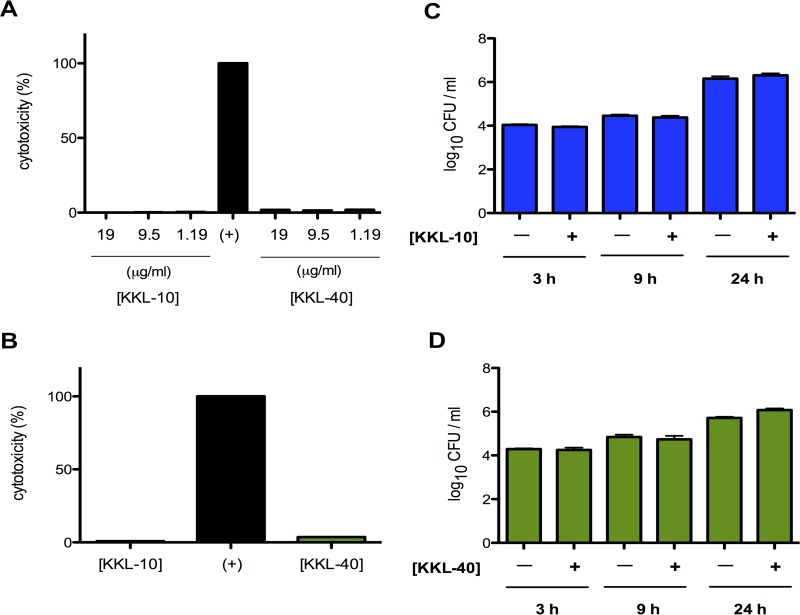
KKL-10 is not cytotoxic to cultured eukaryotic cells. This was verified by an LDH release assay of RAW 264.7 cells. No significant cytotoxicity was observed in RAW 264.7 cells after pretreatment with KKL-10 for 45 minutes or exposure to 2.5 μg/ml of KKL-10 for 24 hours [1]. KKL-10 is also not cytotoxic to macrophages (RAW 264.7 cells). The LDH release assay confirmed that pretreatment with KKL-10 for 45 minutes or exposure to 2.5 μg/ml of KKL-10 for 24 hours did not induce cytotoxicity [2].
|
| References |
|
| Additional Infomation |
KKL-10 is a small molecule inhibitor of ribosome rescue with an oxadiazole chemical structure [1] - Ribosome rescue is an essential pathway for the growth of Tula Francisella at all stages of its infection cycle, and KKL-10 exerts its antibacterial effect by targeting this pathway. The combination of cytokine (IFN-γ)-induced stress and KKL-10-mediated inhibition of the ribosomal rescue pathway is lethal to F. tularensis [1] - KKL-10 is considered a promising antibiotic lead compound due to its potent antibacterial activity against F. tularensis (including attenuated and live strains), its ability to inhibit bacterial growth at all stages of infection, and its lack of cytotoxicity to eukaryotic cells [1] - KKL-10 belongs to the class of small molecule ribosomal rescue inhibitors with an oxadiazole chemical structure [2] - The ribosomal rescue pathway of F. tularensis is crucial for its growth throughout the infection cycle, and KKL-10 exerts its antibacterial activity by inhibiting this pathway. The synergistic effect between IFN-γ-induced host cell stress and KKL-10 treatment significantly reduces the number of intracellular F. tularensis [2]. KKL-10 is a potential new antibiotic lead compound because it has strong antibacterial activity against both attenuated and virulent strains of Francisella, inhibits bacterial growth at all stages of infection, and is non-cytotoxic to eukaryotic cells[2].
|
| Molecular Formula |
C14H10BRN3O2S
|
|
|---|---|---|
| Molecular Weight |
364.22
|
|
| Exact Mass |
362.97
|
|
| Elemental Analysis |
C, 46.17; H, 2.77; Br, 21.94; N, 11.54; O, 8.79; S, 8.80
|
|
| CAS # |
952849-76-2
|
|
| Related CAS # |
|
|
| PubChem CID |
16854524
|
|
| Appearance |
2934.99.9001
|
|
| LogP |
4
|
|
| Hydrogen Bond Donor Count |
1
|
|
| Hydrogen Bond Acceptor Count |
5
|
|
| Rotatable Bond Count |
3
|
|
| Heavy Atom Count |
21
|
|
| Complexity |
379
|
|
| Defined Atom Stereocenter Count |
0
|
|
| SMILES |
CC1=CC=C(C=C1)C2=NN=C(O2)NC(=O)C3=CC=C(S3)Br
|
|
| InChi Key |
QKSDWSBGDVYRKQ-UHFFFAOYSA-N
|
|
| InChi Code |
InChI=1S/C14H10BrN3O2S/c1-8-2-4-9(5-3-8)13-17-18-14(20-13)16-12(19)10-6-7-11(15)21-10/h2-7H,1H3,(H,16,18,19)
|
|
| Chemical Name |
5-bromo-N-(5-(p-tolyl)-1,3,4-oxadiazol-2-yl)thiophene-2-carboxamide
|
|
| Synonyms |
|
|
| HS Tariff Code |
2934.99.9001
|
|
| Storage |
Powder -20°C 3 years 4°C 2 years In solvent -80°C 6 months -20°C 1 month |
|
| Shipping Condition |
Room temperature (This product is stable at ambient temperature for a few days during ordinary shipping and time spent in Customs)
|
| Solubility (In Vitro) |
DMSO : 2.78~3 mg/mL ( 7.63 ~8.23 mM)
|
|---|---|
| Solubility (In Vivo) |
Note: Listed below are some common formulations that may be used to formulate products with low water solubility (e.g. < 1 mg/mL), you may test these formulations using a minute amount of products to avoid loss of samples.
Injection Formulations
Injection Formulation 1: DMSO : Tween 80: Saline = 10 : 5 : 85 (i.e. 100 μL DMSO stock solution → 50 μL Tween 80 → 850 μL Saline)(e.g. IP/IV/IM/SC) *Preparation of saline: Dissolve 0.9 g of sodium chloride in 100 mL ddH ₂ O to obtain a clear solution. Injection Formulation 2: DMSO : PEG300 :Tween 80 : Saline = 10 : 40 : 5 : 45 (i.e. 100 μL DMSO → 400 μLPEG300 → 50 μL Tween 80 → 450 μL Saline) Injection Formulation 3: DMSO : Corn oil = 10 : 90 (i.e. 100 μL DMSO → 900 μL Corn oil) Example: Take the Injection Formulation 3 (DMSO : Corn oil = 10 : 90) as an example, if 1 mL of 2.5 mg/mL working solution is to be prepared, you can take 100 μL 25 mg/mL DMSO stock solution and add to 900 μL corn oil, mix well to obtain a clear or suspension solution (2.5 mg/mL, ready for use in animals). View More
Injection Formulation 4: DMSO : 20% SBE-β-CD in saline = 10 : 90 [i.e. 100 μL DMSO → 900 μL (20% SBE-β-CD in saline)] Oral Formulations
Oral Formulation 1: Suspend in 0.5% CMC Na (carboxymethylcellulose sodium) Oral Formulation 2: Suspend in 0.5% Carboxymethyl cellulose Example: Take the Oral Formulation 1 (Suspend in 0.5% CMC Na) as an example, if 100 mL of 2.5 mg/mL working solution is to be prepared, you can first prepare 0.5% CMC Na solution by measuring 0.5 g CMC Na and dissolve it in 100 mL ddH2O to obtain a clear solution; then add 250 mg of the product to 100 mL 0.5% CMC Na solution, to make the suspension solution (2.5 mg/mL, ready for use in animals). View More
Oral Formulation 3: Dissolved in PEG400 (Please use freshly prepared in vivo formulations for optimal results.) |
| Preparing Stock Solutions | 1 mg | 5 mg | 10 mg | |
| 1 mM | 2.7456 mL | 13.7280 mL | 27.4559 mL | |
| 5 mM | 0.5491 mL | 2.7456 mL | 5.4912 mL | |
| 10 mM | 0.2746 mL | 1.3728 mL | 2.7456 mL |
*Note: Please select an appropriate solvent for the preparation of stock solution based on your experiment needs. For most products, DMSO can be used for preparing stock solutions (e.g. 5 mM, 10 mM, or 20 mM concentration); some products with high aqueous solubility may be dissolved in water directly. Solubility information is available at the above Solubility Data section. Once the stock solution is prepared, aliquot it to routine usage volumes and store at -20°C or -80°C. Avoid repeated freeze and thaw cycles.
Calculation results
Working concentration: mg/mL;
Method for preparing DMSO stock solution: mg drug pre-dissolved in μL DMSO (stock solution concentration mg/mL). Please contact us first if the concentration exceeds the DMSO solubility of the batch of drug.
Method for preparing in vivo formulation::Take μL DMSO stock solution, next add μL PEG300, mix and clarify, next addμL Tween 80, mix and clarify, next add μL ddH2O,mix and clarify.
(1) Please be sure that the solution is clear before the addition of next solvent. Dissolution methods like vortex, ultrasound or warming and heat may be used to aid dissolving.
(2) Be sure to add the solvent(s) in order.
KKL-40 and KKL-10 inhibit growth ofF. tularensisin culture.Antimicrob Agents Chemother.2016 May 23;60(6):3276-82. |
|---|
KKL-40 and KKL-10 inhibitF. tularensisgrowth at multiple stages of the infection cycle.Antimicrob Agents Chemother.2016 May 23;60(6):3276-82. |
KKL-10 and KKL-40 inhibit intracellular growth of LVS in different cell types.Antimicrob Agents Chemother.2016 May 23;60(6):3276-82. |
KKL-10 and KKL-40 do not show cytotoxic effects on macrophages.Antimicrob Agents Chemother.2016 May 23;60(6):3276-82. |
|---|
Effects of KKL-10 and KKL-40 on LVS in macrophages prestimulated for 12 h with IFN-γ.Antimicrob Agents Chemother.2016 May 23;60(6):3276-82. |
Chemical structures of small-molecule ribosome rescue inhibitors. KKL-10, KKL-22, KKL-35, and KKL-40 are oxadiazoles, and KKL-55 has a related tetrazole structure.Antimicrob Agents Chemother.2016 May 23;60(6):3276-82. |
Products are for research use only; We do not sell to patients
Copyright 2020 InvivoChem LLC | All Rights Reserved


 COA
COA