| Size | Price | Stock | Qty |
|---|---|---|---|
| 100mg |
|
||
| Other Sizes |


Purity: ≥98%
| Targets |
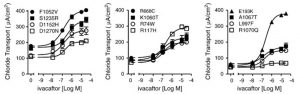
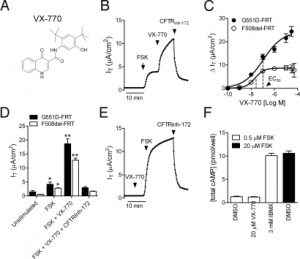
G551D-CFTR (EC50: 100 nM), F508del-CFTR (EC50: 25 nM)
Ivacaftor targets the cystic fibrosis transmembrane conductance regulator (CFTR) protein, acting as a potentiator to increase channel open probability.[2]. |
|---|---|
| ln Vitro |
Ivacaftor (10 µM) enhances the PC secretion activity by 3 times for ABCB4-G535D, 13.7 times for ABCB4-G536R, 6.7 times for ABCB4-S1076C, 9.4 times for ABCB4-S1176L, and 5.7 times for ABCB4-G1178S. Ivacaftor fixes the ABCB4 mutants' functional defect[1]. In comparison to R1162X CFTR cells, Ivacaftor (10 μM) dramatically boosts CFTR activity in W1282X-expressing cells[2]. Despite testing 160 targets, including the GABAA benzodiazepine, ivacaftor demonstrates no discernible activity. Compared to F508del HBEs, ivacaftor exhibits a 10-fold shift in potency, increasing chloride secretion with an EC50 of 0.236 ± 0.200 μM[3]. VX-770 elevates the CFTR channel open probability (Po) in recombinant cells for both the G551D gating mutation and the F508del processing mutation. At an EC50 of 25 nM, VX-770 about 6-fold enhances forskolin-stimulated IT in temperature-corrected F508del-FRT cells[4].
In CFBE41o- cells stably expressing W1282X CFTR, treatment with G418 (250 μg/mL for 48 h) followed by acute addition of Ivacaftor (10 μM) significantly enhanced forskolin‑stimulated short‑circuit current (Isc) compared to DMSO control. In contrast, Ivacaftor had negligible effects on cells expressing R1162X CFTR, which does not retain function in the truncated state [2]. In FRT cells expressing W1282X CFTR, the synergistic effect of Ivacaftor with G418 was significant, as measured by transepithelial chloride conductance (Gt). Ivacaftor alone (without readthrough) also increased CFTR activity in W1282X‑expressing cells, but to a lesser extent than when combined with G418 [2]. Primary human nasal epithelial (HNE) cells from a W1282X homozygous patient, cultured at air‑liquid interface and treated with Ivacaftor (10 μM for 48 h), showed a small but statistically significant increase in forskolin‑dependent Isc (0.4 ± 0.04 μA/cm²) compared to DMSO‑treated control (0.08 ± 0.003 μA/cm², P < 0.01), indicating CFTR activity. Acute addition of Ivacaftor did not further increase this signal. CFTR mRNA levels in these cells were ∼40% of wild‑type levels, indicative of nonsense‑mediated decay [2]. |
| ln Vivo |
In rats, Ivacaftor (100–200 mg/kg, po) has good oral bioavailability[3].In a rat dose proportionality study, the AUC and Cmax were increased linearly after oral administration of (VX-770, ivacaftor) in a suspension vehicle at doses from 1 to 200 mg/kg (3, 10, 30, and 100 were the intermediate doses). A similar trend was observed in beagle dogs increasing the oral dose from 3 to 80 mg/kg (10, 30, and 60 were the intermediate doses), confirming high levels of oral absorption.
The predicted human hepatic clearance of (VX-770, ivacaftor) using allometric scaling from four species was 4.7 mL min–1 kg–1, which is approximately 23% of hepatic blood flow. On the basis of its potency, selectivity, and favorable pharmacokinetic profile, compound 48 (VX-770, ivacaftor) was selected for further (pre)clinical evaluation and eventually was approved by the FDA for the treatment of CF patients 6 years and older carrying the G551D mutation.[3] Premature termination codons (PTCs) in cystic fibrosis transmembrane conductance regulator (CFTR) gene result in nonfunctional CFTR protein and are the proximate cause of ~11% of CF causing alleles. Aminoglycosides and other novel agents are known to induce translational readthrough of PTCs, a potential therapeutic approach. Among PTCs, W1282X CFTR is unique, as it is a C-terminal CFTR mutation that can exhibit partial activity, even in the truncated state. The potentiator ivacaftor (VX-770) is approved for treating CF patients with G551D and other gating mutations. Based on previous studies demonstrating the beneficial effect of ivacaftor for PTC mutations following readthrough in vitro, we hypothesized that ivacaftor may enhance CFTR activity in CF patients expressing W1282X CFTR, and could be further enhanced by readthrough. Ivacaftor significantly increased CFTR activity in W1282X-expressing cells compared to R1162X CFTR cells, and was further enhanced by readthrough with the aminoglycoside G418. Primary nasal epithelial cells from a W1282X homozygous patient showed improved CFTR function in the presence of ivacaftor. Upon ivacaftor administration to the same patient, there was significant improvement in pulmonary exacerbation frequency, BMI, and insulin requirement, whereas FEV1 remained stable over 3years. These studies suggest that ivacaftor may have moderate clinical benefit in patients with preserved expression of the W1282X CFTR mutation by stimulating residual activity of the truncated protein, suggesting the need for further studies including the addition of efficacious readthrough agents[2]. A 31‑year‑old female CF patient homozygous for W1282X (sweat chloride 116 mEq/L) with progressive lung disease, poor nutrition (BMI <17), frequent pulmonary exacerbations (3.6/year), and insulin‑dependent diabetes was treated with oral Ivacaftor 150 mg twice daily for 3 years [2]. After Ivacaftor initiation: no significant improvement in FEV₁ (remained stable at ∼36% predicted) nor change in sweat chloride (116 to 114 mEq/L); however, pulmonary exacerbation frequency decreased significantly from 3.6/year to 0.5/year (P < 0.05). Body mass index (BMI) increased from <17 to 20.3, with significant improvement in rate of BMI change (P < 0.001). Average daily insulin requirement decreased significantly (P < 0.05). Subjectively, the patient reported less sputum production, easier clearance, and increased energy [2]. |
| Enzyme Assay |
Membrane Potential Optical Assay for Detecting F508del-CFTR Potentiator Activity [3]
To identify potentiators of F508del-CFTR, an HTS assay format utilizing fluorescent voltage sensing probes was developed using a FLIPR III fluorescence plate reader. NIH-3T3 cells stably expressing F508del-CFTR were incubated for 16–24 h at 27 °C to correct the misfolded F508del-CFTR. Cells are then washed with a bath solution (160 mM NaCl, 4.5 mM KCl, 2 mM CaCl2, 1 mM MgCl2, 10 mM HEPES, pH 7.4 with NaOH) and treated with fluorescent voltage sensing dyes combined with test compounds (or DMSO vehicle control) for 30 min at room temperature. The assay is run on FLIPR III using a single liquid addition step of Cl– free bath solution containing forskolin. Detected changes in membrane potential are due to the potentiator activity of test compounds on Cl– anion flux through F508del-CFTR. |
| Cell Assay |
Ussing Chamber Recordings [3]
All cells were grown on Costar Snapwell cell culture inserts maintained at 37 °C, unless otherwise indicated, prior to recording. The cell culture inserts were mounted into an Ussing chamber (VCC MC8) to record ISC in the voltage-clamp mode (Vhold = 0 mV). For measurement of ISC, the basolateral bath solution contained the following (in mM): 135 NaCl, 1.2 CaCl2, 1.2 MgCl2, 2.4 K2HPO4, 0.6 KH2PO4, 10 N-2-hydroxyethylpiperazine-N′-2-ethanesulfonic acid (HEPES), and 10 dextrose (titrated to pH 7.4 with NaOH). The apical NaCl was replaced by equimolar Na+ gluconate (titrated to pH 7.4 with NaOH). For HBE cells, the ISC was measured in the presence of a basolateral to apical Cl– gradient. The normal Cl– solution contained the following (in mM): 145 NaCl, 0.83 K2HPO4, 3.3 KH2PO4, 1.2 MgCl2, 1.2 CaCl2, 10 glucose, 10 HEPES (pH adjusted to 7.35 with NaOH). The low Cl– solution contained the following (in mM): 145 Na gluconate, 1.2 MgCl2, 1.2 CaCl2, 10 glucose, 10 HEPES (pH adjusted to 7.35 with NaOH). The ISCs were digitally acquired using Acquire and Analyze software. [3] cAMP Measurements[3] The total cAMP concentration (cellular and secreted) in FRT cells following test compound application was determined using a cAMP-Screen 96-well immunoassay system according the manufactures directions. Briefly, FRT cells were incubated for 15 min with test compound and then lysed and transferred to a 96-well assay plate provided with the kit. The plate was incubated at room temperature for 1 h after which it was developed and luminescence emission was measured using the Acquest 384.1536 by LJL Biosystems. The cAMP concentrations were determined using a cAMP standard curve present in each plate. CFBE41o- and FRT cells stably transfected with W1282X or R1162X CFTR cDNA were pretreated with G418 (250 μg/mL) or DMSO vehicle for 48 h. Acute addition of Ivacaftor (10 μM) was performed during Ussing chamber recordings. Short‑circuit current (Isc) was measured under voltage clamp conditions, and transepithelial chloride conductance (Gt) was assessed as previously described [2]. Primary human nasal epithelial (HNE) cells were collected from the patient by nasal brush, expanded using conditional reprogramming, and grown as airway monolayers at air‑liquid interface until well‑differentiated. First‑passage cells were incubated with Ivacaftor (10 μM) or DMSO (0.1%) for 48 h, then evaluated in modified Ussing chambers under voltage clamp with a chloride secretory gradient. CFTR was stimulated with forskolin (20 μM), followed by acute addition of Ivacaftor (10 μM) and CFTR inhibition with CFTRinh‑172 (10 μM) [2]. CFTR mRNA levels were measured by real‑time reverse transcriptase PCR. HNE W1282X/W1282X cells expressed 0.4‑fold CFTR mRNA compared to normal wild‑type HNE donors [2]. |
| Animal Protocol |
1-200 mg/kg, p.o. Rats
In Vivo Pharmacokinetic Experiments [3] Male mouse, Sprague–Dawley rats, beagle dog, and cynomolgus monkeys (n = 3/group) were administered a single iv dose of compound formulated in dimethyl isosorbide/ethanol/PEG400/5% dextrose in water (D5W) (10%/15%/35%/40%) at the nominal dose indicated in a dose volume of 1 mL/kg. Blood samples (0.3 mL, sodium heparin anticoagulant) were collected from an indwelling carotid cannula at the following nominal time points: at predose, 5, 15, 30, and 45 min and 1, 2, 4, 6, 8, 12, 24, 36, and 48 h following iv administration and at predose, 0.25, 0.50, 1, 1.5, 2, 4, 8, 12, and 24 h following oral administration. The concentration of compound in the plasma samples was determined with a liquid chromatography/tandem mass spectrometry (LC/MS/MS) method, which had a lowest limit of quantitation (LLOQ) of 1 ng/mL and a linearity range between 1 and 2500 ng/mL. The mean plasma concentration–time profiles and the measured dose values were used to estimate the pharmacokinetic parameters using noncompartmental analysis modules in WinNonlin Professional Edition software, version 4.0.1. Mouse (n=3/group): iv dose 3 mg/kg (formulated in dimethyl isosorbide/ethanol/PEG400/5% dextrose in water, 10/15/35/40, 1 mL/kg). Blood collected at 5,15,30,45 min and 1,2,3,4,6,8,12,24 h. Plasma analyzed by LC‑MS/MS. Rat (n=3): iv 2.5 mg/kg; oral 5 mg/kg. Dog (n=3): iv 0.9 mg/kg; oral 3.8 mg/kg. Monkey: iv 0.8 mg/kg. Formulations and sampling similar [3]. For ABCB4 rescue studies, no animal protocol was described; only in vitro cell culture [1]. |
| ADME/Pharmacokinetics |
Ivacartole is well absorbed in the gastrointestinal tract. When taken with fatty foods, peak plasma concentration (Tmax) was reached at 4 hours, with a maximum concentration (Cmax) of 768 ng/mL and an AUC of 10600 ng·hr/mL. Co-administration with fatty foods is recommended as fat can increase its absorption by approximately 2.5 to 4 times. After oral administration, ivicacartole is primarily metabolized and excreted in feces, accounting for 87.8% of the total dose. Metabolites M1 and M6 account for the majority of the excreted dose, at 22% and 43%, respectively. Very little ivicacartole is excreted unchanged in urine. In healthy volunteers, after oral administration of 150 mg every 12 hours for 7 consecutive days in a postprandial state, the mean (± standard deviation) apparent volume of distribution was 353 (122) L.
The clearance/plasma concentration (CL/F) (standard deviation) after a 150 mg dose in healthy subjects was 17.3 (8.4) L/hr. Ivacarto is extensively metabolized in the human body. In vitro and clinical studies have shown that ivacarto is primarily metabolized by CYP3A. The major metabolites are M1 and M6. Although M1 has only about one-sixth the potency of the parent compound ivacarto, it is still considered pharmacologically active. On the other hand, M6 is not considered pharmacologically active because it represents less than one-fiftieth the effect of the parent compound. In one clinical study, the apparent terminal half-life of ivacarto was approximately 12 hours after a single dose. Other data indicate that its half-life ranges from 12 to 14 hours. See ADME/Pharmacokinetics for clearance, half‑life, volume of distribution, and oral bioavailability across species. No specific toxicity data (LD50, hERG, CYP inhibition) are reported in these papers, except that Ivacaftor showed no significant activity against 160 targets in the Ricerca spectrum screen, including GABAA benzodiazepine receptor (18% inhibition at 10 μM for compound 48) [3]. CYP450 IC50 >20 μM for 1A2, 2C9, 2C19, 2E1, 3A4, 2D6; hERG IC50 >10 μM [3]. |
| Toxicity/Toxicokinetics |
◉ Summary of Medication Use During Lactation
After mothers take ivacatocin, the drug concentration in breast milk is low, and the drug concentration in the serum of breastfed infants is extremely low. An international survey of cystic fibrosis centers found no adverse reactions in infants breastfed by mothers taking the drug. A working group of respiratory experts from Europe, Australia, and New Zealand also believes that the drug is likely safe for use during lactation. One breastfed infant experienced transient increases in bilirubin and liver enzymes during the mother's treatment, but it could not be determined whether this was related to the drug in breast milk. Until more data are available, it is recommended to monitor bilirubin and liver enzymes in breastfed infants during the mother's ivacatocin treatment. There are reports of congenital cataracts in infants breastfed by mothers who took the drug during pregnancy; therefore, cataract screening is recommended for breastfed infants. Anecdotal evidence suggests that the drug in breast milk may have a relieving effect on cystic fibrosis in breastfed infants. ◉ Impact on Breastfed Infants A woman with cystic fibrosis received lumacaftor and ivacaftor during pregnancy and postpartum. Her infant was exclusively breastfed until day 29 postpartum, after which elevated levels of direct bilirubin, indirect bilirubin, aspartate aminotransferase (AST), and alkaline phosphatase were observed in the infant. All indicators were normal on days 1 and 14 postpartum. The infant's breastfeeding rate decreased to 25%, and all indicators returned to normal by day 37. The breastfeeding rate then increased to 50%, and then to 100%. On day 135, while the mother was simultaneously receiving levofloxacin and sulfamethoxazole/trimethoprim, the infant's direct bilirubin level increased. The breastfeeding rate decreased to 75%, and direct bilirubin levels returned to normal by day 154. The authors note that the abnormal test results could not be definitively attributed to lumacaftor and ivacaftor treatment. We sent a questionnaire to chief clinicians at adult cystic fibrosis (CF) centers in Europe, the UK, the US, Australia, and Israel, requesting anonymized data on pregnancy outcomes in women using CFTR modulators during pregnancy and lactation. We received responses from 31 centers and one CF patient, involving 64 pregnancies in 61 women, resulting in 60 live births. Of these, 13 infants were breastfed with ivacaftor alone, 9 were breastfed with lumacaftor and ivacaftor, and 5 were breastfed with tezacaftor and ivacaftor, for a total of 27 infants exposed to ivacaftor through breast milk. No complications were reported in any of the infants. However, the extent of breastfeeding was not reported. A subsequent survey by the same co-authors asked CF clinicians to report cases of pregnant women exposed to combinations of elexacaftor, tezacaftor, and ivacaftor during pregnancy and lactation. Twenty-six infants were breastfed while their mothers were taking the combination therapy (feeding extent not specified). No adverse reactions were reported in the breastfed infants. One infant's mother was taking elexacaftor, ivacaftor, and tezacaftor for cystic fibrosis. This infant was breastfed (feeding extent not specified). Although the infant carried the CFTR gene mutation that causes cystic fibrosis, the infant was healthy and had a negative newborn screening result. The authors express concern that these drugs may cross the placenta and breast milk into the infant, leading to false negative screening results. A mother who was a heterozygous carrier of the F508del gene became pregnant and gave birth to a homozygous infant. At 32 weeks of gestation, the mother started taking adult-standard doses of elexacaftor, ivacaftor, and tezacaftor to treat fetal meconium intestinal obstruction. The infant was born at 36 weeks and received pancreatic enzyme replacement therapy and was breastfed after birth while the mother continued treatment. By approximately one month of age, the infants' fecal elastase, transaminase, and bilirubin levels had returned to normal. While the infants' sweat chloride levels were low, they were closer to normal than expected. The authors speculate that the medication in the breast milk may have alleviated the infants' condition. Three women with cystic fibrosis took elexadecanotoxin, ivacaftor, and tezacator during pregnancy and postpartum breastfeeding, but the specific dosages were not specified. Routine vision checks at 8 days to 6 months postpartum revealed that these infants had bilateral small cataracts (<1.0 mm), with one infant having a central cataract and the other two having cataracts off-axis. Breastfeeding was discontinued after diagnosis at 16 days, 9 weeks, and 6 months postpartum. The effect of breastfeeding on cataracts could not be determined. A BC cystic fibrosis clinic reported two cases of pregnant and breastfeeding women. One of them took ivacaftor and breastfed for 42 months (duration not specified). Her baby was physically healthy but had delayed language development. Another woman was taking Tricafta (ivacafta, elecafta, and tezacator). She breastfed her baby for 6 months (feeding duration not specified), and the baby experienced no complications. A woman with cystic fibrosis took ivacafta 150 mg, tezacator 100 mg, and elecafta 200 mg in the morning and ivacafta 150 mg in the evening during pregnancy and lactation (feeding duration not specified). Ten days after birth, the baby's weight had not returned to birth weight, stools were oily, and pancreatic elastase levels were below the standard for normal pancreatic function but above the expected level for a homozygous newborn with this mutation. The baby started taking pancreatic enzyme preparations, and by day 20, pancreatic elastase levels returned to normal. By day 45 after birth, the baby had gained weight and had normal bowel movements. At 6 months of age, the baby was still breastfed and in good health. The authors suggest that symptoms may rebound after breastfeeding is discontinued because the infant can no longer ingest small amounts of the mother's medication through breast milk. A woman with cystic fibrosis took 100 mg elezacador, 50 mg tezazacador, and 75 mg ivacacador daily from week 12 of pregnancy, and continued taking 150 mg ivacacador postpartum. The mother exclusively breastfed during the continued treatment, and no significant drug-related side effects were observed in the infant at least 3 months of age. ◉ Effects on lactation and breast milk: As of the revision date, no relevant published information was found. Ivacacador is approximately 99% bound to plasma proteins, primarily α1-acid glycoprotein and albumin. Ivacaftor (VX‑770) was discovered through optimization of hit compound 1 (dibenzylamide) via SAR studies on the quinolinone‑3‑carboxamide scaffold. Key modifications: replacement of indole with 4‑alkyl aniline and then with 2,4‑di‑tert‑butyl‑5‑hydroxyphenyl group. The compound is an ATP‑competitive CFTR potentiator (not directly shown, but inferred from binding site). It has been approved by the FDA for CF patients with G551D and other gating mutations. In addition, it rescues ABCB4 function in vitro for mutations homologous to CFTR gating mutations (G536R, S1076C, G1178S, etc.), suggesting potential repurposing for ABCB4‑deficiency liver diseases [1,3]. |
| References |
|
| Additional Infomation |
Ivacaftor is an aromatic amide formed by the condensation of the carboxyl group of 4-oxo-1,4-dihydroquinoline-3-carboxylic acid with the amino group of 5-amino-2,4-di-tert-butylphenol. It is used to treat cystic fibrosis. It is a CFTR enhancer and an orphan drug. It belongs to the quinolone, phenol, aromatic amide, and monocarboxylic acid amide classes. Ivacaftor (also known as Kalydeco or VX-770) is a drug used to treat cystic fibrosis (CF). It is manufactured and marketed by Vertex Pharmaceuticals. The drug was approved by the U.S. Food and Drug Administration (FDA) on January 31, 2012, and by Health Canada at the end of 2012. Ivacaftor can be used as monotherapy or in combination with other drugs to treat cystic fibrosis. Cystic fibrosis is an autosomal recessive genetic disorder caused by one of several different mutations in the cystic fibrosis transmembrane transport regulator (CFTR) gene. CFTR protein is an ion channel involved in the transmembrane transport of chloride and sodium ions. CFTR is actively expressed in the epithelial cells of organs such as the lungs, pancreas, liver, digestive system, and reproductive tract. Alterations in the CFTR gene can lead to abnormal protein production, misfolding, or dysfunction, resulting in abnormal fluid and ion transport across the cell membrane. Therefore, patients with cystic fibrosis produce thick mucus that can clog the ducts of the organs that produce mucus, making them more susceptible to complications such as infection, lung injury, pancreatic insufficiency, and malnutrition. Before the advent of ivacaftor, treatment for cystic fibrosis (CF) focused primarily on controlling infection, providing nutritional support, clearing mucus, and relieving symptoms, rather than improving the disease itself or lung function (FEV1). Notably, ivacaftor was the first drug approved for treating the underlying cause of CF (abnormal CFTR protein function) rather than relieving symptoms. Ivacaftor is an enhancer of the cystic fibrosis transmembrane conduction regulator (CFTR). Its mechanisms of action include acting as a chloride channel activator, a cytochrome P450 2C9 inhibitor, a P-glycoprotein inhibitor, and a cytochrome P450 3A inhibitor. See also: ivacaftor; lumacaftor (component); Elexacaftor, ivacaftor, tezacaftor; ivacaftor (component); ivacaftor; ivacaftor (ivacaftor), tezacaftor (component). When used as monotherapy (Kalydeco), ivacaftor is indicated for the treatment of cystic fibrosis (CF) patients aged 1 month or older with a single mutation in the CFTR gene and who have demonstrated sensitivity to the synergistic effect of ivacaftor based on clinical and/or in vitro data. When used in combination with the drug [lumacaftor] (Orkambi), ivacaftor is indicated for the treatment of CF patients aged 1 year or older who are homozygous for the F508del mutation in the CFTR gene. If the patient's genotype is unknown, an FDA-approved CF mutation assay should be used to detect the presence of the F508del mutation in both alleles of the CFTR gene. When used in combination with [tezacaftor] in the product Symdeko, it is indicated for the treatment of patients aged 12 years and older with at least one mutation in the CFTR gene, or patients aged 12 years and older with CF who are confirmed to be homozygous for the F508del mutation. When used in combination with tezacaftor and [elexacaftor] in the product Trikafta, it is indicated for the treatment of patients aged 12 years and older with cystic fibrosis carrying at least one _F508del_ mutation in the CFTR gene.
The indication for Kalydeco tablets is as monotherapy for the treatment of cystic fibrosis (CF) in adults, adolescents, and children aged 6 years and older and weighing 25 kg or more who carry the R117H CFTR mutation or one of the following gated (class III) mutations in the cystic fibrosis transmembrane conduction regulator (CFTR) gene: G551D, G1244E, G1349D, G178R, G551S, S1251N, S1255P, S549N, or S549R (see Sections 4.4 and 5.1). In combination with tezacaftor/ivacaftor tablets, this treatment is indicated for the treatment of adults, adolescents, and children aged 6 years and older with cystic fibrosis (CF) who are homozygous for the F508del mutation or heterozygous for the F508del mutation and have one of the following mutations in the CFTR gene: P67L, R117C, L206W, R352Q, A455E, D579G, 711+3A→G, S945L, S977F, R1070W, D1152H, 2789+5G→A, 327226A→G, and 3849+10kbC→T. Calideco granules may be used in combination with ivacator/tezacotto/elecator tablets for the treatment of cystic fibrosis (CF) in adults, adolescents, and children aged 6 years and older who carry at least one CFTR gene F508del mutation (see Section 5.1). Calideco granules are indicated for the treatment of infants at least 4 months of age, toddlers and children weighing 5 kg to less than 25 kg who have cystic fibrosis (CF) and carry the R117H CFTR mutation or one of the following CFTR gene-gated (class III) mutations: G551D, G1244E, G1349D, G178R, G551S, S1251N, S1255P, S549N, or S549R (see Sections 4.4 and 5.1). For the treatment of cystic fibrosis (CF) in children aged 2 to 6 years who carry at least one CFTR gene F508del mutation, a combination therapy of ivacathoto/tezacator/elecathoto is required. Treatment of Cystic Fibrosis Multiple CFTR mutations are associated with the cystic fibrosis phenotype, and the severity of the disease varies. The most common mutation is F508del-CFTR or delta-F508 (ΔF508), affecting approximately 70% of CF patients worldwide. This mutation results in the deletion of phenylalanine at position 508, impairing CFTR protein production and significantly reducing the number of ion transport proteins on the cell membrane. Ivacathoto monotherapy has failed to benefit patients carrying the delta-F508 mutation, likely due to insufficient availability of proteins on the cell membrane to interact with and enhance the drug's effect. The second most common mutation is G551D, affecting 4-5% of cystic fibrosis (CF) patients worldwide. This mutation is a missense mutation; the number of cell surface proteins is sufficient, but the opening and closing mechanisms of the channels are altered. Ivacasoto is indicated for the treatment of cystic fibrosis (CF) patients carrying this mutation because it binds to the CFTR protein on the cell membrane and enhances its channel-opening capacity. Ivacasoto works by enhancing the activity of the CFTR protein, an ion channel involved in the transport of chloride and sodium ions across the cell membranes of the lungs, pancreas, and other organs. Alterations in the CFTR gene can lead to abnormal protein production, misfolding, or dysfunction, resulting in impaired fluid and ion transport across the cell membrane. Ivacasoto improves cystic fibrosis (CF) symptoms and underlying pathological mechanisms by enhancing the probability (or gating capacity) of CFTR protein channels, particularly in patients with impaired CFTR gating mechanisms. The overall level of ivaccato-mediated CFTR chloride transport depends on the amount of CFTR protein on the cell surface and the degree to which specific mutant CFTR proteins respond to the enhancing effect of ivaccato. Ivacaftor is a CFTR potentiator that increases channel open probability. This study provides proof‑of‑concept that Ivacaftor may have moderate clinical benefit in CF patients with the W1282X nonsense mutation, even without translational readthrough, by stimulating residual activity of the truncated protein. Ex vivo testing using primary human airway cells from the individual patient predicted the clinical response. The patient received 150 mg twice daily orally, a standard dose for gating mutations [2]. |
| Molecular Formula |
C₂₄H₃₀N₂O₄
|
|---|---|
| Molecular Weight |
410.51
|
| Exact Mass |
410.221
|
| CAS # |
1134822-07-3
|
| Related CAS # |
Ivacaftor;873054-44-5;Ivacaftor-d4;Ivacaftor benzenesulfonate;1134822-09-5;Ivacaftor-d19;1413431-22-7
|
| PubChem CID |
78357769
|
| Appearance |
Typically exists as solid at room temperature
|
| LogP |
5.089
|
| Hydrogen Bond Donor Count |
4
|
| Hydrogen Bond Acceptor Count |
5
|
| Rotatable Bond Count |
4
|
| Heavy Atom Count |
30
|
| Complexity |
671
|
| Defined Atom Stereocenter Count |
0
|
| SMILES |
O([H])C1C([H])=C(C(=C([H])C=1C(C([H])([H])[H])(C([H])([H])[H])C([H])([H])[H])C(C([H])([H])[H])(C([H])([H])[H])C([H])([H])[H])N([H])C(C1=C([H])N([H])C2=C([H])C([H])=C([H])C([H])=C2C1=O)=O.O([H])[H]
|
| InChi Key |
MYELKYHBCRDZNH-UHFFFAOYSA-N
|
| InChi Code |
InChI=1S/C24H28N2O3.H2O/c1-23(2,3)16-11-17(24(4,5)6)20(27)12-19(16)26-22(29)15-13-25-18-10-8-7-9-14(18)21(15)28;/h7-13,27H,1-6H3,(H,25,28)(H,26,29);1H2
|
| Chemical Name |
N-(2,4-ditert-butyl-5-hydroxyphenyl)-4-oxo-1H-quinoline-3-carboxamide;hydrate
|
| Synonyms |
VX770 hydrate; VX 770 hydrate; VX-770; Ivacaftor hydrate; 1134822-07-3; Ivacaftor (hydrate); VX-770 hydrate; N-(2,4-ditert-butyl-5-hydroxyphenyl)-4-oxo-1H-quinoline-3-carboxamide;hydrate; Kalydeco hydrate; SCHEMBL2100895; Ivacaftor hydrate; Trade name: KALYDECO.
|
| HS Tariff Code |
2934.99.9001
|
| Storage |
Powder -20°C 3 years 4°C 2 years In solvent -80°C 6 months -20°C 1 month |
| Shipping Condition |
Room temperature (This product is stable at ambient temperature for a few days during ordinary shipping and time spent in Customs)
|
| Solubility (In Vitro) |
|
|||
|---|---|---|---|---|
| Solubility (In Vivo) |
Note: Listed below are some common formulations that may be used to formulate products with low water solubility (e.g. < 1 mg/mL), you may test these formulations using a minute amount of products to avoid loss of samples.
Injection Formulations
Injection Formulation 1: DMSO : Tween 80: Saline = 10 : 5 : 85 (i.e. 100 μL DMSO stock solution → 50 μL Tween 80 → 850 μL Saline)(e.g. IP/IV/IM/SC) *Preparation of saline: Dissolve 0.9 g of sodium chloride in 100 mL ddH ₂ O to obtain a clear solution. Injection Formulation 2: DMSO : PEG300 :Tween 80 : Saline = 10 : 40 : 5 : 45 (i.e. 100 μL DMSO → 400 μLPEG300 → 50 μL Tween 80 → 450 μL Saline) Injection Formulation 3: DMSO : Corn oil = 10 : 90 (i.e. 100 μL DMSO → 900 μL Corn oil) Example: Take the Injection Formulation 3 (DMSO : Corn oil = 10 : 90) as an example, if 1 mL of 2.5 mg/mL working solution is to be prepared, you can take 100 μL 25 mg/mL DMSO stock solution and add to 900 μL corn oil, mix well to obtain a clear or suspension solution (2.5 mg/mL, ready for use in animals). View More
Injection Formulation 4: DMSO : 20% SBE-β-CD in saline = 10 : 90 [i.e. 100 μL DMSO → 900 μL (20% SBE-β-CD in saline)] Oral Formulations
Oral Formulation 1: Suspend in 0.5% CMC Na (carboxymethylcellulose sodium) Oral Formulation 2: Suspend in 0.5% Carboxymethyl cellulose Example: Take the Oral Formulation 1 (Suspend in 0.5% CMC Na) as an example, if 100 mL of 2.5 mg/mL working solution is to be prepared, you can first prepare 0.5% CMC Na solution by measuring 0.5 g CMC Na and dissolve it in 100 mL ddH2O to obtain a clear solution; then add 250 mg of the product to 100 mL 0.5% CMC Na solution, to make the suspension solution (2.5 mg/mL, ready for use in animals). View More
Oral Formulation 3: Dissolved in PEG400 (Please use freshly prepared in vivo formulations for optimal results.) |
| Preparing Stock Solutions | 1 mg | 5 mg | 10 mg | |
| 1 mM | 2.4360 mL | 12.1800 mL | 24.3599 mL | |
| 5 mM | 0.4872 mL | 2.4360 mL | 4.8720 mL | |
| 10 mM | 0.2436 mL | 1.2180 mL | 2.4360 mL |
*Note: Please select an appropriate solvent for the preparation of stock solution based on your experiment needs. For most products, DMSO can be used for preparing stock solutions (e.g. 5 mM, 10 mM, or 20 mM concentration); some products with high aqueous solubility may be dissolved in water directly. Solubility information is available at the above Solubility Data section. Once the stock solution is prepared, aliquot it to routine usage volumes and store at -20°C or -80°C. Avoid repeated freeze and thaw cycles.
Calculation results
Working concentration: mg/mL;
Method for preparing DMSO stock solution: mg drug pre-dissolved in μL DMSO (stock solution concentration mg/mL). Please contact us first if the concentration exceeds the DMSO solubility of the batch of drug.
Method for preparing in vivo formulation::Take μL DMSO stock solution, next add μL PEG300, mix and clarify, next addμL Tween 80, mix and clarify, next add μL ddH2O,mix and clarify.
(1) Please be sure that the solution is clear before the addition of next solvent. Dissolution methods like vortex, ultrasound or warming and heat may be used to aid dissolving.
(2) Be sure to add the solvent(s) in order.
|
|---|
|
Products are for research use only; We do not sell to patients
Copyright 2020 InvivoChem LLC | All Rights Reserved


 COA
COA