
| Size | Price | Stock | Qty |
|---|---|---|---|
| 1mg |
|
||
| 5mg |
|
||
| 10mg |
|
||
| Other Sizes |


| Targets |
ALAS1 (5'-aminolevulinic acid synthase 1). Givosiran is an siRNA that targets the ALAS1 messenger RNA (mRNA). By binding to the ALAS1 mRNA, it triggers RNA interference (RNAi)-mediated degradation of the transcript, leading to a reduction in the ALAS1 protein. ALAS1 is the first and rate-limiting enzyme in the heme biosynthesis pathway. Reducing ALAS1 activity limits the accumulation of the neurotoxic precursors delta-aminolevulinic acid (ALA) and porphobilinogen (PBG), which are responsible for the clinical manifestations of acute hepatic porphyria.
|
|---|---|
| ln Vitro |
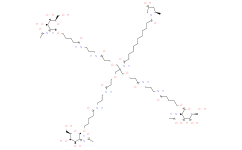
Givosiran has been coupled to a trivalent N-phenylgalactosamine ligand, which is anticipated to attach to asialoglycochrome to facilitate liver absorption [2].
Cell-free assays are not applicable for siRNA therapeutics. The activity of givosiran is assessed in cellular systems by transfecting hepatocyte cell lines (e.g., Huh-7, HepG2) with the siRNA and measuring ALAS1 mRNA knockdown by qRT-PCR and ALAS1 protein by Western blot. The GalNAc conjugation enables uptake via the asialoglycoprotein receptor (ASGPR). In the absence of a lipid carrier, the GalNAc-siRNA is taken up by hepatocytes. The EC50 for ALAS1 mRNA knockdown is typically in the low picomolar to nanomolar range. Givosiran does not bind to protein targets; it hybridizes with specific complementary mRNA sequences (ALAS1). |
| ln Vivo |
The cellular activity of givosiran is evaluated in primary human hepatocytes or a hepatocyte cell line (e.g., HepG2, Huh-7) that expresses ASGPR. Cells are seeded in 96-well plates and treated with givosiran at concentrations ranging from 0.001-100 nM in serum-free or low-serum medium to allow GalNAc-ASGPR binding. For unconjugated siRNA, transfection reagents (e.g., Lipofectamine 2000) are required. After 24-72 hours, the reduction in ALAS1 mRNA is measured by qRT-PCR using TaqMan probes, normalized to a housekeeping gene (e.g., GAPDH or beta-actin). ALAS1 protein levels are confirmed by Western blot. The functional consequence is a reduction in the accumulation of ALA and PBG, which can be measured in the cell culture medium by a specific enzymatic assay or LC-MS/MS. The EC50 for reduction in ALA/PBG is also in the low nanomolar range.
|
| Enzyme Assay |
Givosiran is an RNAi therapeutic, not a small molecule, so it is not used in cell-free enzyme assays. Instead, its mechanism of action is confirmed in cell culture using primary human hepatocytes. Cells are isolated from human liver tissue or purchased from a commercial source. They are seeded in collagen-coated plates and allowed to attach. Givosiran is added to the culture medium (1-100 nM) and incubated for 24-72 hours. Total RNA is extracted, and ALAS1 mRNA is quantified by qRT-PCR using gene-specific TaqMan probes. The percent knockdown is calculated relative to a negative control siRNA. To demonstrate pathway inhibition, the cells may be treated with a porphyrinogenic compound (e.g., glutethimide or phenobarbital) to induce ALAS1 expression, and givosiran's ability to block this induction is tested. The reduction in ALA and PBG in the culture medium is measured by a colorimetric assay or LC-MS/MS. This confirms the functional effect on the heme biosynthesis pathway.
|
| Animal Protocol |
In vivo activity of givosiran is demonstrated in animal models (mice, rats, monkeys) and in patients. In a typical efficacy study, givosiran is administered subcutaneously (SC) to wild-type or transgenic mice at doses of 0.3-10 mg/kg SC once monthly or less frequently. The primary endpoint is the reduction of ALAS1 mRNA in liver tissue, measured by qRT-PCR. ALAS1 protein is measured by Western blot. The reduction in ALA and PBG levels is measured in plasma and urine using LC-MS/MS. A pharmacodynamic model often involves chemical induction of ALAS1 using phenobarbital or a porphyrinogenic drug. Givosiran treatment results in a >90% reduction in ALAS1 mRNA, leading to a sustained reduction in ALA and PBG levels. The duration of effect is several weeks, consistent with RNAi pharmacology. In AHP patients, givosiran reduces the frequency of porphyria attacks.
|
| ADME/Pharmacokinetics |
Givosiran is a siRNA therapeutic with a distinct PK/PD profile. Following subcutaneous administration, it is absorbed into the systemic circulation. The GalNAc moiety binds with high affinity to the ASGPR on hepatocytes, leading to rapid internalization. The plasma half-life is relatively short (hours), but the pharmacodynamic effect on ALAS1 mRNA lasts for weeks. In humans, the FDA-approved dosing regimen is 2.5 mg/kg once monthly. The drug is distributed primarily to the liver. It is cleared by endosomal/lysosomal degradation, not by CYP450 enzymes. No significant drug-drug interactions are expected. The major route of elimination is urinary excretion as nucleotides. The high liver:plasma ratio is a key feature. In studies, a single 2.5 mg/kg SC dose in humans reduces ALAS1 mRNA by approximately 90% for at least 4 weeks. The elimination half-life from the liver is estimated to be 7-10 days.
|
| Toxicity/Toxicokinetics |
In preclinical toxicology studies, givosiran was generally well-tolerated. The primary findings were on-target effects (reduction in ALAS1 and heme synthesis) and injection site reactions. At high doses, effects on the hematopoietic system (mild anemia, reticulocytosis) were observed in animals, consistent with reduced heme synthesis. No significant off-target effects were reported. In human clinical trials (Phase 3 ENVISION), the most common adverse events were injection site reactions (erythema, pain) and nausea. Elevations in liver function tests (ALT, AST) have been observed in some patients, but these were generally mild and reversible. There is a boxed warning for the drug for the risk of anaphylaxis and hepatic toxicity. Givosiran is not genotoxic. Post-marketing safety data continues to be collected.
|
| References | |
| Additional Infomation |
Givosiran (Givlaari) was the first FDA-approved RNAi therapeutic for the treatment of acute hepatic porphyria (AHP), approved in November 2019. It is developed by Alnylam Pharmaceuticals. The drug is administered subcutaneously once monthly (2.5 mg/kg). It is a double-stranded siRNA covalently linked to a GalNAc ligand. Its approval was based on the ENVISION Phase 3 trial, which showed an 89% reduction in the rate of porphyria attacks. The CAS number is 1639325-43-1. The molecular weight is approximately 16,300 g/mol (AS: 7563.9 + SS: 8736.7). For research use, it is provided as a solution or powder. It is not for human use in laboratory research. The drug is used to treat acute intermittent porphyria (AIP) and other AHP types.
|
| Molecular Formula |
C78H139N11O30
|
|---|---|
| Molecular Weight |
1710.9940
|
| Exact Mass |
1709.968
|
| CAS # |
1639325-43-1
|
| Related CAS # |
1469730-77-5 (hydroxy);
|
| Sequence |
RNA, (Cm-sp-Am-sp-Gm-Am-Am-Am-(2'-deoxy-2'-fluoro)G-Am-(2'-deoxy-2'-fluoro)G-Um-(2'-deoxy-2'-fluoro)G-Um-(2'-deoxy-2'-fluoro)C-Um-(2'-deoxy-2'-fluoro)C-Am-Um-Cm-Um-Um-Am), 3'-[[(2S,4R)-1-[29-[[2-(acetylamino)-2-deoxy-β-D-galactopyranosyl]oxy]- 14,14-bis[[3-[[3-[[5-[[2-(acetylamino)-2-deoxy-β-D-galactopyranosyl]oxy]-1-oxopentyl]amino]propyl]amino]-3-oxopropoxy]methyl]-1,12,19,25-tetraoxo-16-oxa13,20,24-triazanonacos-1-yl]-4-hydroxy-2-pyrrolidinyl]methyl hydrogen phosphate], complex with RNA (Um-sp-(2'-deoxy-2'-fluoro)A-sp-(2'-deoxy-2'-fluoro)A-(2'-deoxy-2'-fluoro)G-Am-(2'-deoxy-2'-fluoro)U-Gm-(2'-deoxy-2'-fluoro)A-Gm-(2'-deoxy-2'-fluoro)A-Cm-(2'-deoxy-2'-fluoro)A-Cm-(2'-deoxy-2'-fluoro)U-Cm-(2'-deoxy-2'-fluoro)U-Um-(2'-deoxy-2'-fluoro)U-Cm-(2'-deoxy-2'-fluoro)U-Gm-sp-Gm-sp-Um) (1:1)
|
| Appearance |
White to off-white solid powder
|
| Density |
1.3±0.1 g/cm3
|
| Boiling Point |
1780.6±65.0 °C at 760 mmHg
|
| Flash Point |
1030.6±34.3 °C
|
| Vapour Pressure |
0.0±0.6 mmHg at 25°C
|
| Index of Refraction |
1.579
|
| LogP |
-4.24
|
| SMILES |
[Givosiran]
|
| HS Tariff Code |
2934.99.9001
|
| Storage |
Powder -20°C 3 years 4°C 2 years In solvent -80°C 6 months -20°C 1 month Note: This product requires protection from light (avoid light exposure) during transportation and storage. |
| Shipping Condition |
Room temperature (This product is stable at ambient temperature for a few days during ordinary shipping and time spent in Customs)
|
| Solubility (In Vitro) |
May dissolve in DMSO (in most cases), if not, try other solvents such as H2O, Ethanol, or DMF with a minute amount of products to avoid loss of samples
|
|---|---|
| Solubility (In Vivo) |
Note: Listed below are some common formulations that may be used to formulate products with low water solubility (e.g. < 1 mg/mL), you may test these formulations using a minute amount of products to avoid loss of samples.
Injection Formulations
Injection Formulation 1: DMSO : Tween 80: Saline = 10 : 5 : 85 (i.e. 100 μL DMSO stock solution → 50 μL Tween 80 → 850 μL Saline)(e.g. IP/IV/IM/SC) *Preparation of saline: Dissolve 0.9 g of sodium chloride in 100 mL ddH ₂ O to obtain a clear solution. Injection Formulation 2: DMSO : PEG300 :Tween 80 : Saline = 10 : 40 : 5 : 45 (i.e. 100 μL DMSO → 400 μLPEG300 → 50 μL Tween 80 → 450 μL Saline) Injection Formulation 3: DMSO : Corn oil = 10 : 90 (i.e. 100 μL DMSO → 900 μL Corn oil) Example: Take the Injection Formulation 3 (DMSO : Corn oil = 10 : 90) as an example, if 1 mL of 2.5 mg/mL working solution is to be prepared, you can take 100 μL 25 mg/mL DMSO stock solution and add to 900 μL corn oil, mix well to obtain a clear or suspension solution (2.5 mg/mL, ready for use in animals). View More
Injection Formulation 4: DMSO : 20% SBE-β-CD in saline = 10 : 90 [i.e. 100 μL DMSO → 900 μL (20% SBE-β-CD in saline)] Oral Formulations
Oral Formulation 1: Suspend in 0.5% CMC Na (carboxymethylcellulose sodium) Oral Formulation 2: Suspend in 0.5% Carboxymethyl cellulose Example: Take the Oral Formulation 1 (Suspend in 0.5% CMC Na) as an example, if 100 mL of 2.5 mg/mL working solution is to be prepared, you can first prepare 0.5% CMC Na solution by measuring 0.5 g CMC Na and dissolve it in 100 mL ddH2O to obtain a clear solution; then add 250 mg of the product to 100 mL 0.5% CMC Na solution, to make the suspension solution (2.5 mg/mL, ready for use in animals). View More
Oral Formulation 3: Dissolved in PEG400 (Please use freshly prepared in vivo formulations for optimal results.) |
| Preparing Stock Solutions | 1 mg | 5 mg | 10 mg | |
| 1 mM | 0.5845 mL | 2.9223 mL | 5.8446 mL | |
| 5 mM | 0.1169 mL | 0.5845 mL | 1.1689 mL | |
| 10 mM | 0.0584 mL | 0.2922 mL | 0.5845 mL |
*Note: Please select an appropriate solvent for the preparation of stock solution based on your experiment needs. For most products, DMSO can be used for preparing stock solutions (e.g. 5 mM, 10 mM, or 20 mM concentration); some products with high aqueous solubility may be dissolved in water directly. Solubility information is available at the above Solubility Data section. Once the stock solution is prepared, aliquot it to routine usage volumes and store at -20°C or -80°C. Avoid repeated freeze and thaw cycles.
Calculation results
Working concentration: mg/mL;
Method for preparing DMSO stock solution: mg drug pre-dissolved in μL DMSO (stock solution concentration mg/mL). Please contact us first if the concentration exceeds the DMSO solubility of the batch of drug.
Method for preparing in vivo formulation::Take μL DMSO stock solution, next add μL PEG300, mix and clarify, next addμL Tween 80, mix and clarify, next add μL ddH2O,mix and clarify.
(1) Please be sure that the solution is clear before the addition of next solvent. Dissolution methods like vortex, ultrasound or warming and heat may be used to aid dissolving.
(2) Be sure to add the solvent(s) in order.
Products are for research use only; We do not sell to patients
Copyright 2020 InvivoChem LLC | All Rights Reserved


