| Size | Price | Stock | Qty |
|---|---|---|---|
| 5mg |
|
||
| 10mg |
|
||
| 50mg | |||
| Other Sizes |
| Targets |
Gemcabene calcium has a unique mechanism of action that involves two primary pathways. First, it blocks the production of hepatic triglyceride and cholesterol synthesis. Second, it enhances the clearance of very low-density lipoprotein (VLDL) by decreasing the levels of ApoC-III, a protein that inhibits the breakdown of VLDL. Furthermore, it down-regulates acute-phase C-reactive protein (CRP) via a C/EBP-δ-mediated transcriptional mechanism, demonstrating its anti-inflammatory properties.
|
|---|---|
| ln Vitro |
The mRNA markers of liver inflammation (TNF-α, MCP-1, MIP-1β, CCR5, CCR2, NF-κB), adipogenesis, lipid regulation (ApoC-III, ACC1, ADH-4, Sulf-2), and fibrosis (TIMP-1 and MMP-2) are all significantly downregulated by gemcabene calcium (PD-72953 calcium) [3].
In vitro, Gemcabene calcium has been shown to potently inhibit IL-6 plus IL-1β-induced CRP production in human hepatoma cells in a concentration-dependent manner, reaching 70% inhibition at 2 mM. This confirms its ability to directly reduce CRP production at the cellular level. Its primary lipid-lowering effects, including reduction of triglyceride and cholesterol synthesis, have also been demonstrated in hepatocyte models. |
| ln Vivo |
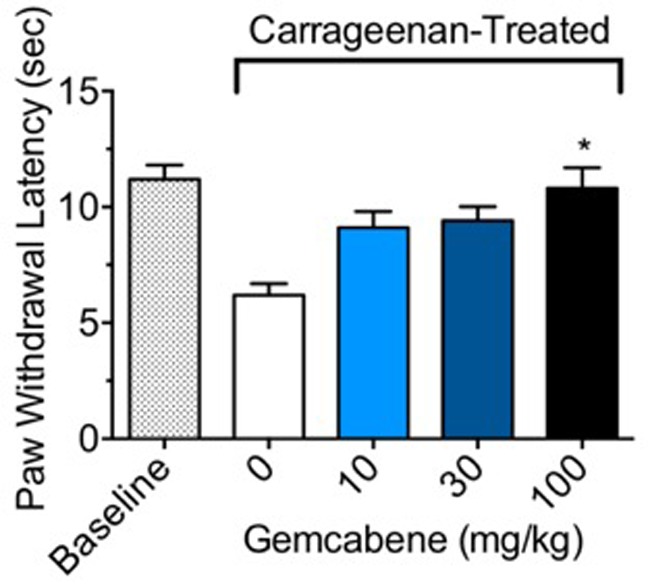
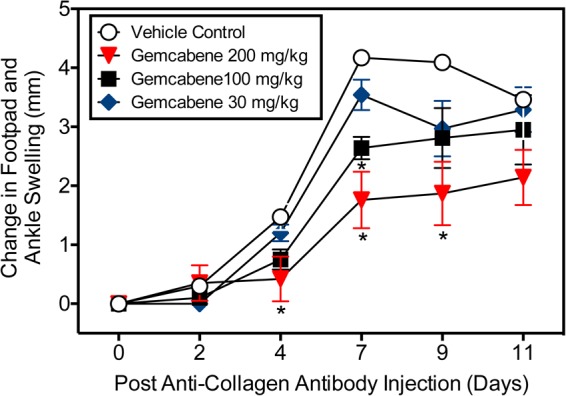
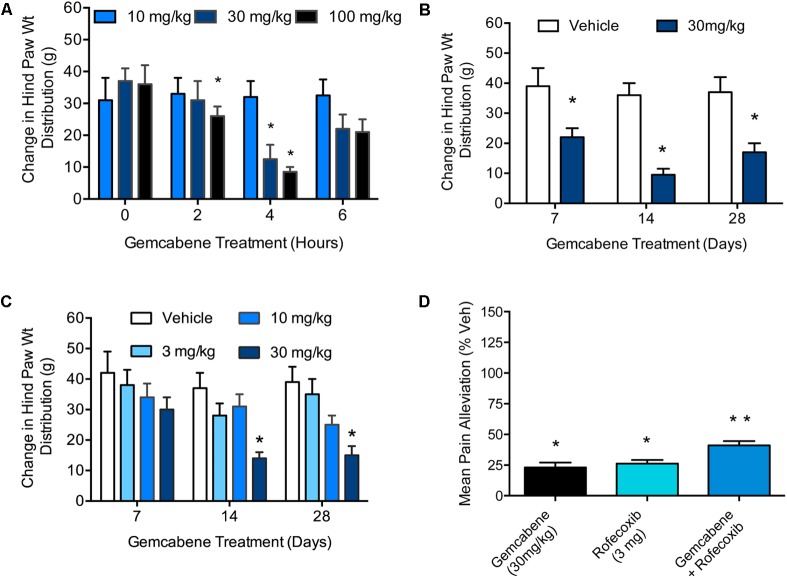
In vivo, Gemcabene calcium is a first-in-class lipid-lowering agent that has been evaluated in clinical trials. It has been shown to lower low-density lipoprotein cholesterol (LDL-C), decrease triglycerides, and raise high-density lipoprotein cholesterol (HDL-C). It also lowers the pro-inflammatory acute-phase protein, C-reactive protein (CRP), exerting anti-inflammatory activity. Its unique mechanism has been observed in preclinical models and human studies.
|
| Enzyme Assay |
Gemcabene calcium's activity can be assessed in cell-free enzymatic assays that measure its effects on lipid metabolism. For example, its ability to inhibit triglyceride synthesis can be evaluated using a hepatic microsomal assay where the incorporation of radiolabeled precursors (e.g., 14C-acetate) into triglycerides is measured. Its effect on cholesterol synthesis can be assessed similarly. The compound's interaction with C/EBP-δ, a transcription factor, could be studied using electrophoretic mobility shift assays (EMSA) or reporter gene assays in a cell-free system.
|
| Cell Assay |
In vitro cell-based assays for Gemcabene calcium are performed using human hepatoma cells, such as HepG2 cells. Cells are treated with the compound, often in the presence of inflammatory cytokines like IL-6 and IL-1β to stimulate CRP production. The amount of CRP secreted into the culture medium is then measured using an ELISA. The compound's effect on lipid accumulation can also be assessed by staining cells with Oil Red O, a dye that binds to neutral lipids, and quantifying the staining. These assays help to elucidate the compound's mechanism of action at the cellular level.
|
| Animal Protocol |
In vivo animal experiments for Gemcabene calcium would involve standard models of hyperlipidemia and atherosclerosis. For example, hamsters or mice fed a high-fat diet are treated with the compound, and plasma lipid profiles (total cholesterol, LDL-C, HDL-C, triglycerides) are measured. The effect on inflammatory markers like CRP is also assessed. In atherosclerotic models, the compound's effect on the progression of aortic plaques would be evaluated. Furthermore, its effect on the expression of genes involved in lipid metabolism in the liver could be studied. Specific protocols for Gemcabene calcium are not detailed in the available summaries.
|
| ADME/Pharmacokinetics |
Gemcabene calcium is an orally available drug candidate, indicating that it has favorable pharmacokinetic properties for oral administration. Its unique mechanism and lipid-lowering effects have been observed in trials. However, specific PK parameters such as bioavailability, half-life, protein binding, and metabolism are not detailed in the available literature. As a calcium salt, its solubility and dissolution rate would be important factors in its absorption. It is a research-grade compound used for in vitro and in vivo studies.
|
| Toxicity/Toxicokinetics |
Toxicological data for Gemcabene calcium is not extensively detailed in the public summaries provided. As a drug candidate that has been in clinical trials, its safety profile would have been evaluated. However, specific data such as LD50, organ toxicity, or common adverse effects are not reported here. In vitro studies have shown that it can inhibit CRP production in human hepatoma cells, suggesting it is not acutely toxic to these cells at the concentrations tested. Its use is for research purposes only, not for human therapeutic use.
|
| References |
|
| Additional Infomation |
Gemcabene Calcium is a calcium salt preparation of gemcabene, a dialkyl ether dicarboxylic acid with anti-hyperlipidemic activity.
Gemcabene calcium is a first-in-class lipid-lowering agent that has progressed into clinical trials. Its unique, pleiotropic mechanism of action distinguishes it from other lipid-lowering drugs like statins and fibrates. By both reducing lipid synthesis and enhancing VLDL clearance, and by reducing inflammation, it addresses multiple aspects of cardiovascular risk. It has not yet received FDA approval for marketing. All information is for research reference and not for diagnostic or clinical use. |
| Molecular Formula |
C16H28O5-2.CA+2
|
|---|---|
| Molecular Weight |
340.46852
|
| Exact Mass |
340.156
|
| CAS # |
209789-08-2
|
| Related CAS # |
Gemcabene;183293-82-5
|
| PubChem CID |
157691
|
| Appearance |
White to off-white solid powder
|
| Boiling Point |
453.6ºC at 760mmHg
|
| Flash Point |
156.7ºC
|
| Vapour Pressure |
1.72E-09mmHg at 25°C
|
| LogP |
0.895
|
| Hydrogen Bond Donor Count |
0
|
| Hydrogen Bond Acceptor Count |
5
|
| Rotatable Bond Count |
10
|
| Heavy Atom Count |
22
|
| Complexity |
291
|
| Defined Atom Stereocenter Count |
0
|
| SMILES |
O(CCCCC(C)(C)C([O-])=O)CCCCC(C)(C)C([O-])=O.[Ca+2]
|
| InChi Key |
ZJKZKKPIKDNHDM-UHFFFAOYSA-L
|
| InChi Code |
InChI=1S/C16H30O5.Ca/c1-15(2,13(17)18)9-5-7-11-21-12-8-6-10-16(3,4)14(19)20;/h5-12H2,1-4H3,(H,17,18)(H,19,20);/q;+2/p-2
|
| Chemical Name |
calcium;6-(5-carboxylato-5-methylhexoxy)-2,2-dimethylhexanoate
|
| HS Tariff Code |
2934.99.9001
|
| Storage |
Powder -20°C 3 years 4°C 2 years In solvent -80°C 6 months -20°C 1 month Note: Please store this product in a sealed and protected environment, avoid exposure to moisture. |
| Shipping Condition |
Room temperature (This product is stable at ambient temperature for a few days during ordinary shipping and time spent in Customs)
|
| Solubility (In Vitro) |
H2O : ~10 mg/mL (~29.37 mM)
|
|---|---|
| Solubility (In Vivo) |
Note: Listed below are some common formulations that may be used to formulate products with low water solubility (e.g. < 1 mg/mL), you may test these formulations using a minute amount of products to avoid loss of samples.
Injection Formulations
Injection Formulation 1: DMSO : Tween 80: Saline = 10 : 5 : 85 (i.e. 100 μL DMSO stock solution → 50 μL Tween 80 → 850 μL Saline)(e.g. IP/IV/IM/SC) *Preparation of saline: Dissolve 0.9 g of sodium chloride in 100 mL ddH ₂ O to obtain a clear solution. Injection Formulation 2: DMSO : PEG300 :Tween 80 : Saline = 10 : 40 : 5 : 45 (i.e. 100 μL DMSO → 400 μLPEG300 → 50 μL Tween 80 → 450 μL Saline) Injection Formulation 3: DMSO : Corn oil = 10 : 90 (i.e. 100 μL DMSO → 900 μL Corn oil) Example: Take the Injection Formulation 3 (DMSO : Corn oil = 10 : 90) as an example, if 1 mL of 2.5 mg/mL working solution is to be prepared, you can take 100 μL 25 mg/mL DMSO stock solution and add to 900 μL corn oil, mix well to obtain a clear or suspension solution (2.5 mg/mL, ready for use in animals). View More
Injection Formulation 4: DMSO : 20% SBE-β-CD in saline = 10 : 90 [i.e. 100 μL DMSO → 900 μL (20% SBE-β-CD in saline)] Oral Formulations
Oral Formulation 1: Suspend in 0.5% CMC Na (carboxymethylcellulose sodium) Oral Formulation 2: Suspend in 0.5% Carboxymethyl cellulose Example: Take the Oral Formulation 1 (Suspend in 0.5% CMC Na) as an example, if 100 mL of 2.5 mg/mL working solution is to be prepared, you can first prepare 0.5% CMC Na solution by measuring 0.5 g CMC Na and dissolve it in 100 mL ddH2O to obtain a clear solution; then add 250 mg of the product to 100 mL 0.5% CMC Na solution, to make the suspension solution (2.5 mg/mL, ready for use in animals). View More
Oral Formulation 3: Dissolved in PEG400 (Please use freshly prepared in vivo formulations for optimal results.) |
| Preparing Stock Solutions | 1 mg | 5 mg | 10 mg | |
| 1 mM | 2.9371 mL | 14.6856 mL | 29.3712 mL | |
| 5 mM | 0.5874 mL | 2.9371 mL | 5.8742 mL | |
| 10 mM | 0.2937 mL | 1.4686 mL | 2.9371 mL |
*Note: Please select an appropriate solvent for the preparation of stock solution based on your experiment needs. For most products, DMSO can be used for preparing stock solutions (e.g. 5 mM, 10 mM, or 20 mM concentration); some products with high aqueous solubility may be dissolved in water directly. Solubility information is available at the above Solubility Data section. Once the stock solution is prepared, aliquot it to routine usage volumes and store at -20°C or -80°C. Avoid repeated freeze and thaw cycles.
Calculation results
Working concentration: mg/mL;
Method for preparing DMSO stock solution: mg drug pre-dissolved in μL DMSO (stock solution concentration mg/mL). Please contact us first if the concentration exceeds the DMSO solubility of the batch of drug.
Method for preparing in vivo formulation::Take μL DMSO stock solution, next add μL PEG300, mix and clarify, next addμL Tween 80, mix and clarify, next add μL ddH2O,mix and clarify.
(1) Please be sure that the solution is clear before the addition of next solvent. Dissolution methods like vortex, ultrasound or warming and heat may be used to aid dissolving.
(2) Be sure to add the solvent(s) in order.
|
|
|
Products are for research use only; We do not sell to patients
Copyright 2020 InvivoChem LLC | All Rights Reserved