| Size | Price | Stock | Qty |
|---|---|---|---|
| 5mg |
|
||
| 10mg |
|
||
| 50mg |
|
||
| 100mg |
|
||
| Other Sizes |


| Targets |
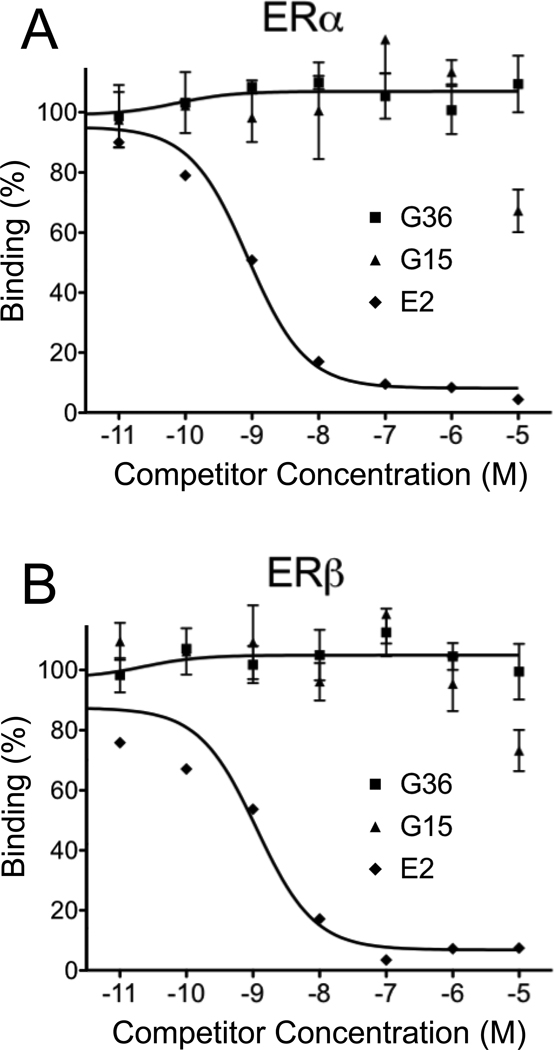
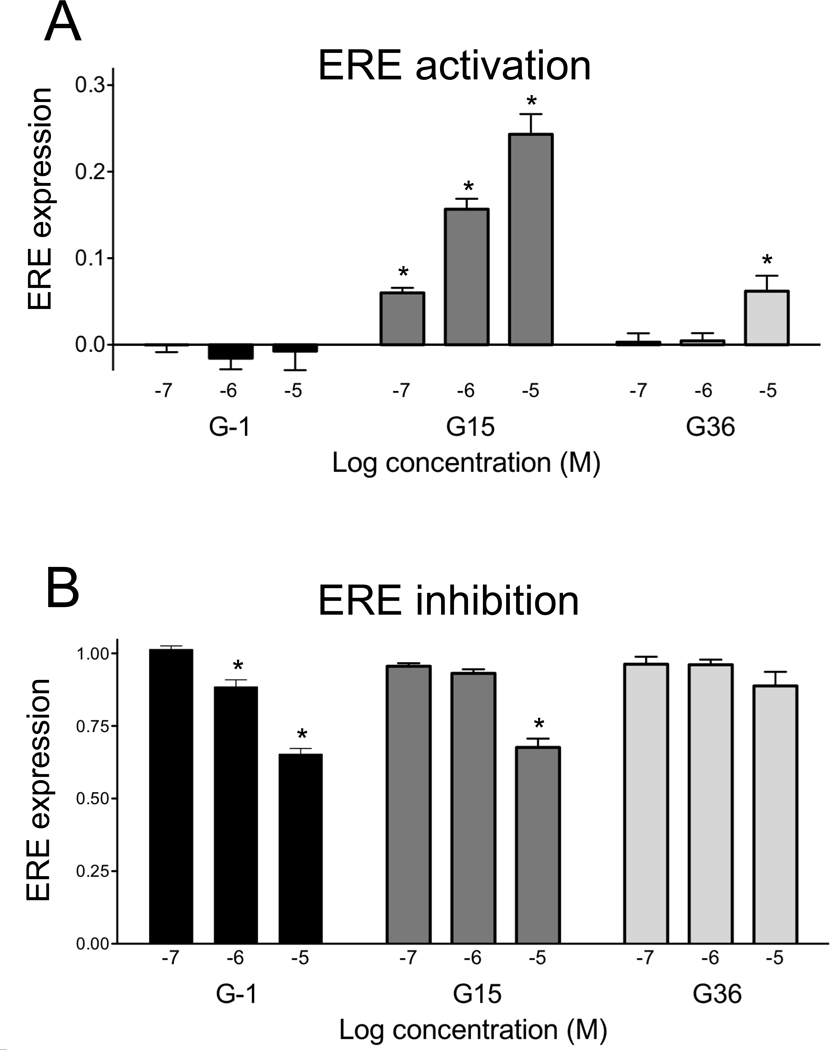
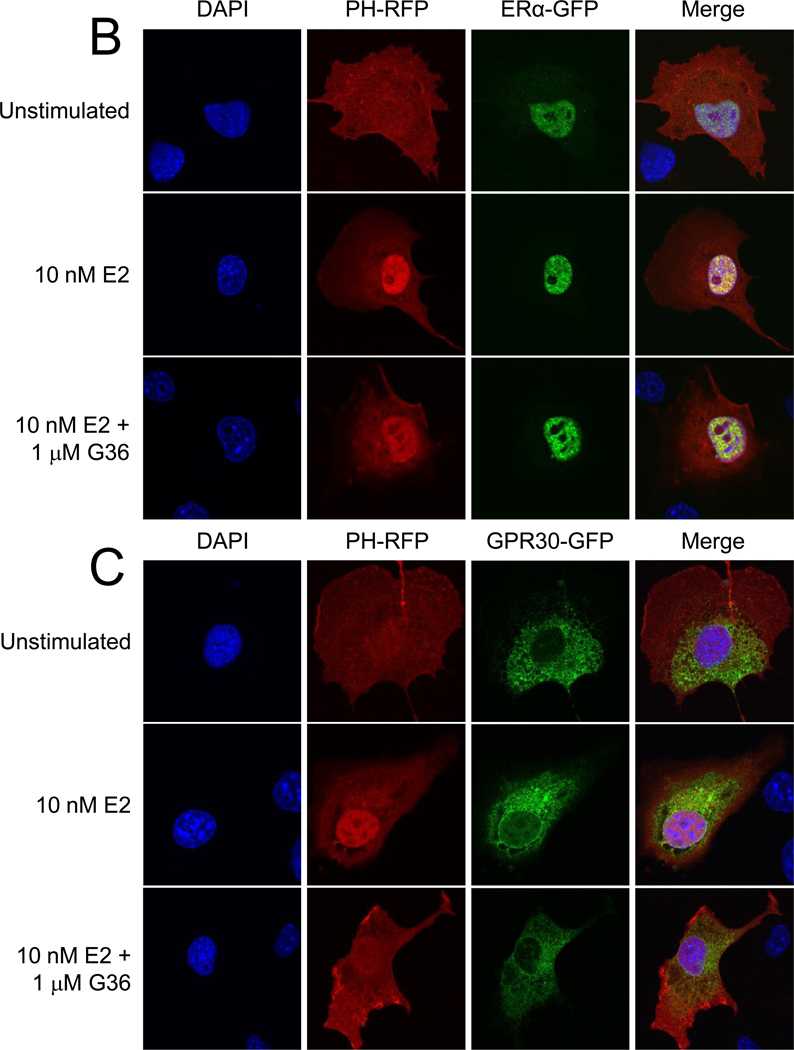
G-36 is a cell-permeable, non-steroidal antagonist that selectively targets the G protein-coupled estrogen receptor (GPER, also known as GPR30). Its primary mechanism of action is to inhibit the activation of GPER by its ligands, such as 17β-estradiol and the GPER-selective agonist G-1. This inhibition is highly selective, as G-36 does not affect the estrogen receptor alpha (ERα) pathway. By blocking GPER, it inhibits estrogen-mediated activation of downstream signaling pathways, including the phosphoinositide 3-kinase (PI3-K) pathway and calcium mobilization. G-36 serves as a crucial tool for dissecting GPER-specific effects from those mediated by classical estrogen receptors.
|
|---|---|
| ln Vitro |
In vitro, G-36 is a potent antagonist of the G protein-coupled estrogen receptor (GPER). It selectively inhibits GPER-mediated signaling while sparing the ERα pathway. G-36 potently inhibits estrogen- and G-1-mediated calcium mobilization with IC50 values of 112 nM and 165 nM, respectively. Studies in human umbilical vein endothelial cells (HUVECs) have shown that pretreatment with G-36 (1 μM) completely blocks ethinylestradiol (EE)- and estetrol (E4)-induced cell migration. In human cervical squamous cell carcinoma (CSCC) cell lines SiHa and C33A, treatment with G-36 (1-5 μM) had no significant effect on cell migration or colony formation, but did increase the protein expression of plasminogen activator inhibitor-1 (PAI-1).
|
| ln Vivo |
In vivo, G-36 has been shown to effectively block GPER-mediated effects in animal models. In high-fat diet (HFD)-fed C57BL/6 male mice, co-administration of G-36 (0.5 mg/kg, i.p.) with the GPER agonist G-1 (5 times per week for 5 weeks) blocked the protective effects of G-1 against HFD-induced obese asthma. This included reversing G-1's effects on airway hyperresponsiveness, pulmonary immune cell infiltration, tissue inflammation, fibrosis, and mucus hypersecretion. In ovariectomized C57Bl6 female mice, a single subcutaneous injection of G-36 (50 μg/kg) blocked G-1 (10 μg/kg)-induced proliferation of uterine epithelial cells and significantly reduced 17β-estradiol (E2)-induced proliferation.
|
| Enzyme Assay |
In vitro receptor binding assays for G-36 are typically conducted to measure its antagonistic activity at the G protein-coupled estrogen receptor (GPER). These assays often involve using cells expressing the receptor and measuring downstream signaling events such as calcium mobilization. The compound's potency is determined by its ability to inhibit the activation of these signaling pathways by agonists like 17β-estradiol or the selective GPER agonist G-1. G-36's selectivity for GPER over ERα is confirmed by demonstrating its lack of effect on ERα-mediated pathways. These studies are critical for confirming its mechanism of action as a selective GPER antagonist.
|
| Cell Assay |
In vitro cell-based assays for G-36 are employed to evaluate its effects on GPER-mediated cellular functions. Researchers treat various cell lines with the compound and assess changes in processes like calcium mobilization, cell migration, and gene expression. For example, in HUVECs, G-36 blocked estrogen-induced cell migration. In CSCC cell lines, it modulated the expression of PAI-1. These assays help define the specific roles of GPER in cellular physiology and pathology, confirming that the effects observed are due to GPER antagonism and not through other estrogen receptor pathways.
|
| Animal Protocol |
In vivo animal experiments with G-36 have demonstrated its efficacy in blocking GPER-mediated effects in various disease models. In a study on obese asthma, G-36 was co-administered with the GPER agonist G-1 to high-fat diet-fed C57BL/6 male mice. The results showed that G-36 blocked G-1's protective effects against airway hyperresponsiveness, inflammation, and fibrosis, effectively reversing the improvements seen with G-1 alone. In another study, G-36 was administered to ovariectomized C57Bl6 female mice, where it blocked G-1-induced uterine epithelial cell proliferation. These in vivo studies confirm the compound's utility as a selective tool for studying GPER function in a physiological context.
|
| ADME/Pharmacokinetics |
Pharmacokinetic (PK) data for G-36 are not extensively detailed in the provided references. For in vivo applications, the compound can be formulated for intraperitoneal (i.p.) injection or subcutaneous (s.c.) injection. A comprehensive PK study would involve administering G-36 to animal models and measuring its concentration in plasma and tissues over time to determine its half-life, clearance, and bioavailability. As a small molecule with a molecular weight of 412.3 g/mol, it is expected to have reasonable tissue distribution properties. Such studies would be essential for designing effective dosing regimens for in vivo experiments.
|
| Toxicity/Toxicokinetics |
The toxicity profile of G-36 is not fully detailed in the provided literature. As a selective GPER antagonist, its safety would need to be carefully evaluated in preclinical studies. The compound is intended for research use only and is not for human or veterinary use. Standard safety precautions for handling research chemicals should be followed, including working in a well-ventilated area and using appropriate personal protective equipment. Any comprehensive toxicological assessment would require dedicated studies to evaluate potential off-target effects and establish a safe dosage range.
|
| References | |
| Additional Infomation |
G-36 is a cell-permeable, non-steroidal, and selective antagonist of the G protein-coupled estrogen receptor (GPER/GPR30). It selectively inhibits GPER-mediated pathways, such as calcium mobilization, without affecting the classical estrogen receptor alpha (ERα) pathway. G-36 potently inhibits G-1 and 17β-estradiol-induced effects, with IC50 values of 165 nM and 112 nM, respectively. In vitro and in vivo studies have shown its efficacy in blocking GPER-mediated cell migration and proliferation. It is a crucial research tool for investigating the role of GPER in various physiological and pathological processes, including cancer. G-36 is exclusively a research chemical and is not approved for clinical trials or therapeutic use.
|
| Molecular Formula |
C22H22BRNO2
|
|---|---|
| Molecular Weight |
412.319585323334
|
| Exact Mass |
411.083
|
| CAS # |
1392487-51-2
|
| Related CAS # |
G36; 1392487-51-2
|
| PubChem CID |
73755224
|
| Appearance |
White to light yellow solid powder
|
| Density |
1.4±0.1 g/cm3
|
| Boiling Point |
478.4±45.0 °C at 760 mmHg
|
| Flash Point |
243.1±28.7 °C
|
| Vapour Pressure |
0.0±1.2 mmHg at 25°C
|
| Index of Refraction |
1.619
|
| LogP |
5.83
|
| Hydrogen Bond Donor Count |
1
|
| Hydrogen Bond Acceptor Count |
3
|
| Rotatable Bond Count |
2
|
| Heavy Atom Count |
26
|
| Complexity |
552
|
| Defined Atom Stereocenter Count |
3
|
| SMILES |
CC(C)C1=CC2=C(C=C1)N[C@H]([C@@H]3[C@H]2C=CC3)C4=CC5=C(C=C4Br)OCO5
|
| InChi Key |
QTOCPACSSHFGOY-ZCCHDVMBSA-N
|
| InChi Code |
InChI=1S/C22H22BrNO2/c1-12(2)13-6-7-19-16(8-13)14-4-3-5-15(14)22(24-19)17-9-20-21(10-18(17)23)26-11-25-20/h3-4,6-10,12,14-15,22,24H,5,11H2,1-2H3/t14-,15+,22-/m1/s1
|
| Chemical Name |
(3aS,4R,9bR)-4-(6-bromo-1,3-benzodioxol-5-yl)-8-propan-2-yl-3a,4,5,9b-tetrahydro-3H-cyclopenta[c]quinoline
|
| HS Tariff Code |
2934.99.9001
|
| Storage |
Powder -20°C 3 years 4°C 2 years In solvent -80°C 6 months -20°C 1 month |
| Shipping Condition |
Room temperature (This product is stable at ambient temperature for a few days during ordinary shipping and time spent in Customs)
|
| Solubility (In Vitro) |
DMSO : ~50 mg/mL (~121.27 mM)
|
|---|---|
| Solubility (In Vivo) |
Note: Listed below are some common formulations that may be used to formulate products with low water solubility (e.g. < 1 mg/mL), you may test these formulations using a minute amount of products to avoid loss of samples.
Injection Formulations
Injection Formulation 1: DMSO : Tween 80: Saline = 10 : 5 : 85 (i.e. 100 μL DMSO stock solution → 50 μL Tween 80 → 850 μL Saline)(e.g. IP/IV/IM/SC) *Preparation of saline: Dissolve 0.9 g of sodium chloride in 100 mL ddH ₂ O to obtain a clear solution. Injection Formulation 2: DMSO : PEG300 :Tween 80 : Saline = 10 : 40 : 5 : 45 (i.e. 100 μL DMSO → 400 μLPEG300 → 50 μL Tween 80 → 450 μL Saline) Injection Formulation 3: DMSO : Corn oil = 10 : 90 (i.e. 100 μL DMSO → 900 μL Corn oil) Example: Take the Injection Formulation 3 (DMSO : Corn oil = 10 : 90) as an example, if 1 mL of 2.5 mg/mL working solution is to be prepared, you can take 100 μL 25 mg/mL DMSO stock solution and add to 900 μL corn oil, mix well to obtain a clear or suspension solution (2.5 mg/mL, ready for use in animals). View More
Injection Formulation 4: DMSO : 20% SBE-β-CD in saline = 10 : 90 [i.e. 100 μL DMSO → 900 μL (20% SBE-β-CD in saline)] Oral Formulations
Oral Formulation 1: Suspend in 0.5% CMC Na (carboxymethylcellulose sodium) Oral Formulation 2: Suspend in 0.5% Carboxymethyl cellulose Example: Take the Oral Formulation 1 (Suspend in 0.5% CMC Na) as an example, if 100 mL of 2.5 mg/mL working solution is to be prepared, you can first prepare 0.5% CMC Na solution by measuring 0.5 g CMC Na and dissolve it in 100 mL ddH2O to obtain a clear solution; then add 250 mg of the product to 100 mL 0.5% CMC Na solution, to make the suspension solution (2.5 mg/mL, ready for use in animals). View More
Oral Formulation 3: Dissolved in PEG400 (Please use freshly prepared in vivo formulations for optimal results.) |
| Preparing Stock Solutions | 1 mg | 5 mg | 10 mg | |
| 1 mM | 2.4253 mL | 12.1265 mL | 24.2530 mL | |
| 5 mM | 0.4851 mL | 2.4253 mL | 4.8506 mL | |
| 10 mM | 0.2425 mL | 1.2127 mL | 2.4253 mL |
*Note: Please select an appropriate solvent for the preparation of stock solution based on your experiment needs. For most products, DMSO can be used for preparing stock solutions (e.g. 5 mM, 10 mM, or 20 mM concentration); some products with high aqueous solubility may be dissolved in water directly. Solubility information is available at the above Solubility Data section. Once the stock solution is prepared, aliquot it to routine usage volumes and store at -20°C or -80°C. Avoid repeated freeze and thaw cycles.
Calculation results
Working concentration: mg/mL;
Method for preparing DMSO stock solution: mg drug pre-dissolved in μL DMSO (stock solution concentration mg/mL). Please contact us first if the concentration exceeds the DMSO solubility of the batch of drug.
Method for preparing in vivo formulation::Take μL DMSO stock solution, next add μL PEG300, mix and clarify, next addμL Tween 80, mix and clarify, next add μL ddH2O,mix and clarify.
(1) Please be sure that the solution is clear before the addition of next solvent. Dissolution methods like vortex, ultrasound or warming and heat may be used to aid dissolving.
(2) Be sure to add the solvent(s) in order.
|
|
|
Products are for research use only; We do not sell to patients
Copyright 2020 InvivoChem LLC | All Rights Reserved