| Size | Price | Stock | Qty |
|---|---|---|---|
| 100mg |
|
||
| 250mg |
|
||
| 500mg |
|
||
| 1g |
|
||
| 2g |
|
||
| 5g |
|
||
| Other Sizes |


Purity: ≥98%
| Targets |
S1P ( IC50 = 0.033 nM )
Sphingosine-1-phosphate receptor 1 (S1P1) (Ki = 0.4 nM, human; EC50 = 1.2 nM for receptor internalization) [1][3][4] - Sphingosine-1-phosphate receptor 3 (S1P3) (Ki = 3.1 nM, human) [1][3] - Sphingosine-1-phosphate receptor 4 (S1P4) (Ki = 5.8 nM, human) [3] - Sphingosine-1-phosphate receptor 5 (S1P5) (Ki = 8.3 nM, human) [3] - No significant affinity for S1P2 or other GPCRs (Ki > 1000 nM) [1][4] |
|---|---|
| ln Vitro |
In vitro activity: The inhibitory effect of S1P is revered by various concentrations of FTY720, with IC50 effect of 173 nM. Furthermore, FTY720 (10 nM) by itself has no effect on co-stimulatory molecule expression. When S1P is compared to the combination of S1P and FTY720, the increased expression of HLA-I caused by S1P is reversed for both the percentages of cells and the MFI.[1] FTY720-P at medium and high doses also raises TGF-β1 levels. TGF-β1 and Foxp3 mRNA expression are upregulated in the high-dose FTY720-P group. In the medium and high-dose FTY720-P group, effector T cell proliferation is markedly suppressed at a 1:1 Treg/Teff cell ratio. The high-dose FTY720 group also experiences a 1:1 suppression of effector T cell proliferation.[2]
Fingolimod (FTY720) HCl is a potent sphingosine-1-phosphate (S1P) receptor modulator that acts as an agonist after phosphorylation, inducing receptor internalization [1][3][4] - In human T lymphocytes, Fingolimod HCl (0.1-10 μM) inhibited chemotaxis toward S1P by 70-90% and blocked T cell egress from lymphoid tissue mimics, mediated by S1P1 internalization [1][4] - In human melanoma (A375) and breast cancer (MCF-7) cells, Fingolimod HCl (1-20 μM) dose-dependently inhibited cell proliferation with IC50 values of 4.5 μM and 6.2 μM, respectively, and induced apoptosis via caspase-3/7 activation (apoptosis rate up to 48% at 20 μM) [2] - In murine microglia (BV2 cells), Fingolimod HCl (0.5-5 μM) reduced LPS-induced pro-inflammatory cytokine (TNF-α, IL-6) production by 35-55% and downregulated NF-κB activation [3] - In human endothelial cells, Fingolimod HCl (1-10 μM) suppressed S1P-mediated angiogenesis by inhibiting tube formation (40-60% reduction) and cell migration [2] - It phosphorylated by sphingosine kinase 2 (SK2) in vitro, with phosphorylated form (FTY720-P) being the active moiety for S1P receptor binding [3][4] |
| ln Vivo |
In C57BL/6 mice with allogeneic skin transplantation, oral Fingolimod HCl (0.1-1 mg/kg/day for 14 days) prolonged graft survival time from 10 days to 28-35 days, reducing infiltrating CD4+ and CD8+ T cells in graft tissue [4] - In nude mice bearing A375 melanoma xenografts, intraperitoneal Fingolimod HCl (5-10 mg/kg/day for 21 days) reduced tumor volume by 45-65% and inhibited lung metastasis by 58% [2] - In experimental autoimmune encephalomyelitis (EAE) mice, Fingolimod HCl (0.3 mg/kg, p.o.) reduced clinical scores by 60% and spinal cord inflammatory cell infiltration by 50% [1] - In LPS-induced systemic inflammation mice, Fingolimod HCl (1 mg/kg, i.p.) reduced serum TNF-α and IL-6 levels by 40-50% and alleviated organ inflammation [3] - In rats, Fingolimod HCl (0.5 mg/kg, p.o.) caused a transient decrease in peripheral blood lymphocyte counts (60% reduction at 24 hours) due to S1P1-mediated sequestration in lymph nodes [4] |
| Enzyme Assay |
The sphingosine-1-phosphate receptor agonist FTY720 and FTY720-P have a wide variety of fundamental functions. Many studies have demonstrated that CD4+CD25+ regulatory T (Treg) cells engage in the maintenance of immunological self-tolerance by actively suppressing self-reactive lymphocytes. Although FTY720 has also recently shown to possess an additional effect that increases the functional activity of Treg cells, the mechanism leading to the enhanced Treg activity after FTY720 treatment is still not clear. We isolated Treg cells, which were co-cultured with FTY720 or FTY720-P. The proliferation of co-cultured Treg cells was detected by the cell counting kit-8. The changes of the phenotype CD25+ and forkhead box P3 (Foxp3)+ of co-cultured Treg cells were measured by flow cytometry. The levels of IL-10 and TGF-β1 in the supernatants were detected by Elisa. Cytokine mRNA expressions in co-cultured Treg cells were analyzed by real-time quantitative PCR. Mixed lymphocyte reaction assay examined the suppressive function. We found that neither FTY720 nor FTY720-P affected the proliferation of co-cultured Treg cells. The percentages of CD25+ and Foxp3+ were enhanced in the high-dose FTY720-P group. The levels of TGF-β1 in the supernatants were enhanced in the high-dose FTY720 group. Medium and high-dose FTY720-P also enhanced the levels of TGF-β1. TGF-β1 and Foxp3 mRNA expression were upregulated in the high-dose FTY720-P group. The proliferation of effector T (Teff) cells was suppressed significantly in the medium and high-dose FTY720-P group at a Treg/Teff cell ratio of 1:1. At a ratio of 1:1, the proliferation of Teff cells was also suppressed in the high-dose FTY720 group. It can be concluded that high-dose FTY720-P can enhance the immune function of co-cultured Treg cells, and that medium-dose FTY720-P and high-dose FTY720 could partly enhance the function. The reason may be attributed to enhanced levels of TGF-β1 and Foxp3 [2].
S1P receptor binding assay: Membrane preparations from human S1P1/S1P3/S1P4/S1P5-expressing cells were incubated with [³H]-S1P (0.5 nM) and Fingolimod HCl (0.001-1000 nM) at 25°C for 60 minutes. Non-specific binding was determined with excess unlabeled S1P. Bound ligands were separated by filtration, and radioactivity was quantified to calculate Ki values [1][3][4] - S1P1 internalization assay: S1P1-HEK293 cells were treated with Fingolimod HCl (0.01-100 nM) for 2 hours, fixed, and immunostained for S1P1. Receptor internalization was quantified by confocal microscopy to determine EC50 [3][4] - NF-κB activation assay: BV2 microglia were pretreated with Fingolimod HCl (0.5-5 μM) for 1 hour, then stimulated with LPS (1 μg/mL) for 6 hours. Nuclear extracts were analyzed for NF-κB DNA-binding activity by EMSA [3] |
| Cell Assay |
Immature DCs are either left unaltered or incubated for four hours with 2 μM S1P, 10 nM FTY720, 10 nM SEW2871, or S1P combined with these medications. LPS at 1 μg/mL is used as a control. After being cleaned and placed in a 96-well plate with a v-bottom and 2 × 10 5 cells per well, the cells are once more washed and reconstituted in PBS buffer that contains 0.1% sodium azide. One microgram per milliliter of FITC-conjugated mouse anti-human CD80, one microgram per milliliter of FITC-conjugated mouse anti-human CD83, one microgram per milliliter of FITC-conjugated mouse anti-human CD86, one microgram per milliliter of FITC-conjugated mouse anti-human HLA-class I, one microgram per milliliter of FITC-conjugated mouse anti-human HLA-DR, one microgram per milliliter of FITC-conjugated mouse anti-human HLA-E, or one microgram per milliliter of FITC-conjugated mouse IgG are used as labels for them. After two rounds of washing, the cells are examined in a flow cytometer. Markers are set using FITC-conjugated mouse IgG as the isotype control. NK cells are either left untreated or incubated with 2 μM S1P for 4 hours, after which they are washed and stained with 1 μg/mL PE-conjugated mouse anti-human NKp30 (CD337), 1 μg/mL PE-conjugated mouse anti-human NKp44 (CD336), 1 μg/mL PE-conjugated mouse anti-human NKG2D (CD314), or as a control 1 μg/mL PE-conjugated mouse IgG1, for 45 minutes at 4 °C. To further stain NK cells, 1 μg/mL of FITC-conjugated anti-killer inhibitory receptor (KIR)/CD158 antibody is used. This antibody recognizes KIR2DL2, KIR2DL3, KIR2DS2, and KIR2DS4, and FITC-conjugated mouse IgG is used as a control. After two rounds of washing, the cells are examined in a flow cytometer. Markers are set in accordance with the isotype control mouse IgG that is conjugated with either PE or FITC.
T cell chemotaxis assay: Human T lymphocytes were isolated from peripheral blood, pretreated with Fingolimod HCl (0.1-10 μM) for 30 minutes, and added to Transwell upper chambers. S1P (100 nM) was added to lower chambers, and migrated cells were counted after 4 hours [1][4] - Tumor cell proliferation assay: A375/MCF-7 cells were seeded in 96-well plates, treated with Fingolimod HCl (0.1-50 μM) for 72 hours. Cell viability was measured by MTT assay, and IC50 values were calculated [2] - Apoptosis assay: A375 cells were treated with Fingolimod HCl (5-20 μM) for 48 hours, stained with annexin V-FITC and propidium iodide, and apoptosis rate was analyzed by flow cytometry. Caspase-3/7 activity was measured by luminescent assay [2] - Endothelial tube formation assay: Human umbilical vein endothelial cells (HUVECs) were seeded on Matrigel-coated plates, treated with Fingolimod HCl (1-10 μM) plus VEGF (10 ng/mL) for 12 hours. Tube formation was quantified by counting branch points [2] |
| Animal Protocol |
Mice: Male C57BL/6J mice or sphingosine kinase-2 deficient (SPHK-2 -/- ) mice, weighing 25–30 g, are used in this study. They are fed a regular diet and given access to water whenever they want. Intraperitoneal injections of LPS (9 mg/kg), PepG (1 mg/kg), or their vehicle (0.9% saline) are given to C57BL/6J wild-type or SPHK-2 -/- mice. Sham mice receive the same care as regular mice but are not given LPS or PepG. Mice are given Fingolimod hydrochloride (0.1 mg/kg i.v.) or its vehicle (10% DMSO) one hour after the LPS/PepG challenge. The selective PI3K inhibitor LY294002 (0.3 mg/kg i.v.) or the selective S1P2 receptor antagonist JTE 013 (1 mg/kg i.v.) or the selective S1P1 receptor agonist SEW2871 (1 mg/kg i.v.) or vehicle (10% DMSO) are given to mice 45 minutes after LPS/PepG and 15 minutes prior to Fingolimod hydrochloride in order to clarify the role of various S1P receptors in the observed effects of the drug.
Rat: The rats used are 200–250 g Sprague-Dawley rats. Fingolimod hydrochloride is applied icv (1 μg/2 μL), together with Kainic acid (KA), plus intraperitoneally (ip; 1 mg/kg) 24 h before, and daily, until sacrifice 3 days aftericv. The neuronal loss in the CA3 hippocampal region, the activation of microglia at the lesion site, and the neurological score are assessed in rats. Allogeneic skin transplantation model: C57BL/6 mice received skin grafts from BALB/c mice. Fingolimod HCl suspended in 0.5% CMC-Na was administered orally at 0.1, 0.5, 1 mg/kg/day from day -1 to day 14 post-transplantation. Graft survival time and infiltrating immune cells were evaluated [4] - Melanoma xenograft model: Nude mice (18-22 g) were subcutaneously inoculated with A375 cells (2×10⁶ cells/mouse). When tumors reached 100 mm³, Fingolimod HCl dissolved in saline was injected intraperitoneally at 5, 10 mg/kg/day for 21 days. Tumor volume, weight, and metastasis were measured [2] - EAE mouse model: C57BL/6 mice were immunized with MOG peptide to induce EAE. Fingolimod HCl (0.3 mg/kg) suspended in 0.5% CMC-Na was administered orally once daily from day 7 post-immunization. Clinical scores and spinal cord inflammation were assessed [1] - LPS-induced inflammation model: C57BL/6 mice were intraperitoneally injected with LPS (5 mg/kg). Fingolimod HCl (1 mg/kg) dissolved in saline was injected intraperitoneally 1 hour before LPS administration. Serum cytokines and organ histopathology were analyzed [3] |
| ADME/Pharmacokinetics |
Oral bioavailability: Approximately 90% after oral administration in humans; approximately 85% after oral administration in rats [3][4] - Elimination half-life: 67-77 hours in humans; 18-24 hours in rats [3] - Plasma protein binding: 99.7% in human plasma (concentration range: 0.1-10 μg/mL) [3] - Distribution: Volume of distribution in humans (Vd) = 130-150 L/kg, widely distributed in lymphoid tissues, brain and tumor stroma [3][4] - Metabolism: Phosphorylated by sphingosine kinase 1/2 (SK1/SK2) in the liver and immune cells to form active FTY720-P; minimal metabolism by CYP450 enzymes [3][4] - Excretion: 70-80% of the dose is excreted in feces as metabolites; 10-15% is excreted in urine; <5% is excreted unchanged [3]
|
| Toxicity/Toxicokinetics |
Effects During Pregnancy and Lactation
◉ Overview of Use During Lactation Although fingolimod and its active metabolites are highly bound in maternal plasma and unlikely to enter breast milk in large quantities, it still poses potential toxicity to breastfed infants. Since there is currently no published experience regarding the use of fingolimod during lactation, expert opinion generally recommends avoiding its use during lactation, especially when breastfeeding newborns or premature infants. However, the manufacturer's label does not recommend contraindications during lactation. ◉ Effects on Breastfed Infants As of the revision date, no relevant published information was found. ◉ Effects on Lactation and Breast Milk As of the revision date, no relevant published information was found. Acute toxicity: Mice oral LD50 = 200 mg/kg; Rat dose: 150 mg/kg [3] - Subchronic toxicity (rats orally administered for 28 days): No significant hepatotoxicity or nephrotoxicity was observed at doses up to 5 mg/kg/day; mild bradycardia (heart rate decreased by 10-15%) occurred at 10 mg/kg/day, which was reversible after discontinuation [3][4] - Chronic toxicity (mice orally administered for 90 days): No organ damage was observed at 1 mg/kg/day; transient lymphopenia (≤30%) occurred at higher doses, which resolved spontaneously [3] - Clinical side effects: Mild to moderate bradycardia, headache and gastrointestinal discomfort have been reported in humans; no serious bone marrow suppression or organ failure has been observed [4] - Drug interactions: Preclinical studies have shown that this product has no significant interaction with immunosuppressants (cyclosporine) or chemotherapy drugs [2][4] |
| References | |
| Additional Infomation |
Fingolimod hydrochloride is the hydrochloride salt of 2-amino-2-[2-(4-octylphenyl)ethyl]-1,3-propanediol (fingolimod). It is a sphingosine-1-phosphate receptor agonist, immunosuppressant, and prodrug. It contains the fingolimod (1+) molecule. Fingolimod hydrochloride is the hydrochloride form of fingolimod, an oral derivative of mycophenolate mofetil, and a sphingosine-1-phosphate receptor 1 (S1PR1, S1P1) modulator with potential anti-inflammatory and immunomodulatory activities. After oral administration, fingolimod, as a structural analog of sphingosine, selectively targets and binds to S1PR1 on lymphocytes, causing transient receptor activation, followed by internalization and degradation of S1PR1. This leads to lymphocyte retention in lymph nodes, thereby preventing lymphocyte migration. Fingolimod reduces the number of circulating peripheral lymphocytes and lymphocyte infiltration into target tissues. This can suppress lymphocyte-mediated immune responses and may reduce inflammation. G protein-coupled receptor S1PR1 plays a key role in the migration of lymphocytes from lymphoid tissues. Fingolimod also converts macrophages to the anti-inflammatory M2 phenotype and regulates their proliferation, morphology, and cytokine release by inhibiting transient receptor potential cation channel M subfamily member 7 (TRPM7). Fingolimod is a sphingosine derivative and immunosuppressant that blocks the migration and homing of lymphocytes to the central nervous system by acting on the sphingosine-1-phosphate receptor. It is used to treat multiple sclerosis. See also: Fingolimod (containing the active ingredient).
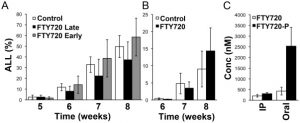
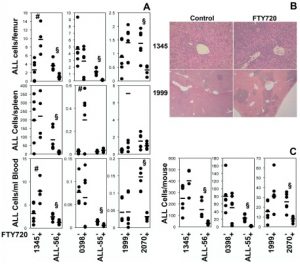
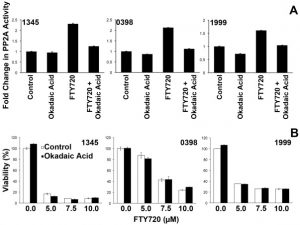
Drug Indications Gillenia is indicated for the treatment of highly active relapsing-remitting multiple sclerosis as a single disease-modifying therapy in the following adult patients and children aged 10 years and older: patients whose disease remains highly active despite having received a complete course of at least one disease-modifying therapy (see Sections 4.4 and 5.1 for information on exceptions and washout periods). Or patients meeting the criteria for rapidly progressive severe relapsing-remitting multiple sclerosis (defined as having two or more disabling relapses within one year, and brain MRI showing one or more gadolinium-enhancing lesions, or a significant increase in T2 lesion burden compared to recent MRI). This study aimed to investigate the effect of sphingosine-1-phosphate (S1P) on the lysis of K562 tumor cells and immature dendritic cells (iDCs) by IL-2 activated natural killer (NK) cells, and to study the mechanism of S1P activity. The results showed that S1P could protect K562 cells or iDCs from NK cell lysis, and the S1P antagonists FTY720 and SEW2871 could reverse this protective effect (1). S1P did not regulate the expression of NKG2D, NKp30, NKp44 or CD158 on the surface of NK cells, nor did it affect the expression of CD80, CD83 or CD86 on the surface of DCs. Conversely, it increased the expression of HLA-I and HLA-E on the surface of DCs, an effect that could be inhibited by FTY720 or SEW2871. Similarly, the inhibitory effect of S1P on NK cell lysis of K562 cells targeted S1P(1) expressed on the surface of tumor cells, not S1P(1) expressed on the surface of NK cells. Further analysis showed that NK cells secrete a variety of cytokines and chemokines with varying intensities: (1) low intensity (IL-4, IL-6, IL-12, TNF-α, and MCP-1); (2) moderate intensity (IL-1β, IL-10, TGF-β1, and IL-17A); (3) high level (IFN-γ and MIP-1α); and (4) very high level (MIP-1β). S1P significantly reduced the release of IL-17A and IFN-γ from NK cells, but this inhibitory effect was independent of S1P(1). These results indicate that S1P is an anti-inflammatory molecule and that S1P(1) is crucial for the interaction between NK cells and tumor cells or dendritic cells (DCs), which leads to the upregulation of HLA-I and HLA-E on the surface of DCs, but S1P is not involved in the release of inflammatory cytokines by NK cells. In addition, the results suggest that FTY720 and SEW2871 may have the potential to be used as preventive and/or therapeutic agents for cancer patients. [1] Most patients with acute lymphoblastic leukemia (ALL) respond well to standard chemotherapy-based treatment. However, a significant proportion of patients, especially adults, relapse, and most of them eventually die from leukemia. FTY720 is an immunosuppressant that has recently been approved for the treatment of multiple sclerosis and is currently in the preclinical research stage, with the potential to treat a variety of hematologic malignancies. For the first time, using a human acute lymphoblastic leukemia (ALL) xenograft model in NOD/SCIDγc(-/-) mice, we demonstrated that early initiation of FTY720 treatment reduced the overall disease incidence by 80 ± 12% in three Ph(+) human ALL xenograft models (p = 0.048). In contrast, using four independent Ph(-) human ALL xenograft models, FTY720 treatment in mice did not reduce leukemia. Although FTY720 can reactivate PP2A in vitro, this reactivation is not a necessary condition for Ph(-) ALL cell death. FTY720 concentrations in mouse plasma reached nanomolar levels. However, the response observed at early initiation of treatment in Ph(+) ALL xenografts suggests that in vivo efficacy can be achieved with much lower drug concentrations than required in vitro. Our data suggest that while FTY720 may have the potential to treat Ph(+) ALL, it is ineffective in treating Ph(-) B-ALL. [3] Fingolimod (FTY720) hydrochloride is a synthetic sphingosine analog and S1P receptor modulator that has been approved for the clinical treatment of autoimmune diseases and is currently being investigated for its use in cancer treatment. [1][3][4] - Its core mechanism involves phosphorylation to FTY720-P, which binds to and induces receptor internalization of S1P receptors (primarily S1P1), thereby blocking S1P-mediated cell migration (especially T lymphocytes). [3][4] - Therapeutic applications include prevention of organ transplant rejection, treatment of multiple sclerosis (through immunosuppression), and inhibition of tumor growth/metastasis (through anti-angiogenic and immunomodulatory effects). [1][2][4] - FDA-approved indication: treatment for relapsing-remitting multiple sclerosis (RRMS) to reduce relapse rate and delay disease progression [4] - It has a dual role: immunosuppression (through T-cell isolation) and antitumor activity (through inhibition of proliferation, angiogenesis and metastasis) [1][2] - Phosphorylation of SK2 is crucial to its activity; the non-phosphorylated form has very low affinity for the S1P receptor [3][4] |
| Molecular Formula |
C19H34CLNO2
|
|---|---|
| Molecular Weight |
343.9
|
| Exact Mass |
343.227
|
| Elemental Analysis |
C, 66.35; H, 9.96; Cl, 10.31; N, 4.07; O, 9.30
|
| CAS # |
162359-56-0
|
| Related CAS # |
Fingolimod-d4;1346747-38-3;Fingolimod-d4 hydrochloride;1346604-90-7;Fingolimod hydrochloride;162359-56-0; 162359-55-9; 402615-91-2 (phosphate); 207113-62-0 (octanoic acid); 1242271-26-6 (palmitamide); 207113-64-2 (hexanoic acid)
|
| PubChem CID |
107969
|
| Appearance |
White to off-white solid powder
|
| Density |
1.016g/cm3
|
| Boiling Point |
479.5ºC at 760 mmHg
|
| Melting Point |
102-107ºC
|
| Flash Point |
243.8ºC
|
| Vapour Pressure |
5.28E-10mmHg at 25°C
|
| Index of Refraction |
1.531
|
| LogP |
4.706
|
| Hydrogen Bond Donor Count |
4
|
| Hydrogen Bond Acceptor Count |
3
|
| Rotatable Bond Count |
12
|
| Heavy Atom Count |
23
|
| Complexity |
258
|
| Defined Atom Stereocenter Count |
0
|
| SMILES |
Cl[H].O([H])C([H])([H])C(C([H])([H])O[H])(C([H])([H])C([H])([H])C1C([H])=C([H])C(=C([H])C=1[H])C([H])([H])C([H])([H])C([H])([H])C([H])([H])C([H])([H])C([H])([H])C([H])([H])C([H])([H])[H])N([H])[H]
|
| InChi Key |
SWZTYAVBMYWFGS-UHFFFAOYSA-N
|
| InChi Code |
InChI=1S/C19H33NO2.ClH/c1-2-3-4-5-6-7-8-17-9-11-18(12-10-17)13-14-19(20,15-21)16-22;/h9-12,21-22H,2-8,13-16,20H2,1H3;1H
|
| Chemical Name |
2-amino-2-[2-(4-octylphenyl)ethyl]propane-1,3-diol;hydrochloride
|
| Synonyms |
FTY720; Fingolimod HCl; FTY-720; Fingolimod hydrochloride; 162359-56-0; Fty 720; Fty-720; FTY 720; Trade name: Gilenia and Gilenya.
|
| HS Tariff Code |
2934.99.9001
|
| Storage |
Powder -20°C 3 years 4°C 2 years In solvent -80°C 6 months -20°C 1 month Note: Please store this product in a sealed and protected environment, avoid exposure to moisture. |
| Shipping Condition |
Room temperature (This product is stable at ambient temperature for a few days during ordinary shipping and time spent in Customs)
|
| Solubility (In Vitro) |
|
|||
|---|---|---|---|---|
| Solubility (In Vivo) |
Solubility in Formulation 1: ≥ 2.08 mg/mL (6.05 mM) (saturation unknown) in 10% DMSO + 40% PEG300 + 5% Tween80 + 45% Saline (add these co-solvents sequentially from left to right, and one by one), clear solution.
For example, if 1 mL of working solution is to be prepared, you can add 100 μL of 20.8 mg/mL clear DMSO stock solution to 400 μL PEG300 and mix evenly; then add 50 μL Tween-80 to the above solution and mix evenly; then add 450 μL normal saline to adjust the volume to 1 mL. Preparation of saline: Dissolve 0.9 g of sodium chloride in 100 mL ddH₂ O to obtain a clear solution. Solubility in Formulation 2: ≥ 2.08 mg/mL (6.05 mM) (saturation unknown) in 10% DMSO + 90% (20% SBE-β-CD in Saline) (add these co-solvents sequentially from left to right, and one by one), clear solution. For example, if 1 mL of working solution is to be prepared, you can add 100 μL of 20.8 mg/mL clear DMSO stock solution to 900 μL of 20% SBE-β-CD physiological saline solution and mix evenly. Preparation of 20% SBE-β-CD in Saline (4°C,1 week): Dissolve 2 g SBE-β-CD in 10 mL saline to obtain a clear solution. View More
Solubility in Formulation 3: ≥ 2.08 mg/mL (6.05 mM) (saturation unknown) in 10% DMSO + 90% Corn Oil (add these co-solvents sequentially from left to right, and one by one), clear solution. Solubility in Formulation 4: Saline: 20 mg/mL |
| Preparing Stock Solutions | 1 mg | 5 mg | 10 mg | |
| 1 mM | 2.9078 mL | 14.5391 mL | 29.0782 mL | |
| 5 mM | 0.5816 mL | 2.9078 mL | 5.8156 mL | |
| 10 mM | 0.2908 mL | 1.4539 mL | 2.9078 mL |
*Note: Please select an appropriate solvent for the preparation of stock solution based on your experiment needs. For most products, DMSO can be used for preparing stock solutions (e.g. 5 mM, 10 mM, or 20 mM concentration); some products with high aqueous solubility may be dissolved in water directly. Solubility information is available at the above Solubility Data section. Once the stock solution is prepared, aliquot it to routine usage volumes and store at -20°C or -80°C. Avoid repeated freeze and thaw cycles.
Calculation results
Working concentration: mg/mL;
Method for preparing DMSO stock solution: mg drug pre-dissolved in μL DMSO (stock solution concentration mg/mL). Please contact us first if the concentration exceeds the DMSO solubility of the batch of drug.
Method for preparing in vivo formulation::Take μL DMSO stock solution, next add μL PEG300, mix and clarify, next addμL Tween 80, mix and clarify, next add μL ddH2O,mix and clarify.
(1) Please be sure that the solution is clear before the addition of next solvent. Dissolution methods like vortex, ultrasound or warming and heat may be used to aid dissolving.
(2) Be sure to add the solvent(s) in order.
| NCT Number | Recruitment | interventions | Conditions | Sponsor/Collaborators | Start Date | Phases |
| NCT04667949 | Active Recruiting |
Drug: Fingolimod 0.5mg | Relapsing Multiple Sclerosis (RMS) |
Novartis Pharmaceuticals | February 20, 2021 | Phase 4 |
| NCT04088630 | Active Recruiting |
Drug: Fingolimod 0.5 mg Drug: Placebo |
Cerebral Edema Stroke Hemorrhagic |
Wake Forest University Health Sciences |
August 7, 2020 | Early Phase 1 |
| NCT05423769 | Active Recruiting |
Drug: Fingolimod | Relapsing-Remitting Multiple Sclerosis |
Hikma Pharmaceuticals LLC | January 19, 2022 | N/A |
| NCT04480853 | Recruiting | Drug: Fingolimod | Multiple Sclerosis | Novartis Pharmaceuticals | October 12, 2020 | Phase 4 |
| NCT01285479 | Completed | Drug: Fingolimod | Multiple Sclerosis | Novartis Pharmaceuticals | October 15, 2011 | N/A |
|
|---|
|
|
Products are for research use only; We do not sell to patients
Copyright 2020 InvivoChem LLC | All Rights Reserved


 COA
COA