| Size | Price | Stock | Qty |
|---|---|---|---|
| 500mg |
|
||
| 1g |
|
||
| Other Sizes |


Purity: ≥98%
| Targets |
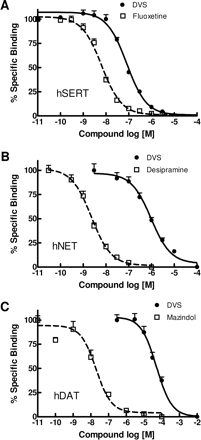
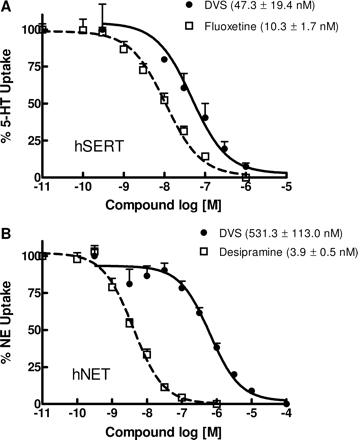
hSERT ( IC50 = 47.3 nM ); hNET ( IC50 = 531.3 nM )
Desvenlafaxine (WY 45233; O-Desmethylvenlafaxine) acts as a selective serotonin-norepinephrine reuptake inhibitor (SNRI), with primary targets being the serotonin transporter (SERT) and norepinephrine transporter (NET). It exhibits high affinity for SERT (Ki = 4.6 nM) and NET (Ki = 54.6 nM), and negligible affinity for the dopamine transporter (DAT, Ki > 1000 nM) and other neurotransmitter receptors (e.g., muscarinic, histaminergic, adrenergic receptors) [1] |
|---|---|
| ln Vitro |
In vitro activity: Desvenlafaxine, the active metabolite of the antidepressant venlafaxine, is a serotonin-norepinephrine reuptake inhibitor. Desvenlafaxine inhibits serotonin and norepinephrine's neuronal uptake, just like venlafaxine does. Desvenlafaxine binds to the human dopamine (DA) transporter with a weak affinity (62% inhibition at 100 μM). Desvenlafaxine has an IC50 of 47.3 nM for hSERT and 531.3 nM for hNET, respectively, inhibiting the uptake of [3H]5-HT or [3H]NE. [1] Because desvenlafaxine inhibits CYP2D6, more drugs that are metabolized via this pathway may be present in higher concentrations. Desvenlafaxine may also induce CYP3A4, which may affect how medications metabolized by this enzyme are metabolized. [2]
In vitro reuptake inhibition assays showed that Desvenlafaxine concentration-dependently inhibited serotonin (5-HT) reuptake in rat forebrain synaptosomes (IC50 = 13.7 nM) and norepinephrine (NE) reuptake in rat hypothalamic synaptosomes (IC50 = 45.8 nM). It had no significant inhibitory effect on dopamine (DA) reuptake in rat striatal synaptosomes (IC50 > 1000 nM) [1] |
| ln Vivo |
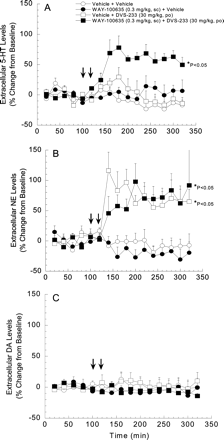
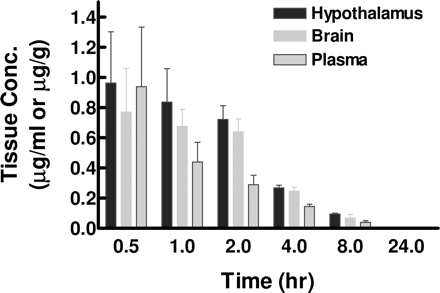
Desvenlafaxine enters the male rat hypothalamus and brain quickly. In the male rat hypothalamus, desvenlafaxine dramatically raises extracellular NE levels relative to baseline; however, it has no effect on DA levels as measured by microdialysis. [1] Between 100 and 600 mg/day, desvenlafaxine shows a dose-proportional, linear pharmacokinetic single-dose profile. The oral formulation has an absolute bioavailability of 80.5%. [2]
In vivo studies in rats showed that oral administration of Desvenlafaxine (10, 30, 100 mg/kg) dose-dependently increased extracellular 5-HT levels in the hippocampus (maximal increase: 230% of baseline at 100 mg/kg) and NE levels in the prefrontal cortex (maximal increase: 180% of baseline at 100 mg/kg), as measured by microdialysis. No significant change in extracellular DA levels was observed [1] - Reference [2] focused on clinical and market analysis of Desvenlafaxine (as a "me too" drug) and did not include in vivo experimental results [2] |
| Enzyme Assay |
SERT/NET binding assay: Membranes prepared from cells expressing human SERT or NET were incubated with [³H]-paroxetine (for SERT) or [³H]-nisoxetine (for NET) and different concentrations of Desvenlafaxine. After incubation, unbound radioligands were removed by filtration, and the radioactivity of the bound fraction was measured using a scintillation counter. The Ki value was calculated using the Cheng-Prusoff equation to assess the binding affinity of Desvenlafaxine for SERT and NET [1]
- Neurotransmitter reuptake assay: Synaptosomes were prepared from rat brain regions (forebrain for 5-HT, hypothalamus for NE, striatum for DA) and incubated with [³H]-5-HT, [³H]-NE, or [³H]-DA, respectively, along with varying concentrations of Desvenlafaxine. The uptake of radiolabeled neurotransmitters was stopped by centrifugation, and the radioactivity in the synaptosomal pellet was quantified. The IC50 value was determined as the concentration of Desvenlafaxine that inhibited 50% of specific neurotransmitter reuptake [1] |
| Animal Protocol |
Dissolved in 0.25% Tween 80 and 0.5% methylcellulose; 30 mg/kg; oral gavage
Male Sprague-Dawley rats Microdialysis study in rats: Male Sprague-Dawley rats were anesthetized, and a microdialysis probe was implanted into the hippocampus (for 5-HT measurement) or prefrontal cortex (for NE measurement). After a 24-hour recovery period, Desvenlafaxine was administered orally at doses of 10, 30, or 100 mg/kg (dissolved in 0.9% saline). Dialysate samples were collected at 20-minute intervals before and after drug administration, and the concentrations of 5-HT and NE in the dialysate were analyzed by high-performance liquid chromatography (HPLC) with electrochemical detection [1] |
| ADME/Pharmacokinetics |
Absorption, Distribution and Excretion
The absolute oral bioavailability of divenlafaxine is approximately 80%. The time to reach maximum concentration (Tmax) after oral administration is estimated to be 7.5 hours. At steady state, the AUC of a 100 mg dose over a 24-hour dosing interval is 6747 ng/mL, and the Cmax is 376 ng/mL. Consuming a high-fat meal (800 to 1000 calories) increases the Cmax of divenlafaxine by approximately 16%, but has no effect on the AUC. Divinlafaxine is primarily excreted in the urine. Approximately 45% of divenlafaxine is excreted unchanged in the urine 72 hours after oral administration. Approximately 19% of the administered dose is excreted in the urine as a glucuronide metabolite, and less than 5% is excreted as an oxidative metabolite (N,O-didesmethylvenlafaxine). The steady-state volume of distribution of desvenlafaxine is 3.4 L/kg. In healthy subjects aged 18 to 45 years, the renal clearance after administration of 100 mg norvenlafaxine was calculated to be 222 ± 82 mL/min. The plasma protein binding of norvenlafaxine is low (30%) and independent of drug concentration. Following intravenous administration, the steady-state volume of distribution of norvenlafaxine is 3.4 L/kg, indicating distribution in non-vascular compartments. The absolute oral bioavailability after oral administration of Pristiq is approximately 80%. The time to peak plasma concentration (Tmax) after oral administration is approximately 7.5 hours. 72 hours after oral administration, approximately 45% of norvenlafaxine is excreted unchanged in the urine. Approximately 19% of the administered dose is excreted in the urine as a glucuronide metabolite, and <5% is excreted in the urine as an oxidative metabolite (N,O-didesmethylvenlafaxine). Norvenlafaxine is excreted into human milk. For more complete data on the absorption, distribution, and excretion of desvenlafaxine (6 items in total), please visit the HSDB record page. Metabolism/Metabolites Desvenlafaxine is primarily metabolized via conjugation (mediated by UGT isoenzymes), with a small amount metabolized via oxidation. O-glucuronide conjugation may be catalyzed by UGT1A1, UGT1A3, UGT2B4, UGT2B15, and UGT2B17. CYP3A4 and possibly CYP2C19 mediate the oxidative metabolism (N-demethylation) of desvenlafaxine to N,O-didesmethylvenlafaxine. The CYP2D6 metabolic pathway is not involved. The pharmacokinetics of desvenlafaxine are similar in subjects with weak and strong CYP2D6 metabolic capacity. Desvenlafaxine is primarily metabolized via conjugation (mediated by UGT isoenzymes), with a small amount metabolized via oxidation. CYP3A4 is a cytochrome P450 isoenzyme that mediates the oxidative metabolism (N-demethylation) of norvenlafaxine. The CYP2D6 metabolic pathway is not involved; after administration of 100 mg, the pharmacokinetics of norvenlafaxine are similar in subjects with poor CYP2D6 metabolism and those with extensive metabolic phenotypes. Approximately 19% of the administered dose is excreted in the urine as a glucuronide metabolite, and <5% is excreted as an oxidative metabolite (N,O-desmethylvenlafaxine). Biological Half-Life The mean terminal half-life is 11.1 hours, which may be prolonged in patients with renal and/or moderate to severe hepatic impairment. The mean half-life in healthy subjects and subjects with mild hepatic impairment is approximately 10 hours, while the mean half-life in subjects with moderate and severe hepatic impairment is prolonged to 13 hours and 14 hours, respectively. The mean terminal half-life is approximately 11 hours. Absorption: After oral administration of desmethylvenlafaxine to healthy volunteers, the mean absolute bioavailability was approximately 80%, and peak plasma concentration (Cmax) was reached 5.5 hours after administration. Food does not affect its absorption [1] -Distribution: The volume of distribution (Vd) of desmethylvenlafaxine in the human body is approximately 40.4 L, and the plasma protein binding rate is approximately 30% (concentration-independent within the therapeutic concentration range) [1] -Metabolism: Desmethylvenlafaxine is mainly metabolized in the liver via glucuronidation (mediated by UGT1A1 and UGT2B15), with a small amount metabolized by CYP3A4. It is not a substrate of CYP2D6, therefore CYP2D6 gene polymorphism does not affect its pharmacokinetics [1] -Excretion: The elimination half-life (t1/2) of desmethylvenlafaxine in the human body is approximately 11 hours. Approximately 45% of the administered dose is excreted unchanged in the urine, and 19% is excreted as glucuronide metabolites [1]. Reference [2] indicates that desvenlafaxine has a longer half-life than its parent drug venlafaxine (t1/2: approximately 11 hours vs. approximately 3-4 hours), and therefore can be administered once daily [2]. |
| Toxicity/Toxicokinetics |
Interactions
Desvenlafaxine does not inhibit or induce CYP3A4 isoenzymes in vitro. Concomitant administration of desvenlafaxine (400 mg daily; 8 times the recommended dose) and midazolam (4 mg single dose, CYP3A4 substrate) reduces the AUC and peak plasma concentration of midazolam by approximately 31% and 16%, respectively. The manufacturer notes that concomitant administration of desvenlafaxine and drugs metabolized by CYP3A4 results in reduced exposure to the latter. Selective serotonin reuptake inhibitors (SSRIs) and selective serotonin and norepinephrine reuptake inhibitors (SNRIs), including desvenlafaxine, may increase the risk of bleeding. Concomitant administration of aspirin, nonsteroidal anti-inflammatory drugs (NSAIDs), warfarin, and other anticoagulants may further increase this risk. Case reports and epidemiological studies have shown an association between the use of drugs that interfere with serotonin reuptake and the occurrence of gastrointestinal bleeding. Bleeding events associated with selective serotonin reuptake inhibitors (SSRIs) and selective serotonin and norepinephrine reuptake inhibitors (SNRIs) include ecchymosis, hematoma, epistaxis, and petechiae, and even life-threatening bleeding. Manufacturers advise informing patients that concomitant use of norvenlafaxine with aspirin or other nonsteroidal anti-inflammatory drugs (NSAIDs), warfarin, or other medications that affect clotting or bleeding increases the risk of bleeding. Norvenlafaxine has a weak inhibitory effect on the cytochrome P-450 (CYP) 2D6 isoenzyme. In a study of healthy adults, concomitant use of norvenlafaxine (100 mg daily) and desipramine (50 mg once daily, a CYP2D6 substrate) increased the peak plasma concentration and AUC of desipramine by approximately 25% and 17%, respectively. Manufacturers note that concomitant use of norvenlafaxine with drugs metabolized by CYP2D6 can lead to increased plasma concentrations of the latter. In a clinical study, desvenlafaxine did not exacerbate alcohol-induced mental and motor skill impairment. However, the manufacturer recommends avoiding alcohol consumption while taking desvenlafaxine. For more complete data on interactions of desvenlafaxine (11 in total), please visit the HSDB record page. Acute toxicity: In mice, the oral LD50 of desvenlafaxine is greater than 2000 mg/kg; in rats, the oral LD50 is greater than 1500 mg/kg [1] -Chronic toxicity: A 13-week oral toxicity study in rats (dose: 10, 30, 100 mg/kg/day) showed that no treatment-related death or significant organ toxicity (liver, kidney, heart) was observed at doses up to 100 mg/kg/day. No Observed Adverse Effect Level (NOAEL) was determined to be 100 mg/kg/day [1] - Drug Interactions: In vitro studies have shown that divenlafaxine does not inhibit major CYP450 enzymes (CYP1A2, CYP2C9, CYP2C19, CYP2D6, CYP3A4), suggesting a low risk of pharmacokinetic interactions with drugs metabolized by these enzymes [1] - Clinical Side Effects (see [2]): The most common adverse reactions associated with divenlafaxine in clinical trials included nausea (21%), dizziness (15%), headache (14%), and insomnia (10%). These side effects were usually mild to moderate and resolved within the first 2 weeks of treatment [2] |
| References | |
| Additional Infomation |
O-Desmethylvenlafaxine is a tertiary amine compound formed by replacing N,N-dimethylethylamine at the 1-position with a 1-hydroxycyclohexyl group and a 4-hydroxyphenyl group. It is a metabolite of the drug venlafaxine. It is both a marine xenobiotic metabolite and a drug metabolite and an antidepressant. It belongs to the cyclohexanol, phenol, and tertiary amine classes of compounds. Desmethylvenlafaxine (O-Desmethylvenlafaxine) is the O-demethylated active metabolite of venlafaxine. Like its parent drug, desmethylvenlafaxine is an antidepressant, belonging to the serotonin-norepinephrine reuptake inhibitor (SNRI) class of drugs. It was approved by the U.S. Food and Drug Administration (FDA) in 2008 for the treatment of major depressive disorder (MDD) in adults. Major depressive disorder (MDD) is a prevalent mental illness, with an estimated lifetime prevalence of 16% in the United States and 12.8% in Europe alone. Although its exact pathophysiological mechanism is not fully understood, the imbalance or deficiency of monoamine neurotransmitters is widely considered to be its primary cause, which is the theoretical basis for using serotonin and norepinephrine reuptake inhibitors (SNRIs) to treat MDD. Norvenlafaxine has very similar pharmacological properties, efficacy, and safety to venlafaxine. The main difference lies in the potential for drug interactions, as venlafaxine is primarily metabolized via CYP2D6, while norvenlafaxine binds via UGT; therefore, the likelihood of drug interactions with norvenlafaxine when co-administered with drugs affecting the CYP2D6 pathway is relatively low. Norvenlafaxine is a serotonin and norepinephrine reuptake inhibitor. Its mechanism of action is as a norepinephrine reuptake inhibitor, a serotonin reuptake inhibitor, and a cytochrome P450 2D6 inhibitor. Norvenlafaxine is a synthetic phenethylamine bicyclic derivative with antidepressant activity. Desvenlafaxine is a selective serotonin and norepinephrine reuptake inhibitor (SNRI) due to its high affinity for presynaptic serotonin and norepinephrine transporters. By blocking these two transporters, the drug prolongs the activity of the neurotransmitters serotonin and norepinephrine, thereby alleviating depressive symptoms. It is a cyclohexanol and phenol derivative and metabolite of venlafaxine, acting as a serotonin and norepinephrine reuptake inhibitor (SNRI) and used as an antidepressant. See also: desvenlafaxine succinate (in salt form); desvenlafaxine toluene (its active ingredient); desvenlafaxine fumarate (its active ingredient)...see more...
Drug Indications Desvenlafaxine is indicated for the treatment of major depressive disorder in adults. It has also been used to treat hot flashes in menopausal women (off-label use). FDA Label Mechanism of Action The exact mechanism of the antidepressant effect of desvenlafaxine is not fully understood, but it is believed to be related to enhancing the effects of these two neurotransmitters in the central nervous system by inhibiting the reuptake of serotonin and norepinephrine. Specifically, studies have found that desvenlafaxine can inhibit serotonin, norepinephrine, and dopamine transporters with varying degrees of affinity. Desvenlafaxine has a 10-fold greater affinity for the serotonin transporter than for the norepinephrine transporter, and the lowest affinity for the dopamine transporter. The exact mechanism of the antidepressant effect of desvenlafaxine is not fully elucidated, but it appears to be related to the drug's enhancement of serotonergic and norepinephrine activity in the central nervous system. Similar to venlafaxine and duloxetine, norvenlafaxine is a potent inhibitor of neuronal serotonin and norepinephrine reuptake; however, in most patients, the likelihood of inhibiting dopamine reuptake at concentrations that inhibit serotonin and norepinephrine reuptake appears to be low. The drug does not inhibit monoamine oxidase (MAO) and has not shown significant affinity for muscarinic cholinergic receptors, H1 histamine receptors, α1 adrenergic receptors, dopaminergic receptors, γ-aminobutyric acid (GABA) receptors, glutamate receptors, and opioid receptors in in vitro studies. Therapeutic Use Antidectomy; Neurotransmitter Reuptake Inhibitor For the treatment of major depressive disorder, generalized anxiety disorder, social anxiety disorder, and panic disorder /Desvenlafaxine Succinate Monohydrate/ Like several other selective serotonin-norepinephrine reuptake inhibitors (SNRIs) and selective serotonin reuptake inhibitors (SSRIs), desvenlafaxine succinate has been investigated for the treatment of vasomotor symptoms in postmenopausal women. /Not included on the U.S. label/ Desvenlafaxine succinate is used to treat major depressive disorder in adults. /Included on the U.S. label/ Recent reviews have questioned whether the serotonin-norepinephrine reuptake inhibitor (SNRI) desvenlafaxine succinate offers any real clinical advantage over existing SNRIs. The following case demonstrates that this SNRI has a unique safety profile and benefit. This article reports a case of a patient with Gilbert syndrome, chronic social phobia, and recent unspecified depression. This patient experienced elevated liver transaminases after concurrent use of duloxetine and venlafaxine. Subsequently, the patient responded to norvenlafaxine treatment without liver dysfunction. In this Gilbert syndrome patient, norvenlafaxine is not metabolized via the cytochrome P450 (CYP) 2D6 pathway, which may explain the avoidance of liver dysfunction and suggests that this selective serotonin and norepinephrine reuptake inhibitor (SNRI) may have therapeutic effects in similarly susceptible patients. Drug Warning /Black Box Warning/ Warning: Suicidal ideation and behavior. Short-term studies have shown that antidepressants increase the risk of suicidal ideation and behavior in children, adolescents, and young adults. These studies did not show an increased risk of suicidal ideation and behavior in patients aged 24 years and older; however, antidepressant use in patients aged 65 years and older reduced the risk. Patients of all ages initiating antidepressant treatment should be closely monitored for disease progression and the occurrence of suicidal ideation and behavior. The necessity of close monitoring and communication with the prescribing physician should be explained to the patient's family and caregivers. Pristiq is not approved for use in pediatric patients. In patients with moderate or severe renal impairment or end-stage renal disease (ESRD), the clearance of Pristiq is reduced, thus prolonging the elimination half-life of the drug. Therefore, clinically significant increases in Pristiq exposure may occur. Dose adjustments (50 mg every other day) are required for patients with severe renal impairment or ESRD. Dose increases should not be increased for patients with moderate or severe renal impairment or ESRD. Persistent hypertension has been reported. In controlled studies, the incidence of persistent hypertension was 0.7%–2.3% in patients taking 50–400 mg of norvena favaxin daily, with a potentially higher incidence (2.3%) in patients taking 400 mg daily. Furthermore, there have been reports of hypertension requiring immediate treatment during norvena favaxin treatment. Persistent hypertension may have adverse consequences for patients taking this drug. Therefore, the manufacturer recommends controlling pre-existing hypertension before starting norvenlafaxine treatment and monitoring blood pressure regularly in patients taking this medication. Norvenlafaxine should be used with caution in patients with a history of hypertension or other underlying conditions that may be exacerbated by elevated blood pressure. For patients whose blood pressure remains elevated during treatment, dose reduction or discontinuation should be considered. Treatment with selective serotonin reuptake inhibitors (SSRIs) and selective serotonin and norepinephrine reuptake inhibitors (SNRIs) (including norvenlafaxine) may cause hyponatremia. In many cases, hyponatremia appears to be caused by syndrome of dysregulation of antidiuretic hormone secretion (SIADH). Cases of serum sodium concentrations below 110 mmol/L have been reported. Elderly individuals and patients taking diuretics or with other volume deficiencies may be at higher risk of developing hyponatremia. Signs and symptoms of hyponatremia include headache, poor concentration, memory loss, confusion, weakness, and unsteady gait, which may lead to falls; more severe and/or acute cases may be accompanied by hallucinations, syncope, seizures, coma, respiratory arrest, and death. For patients presenting with symptomatic hyponatremia, appropriate medical intervention should be initiated and discontinuation of the drug should be considered. For more complete data on drug warnings for divenlafaxine (20 of 20), please visit the HSDB record page. Pharmacodynamics Divenlafaxine is a selective serotonin and norepinephrine reuptake inhibitor. In vitro studies have shown that it has no significant activity against muscarinic-cholinergic receptors, H1-histaminergic receptors, or α1-adrenergic receptors, and no inhibitory activity against monoamine oxidase. Divenlafaxine appears to be inactive against calcium, chloride, potassium, and sodium ion channels and lacks monoamine oxidase (MAO) inhibitory activity. In vitro experiments also showed that it had no significant activity against cardiac potassium channels (hERG). In an 8-week clinical study, researchers performed electrocardiograms on 1492 patients with major depressive disorder treated with norvenlafaxine and 984 patients treated with placebo. Results showed no clinically significant differences in QT, QTc, PR, and QRS intervals between the norvenlafaxine and placebo groups. In a prospective, definitive, full-scale QTc study, norvenlafaxine did not cause QT interval prolongation. No difference in QRS interval was also observed between the placebo and norvenlafaxine groups. Novenlafaxine is the major active metabolite of venlafaxine, a widely used selective serotonin and norepinephrine reuptake inhibitor (SNRI). It was developed as a standalone drug to overcome the variability in the metabolism of venlafaxine (metabolic by CYP2D6) [1, 2] - In clinical trials for major depressive disorder (MDD), desvenlafaxine (50-400 mg/day) significantly improved Montgomery-Osberg Depression Rating Scale (MADRS) scores compared to placebo. The recommended dose for treating major depressive disorder (MDD) is 50 mg/day (once daily) [1, 2] - Reference [2] describes desvenlafaxine as a \"me too\" drug, noting that although it has good pharmacokinetic characteristics (once daily, CYP2D6-independent), it has not shown any advantage in efficacy and safety compared to existing SNRIs (e.g., venlafaxine, duloxetine) [2] - Desvenlafaxine was approved by the FDA in 2008 for the treatment of major depressive disorder [2] |
| Molecular Formula |
C16H25NO2
|
|
|---|---|---|
| Molecular Weight |
263.38
|
|
| Exact Mass |
263.188
|
|
| Elemental Analysis |
C, 72.96; H, 9.57; N, 5.32; O, 12.15
|
|
| CAS # |
93413-62-8
|
|
| Related CAS # |
Desvenlafaxine succinate hydrate; 386750-22-7; (S)-(+)-O-Desmethyl Venlafaxine-d6; 1062609-99-7; Desvenlafaxine succinate; 448904-47-0; Desvenlafaxine fumarate; 93414-04-1; Desvenlafaxine hydrochloride; 300827-87-6; (S)-(+)-O-Desmethyl Venlafaxine; 142761-12-4; (R)-(-)-O-Desmethyl Venlafaxine-d6; 1062609-96-4; 1147940-37-1 (benzoate)
|
|
| PubChem CID |
125017
|
|
| Appearance |
White to off-white solid powder
|
|
| Density |
1.1±0.1 g/cm3
|
|
| Boiling Point |
403.8±25.0 °C at 760 mmHg
|
|
| Melting Point |
208-213ºC
|
|
| Flash Point |
193.2±21.8 °C
|
|
| Vapour Pressure |
0.0±1.0 mmHg at 25°C
|
|
| Index of Refraction |
1.573
|
|
| LogP |
2.26
|
|
| Hydrogen Bond Donor Count |
2
|
|
| Hydrogen Bond Acceptor Count |
3
|
|
| Rotatable Bond Count |
4
|
|
| Heavy Atom Count |
19
|
|
| Complexity |
266
|
|
| Defined Atom Stereocenter Count |
0
|
|
| SMILES |
OC1C=CC(C(C2(CCCCC2)O)CN(C)C)=CC=1
|
|
| InChi Key |
KYYIDSXMWOZKMP-UHFFFAOYSA-N
|
|
| InChi Code |
InChI=1S/C16H25NO2/c1-17(2)12-15(13-6-8-14(18)9-7-13)16(19)10-4-3-5-11-16/h6-9,15,18-19H,3-5,10-12H2,1-2H3
|
|
| Chemical Name |
4-[2-(dimethylamino)-1-(1-hydroxycyclohexyl)ethyl]phenol
|
|
| Synonyms |
|
|
| HS Tariff Code |
2934.99.9001
|
|
| Storage |
Powder -20°C 3 years 4°C 2 years In solvent -80°C 6 months -20°C 1 month |
|
| Shipping Condition |
Room temperature (This product is stable at ambient temperature for a few days during ordinary shipping and time spent in Customs)
|
| Solubility (In Vitro) |
DMSO: 37~50 mg/mL (140.5~189.8 mM)
Water: 1 mg/mL (Insoluble) Ethanol: ~3 mg/mL (~11.4 mM) |
|---|---|
| Solubility (In Vivo) |
Solubility in Formulation 1: ≥ 2.5 mg/mL (9.49 mM) (saturation unknown) in 10% DMSO + 40% PEG300 + 5% Tween80 + 45% Saline (add these co-solvents sequentially from left to right, and one by one), clear solution.
For example, if 1 mL of working solution is to be prepared, you can add 100 μL of 25.0 mg/mL clear DMSO stock solution to 400 μL PEG300 and mix evenly; then add 50 μL Tween-80 to the above solution and mix evenly; then add 450 μL normal saline to adjust the volume to 1 mL. Preparation of saline: Dissolve 0.9 g of sodium chloride in 100 mL ddH₂ O to obtain a clear solution. Solubility in Formulation 2: ≥ 2.5 mg/mL (9.49 mM) (saturation unknown) in 10% DMSO + 90% (20% SBE-β-CD in Saline) (add these co-solvents sequentially from left to right, and one by one), clear solution. For example, if 1 mL of working solution is to be prepared, you can add 100 μL of 25.0 mg/mL clear DMSO stock solution to 900 μL of 20% SBE-β-CD physiological saline solution and mix evenly. Preparation of 20% SBE-β-CD in Saline (4°C,1 week): Dissolve 2 g SBE-β-CD in 10 mL saline to obtain a clear solution. View More
Solubility in Formulation 3: ≥ 2.5 mg/mL (9.49 mM) (saturation unknown) in 10% DMSO + 90% Corn Oil (add these co-solvents sequentially from left to right, and one by one), clear solution. Solubility in Formulation 4: 0.5% methylcellulose+0.2% Tween 80 : 30 mg/mL |
| Preparing Stock Solutions | 1 mg | 5 mg | 10 mg | |
| 1 mM | 3.7968 mL | 18.9840 mL | 37.9680 mL | |
| 5 mM | 0.7594 mL | 3.7968 mL | 7.5936 mL | |
| 10 mM | 0.3797 mL | 1.8984 mL | 3.7968 mL |
*Note: Please select an appropriate solvent for the preparation of stock solution based on your experiment needs. For most products, DMSO can be used for preparing stock solutions (e.g. 5 mM, 10 mM, or 20 mM concentration); some products with high aqueous solubility may be dissolved in water directly. Solubility information is available at the above Solubility Data section. Once the stock solution is prepared, aliquot it to routine usage volumes and store at -20°C or -80°C. Avoid repeated freeze and thaw cycles.
Calculation results
Working concentration: mg/mL;
Method for preparing DMSO stock solution: mg drug pre-dissolved in μL DMSO (stock solution concentration mg/mL). Please contact us first if the concentration exceeds the DMSO solubility of the batch of drug.
Method for preparing in vivo formulation::Take μL DMSO stock solution, next add μL PEG300, mix and clarify, next addμL Tween 80, mix and clarify, next add μL ddH2O,mix and clarify.
(1) Please be sure that the solution is clear before the addition of next solvent. Dissolution methods like vortex, ultrasound or warming and heat may be used to aid dissolving.
(2) Be sure to add the solvent(s) in order.
| NCT Number | Recruitment | interventions | Conditions | Sponsor/Collaborators | Start Date | Phases |
| NCT00211094 | Completed | Drug: Dapoxetine | Ejaculation | Alza Corporation, DE, USA | June 2004 | Phase 3 |
| NCT01419470 | Completed | Drug: dapoxetine | Premature Ejaculation | Yuhan Corporation | February 2011 | Phase 1 Phase 2 |
| NCT01366664 | Completed | Drug: Treatment sequence 2 Drug: Treatment sequence 1 |
Ejaculation | Janssen Research & Development, LLC |
April 2011 | Phase 1 |
| NCT01063855 | Completed | Drug: Dapoxetine Drug: Placebo |
Erectile Dysfunction Sexual Dysfunction |
Johnson & Johnson Pharmaceutical Research & Development, L.L.C. |
April 2010 | Phase 3 |
| NCT01230762 | Completed | Drug: dapoxetine | Ejaculation | Alza Corporation, DE, USA | April 2005 | Phase 3 |
|
|---|
|
  |
Products are for research use only; We do not sell to patients
Copyright 2020 InvivoChem LLC | All Rights Reserved


 COA
COA