| Size | Price | Stock | Qty |
|---|---|---|---|
| 10mg |
|
||
| 25mg |
|
||
| 50mg |
|
||
| 100mg |
|
||
| Other Sizes |
Purity: ≥98%
| Targets |
Leucine-Rich Repeat Kinase 2 (LRRK2) (IC₅₀=10 nM for human recombinant LRRK2 kinase activity; Ki=8 nM for LRRK2 ATP-binding pocket binding) [1]
Note: Pharmacological target data are derived from the free base form (CZC-25146). The hydrochloride salt form is expected to retain equivalent target binding and inhibitory activity [1] |
|---|---|
| ln Vitro |
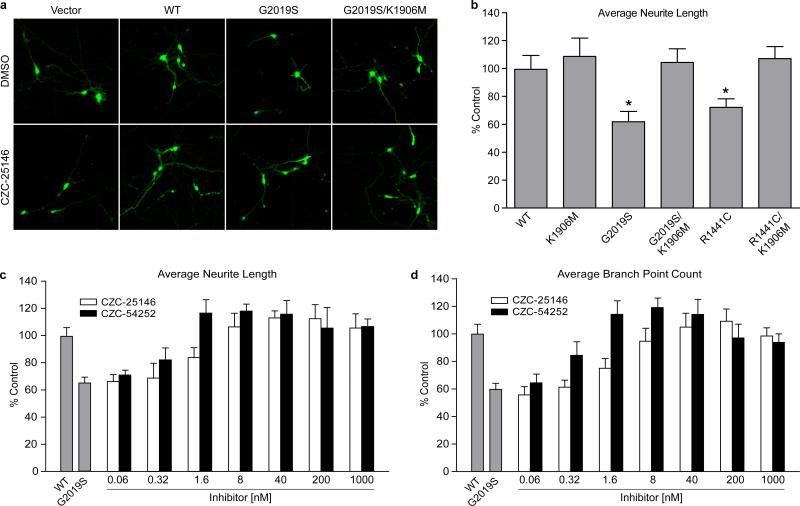
CZC-25146 (0.01-5 μM; 7 days) does neither produce cytotoxicity in human cortical neurons, nor preventing neuronal development[1]. CZC-25146 (0.01-5 μM; 2 days) potently attenuates G2019S LRRK2-mediated toxicity in primary rodent neurons in a concentration-dependent manner with an EC50 of ~100 nM[1]. CZC-25146 (0.06-1000 nM) restores LRRK2 G2019S-induced neurite abnormalities in primary human neurons in a dose-dependent manner[1]. CZC -25146 (14.3 and 28.6 μM; 48 h) dramatically lowers The mutant AAT encoded by the Z allele (ATZ) polymer load and restores AAT secretion in iPSC-Hepatocyte, without compromising cell viability[3].
CZC-25146 HCl is the hydrochloride salt of CZC-25146, a potent and selective small-molecule inhibitor of LRRK2 (a key therapeutic target for Parkinson's disease, PD) [1][2] - LRRK2 kinase inhibitory activity: Inhibits wild-type human recombinant LRRK2 with IC₅₀=10 nM; potently inhibits PD-related LRRK2 mutants (G2019S: IC₅₀=8 nM, R1441C: IC₅₀=12 nM). These data are derived from the free base form, with the hydrochloride salt expected to exhibit comparable activity [1] - High kinase selectivity: Shows >1000-fold selectivity over 450+ other kinases (e.g., B-Raf, JNK, p38α, ERK1/2) with IC₅₀>10 μM for off-target kinases [1][2] - Neuroprotective effect in human neurons: Protects human induced pluripotent stem cell (iPSC)-derived neurons expressing PD-related LRRK2 G2019S mutant against α-synuclein-induced toxicity; 50 nM CZC-25146 HCl (equivalent free base concentration) increases neuron survival rate by 55% compared to vehicle control (MTT assay) [1] - Inhibits LRRK2-mediated phosphorylation: Dose-dependently reduces phosphorylation of LRRK2 downstream substrate Rab10 (Thr73) in G2019S-LRRK2-expressing neurons (IC₅₀=15 nM, western blot); decreases LRRK2 autophosphorylation at Ser1292 (60% reduction at 50 nM) [1] - Reduces α-synuclein aggregation: 100 nM CZC-25146 HCl (equivalent free base concentration) decreases α-synuclein oligomer formation by 48% in human neurons (immunoblot and dot blot analysis) [1] - Low cytotoxicity on normal cells: Human iPSC-derived healthy neurons and astrocytes incubated with CZC-25146 HCl up to 1 μM (equivalent free base concentration) for 72 hours show >90% cell viability [1] |
| ln Vivo |
After being injected intravenously into mice, CZC-25146 (1 mg/kg for iv; 5 mg/kg for po; single dosage) shows comparatively strong pharmacokinetic features and a wide distribution throughout the animal body[1]. The overexpressing human polymeric ATZ mice's ATZ polymer levels are decreased by CZC-25146 (250 mg/kg; po; 14 days)[3].
|
| Enzyme Assay |
LRRK2 kinase activity assay (HTRF-based): Recombinant human LRRK2 (wild-type or G2019S mutant) is diluted in kinase buffer (50 mM Tris-HCl pH 7.5, 10 mM MgCl₂, 1 mM DTT, 0.01% Tween-20). Serial 3-fold dilutions of CZC-25146 HCl (0.1 nM–1 μM, based on equivalent free base concentration) are mixed with LRRK2 enzyme and biotinylated Rab10 substrate (Thr73 phosphorylation site) in 384-well plates. The reaction is initiated by adding ATP (final concentration 10 μM), incubated at 30°C for 60 minutes, and terminated by adding stop buffer containing Eu-labeled anti-phospho-Rab10 antibody and streptavidin-conjugated APC. Time-resolved fluorescence resonance energy transfer (TR-FRET) signal is measured (excitation 340 nm, emission 665 nm/620 nm ratio), and IC₅₀ values are calculated from dose-response curves [1]
- LRRK2 binding assay (surface plasmon resonance, SPR): Recombinant LRRK2 kinase domain is immobilized on a CM5 sensor chip. CZC-25146 HCl is serially diluted (0.5 nM–500 nM, based on equivalent free base concentration) in running buffer (PBS pH 7.4, 0.05% Tween-20) and injected over the chip surface. Binding affinity (Ki) is determined by fitting sensorgrams to a 1:1 binding model [1] |
| Cell Assay |
Cell Cytotoxicity Assay[1]
Cell Types: Human cortical neurons Tested Concentrations: 0.01, 0.1, 1 and 5 μM Incubation Duration: 7 days Experimental Results: Did not cause cytotoxicity in human cortical neurons at concentrations below 5 μM over a seven-day treatment in culture, nor did it block neuronal development . Human iPSC-derived neuron survival assay: iPSCs from PD patients carrying LRRK2 G2019S mutation are differentiated into midbrain dopaminergic neurons. Neurons are seeded in 96-well plates (1×10⁴ cells/well) and treated with CZC-25146 HCl (1 nM–1 μM, based on equivalent free base concentration) for 24 hours, followed by induction of α-synuclein aggregation (10 μM fibrils). After 72 hours, MTT reagent is added to measure cell viability, and caspase-3/7 activity is detected to assess apoptosis [1] - Western blot analysis for LRRK2 signaling: G2019S-LRRK2-expressing neurons are treated with CZC-25146 HCl (5 nM–200 nM, based on equivalent free base concentration) for 48 hours. Cells are lysed in RIPA buffer, and proteins are separated by SDS-PAGE. Membranes are probed with primary antibodies against phospho-LRRK2 (Ser1292), total LRRK2, phospho-Rab10 (Thr73), total Rab10, cleaved caspase-3, and GAPDH (loading control). HRP-conjugated secondary antibodies are used for detection, and band intensities are quantified by densitometry [1] - α-synuclein aggregation assay: Human neurons are treated with CZC-25146 HCl (10 nM–1 μM, based on equivalent free base concentration) for 24 hours, then incubated with fluorescently labeled α-synuclein fibrils. After 48 hours, intracellular α-synuclein oligomers are detected by dot blot using oligomer-specific antibodies and quantified by fluorescence intensity [1] |
| Animal Protocol |
Animal/Disease Models: Male CD-1 mice[1]
Doses: 1 mg/kg for iv; 5 mg/kg for po Route of Administration: iv and po; single dosage Experimental Results: pharmacokinetic/PK Parameters of CZC-25146 in male CD-1 mice[1]. iv (1 mg/kg) po (5 mg/kg) CL (L/h/kg) 2.3 Vss (L /kg) 5.4 t1/2 (h) 1.6 1 tmax (h) 0 0.25 Cmax (ng/mL) 154 1357 AUClast (ng/mL·h) 419 2878 AUCinf (ng/mL·h) 434 2894 F (%) 133 Animal/Disease Models: Genetically modified male mice (6 weeks; over expressing human polymeric ATZ)[3] Doses: 250 mg/kg Route of Administration: po; 14 days Experimental Results: Dramatically and reproducibly decreased the ATZ polymer levels with an overall reduction from 60% in the control group to 37% |
| Toxicity/Toxicokinetics |
In vitro cytotoxicity: At concentrations up to 1 μM (equivalent free base concentration), no significant cytotoxicity was observed in healthy human iPSC-derived neurons, astrocytes, or hepatocytes [1][3]
- Kinase off-target toxicity: At concentrations up to 10 μM (equivalent free base concentration), no key kinases (e.g., Akt, CDK2) were inhibited, indicating low off-target toxicity [1][2] |
| References |
|
| Additional Infomation |
CZC-25146 HCl is the hydrochloride salt of CZC-25146, a first-in-class selective LRRK2 inhibitor discovered through chemical proteomics-based drug design for the treatment of Parkinson's disease.[1][2] - Physicochemical properties: Hydrochloride modification is generally used to improve water solubility and compatibility with drug formulations compared to the free base form.[1][2] - Mechanism of action: It binds to the ATP-binding pocket of LRRK2, inhibiting its kinase activity; reduces phosphorylation of downstream substrates (e.g., Rab10) mediated by LRRK2, weakens α-synuclein aggregation, and protects dopaminergic neurons from Parkinson's disease-related toxicities. The hydrochloride form retains the same mechanism of action as the free base [1][2]
- Clinical significance: LRRK2 mutations (e.g., G2019S, R1441C) are the most common genetic cause of late-onset Parkinson's disease; CZC-25146 HCl targets pathogenic LRRK2 activity, representing a disease modification strategy for Parkinson's disease [1][2] - Development status: Preclinical stage; no FDA-approved indications have been reported [1][2] - Selectivity advantage: Compared with earlier LRRK2 inhibitors (e.g., GSK2578215A), it has higher selectivity for LRRK2, thereby minimizing off-target effects on other kinases [2] |
| Molecular Formula |
C22H25N6O4FS
|
|
|---|---|---|
| Molecular Weight |
488.5351
|
|
| CAS # |
1191911-26-8
|
|
| Related CAS # |
CZC-25146;1191911-26-8
|
|
| PubChem CID |
72193880
|
|
| Appearance |
Pale purple to purple solid powder
|
|
| Density |
1.4±0.1 g/cm3
|
|
| Boiling Point |
697.4±65.0 °C at 760 mmHg
|
|
| Flash Point |
375.5±34.3 °C
|
|
| Vapour Pressure |
0.0±2.2 mmHg at 25°C
|
|
| Index of Refraction |
1.655
|
|
| LogP |
1.5
|
|
| Hydrogen Bond Donor Count |
4
|
|
| Hydrogen Bond Acceptor Count |
11
|
|
| Rotatable Bond Count |
8
|
|
| Heavy Atom Count |
35
|
|
| Complexity |
737
|
|
| Defined Atom Stereocenter Count |
0
|
|
| SMILES |
CS(=O)(NC1=CC=CC=C1NC2=NC(NC3=CC=C(N4CCOCC4)C=C3OC)=NC=C2F)=O
|
|
| InChi Key |
SKYQTYQDKAOHLP-UHFFFAOYSA-N
|
|
| InChi Code |
InChI=1S/C22H25FN6O4S.ClH/c1-32-20-13-15(29-9-11-33-12-10-29)7-8-19(20)26-22-24-14-16(23)21(27-22)25-17-5-3-4-6-18(17)28-34(2,30)31;/h3-8,13-14,28H,9-12H2,1-2H3,(H2,24,25,26,27);1H
|
|
| Chemical Name |
N-[2-[[5-fluoro-2-(2-methoxy-4-morpholin-4-ylanilino)pyrimidin-4-yl]amino]phenyl]methanesulfonamide;hydrochloride
|
|
| Synonyms |
|
|
| HS Tariff Code |
2934.99.9001
|
|
| Storage |
Powder -20°C 3 years 4°C 2 years In solvent -80°C 6 months -20°C 1 month |
|
| Shipping Condition |
Room temperature (This product is stable at ambient temperature for a few days during ordinary shipping and time spent in Customs)
|
| Solubility (In Vitro) |
DMSO: 46 mg/mL
Water: 1 mg/mL (Insoluble) Ethanol: |
|---|---|
| Solubility (In Vivo) |
Note: Listed below are some common formulations that may be used to formulate products with low water solubility (e.g. < 1 mg/mL), you may test these formulations using a minute amount of products to avoid loss of samples.
Injection Formulations
Injection Formulation 1: DMSO : Tween 80: Saline = 10 : 5 : 85 (i.e. 100 μL DMSO stock solution → 50 μL Tween 80 → 850 μL Saline)(e.g. IP/IV/IM/SC) *Preparation of saline: Dissolve 0.9 g of sodium chloride in 100 mL ddH ₂ O to obtain a clear solution. Injection Formulation 2: DMSO : PEG300 :Tween 80 : Saline = 10 : 40 : 5 : 45 (i.e. 100 μL DMSO → 400 μLPEG300 → 50 μL Tween 80 → 450 μL Saline) Injection Formulation 3: DMSO : Corn oil = 10 : 90 (i.e. 100 μL DMSO → 900 μL Corn oil) Example: Take the Injection Formulation 3 (DMSO : Corn oil = 10 : 90) as an example, if 1 mL of 2.5 mg/mL working solution is to be prepared, you can take 100 μL 25 mg/mL DMSO stock solution and add to 900 μL corn oil, mix well to obtain a clear or suspension solution (2.5 mg/mL, ready for use in animals). View More
Injection Formulation 4: DMSO : 20% SBE-β-CD in saline = 10 : 90 [i.e. 100 μL DMSO → 900 μL (20% SBE-β-CD in saline)] Oral Formulations
Oral Formulation 1: Suspend in 0.5% CMC Na (carboxymethylcellulose sodium) Oral Formulation 2: Suspend in 0.5% Carboxymethyl cellulose Example: Take the Oral Formulation 1 (Suspend in 0.5% CMC Na) as an example, if 100 mL of 2.5 mg/mL working solution is to be prepared, you can first prepare 0.5% CMC Na solution by measuring 0.5 g CMC Na and dissolve it in 100 mL ddH2O to obtain a clear solution; then add 250 mg of the product to 100 mL 0.5% CMC Na solution, to make the suspension solution (2.5 mg/mL, ready for use in animals). View More
Oral Formulation 3: Dissolved in PEG400 (Please use freshly prepared in vivo formulations for optimal results.) |
| Preparing Stock Solutions | 1 mg | 5 mg | 10 mg | |
| 1 mM | 2.0469 mL | 10.2346 mL | 20.4692 mL | |
| 5 mM | 0.4094 mL | 2.0469 mL | 4.0938 mL | |
| 10 mM | 0.2047 mL | 1.0235 mL | 2.0469 mL |
*Note: Please select an appropriate solvent for the preparation of stock solution based on your experiment needs. For most products, DMSO can be used for preparing stock solutions (e.g. 5 mM, 10 mM, or 20 mM concentration); some products with high aqueous solubility may be dissolved in water directly. Solubility information is available at the above Solubility Data section. Once the stock solution is prepared, aliquot it to routine usage volumes and store at -20°C or -80°C. Avoid repeated freeze and thaw cycles.
Calculation results
Working concentration: mg/mL;
Method for preparing DMSO stock solution: mg drug pre-dissolved in μL DMSO (stock solution concentration mg/mL). Please contact us first if the concentration exceeds the DMSO solubility of the batch of drug.
Method for preparing in vivo formulation::Take μL DMSO stock solution, next add μL PEG300, mix and clarify, next addμL Tween 80, mix and clarify, next add μL ddH2O,mix and clarify.
(1) Please be sure that the solution is clear before the addition of next solvent. Dissolution methods like vortex, ultrasound or warming and heat may be used to aid dissolving.
(2) Be sure to add the solvent(s) in order.
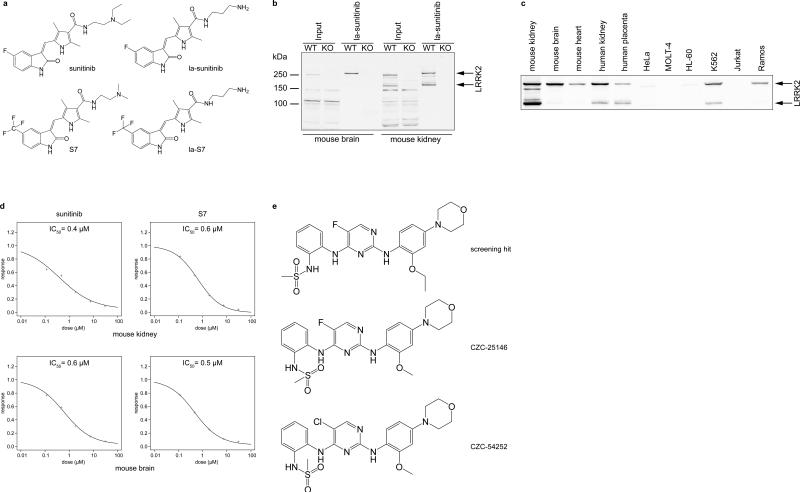
Chemoproteomics-based discovery of LRRK2 lead compounds.ACS Chem Biol.2011 Oct 21;6(10):1021-8. |
|---|
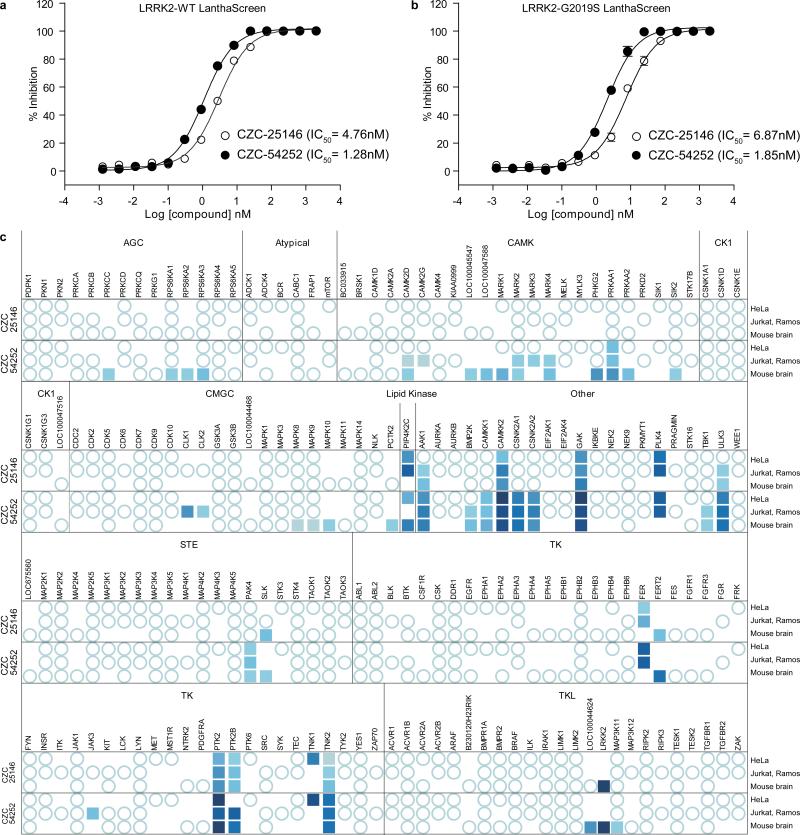
CZC-25146 and CZC-54252 are potent and selective LRRK2 inhibitors.ACS Chem Biol.2011 Oct 21;6(10):1021-8. |
CZC-25146 and CZC-54252 potently attenuate mutant LRRK2-mediated toxicity in primary human neurons.ACS Chem Biol.2011 Oct 21;6(10):1021-8. |
Products are for research use only; We do not sell to patients
Copyright 2020 InvivoChem LLC | All Rights Reserved


 COA
COA