| Size | Price | Stock | Qty |
|---|---|---|---|
| 50mg |
|
||
| 100mg |
|
||
| 250mg |
|
||
| Other Sizes |
| Targets |
Bisdemethoxycurcumin targets various molecular targets, including inflammatory mediators, oxidative stress pathways, and cell signaling pathways. It inhibits the production of pro-inflammatory cytokines, scavenges free radicals, and modulates cell signaling pathways involved in cell proliferation and apoptosis. Bisdemethoxycurcumin's multi-targeted effects make it a valuable tool for studying natural product pharmacology.
|
|---|---|
| ln Vitro |
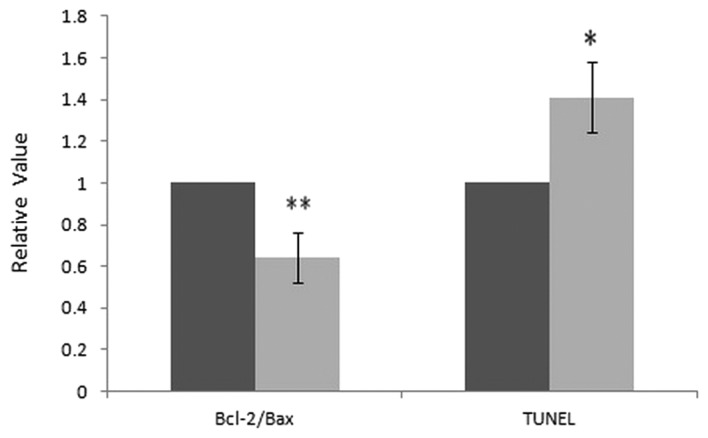
In vitro, bisdemethoxycurcumin exhibits antioxidant, anti-inflammatory, and anticancer activities. It inhibits the production of pro-inflammatory cytokines, scavenges free radicals, and induces apoptosis in cancer cells. In cell-based assays, bisdemethoxycurcumin treatment results in reduced inflammation, decreased oxidative stress, and inhibition of cancer cell proliferation. These studies confirm the compound's diverse pharmacological activities.
|
| ln Vivo |
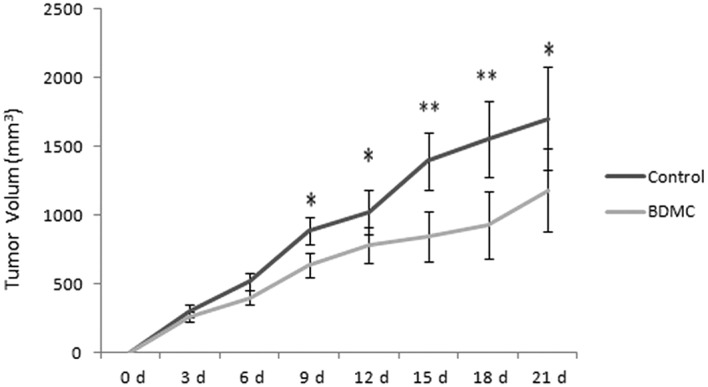
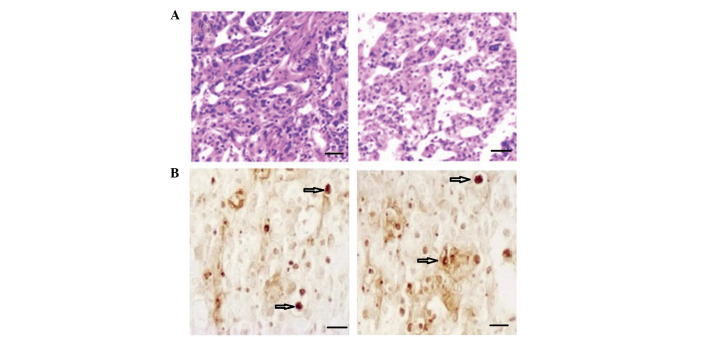
In vivo, bisdemethoxycurcumin has been studied for its potential in the treatment of cancer, inflammation, and neurodegenerative disorders. Its anti-inflammatory and antioxidant effects have been demonstrated in animal models. Anticancer activity has been shown in models of various cancers. Comprehensive in vivo studies are needed to fully characterize its therapeutic potential.
|
| Enzyme Assay |
In vitro enzyme assays for bisdemethoxycurcumin involve measuring its antioxidant activity using DPPH or ABTS assays. The compound's anti-inflammatory activity is assessed by measuring the inhibition of COX or LOX enzymes. These assays confirm the compound's mechanism of action.
|
| Cell Assay |
In vitro cell-based assays for bisdemethoxycurcumin evaluate its effects on inflammation, oxidative stress, and cancer cell proliferation. Cells are cultured and treated with bisdemethoxycurcumin, and the production of inflammatory mediators is measured by ELISA. Oxidative stress is assessed by measuring ROS production. Cancer cell proliferation is assessed using MTT or cell counting assays. These assays confirm the compound's functional activity.
|
| Animal Protocol |
In vivo animal experiments for bisdemethoxycurcumin have been conducted in models of cancer, inflammation, and neurodegenerative disorders. Animals are treated with bisdemethoxycurcumin, and disease progression and inflammatory markers are assessed. Pharmacokinetic studies are conducted to determine the compound's half-life and tissue distribution. Comprehensive in vivo studies are ongoing.
|
| ADME/Pharmacokinetics |
Metabolism / Metabolites
The known metabolites of bisdemethoxycurcumin include bisdemethoxycurcumin and 4-O-glucuronide. Bisdemethoxycurcumin is absorbed after oral administration and is metabolized in the liver. It is excreted in urine and feces. The compound has a molecular weight of 308.33 g/mol. It is soluble in organic solvents and slightly soluble in water. Bisdemethoxycurcumin is for research use only. |
| Toxicity/Toxicokinetics |
The toxicity of bisdemethoxycurcumin is low. It is a natural compound found in turmeric. High doses may cause adverse effects. Bisdemethoxycurcumin is for research use only.
|
| References |
|
| Additional Infomation |
Bisdemethoxycurcumin is a β-diketone with a methane structure in which two hydrogen atoms are replaced by 4-hydroxycinnamoyl groups. It is a metabolite and an EC 3.2.1.1 (α-amylase) inhibitor. It is a β-diketone, polyphenol, enone, and diarylheptane compound. Its function is related to 4-coumaric acid. Bisdemethoxycurcumin has been reported in turmeric (Curcuma xanthorrhiza), Guangxi turmeric (Curcuma kwangsiensis), and other organisms with relevant data.
Bisdemethoxycurcumin is a natural polyphenolic compound and a minor constituent of turmeric (Curcuma longa). It has a molecular formula of C₁₉H₁₆O₄ and a molecular weight of 308.33 g/mol. Bisdemethoxycurcumin is a derivative of curcumin that lacks the two methoxy groups present in curcumin. It has antioxidant, anti-inflammatory, and anticancer properties. Bisdemethoxycurcumin is a valuable research tool for studying the pharmacology of curcuminoids. |
| Molecular Formula |
C19H16O4C19H16O4
|
|---|---|
| Molecular Weight |
308.33
|
| Exact Mass |
308.104
|
| CAS # |
24939-16-0
|
| Related CAS # |
33171-05-0;
|
| PubChem CID |
5315472
|
| Appearance |
Light yellow to orange solid powder
|
| Density |
1.3±0.1 g/cm3
|
| Boiling Point |
551.3±45.0 °C at 760 mmHg
|
| Melting Point |
91-93℃
|
| Flash Point |
301.3±25.2 °C
|
| Vapour Pressure |
0.0±1.5 mmHg at 25°C
|
| Index of Refraction |
1.680
|
| Source |
Originated from plants: Zingiberaceae Zingiber officinale Roscoe
|
| LogP |
3.39
|
| Hydrogen Bond Donor Count |
2
|
| Hydrogen Bond Acceptor Count |
4
|
| Rotatable Bond Count |
6
|
| Heavy Atom Count |
23
|
| Complexity |
408
|
| Defined Atom Stereocenter Count |
0
|
| SMILES |
C1=CC(=CC=C1/C=C/C(=O)CC(=O)/C=C/C2=CC=C(C=C2)O)O
|
| InChi Key |
PREBVFJICNPEKM-YDWXAUTNSA-N
|
| InChi Code |
InChI=1S/C19H16O4/c20-16-7-1-14(2-8-16)5-11-18(22)13-19(23)12-6-15-3-9-17(21)10-4-15/h1-12,20-21H,13H2/b11-5+,12-6+
|
| Chemical Name |
(1E,6E)-1,7-bis(4-hydroxyphenyl)hepta-1,6-diene-3,5-dione
|
| HS Tariff Code |
2934.99.9001
|
| Storage |
Powder -20°C 3 years 4°C 2 years In solvent -80°C 6 months -20°C 1 month |
| Shipping Condition |
Room temperature (This product is stable at ambient temperature for a few days during ordinary shipping and time spent in Customs)
|
| Solubility (In Vitro) |
DMSO : ~66.67 mg/mL (~216.23 mM)
|
|---|---|
| Solubility (In Vivo) |
Note: Listed below are some common formulations that may be used to formulate products with low water solubility (e.g. < 1 mg/mL), you may test these formulations using a minute amount of products to avoid loss of samples.
Injection Formulations
Injection Formulation 1: DMSO : Tween 80: Saline = 10 : 5 : 85 (i.e. 100 μL DMSO stock solution → 50 μL Tween 80 → 850 μL Saline)(e.g. IP/IV/IM/SC) *Preparation of saline: Dissolve 0.9 g of sodium chloride in 100 mL ddH ₂ O to obtain a clear solution. Injection Formulation 2: DMSO : PEG300 :Tween 80 : Saline = 10 : 40 : 5 : 45 (i.e. 100 μL DMSO → 400 μLPEG300 → 50 μL Tween 80 → 450 μL Saline) Injection Formulation 3: DMSO : Corn oil = 10 : 90 (i.e. 100 μL DMSO → 900 μL Corn oil) Example: Take the Injection Formulation 3 (DMSO : Corn oil = 10 : 90) as an example, if 1 mL of 2.5 mg/mL working solution is to be prepared, you can take 100 μL 25 mg/mL DMSO stock solution and add to 900 μL corn oil, mix well to obtain a clear or suspension solution (2.5 mg/mL, ready for use in animals). View More
Injection Formulation 4: DMSO : 20% SBE-β-CD in saline = 10 : 90 [i.e. 100 μL DMSO → 900 μL (20% SBE-β-CD in saline)] Oral Formulations
Oral Formulation 1: Suspend in 0.5% CMC Na (carboxymethylcellulose sodium) Oral Formulation 2: Suspend in 0.5% Carboxymethyl cellulose Example: Take the Oral Formulation 1 (Suspend in 0.5% CMC Na) as an example, if 100 mL of 2.5 mg/mL working solution is to be prepared, you can first prepare 0.5% CMC Na solution by measuring 0.5 g CMC Na and dissolve it in 100 mL ddH2O to obtain a clear solution; then add 250 mg of the product to 100 mL 0.5% CMC Na solution, to make the suspension solution (2.5 mg/mL, ready for use in animals). View More
Oral Formulation 3: Dissolved in PEG400 (Please use freshly prepared in vivo formulations for optimal results.) |
| Preparing Stock Solutions | 1 mg | 5 mg | 10 mg | |
| 1 mM | 3.2433 mL | 16.2164 mL | 32.4328 mL | |
| 5 mM | 0.6487 mL | 3.2433 mL | 6.4866 mL | |
| 10 mM | 0.3243 mL | 1.6216 mL | 3.2433 mL |
*Note: Please select an appropriate solvent for the preparation of stock solution based on your experiment needs. For most products, DMSO can be used for preparing stock solutions (e.g. 5 mM, 10 mM, or 20 mM concentration); some products with high aqueous solubility may be dissolved in water directly. Solubility information is available at the above Solubility Data section. Once the stock solution is prepared, aliquot it to routine usage volumes and store at -20°C or -80°C. Avoid repeated freeze and thaw cycles.
Calculation results
Working concentration: mg/mL;
Method for preparing DMSO stock solution: mg drug pre-dissolved in μL DMSO (stock solution concentration mg/mL). Please contact us first if the concentration exceeds the DMSO solubility of the batch of drug.
Method for preparing in vivo formulation::Take μL DMSO stock solution, next add μL PEG300, mix and clarify, next addμL Tween 80, mix and clarify, next add μL ddH2O,mix and clarify.
(1) Please be sure that the solution is clear before the addition of next solvent. Dissolution methods like vortex, ultrasound or warming and heat may be used to aid dissolving.
(2) Be sure to add the solvent(s) in order.
|
|
|
Products are for research use only; We do not sell to patients
Copyright 2020 InvivoChem LLC | All Rights Reserved