| Size | Price | Stock | Qty |
|---|---|---|---|
| 1mg |
|
||
| 5mg |
|
||
| 10mg |
|
||
| 25mg |
|
||
| 50mg |
|
||
| 100mg |
|
||
| 250mg | |||
| Other Sizes |


Purity: ≥98%
| Targets |
ATM ( IC50 = 0.78 nM )
The target of AZD1390 is ATM kinase, with an IC50 value of 0.7 nM (determined via enzyme assay) [2] |
|---|---|
| ln Vitro |
AZD1390 inhibits the activity of the ATM-dependent DDR (DNA damage response) pathway, causing micronuclei, apoptosis, and accumulation of the G2 cell cycle phase in conjunction with radiation. Glioma and lung cancer cell lines are radiosensitized to AZD1390; p53 mutant glioma cells are typically more radiosensitized than wild type. AZD1390 increases the instability of the genome[2].
1. Antiproliferative activity: AZD1390 exhibited potent antiproliferative effects on a panel of human cancer cell lines with ATM deficiency or ATM pathway activation. In ATM-deficient cancer cell lines (e.g., HT1080-ATMKO, Capan-1), the GI50 values were in the range of 0.01-0.1 μM; in contrast, ATM-proficient cell lines (e.g., HT1080, A549) showed GI50 values >1 μM, indicating selective antiproliferation against ATM-deficient cells [2] 2. Target inhibition activity: Treatment with AZD1390 (100 nM) for 2 hours significantly inhibited the phosphorylation of ATM downstream substrates (e.g., Chk2, p53) in ATM-proficient cancer cells (A549) after ionizing radiation (IR, 2 Gy), as detected by western blot [2] 3. DNA damage response (DDR) inhibition: AZD1390 (1 μM) blocked the formation of IR-induced γH2AX foci (a marker of DNA double-strand breaks) in ATM-proficient cells (HT1080) at 24 hours post-IR, as observed via immunofluorescence staining [2] |
| ln Vivo |
AZD1390 exhibits superior oral bioavailability in preclinical species (64 percent in rats and 74 percent in dogs). PET studies on non-human primates have shown that it can effectively cross the blood-brain barrier. When AZD1390 is combined with radiation therapy for just two or four days, as opposed to radiotherapy alone, profound tumor regressions and longer animal survival (>50 days) have been seen in orthotopic xenograft models of brain cancer[1]. AZD1390 dosed in conjunction with daily fractions of IR (whole-brain or stereotactic radiotherapy) significantly induces tumor regressions and increased animal survival compared to IR treatment alone in in vivo syngeneic and patient-derived glioma as well as orthotopic lung-brain metastatic models. For clinical applications requiring exposures inside the central nervous system, AZD1390 offers advantageous physical, chemical, PK, and PD properties[2].
1. Antitumor efficacy in ATM-deficient xenografts: Nude mice bearing HT1080-ATMKO (ATM-deficient) xenografts were administered AZD1390 at doses of 10 mg/kg and 30 mg/kg via oral gavage once daily for 14 days. The 10 mg/kg group showed a tumor growth inhibition (TGI) rate of 45%, while the 30 mg/kg group achieved a TGI rate of 82%, with no significant body weight loss (<5%) observed in either group [2] 2. Antitumor efficacy in ATM-proficient xenografts combined with IR: Nude mice bearing A549 (ATM-proficient) xenografts were treated with AZD1390 (30 mg/kg, oral gavage, once daily) alone, IR (2 Gy, local irradiation, once every 3 days for 3 times) alone, or the combination. The combination group exhibited a TGI rate of 91%, which was significantly higher than the TGI rates of 18% (drug alone) and 35% (IR alone), and no obvious toxicity (e.g., diarrhea, skin lesions) was noted [2] |
| Enzyme Assay |
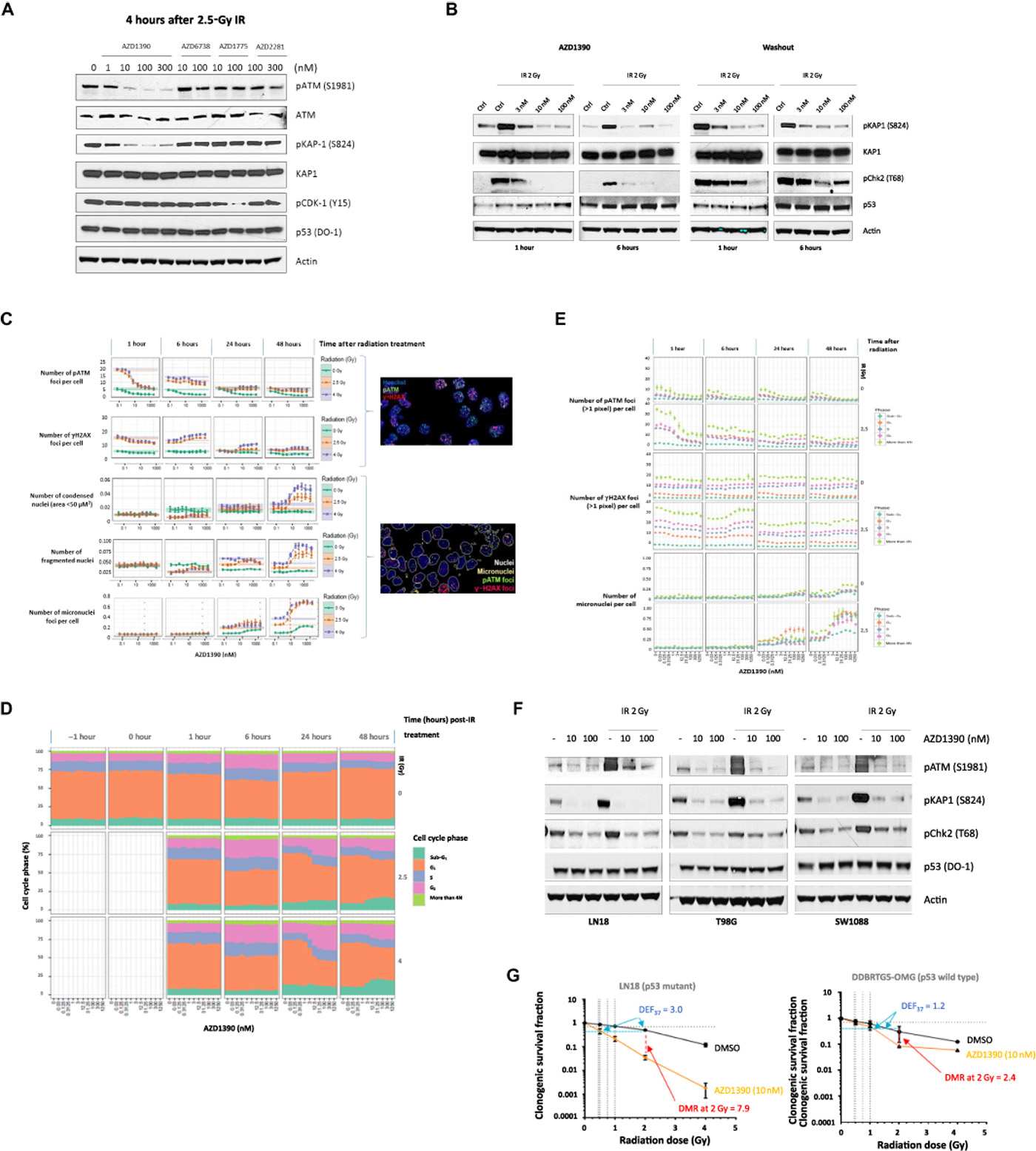
AZD1390 belongs to the same exquisitely potent series of ATM inhibitor as the clinical development compound AZD0156 (Fig. 1). However, AZD1390 was discovered following a series of in vitro assays designed to screen for (i) ATM autophosphorylation activity; (ii) selectivity against closely related PIKK family kinases ATR, DNA-PK, and mTOR activity and (iii) broader kinase panels; and (iv) lack of substrate activity in novel dual-transfected human MDR1 and BCRP efflux transporters assays. AZD1390 was screened against ATM [modulation of purified ATM-dependent phosphorylation of glutathione S-transferase (GST)–p53 Ser15] with activity defined as ≥50% [median inhibitory concentration (IC50)] of 0.00009 μM (0.00004 μM corrected for tight binding). IC50 activity against closely related and purified PIKK family enzymes was never more potent than 1 μM. In broader purified kinase screening panels, AZD1390 was tested at two concentrations, 1 and 0.1 μM, against the Thermo Fisher Scientific kinase panel. At the very high concentration of 1 μM, AZD1390 showed ≥50% inhibition against 3 targets (CSF1R, NUAK1, and SGK), with no activity against the remaining 118 targets tested. At 0.1 μM, no activity was found (<50% inhibition) against 354 kinases. We also tested activity and selectivity of AZD1390 against a panel of kinases run by Eurofins Panlabs. AZD1390 showed activity (>50% inhibition at 1 μM) against 1 kinase, FMS, and showed no activity (<50% inhibition at 1 μM) against 124 other kinases from the panel (Table 1). [2]
Brain and plasma binding of AZD1390[2] Rat brain binding (fubrain) was determined using the rat brain slice binding method, as detailed by Fridén et al.. Plasma binding (rat, mouse, dog, monkey, and human) was determined by equilibrium dialysis using a rapid equilibrium device. The compound in plasma at 1 or 0.1 μM was dialyzed with buffer at pH 7.4 and 37°C for 16 hours. After incubation, aliquots of both plasma and buffer were added to equal volumes of blank buffer and plasma, respectively, before precipitation with acetonitrile prior to centrifugation and analysis of the supernatants by UPLC-MS/MS. Fuplasma was determined by dividing the concentration in the buffer chamber by the concentration in the plasma chamber. 1. ATM kinase activity assay: Recombinant human ATM kinase (catalytic domain) was incubated with a specific peptide substrate (containing the ATM phosphorylation site) in reaction buffer (including ATP, MgCl2, and DTT) at 30°C for 60 minutes. Different concentrations of AZD1390 (0.01-100 nM) were added to the reaction system to determine the inhibitory effect. After the reaction, the amount of phosphorylated substrate was detected using a time-resolved fluorescence resonance energy transfer (TR-FRET) method. The IC50 value was calculated by fitting the inhibition rate-concentration curve with a four-parameter logistic model [2] |
| Cell Assay |
In an RPMI format, 3000 cells per well are seeded using 10% fetal bovine serum in a 384-well format.Plates are Echo-dosed with a semi-log dose dilution of each compound after a 24-hour period, starting at a top concentration of 1250 nM. After compound dosing, plates are exposed to 0, 2.5, or 4 Gy of radiation for one hour. After the plates are fixed at 1, 6, 24, and 48 hours after the radiation, they are incubated for 30 minutes at room temperature and then three times with phosphate-buffered saline solution (PBSA). This is done by directly adding a 1:1 volume of 8% PFA to the medium, resulting in a final concentration of 4% PFA.
1. Antiproliferation assay (GI50 determination): Cancer cells were seeded in 96-well plates at a density of 1×10³ cells/well and cultured overnight. AZD1390 was serially diluted (0.001-10 μM) and added to the wells, with 6 replicate wells per concentration. After 72 hours of incubation, a cell viability reagent was added, and the absorbance was measured at 490 nm using a microplate reader. The GI50 value (concentration inhibiting cell growth by 50%) was calculated based on the absorbance values of treated and untreated cells [2] 2. Western blot assay for DDR protein phosphorylation: Cells were seeded in 6-well plates and cultured to 70% confluence. After treatment with AZD1390 (0.01-1 μM) for 2 hours, cells were exposed to IR (2 Gy) and incubated for an additional 1 hour. Cells were then lysed with RIPA buffer (containing protease and phosphatase inhibitors), and protein concentrations were determined. Equal amounts of protein (30 μg) were separated by SDS-PAGE, transferred to PVDF membranes, and probed with primary antibodies against phosphorylated Chk2 (p-Chk2), phosphorylated p53 (p-p53), and total Chk2/p53. After incubation with secondary antibodies, the bands were visualized using an enhanced chemiluminescence (ECL) system, and band intensities were quantified using image analysis software [2] 3. Immunofluorescence assay for γH2AX foci: Cells were grown on coverslips in 24-well plates. After treatment with AZD1390 (1 μM) for 2 hours and IR (2 Gy), cells were fixed with 4% paraformaldehyde at 24 hours post-IR, permeabilized with 0.2% Triton X-100, and blocked with 5% BSA. Cells were incubated with anti-γH2AX primary antibody overnight at 4°C, followed by fluorescently labeled secondary antibody for 1 hour at room temperature. Nuclei were stained with DAPI, and γH2AX foci were observed under a fluorescence microscope. The number of foci per cell was counted in at least 100 cells per group [2] |
| Animal Protocol |
Bioluminescent imaging (BLI) is performed after intracranial implantation of mouse GL261 glioma (p53 mutant) cells into immunocompetent, syngeneic C57/bl6 mice, before the mice are randomly assigned. Before receiving several fractions of 2-3 Gy of radiation over the course of two to four days, AZD1390 is given orally via gavage. Radiation therapy is applied to the tumor site using a 5 x 5 mm lateral field using the Small Animal Radiation Research Platform (SARRP). In vivo H2228 model efficacy[2]
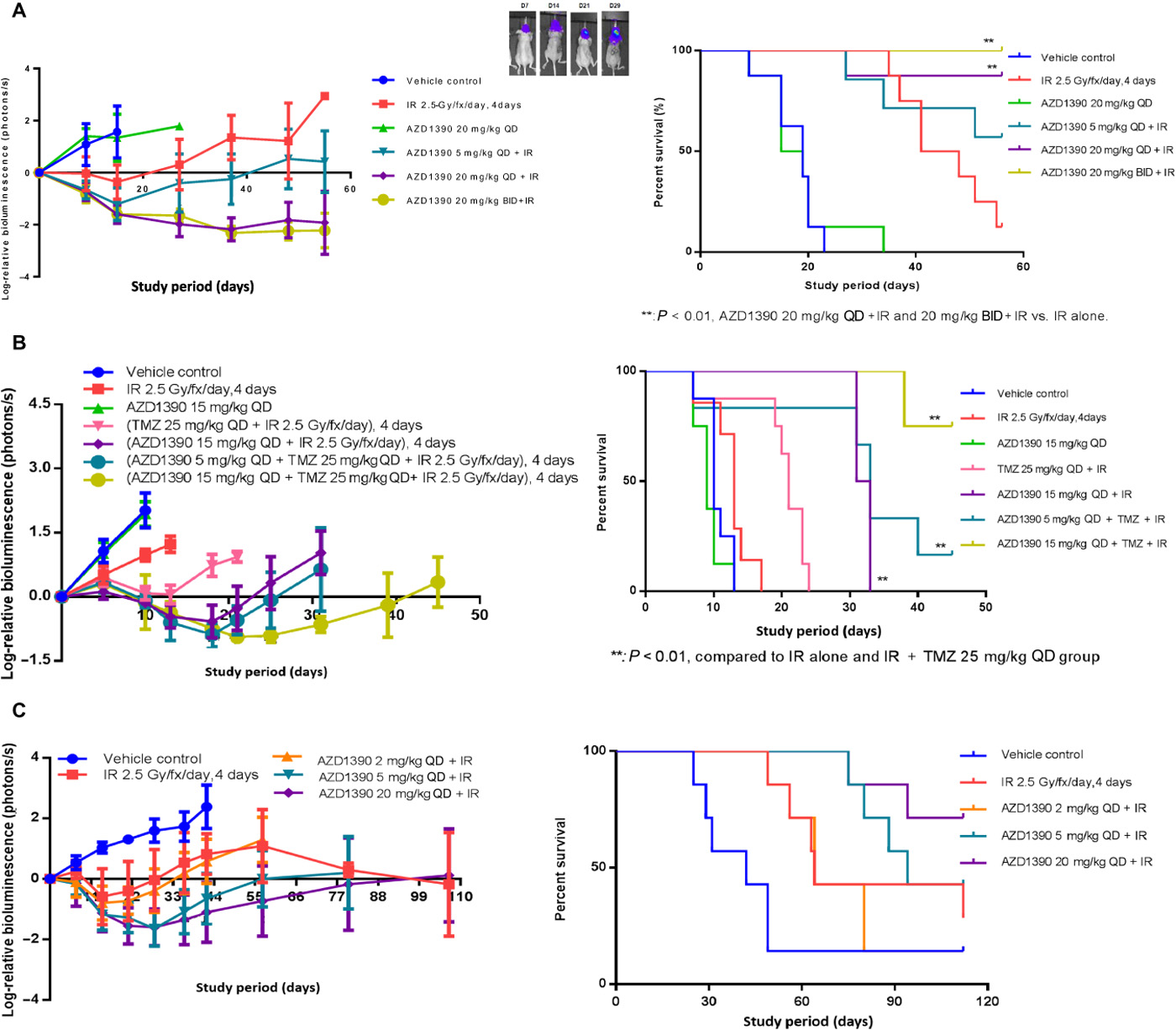
Bioluminescence signaling of implanted 3 × 10⁵ NCI-H2228-Luc cells was measured using an IVIS Xenogen imaging machine to monitor tumor growth. When the signal reached the range of 107 to 108, the mice were randomized into different treatment groups and treated orally with either vehicle or AZD1390 QD or BID + IR at 2.5 Gy daily for four consecutive days. AZD1390 or vehicle was dosed at 1 hour before IR on each dosing day. The bioluminescence signals and body weight of the mice were measured once weekly, and the raw data were recorded according to their study number and measurement date in the in vivo database. TGI from the start of treatment was assessed by comparison of the mean change in bioluminescence intensity for the control and treated groups and presented as % of TGI. The calculation of inhibition and regression was based on the geometric mean of relative tumor volume (RTV) in each group. “CG” means the geometric mean of RTV of the control group, whereas “TG” means the geometric mean of RTV of the treated group. On specific day, for each treated group, the inhibition value was calculated using the following formula: Inhibition% = (CG − TG) * 100/(CG − 1). CG should use the corresponding control group of the treated group during calculation. If inhibition was >100%, then regression was calculated using the following formula: Regression = 1 – TG. Statistical significance was evaluated using a one-tailed t test. Survival benefit was measured by Kaplan-Meier plots at the end of the study.[2] In vivo efficacy studies in syngeneic glioma model[2] GL261_Luc cells (1.6 × 10⁵) were implanted into mice through ICB injection, as described above. An IVIS Xenogen imaging machine used to monitor tumor growth measured the bioluminescence signals. When the signals reached the range of 107 to 108, the mice were randomized into treatment groups and treated orally with either vehicle, AZD1390, IR at 2.5 Gy per day for four consecutive days, IR + AZD1390, or AZD1390 + TMZ. AZD1390, TMZ, or vehicle was dosed 1 hour before IR on each dosing day. The bioluminescent signals and body weight of the mice were measured once a week. TGI from the start of treatment was assessed by comparison of the mean change in bioluminescence intensity for the control and treatment groups, and data are presented as % of TGI. The calculation of inhibition and regression was based on the geometric mean of RTV in each group. CG means the geometric mean of RTV of the control group, whereas TG means the geometric mean of RTV of the treated group. On specific day, for each treated group, inhibition value was calculated using the following formula: Inhibition% = (CG − TG) * 100/(CG − 1). CG should use the corresponding control group of the treated group during calculation. If Inhibition was >100%, then regression was calculated using the following formula: Regression = 1 − TG. Statistical significance was evaluated using a one-tailed t test. A Kaplan-Meier curve was generated to calculate the survival benefit of mice treated with compounds.[2] In vivo PDX efficacy studies[2] Human tumor tissue fragments were taken from TMZ-resistant or TMZ-sensitive GBM patients, derived from START (http://startthecure.com/preclinical_services_research.php), and implanted subcutaneously in female NMRI nude mice (Janvier Labs) between 7 and 11 weeks of age to establish the GBM PDX models. Animals were enrolled into the study when their tumor volume was approximately 200 mm3 and randomized into four groups: vehicle, 0.5% (w/v) HPMC, and 0.1% (w/v) Tween 80 given QD for 5 days by oral gavage; 2-Gy XRT given QD for 5 days; AZD1390 (20 mg/kg) given QD for 5 days by oral gavage; and AZD1390 + XRT given QD for 5 days. XRT was performed with X-RAD 320 (Precision X-Ray) to the whole head, and AZD1390 was administered 1 hour before XRT in the combination group. Animals were observed daily, and tumor volume and body weight were measured twice per week. Tumor volumes were calculated using the following formula: 0.52 (width × length2). All animal experiments were performed under a protocol approved by the Danish Animal Experiments Inspectorate.[2] 1. ATM-deficient xenograft model: Female nude mice (6-8 weeks old) were subcutaneously inoculated with 5×10⁶ HT1080-ATMKO cells (suspended in Matrigel and PBS at a 1:1 ratio) into the right flank. When tumors reached a volume of ~100 mm³, mice were randomly divided into 3 groups (n=6 per group): vehicle control (0.5% methylcellulose + 0.2% Tween 80), AZD1390 10 mg/kg, and AZD1390 30 mg/kg. Drugs were administered via oral gavage once daily for 14 days. Tumor volume was measured every 2 days using a caliper (tumor volume = length × width² / 2), and body weight was recorded simultaneously [2] 2. ATM-proficient xenograft combined with IR model: Female nude mice (6-8 weeks old) were subcutaneously implanted with 5×10⁶ A549 cells (suspended in Matrigel and PBS at 1:1) into the right flank. When tumors reached ~150 mm³, mice were randomly assigned to 4 groups (n=6 per group): vehicle control, AZD1390 30 mg/kg (oral gavage, once daily), IR alone (2 Gy, local tumor irradiation using a linear accelerator, once every 3 days for 3 times), and combination of AZD1390 and IR. AZD1390 was administered 1 hour before each IR treatment. Tumor volume and body weight were monitored every 2 days for 21 days [2] |
| ADME/Pharmacokinetics |
Blood-brain barrier penetration [2]
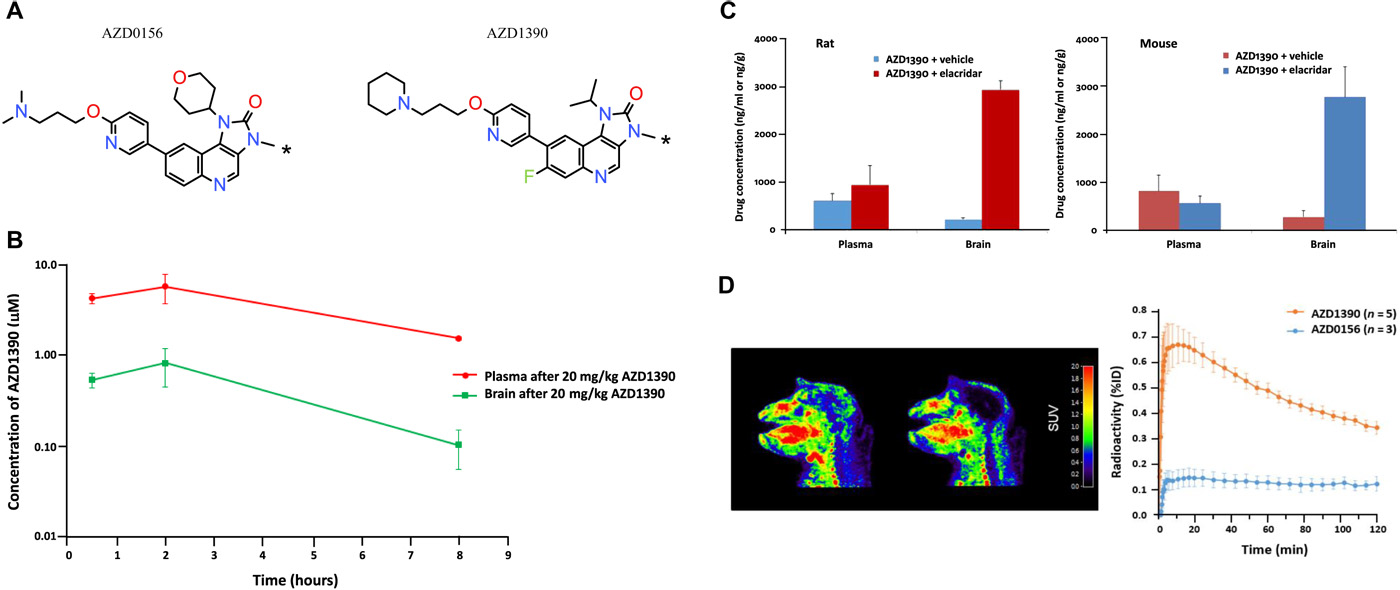
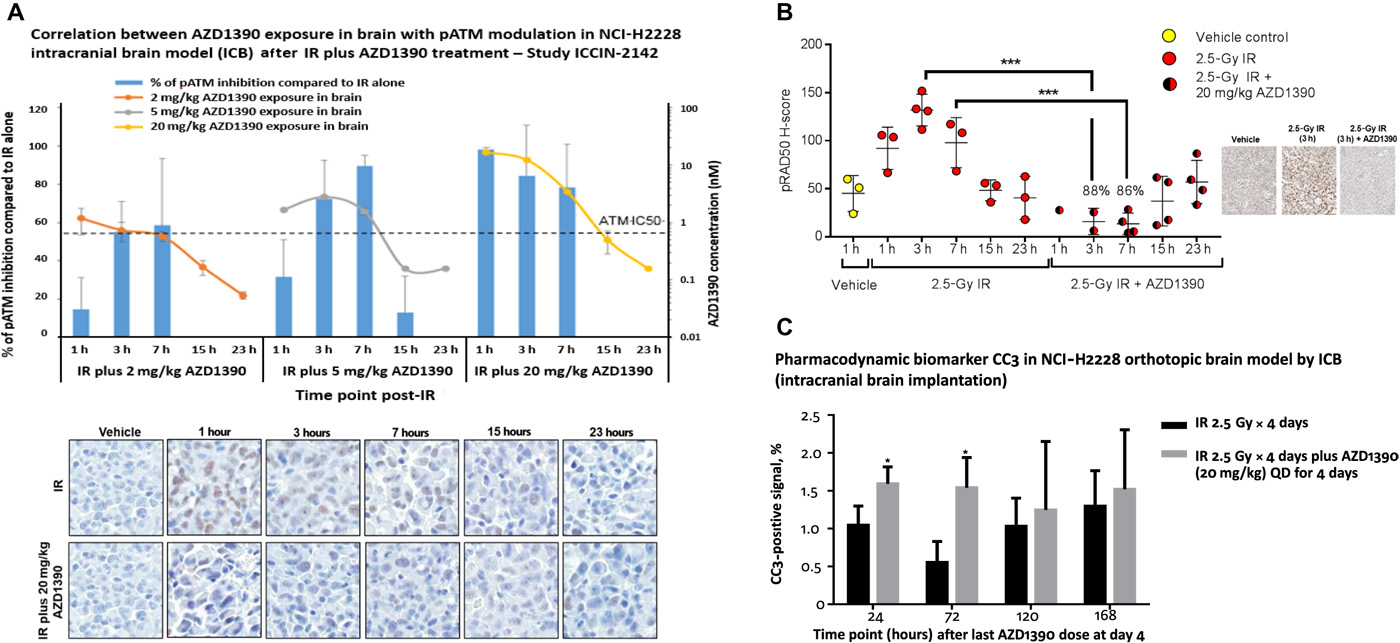
The blood-brain barrier endothelial cells contain efflux transporters MDR1 (Pgp) and BCRP, which can actively expel compounds from brain tissue (32). To identify compounds that do not have substrate activity, we established an in vitro efflux assay using Madin-Darby canine kidney (MDCK) cells double-transfected with human MDR1 and BCRP efflux transporters. In vitro MDCK_MDR1_BCRP studies showed that AD1390 was not a substrate of human Pgp and/or BCRP efflux transporters at concentrations of 1 μM and 0.1 μM (efflux ratio <2); however, AD1390 was effluxed at a higher rate in rodents, as lower Kp,uu values (0.17 and 0.04, respectively) were observed in rats and mice. This indicates that AZD1390 is an efflux substrate in rodents, with increased brain exposure after administration of the chemical efflux transporter elacridar (Kp,uu values were 0.85 and 0.77, respectively) (Figure 1C). Furthermore, at a concentration of 1 μM, its efflux ratio was 3.2 in an in vitro LLC-PK1-rMdr1a assay transfected with rat transporters. In contrast, AZD0156 showed an efflux ratio of 23 at a concentration of 0.1 μM, suggesting it is a substrate for human efflux transporters (Figure 1, B and C). This difference in blood-brain barrier permeability was also reflected in vivo, with AZD1390 showing 6-fold and 7-fold higher Kp,uu values in the rat and mouse brains, respectively, compared to AZD0156. Cynocynomolgus monkey positron emission tomography (PET) images (Figure 1D) show that only AZD1390 significantly penetrated the blood-brain barrier, with a Cmax (%ID) of 0.68 ± 0.078 (n = 5) [compared to AZD0156, whose Cmax %ID was 0.15 ± 0.036 (n = 3, P < 0.01)]. The VT (equivalent to Kp) calculated from the two-compartment (2-TC) model of AZD1390 PET data was 5.8 ± 1.2 (n = 5), and the calculated Kp,uu was 0.33 ± 0.068 (n = 5). The Kp value of AZD0156 could not be accurately determined in cynomolgus monkeys. In this study, the 2-TC model showed poor recognition in VT, with a very high standard error (SE). We observed low Kp,uu values of AZD1390 in rats and mice (0.17 and 0.04, respectively). This suggests that AZD1390 appears to be an efflux substrate in rodents, with increased brain exposure following administration of the chemical efflux transporter elacridar (Kp,uu values of 0.85 and 0.77, respectively) (Figure 3B), and an efflux ratio of 3.2 in an in vitro LLC-PK1-rMdr1a assay transfected with rat transporter at a concentration of 1 μM. Although mice showed lower Kp,uu values at doses ranging from 2 to 20 mg/kg, they still achieved free brain exposure, and pATM inhibition and therapeutic effects were observed. [2] In vivo pharmacodynamics and pharmacokinetics of AZD1390[2] Researchers conducted an extensive assessment of the relationship between the pharmacokinetics and pharmacodynamics of AZD1390 in plasma, brain tissue, and tumor samples from our orthotopic brain tumor model NCI-H2228 (implanted in the brain). Data showed that pharmacologically active AZD1390 dose combinations in in vitro and cellular power assays inhibited the in vivo IR-induced pharmacodynamic biomarkers pATM (Ser1981) and phosphorylated Rad50 (pRad50) (Ser635) in a dose- and time-dependent manner (Figure 3, A and B). Antibodies used to detect the latter are being used in clinical trials, and data in Figure 4B show that staining levels correlate with PK observations in Figure 2A. In the NCI-H2228 lung cancer brain metastasis (LC-BM) model, the combination of AZD1390 and IR significantly increased the apoptosis marker CC3 (cleaved caspase-3) compared to IR alone, indicating that the combination induced tumor cell death (Figure 3C). Data revealed a correlation between PK and PD regulation; the free brain concentration of AZD1390 peaked within 1 hour after administration and gradually declined over 24 hours, which was correlated with ATM inhibitory activity (see Figures S4, A and D for more details on the analyzed PK and PD). Oral bioavailability: In SD rats, AZD1390 was administered at a dose of 10 mg/kg via intravenous (IV) and gavage. The oral bioavailability was calculated based on the area under the plasma concentration-time curve (AUC0-∞) for intravenous and oral administration, and the result was 65% [2] 2. Plasma half-life: After intravenous injection of AZD1390 (10 mg/kg) in SD rats, the plasma elimination half-life (t1/2) was determined by fitting the plasma concentration-time data with a two-compartment model, and the t1/2 was 3.2 hours [2] 3. Tissue distribution: One hour after oral administration of AZD1390 (30 mg/kg) to nude mice, the highest drug concentrations were found in the liver (12.5 μg/g) and kidney (8.3 μg/g), while the drug concentration in the tumor (A549 xenograft tumor) was 4.1 μg/g, which was higher than the plasma concentration (2.8 μg/mL) [2]. |
| Toxicity/Toxicokinetics |
The IC50 values of AZD0156 and AZD1390 for the cardiac ion channel hERG were both confirmed to be very low, >33.3 μM and 6.55 μM, respectively. (An IC50 value of AZD1390 for hERG of 7.99 μM was also obtained using an alternative detection method with improved compound processing and data processing.) [2] 1. Acute toxicity: In a 7-day acute toxicity study in CD-1 mice, AZD1390 was administered by gavage at a maximum dose of 200 mg/kg. No deaths were observed, and the maximum non-lethal dose (MNLD) was determined to be 200 mg/kg. Mild changes in liver function (mild elevation of ALT, <2 times the normal value) were observed in the 200 mg/kg group, which returned to normal 7 days after drug withdrawal [2] 2. Plasma protein binding rate: The plasma protein binding rate of AZD1390 was determined by equilibrium dialysis. Human plasma was incubated with AZD1390 (1 μM) at 37°C for 4 hours, and the concentration of free drug in the dialysate was determined by LC-MS/MS. The plasma protein binding rate was calculated to be 92% [2]
|
| References | |
| Additional Infomation |
AZD1390, an ATM kinase inhibitor, is an orally bioavailable inhibitor of ataxia-telangiectasia mutant gene (ATM) kinase with potential antitumor activity. After oral administration, AZD1390 targets and binds to ATM, thereby inhibiting ATM kinase activity and its mediated signaling pathways. This prevents activation of DNA damage checkpoints, interferes with DNA damage repair, induces tumor cell apoptosis, and leads to the death of ATM-overexpressing tumor cells. AZD1390 can enhance tumor sensitivity to chemotherapy/radiotherapy. Furthermore, AZD1390 can cross the blood-brain barrier (BBB). ATM is a serine/threonine protein kinase belonging to the phosphatidylinositol 3-kinase-associated kinase (PIKK) family and is highly expressed in various cancer cell types. It is activated during DNA double-strand breaks (DSBs) and plays a crucial role in DNA repair.
1. Background: AZD1390 is a small-molecule selective ATM kinase inhibitor used to treat cancers with ATM pathway defects or in combination with DNA damage drugs (e.g., radiotherapy, chemotherapy). ATM kinases play a key role in DNA damage response (DDR), and inhibiting ATM can make cancer cells more sensitive to DNA damage and inhibit tumor growth [2] 2. Selectivity: AZD1390 has higher selectivity for ATM kinase than other phosphatidylinositol 3-kinase-associated kinases (PIKKs), such as ATR, DNA-PKcs, and mTOR. The IC50 values of ATR, DNA-PKcs, and mTOR are greater than 10 μM, 10 μM, and 10 μM, respectively, indicating that their off-target activity is extremely low [2] |
| Molecular Formula |
C27H32FN5O2
|
|
|---|---|---|
| Molecular Weight |
477.5737
|
|
| Exact Mass |
477.25
|
|
| Elemental Analysis |
C, 67.90; H, 6.75; F, 3.98; N, 14.66; O, 6.70
|
|
| CAS # |
2089288-03-7
|
|
| Related CAS # |
|
|
| PubChem CID |
126689157
|
|
| Appearance |
White to off-white solid powder
|
|
| LogP |
4.2
|
|
| Hydrogen Bond Donor Count |
0
|
|
| Hydrogen Bond Acceptor Count |
6
|
|
| Rotatable Bond Count |
7
|
|
| Heavy Atom Count |
35
|
|
| Complexity |
720
|
|
| Defined Atom Stereocenter Count |
0
|
|
| SMILES |
O=C(N1C(C)C)N(C)C2=C1C3=CC(C4=CC=C(OCCCN5CCCCC5)N=C4)=C(F)C=C3N=C2
|
|
| InChi Key |
VQSZIPCGAGVRRP-UHFFFAOYSA-N
|
|
| InChi Code |
InChI=1S/C27H32FN5O2/c1-18(2)33-26-21-14-20(22(28)15-23(21)29-17-24(26)31(3)27(33)34)19-8-9-25(30-16-19)35-13-7-12-32-10-5-4-6-11-32/h8-9,14-18H,4-7,10-13H2,1-3H3
|
|
| Chemical Name |
|
|
| Synonyms |
|
|
| HS Tariff Code |
2934.99.9001
|
|
| Storage |
Powder -20°C 3 years 4°C 2 years In solvent -80°C 6 months -20°C 1 month |
|
| Shipping Condition |
Room temperature (This product is stable at ambient temperature for a few days during ordinary shipping and time spent in Customs)
|
| Solubility (In Vitro) |
|
|||
|---|---|---|---|---|
| Solubility (In Vivo) |
Solubility in Formulation 1: 5 mg/mL (10.47 mM) in 50% PEG300 + 50% Saline (add these co-solvents sequentially from left to right, and one by one), Suspended solution; with ultrasonication.
Preparation of saline: Dissolve 0.9 g of sodium chloride in 100 mL ddH₂ O to obtain a clear solution. Solubility in Formulation 2: 5 mg/mL (10.47 mM) in 0.5% CMC-Na/saline water (add these co-solvents sequentially from left to right, and one by one), Suspended solution. Preparation of saline: Dissolve 0.9 g of sodium chloride in 100 mL ddH₂ O to obtain a clear solution. (Please use freshly prepared in vivo formulations for optimal results.) |
| Preparing Stock Solutions | 1 mg | 5 mg | 10 mg | |
| 1 mM | 2.0939 mL | 10.4697 mL | 20.9393 mL | |
| 5 mM | 0.4188 mL | 2.0939 mL | 4.1879 mL | |
| 10 mM | 0.2094 mL | 1.0470 mL | 2.0939 mL |
*Note: Please select an appropriate solvent for the preparation of stock solution based on your experiment needs. For most products, DMSO can be used for preparing stock solutions (e.g. 5 mM, 10 mM, or 20 mM concentration); some products with high aqueous solubility may be dissolved in water directly. Solubility information is available at the above Solubility Data section. Once the stock solution is prepared, aliquot it to routine usage volumes and store at -20°C or -80°C. Avoid repeated freeze and thaw cycles.
Calculation results
Working concentration: mg/mL;
Method for preparing DMSO stock solution: mg drug pre-dissolved in μL DMSO (stock solution concentration mg/mL). Please contact us first if the concentration exceeds the DMSO solubility of the batch of drug.
Method for preparing in vivo formulation::Take μL DMSO stock solution, next add μL PEG300, mix and clarify, next addμL Tween 80, mix and clarify, next add μL ddH2O,mix and clarify.
(1) Please be sure that the solution is clear before the addition of next solvent. Dissolution methods like vortex, ultrasound or warming and heat may be used to aid dissolving.
(2) Be sure to add the solvent(s) in order.
| NCT Number | Recruitment | interventions | Conditions | Sponsor/Collaborators | Start Date | Phases |
| NCT04550104 | Recruiting | Drug: AZD1390 Drug: TBD Compound 1 |
Non Small Cell Lung Cancer | University of Leeds | March 17, 2021 | Phase 1 |
| NCT05116254 | Recruiting | Combination Product: AZD1390 + radiotherapy |
Soft Tissue Sarcoma Adult | The Netherlands Cancer Institute | July 18, 2022 | Phase 1 |
| NCT05678010 | Recruiting | Radiation: Stereotactic Body Radiotherapy Drug: AZD1390 |
Solid Tumor Solid Carcinoma |
Memorial Sloan Kettering Cancer Center |
May 17, 2023 | Phase 1 |
| NCT03423628 | Recruiting | Radiation: Radiation Therapy Drug: AZD1390 |
Brain Neoplasms, Malignant Leptomeningeal Disease (LMD) |
AstraZeneca | April 2, 2018 | Phase 1 |
| NCT05182905 | Recruiting | Drug: AZD1390 | Glioblastoma Glioma |
Nader Sanai | March 9, 2022 | Early Phase 1 |
The structure and brain-penetrating properties of AZD1390.Science Advances. 2018, 4(6): eaat1719. |
|---|
Target engagement and cellular mechanism of action of AZD1390.Science Advances. 2018, 4(6): eaat1719. |
In vivo activity of AZD1390 in lung-brain metastatic models.Science Advances. 2018, 4(6): eaat1719. |
Survival of a syngeneic mouse model of GBM treated with AZD1390.Science Advances. 2018, 4(6): eaat1719. |
|---|
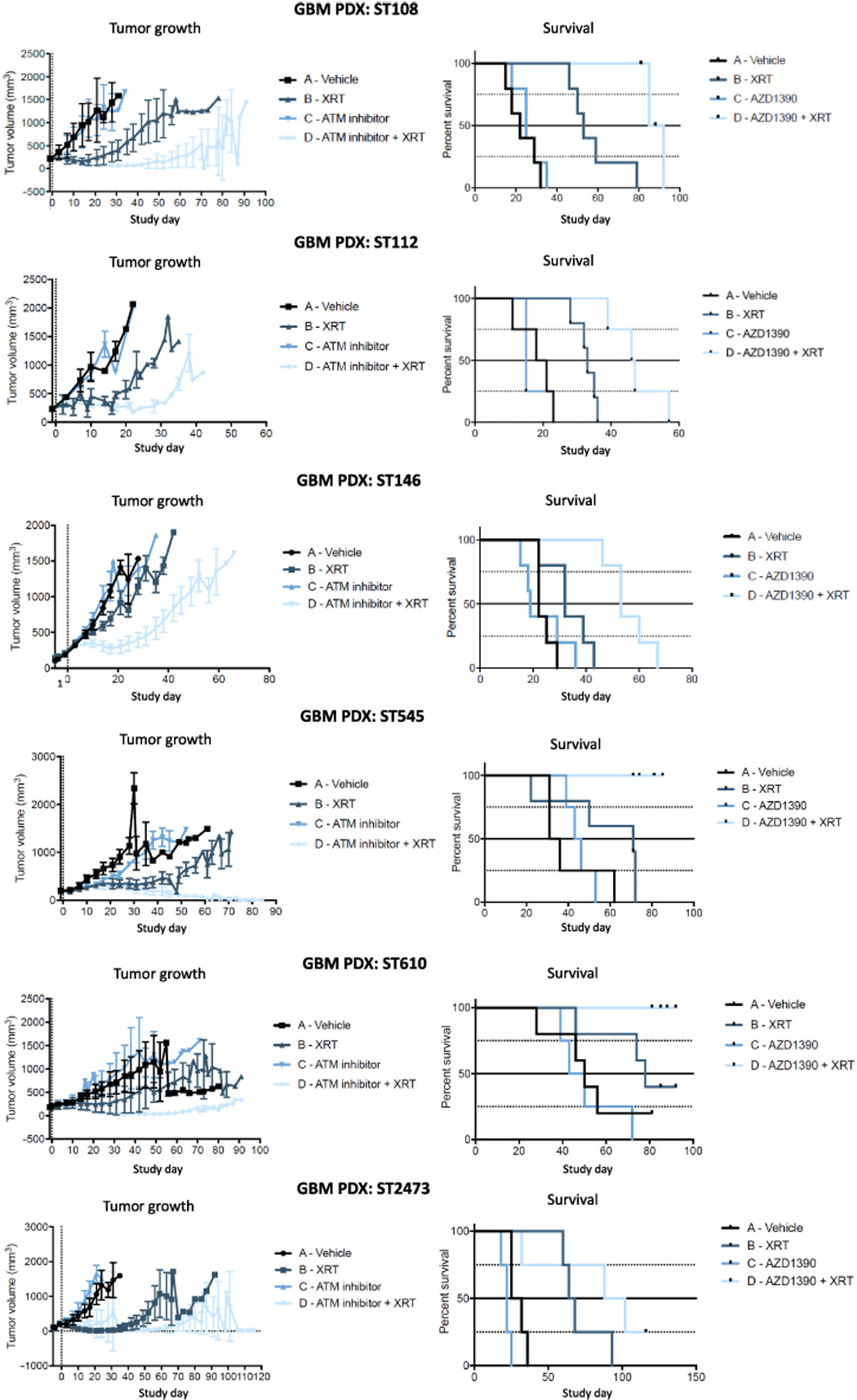 In vivo subcutaneous efficacy studies using PDX models.Science Advances. 2018, 4(6): eaat1719. |
harmacokinetics and pharmacodynamicsof AZD1390.Science Advances. 2018, 4(6): eaat1719. |
Products are for research use only; We do not sell to patients
Copyright 2020 InvivoChem LLC | All Rights Reserved


 COA
COA