| Size | Price | Stock | Qty |
|---|---|---|---|
| 1mg |
|
||
| Other Sizes |


| Targets |
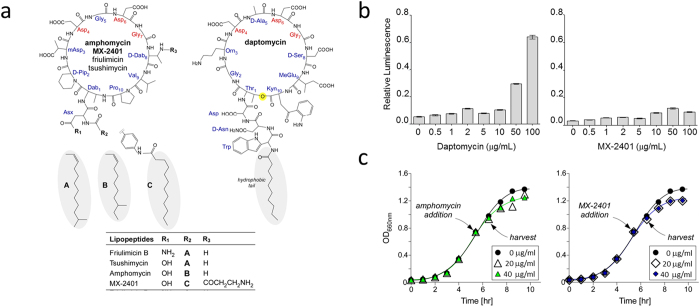
The primary target of Amphomycin is the bacterial cell wall synthesis pathway. The antibiotic binds to bactoprenol phosphate, a lipid carrier essential for the transport of cell wall precursors across the bacterial membrane. This binding inhibits phospho-N-acetylmuramyl-pentapeptide translocase (MraY), the enzyme responsible for transferring the peptidoglycan precursor from the cytoplasmic side to the membrane. By blocking the translocation of lipid II, Amphomycin prevents peptidoglycan synthesis and subsequent cell wall development. This mechanism differs from β-lactams or glycopeptides, potentially reducing cross-resistance. Amphomycin also binds with phosphorylated substrates in a calcium-dependent manner.
|
|---|---|
| ln Vitro |
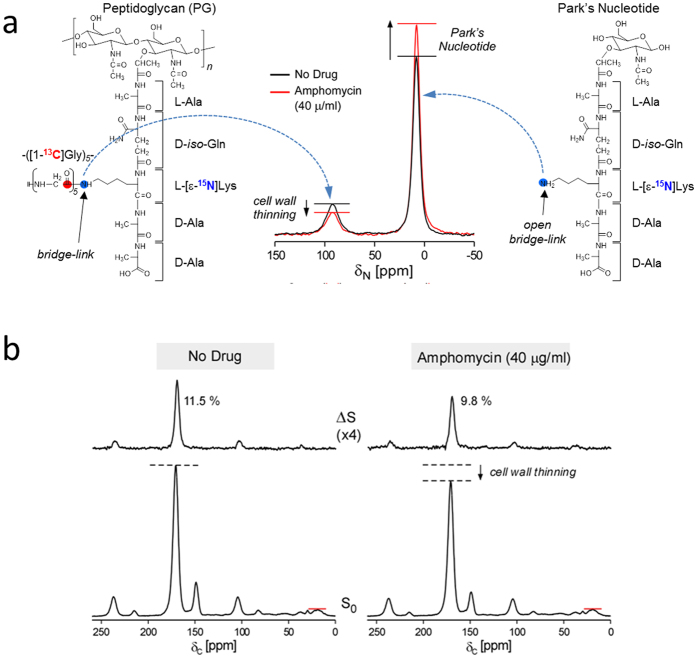
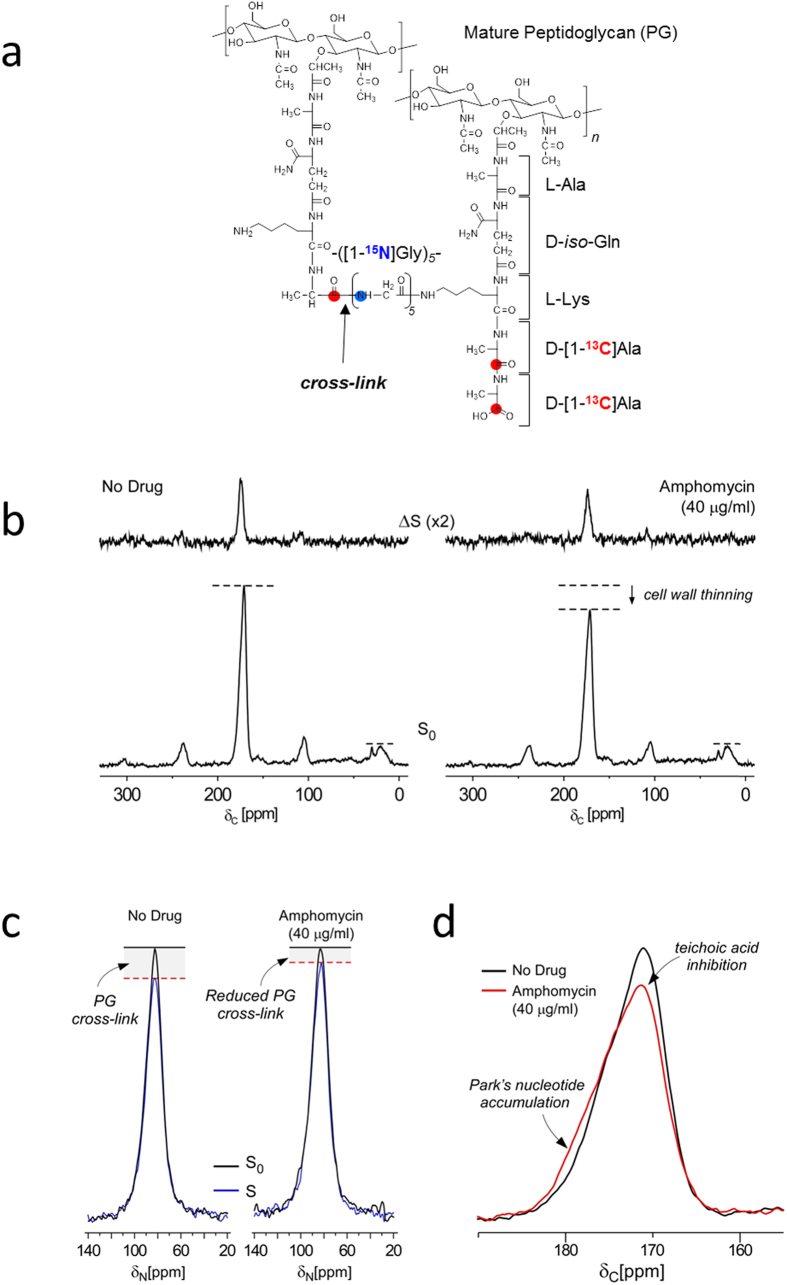
Staphylococcus aureus exhibits weakening of the cell wall and accumulation of Park nucleotides when exposed to amfomycin (40 μg/mL; 60 min) [1].
In vitro, Amphomycin demonstrates potent antibacterial activity against a broad spectrum of drug-resistant Gram-positive bacteria. In Staphylococcus aureus, exposure to Amphomycin (40 μg/mL; 60 min) causes weakening of the cell wall and accumulation of Park nucleotides (uridine diphosphate-N-acetylmuramyl-peptide precursors), indicative of peptidoglycan synthesis inhibition. The antibiotic is effective against methicillin-resistant S. aureus (MRSA), vancomycin-resistant enterococci (VRE), and multiple drug-resistant Streptococcus pneumoniae strains. Minimum inhibitory concentration (MIC) values can be determined using standard broth microdilution methods according to CLSI guidelines. These protocols are for reference only. |
| ln Vivo |
Amfomycin (50 mg/kg; PO; single dose) has low oral availability, but amfomycin (5-10 mg/kg; IV; single dose) has a prolonged half-life (5.2-8.0 hours in mice, 4.6-7.1 hours in rats) [2].
In vivo, Amphomycin has been evaluated in pharmacokinetic studies. Oral administration of Amphomycin (50 mg/kg; single dose) shows low oral bioavailability. However, intravenous administration (5-10 mg/kg; single dose) results in a prolonged half-life: 5.2-8.0 hours in mice and 4.6-7.1 hours in rats. The prolonged half-life is a notable feature of this lipopeptide antibiotic. The compound's efficacy against systemic bacterial infections can be evaluated in animal models of sepsis or pneumonia using appropriate bacterial challenge strains. Further in vivo efficacy studies are needed to fully characterize its therapeutic potential. |
| Enzyme Assay |
In vitro enzyme/receptor binding studies for Amphomycin focus on its interaction with bacterial cell wall synthesis enzymes. The compound inhibits phospho-N-acetylmuramyl-pentapeptide translocase (MraY), which can be assayed using membrane preparations from susceptible bacteria. The assay measures the transfer of radiolabeled phospho-N-acetylmuramyl-pentapeptide to lipid carriers. Binding to bactoprenol phosphate can be assessed using thin-layer chromatography or mass spectrometry. Calcium dependency of binding can be evaluated by performing assays in the presence and absence of calcium ions. These methods are for research purposes only and require independent validation.
|
| Cell Assay |
Cell viability assay [1]
Cell Types: Staphylococcus aureus whole cells Tested Concentrations: 40 μg/mL Incubation Duration: 60 minutes Experimental Results: Causes thinning of cell wall and accumulation of Park's nucleotides. In vitro cell-based assays for Amphomycin include antibacterial susceptibility testing using standard broth microdilution or agar dilution methods. Bacterial strains (e.g., S. aureus, E. faecalis, S. pneumoniae) are cultured in appropriate media (Mueller-Hinton broth, cation-adjusted) and treated with serial two-fold dilutions of Amphomycin. Minimum inhibitory concentrations (MICs) are determined after 18-24 hours of incubation at 37°C. Time-kill curve assays can be performed to evaluate bactericidal activity over time. Cell wall thinning and Park nucleotide accumulation can be assessed by electron microscopy and HPLC analysis of nucleotide pools. Standard quality control strains should be included. |
| Animal Protocol |
In vivo animal studies for Amphomycin typically involve murine models of bacterial infection. Mice are infected with a lethal dose of a susceptible bacterial strain (e.g., S. aureus) via intravenous or intraperitoneal injection. Amphomycin is administered via intravenous or oral routes at various doses, and survival is monitored over 7-14 days. Pharmacokinetic studies involve serial blood sampling following drug administration to determine half-life, clearance, and volume of distribution. Tissue distribution studies can be performed to assess drug penetration into target organs. All procedures must comply with institutional animal care guidelines.
|
| ADME/Pharmacokinetics |
The pharmacokinetic properties of Amphomycin are characterized by low oral bioavailability and prolonged half-life following intravenous administration. In mice, intravenous administration (5-10 mg/kg) yields a half-life of 5.2-8.0 hours; in rats, the half-life is 4.6-7.1 hours. The compound exhibits calcium-dependent binding to phosphorylated substrates, which may influence its distribution and activity. Oral bioavailability is low, suggesting that intravenous administration is the preferred route for systemic infections. The compound's large molecular weight (approximately 1290 Da) and lipopeptide nature contribute to its pharmacokinetic profile.
|
| Toxicity/Toxicokinetics |
The toxicity profile of Amphomycin is not fully characterized in publicly available literature. The compound is classified for research use only and not for human consumption. As a lipopeptide antibiotic, potential toxicities may include nephrotoxicity, which is a concern for similar compounds in this class. Standard safety precautions for handling antibiotics apply, including the use of personal protective equipment and working in a biosafety cabinet. Preclinical toxicology studies would be required for clinical development, including assessment of renal function, hepatotoxicity, and hematological parameters in appropriate animal models.
|
| References |
[1]. Singh M, et al. Solid-state NMR characterization of amphomycin effects on peptidoglycan and wall teichoic acid biosyntheses in Staphylococcus aureus. Sci Rep. 2016 Aug 19;6:31757.
[2]. Pasetka CJ, et al. Novel antimicrobial lipopeptides with long in vivo half-lives. Int J Antimicrob Agents. 2010 Feb;35(2):182-5. [3]. Tanaka H, et al. Amphomycin inhibits phospho-N-acetylmuramyl-pentapeptide translocase in peptidoglycan synthesis of Bacillus. Biochem Biophys Res Commun. 1979 Feb 14;86(3):902-8. |
| Additional Infomation |
It has been reported that (3S)-4-[[(3S,4R,7S,13S,16R,22S,28S,31S,34R)-16-(1-aminoethyl)-31-[(1S)-1-carboxyethyl]-22,28-bis(carboxymethyl)-4-methyl-2,6,12,15,18,21,24,27,30,33-decano-13-propyl-2-yl-1,5,11,14,17,20,23,26,29,32-decazatricyclo[32.4.0.07,11]octacosadecan-3-yl]amino]-3-[[(Z)-10-methyldodecano-3-enoyl]amino]-4-oxobutyric acid has been found in Streptomyces canus, and relevant data are available.
Additional information: Amphomycin is also known by its synonym amphomycin and has the PubChem CID 5458513. The compound typically exists as a solid at room temperature with a density of 1.37 g/cm³ and a boiling point of 1693.3°C. It is produced by Streptomyces canus. The compound's mechanism of action involves inhibition of peptidoglycan synthesis via binding to bactoprenol phosphate, a mechanism distinct from other antibiotic classes that may reduce cross-resistance. Amphomycin is effective against multiple drug-resistant Gram-positive pathogens, making it of interest for research on antibiotic resistance. This product is for research use only and is not approved for clinical or therapeutic applications. |
| Molecular Formula |
C58H91N13O20
|
|---|---|
| Molecular Weight |
1290.41824
|
| Exact Mass |
1289.65
|
| CAS # |
1402-82-0
|
| PubChem CID |
5458513
|
| Appearance |
White to off-white solid
|
| Density |
1.37g/cm3
|
| Boiling Point |
1693.3ºC at 760 mmHg
|
| Flash Point |
977.9ºC
|
| Vapour Pressure |
0mmHg at 25°C
|
| Index of Refraction |
1.599
|
| LogP |
0.526
|
| Hydrogen Bond Donor Count |
15
|
| Hydrogen Bond Acceptor Count |
21
|
| Rotatable Bond Count |
22
|
| Heavy Atom Count |
91
|
| Complexity |
2710
|
| Defined Atom Stereocenter Count |
11
|
| SMILES |
CCC(C)CCCCCC=CCC(=O)NC(CC(=O)O)C(=O)NC1C(NC(=O)C2CCCN2C(=O)C(NC(=O)C(NC(=O)CNC(=O)C(NC(=O)CNC(=O)C(NC(=O)C(NC(=O)C3CCCCN3C1=O)C(C)C(=O)O)CC(=O)O)CC(=O)O)C(C)N)C(C)C)C
|
| InChi Key |
WAFOSUDOWLQGBG-YZAYYAESSA-N
|
| InChi Code |
InChI=1S/C58H91N13O20/c1-8-30(4)18-13-11-9-10-12-14-21-39(72)63-36(26-44(79)80)51(83)69-48-33(7)62-52(84)38-20-17-23-71(38)56(88)45(29(2)3)67-55(87)47(32(6)59)66-41(74)28-61-49(81)34(24-42(75)76)64-40(73)27-60-50(82)35(25-43(77)78)65-54(86)46(31(5)58(90)91)68-53(85)37-19-15-16-22-70(37)57(48)89/h12,14,29-38,45-48H,8-11,13,15-28,59H2,1-7H3,(H,60,82)(H,61,81)(H,62,84)(H,63,72)(H,64,73)(H,65,86)(H,66,74)(H,67,87)(H,68,85)(H,69,83)(H,75,76)(H,77,78)(H,79,80)(H,90,91)/b14-12-/t30?,31-,32?,33+,34-,35-,36-,37+,38-,45-,46-,47+,48-/m0/s1
|
| Chemical Name |
(3S)-4-[[(3S,4R,7S,13S,16R,22S,28S,31S,34R)-16-(1-aminoethyl)-31-[(1S)-1-carboxyethyl]-22,28-bis(carboxymethyl)-4-methyl-2,6,12,15,18,21,24,27,30,33-decaoxo-13-propan-2-yl-1,5,11,14,17,20,23,26,29,32-decazatricyclo[32.4.0.07,11]octatriacontan-3-yl]amino]-3-[[(Z)-10-methyldodec-3-enoyl]amino]-4-oxobutanoic acid
|
| HS Tariff Code |
2934.99.9001
|
| Storage |
Powder -20°C 3 years 4°C 2 years In solvent -80°C 6 months -20°C 1 month Note: Please store this product in a sealed and protected environment (e.g. under nitrogen), avoid exposure to moisture and light. |
| Shipping Condition |
Room temperature (This product is stable at ambient temperature for a few days during ordinary shipping and time spent in Customs)
|
| Solubility (In Vitro) |
May dissolve in DMSO (in most cases), if not, try other solvents such as H2O, Ethanol, or DMF with a minute amount of products to avoid loss of samples
|
|---|---|
| Solubility (In Vivo) |
Note: Listed below are some common formulations that may be used to formulate products with low water solubility (e.g. < 1 mg/mL), you may test these formulations using a minute amount of products to avoid loss of samples.
Injection Formulations
Injection Formulation 1: DMSO : Tween 80: Saline = 10 : 5 : 85 (i.e. 100 μL DMSO stock solution → 50 μL Tween 80 → 850 μL Saline)(e.g. IP/IV/IM/SC) *Preparation of saline: Dissolve 0.9 g of sodium chloride in 100 mL ddH ₂ O to obtain a clear solution. Injection Formulation 2: DMSO : PEG300 :Tween 80 : Saline = 10 : 40 : 5 : 45 (i.e. 100 μL DMSO → 400 μLPEG300 → 50 μL Tween 80 → 450 μL Saline) Injection Formulation 3: DMSO : Corn oil = 10 : 90 (i.e. 100 μL DMSO → 900 μL Corn oil) Example: Take the Injection Formulation 3 (DMSO : Corn oil = 10 : 90) as an example, if 1 mL of 2.5 mg/mL working solution is to be prepared, you can take 100 μL 25 mg/mL DMSO stock solution and add to 900 μL corn oil, mix well to obtain a clear or suspension solution (2.5 mg/mL, ready for use in animals). View More
Injection Formulation 4: DMSO : 20% SBE-β-CD in saline = 10 : 90 [i.e. 100 μL DMSO → 900 μL (20% SBE-β-CD in saline)] Oral Formulations
Oral Formulation 1: Suspend in 0.5% CMC Na (carboxymethylcellulose sodium) Oral Formulation 2: Suspend in 0.5% Carboxymethyl cellulose Example: Take the Oral Formulation 1 (Suspend in 0.5% CMC Na) as an example, if 100 mL of 2.5 mg/mL working solution is to be prepared, you can first prepare 0.5% CMC Na solution by measuring 0.5 g CMC Na and dissolve it in 100 mL ddH2O to obtain a clear solution; then add 250 mg of the product to 100 mL 0.5% CMC Na solution, to make the suspension solution (2.5 mg/mL, ready for use in animals). View More
Oral Formulation 3: Dissolved in PEG400 (Please use freshly prepared in vivo formulations for optimal results.) |
| Preparing Stock Solutions | 1 mg | 5 mg | 10 mg | |
| 1 mM | 0.7749 mL | 3.8747 mL | 7.7494 mL | |
| 5 mM | 0.1550 mL | 0.7749 mL | 1.5499 mL | |
| 10 mM | 0.0775 mL | 0.3875 mL | 0.7749 mL |
*Note: Please select an appropriate solvent for the preparation of stock solution based on your experiment needs. For most products, DMSO can be used for preparing stock solutions (e.g. 5 mM, 10 mM, or 20 mM concentration); some products with high aqueous solubility may be dissolved in water directly. Solubility information is available at the above Solubility Data section. Once the stock solution is prepared, aliquot it to routine usage volumes and store at -20°C or -80°C. Avoid repeated freeze and thaw cycles.
Calculation results
Working concentration: mg/mL;
Method for preparing DMSO stock solution: mg drug pre-dissolved in μL DMSO (stock solution concentration mg/mL). Please contact us first if the concentration exceeds the DMSO solubility of the batch of drug.
Method for preparing in vivo formulation::Take μL DMSO stock solution, next add μL PEG300, mix and clarify, next addμL Tween 80, mix and clarify, next add μL ddH2O,mix and clarify.
(1) Please be sure that the solution is clear before the addition of next solvent. Dissolution methods like vortex, ultrasound or warming and heat may be used to aid dissolving.
(2) Be sure to add the solvent(s) in order.
|
|
|
Products are for research use only; We do not sell to patients
Copyright 2020 InvivoChem LLC | All Rights Reserved