| Size | Price | Stock | Qty |
|---|---|---|---|
| 1mg |
|
||
| 100mg | |||
| Other Sizes |
| Targets |
Prostaglandin F2α receptor (FP receptor). AL-8810 is a selective antagonist of the FP receptor, a G protein-coupled receptor involved in regulation of blood pressure, renal function, smooth muscle contraction, platelet aggregation, and immune response. It has an EC50 of 261 ± 44 nM against the FP receptor in A7r5 rat thoracic aorta smooth muscle cells and 186 ± 63 nM in Swiss mouse 3T3 fibroblasts.
|
|---|---|
| ln Vitro |
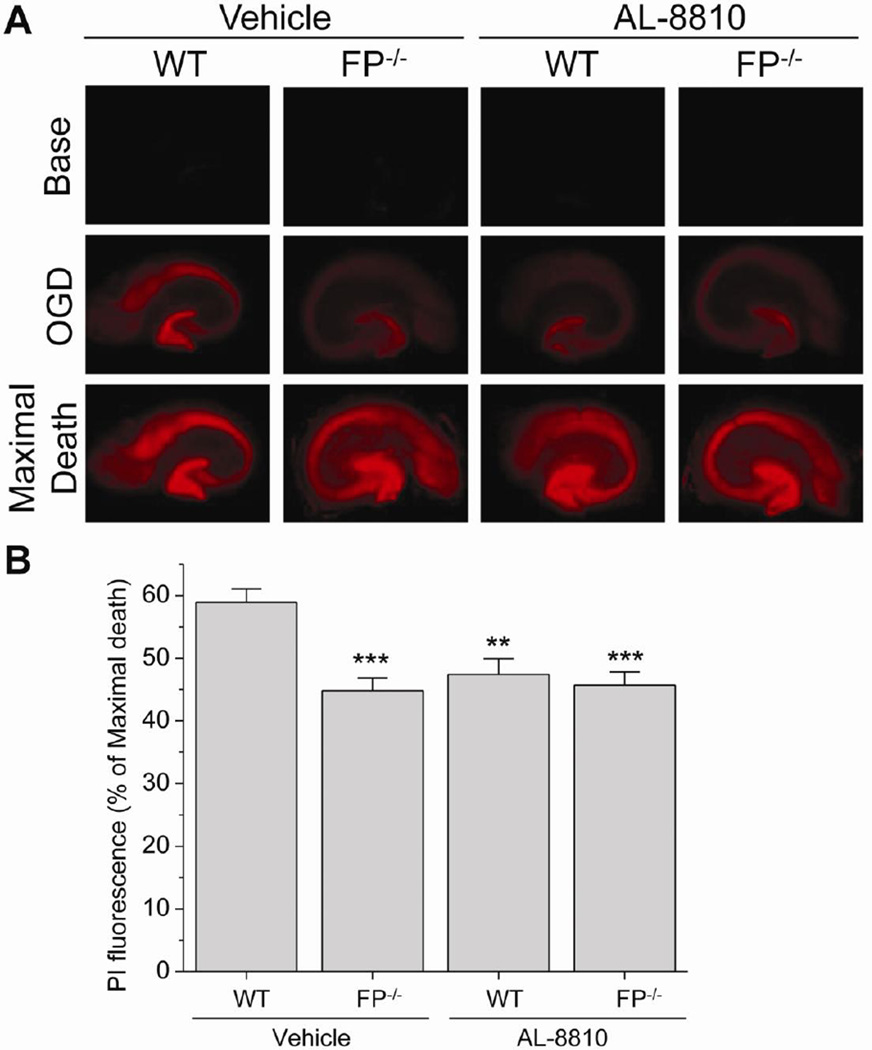
AL-8810 antagonizes the response to 100 nM fluprostenol with a Ki of 426 ± 63 nM in A7r5 cells. In h-TM cells, it antagonizes fluprostenol-induced PI turnover with a Ki of 2.56 ± 0.62 µM. In HCM cells, 1 µM AL-8810 blocks 85% of PGF2α-induced MMP-2 secretion and 66% of PGF2α-induced activation of ERK1/2. It also antagonizes bimatoprost, travoprost acid, and latanoprost acid.
|
| ln Vivo |
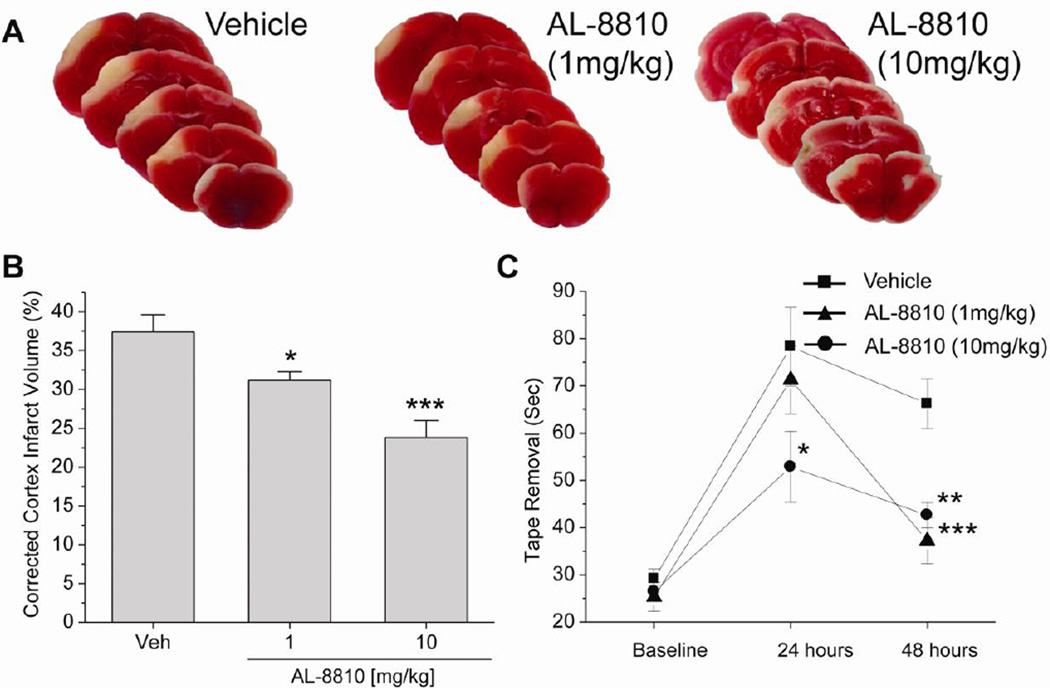
In vivo, AL-8810 has been studied for its effects on FP receptor-mediated functions including smooth muscle contraction and regulation of blood pressure and renal function. As a selective FP receptor antagonist, it is used to study the physiological and pathological roles of prostaglandin F2α signaling. Detailed in vivo efficacy data are limited in publicly available sources.
|
| Enzyme Assay |
In vitro receptor binding assays for AL-8810 involve competition binding experiments using radiolabeled PGF2α or FP receptor ligands. Membranes are prepared from cells expressing the FP receptor, such as A7r5 cells or Swiss mouse 3T3 fibroblasts. AL-8810 is incubated at varying concentrations, and bound radioactivity is measured. Ki values are calculated from displacement curves.
|
| Cell Assay |
Cellular assays for AL-8810 involve culturing cells expressing the FP receptor, such as A7r5 rat thoracic aorta smooth muscle cells, Swiss mouse 3T3 fibroblasts, h-TM cells, or HCM cells. Cells are treated with AL-8810 and stimulated with FP receptor agonists such as fluprostenol or PGF2α. Phosphoinositide turnover, calcium mobilization, MMP-2 secretion, and ERK1/2 activation are measured.
|
| Animal Protocol |
In vivo animal studies for AL-8810 are not extensively documented in publicly available sources. When performed, they typically involve administration in rodent models to assess effects on FP receptor-mediated functions such as smooth muscle contraction, blood pressure regulation, and renal function. Dosing regimens vary depending on the study objectives.
|
| ADME/Pharmacokinetics |
AL-8810 has a molecular weight of 402.5 and a molecular formula of C24H31FO4. It is soluble in DMSO at 10 mg/mL. The compound should be stored as a powder at -20°C for up to 3 years or at 4°C for up to 2 years. It is typically supplied as a solid with a purity of ≥98%.
|
| Toxicity/Toxicokinetics |
AL-8810 is generally considered safe for research use at appropriate concentrations. Comprehensive toxicological data are limited. The compound is intended for research use only and is not approved for human therapeutic applications. Standard laboratory safety precautions should be taken when handling the compound.
|
| References |
|
| Additional Infomation |
AL 8810 is a long-chain fatty acid.
AL-8810 is an 11β-fluoro analog of PGF2α that acts as a selective antagonist of the FP receptor. It has weak intrinsic agonist activity in the 200-300 nM range. The compound is used to study FP receptor-mediated functions including smooth muscle contraction, blood pressure regulation, and renal function. It is not approved for clinical use and is available for research purposes only. |
| Molecular Formula |
C24H31O4F
|
|---|---|
| Molecular Weight |
402.49894
|
| Exact Mass |
402.22
|
| CAS # |
246246-19-5
|
| Related CAS # |
(S)-AL-8810; 1224444-55-6
|
| PubChem CID |
5311238
|
| Appearance |
White to off-white solid powder
|
| Density |
1.2±0.1 g/cm3
|
| Boiling Point |
594.6±50.0 °C at 760 mmHg
|
| Flash Point |
313.4±30.1 °C
|
| Vapour Pressure |
0.0±1.8 mmHg at 25°C
|
| Index of Refraction |
1.584
|
| LogP |
4
|
| Hydrogen Bond Donor Count |
3
|
| Hydrogen Bond Acceptor Count |
5
|
| Rotatable Bond Count |
9
|
| Heavy Atom Count |
29
|
| Complexity |
575
|
| Defined Atom Stereocenter Count |
5
|
| SMILES |
C1[C@@H]([C@@H]([C@H]([C@H]1F)/C=C/[C@@H](C2CC3=CC=CC=C3C2)O)C/C=C\CCCC(=O)O)O
|
| InChi Key |
WTYSXBKKVNOOIX-JTGCGUAKSA-N
|
| InChi Code |
InChI=1S/C24H31FO4/c25-21-15-23(27)20(9-3-1-2-4-10-24(28)29)19(21)11-12-22(26)18-13-16-7-5-6-8-17(16)14-18/h1,3,5-8,11-12,18-23,26-27H,2,4,9-10,13-15H2,(H,28,29)/b3-1-,12-11+/t19-,20-,21+,22+,23+/m1/s1
|
| Chemical Name |
(Z)-7-[(1R,2R,3S,5S)-2-[(E,3R)-3-(2,3-dihydro-1H-inden-2-yl)-3-hydroxyprop-1-enyl]-3-fluoro-5-hydroxycyclopentyl]hept-5-enoic acid
|
| HS Tariff Code |
2934.99.9001
|
| Storage |
Powder -20°C 3 years 4°C 2 years In solvent -80°C 6 months -20°C 1 month |
| Shipping Condition |
Room temperature (This product is stable at ambient temperature for a few days during ordinary shipping and time spent in Customs)
|
| Solubility (In Vitro) |
DMSO: ≥ 10 mg/mL (~24.8 mM)
|
|---|---|
| Solubility (In Vivo) |
Note: Listed below are some common formulations that may be used to formulate products with low water solubility (e.g. < 1 mg/mL), you may test these formulations using a minute amount of products to avoid loss of samples.
Injection Formulations
Injection Formulation 1: DMSO : Tween 80: Saline = 10 : 5 : 85 (i.e. 100 μL DMSO stock solution → 50 μL Tween 80 → 850 μL Saline)(e.g. IP/IV/IM/SC) *Preparation of saline: Dissolve 0.9 g of sodium chloride in 100 mL ddH ₂ O to obtain a clear solution. Injection Formulation 2: DMSO : PEG300 :Tween 80 : Saline = 10 : 40 : 5 : 45 (i.e. 100 μL DMSO → 400 μLPEG300 → 50 μL Tween 80 → 450 μL Saline) Injection Formulation 3: DMSO : Corn oil = 10 : 90 (i.e. 100 μL DMSO → 900 μL Corn oil) Example: Take the Injection Formulation 3 (DMSO : Corn oil = 10 : 90) as an example, if 1 mL of 2.5 mg/mL working solution is to be prepared, you can take 100 μL 25 mg/mL DMSO stock solution and add to 900 μL corn oil, mix well to obtain a clear or suspension solution (2.5 mg/mL, ready for use in animals). View More
Injection Formulation 4: DMSO : 20% SBE-β-CD in saline = 10 : 90 [i.e. 100 μL DMSO → 900 μL (20% SBE-β-CD in saline)] Oral Formulations
Oral Formulation 1: Suspend in 0.5% CMC Na (carboxymethylcellulose sodium) Oral Formulation 2: Suspend in 0.5% Carboxymethyl cellulose Example: Take the Oral Formulation 1 (Suspend in 0.5% CMC Na) as an example, if 100 mL of 2.5 mg/mL working solution is to be prepared, you can first prepare 0.5% CMC Na solution by measuring 0.5 g CMC Na and dissolve it in 100 mL ddH2O to obtain a clear solution; then add 250 mg of the product to 100 mL 0.5% CMC Na solution, to make the suspension solution (2.5 mg/mL, ready for use in animals). View More
Oral Formulation 3: Dissolved in PEG400 (Please use freshly prepared in vivo formulations for optimal results.) |
| Preparing Stock Solutions | 1 mg | 5 mg | 10 mg | |
| 1 mM | 2.4845 mL | 12.4224 mL | 24.8447 mL | |
| 5 mM | 0.4969 mL | 2.4845 mL | 4.9689 mL | |
| 10 mM | 0.2484 mL | 1.2422 mL | 2.4845 mL |
*Note: Please select an appropriate solvent for the preparation of stock solution based on your experiment needs. For most products, DMSO can be used for preparing stock solutions (e.g. 5 mM, 10 mM, or 20 mM concentration); some products with high aqueous solubility may be dissolved in water directly. Solubility information is available at the above Solubility Data section. Once the stock solution is prepared, aliquot it to routine usage volumes and store at -20°C or -80°C. Avoid repeated freeze and thaw cycles.
Calculation results
Working concentration: mg/mL;
Method for preparing DMSO stock solution: mg drug pre-dissolved in μL DMSO (stock solution concentration mg/mL). Please contact us first if the concentration exceeds the DMSO solubility of the batch of drug.
Method for preparing in vivo formulation::Take μL DMSO stock solution, next add μL PEG300, mix and clarify, next addμL Tween 80, mix and clarify, next add μL ddH2O,mix and clarify.
(1) Please be sure that the solution is clear before the addition of next solvent. Dissolution methods like vortex, ultrasound or warming and heat may be used to aid dissolving.
(2) Be sure to add the solvent(s) in order.
|
|
|
Products are for research use only; We do not sell to patients
Copyright 2020 InvivoChem LLC | All Rights Reserved