
| Size | Price | Stock | Qty |
|---|---|---|---|
| 50mg |
|
||
| 100mg |
|
||
| Other Sizes |


| Targets |
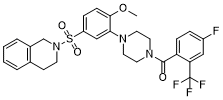
BT44 targets the RET receptor tyrosine kinase, which plays critical roles in neuronal survival, regeneration, and development. It is a selective RET activator and a small molecule mimetic of glial cell line-derived neurotrophic factor (GDNF). By activating RET, BT44 promotes neuronal survival and regeneration, making it a promising lead compound for the treatment of neurodegenerative disorders. BT44 can penetrate the blood-brain barrier, enabling central nervous system applications.
|
|---|---|
| ln Vitro |
In recipient cells that express GFL, BT44 (7.5-75 μM; 15 min) selectively activates downstream pathways and increases RET phosphorylation [1]. BT44 (0.5-10 μM; 16–20 h) boosting sensory neurons was examined using Western blot analysis [1].
In vitro, BT44 (7.5-75 μM; 15 minutes) promotes RET phosphorylation and selectively activates downstream cascades in cells expressing GFL receptors. It is a selective RET activator that mimics the effects of GDNF. These in vitro properties make BT44 a valuable tool for studying RET-mediated signaling pathways and their roles in neuronal survival, regeneration, and diabetes. |
| ln Vivo |
BT44 (5-25 mg/kg; sc; every two days for 10, 42, or 14 days) attenuates sensory signs in neurogenic SNL and STZ models [1]. Once every two days for 10 days) has a protective effect on IB4-positive neurons in DRGs of experimental nerve-damaged animals [1]. BT44 (0.1 and 0.3 μg/24 hours; injected into the right dorsal striatum for 14 days) restores amphetamine-induced motor balance in the 6-OHDA Parkinson model and appears to protect dopaminergic fibers in the striatum [2]. BT44 (10 mg/kg; iv) crosses the blood-brain barrier and is rapidly eliminated from the circulation (half-life (t1/2) = 0.72 h) and brain (t1/2 = 0.47 h) in the stent [2].
In vivo, BT44 can penetrate the blood-brain barrier and can be used for research of neurodegenerative disorders and diabetes mellitus. As a GDNF mimetic and RET activator, it promotes neuronal survival and regeneration, making it a lead compound for the treatment of neurodegenerative diseases. However, detailed in vivo efficacy data are limited in publicly available sources. |
| Enzyme Assay |
The in vitro enzyme/receptor binding assay for BT44 involves measuring its activation of RET kinase activity. Cells expressing RET are treated with BT44 at various concentrations, and RET phosphorylation is assessed by Western blot using phospho-specific antibodies against RET or downstream signaling proteins (e.g., AKT, ERK, PLCγ). Kinase activity can also be measured using recombinant RET in kinase assays with peptide substrates and ATP. Binding affinity to RET can be assessed using surface plasmon resonance.
|
| Cell Assay |
Western Blot Analysis[1]
Cell Types: GFRα3 transfected MG87RET cells Tested Concentrations: 7.5, 18, 35 and 75 μM Incubation Duration: 15 minutes Experimental Results: Increased phosphorylation of RET and ERK. The in vitro cell-based assay for BT44 involves culturing cells expressing GFL receptors (e.g., RET) and treating them with the compound to assess effects on RET signaling and cell survival. Cells are treated with BT44 at various concentrations (7.5-75 μM) for 15 minutes, and RET phosphorylation and downstream signaling (AKT, ERK, PLCγ) are assessed by Western blot. Cell survival and neurite outgrowth can be assessed in neuronal cell cultures. Cell viability is assessed using MTT or CellTiter-Glo assays. |
| Animal Protocol |
Animal/Disease Models: Wistar rat, spinal nerve ligation (SNL) and streptozotocin (STZ)-induced diabetes model [1]
Doses: 5, 12.5 or 25 mg/kg Route of Administration: subcutaneous injection, once every other day, Results for 10, 42 or 14 days: Reduction of mechanical allodynia in SNL animals. Treatment at the 5 mg/kg dose diminished mechanical hyperalgesia in STZ-treated animals, whereas the 12.5 mg/kg dose had no effect. The concentration of 5 mg/kg diminished cold allodynia in animals treated with STZ during the first two weeks, while the effect of 12.5 mg/kg was not significant. Animal/Disease Models: Wistar rat, SNL-induced diabetes model [1] Doses: 12.5 or 25 mg/kg Route of Administration: subcutaneous injection, once every other day for 10 days Experimental Results: resulted in a significant increase in the number of IB4-expressing neurons. Side DRG. A dose of 12.5 mg/kg protected IB4-positive neurons from SNL-induced damage. In vivo animal studies for BT44 have not been extensively reported. If conducted, such studies might involve mouse models of neurodegenerative disorders (e.g., Parkinson's disease, ALS) or diabetes. BT44 would be administered orally or intraperitoneally, and behavioral, biochemical, and histological endpoints would be assessed. Standard protocols for neurodegenerative disease or diabetes models would be employed. No specific data are available. |
| ADME/Pharmacokinetics |
BT44 is a small molecule that can penetrate the blood-brain barrier, making it suitable for central nervous system research. It has a molecular weight of 577.59 and a molecular formula of C28H27F4N3O4S. The compound is soluble in DMSO and can be formulated for in vivo administration. Detailed PK parameters such as half-life, Cmax, and bioavailability are not available from publicly accessible sources.
|
| Toxicity/Toxicokinetics |
The toxicity profile of BT44 has not been systematically evaluated. As a RET activator and GDNF mimetic, its primary safety concerns would relate to on-target effects on neuronal survival and proliferation. Standard toxicology assessments would include acute and sub-chronic toxicity studies in rodents, with endpoints including clinical signs, body weight, clinical pathology, and histopathology. No specific toxicity data are available.
|
| References | |
| Additional Infomation |
BT44 is a research compound and has not been approved for clinical use. It is a novel, second-generation GDNF mimetic and selective RET activator that promotes RET phosphorylation and selectively activates downstream cascades. BT44 can penetrate the blood-brain barrier and can be used for research of neurodegenerative disorders and diabetes mellitus. It is a promising lead compound for the treatment of neurodegenerative diseases.
|
| Molecular Formula |
C28H27F4N3O4S
|
|---|---|
| Molecular Weight |
577.59
|
| Exact Mass |
577.17
|
| Elemental Analysis |
C, 58.23; H, 4.71; F, 13.16; N, 7.28; O, 11.08; S, 5.55
|
| CAS # |
924759-42-2
|
| Related CAS # |
924759-42-2;
|
| PubChem CID |
46088367
|
| Appearance |
White to off-white solid powder
|
| LogP |
4.6
|
| Hydrogen Bond Donor Count |
0
|
| Hydrogen Bond Acceptor Count |
10
|
| Rotatable Bond Count |
5
|
| Heavy Atom Count |
40
|
| Complexity |
985
|
| Defined Atom Stereocenter Count |
0
|
| SMILES |
COC1=C(C=C(C=C1)S(=O)(=O)N2CCC3=CC=CC=C3C2)N4CCN(CC4)C(=O)C5=C(C=C(C=C5)F)C(F)(F)F
|
| InChi Key |
MFQBJWVTKPJNEP-UHFFFAOYSA-N
|
| InChi Code |
InChI=1S/C28H27F4N3O4S/c1-39-26-9-7-22(40(37,38)35-11-10-19-4-2-3-5-20(19)18-35)17-25(26)33-12-14-34(15-13-33)27(36)23-8-6-21(29)16-24(23)28(30,31)32/h2-9,16-17H,10-15,18H2,1H3
|
| Chemical Name |
(4-(5-((3,4-Dihydroisoquinolin-2(1H)-yl)sulfonyl)-2-methoxyphenyl)piperazin-1-yl)(4-fluoro-2-(trifluoromethyl)phenyl)methanone
|
| Synonyms |
BT44; BT-44; BT 44
|
| HS Tariff Code |
2934.99.9001
|
| Storage |
Powder -20°C 3 years 4°C 2 years In solvent -80°C 6 months -20°C 1 month |
| Shipping Condition |
Room temperature (This product is stable at ambient temperature for a few days during ordinary shipping and time spent in Customs)
|
| Solubility (In Vitro) |
DMSO : ~62.5 mg/mL (~108.21 mM)
|
|---|---|
| Solubility (In Vivo) |
Note: Listed below are some common formulations that may be used to formulate products with low water solubility (e.g. < 1 mg/mL), you may test these formulations using a minute amount of products to avoid loss of samples.
Injection Formulations
Injection Formulation 1: DMSO : Tween 80: Saline = 10 : 5 : 85 (i.e. 100 μL DMSO stock solution → 50 μL Tween 80 → 850 μL Saline)(e.g. IP/IV/IM/SC) *Preparation of saline: Dissolve 0.9 g of sodium chloride in 100 mL ddH ₂ O to obtain a clear solution. Injection Formulation 2: DMSO : PEG300 :Tween 80 : Saline = 10 : 40 : 5 : 45 (i.e. 100 μL DMSO → 400 μLPEG300 → 50 μL Tween 80 → 450 μL Saline) Injection Formulation 3: DMSO : Corn oil = 10 : 90 (i.e. 100 μL DMSO → 900 μL Corn oil) Example: Take the Injection Formulation 3 (DMSO : Corn oil = 10 : 90) as an example, if 1 mL of 2.5 mg/mL working solution is to be prepared, you can take 100 μL 25 mg/mL DMSO stock solution and add to 900 μL corn oil, mix well to obtain a clear or suspension solution (2.5 mg/mL, ready for use in animals). View More
Injection Formulation 4: DMSO : 20% SBE-β-CD in saline = 10 : 90 [i.e. 100 μL DMSO → 900 μL (20% SBE-β-CD in saline)] Oral Formulations
Oral Formulation 1: Suspend in 0.5% CMC Na (carboxymethylcellulose sodium) Oral Formulation 2: Suspend in 0.5% Carboxymethyl cellulose Example: Take the Oral Formulation 1 (Suspend in 0.5% CMC Na) as an example, if 100 mL of 2.5 mg/mL working solution is to be prepared, you can first prepare 0.5% CMC Na solution by measuring 0.5 g CMC Na and dissolve it in 100 mL ddH2O to obtain a clear solution; then add 250 mg of the product to 100 mL 0.5% CMC Na solution, to make the suspension solution (2.5 mg/mL, ready for use in animals). View More
Oral Formulation 3: Dissolved in PEG400 (Please use freshly prepared in vivo formulations for optimal results.) |
| Preparing Stock Solutions | 1 mg | 5 mg | 10 mg | |
| 1 mM | 1.7313 mL | 8.6567 mL | 17.3133 mL | |
| 5 mM | 0.3463 mL | 1.7313 mL | 3.4627 mL | |
| 10 mM | 0.1731 mL | 0.8657 mL | 1.7313 mL |
*Note: Please select an appropriate solvent for the preparation of stock solution based on your experiment needs. For most products, DMSO can be used for preparing stock solutions (e.g. 5 mM, 10 mM, or 20 mM concentration); some products with high aqueous solubility may be dissolved in water directly. Solubility information is available at the above Solubility Data section. Once the stock solution is prepared, aliquot it to routine usage volumes and store at -20°C or -80°C. Avoid repeated freeze and thaw cycles.
Calculation results
Working concentration: mg/mL;
Method for preparing DMSO stock solution: mg drug pre-dissolved in μL DMSO (stock solution concentration mg/mL). Please contact us first if the concentration exceeds the DMSO solubility of the batch of drug.
Method for preparing in vivo formulation::Take μL DMSO stock solution, next add μL PEG300, mix and clarify, next addμL Tween 80, mix and clarify, next add μL ddH2O,mix and clarify.
(1) Please be sure that the solution is clear before the addition of next solvent. Dissolution methods like vortex, ultrasound or warming and heat may be used to aid dissolving.
(2) Be sure to add the solvent(s) in order.
Products are for research use only; We do not sell to patients
Copyright 2020 InvivoChem LLC | All Rights Reserved


