| Size | Price | Stock | Qty |
|---|---|---|---|
| 100mg |
|
||
| 500mg |
|
||
| 1g |
|
||
| 2g |
|
||
| 5g |
|
||
| 10g |
|
||
| 25g |
|
||
| 50g | |||
| Other Sizes |


Purity: ≥98%
| Targets |
VEGFR3 (IC50 = 20 nM); Braf (IC50 = 22 nM); Raf-1 (IC50 = 6 nM); VEGFR2 (IC50 = 90 nM); PDGFRβ (IC50 = 57 nM); BrafV599E (IC50 = 38 nM); c-Kit (IC50 = 68 nM); Flt3 (IC50 = 58 nM)
Sorafenib Tosylate (Bay 43-9006; Nexavar) is a multi-targeted kinase inhibitor. It inhibits RAF family kinases: B-RAF (IC₅₀ = 22 nM), C-RAF (IC₅₀ = 28 nM); receptor tyrosine kinases: vascular endothelial growth factor receptor 2 (VEGFR2, IC₅₀ = 90 nM), platelet-derived growth factor receptor β (PDGFRβ, IC₅₀ = 57 nM), and c-KIT (IC₅₀ = 68 nM) [1] |
|---|---|
| ln Vitro |
Sorafenib Tosylate also inhibits BRAFwt (IC50=22 nM), BRAFV599E (IC50=38 nM), VEGFR-2 (IC50=90 nM), VEGFR-3 (IC50=20 nM), PDGFR-β (IC50=57 nM), c-KIT (IC50=68 nM), and Flt3 (IC50=58 nM) in biochemical assays[1].
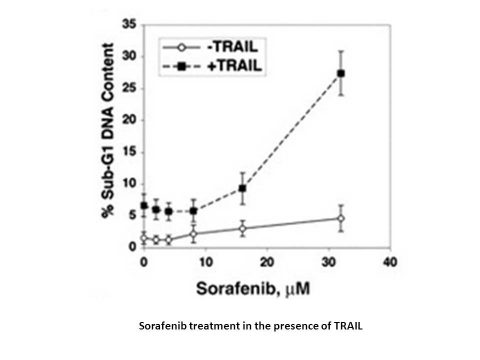
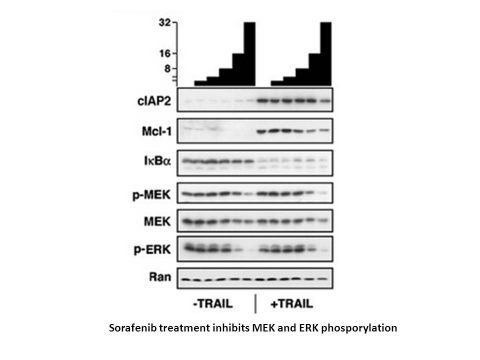
Sorafenib Tosylate-induced phosphorylation of c-Met, p70S6K and 4EBP1 is significantly decreased when anti-human anti-HGF antibody is also given to 10-0505 cells, indicating that sorafenib tosylate treatment increases HGF secretion and activates c-Met and mTOR targets[2]. Antiproliferative Activity in Multiple Tumor Cells: In human tumor cell lines, Sorafenib Tosylate (Bay 43-9006; Nexavar) (0.1–10 μM) concentration-dependently inhibits proliferation: A375 (melanoma, B-RAF mutant) IC₅₀ = 0.6 μM, HT-29 (colorectal cancer) IC₅₀ = 5.2 μM, HepG2 (hepatocellular carcinoma, HCC) IC₅₀ = 7.0 μM. It also reduces phosphorylation of ERK1/2 (by 75% at 2 μM) in A375 cells, blocking the RAF/MEK/ERK pathway [1] - HCC Cell Growth Inhibition: In HepG2 cells, Sorafenib Tosylate (Bay 43-9006; Nexavar) (1–10 μM) inhibits cell growth with IC₅₀ = 7.2 μM; co-treatment with rapamycin (0.1 μM) reduces IC₅₀ to 2.5 μM, synergistically suppressing proliferation. Western blot shows reduced p-mTOR (by 60%) and p-ERK (by 80%) in the combination group [2] - Anti-Angiogenic Activity: In human umbilical vein endothelial cells (HUVECs), Sorafenib Tosylate (Bay 43-9006; Nexavar) (0.1–5 μM) inhibits VEGF-induced migration (IC₅₀ = 0.8 μM) and tube formation (reduced by 90% at 2 μM). It also decreases phosphorylation of VEGFR2 (by 85% at 1 μM) [1] - Apoptosis Induction in HCC Cells: In Hep3B cells, Sorafenib Tosylate (Bay 43-9006; Nexavar) (5 μM) alone induces apoptosis in 18% of cells; co-treatment with valproic acid (VPA, 2 mM) increases apoptosis to 45%. This is accompanied by downregulation of Notch3 (by 70%) and pAkt (by 65%) (Western blot) [4] |
| ln Vivo |
Sorafenib Tosylate (10, 30, 50 and 100 mg/kg, orally) treatment inhibits the tumor growth of 06-0606 and 10-0505 xenografts in a dose-dependent manner (P<0.01). Sorafenib also significantly slows down the growth of the xenografts 06-0606 and 10-0505. The weights of 06-0606 tumors in mice receiving Sorafenib 50 mg/kg and 100 mg/kg treatments are roughly 13% and 5% of the controls, respectively. Sorafenib 50 mg dose significantly reduces tumor growth in mice with lines 5-1318, 26-1004, and 10-0505 (P<0.01). For a 50 mg dose, the T/C ratio for the 06-0606, 26-1004, 5-1318, and 10-0505 xenografts is 0.13, 0.10, 0.12, and 0.49, respectively, where T and C are the median weight (mg) of Sorafenib- and vehicle-treated tumors at the end of the treatment[2]. Compared to 100% in the normal control group, the survival rate is 73.3% in the Diethyl Nitrosamine (DENA) group and 83.3% in the Sorafenib group. While the treatment with Sorafenib results in a significant decrease (p<0.05) in liver index when compared to the DENA group, the DENA group exhibits a significant increase in liver index (1.51-fold increase, p<0.05) in comparison to the normal control group. The liver index significantly drops to a lower value in the Sorafenib group compared to the normal control group[3].
Xenograft Models of Multiple Cancers: In nude mice bearing A375 melanoma xenografts, oral Sorafenib Tosylate (Bay 43-9006; Nexavar) (30, 60, 100 mg/kg/day, q.d.) dose-dependently inhibits tumor growth: 100 mg/kg reduces tumor volume by 80% at day 21 vs. vehicle, with no significant weight loss. In HT-29 colorectal xenografts, 60 mg/kg/day inhibits tumor growth by 65% [1] - Mouse HCC Model: In C57BL/6 mice with diethylnitrosamine (DEN)-induced HCC, oral Sorafenib Tosylate (Bay 43-9006; Nexavar) (30 mg/kg/day, q.d.) for 4 weeks reduces tumor volume by 35% vs. vehicle. Co-administration with rapamycin (2 mg/kg/day, i.p.) increases inhibition to 60% and reduces intratumoral microvessel density (by 50%, CD31 staining) [2] - Rat HCC Prevention Model: In F344 rats treated with DEN to induce liver neoplasia, oral Sorafenib Tosylate (Bay 43-9006; Nexavar) (10 mg/kg/day, q.d.) for 12 weeks reduces the number of hepatic tumor nodules (from 8.5 to 3.2 per liver) and decreases nodule size (by 40%). It also reduces oxidative stress markers (MDA levels by 30%) [3] - Hep3B Xenograft Model: In nude mice bearing Hep3B HCC xenografts, oral Sorafenib Tosylate (Bay 43-9006; Nexavar) (50 mg/kg/day, q.d.) inhibits tumor growth by 40% at day 28. Combination with VPA (200 mg/kg/day, i.p.) increases inhibition to 75% and prolongs median survival from 32 days to 50 days [4] |
| Enzyme Assay |
Assay buffer, which contains 20 mM Tris (pH 8.2), 100 mM NaCl, 5 mM MgCl2, and 0.15% β-mercaptoethanol, is used to combine Raf-1 (80 ng), wt BRAF (80 ng), or V599E BRAF (80 ng) with MEK-1 (1 μg) to test compound inhibition against different RAF kinase isoforms. After adding 25 μL of 10 μM γ-[33P]ATP (400 Ci/mol) to the 50 μL final volume of the RAF kinase assay, it is incubated at 32°C for 25 minutes. By filtration onto a phosphocellulose mat, phosphorylated MEK-1 is obtained. Unbound radioactivity is then removed using 1% phosphoric acid. Utilizing a β-plate counter, filter-bound radioactivity is measured after drying by microwave heating[1].
BRAF/CRAF Kinase Assay: Recombinant human B-RAF (50 ng/well) or C-RAF (50 ng/well) was incubated in kinase buffer (50 mM Tris-HCl pH 7.5, 10 mM MgCl₂, 1 mM DTT, 20 μM ATP) with a biotinylated MEK1 peptide (substrate, 1 μM) and various concentrations of Sorafenib Tosylate (Bay 43-9006; Nexavar) (0.001–100 μM) at 30°C for 60 min. Phosphorylated substrate was detected via HTRF (Eu-labeled anti-phospho-MEK antibody + streptavidin-APC). Kinase activity was normalized to vehicle, and IC₅₀ values were calculated [1] - VEGFR2 Kinase Assay: Recombinant human VEGFR2 (40 ng/well) was incubated in kinase buffer (25 mM HEPES pH 7.4, 5 mM MnCl₂, 1 mM DTT, 10 μM ATP) with a biotinylated KKKSPGEYVNIEFG peptide (substrate, 2 μM) and Sorafenib Tosylate (Bay 43-9006; Nexavar) (0.01–100 μM) at 37°C for 45 min. Radioactive detection (³²P-ATP incorporation) was used to measure kinase activity; IC₅₀ was determined by nonlinear regression [1] |
| Cell Assay |
The 10-0505, 06-0606, and 26-1004 tumors are finely minced and thoroughly washed three times in modified Eagle medium (MEM). Centrifuging at 800× g for 10 min is used to collect the cells. For 48 hours, cells are treated with 3 or 6 μM of sorafenib in serum-free MEM in the presence or absence of 5 μg/mL anti-human hepatocyte growth factor (HGF) antibody. Western blotting is used to determine the amount of HGF secreted in the conditioned medium after 2 mL of conditioned medium from animals treated with Sorafenib or the vehicle (without anti-human antibody) was collected and concentrated[2].
Tumor Cell Proliferation Assay: A375/HT-29/HepG2 cells were seeded in 96-well plates (5×10³ cells/well) in DMEM + 10% FBS. After 24 h adhesion, Sorafenib Tosylate (Bay 43-9006; Nexavar) (0.1–10 μM) ± rapamycin/VPA was added, and cells were incubated for 72 h. Cell viability was measured via MTT assay (absorbance at 570 nm), and IC₅₀ values were calculated. For Western blot, cells were lysed, and lysates were probed with anti-p-ERK, anti-p-mTOR, anti-Notch3, or anti-pAkt antibodies [1,2,4] - HUVEC Migration Assay: HUVECs were seeded in the upper chamber of Transwell inserts (8 μm pores) in serum-free EBM-2 medium. The lower chamber contained EBM-2 + VEGF (50 ng/mL) ± Sorafenib Tosylate (Bay 43-9006; Nexavar) (0.1–5 μM). After 6 h incubation at 37°C, cells on the upper surface were removed; migrated cells on the lower surface were fixed, stained with crystal violet, and counted [1] - HCC Cell Apoptosis Assay: Hep3B cells were seeded in 24-well plates (1×10⁵ cells/well) and treated with Sorafenib Tosylate (Bay 43-9006; Nexavar) (5 μM) ± VPA (2 mM) for 48 h. Cells were harvested, stained with Annexin V-FITC and propidium iodide (PI), and analyzed via flow cytometry. The percentage of apoptotic cells (Annexin V⁺/PI⁻ and Annexin V⁺/PI⁺) was calculated [4] |
| Animal Protocol |
Mice: Four doses of sorafenib (10, 30, 50, and 100 mg/kg daily) are given orally to mice with the 06-0606 and 10-0505 xenografts for a dose-response experiment. The number of mice in each treatment group was five. Mice with tumors are given sorafenib 50 mg/kg orally once a day for 12 days in order to study the antitumor effects of the drug. Each experiment is repeated at least twice, and there are 14 animals in each treatment group. Seven days after the tumor was implanted, treatment began. The HCC xenografts had grown to a size of about 100 mm3 by this point. Mice with tumors (14 per group) are given 200 μL of vehicle, 50 mg/kg of Sorafenib, 1 mg/kg of Rapamycin, or Rapamycin plus Sorafenib orally once daily for the specified days in order to study the effects of Rapamycin plus Sorafenib on the growth of 10-0505 xenograft. Vernier caliper measurements of the tumor's length and width are used to track tumor growth at least twice per week. The formula for calculating tumor volume is [length×width2×π/6]. The mice are killed at the conclusion of the experiment, their body weights and tumor weights are noted, and the tumors are collected for examination.
Rats: Male albino rats weighing 100–120 g are used in the experiment. Following the acclimatization period, rats are weighed and divided into three groups at random: For eight weeks, the vehicle is given daily to Group 1 (a normal control group; n = 10). 200 mg/kg of DENA is administered intravenously to Group 2 (the DENA group; n=15). Group 3 (Sorafenib group; n=12) receives Sorafenib orally twice daily for two weeks following DENA intravenously. Rats are weighed, put to sleep with ether, killed after the experiment (8 weeks), and then their livers are dissected. Two rounds of ice-cold saline washing and drying are performed on fresh liver before weighing. The formula for calculating liver index is liver weight (g)/final body weight (g) x 100. Five portions of the liver are removed, one of which is preserved in 10% formalin for histopathological analysis while the other four are immediately frozen in liquid nitrogen and kept at 80°C.
A375/HT-29 Xenograft Protocol: Female nude mice (6–7 weeks old) were subcutaneously injected with A375 (5×10⁶ cells/mouse) or HT-29 (1×10⁷ cells/mouse) into the right flank. When tumors reached 100 mm³, mice were randomized into 4 groups (n=7/group): Vehicle (0.5% methylcellulose + 0.2% Tween 80, p.o.), Sorafenib Tosylate 30 mg/kg (p.o., q.d.), 60 mg/kg (p.o., q.d.), 100 mg/kg (p.o., q.d.). Drugs were administered daily for 21 days. Tumor volume (V = π×L×W²/6) and body weight were measured every 3 days [1] - DEN-Induced Mouse HCC Protocol: Male C57BL/6 mice (4 weeks old) were injected with DEN (25 mg/kg, i.p.) once to induce HCC. At week 16, mice were divided into 3 groups (n=8/group): Vehicle, Sorafenib Tosylate 30 mg/kg (p.o., q.d.), Sorafenib Tosylate 30 mg/kg + rapamycin 2 mg/kg (i.p., q.d.). Treatment lasted 4 weeks. Tumors were excised, weighed, and stained for CD31 to assess microvessel density [2] - Rat HCC Prevention Protocol: Male F344 rats (6 weeks old) were given DEN (100 mg/kg, i.p.) once. At week 8, rats were randomized into 2 groups (n=10/group): Vehicle, Sorafenib Tosylate 10 mg/kg (p.o., q.d.). Treatment continued for 12 weeks. Livers were removed, and tumor nodules were counted and measured. Hepatic MDA levels were detected to assess oxidative stress [3] - Hep3B Xenograft Protocol: Female nude mice (6 weeks old) were subcutaneously injected with Hep3B cells (2×10⁶ cells/mouse). When tumors reached 120 mm³, mice were divided into 3 groups (n=6/group): Vehicle, Sorafenib Tosylate 50 mg/kg (p.o., q.d.), Sorafenib Tosylate 50 mg/kg + VPA 200 mg/kg (i.p., q.d.). Treatment lasted 28 days. Tumor volume was measured every 3 days, and survival was monitored [4] |
| ADME/Pharmacokinetics |
Oral absorption: In healthy volunteers (n=6), oral administration of sorafenib tosylate (Bay 43-9006; Nexavar) (400 mg) reached a peak plasma concentration (Cmax) of 2.8 μg/mL in 3-4 hours (Tmax), with an absolute oral bioavailability of 38-49% (partial first-pass metabolism) [1]
- Metabolism: Sorafenib tosylate (Bay 43-9006; Nexavar) is mainly metabolized in the liver by cytochrome P450 enzyme CYP3A4 (major) and UDP-glucuronyl transferase UGT1A9 (minor), forming inactive metabolites (e.g., M2, M4). No significant metabolism of CYP2D6 or CYP2C9 was observed [1] - Excretion and half-life: In humans, the terminal elimination half-life (t₁/₂) of sorafenib tosylate (Bay 43-9006; Nexavar) is 24–48 hours. Approximately 77% of the administered dose is excreted in feces within 7 days (69% as metabolites, 8% as the original drug), and 19% is excreted in urine (15% as metabolites, 4% as the original drug) [1] - Tissue distribution: In nude mice, 4 hours after oral administration of sorafenib tosylate (Bay 43-9006; Nexavar) (100 mg/kg), the tumor/plasma concentration ratio reached 1.3, and the tumor concentration remained higher than the IC₅₀ of A375 cells for 12 hours [1] |
| Toxicity/Toxicokinetics |
Effects During Pregnancy and Lactation
◉ Overview of Use During Lactation There is currently no information on the clinical use of sorafenib during lactation. Because sorafenib binds to plasma proteins at a rate of up to 99.5%, its concentration in breast milk may be very low. However, its half-life is 25 to 48 hours, so it may accumulate in the infant. The manufacturer recommends discontinuing breastfeeding during sorafenib treatment and for two weeks after the last dose. ◉ Effects on Breastfed Infants No published information found as of the revision date. ◉ Effects on Lactation and Breast Milk No published information found as of the revision date. Plasma protein binding: In human plasma (as determined by ultrafiltration), sorafenib tosylate (Bay 43-9006; Nexavar) had a protein binding of 99.5% at concentrations of 0.1–10 μg/mL, independent of concentration [1] - Acute toxicity: In Sprague-Dawley rats, the oral LD₅₀ of sorafenib tosylate (Bay 43-9006; Nexavar) was >2000 mg/kg; in mice, the oral LD₅₀ was >1500 mg/kg. In rats, at doses up to 1000 mg/kg, mild transient diarrhea (incidence <15%) and mild weight loss (<5%) were observed, with no organ damage [1] - Chronic toxicity: In a 12-week rat hepatocellular carcinoma model (10 mg/kg/day), sorafenib tosylate (Bay 43-9006; Nexavar) did not cause significant changes in serum ALT/AST (liver marker) or creatinine (kidney marker). No histopathological lesions were found in the liver, kidneys or heart [3] - Clinically relevant toxicity: In preclinical studies, common adverse reactions included hand-foot skin reaction (incidence of approximately 20% in mice at a dose of 100 mg/kg/day), fatigue and hypertension (mild increase in systolic blood pressure of 10-15 mmHg in rats). These effects can be reversed by dose reduction [1] - Drug interactions: In humans, co-administration of sorafenib tosylate (Bay 43-9006; Nexavar) (400 mg twice daily) with ketoconazole (a CYP3A4 inhibitor, 400 mg/day) increased sorafenib's Cmax by 1.4-fold and t₁/₂ to 56 hours, but did not increase serious adverse reactions [1] |
| References |
|
| Additional Infomation |
Sorafenib tosylate is an organic sulfonate containing the sorafenib molecule. Sorafenib tosylate is the tosylate of sorafenib, a synthetic compound that targets growth signaling and angiogenesis. Sorafenib blocks RAF kinase, a key component of the RAF/MEK/ERK signaling pathway that controls cell division and proliferation; additionally, sorafenib inhibits the VEGFR-2/PDGFR-β signaling cascade, thereby blocking tumor angiogenesis. It is a nicotinamide and phenylurea derivative that inhibits multiple intracellular and cell surface kinases believed to be involved in angiogenesis, including RAF kinase and VEGF receptors. It is used to treat advanced renal cell carcinoma and hepatocellular carcinoma, as well as thyroid cancer unresponsive to radioactive iodine therapy. See also: Sorafenib (containing the active ingredient). Drug Indications Hepatocellular Carcinoma: Nexavar is indicated for the treatment of hepatocellular carcinoma. Renal cell carcinoma: Nexavar is indicated for the treatment of patients with advanced renal cell carcinoma who have failed or are ineligible for prior interferon-α or interleukin-2 therapy. Differentiated thyroid cancer: Nexavar is indicated for the treatment of patients with advanced, locally advanced, or metastatic differentiated (papillary/follicular/Hürthle cell) thyroid cancer that has not responded to radioactive iodine therapy.
Sorafenib tosylate (Bay 43-9006; Nexavar) was the first oral multi-target kinase inhibitor approved by the FDA in 2005 for the treatment of advanced renal cell carcinoma (RCC), and was subsequently approved for the treatment of unresectable hepatocellular carcinoma (HCC) (2007) and differentiated thyroid cancer unresponsive to radioactive iodine therapy (2013) [1,2] - Mechanism of action: Its antitumor effect is dual: 1) inhibiting the RAF/MEK/ERK signaling pathway to inhibit tumor cell proliferation; 2) blocking receptor tyrosine kinases (VEGFR2, PDGFRβ) to inhibit angiogenesis and cut off the tumor's nutrient supply [1,4] - Synergistic combination: Preclinical studies have shown that sorafenib tosylate (Bay 43-9006; Nexavar) has a synergistic effect. 43-9006; Nexavar) has a synergistic effect with rapamycin (mTOR inhibitor) and valproic acid (HDAC inhibitor), which can enhance the anti-tumor efficacy of hepatocellular carcinoma (HCC) and overcome monotherapy resistance [2,4] - Clinical significance: It is the first drug to improve the overall survival of patients with unresectable HCC (in the SHARP trial, the median overall survival in the sorafenib group was 10.7 months, while that in the placebo group was 7.9 months), setting a new standard for HCC treatment [1,2] |
| Molecular Formula |
C21H16CLF3N4O3.C7H8O3S
|
|
|---|---|---|
| Molecular Weight |
637.03
|
|
| Exact Mass |
636.105
|
|
| Elemental Analysis |
C, 52.79; H, 3.80; Cl, 5.56; F, 8.95; N, 8.80; O, 15.07; S, 5.03
|
|
| CAS # |
475207-59-1
|
|
| Related CAS # |
Sorafenib;284461-73-0
|
|
| PubChem CID |
406563
|
|
| Appearance |
White solid powder
|
|
| Density |
1.454 g/cm3
|
|
| Boiling Point |
523.3ºC at 760 mmHg
|
|
| Flash Point |
270.3ºC
|
|
| LogP |
8.349
|
|
| Hydrogen Bond Donor Count |
4
|
|
| Hydrogen Bond Acceptor Count |
10
|
|
| Rotatable Bond Count |
6
|
|
| Heavy Atom Count |
43
|
|
| Complexity |
853
|
|
| Defined Atom Stereocenter Count |
0
|
|
| SMILES |
CC1=CC=C(S(O)(=O)=O)C=C1.CNC(C1C=C(OC2=CC=C(NC(NC3=CC(C(F)(F)F)=C(Cl)C=C3)=O)C=C2)C=CN=1)=O
|
|
| InChi Key |
IVDHYUQIDRJSTI-UHFFFAOYSA-N
|
|
| InChi Code |
InChI=1S/C21H16ClF3N4O3.C7H8O3S/c1-26-19(30)18-11-15(8-9-27-18)32-14-5-2-12(3-6-14)28-20(31)29-13-4-7-17(22)16(10-13)21(23,24)25;1-6-2-4-7(5-3-6)11(8,9)10/h2-11H,1H3,(H,26,30)(H2,28,29,31);2-5H,1H3,(H,8,9,10)
|
|
| Chemical Name |
4-[4-[[4-chloro-3-(trifluoromethyl)phenyl]carbamoylamino]phenoxy]-N-methylpyridine-2-carboxamide;4-methylbenzenesulfonic acid
|
|
| Synonyms |
|
|
| HS Tariff Code |
2934.99.9001
|
|
| Storage |
Powder -20°C 3 years 4°C 2 years In solvent -80°C 6 months -20°C 1 month Note: Please store this product in a sealed and protected environment, avoid exposure to moisture. |
|
| Shipping Condition |
Room temperature (This product is stable at ambient temperature for a few days during ordinary shipping and time spent in Customs)
|
| Solubility (In Vitro) |
DMSO: ~127 mg/mL (~199.4 mM)
Water: 1 mg/mL (Insoluble) Ethanol: 1 mg/mL |
|---|---|
| Solubility (In Vivo) |
Solubility in Formulation 1: 2.08 mg/mL (3.27 mM) in 10% DMSO + 40% PEG300 + 5% Tween80 + 45% Saline (add these co-solvents sequentially from left to right, and one by one), suspension solution; with sonication.
For example, if 1 mL of working solution is to be prepared, you can add 100 μL of 20.8 mg/mL clear DMSO stock solution to 400 μL PEG300 and mix evenly; then add 50 μL Tween-80 to the above solution and mix evenly; then add 450 μL normal saline to adjust the volume to 1 mL. Preparation of saline: Dissolve 0.9 g of sodium chloride in 100 mL ddH₂ O to obtain a clear solution. Solubility in Formulation 2: ≥ 2.08 mg/mL (3.27 mM) (saturation unknown) in 10% DMSO + 90% (20% SBE-β-CD in Saline) (add these co-solvents sequentially from left to right, and one by one), clear solution. For example, if 1 mL of working solution is to be prepared, you can add 100 μL of 20.8 mg/mL clear DMSO stock solution to 900 μL of 20% SBE-β-CD physiological saline solution and mix evenly. Preparation of 20% SBE-β-CD in Saline (4°C,1 week): Dissolve 2 g SBE-β-CD in 10 mL saline to obtain a clear solution. View More
Solubility in Formulation 3: ≥ 2.08 mg/mL (3.27 mM) (saturation unknown) in 10% DMSO + 90% Corn Oil (add these co-solvents sequentially from left to right, and one by one), clear solution. Solubility in Formulation 4: 2% Cremophor EL, 2% N,N-dimethylacetamide: 30 mg/mL Solubility in Formulation 5: 5 mg/mL (7.85 mM) in 20% HP-β-CD in Saline (add these co-solvents sequentially from left to right, and one by one), suspension solution; with ultrasonication. Preparation of saline: Dissolve 0.9 g of sodium chloride in 100 mL ddH₂ O to obtain a clear solution. |
| Preparing Stock Solutions | 1 mg | 5 mg | 10 mg | |
| 1 mM | 1.5698 mL | 7.8489 mL | 15.6978 mL | |
| 5 mM | 0.3140 mL | 1.5698 mL | 3.1396 mL | |
| 10 mM | 0.1570 mL | 0.7849 mL | 1.5698 mL |
*Note: Please select an appropriate solvent for the preparation of stock solution based on your experiment needs. For most products, DMSO can be used for preparing stock solutions (e.g. 5 mM, 10 mM, or 20 mM concentration); some products with high aqueous solubility may be dissolved in water directly. Solubility information is available at the above Solubility Data section. Once the stock solution is prepared, aliquot it to routine usage volumes and store at -20°C or -80°C. Avoid repeated freeze and thaw cycles.
Calculation results
Working concentration: mg/mL;
Method for preparing DMSO stock solution: mg drug pre-dissolved in μL DMSO (stock solution concentration mg/mL). Please contact us first if the concentration exceeds the DMSO solubility of the batch of drug.
Method for preparing in vivo formulation::Take μL DMSO stock solution, next add μL PEG300, mix and clarify, next addμL Tween 80, mix and clarify, next add μL ddH2O,mix and clarify.
(1) Please be sure that the solution is clear before the addition of next solvent. Dissolution methods like vortex, ultrasound or warming and heat may be used to aid dissolving.
(2) Be sure to add the solvent(s) in order.
Sorafenib in Treating Patients With Malignant Gastrointestinal Stromal Tumor That Progressed During or After Previous Treatment With Imatinib Mesylate and Sunitinib Malate
CTID: NCT00265798
Phase: Phase 2 Status: Active, not recruiting
Date: 2024-08-21
|
 |
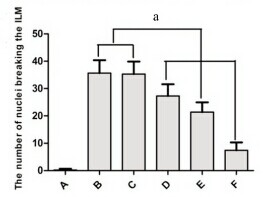
The number of nuclei breaking the internal limiting membrane (ILM). A: Controlled group; B: ROP group; C: Vehicle-treated ROP group; D: Low doses sorafenib-treated ROP group; E: Middle doses sorafenib-treated ROP group; F: High dose sorafenib-treated ROP group. |
Products are for research use only; We do not sell to patients
Copyright 2020 InvivoChem LLC | All Rights Reserved


 COA
COA