| Size | Price | Stock | Qty |
|---|---|---|---|
| 5mg |
|
||
| 10mg |
|
||
| 25mg |
|
||
| 50mg |
|
||
| Other Sizes |


Purity: ≥98%
| Targets |
Rosuvastatin D6 Sodium targets HMG-CoA reductase, the rate-limiting enzyme in cholesterol biosynthesis. By inhibiting this enzyme, it reduces cholesterol production and lowers plasma LDL cholesterol levels. The deuterated form is used as an internal standard in analytical methods for quantitation of rosuvastatin.
|
|---|---|
| ln Vitro |
Rosuvastatin is relatively hydrophilic and is highly selective for hepatic cells; its uptake is mediated by the liver-specific organic anion transporter OATP-C. Rosuvastatin is a high-affinity substrate for OATP-C with apparent association constant of 8.5 μM. Rosuvastatin inhibits cholesterol biosynthesis in rat liver isolated hepatocytes with IC50 of 1.12 nM. Rosuvastatin causes approximately 10 times greater increase of mRNA of LDL receptors than pravastatin. Rosuvastatin (100 μM) decreases the extent of U937 adhesion to TNF-α-stimulated HUVEC. Rosuvastatin inhibits the expressions of ICAM-1, MCP-1, IL-8, IL-6, and COX-2 mRNA and protein levels through inhibition of c-Jun N-terminal kinase and nuclear factor-kB in endothelial cells.
Kinase Assay: Rosuvastatin Calcium is a competitive inhibitor of HMG-CoA reductase with IC50 of 11 nM. Cell Assay: Rosuvastatin is relatively hydrophilic and is highly selective for hepatic cells; its uptake is mediated by the liver-specific organic anion transporter OATP-C. Rosuvastatin is a high-affinity substrate for OATP-C with apparent association constant of 8.5 μM. Rosuvastatin inhibits cholesterol biosynthesis in rat liver isolated hepatocytes with IC50 of 1.12 nM. Rosuvastatin causes approximately 10 times greater increase of mRNA of LDL receptors than pravastatin. Rosuvastatin (100 μM) decreases the extent of U937 adhesion to TNF-α-stimulated HUVEC. Rosuvastatin inhibits the expressions of ICAM-1, MCP-1, IL-8, IL-6, and COX-2 mRNA and protein levels through inhibition of c-Jun N-terminal kinase and nuclear factor-kB in endothelial cells. Rosuvastatin D6 Sodium has the same pharmacological activity as rosuvastatin sodium. It is a potent inhibitor of HMG-CoA reductase, reducing cholesterol biosynthesis and lowering LDL cholesterol levels. The deuterium labeling does not affect its pharmacological activity but allows for tracing in pharmacokinetic studies. |
| ln Vivo |
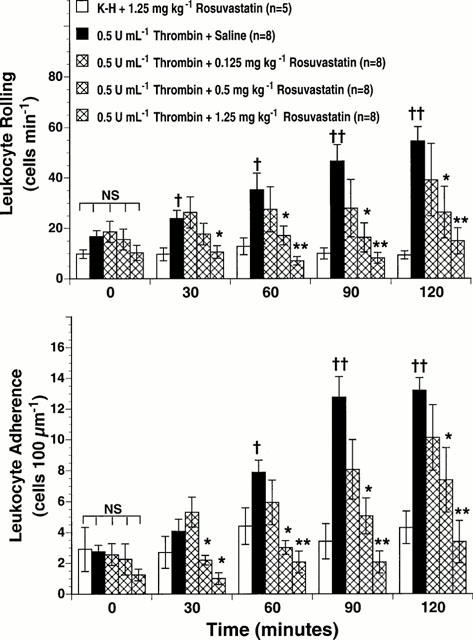
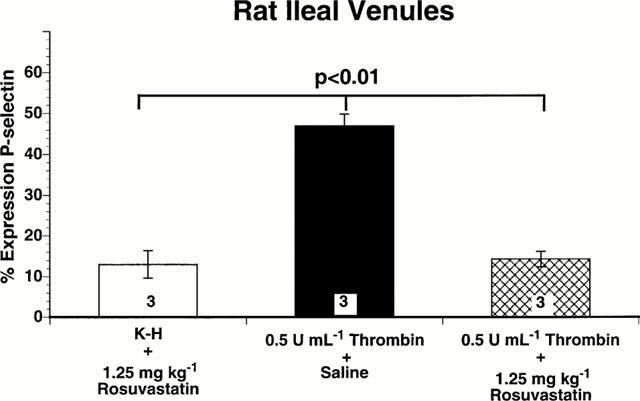
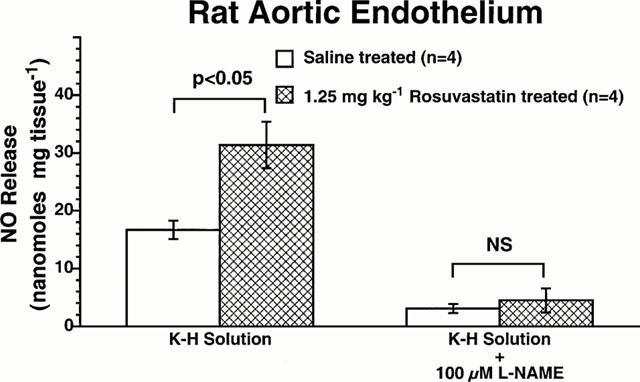
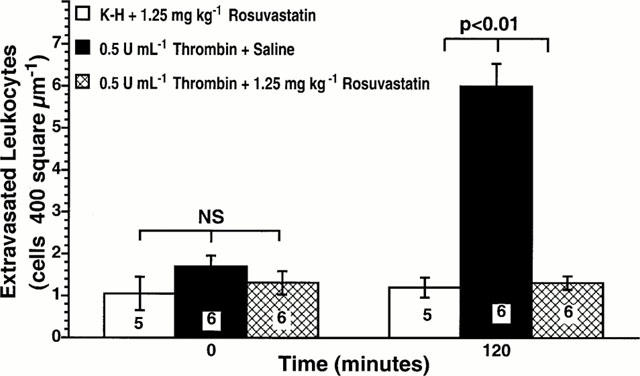
Rosuvastatin is efficient on reducing plasma liquids. Rosuvastatin (3 mg/kg) daily administration for 14 days decreases plasma cholesterol levels by 26% in male beagle dogs with normal cholesterol levels. In cynomolgus monkeys, Rosuvastatin decreases plasma cholesterol levels by 22% Rosuvastatin (20 mg/kg/day) administration for 2 weeks, significantly reduces very low-density lipoproteins (VLDL) in diabetes mellitus rats induced by Streptozocin. Rosuvastatin shows antiatherothromhotic effects in vivo. Rosuvastatin (1.25 mg/kg) significantly inhibits thrombin-induced transmigration of monocvtes across mesenteric venules via inhibition of the endothelial cell surface expression of P-selectin, and increases the basal rate of nitric oxide in aortic segments by 2-fold times. Rosuvastatin (20 mg/kg) inhibits ROS production, normalizes NO-dependent endothelial function and reduces platelet activation in diabetic rats induced by Streptozocin. Rosuvastatin displays cardioprotective effects in vivo. Rosuvastatin (80 mg) is shows to decrease infarct size and improve cardiac mechanical function after ischemia/reperfusion in animal model. The cardioprotective properties of Rosuvastatin may be due to the improvement of coronary blood flow, decrease in resistance of coronary arteries mediated by enhanced eNOS expression, and the subsequent increase in the production of vascular endothelial NO. Rosuvastatin (2.0 mg/kg) attenuates left ventricular hypertrophy produced by transaortic constriction in mice through regulation of Racl protein and NADPH oxidase activities. |
| Enzyme Assay |
Cell-free assays for Rosuvastatin D6 Sodium utilize purified HMG-CoA reductase enzyme and HMG-CoA as substrate. The enzyme reaction is performed in the presence of NADPH and increasing concentrations of the compound. The production of mevalonate is quantified spectrophotometrically or by radiometric methods. IC50 values are determined from concentration-response curves.
|
| Cell Assay |
Hepatic cell lines (e.g., HepG2 cells) are treated with Rosuvastatin D6 Sodium at various concentrations. Cholesterol biosynthesis is assessed by measuring incorporation of radiolabeled acetate into cholesterol. HMG-CoA reductase activity in cell lysates is measured. LDL receptor expression is assessed by Western blot or flow cytometry.
|
| Animal Protocol |
20 mg/kg/day | Male beagle dogs and Monkey
| ADME/Pharmacokinetics |
Rosuvastatin D6 Sodium is orally bioavailable. As a small molecule (MW 506.5, formula C22H23D6FN3NaO6S), it has favorable drug-like properties. The deuterium labeling does not significantly alter its pharmacokinetic properties compared to the non-deuterated form. PK parameters have been characterized in preclinical species and humans.
|
| Toxicity/Toxicokinetics |
Rosuvastatin D6 Sodium has the same toxicity profile as rosuvastatin sodium. Common adverse effects include myalgia, elevated liver enzymes, and gastrointestinal disturbances. As a statin, it has potential for muscle toxicity and hepatotoxicity. Standard toxicological assessments have been conducted.
|
| References |
Clin Pharmacol Ther.2004 May;75(5):455-63;Bioorg Med Chem.1997 Feb;5(2):437-44.
|
| Additional Infomation |
Rosuvastatin D6 Sodium (molecular formula C22H23D6FN3NaO6S, MW 506.5) is a deuterated form of rosuvastatin sodium containing six deuterium atoms. It is a potent HMG-CoA reductase inhibitor used as an internal standard in pharmacokinetic and metabolic studies. The compound is intended for research use only.
|
| Molecular Formula |
C₂₂H₂₁D₆FN₃NAO₆S
|
|
|---|---|---|
| Molecular Weight |
509.56
|
|
| Exact Mass |
509.187
|
|
| CAS # |
2070009-41-3
|
|
| Related CAS # |
Rosuvastatin Calcium;147098-20-2;Rosuvastatin Sodium;147098-18-8;Rosuvastatin-d3 sodium;1279031-70-7;Rosuvastatin;287714-41-4;Rosuvastatin-d3;1133429-16-9;Rosuvastatin-d6 calcium
|
|
| PubChem CID |
71752109
|
|
| Appearance |
White to off-white solid powder
|
|
| Hydrogen Bond Donor Count |
2
|
|
| Hydrogen Bond Acceptor Count |
10
|
|
| Rotatable Bond Count |
10
|
|
| Heavy Atom Count |
34
|
|
| Complexity |
773
|
|
| Defined Atom Stereocenter Count |
2
|
|
| SMILES |
S(C)(N(C)C1=NC(C2C=CC(=CC=2)F)=C(/C=C/[C@H](C[C@H](CC(=O)[O-])O)O)C(C(C([2H])([2H])[2H])C([2H])([2H])[2H])=N1)(=O)=O.[Na+]
|
|
| InChi Key |
RGEBGDYYHAFODH-HPECXWNWSA-M
|
|
| InChi Code |
InChI=1S/C22H28FN3O6S.Na/c1-13(2)20-18(10-9-16(27)11-17(28)12-19(29)30)21(14-5-7-15(23)8-6-14)25-22(24-20)26(3)33(4,31)32;/h5-10,13,16-17,27-28H,11-12H2,1-4H3,(H,29,30);/q;+1/p-1/b10-9+;/t16-,17-;/m1./s1/i1D3,2D3;
|
|
| Chemical Name |
|
|
| Synonyms |
Rosuvastatin: (ZD 4522; ZD-4522; ZD4522; S-4522; S 4522; S4522; Brand name: Crestor).
|
|
| HS Tariff Code |
2934.99.9001
|
|
| Storage |
Powder -20°C 3 years 4°C 2 years In solvent -80°C 6 months -20°C 1 month Note: Please store this product in a sealed and protected environment, avoid exposure to moisture. |
|
| Shipping Condition |
Room temperature (This product is stable at ambient temperature for a few days during ordinary shipping and time spent in Customs)
|
| Solubility (In Vitro) |
|
|||
|---|---|---|---|---|
| Solubility (In Vivo) |
|
| Preparing Stock Solutions | 1 mg | 5 mg | 10 mg | |
| 1 mM | 1.9625 mL | 9.8124 mL | 19.6248 mL | |
| 5 mM | 0.3925 mL | 1.9625 mL | 3.9250 mL | |
| 10 mM | 0.1962 mL | 0.9812 mL | 1.9625 mL |
*Note: Please select an appropriate solvent for the preparation of stock solution based on your experiment needs. For most products, DMSO can be used for preparing stock solutions (e.g. 5 mM, 10 mM, or 20 mM concentration); some products with high aqueous solubility may be dissolved in water directly. Solubility information is available at the above Solubility Data section. Once the stock solution is prepared, aliquot it to routine usage volumes and store at -20°C or -80°C. Avoid repeated freeze and thaw cycles.
Calculation results
Working concentration: mg/mL;
Method for preparing DMSO stock solution: mg drug pre-dissolved in μL DMSO (stock solution concentration mg/mL). Please contact us first if the concentration exceeds the DMSO solubility of the batch of drug.
Method for preparing in vivo formulation::Take μL DMSO stock solution, next add μL PEG300, mix and clarify, next addμL Tween 80, mix and clarify, next add μL ddH2O,mix and clarify.
(1) Please be sure that the solution is clear before the addition of next solvent. Dissolution methods like vortex, ultrasound or warming and heat may be used to aid dissolving.
(2) Be sure to add the solvent(s) in order.
Effect of rosuvastatin on thrombin-stimulated leukocyte rolling (upper panel) and leukocyte adherence (lower panel) in rat mesenteric venules.Br J Pharmacol.2001 Jun;133(3):406-12. |
|---|
Mevalonic acid blocks the inhibitory effect of rosuvastatin on thrombin-stimulated leukocyte rolling (upper panel) and leukocyte adherence (lower panel).Br J Pharmacol.2001 Jun;133(3):406-12. |
 Leukocyte rolling (upper panel) and leukocyte adherence (lower panel) in peri-intestinal venules of wild-type mice, eNOS−/−mice, and eNOS−/−mice given 1.25 mg kg−1rosuvastatin.Br J Pharmacol.2001 Jun;133(3):406-12. |
Immunohistochemical analysis of P-selectin expression on rat ileal venules, expressed as percentage of venules staining positive for P-selectin.Br J Pharmacol.2001 Jun;133(3):406-12. |
|---|
Effect of rosuvastatin on NO release in rat aortic segments. Basal release of nitric oxide is expressed as nanomoles per mg tissue.Br J Pharmacol.2001 Jun;133(3):406-12. |
Effect of rosuvastatin on thrombin-stimulated leukocyte extravasation. Rat mesenteries were superfused with either K-H buffer alone or with 0.5 u ml−1thrombin. Rosuvastatin (1.25 mg kg−1) was administered intraperitoneally 18 h prior to the study.Br J Pharmacol.2001 Jun;133(3):406-12. |
Products are for research use only; We do not sell to patients
Copyright 2020 InvivoChem LLC | All Rights Reserved


 COA
COA