| Size | Price | Stock | Qty |
|---|---|---|---|
| 100mg |
|
||
| 250mg |
|
||
| 500mg |
|
||
| 1g |
|
||
| 2g | |||
| Other Sizes |


Purity: ≥98%
| Targets |
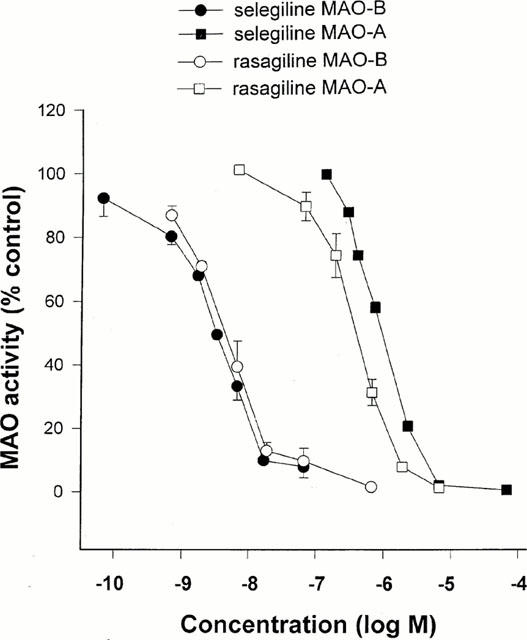
rMAO-B (IC50 = 4.43 nM); rMAO-A (IC50 = 412 nM)
Selective and potent inhibitor of mitochondrial monoamine oxidase B (MAO-B); the inhibition constant (Ki) for Rasagiline against MAO-B was determined to be in the nanomolar range, exhibiting high affinity and selectivity (no significant inhibition of MAO-A was observed at concentrations effective for MAO-B) [1] |
|---|---|
| ln Vitro |
Following treatment with Dexamethasone (10 µM), the proliferation rates of SH-SY5Y and 1242-MG are dramatically increased by rasagine (0.25 nM; 96 hours)[2].
1. Rasagiline [N-propargyl-1R(+)-aminoindan], was examined for its monoamine oxidase (MAO) A and B inhibitor activities in rats together with its S(-)-enantiomer (TVP 1022) and the racemic compound (AGN-1135) and compared to selegiline (1-deprenyl). The tissues that were studied for MAO inhibition were the brain, liver and small intestine. 2. While rasagiline and AGN1135 are highly potent selective irreversible inhibitors of MAO in vitro and in vivo, the S(-) enantiomer is relatively inactive in the tissues examined. 3. The in vitro IC(50) values for inhibition of rat brain MAO activity by rasagiline are 4.43+/-0.92 nM (type B), and 412+/-123 nM (type A). The ED(50) values for ex vivo inhibition of MAO in the brain and liver by a single dose of rasagiline are 0.1+/-0.01, 0.042+/-0.0045 mg kg(-1) respectively for MAO-B, and 6.48+/-0.81, 2.38+/-0.35 mg kg(-1) respectively for MAO-A. 4. Selective MAO-B inhibition in the liver and brain was maintained on chronic (21 days) oral dosage with ED(50) values of 0.014+/-0.002 and 0.013+/-0.001 mg kg(-1) respectively. 5. The degree of selectivity of rasagiline for inhibition of MAO-B as opposed to MAO-A was similar to that of selegiline. Rasagiline was three to 15 times more potent than selegiline for inhibition of MAO-B in rat brain and liver in vivo on acute and chronic administration, but had similar potency in vitro. 6. These data together with lack of tyramine sympathomimetic potentiation by rasagiline, at selective MAO-B inhibitory dosage, indicate that this inhibitor like selegiline may be a useful agent in the treatment of Parkinson's disease in either symptomatic or L-DOPA adjunct therapy, but lack of amphetamine-like metabolites could present a therapeutic advantage for rasagiline.[1] Stress can affect the brain and lead to depression; however, the molecular pathogenesis is unclear. An association between stress and stress-induced hypersecretion of glucocorticoids occurs during stress. Dexamethasone (a synthetic glucocorticoid steroid) has been reported to induce apoptosis and increase the activity of monoamine oxidase (MAO) (Youdim et al. 1989). MAO is an enzyme for the degradation of aminergic neurotransmitters; dopamine, noradrenaline and serotonin and dietary amines and MAO inhibitors are classical antidepressant drugs. In this study, we have compared the ability of rasagiline (Azilect) and its main metabolite, R-aminoindan with selegiline (Deprenyl) in prevention of dexamethasone-induced brain cell death employing human neuroblastoma SH-SY5Y cells and glioblastoma 1242-MG cells. Dexamethasone reduced cell viability as measured by MTT test, but rasagiline, selegiline, and 1-R-aminoindan could significantly prevent dexamethasone-induced brain cell death. Among three drugs, rasagiline had the highest neuroprotective effect. Furthermore, the inhibitory effects of these drugs on MAO B catalytic activity and on apoptotic DNA damage (TUNEL staining) were examined. Rasagiline exhibited highest inhibition on MAO B enzymatic activity and prevention on DNA damage as compared to selegiline and 1-R-aminoindan. In summary, the greater neuroprotective effect of rasagiline may be associated with the combination of the parent drug and its metabolite 1-R-aminoindan.[2] In mitochondrial preparations isolated from mammalian tissues, Rasagiline showed potent inhibitory activity against MAO-B: at a concentration of 10 nM, it inhibited MAO-B activity by more than 80%, while MAO-A activity remained unaffected (inhibition <10%) even at 1 μM. This selective inhibition of MAO-B was irreversible, as washing the mitochondrial preparations did not restore MAO-B activity [1] - In primary cultured rat brain cortical neurons exposed to dexamethasone (10 μM, a glucocorticoid that induces neuronal apoptosis), Rasagiline (at concentrations of 1 μM, 5 μM, and 10 μM) significantly reduced apoptotic cell death. The percentage of apoptotic neurons was decreased by 35% (1 μM), 52% (5 μM), and 68% (10 μM) compared to the dexamethasone-only group. Western blot analysis revealed that Rasagiline upregulated the expression of anti-apoptotic protein Bcl-2 and downregulated the expression of pro-apoptotic protein Bax, with the effect being more pronounced than that of selegiline (a reference MAO-B inhibitor) at the same concentrations [2] - In a cell model of multiple system atrophy (MSA) established by treating human oligodendrocyte precursor cells (OPCs) with α-synuclein fibrils (500 nM, which induces OPC damage and death), Rasagiline (2 μM and 5 μM) improved OPC viability by 28% (2 μM) and 45% (5 μM) compared to the α-synuclein-only group. Additionally, Rasagiline increased the expression of myelin basic protein (MBP, a marker of oligodendrocyte maturation) in OPCs, as detected by immunofluorescence staining [3] |
| ln Vivo |
In a transgenic model of multiple system atrophy, rasagiline has neuroprotective effects. Motor impairments related to 2.5 mg/kg Rasagiline therapy improve according to motor behavioral tests[3].
The present study was performed to test the potential of rasagiline as a disease-modifying agent in multiple system atrophy (MSA) using a transgenic mouse model previously described by our group. (PLP)-alpha-synuclein transgenic mice featuring glial cytoplasmic inclusion pathology underwent 3-nitropropionic acid intoxication to model full-blown MSA-like neurodegeneration. Two doses of rasagiline were used (0.8 and 2.5 mg/kg) for a treatment period of 4 weeks. Rasagiline-treated animals were compared to placebo saline-treated mice by evaluation of motor behaviour and neuropathology. Motor behavioural tests including pole test, stride length test and general motor score evaluation showed improvements in motor deficits associated with 2.5 mg/kg rasagiline therapy. Immunohistochemistry and histology showed significant reduction of 3-NP-induced neuronal loss in striatum, substantia nigra pars compacta, cerebellar cortex, pontine nuclei and inferior olives of MSA mice receiving 2.5 mg/kg rasagiline. The results of the study indicate that rasagiline confers neuroprotection in a transgenic mouse model of MSA and may therefore be considered a promising disease-modifying candidate for human MSA.[3] In transgenic mice overexpressing human α-synuclein (a model of multiple system atrophy, MSA), Rasagiline was administered orally at a dose of 1 mg/kg/day for 12 weeks. Behavioral tests showed that the MSA transgenic mice treated with Rasagiline had significantly improved motor function: the time to traverse a rotarod was increased by 40% compared to the untreated transgenic mice, and the number of hindlimb slips in the beam-walking test was decreased by 35%. Histopathological analysis revealed that Rasagiline reduced the loss of dopaminergic neurons in the substantia nigra pars compacta (SNpc) by 30% and decreased the number of α-synuclein inclusions in oligodendrocytes by 45% compared to the untreated transgenic group [3] - In rats treated with dexamethasone (0.5 mg/kg/day, subcutaneous injection for 7 days, to induce brain cell apoptosis), oral administration of Rasagiline (0.5 mg/kg/day and 1 mg/kg/day) for 7 days significantly attenuated hippocampal neuronal apoptosis. The number of TUNEL-positive (apoptotic) neurons in the hippocampal CA1 region was reduced by 40% (0.5 mg/kg) and 55% (1 mg/kg) compared to the dexamethasone-only group. This neuroprotective effect was stronger than that of selegiline (1 mg/kg/day, oral), which reduced TUNEL-positive neurons by only 30% [2] |
| Enzyme Assay |
Determination of MAO inhibitory activity in vitro [1]
The activities of MAO-A and -B were determined by the adapted method of Tipton & Youdim (1983). Rat or human cerebral cortical tissue was homogenized in 0.3 M sucrose (one part tissue to 20 parts sucrose) using a glass-teflon motor-driven homogenizer (brain and liver), or Ultraturrax (gut). The inhibitor under test was added to a suitable dilution of the enzyme preparation in 0.05 M phosphate buffer (pH 7.4) and incubated together with selegiline 0.1 μM (for determination of MAO-A) or clorgyline 0.1 μM (for determination of MAO-B). Incubation was carried on for 60 min at 37°C before addition of labelled substrates (14C-5-hydroxytryptamine creatinine disulphate 100 μM for determination of MAO-A, or 14C-phenylethylamine 10 μM for determination of MAO-B) and incubation continued for 30 or 20 min respectively. The reaction was then stopped by addition of citric acid (2 M). Radioactive metabolites were extracted into toluene/ethyl acetate (1 : 1 v v−1), a solution of 2,5-diphenyloxazole was added to a final concentration of 0.4% (w v−1), and metabolite content estimated by liquid scintillation counting. Activity in presence of drug was expressed as a percentage of that in control samples. [1] The preincubation was carried out in the presence of clorgyline or selegiline because phenylethylamine is also metabolized quite effectively by MAO-A (O'Carroll et al., 1983), leading to inhibition curves for MAO-B, which showed a plateau at about 80% inhibition with selegiline or Rasagiline if MAO-A was not inactivated. For comparison between two inhibitors with potentially different inhibitory effects on MAO-A and MAO-B, therefore, it was thought necessary to employ the system in which opposite enzyme forms are inactivated before assay. MAO B Catalytic Activity Assay [1] SH-SY5Y and 1242-MG cells were grown to confluence, harvested, and washed with phosphate-buffered saline. One hundred micrograms of total proteins were incubated with 10 µM 14C-labeled phenylethylamine in the assay buffer (50 mM sodium phosphate buffer, pH 7.4) at 37°C for 20 min and terminated by the addition of 100 µl of 6 N HCl. The reaction products were then extracted with ethyl acetate/toluene (1:1) and centrifuged at 4°C for 10 min. The organic phase containing the reaction product was extracted, and its radioactivity was obtained by liquid scintillation spectroscopy For MAO-B activity assay: Mitochondria were isolated from rat liver or brain tissues by differential centrifugation. The reaction mixture contained mitochondrial suspension (0.5 mg protein/mL), 50 mM phosphate buffer (pH 7.4), and 14C-labeled phenylethylamine (a specific substrate for MAO-B, final concentration 50 μM). Rasagiline was added to the reaction mixture at various concentrations (0.1 nM to 1 μM) and pre-incubated at 37°C for 15 minutes. The reaction was initiated by adding the substrate and incubated for 30 minutes at 37°C. The reaction was terminated by adding 2 M HCl, and the 14C-labeled reaction product was extracted with ethyl acetate. The radioactivity of the extract was measured using a liquid scintillation counter to calculate MAO-B activity. The Ki value of Rasagiline for MAO-B was determined by plotting inhibition curves and fitting data to the Michaelis-Menten equation [1] - For MAO-A selectivity assay: The same mitochondrial preparation was used, with 14C-labeled 5-hydroxytryptamine (5-HT, a specific substrate for MAO-A, final concentration 50 μM) instead of phenylethylamine. Rasagiline was tested at concentrations up to 10 μM, and MAO-A activity was measured using the same extraction and radioactivity detection method as for MAO-B. The degree of MAO-A inhibition was calculated to evaluate the selectivity of Rasagiline [1] |
| Cell Assay |
Cell Viability Assay[2]
Cell Types: Neuroblastoma SH-SY5Y, and glioblastoma 1242- MG Tested Concentrations: 0.25 nM Incubation Duration: 96 hrs (hours) Experimental Results: Caused ~60% increase in the cell proliferation rate for SH-SY5Y cells treated with Dexamethasone. Caused ~35% increase in cell proliferation rate for 1242-MG cells treated with Dexamethasone. Cell Culture and Treatments [2] The SH-SY5Y and 1242-MG cells were seeded into 6-well plates and cultured overnight in medium. Cells were supplemented with charcoal-stripped, steroid-free fetal calf serum for ~6 h. The medium was then replaced with medium treated with 10 µM of dexamethasone, 0.25 nM of Rasagiline, 0.25 nM of selegiline, or 1 µM of 1-R-aminoindan in the presence of charcoal-stripped fetal calf serum. The treatments were performed every other day for 4 days. TUNEL Assay [2] The terminal deoxynucleotidyl transferase (TdT)-mediated dUTP Nick End Labeling (TUNEL) assay was used to assess the extent of apoptosis in treated cells. Briefly, cells were plated on a four-well chamber slide on the day preceding the experiment, and treated with or without 10 µM dexamethasone, 0.25 nM of Rasagiline, 0.25 nM of selegiline, or 1 µM of 1-R-aminoindan for 2 days. Cells were then washed with PBS and fixed using 4% paraformaldehyde in PBS. The slides were again washed with PBS, and fragmented DNA was detected in apoptotic cells by adding fluorescein 12-dUTP to nicked ends of DNA (In Situ Cell Death Detection Kit, Roche). Slides were incubated for 1 h at 37°C in the dark and washed in PBS three times and then visualized with a fluorescent light microscope. Green fluorescence was correlated with DNA fragmentation. Experiments were done in duplicate for three times, and the percentage of TUNEL-positive cells was determined. Primary rat brain cortical neuron culture and apoptosis assay: Cortical tissues were isolated from embryonic day 18 (E18) rat embryos, minced, and digested with trypsin (0.25%) for 15 minutes at 37°C. The cell suspension was filtered through a 70 μm cell strainer and centrifuged at 1000 rpm for 5 minutes. Neurons were resuspended in neurobasal medium supplemented with B27 and plated at a density of 5×10⁴ cells/cm2 in 24-well plates pre-coated with poly-D-lysine. After 7 days of culture, neurons were treated with dexamethasone (10 μM) alone or in combination with Rasagiline (1 μM, 5 μM, 10 μM) for 48 hours. Apoptotic neurons were detected by TUNEL staining: cells were fixed with 4% paraformaldehyde for 20 minutes, permeabilized with 0.1% Triton X-100 for 10 minutes, and incubated with TUNEL reaction mixture at 37°C for 1 hour. Nuclei were counterstained with DAPI, and the number of TUNEL-positive cells was counted under a fluorescence microscope (five random fields per well) to calculate the apoptotic rate [2] - Western blot analysis for Bcl-2 and Bax: After treatment (as described above), neurons were lysed with RIPA buffer containing protease inhibitors. Protein concentration was determined using a BCA assay kit. Equal amounts of protein (30 μg per lane) were separated by 12% SDS-PAGE and transferred to PVDF membranes. Membranes were blocked with 5% non-fat milk in TBST for 1 hour at room temperature, then incubated with primary antibodies against Bcl-2, Bax, or β-actin (loading control) overnight at 4°C. After washing with TBST, membranes were incubated with horseradish peroxidase (HRP)-conjugated secondary antibodies for 1 hour at room temperature. The bands were visualized using an ECL chemiluminescence kit, and band intensity was quantified using ImageJ software. The ratio of Bcl-2 to Bax was calculated to assess anti-apoptotic activity [2] - Human oligodendrocyte precursor cell (OPC) viability assay: Human OPCs were cultured in OPC growth medium supplemented with growth factors (EGF and FGF-2) and plated at 2×10⁴ cells/cm2 in 96-well plates. After 24 hours, OPCs were treated with α-synuclein fibrils (500 nM) alone or in combination with Rasagiline (2 μM, 5 μM) for 72 hours. Cell viability was measured using the MTT assay: 10 μL of MTT solution (5 mg/mL) was added to each well, and the plates were incubated at 37°C for 4 hours. The formazan crystals were dissolved with 100 μL of DMSO, and the absorbance was measured at 570 nm using a microplate reader. Viability was expressed as a percentage of the untreated control group [3] |
| Animal Protocol |
Animal/Disease Models: (PLP)-α-synuclein transgenic mice over 6 months of age[3]
Doses: Low-(0.8 mg/kg bw) and high dose (2.5 mg/kg bw) Route of Administration: Administered subcutaneously (sc) every 24 h for a total period of 4 weeks (from day 1 till day 28 of the experiment). Experimental Results: Low dose treatment did not show protective efficacy in striatum with number of neurons similar to placebo treated MSA mice. High dose was associated with about 15% rescue of DARPP-32 immunoreactive striatal neurons. Low dose treatment had no effect on nigral neuronal loss, but high dose completely protected nigral neurons with numbers comparable to healthy controls. Determination of inhibition of MAO activity in vivo [1] In in vivo studies, drugs were administered orally by gavage (p.o.). The animals weighed 250 – 300 g at the time of killing. For estimation of in vivo inhibitory effect, varying doses of the inhibitors were administered to groups of five or six rats for the stated times, the animals were killed by decapitation, tissues removed and frozen at −20°C, and enzyme activity determined subsequently as above. Enzyme activity in drug-treated tissues were expressed as a percentage of that in control tissues. Transgenic MSA mouse model experiment: Transgenic mice overexpressing human α-synuclein (line M83, 8-10 weeks old, male) were randomly divided into three groups: untreated transgenic group, Rasagiline-treated transgenic group, and wild-type control group (n=12 per group). Rasagiline was dissolved in 0.9% normal saline and administered orally via gavage at a dose of 1 mg/kg/day for 12 weeks. The untreated transgenic group and wild-type control group received the same volume of normal saline by gavage. During the treatment period, motor function was evaluated weekly using the rotarod test (speed increased from 4 to 40 rpm over 5 minutes, latency to fall was recorded) and the beam-walking test (number of hindlimb slips while traversing a 100 cm-long beam with 5 mm width was counted). After 12 weeks, mice were euthanized, and brains were harvested. Brain tissues were fixed with 4% paraformaldehyde, embedded in paraffin, and sectioned (5 μm thickness). Immunohistochemical staining was performed using antibodies against tyrosine hydroxylase (TH, a marker of dopaminergic neurons) and α-synuclein to quantify dopaminergic neuron loss in the SNpc and α-synuclein inclusions in oligodendrocytes [3] - Dexamethasone-induced brain apoptosis rat model experiment: Sprague-Dawley rats (6-8 weeks old, male) were randomly divided into four groups: normal control group, dexamethasone-only group, Rasagiline + dexamethasone group, and selegiline + dexamethasone group (n=10 per group). Dexamethasone was dissolved in 0.9% normal saline and administered subcutaneously at a dose of 0.5 mg/kg/day for 7 days. Rasagiline was dissolved in normal saline and administered orally via gavage at doses of 0.5 mg/kg/day and 1 mg/kg/day for 7 days (starting 1 day before dexamethasone treatment). Selegiline was administered orally at 1 mg/kg/day for 7 days (same schedule as Rasagiline). The normal control group received subcutaneous and oral normal saline. After treatment, rats were euthanized, and brains were removed. Hippocampal tissues were dissected, fixed with 4% paraformaldehyde, and processed for paraffin sectioning. TUNEL staining was performed to detect apoptotic neurons in the hippocampal CA1 region, and the number of TUNEL-positive cells was counted under a light microscope (five sections per rat) [2] |
| ADME/Pharmacokinetics |
Absorption, Distribution and Excretion
Rasagilan is rapidly absorbed after oral administration. The absolute bioavailability of rasagilan is approximately 36%. Rasagilan undergoes almost complete biotransformation in the liver before excretion. The main elimination pathway is glucuronidation of rasagilan and its metabolites, followed by urinary excretion. After oral administration of 14C-labeled rasagilan, it is primarily eliminated via urine, followed by fecal excretion (62% of the total dose is excreted in urine and 7% in feces within 7 days), with a total recovery rate of 84% within 38 days. Less than 1% of rasagilan is excreted unchanged in the urine. 87 L After oral administration of 14C-labeled rasagilan, it is primarily eliminated via urine, followed by fecal excretion (62% of the total dose is excreted in urine and 7% in feces within 7 days), with a total recovery rate of 84% within 38 days. Less than 1% of rasagiline is excreted unchanged in the urine. Rasagiline is rapidly absorbed; peak plasma concentrations are reached approximately 1 hour after oral administration. The absolute bioavailability of rasagiline is approximately 36%. When taken with a high-fat meal, the peak plasma concentration and area under the plasma concentration-time curve (AUC) of rasagiline decrease by approximately 60% and 20%, respectively; since the AUC is largely unaffected, rasagiline can be taken on an empty stomach or with food. Rasagiline readily crosses the blood-brain barrier. The mean steady-state half-life or terminal half-life of rasagiline is 31 hours and 1.342 hours, respectively; however, there is no correlation between the pharmacokinetic characteristics of rasagiline and its pharmacological effects, as the drug irreversibly inhibits MAO-B, and the recovery of normal enzyme activity depends on the rate of new enzyme synthesis. Rasagiline binds to plasma proteins at a rate of approximately 88-94%, of which 61-63% binds to albumin. In intravenous administration studies in rats and dogs, the volume of distribution (Vd) of rasagiline was several times the total body fluid volume, indicating its extensive tissue distribution. Tissue distribution of 14C-rasagiline was studied in albino and colored rats, showing peak radioactivity in tissues occurring between 0.25 and 0.5 hours. Distribution to the large intestine, bladder, and lacrimal glands was relatively slow, but in the eyes, skin, and arterial walls of colored animals, the duration of drug distribution could reach 24 hours. In vitro animal plasma protein binding was 70% to 90%, and in human plasma protein binding was 88% to 94%. Oral administration of (14)C-rasagiline showed rapid absorption in all species, with peak plasma concentration (Cmax) reached within 2 hours. Absolute bioavailability was estimated at 53% to 69% in rats, 13% to 22% in dogs, and 36% in humans. Toxicokinetic analysis during toxicology studies showed that drug exposure was linear at doses above the level of MOA-B inhibitory pharmacological selectivity, maintaining at approximately 5 mg/kg/day. However, at higher doses, its pharmacokinetics were nonlinear, which may indicate that the elimination of rasagiline and its metabolite aminoindene has reached saturation. In mouse and dog studies, accumulation was observed only at the highest doses (60 and 21 mg/kg/day, respectively). For more complete data on absorption, distribution, and excretion of rasagiline (6 items in total), please visit the HSDB record page. Metabolism/MetabolitesRasagiline undergoes almost complete biotransformation in the liver before excretion. In vitro studies have shown that both metabolic pathways of rasagiline depend on the cytochrome P450 (CYP) system, with CYP 1A2 being the major isoenzyme involved in rasagiline metabolism. After oral administration, rasagiline is extensively metabolized in the liver. In vitro studies have shown that CYP1A2 is the major P450 isoenzyme involved in the metabolic elimination of rasagiline. The major metabolite of rasagiline in human plasma after biotransformation is aminoindene. The main biotransformation pathways of rasagiline in humans include N-dealkylation, indene ring hydroxylation, and phase II N- or O-binding, including N-glucuronidation of the parent drug and its metabolites. In plasma samples from healthy volunteers who have taken rasagiline, the conversion of rasagiline methanesulfonate (R enantiomer) to its S enantiomer was not observed in humans. Rasagiline is not metabolized to amphetamine or methamphetamine. Due to its binding to the MAO site in the intestine before passing through the liver, rasagiline exhibits a significant first-pass metabolic effect. Rasagiline metabolism is rapid and widespread, with similar metabolic characteristics across all tested species. Its main biotransformation pathways are N-dealkylation to aminoindene and hydroxylation to 3-hydroxy-N-propynyl-1-aminoindene. In addition, sulfide or glucuronide conjugation reactions may occur. Microsomal studies have shown that CYP1A2 is the major metabolic isoenzyme, but rasagiline is neither an inducer nor an inhibitor of cytochrome P450. The metabolism of rasagiline under CYP1A2 inhibition, induction, or in the presence of other substrates has been studied clinically. Rasagiline undergoes almost complete biotransformation in the liver before excretion. The metabolism of rasagiline proceeds primarily through two pathways: N-dealkylation and/or hydroxylation, yielding 1-aminoindan (AI), 3-hydroxy-N-propynyl-1-aminoindan (3-OH-PAI), and 3-hydroxy-1-aminoindan (3-OH-AI). In vitro studies have shown that both metabolic pathways of rasagiline depend on the cytochrome P450 (CYP) system, with CYP1A2 being the major isoenzyme involved in rasagiline metabolism. Rasagilan and its metabolites are glucuronidated and subsequently excreted in the urine, which is the primary elimination pathway. Biological Half-Life The mean steady-state half-life of rasagilan is 3 hours, but due to its irreversible inhibition of MAO-B, there is no correlation between its pharmacokinetics and its pharmacological effects. The mean steady-state half-life of rasagilan is 3 hours… After oral administration, in the dose range of 0.5 to 20 mg, the elimination half-life of rasagilan is approximately 0.6 to 2 hours, ranging from 0.3 to 3.5 hours. |
| Toxicity/Toxicokinetics |
Hepatotoxicity
Rasagiline has been reported to cause elevated serum enzymes in a small number of patients taking it long-term, but these abnormalities are usually mild and resolve spontaneously. Rasagiline has not been reported to be associated with cases of acute liver injury, but such cases have been reported with other nonspecific monoamine oxidase inhibitors. Probability Score: E (Unlikely to cause clinically significant liver injury). Pregnancy and Lactation Effects ◉ Overview of Use During Lactation There are no reports of clinical use of rasagiline during lactation. Rasagiline may lower serum prolactin levels, thus affecting milk production. This may be especially true for breastfed newborns or premature infants, where alternative medications may be necessary. ◉ Effects on Breastfed Infants No published information was found as of the revision date. ◉ Effects on Lactation and Breast Milk Animal studies have shown that rasagiline can lower serum prolactin levels. The clinical significance of these findings in breastfeeding women is unclear. For mothers who have established lactation, prolactin levels may not affect their ability to breastfeed. Protein Binding: Plasma protein binding ranges from 88-94%, with an average binding rate of 61-63% to human serum albumin at concentrations of 1-100 ng/ml. Interactions: Antidepressants and selective serotonin reuptake inhibitors (SSRIs): Pharmacological interactions similar to serotonin syndrome may exist (high fever, muscle rigidity, myoclonus, autonomic dysfunction with rapid fluctuations in vital signs and altered mental status, potentially progressing to extreme agitation, delirium, coma, or even death). Concomitant use should generally be avoided. At least 14 days should be elapsed after discontinuing rasagiline before starting SSRIs. Due to the relatively long half-lives of fluoxetine and its main metabolites, the manufacturer of rasagiline recommends at least 5 weeks (longer intervals for high-dose or long-term fluoxetine treatment) after discontinuing fluoxetine before starting rasagiline. CYP1A2 Inhibitors: Pharmacokinetic interactions (elevated plasma rasagiline concentrations) have been observed when used in combination with ciprofloxacin. The dose of rasagiline should be limited if ciprofloxacin or other CYP1A2 inhibitors are taken concurrently with rasagiline. St. John's wort (Hypericum perforatum): Concomitant use with rasagiline is prohibited. Rasagiline may interact with meperidine (similar to serotonin syndrome), potentially leading to coma, severe hypertension or hypotension, severe respiratory depression, seizures, malignant hyperthermia, excitation, peripheral vascular failure, and death. Concomitant use with meperidine, methadone, propoxyphene, or tramadol is prohibited. At least 14 days should be elapsed between discontinuing rasagiline and initiating meperidine. For more complete data on rasagiline interactions (12 items in total), please visit the HSDB records page. In vitro studies have shown that rasagiline at concentrations up to 10 μM does not produce cytotoxicity in primary rat cortical neurons or human oligodendrocyte precursor cells (OPCs) with a survival rate >90% compared to untreated controls[2][3]. In vivo studies have shown that oral administration of 0.5 mg/kg/day to 1 mg/kg/day for 7–12 weeks does not significantly affect body weight, food intake, or serum liver enzymes (ALT, AST) and renal function indicators (BUN, creatinine) levels in rats or transgenic mice. No significant histopathological damage was observed in the liver, kidneys, or brain tissue of animals treated with rasagiline[2][3]. |
| References |
|
| Additional Infomation |
Drug Indication
Azilect is indicated for the treatment of idiopathic Parkinson's disease (PD) as monotherapy (without levodopa) or adjuvant therapy (in combination with levodopa), particularly suitable for patients with end-of-dose fluctuations. This study demonstrates that rasagiline, like selegiline, is an irreversible inhibitor of MAO-B. This conclusion was confirmed through in vitro and in vivo experiments. In the experiments, MAO-A and MAO-B activities in different tissues were assessed in vitro over a 13-day time interval after oral administration of rasagiline. The results showed that rasagiline is a highly potent selective MAO-B inhibitor and crosses the blood-brain barrier well, with similar inhibition curves in liver and brain tissue. Although in vitro experiments showed that rasagiline and selegiline have similar inhibitory efficacy against MAO-B, in vivo studies showed that rasagiline is more potent. This higher efficacy of rasagiline is even more significant when the dose required to achieve 80% inhibition is measured, rather than 50% enzyme inhibition. The reason for this is currently unclear, but it may be related to the different metabolic rates of the parent compound in vivo, or the better tissue penetration of rasagiline. Interestingly, preliminary human studies showed that rasagiline's inhibitory potency against platelet MAO-B was approximately 5 times that of selegiline (unpublished data). Although rasagiline is more potent than selegiline, its selectivity for inhibiting MAO-A and MAO-B is very similar to that of selegiline. However, unlike selegiline (whose optical isomers do not selectively inhibit MAO-A and MAO-B), the two optical isomers of AGN 1135 show inhibitory effects on MAO-B and MAO-A that differ by approximately 4 and 2 orders of magnitude, respectively. These results are consistent with findings in non-human primate (monkey) brain tissue (Gotz et al., 1998). In a study by Gotz et al., researchers administered different doses of rasagiline for seven consecutive days and measured the activities of MAO-A and MAO-B in multiple brain regions, including the caudate nucleus, globus pallidus, cerebral cortex, and hippocampus. The results showed that rasagiline is a potent and selective inhibitor of MAO-B in the caudate nucleus and globus pallidus, where MAO-B activity is four times that of MAO-A (Gotz et al., 1998). The recovery of MAO-A and MAO-B activity after in vivo inhibition was related to the synthesis of enzymatic apolipoproteins, and the recovery varied among different tissues (liver, intestine, and brain). The small intestine showed the fastest recovery of MAO-B activity, while brain tissue showed the slowest. This difference in enzyme activity recovery in rat tissues after rasagiline treatment is not uncommon, as similar enzyme activity recovery has been reported after inhibition with selegiline and clogiline (Neff & Goridis, 1972; Della Corte & Tipton, 1980). In fact, it has been reported that the half-life of MAO-B activity recovery after selegiline treatment in primate (monkey and human) brain tissue exceeds 30 days (Fowler et al., 1994), while it is 13 days in rat brain tissue (Neff & Goridis, 1972; Della Corte & Tipton, 1980). In summary, this study demonstrates that rasagiline is a potent and irreversible MAO-B inhibitor, exhibiting 3-15 times stronger inhibitory activity in rats than selegiline, with similar selectivity for both MAO-B and MAO-A. Given its pharmacologically purer nature, lack of amphetamine-like properties, metabolite of aminoindene rather than 1-methylamphetamine, and recent reports of its neuroprotective and anti-apoptotic properties (Finberg et al., 1998; Huang et al., 1999; Youdim et al., 1999), we can conclude that this drug may be more advantageous than selegiline in the treatment of Parkinson's disease. [1] We are the first to report that rasagiline, selegiline, and 1-R-aminoindene significantly inhibit dexamethasone-induced brain cell death, including neuroblastoma and glioblastoma cells. Of the three compounds, rasagiline exhibited the strongest neuroprotective effect, superior to selegiline and 1-R-aminoindene. Rasagiline (Azilect) and selegiline (1-deprazole or Emsam) are irreversible inhibitors of MAO B. The stronger neuroprotective effect of rasagiline may be partly attributed to the effects of its parent compound and its major metabolite, 1-R-aminoindene. In addition, the inhibitory effects of these drugs on MAO B catalytic activity and apoptotic DNA fragment damage (observed by TUNEL staining) were also examined. Rasagiline showed the strongest inhibition of MAO B enzyme activity (Youdim et al., 2001a) and also the strongest inhibition of apoptosis compared to selegiline and 1-R-aminoindene. The mechanisms by which rasagiline and selegiline exert their anti-apoptotic effects can be summarized as follows: they upregulate the anti-apoptotic proteins Bcl-2 and Bcl-X1, and downregulate the pro-apoptotic proteins Bad, Bax, PARP, and caspase 3 (see reviews by Youdim et al., 2005a and Youdim et al., 2006). Since Bcl-2 and caspase 3 are key factors in preventing or mediating mitochondrial-related apoptosis (Lakhani et al., 2006), this suggests that MAO inhibitors may protect cells from apoptosis by maintaining mitochondrial homeostasis (Malorni et al., 1998). Furthermore, structure-activity relationship studies of rasagiline indicate that this effect is generated by the propargylamine moiety, as propargylamine has little or no monoamine oxidase (MAO) inhibitory activity but possesses a similar neuroprotective mechanism and similar potency (Bar-Am et al., 2005). In addition, both rasagiline and propargylamine can activate neuroprotective protein kinases C (PKCα and PKCε) while downregulating the pro-apoptotic PKCδ and γ. Inhibition of PKC with GF109203X blocks their neuroprotective activity (Weinreb et al., 2005; Youdim et al., 2005a). The mechanism of action of aminoindene has been fully elucidated. In this study, using a cytotoxic model of human neuroblastoma SKN-SH cells, the neuroprotective effect of 1-R-aminoindene was evaluated under high-density culture-induced neuronal death and 6-hydroxydopamine stimulation. The results showed that 1-R-aminoindene (0.1–1 µM) significantly reduced the level of the apoptosis-associated phosphorylated protein H2A.X (Ser139), decreased the cleavage of caspase 9 and caspase 3, and increased the levels of the anti-apoptotic proteins Bcl-2 and Bcl-xl. The protein kinase C (PKC) inhibitor GF109203X blocked this neuroprotective effect, indicating that PKC is involved in aminoindene-induced cell survival. Aminoindene significantly increased pPKC (pan-) levels, particularly the levels of the pro-survival PKC subtype PKCε (Bar-Am et al., 2007). In summary, the neuroprotective activity of rasagiline and its major metabolite 1-R-aminoindene in current and previous studies may be related to the recent prospective clinical trial ADAGIO in patients with Parkinson's disease, which showed that early treatment with rasagiline could provide benefits that could not be obtained by starting the drug later. This was the first prospective, large-scale, randomized, double-blind trial to provide evidence that the drug may delay the progression of Parkinson's disease (PD) through neuroprotective effects (Hughes 2008) [2]. Rasagiline is a propynylamine derivative with the chemical structure N-propynyl-1R(+)-aminoindene. Its selective inhibition of mitochondrial MAO-B is thought to contribute to its neuroprotective effect because it reduces reactive oxygen species (ROS) produced by MAO-B-mediated monoamine metabolism [1]. In a dexamethasone-induced brain cell apoptosis model, the neuroprotective effect of rasagiline was observed to be independent of its MAO-B inhibitory activity, as its metabolite aminoindane (which does not have MAO-B inhibitory activity) also showed partial neuroprotective effects. This suggests that rasagiline may exert its neuroprotective effect through multiple mechanisms, including anti-apoptotic and antioxidant pathways. [2] In a transgenic MSA model, rasagiline not only protected dopaminergic neurons but also improved oligodendrocyte function by reducing α-synuclein aggregation, suggesting that it has potential therapeutic value for neurodegenerative diseases (such as MSA and Parkinson's disease) associated with α-synuclein pathology. [3] |
| Molecular Formula |
C12H13N.CH4O3S
|
|
|---|---|---|
| Molecular Weight |
267.34
|
|
| Exact Mass |
267.092
|
|
| Elemental Analysis |
C, 58.40; H, 6.41; N, 5.24; O, 17.95; S, 11.99
|
|
| CAS # |
161735-79-1
|
|
| Related CAS # |
Rasagiline;136236-51-6;Rasagiline-13C3 mesylate;1391052-18-8;Rasagiline-13C3 mesylate racemic;1216757-55-9
|
|
| PubChem CID |
3052775
|
|
| Appearance |
White to off-white solid powder
|
|
| Density |
1.05 g/cm3
|
|
| Boiling Point |
305.5ºC at 760 mmHg
|
|
| Melting Point |
155-158°C
|
|
| Flash Point |
146.8ºC
|
|
| Vapour Pressure |
0.000816mmHg at 25°C
|
|
| LogP |
2.872
|
|
| Hydrogen Bond Donor Count |
2
|
|
| Hydrogen Bond Acceptor Count |
4
|
|
| Rotatable Bond Count |
2
|
|
| Heavy Atom Count |
18
|
|
| Complexity |
305
|
|
| Defined Atom Stereocenter Count |
1
|
|
| SMILES |
CS(=O)(=O)O.C#CCN[C@@H]1CCC2=CC=CC=C12
|
|
| InChi Key |
JDBJJCWRXSVHOQ-UTONKHPSSA-N
|
|
| InChi Code |
InChI=1S/C12H13N.CH4O3S/c1-2-9-13-12-8-7-10-5-3-4-6-11(10)12;1-5(2,3)4/h1,3-6,12-13H,7-9H2;1H3,(H,2,3,4)/t12-;/m1./s1
|
|
| Chemical Name |
methanesulfonic acid;(1R)-N-prop-2-ynyl-2,3-dihydro-1H-inden-1-amine
|
|
| Synonyms |
|
|
| HS Tariff Code |
2934.99.9001
|
|
| Storage |
Powder -20°C 3 years 4°C 2 years In solvent -80°C 6 months -20°C 1 month Note: Please store this product in a sealed and protected environment, avoid exposure to moisture. |
|
| Shipping Condition |
Room temperature (This product is stable at ambient temperature for a few days during ordinary shipping and time spent in Customs)
|
| Solubility (In Vitro) |
|
|||
|---|---|---|---|---|
| Solubility (In Vivo) |
Solubility in Formulation 1: 100 mg/mL (374.06 mM) in PBS (add these co-solvents sequentially from left to right, and one by one), clear solution; with sonication.
Solubility in Formulation 2: Saline: 30 mg/mL (Please use freshly prepared in vivo formulations for optimal results.) |
| Preparing Stock Solutions | 1 mg | 5 mg | 10 mg | |
| 1 mM | 3.7406 mL | 18.7028 mL | 37.4056 mL | |
| 5 mM | 0.7481 mL | 3.7406 mL | 7.4811 mL | |
| 10 mM | 0.3741 mL | 1.8703 mL | 3.7406 mL |
*Note: Please select an appropriate solvent for the preparation of stock solution based on your experiment needs. For most products, DMSO can be used for preparing stock solutions (e.g. 5 mM, 10 mM, or 20 mM concentration); some products with high aqueous solubility may be dissolved in water directly. Solubility information is available at the above Solubility Data section. Once the stock solution is prepared, aliquot it to routine usage volumes and store at -20°C or -80°C. Avoid repeated freeze and thaw cycles.
Calculation results
Working concentration: mg/mL;
Method for preparing DMSO stock solution: mg drug pre-dissolved in μL DMSO (stock solution concentration mg/mL). Please contact us first if the concentration exceeds the DMSO solubility of the batch of drug.
Method for preparing in vivo formulation::Take μL DMSO stock solution, next add μL PEG300, mix and clarify, next addμL Tween 80, mix and clarify, next add μL ddH2O,mix and clarify.
(1) Please be sure that the solution is clear before the addition of next solvent. Dissolution methods like vortex, ultrasound or warming and heat may be used to aid dissolving.
(2) Be sure to add the solvent(s) in order.
| NCT Number | Recruitment | interventions | Conditions | Sponsor/Collaborators | Start Date | Phases |
| NCT03727139 | Completed Has Results | Drug: Rasagiline | Parkinson's Disease | Takeda | November 1, 2018 | |
| NCT01879748 | Completed | Drug: Rasagiline Drug: Placebo |
Parkinson's Disease | Teva Branded Pharmaceutical Products R&D, Inc. |
June 2013 | Phase 1 |
| NCT01032486 | Completed | Drug: Rasagiline mesylate | Parkinson's Disease | Teva Branded Pharmaceutical Products R&D, Inc. |
December 2009 | |
| NCT00203164 | Completed | Drug: rasagiline mesylate | Parkinson's Disease | Teva Branded Pharmaceutical Products R&D, Inc. |
May 2002 | Phase 3 |
|
|---|
|
|
Products are for research use only; We do not sell to patients
Copyright 2020 InvivoChem LLC | All Rights Reserved


 COA
COA