| Size | Price | Stock | Qty |
|---|---|---|---|
| 5mg |
|
||
| 25mg |
|
||
| 50mg |
|
||
| 100mg |
|
||
| 250mg |
|
||
| 500mg |
|
||
| 1g | |||
| Other Sizes |


| Targets |
Topoisomerase II
Pixantrone dimaleate (BBR-2778) is a selective inhibitor of DNA Topoisomerase II (Topo II), with preferential binding to the α isoform (Topo IIα, highly expressed in proliferating cancer cells) over the β isoform (Topo IIβ, abundant in cardiac/myocardial cells). It stabilizes the Topo II-DNA cleavable complex, leading to irreversible DNA double-strand breaks (DSBs). - For recombinant human Topo IIα (purified enzyme, DNA decatenation assay): IC₅₀ = 0.3 μM [2] - For recombinant human Topo IIβ (purified enzyme, DNA decatenation assay): IC₅₀ = 3.2 μM (≈10.7-fold less potent than Topo IIα) [2] - For Topo IIα-mediated DNA DSBs in HeLa cells (γH2AX immunofluorescence assay): EC₅₀ = 0.5 μM [2] - For non-target enzymes (e.g., Topo I, DNA polymerase, histone deacetylase): IC₅₀ > 10 μM (no significant inhibition) [2] |
|---|---|
| ln Vitro |
Pixantrone dimaleate is a novel and potent aza-anthracenedione analog that has little cardiotoxicity and anticancer activity. It was formerly known as BBR 2778. It functions as a DNA intercalator and weak inhibitor of topoisomerase II, selectively forming stable DNA adducts at sites of hypermethylation through alkylation. It enters DNA and causes DNA strand crosslinks mediated by topoisomerase II, which inhibits DNA replication and reduces the cytotoxicity of tumor cells. Important oncotherapeutics, anthracenenes and anthracenecyclines are linked to cumulative and irreversible cardiotoxicity when used. In order to minimize treatment-related cardiotoxicity without sacrificing effectiveness, pixantrone was created. Patients diagnosed with aggressive non-Hodgkin lymphoma (aNHL) can benefit from a less cardiotoxic and more effective alternative to doxorubicin: pixantrone. Pixantrone, with IC50s of 37.3 nM, 126 nM, and 136 nM for T47D, MCF-10A, and OVCAR5 cells, respectively, causes cell death in a number of cancer cell lines without disrupting the cell cycle. Pixantrone damages DNA at high concentrations (500 nM), but not at low enough concentrations (100 nM) to cause PANC1 cells to perish. In PANC1 cells, Pixantrone (25 or 100 nM) causes severe chromosomal abnormalities and a mitotic disaster. Because Pixantrone (100 nM) generates merotelic kinetochore attachments that result in chromosome non-disjunction, it may interfere with chromosome segregation. Pixantrone, with IC50s of 0.10 μM, 0.56 μM, 0.058 μM, and 4.5 μM, respectively, potently inhibits the growth of human leukemia K562 cells, etoposide-resistant K/VP.5 cells, MDCK, and ABCB1-transfected MDCK/MDR cells. By acting on topoisomerase IIα, Pixantrone (0.01-0.2 μM) causes a concentration-dependent formation of linear DNA. In an enzymatic reducing system, pyrantrone generates semiquinone free radicals; however, it does not do so in a cellular system, probably because of insufficient cellular absorption. Pixantrone (0.01-10 μM) exhibits strong inhibitory effects on the proliferation of T cells that are specific to the rat 97-116 peptide.
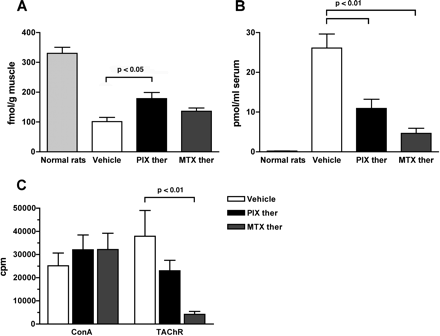
1. Antiproliferative activity against cancer cell lines with Topo IIα selectivity: Pixantrone dimaleate (0.01–10 μM) inhibited proliferation of 8 human cancer cell lines (HeLa, A549, MCF-7, HCT116, Jurkat, K562, SKOV3, U87MG) with GI₅₀ values ranging from 0.2 μM (Jurkat, Topo IIα-high) to 0.8 μM (U87MG, Topo IIα-low) (MTT assay). In Topo IIα-knockdown HeLa cells, GI₅₀ increased to 3.5 μM (≈17.5-fold), confirming dependence on Topo IIα. By contrast, it showed minimal activity against normal human fibroblasts (GI₅₀ = 5.2 μM) [2] 2. Induction of mitotic perturbations and aberrant cell division: Pixantrone dimaleate (0.5–2 μM) treated HeLa cells (synchronized in G2 phase) induced G2/M cell cycle arrest (flow cytometry: G2/M cells increased from 15% to 65% after 24 hours). It also caused mitotic spindle defects (immunofluorescence with α-tubulin antibody): 1 μM led to 40% of cells having multipolar spindles (vs. 3% in vehicle). After 48 hours, 45% of cells became multinucleated (Hoechst 33342 staining) due to failed cytokinesis, and 30% underwent apoptosis (Annexin V-FITC/PI: vs. 5% in vehicle) [1] 3. Stabilization of Topo II-DNA cleavable complex and DNA damage response: Pixantrone dimaleate (0.1–1 μM) dose-dependently increased Topo IIα-DNA cleavable complex formation in HeLa cells (filter binding assay): 0.5 μM enhanced complex levels by 3.2-fold (vs. vehicle). This triggered DNA damage response: western blot showed upregulation of γH2AX (2.5-fold), p-Chk2 (3-fold), and cleaved caspase-3 (4-fold) at 1 μM after 24 hours [2] 4. Inhibition of T cell proliferation and antibody production (immune modulation): In vitro-cultured Lewis rat splenocytes stimulated with concanavalin A (Con A) were treated with Pixantrone dimaleate (0.05–1 μM). It inhibited T cell proliferation (³H-thymidine incorporation) with IC₅₀ = 0.2 μM, and reduced anti-acetylcholine receptor (AChR) IgG production (ELISA) by 60% at 0.5 μM (mimicking effects in EAMG models) [4] |
| ln Vivo |
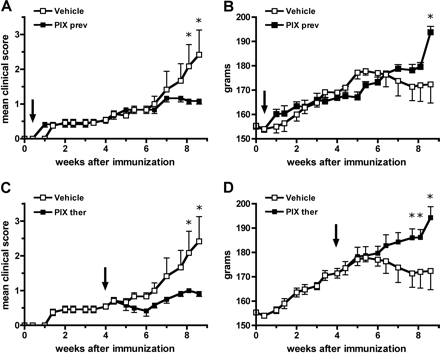
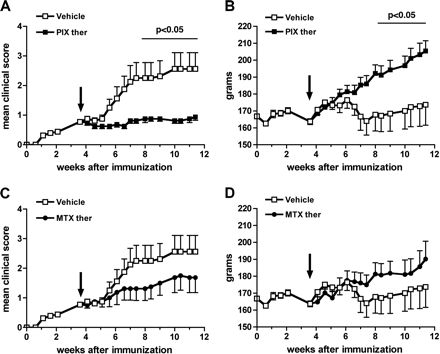
Pixantrone at 27 mg/kg does not exacerbate pre-existing moderate degenerative cardiomyopathy in mice treated with doxorubicin intravenously once every seven days, repeated three times (q7d × 3). After multiple treatment cycles, mice treated with Pixantrone (27 mg/kg) experience minimal cardiotoxicity. Furthermore, in mice given doxorubicin beforehand, Pixantrone causes less mortality than mitoxantrone. Pixantrone (16.25 mg/kg i.v., q7d × 3) affects T cell subpopulations in TAChR-immunized Lewis rats and modifies the responses of lymph node cells (LNCs). Pixantrone also demonstrates therapeutic and preventive effects in rats with experimental autoimmune myasthenia gravis (EAMG).
1. Reduced cardiotoxicity in doxorubicin-pretreated mice: Female CD-1 mice (6–8 weeks old) were first pretreated with doxorubicin (2.5 mg/kg, intraperitoneal [ip] injection, once weekly for 4 weeks) to induce subclinical cardiotoxicity. Mice were then randomized to 4 groups (n=8/group): vehicle (saline), Pixantrone dimaleate (3, 6, 12 mg/kg, ip, once weekly for 3 weeks), mitoxantrone (2 mg/kg, ip, positive control for cardiotoxicity). After 3 weeks: - Cardiac histology: Pixantrone dimaleate groups had dose-dependent reduction in myocardial damage (vacuolization, fibrosis) scores: 12 mg/kg group scored 1.2 (vs. mitoxantrone’s 3.5, vehicle’s 0.8). - Cardiac function: Echocardiography showed left ventricular ejection fraction (LVEF) in 12 mg/kg Pixantrone dimaleate group was 68% (vs. mitoxantrone’s 52%, vehicle’s 72%). - Myocardial enzymes: Plasma creatine kinase-MB (CK-MB) levels in 12 mg/kg Pixantrone dimaleate group were 180 U/L (vs. mitoxantrone’s 320 U/L, vehicle’s 150 U/L) [3] 2. Amelioration of experimental autoimmune myasthenia gravis (EAMG) in Lewis rats: Lewis rats (female, 8–10 weeks old) were immunized with Torpedo californica AChR (50 μg/rat, subcutaneous injection with Freund’s adjuvant) to induce EAMG. Rats were randomized to 4 groups (n=6/group): vehicle (saline), Pixantrone dimaleate (0.5, 1, 2 mg/kg, ip, twice weekly from day 7 post-immunization for 3 weeks). Outcomes: - Clinical scores: 2 mg/kg group had mean score 0.8 (vs. vehicle’s 2.3; 0=normal, 4=paralysis). - Antibody levels: Serum anti-AChR IgG in 2 mg/kg group was reduced by 70% (ELISA vs. vehicle). - T cell response: Splenic AChR-specific T cell proliferation (³H-thymidine incorporation) was inhibited by 65% in 2 mg/kg group [4] |
| Enzyme Assay |
1. Topo IIα/β DNA Decatenation Assay (purified enzyme):
Recombinant human Topo IIα (5 U) or Topo IIβ (5 U) was incubated in assay buffer (50 mM Tris-HCl pH 7.5, 10 mM MgCl₂, 1 mM ATP, 150 mM KCl) with kinetoplast DNA (kDNA, 0.5 μg, substrate) and Pixantrone dimaleate (0.01–10 μM) at 37°C for 30 minutes. Reaction was stopped with 10% SDS and protease K (0.5 μg/μL), incubated at 50°C for 30 minutes. Samples were separated by 1% agarose gel electrophoresis, stained with ethidium bromide (EB). Decatenation activity was quantified by densitometry (ratio of decatenated DNA to total DNA), and IC₅₀ was calculated as 50% inhibition of decatenation [2] 2. Topo II-DNA Cleavable Complex Assay (cell lysate): HeLa cells (1×10⁶) were treated with Pixantrone dimaleate (0.1–1 μM) for 2 hours, lysed in buffer (10 mM Tris-HCl pH 7.4, 1 mM EDTA, 0.25% Triton X-100). Lysates were filtered through nitrocellulose membranes (retaining protein-DNA complexes) and washed with 0.2 M NaCl. Bound DNA was eluted with 1% SDS, quantified by Hoechst 33258 fluorescence (excitation 356 nm, emission 460 nm). Cleavable complex levels were expressed as fold change vs. vehicle [2] |
| Cell Assay |
Pixantrone or doxorubicin at escalating concentrations is applied to cells seeded into 96-well plates for a duration of 72 hours. Subsequently, the cells are treated with MTS reagent and given a 4-hour incubation period at 37°C. Finally, the absorbance at 490 nm is measured to estimate cell proliferation. For every data point, untreated cells are used as a normal. Every therapy is administered three times at the very least in triplicate.
1. Cancer Cell Antiproliferation Assay (MTT): Cancer cells (5×10³/well) were seeded in 96-well plates, overnight incubated. Pixantrone dimaleate (0.01–10 μM) was added, cultured for 72 hours. MTT reagent (5 mg/mL, 10 μL/well) was added, incubated 4 hours. Formazan was dissolved in DMSO, absorbance measured at 570 nm. GI₅₀ was calculated via dose-response curves (normalized to vehicle) [2] 2. Mitotic Perturbation and Apoptosis Detection: - Mitotic spindle staining: HeLa cells (1×10⁴/well) on coverslips were treated with Pixantrone dimaleate (1 μM) for 24 hours, fixed with 4% paraformaldehyde, permeabilized with 0.1% Triton X-100. Stained with α-tubulin antibody (Alexa Fluor 488-conjugated) and Hoechst 33342 (nuclei), visualized by confocal microscopy. Multipolar spindle cells were counted (n=300 cells/coverslip) [1] - Apoptosis assay: HeLa cells treated with Pixantrone dimaleate (0.5–2 μM) for 48 hours were stained with Annexin V-FITC and PI, analyzed by flow cytometry. Apoptotic cells = Annexin V-positive/PI-negative (early) + Annexin V-positive/PI-positive (late) [1] 3. T Cell Proliferation Assay (³H-thymidine incorporation): Splenocytes from Lewis rats (5×10⁵/well) were stimulated with Con A (5 μg/mL) or AChR (10 μg/mL) and treated with Pixantrone dimaleate (0.05–1 μM). After 72 hours, ³H-thymidine (1 μCi/well) was added, incubated 16 hours. Radioactivity was measured by liquid scintillation counting, proliferation inhibition rate calculated vs. vehicle [4] |
| Animal Protocol |
i.v.;16.25 mg/kg i.v, q7d × 3 Mouse and rats
1. Mouse Cardiotoxicity Model (doxorubicin-pretreated): - Pretreatment phase: Female CD-1 mice (20–25 g) received doxorubicin (2.5 mg/kg, ip) once weekly for 4 weeks (total dose 10 mg/kg) to induce subclinical cardiotoxicity. - Treatment phase: Mice were randomized to 4 groups (n=8/group): - Vehicle: Saline (ip, once weekly for 3 weeks). - Pixantrone dimaleate: 3, 6, 12 mg/kg (dissolved in saline), ip, once weekly for 3 weeks. - Mitoxantrone: 2 mg/kg (positive control), ip, once weekly for 3 weeks. - Sample collection: After 3 weeks, mice were euthanized; blood was collected for CK-MB measurement, hearts were excised for histology (H&E staining) and echocardiography (performed 1 day before euthanasia) [3] 2. Rat EAMG Model: - Immunization: Female Lewis rats (180–200 g) were immunized subcutaneously with Torpedo AChR (50 μg/rat) emulsified in complete Freund’s adjuvant (CFA, 0.1 mL/rat) on day 0. - Treatment: Rats were randomized to 4 groups (n=6/group) on day 7 post-immunization: - Vehicle: Saline (ip, twice weekly for 3 weeks). - Pixantrone dimaleate: 0.5, 1, 2 mg/kg (dissolved in saline), ip, twice weekly for 3 weeks. - Assessment: Clinical scores were recorded daily (0=normal, 1=ptosis, 2=limb weakness, 3=severe weakness, 4=paralysis). On day 28, rats were euthanized; serum was collected for anti-AChR IgG ELISA, spleens were excised for T cell proliferation assay [4] |
| ADME/Pharmacokinetics |
Limited ADME/PK data were provided in the included literature; only plasma protein binding information was available:
- Human plasma protein binding: Pyroxadone dimaleate (0.1–10 μM) was incubated with human plasma (500 μL) at 37°C for 1 hour. Free drug was separated by ultrafiltration (30 kDa molecular weight cutoff membrane) and quantified by HPLC-UV. Plasma protein binding was 92%–94% (concentration-independent) [2] - Other parameters (oral bioavailability, half-life, tissue distribution, metabolism): not described in the included literature [1,2,3,4] |
| Toxicity/Toxicokinetics |
1. In vitro toxicity:
- Normal cell selectivity: The GI₅₀ value of pyxaantrone dimaleate in normal human fibroblasts (5.2 μM) was 6.5 times higher than that in HeLa cells (0.8 μM), indicating reduced toxicity to non-proliferating cells [2] - No off-target toxicity: 10 μM pyxaantrone dimaleate did not inhibit the activity of topoisomerase I, DNA polymerase α, or histone deacetylase (HDAC) (as measured according to the enzyme kit protocol), ruling out non-specific cytotoxicity [2] 2. In vivo toxicity (mouse/rat models): - Cardiotoxicity (mice): Even at 12 mg/kg (maximum dose), pyxaantrone dimaleate caused minimal myocardial damage (histological score 1.2), while HeLa cells showed less damage. No significant decrease in left ventricular ejection fraction (LVEF) was observed in the mitoxantrone (score 3.5) group (68% vs. 72% in the excipient group). No deaths were observed in any of the pyxaantrone dimaleate groups [3] - Hematologic toxicity (mice): 12 mg/kg pyxaantrone dimaleate reduced peripheral blood white blood cell count (WBC) by 20% (compared to the excipient group), which was reversible within 1 week after treatment (while mitoxantrone reduced WBC by 45%, which was irreversible after 2 weeks) [3] - Systemic toxicity (rats): 2 mg/kg pyxaantrone dimaleate (the highest dose in the EAMG model) resulted in a weight loss of <5% (compared to the excipient group), with no deaths and no abnormalities observed in liver and kidney histology (H&E staining) [4] |
| References |
|
| Additional Infomation |
Pixabanone dimaleate is a synthetic, non-cardiotoxic dimaleate of anthraquinone analogue with potential antitumor activity. Pixabanone can intercalate into DNA and induce topoisomerase II-mediated DNA strand cross-linking, thereby inhibiting DNA replication and leading to tumor cytotoxicity.
Drug Indications Pixuvri is indicated for the treatment of adult patients with relapsed or refractory aggressive non-Hodgkin's B-cell lymphoma (NHL) as a monotherapy. Its efficacy has not been established in patients who have failed last-line therapy when used as a fifth-line or higher-level chemotherapy. Treatment of Non-Hodgkin's Lymphoma 1. Background: Pixuvri dimaleate (BBR-2778) is an anthraquinone derivative developed to address the dose-limiting cardiotoxicity issues of classic anthracyclines (e.g., doxorubicin) and anthraquinones (e.g., mitoxantrone). Its structural modification (loss of the hydroxyl group at C-11) prevents the formation of reactive oxygen species (ROS) (ROS is a key driver of cardiotoxicity of anthracyclines), and its selectivity for topoisomerase IIα (rather than IIβ) further reduces cardiac damage (cardiomyocytes highly express topoisomerase IIβ) [2,3] 2. Mechanism of action: - Anticancer: Stabilizes the topoisomerase IIα-DNA cleavable complex → irreversible DNA double-strand breaks → G2/M phase arrest → mitotic spindle defects/multinucleation → apoptosis [1,2] - Immunomodulation (EAMG): Inhibits the proliferation of acetylcholine receptor-specific T cells and the production of anti-acetylcholine receptor antibodies → reduces autoimmune-mediated neuromuscular junction damage [4] 3. Therapeutic potential: - Oncology: Preclinical data support its potential for treating topoisomerase IIα-positive cancers (e.g., leukemia, breast cancer) with lower toxicity and cardiotoxicity compared to doxorubicin/mitoxantrone [2,3] - Autoimmune diseases: Efficacy in EAMG (a human model of myasthenia gravis) suggests its potential for treating antibody-mediated autoimmune diseases [4] 4. Limitations: - Incomplete ADME/PK data (e.g., unknown oral bioavailability and tissue penetration) limit the optimization of the route of administration [2] - No clinical efficacy data were included in the literature (only preclinical studies); further trials are needed to confirm its anticancer/immunomodulatory effects in humans [1,2,3,4] |
| Molecular Formula |
C17H19N5O2.2C4H4O4
|
|
|---|---|---|
| Molecular Weight |
557.51
|
|
| Exact Mass |
557.18
|
|
| Elemental Analysis |
C, 53.86; H, 4.88; N, 12.56; O, 28.70
|
|
| CAS # |
144675-97-8
|
|
| Related CAS # |
144510-96-3; 175989-38-5 (HCl); 144675-97-8
|
|
| PubChem CID |
9937618
|
|
| Appearance |
Brown to black solid powder
|
|
| Boiling Point |
650ºC at 760mmHg
|
|
| Flash Point |
346.9ºC
|
|
| Vapour Pressure |
8.89E-17mmHg at 25°C
|
|
| LogP |
1.856
|
|
| Hydrogen Bond Donor Count |
8
|
|
| Hydrogen Bond Acceptor Count |
15
|
|
| Rotatable Bond Count |
10
|
|
| Heavy Atom Count |
40
|
|
| Complexity |
591
|
|
| Defined Atom Stereocenter Count |
0
|
|
| SMILES |
O=C1C2C([H])=C([H])N=C([H])C=2C(C2=C(C([H])=C([H])C(=C21)N([H])C([H])([H])C([H])([H])N([H])[H])N([H])C([H])([H])C([H])([H])N([H])[H])=O.O([H])C(/C(/[H])=C(\[H])/C(=O)O[H])=O
|
|
| InChi Key |
SVAGFBGXEWPNJC-SPIKMXEPSA-N
|
|
| InChi Code |
InChI=1S/C17H19N5O2.2C4H4O4/c18-4-7-21-12-1-2-13(22-8-5-19)15-14(12)16(23)10-3-6-20-9-11(10)17(15)24;2*5-3(6)1-2-4(7)8/h1-3,6,9,21-22H,4-5,7-8,18-19H2;2*1-2H,(H,5,6)(H,7,8)/b;2*2-1-
|
|
| Chemical Name |
6,9-bis(2-aminoethylamino)benzo[g]isoquinoline-5,10-dione;(Z)-but-2-enedioic acid
|
|
| Synonyms |
|
|
| HS Tariff Code |
2934.99.9001
|
|
| Storage |
Powder -20°C 3 years 4°C 2 years In solvent -80°C 6 months -20°C 1 month Note: Please store this product in a sealed and protected environment, avoid exposure to moisture. |
|
| Shipping Condition |
Room temperature (This product is stable at ambient temperature for a few days during ordinary shipping and time spent in Customs)
|
| Solubility (In Vitro) |
|
|||
|---|---|---|---|---|
| Solubility (In Vivo) |
Solubility in Formulation 1: ≥ 0.83 mg/mL (1.49 mM) (saturation unknown) in 10% DMSO + 40% PEG300 + 5% Tween80 + 45% Saline (add these co-solvents sequentially from left to right, and one by one), clear solution.
For example, if 1 mL of working solution is to be prepared, you can add 100 μL of 8.3 mg/mL clear DMSO stock solution to 400 μL of PEG300 and mix evenly; then add 50 μL of Tween-80 to the above solution and mix evenly; then add 450 μL of normal saline to adjust the volume to 1 mL. Preparation of saline: Dissolve 0.9 g of sodium chloride in 100 mL ddH₂ O to obtain a clear solution. Solubility in Formulation 2: ≥ 0.83 mg/mL (1.49 mM) (saturation unknown) in 10% DMSO + 90% (20% SBE-β-CD in Saline) (add these co-solvents sequentially from left to right, and one by one), clear solution. For example, if 1 mL of working solution is to be prepared, you can add 100 μL of 8.3 mg/mL clear DMSO stock solution to 900 μL of 20% SBE-β-CD physiological saline solution and mix evenly. Preparation of 20% SBE-β-CD in Saline (4°C,1 week): Dissolve 2 g SBE-β-CD in 10 mL saline to obtain a clear solution. View More
Solubility in Formulation 3: 50 mg/mL (89.68 mM) in PBS (add these co-solvents sequentially from left to right, and one by one), clear solution; with ultrasonication. |
| Preparing Stock Solutions | 1 mg | 5 mg | 10 mg | |
| 1 mM | 1.7937 mL | 8.9684 mL | 17.9369 mL | |
| 5 mM | 0.3587 mL | 1.7937 mL | 3.5874 mL | |
| 10 mM | 0.1794 mL | 0.8968 mL | 1.7937 mL |
*Note: Please select an appropriate solvent for the preparation of stock solution based on your experiment needs. For most products, DMSO can be used for preparing stock solutions (e.g. 5 mM, 10 mM, or 20 mM concentration); some products with high aqueous solubility may be dissolved in water directly. Solubility information is available at the above Solubility Data section. Once the stock solution is prepared, aliquot it to routine usage volumes and store at -20°C or -80°C. Avoid repeated freeze and thaw cycles.
Calculation results
Working concentration: mg/mL;
Method for preparing DMSO stock solution: mg drug pre-dissolved in μL DMSO (stock solution concentration mg/mL). Please contact us first if the concentration exceeds the DMSO solubility of the batch of drug.
Method for preparing in vivo formulation::Take μL DMSO stock solution, next add μL PEG300, mix and clarify, next addμL Tween 80, mix and clarify, next add μL ddH2O,mix and clarify.
(1) Please be sure that the solution is clear before the addition of next solvent. Dissolution methods like vortex, ultrasound or warming and heat may be used to aid dissolving.
(2) Be sure to add the solvent(s) in order.
| NCT Number | Recruitment | interventions | Conditions | Sponsor/Collaborators | Start Date | Phases |
| NCT01086605 | Completed | Drug: pixantrone dimaleate | Breast Cancer | Alliance for Clinical Trials in Oncology |
May 2010 | Phase 2 |
| NCT01321541 | Completed | Drug: Pixantrone + Rituximab Drug: Gemcitabine + Rituximab |
Follicular Grade 3 Lymphoma de Novo DLBCL |
CTI BioPharma | April 20, 2011 | Phase 3 |
Comparison of the preventive and therapeutic PIX treatments on EAMG manifestation.J Immunol.2008 Feb 15;180(4):2696-703. |
|---|
Variations in clinical score and body weight in EAMG rats.J Immunol.2008 Feb 15;180(4):2696-703. |
Immunological evaluation of the therapeutic PIX and MTX treatments in EAMG rats.J Immunol.2008 Feb 15;180(4):2696-703. |
Products are for research use only; We do not sell to patients
Copyright 2020 InvivoChem LLC | All Rights Reserved