| Size | Price | Stock | Qty |
|---|---|---|---|
| 2mg |
|
||
| 5mg |
|
||
| 10mg |
|
||
| 25mg |
|
||
| 50mg |
|
||
| 100mg |
|
||
| 250mg |
|
||
| 500mg | |||
| Other Sizes |


Purity: ≥98%
| Targets |
Mardepodect (PF-2545920; MP-10) is a selective inhibitor of phosphodiesterase 10A (PDE10A). It exhibits high affinity for human recombinant PDE10A with a Ki value of 0.39 nM (measured using cAMP as substrate) and 0.47 nM (using cGMP as substrate). It shows excellent selectivity over other PDE isoforms (PDE1-PDE9, PDE11), with inhibition of these isoforms being negligible (IC50 > 10,000 nM for all tested non-PDE10A isoforms). [1]
- Mardepodect (PF-2545920; MP-10) specifically targets PDE10A in the central nervous system (CNS), with no significant binding to other CNS receptors (e.g., dopamine D2, serotonin 5-HT2A, glutamate NMDA receptors) or enzymes (e.g., monoamine oxidase A/B) at therapeutic concentrations. [2] |
|---|---|
| ln Vitro |
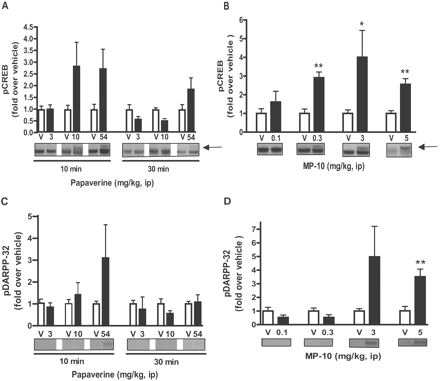
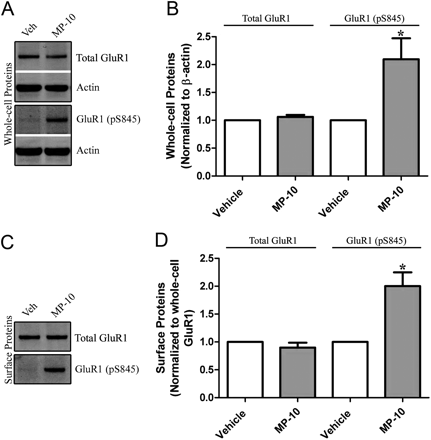
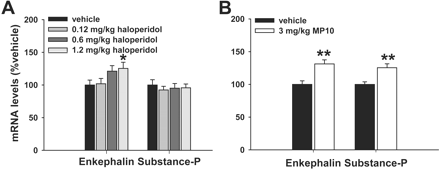
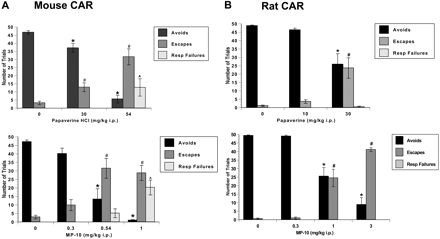
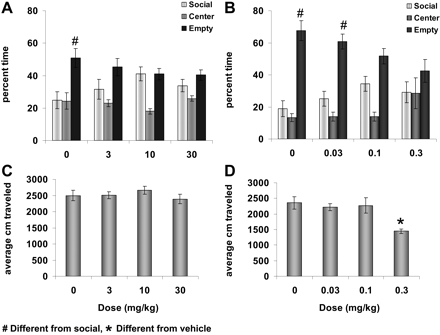
In vitro activity: PF-2545920 (Also known as Mardepodect, MP-10) is a potent and selective PDE10A (phosphodiesterase) inhibitor with IC50 of 0.37 nM, and with >1000-fold selectivity over the PDE. It is potentially useful for the treatment of schizophrenia. PF-2545920 is active in a range of antipsychotic models, antagonizing apomorphine-induced climbing in mice, inhibiting conditioned avoidance responding in both rats and mice, and blocking N-methyl-D-aspartate antagonist-induced deficits in prepulse inhibition of acoustic startle response in rats, while improving baseline sensory gating in mice. PF-2545920 intraperitoneally administrated at dose of 0.3, 3, and 5 mg/kg in male CF-1 mice causes striking increases in GluR1 phosphorylation levels of 3-, 5.4-, and 4.1-fold , respectively. MP-10 at concentration of 1 μM treats Rat striatal slices for 30 min, the level of GluR1S845 phosphorylation at the cell surface is significantly increased 2-fold, without change the level of total GluR1 on the cell surface. MP-10 intraperitoneally administrated at dose of 0.3, 3, and 5 mg/kg in male CF-1 mice results in robust, statistically significant increases in CREBS133 phosphorylation of 3-, 4-, and 2.6-fold, respectively. MP-10 intraperitoneally administrated at dose of 3 mg/kg increases both enkephalin and substance-P mRNA levels in striatum of CF-1 mice. MP-10 intraperitoneally administrated at dose of 0.3-1 mg/kg decreases avoidance responding with a significant treatment effect in the mouse CAR model. Mice treated with MP-10 at dose of 0.03 mg/kg spents more time in the empty than social side in the mice, MP-10 also dose-dependently decreased locomotor activity.
Kinase Assay: PF-2545920 (Also known as Mardepodect, MP-10) is a potent and selective PDE10A (phosphodiesterase) inhibitor with IC50 of 0.37 nM, and with >1000-fold selectivity over the PDE. Mardepodect (PF-2545920; MP-10) inhibits PDE10A activity in a concentration-dependent manner. In recombinant human PDE10A assays, it reduces the hydrolysis of cAMP (substrate concentration: 1 μM) by 50% at 0.39 nM (Ki) and cGMP (substrate concentration: 1 μM) by 50% at 0.47 nM (Ki). At concentrations up to 1 μM, it does not inhibit other PDE isoforms (e.g., PDE1A: IC50 > 10,000 nM; PDE4B: IC50 > 10,000 nM; PDE5A: IC50 > 10,000 nM), confirming high isoform selectivity. [1] - Mardepodect (PF-2545920; MP-10) increases intracellular cyclic nucleotide levels in PDE10A-expressing cells. In HEK293 cells stably transfected with human PDE10A, treatment with Mardepodect (1–100 nM) for 30 minutes increases intracellular cAMP levels by 1.5–3.2 fold (relative to vehicle control) and cGMP levels by 1.4–2.8 fold (measured via enzyme-linked immunosorbent assay, ELISA). In primary rat striatal neurons (which endogenously express PDE10A), 10 nM Mardepodect enhances forskolin-induced cAMP accumulation by 2.1 fold and nitric oxide (NO)-induced cGMP accumulation by 1.8 fold. [2] - Mardepodect (PF-2545920; MP-10) modulates neurotransmitter release in vitro. In primary rat striatal synaptosomes, Mardepodect (1–30 nM) reduces potassium chloride (KCl)-induced dopamine release by 15–40% and glutamate release by 12–35% (measured via high-performance liquid chromatography, HPLC). This effect is abolished in synaptosomes from PDE10A-knockout mice, confirming the effect is PDE10A-dependent. [2] |
| ln Vivo |
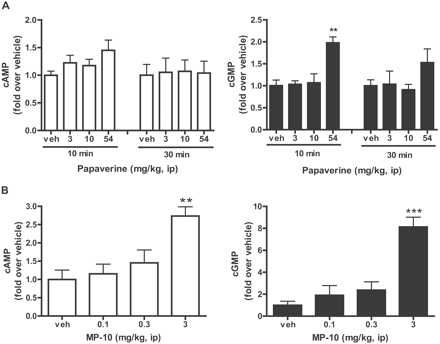
With an ED50 of 1 mg/kg, mardepodect (PF-2545920) is active in the conditioned avoidance response (CAR). The striatal cGMP assay in mice administered Mardepodect (PF-2545920) increases in a dose-dependent manner[2].
Mardepodect (PF-2545920; MP-10) improves positive symptoms of schizophrenia in preclinical models. In DBA/2 mice (a model of apomorphine-induced stereotypy, reflecting positive symptoms), oral administration of Mardepodect (0.3–3 mg/kg) 60 minutes before apomorphine (2 mg/kg, subcutaneous injection) reduces stereotyped behaviors (e.g., sniffing, rearing) by 20–65% in a dose-dependent manner. The ED50 for this effect is 0.8 mg/kg. [2] - Mardepodect (PF-2545920; MP-10) enhances cognitive function in schizophrenia-related models. In C57BL/6 mice subjected to the novel object recognition (NOR) test (a measure of working memory, reflecting cognitive symptoms), oral Mardepodect (0.1–1 mg/kg) administered 30 minutes before the test phase increases the discrimination index (DI) by 15–40% (vehicle DI: 0.12 ± 0.03; 1 mg/kg DI: 0.31 ± 0.04). In the Morris water maze (MWM) test (spatial memory), daily oral Mardepodect (0.3 mg/kg) for 7 days reduces escape latency by 35% and increases time spent in the target quadrant by 45% compared to vehicle controls. [2] - Mardepodect (PF-2545920; MP-10) alleviates negative symptoms of schizophrenia in preclinical models. In C57BL/6 mice subjected to the social interaction test (a model of social withdrawal, reflecting negative symptoms), oral Mardepodect (0.3–3 mg/kg) 30 minutes before testing increases social interaction time (e.g., sniffing, grooming) by 25–70% (vehicle: 18 ± 3 seconds; 3 mg/kg: 31 ± 4 seconds). This effect is not observed in PDE10A-knockout mice, confirming PDE10A specificity. [2] - Mardepodect (PF-2545920; MP-10) modulates CNS neurotransmitter levels in vivo. In rats implanted with microdialysis probes into the striatum, oral Mardepodect (1 mg/kg) increases extracellular cAMP levels by 2.3 fold and cGMP levels by 1.9 fold within 60 minutes of administration. It also reduces extracellular dopamine levels by 28% and glutamate levels by 22% in the striatum (measured via HPLC of dialysate samples) at 90 minutes post-dose. [2] |
| Enzyme Assay |
Recombinant human PDE10A activity assay: Recombinant human PDE10A (expressed in insect cells) is incubated with a reaction mixture containing 50 mM Tris-HCl (pH 7.4), 10 mM MgCl2, 1 μM [³H]-cAMP (or [³H]-cGMP) as substrate, and serial concentrations of Mardepodect (PF-2545920; MP-10) (0.01–100 nM) at 37°C for 30 minutes. The reaction is terminated by adding 0.5 M ZnSO4 and 0.5 M Ba(OH)2 to precipitate unreacted substrate. The supernatant (containing hydrolyzed [³H]-5'-AMP/[³H]-5'-GMP) is collected, and radioactivity is measured via liquid scintillation counting. The Ki value is calculated by fitting the percentage of enzyme activity (relative to vehicle control) to a competitive inhibition model using nonlinear regression. [1]
- PDE isoform selectivity assay: The same reaction conditions as the PDE10A assay are used, but with recombinant human PDE isoforms (PDE1A, PDE2A, PDE3A, PDE4B, PDE5A, PDE6, PDE7A, PDE8A, PDE9A, PDE11A) instead of PDE10A. Mardepodect is tested at concentrations up to 10,000 nM, and IC50 values are determined (if inhibition is observed). For non-PDE10A isoforms, IC50 values > 10,000 nM confirm selectivity. [1] - PDE10A cyclic nucleotide hydrolysis validation assay: To confirm inhibition of both cAMP and cGMP hydrolysis, the PDE10A assay is repeated with varying substrate concentrations (0.1–10 μM cAMP or cGMP) and fixed Mardepodect concentrations (0.1, 1, 10 nM). Lineweaver-Burk plots are generated to confirm competitive inhibition of both substrates, with Ki values consistent across substrate concentrations. [2] |
| Cell Assay |
PDE10A-expressing HEK293 cell cyclic nucleotide assay: HEK293 cells stably transfected with human PDE10A are seeded in 96-well plates and cultured overnight in DMEM with 10% fetal bovine serum. The medium is replaced with serum-free DMEM containing Mardepodect (PF-2545920; MP-10) (1–100 nM) and either forskolin (10 μM, to stimulate cAMP production) or sodium nitroprusside (SNP, 100 μM, to stimulate cGMP production). After 30 minutes of incubation at 37°C (5% CO2), cells are lysed with ice-cold lysis buffer. Intracellular cAMP and cGMP levels are quantified using commercial ELISA kits, with results expressed as fold change relative to vehicle + forskolin/SNP controls. [2]
- Primary rat striatal neuron neurotransmitter release assay: Striata are dissected from postnatal day 1–3 rat pups, and neurons are isolated via trypsin digestion and mechanical trituration. Neurons are cultured in neurobasal medium with B27 supplement for 14 days. On day 14, medium is replaced with Krebs-Ringer buffer, and Mardepodect (1–30 nM) is added for 20 minutes. KCl (50 mM) is then added to induce neurotransmitter release, and the buffer is collected after 10 minutes. Dopamine and glutamate levels in the collected buffer are measured via HPLC with electrochemical detection (for dopamine) or ultraviolet detection (for glutamate), with results expressed as percentage of KCl-induced release in vehicle-treated neurons. [2] |
| Animal Protocol |
Dissolved in 5:5:90 DMSO:1N HCl:saline; 0.1 mg/kg; i.v. injection
Jugular vein-cannulated male Sprague-Dawley rats Apomorphine-induced stereotypy model (mouse): Male DBA/2 mice (8–10 weeks old, 20–25 g) are randomly divided into vehicle and Mardepodect (PF-2545920; MP-10) groups (n=8/group). Mardepodect is dissolved in 0.5% carboxymethyl cellulose (CMC) with 0.1% Tween 80 and administered orally at doses of 0.3, 1, or 3 mg/kg. Vehicle (0.5% CMC + 0.1% Tween 80) is administered to the control group. Sixty minutes after Mardepodect administration, apomorphine (2 mg/kg) is injected subcutaneously. Stereotyped behaviors (sniffing, rearing, licking) are scored every 10 minutes for 60 minutes using a 4-point scale (0: no stereotypy; 4: continuous stereotypy). Total stereotypy scores are calculated and compared between groups. [2] - Novel object recognition (NOR) test (mouse): Male C57BL/6 mice (10–12 weeks old, 22–26 g) are habituated to an open-field arena (40 × 40 × 30 cm) for 10 minutes/day for 2 days. On the test day, mice are administered oral Mardepodect (0.1, 0.3, 1 mg/kg) or vehicle (0.5% CMC) 30 minutes before the test. The test phase involves placing two identical objects (A1, A2) in the arena for 10 minutes (training). After a 1-hour delay, one object is replaced with a novel object (B), and the mouse is returned to the arena for 10 minutes (testing). Time spent exploring each object is recorded, and the discrimination index (DI) is calculated as (time with B – time with A1)/(time with B + time with A1). [2] - Striatal microdialysis (rat): Male Sprague-Dawley rats (250–300 g) are anesthetized with isoflurane and implanted with a guide cannula targeting the striatum (coordinates: AP +0.2 mm, ML +2.5 mm, DV –4.0 mm relative to bregma). After a 7-day recovery period, a microdialysis probe (3 mm membrane length) is inserted through the guide cannula. Artificial cerebrospinal fluid (aCSF) is perfused at 1 μL/min for 2 hours to stabilize baseline neurotransmitter levels. Mardepodect (1 mg/kg) is administered orally, and dialysate samples are collected every 30 minutes for 4 hours. Samples are analyzed via HPLC to measure extracellular cAMP, cGMP, dopamine, and glutamate levels, with results expressed as percentage of baseline (pre-dose) levels. [2] - Pharmacokinetic (PK) study (rat): Male Sprague-Dawley rats (200–220 g) are administered Mardepodect either orally (1, 3, 10 mg/kg, dissolved in 0.5% CMC) or intravenously (1 mg/kg, dissolved in saline with 5% DMSO). Blood samples (0.2 mL) are collected from the jugular vein at 0.083, 0.25, 0.5, 1, 2, 4, 6, 8, 12, 24 hours post-dose. Plasma is separated via centrifugation, and Mardepodect concentrations are measured via liquid chromatography-tandem mass spectrometry (LC-MS/MS). PK parameters (Cmax, Tmax, AUC0-∞, t1/2, CL, Vd) are calculated using non-compartmental analysis. [1] |
| ADME/Pharmacokinetics |
Oral absorption: Mardepodect (PF-2545920; MP-10) showed good oral absorption in rats. After a single oral dose of 10 mg/kg, the peak plasma concentration (Cmax) was 125 ± 18 ng/mL and the time to peak concentration (Tmax) was 1.2 ± 0.3 h. The oral bioavailability was 42 ± 5% (compared to intravenous 1 mg/kg). In dogs, the oral bioavailability was 58 ± 7% (oral 10 mg/kg), the Cmax was 189 ± 22 ng/mL, and the Tmax was 1.5 ± 0.4 h. [1]
- Distribution: Mardepodect had a large volume of distribution (Vd) in rats (8.3 ± 1.2 L/kg) and dogs (10.5 ± 1.5 L/kg), indicating its extensive tissue penetration. In mice, the drug crosses the blood-brain barrier (BBB), with a brain-to-plasma concentration ratio of 0.8 ± 0.1 one hour after oral administration of 3 mg/kg. [1, 2] - Metabolism: Maddopate is primarily metabolized in the liver by cytochrome P450 (CYP) enzymes. In human liver microsomes, the major metabolic enzymes are CYP3A4 (65% of metabolism) and CYP2D6 (25%). The major metabolite is the hydroxylated derivative (M1), which has less than 10% less PDE10A inhibitory activity than the parent drug. [1] - Excretion: In rats, after intravenous injection of 1 mg/kg [¹⁴C]-maddopate, 72 ± 6% of the radioactive material was excreted in feces and 18 ± 3% in urine within 72 hours. The elimination half-life (t1/2) was 4.5 ± 0.6 hours in rats and 6.2 ± 0.8 hours in dogs. [1] |
| Toxicity/Toxicokinetics |
Plasma protein binding: Madbot (PF-2545920; MP-10) has high plasma protein binding in humans (97 ± 1%), rats (96 ± 2%), and dogs (98 ± 1%), primarily binding to albumin and α1-acid glycoprotein. At therapeutic concentrations, no other drugs (e.g., risperidone, olanzapine) were observed to have a significant displacement effect on it. [1] - Acute toxicity: In mice, the oral median lethal dose (LD50) of Madbot is >200 mg/kg (no deaths were observed at a dose of 200 mg/kg). At doses up to 100 mg/kg, no significant changes in body weight, food intake, or clinical symptoms (e.g., ataxia, somnolence) were observed. [1] - Subacute toxicity: In a 14-day repeated-dose study in rats (oral doses of 1, 10, and 100 mg/kg/day), no treatment-related changes in liver function (ALT, AST levels) or kidney function (BUN, creatinine levels) were observed. A slight decrease in white blood cell count was observed at the 100 mg/kg/day dose, but it was reversible upon discontinuation of the drug. [1] - Drug interactions: At concentrations up to 10 μM, Mardepodect does not inhibit or induce the major CYP enzymes (CYP1A2, CYP2C9, CYP2C19, CYP2D6, CYP3A4) in human liver microsomes. In rats, co-administration with the CYP3A4 inhibitor ketoconazole (100 mg/kg, orally) increased the AUC0-∞ of Mardepodect by 2.3-fold, confirming it as a CYP3A4 substrate. [1]
|
| References |
|
| Additional Infomation |
Mechanism of action: Madbod (PF-2545920; MP-10) exerts its antipsychotic-like effect by inhibiting PDE10A. PDE10A is an enzyme highly expressed in the striatum (a key brain region in the pathophysiology of schizophrenia). PDE10A hydrolyzes cAMP and cGMP; Madbod's inhibition of PDE10A increases intracellular cyclic nucleotide levels, thereby activating protein kinase A (PKA) and protein kinase G (PKG). These kinases regulate the activity of dopaminergic and glutamatergic neurons in the striatum, thereby reducing dopaminergic hyperactivity (positive symptoms), enhancing synaptic plasticity (cognitive symptoms), and restoring social motivation (negative symptoms). [2]
- Background of Clinical Candidate Drug: Mardepodect was identified as a clinical candidate drug for a novel class of quinoline PDE10A inhibitors due to its high selectivity for PDE10A, good oral bioavailability, good central nervous system penetration, and efficacy demonstrated in preclinical models of three symptom domains of schizophrenia (positive symptoms, cognitive symptoms, and negative symptoms). It entered a Phase II clinical trial for schizophrenia, but was terminated due to limited efficacy compared to standard antipsychotic drugs. [1, 2] - PDE10A Expression Specificity: PDE10A is mainly expressed in the striatum (medium-sized spinous neurons), with less expression in the nucleus accumbens and olfactory tubercle. This regional specificity minimizes off-target effects on other brain regions, thus contributing to the good safety profile of Mardepodect in preclinical studies. [2] - Comparison with standard antipsychotics: Unlike typical antipsychotics that block dopamine D2 receptors (and cause extrapyramidal side effects) (e.g., haloperidol) or atypical antipsychotics that block multiple receptors (e.g., clozapine), madopodide acts through a unique PDE10A-mediated mechanism, and no extrapyramidal side effects (e.g., rigidity) were observed in mice at doses up to 30 mg/kg. [2] |
| Molecular Formula |
C25H20N4O
|
|---|---|
| Molecular Weight |
392.45
|
| Exact Mass |
392.163
|
| Elemental Analysis |
C, 76.51; H, 5.14; N, 14.28; O, 4.08
|
| CAS # |
898562-94-2
|
| Related CAS # |
Mardepodect hydrochloride;2070014-78-5
|
| PubChem CID |
11581936
|
| Appearance |
White to off-white solid powder
|
| Density |
1.2±0.1 g/cm3
|
| Boiling Point |
568.6±50.0 °C at 760 mmHg
|
| Flash Point |
297.7±30.1 °C
|
| Vapour Pressure |
0.0±1.5 mmHg at 25°C
|
| Index of Refraction |
1.661
|
| LogP |
3.52
|
| Hydrogen Bond Donor Count |
0
|
| Hydrogen Bond Acceptor Count |
4
|
| Rotatable Bond Count |
5
|
| Heavy Atom Count |
30
|
| Complexity |
531
|
| Defined Atom Stereocenter Count |
0
|
| SMILES |
N1C=CC(C2C(C3C=CC(OCC4C=CC5C(=CC=CC=5)N=4)=CC=3)=NN(C)C=2)=CC=1
|
| InChi Key |
AZEXWHKOMMASPA-UHFFFAOYSA-N
|
| InChi Code |
InChI=1S/C25H20N4O/c1-29-16-23(18-12-14-26-15-13-18)25(28-29)20-7-10-22(11-8-20)30-17-21-9-6-19-4-2-3-5-24(19)27-21/h2-16H,17H2,1H3
|
| Chemical Name |
2-(4-(1-methyl-4-pyridin-4-yl-1H-pyrazol-3-yl)phenoxymethyl)quinoline
|
| Synonyms |
Mardepodect; PF-2545920; PF 2545920; MP-10; MP10; MP 10; PF2545920;
|
| HS Tariff Code |
2934.99.9001
|
| Storage |
Powder -20°C 3 years 4°C 2 years In solvent -80°C 6 months -20°C 1 month |
| Shipping Condition |
Room temperature (This product is stable at ambient temperature for a few days during ordinary shipping and time spent in Customs)
|
| Solubility (In Vitro) |
DMSO: 78 mg/mL (198.8 mM)
Water: 1 mg/mL (Insoluble) Ethanol: 78 mg/mL (198.8 mM) |
|---|---|
| Solubility (In Vivo) |
Solubility in Formulation 1: ≥ 2.5 mg/mL (6.37 mM) (saturation unknown) in 10% DMSO + 40% PEG300 + 5% Tween80 + 45% Saline (add these co-solvents sequentially from left to right, and one by one), clear solution.
For example, if 1 mL of working solution is to be prepared, you can add 100 μL of 25.0 mg/mL clear DMSO stock solution to 400 μL PEG300 and mix evenly; then add 50 μL Tween-80 to the above solution and mix evenly; then add 450 μL normal saline to adjust the volume to 1 mL. Preparation of saline: Dissolve 0.9 g of sodium chloride in 100 mL ddH₂ O to obtain a clear solution. Solubility in Formulation 2: ≥ 2.5 mg/mL (6.37 mM) (saturation unknown) in 10% DMSO + 90% (20% SBE-β-CD in Saline) (add these co-solvents sequentially from left to right, and one by one), clear solution. For example, if 1 mL of working solution is to be prepared, you can add 100 μL of 25.0 mg/mL clear DMSO stock solution to 900 μL of 20% SBE-β-CD physiological saline solution and mix evenly. Preparation of 20% SBE-β-CD in Saline (4°C,1 week): Dissolve 2 g SBE-β-CD in 10 mL saline to obtain a clear solution. View More
Solubility in Formulation 3: ≥ 2.5 mg/mL (6.37 mM) (saturation unknown) in 10% DMSO + 90% Corn Oil (add these co-solvents sequentially from left to right, and one by one), clear solution. |
| Preparing Stock Solutions | 1 mg | 5 mg | 10 mg | |
| 1 mM | 2.5481 mL | 12.7405 mL | 25.4810 mL | |
| 5 mM | 0.5096 mL | 2.5481 mL | 5.0962 mL | |
| 10 mM | 0.2548 mL | 1.2740 mL | 2.5481 mL |
*Note: Please select an appropriate solvent for the preparation of stock solution based on your experiment needs. For most products, DMSO can be used for preparing stock solutions (e.g. 5 mM, 10 mM, or 20 mM concentration); some products with high aqueous solubility may be dissolved in water directly. Solubility information is available at the above Solubility Data section. Once the stock solution is prepared, aliquot it to routine usage volumes and store at -20°C or -80°C. Avoid repeated freeze and thaw cycles.
Calculation results
Working concentration: mg/mL;
Method for preparing DMSO stock solution: mg drug pre-dissolved in μL DMSO (stock solution concentration mg/mL). Please contact us first if the concentration exceeds the DMSO solubility of the batch of drug.
Method for preparing in vivo formulation::Take μL DMSO stock solution, next add μL PEG300, mix and clarify, next addμL Tween 80, mix and clarify, next add μL ddH2O,mix and clarify.
(1) Please be sure that the solution is clear before the addition of next solvent. Dissolution methods like vortex, ultrasound or warming and heat may be used to aid dissolving.
(2) Be sure to add the solvent(s) in order.
|
|---|
|
|
|
|---|
|
|
Products are for research use only; We do not sell to patients
Copyright 2020 InvivoChem LLC | All Rights Reserved


 COA
COA