| Size | Price | Stock | Qty |
|---|---|---|---|
| 10mg |
|
||
| 25mg |
|
||
| 50mg |
|
||
| 100mg |
|
||
| 250mg |
|
||
| 500mg |
|
||
| 1g | |||
| Other Sizes |
Purity: ≥98%
| Targets |
Survivin (IC50 = 0.54 nM)
Survivin (BIRC5, Inhibitor of Apoptosis Protein): YM155 (Sepantronium Bromide) is a selective suppressant of Survivin expression, with an EC50 of 0.5 ± 0.1 μM for inhibiting Survivin protein levels in human hormone-refractory prostate cancer PC-3 cells (measured by Western blot) [1] - Survivin-Mediated Radiotherapy Resistance: In non-small cell lung cancer (NSCLC) A549 cells, YM155 reverses radiotherapy resistance by suppressing Survivin, with an EC50 of 0.8 ± 0.2 μM for reducing Survivin expression post-radiation [2] |
|---|---|
| ln Vitro |
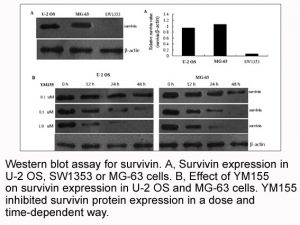
YM155 is not sensitive to survivn gene promoter-driven luciferase reporter activity even at 30 μM. Through transcriptional inhibition of the survivin gene promoter, YM155 significantly reduces endogenous survivin expression in human HRPC cell lines PC-3 and PPC-1 that lack p53. The protein expression of c-IAP2, XIAP, Bcl-2, Bcl-xL, Bad, α-actin, and β-tubulin is not sufficiently affected by YM155 at 100 nM, on the other hand. With a corresponding rise in caspase-3 activity, YM155 shows significant apoptosis in human cancer cell lines such as PC-3 and PPC-1. The human cancer cell lines PC-3, PPC-1, DU145, TSU-Pr1, 22Rv1, SK-MEL-5, and A375 are all potently inhibited by YM155 (with IC50 values ranging from 2.3 to 11 nM, respectively).[1] YM155 increases the sensitivity of NSCLC cells to γ-radiation. Caspase-3 activity and the number of apoptotic cells are both boosted by the combination of YM155 and beta-radiation. Double-strand breaks in nuclear DNA caused by radiation are postponed by YM155.[2]
Antiproliferative & Pro-Apoptotic Effects on Prostate Cancer Cells: Human hormone-refractory prostate cancer PC-3 and DU145 cells were treated with YM155 (0.01–5 μM) for 48 hours. MTT assay showed IC50 values of 0.4 ± 0.1 μM (PC-3) and 0.6 ± 0.1 μM (DU145). Annexin V-FITC/PI staining revealed apoptosis rates increased from 4% (control) to 45% (1 μM YM155, PC-3) and 38% (1 μM YM155, DU145). RT-PCR and Western blot confirmed dose-dependent reduction in Survivin mRNA (by 75% at 1 μM) and protein (by 80% at 1 μM) [1] - Radiosensitization in NSCLC Cells: NSCLC A549 and H460 cells were pre-treated with YM155 (0.1–1 μM) for 24 hours, then irradiated with 0–8 Gy X-rays. Colony formation assay showed: At 4 Gy, the surviving fraction of A549 cells decreased from 0.45 (radiation alone) to 0.12 (0.5 μM YM155 + radiation) and 0.08 (1 μM YM155 + radiation). Western blot detected reduced Survivin protein (by 65% at 0.5 μM) and increased cleaved caspase-3 (3.2-fold at 0.5 μM) post-radiation [2] - Synergy with IL-2 in Renal Cell Carcinoma (RCC) Cells: Human RCC 786-O and ACHN cells were treated with YM155 (0.1–0.5 μM) alone or in combination with IL-2 (100 IU/mL) for 72 hours. MTT assay showed: YM155 alone (0.5 μM) inhibited proliferation by 40% (786-O) and 35% (ACHN); combination inhibited by 75% (786-O) and 70% (ACHN) (synergistic index = 0.6). Annexin V staining showed apoptosis rates increased from 15% (IL-2 alone) to 55% (combination, 786-O) [3] |
| ln Vivo |
At doses of 3 and 10 mg/kg, YM155 completely inhibits the growth of PC-3 s.c. xenografted prostate tumors without causing weight loss or a drop in blood cell count. YM155 is widely distributed throughout tumor tissue, according to pharmacokinetic analysis. Furthermore, in PC-3 orthotopic xenografts, YM155 exhibits 80% TGI at a dose of 5 mg/kg. [1] In nude mice, the combination therapy of YM155 and -radiation exhibits strong antitumor activity against H460 or Calu6 xenografts. [2]
Regression of Prostate Cancer Xenografts: Nude mice (BALB/c nu/nu, 6–8 weeks old) were subcutaneously injected with 5×10⁶ PC-3 cells. When tumors reached ~100 mm³, mice were divided into 3 groups (n=8 per group): 1. Vehicle (0.1% DMSO + sterile saline); 2. YM155 5 mg/kg; 3. YM155 10 mg/kg. YM155 was administered intravenously once daily for 14 days. Compared to controls: - 5 mg/kg group: Tumor volume reduced by 55%, tumor weight reduced by 50%, Survivin protein in tumors reduced by 60%; - 10 mg/kg group: Tumor volume reduced by 75%, tumor weight reduced by 70%, Survivin protein reduced by 85%. No complete tumor regression was observed, but tumor growth was suppressed for 21 days post-treatment [1] - Synergistic Antitumor Effect with IL-2 in RCC Mouse Model: C57BL/6 mice were subcutaneously injected with 2×10⁶ murine RCC Renca cells. When tumors reached ~80 mm³, mice were randomized into 4 groups (n=6 per group): 1. Vehicle; 2. YM155 10 mg/kg (intraperitoneal, once daily); 3. IL-2 10,000 IU/mouse (subcutaneous, twice daily); 4. YM155 + IL-2. Treatment lasted 10 days. Compared to controls: - YM155 alone: Tumor volume reduced by 35%; - IL-2 alone: Tumor volume reduced by 30%; - Combination: Tumor volume reduced by 80%, tumor weight reduced by 75%, CD8⁺ T cell infiltration in tumors increased by 3.5-fold. Immunohistochemistry showed Survivin protein reduced by 70% in the combination group [3] |
| Enzyme Assay |
A 2,767-bp sequence of human survivin gene promoter is isolated from human genomic DNA by PCR using Pyrobest polymerase and the following primers: 5
Immunofluorescence staining of γ-H2AX. [2] Cells were grown to 50% confluence in two-well Lab-Tec Chamber Slides (Nunc) and then cultured for 48 h in the presence of 50 nmol/L YM155 or vehicle before exposure to 3 Gy of γ-radiation. At various times thereafter, they were fixed with 4% paraformaldehyde for 10 min at room temperature, permeabilized with 0.1% Triton X-100 for 10 min at 4°C, and exposed to 5% nonfat dried milk for 10 min at room temperature. The slides were washed with PBS and then incubated at room temperature first for 2 h with mouse monoclonal antibodies to histone γ-H2AX at a dilution of 1:300 and then for 1 h with Alexa 488–labeled goat antibodies to mouse IgG at a dilution of 1:700. The slides were mounted in fluorescence mounting medium, and fluorescence signals were visualized with a confocal laser-scanning microscope equipped with the LSM5 PASCAL system. Three random fields each containing =50 cells were examined at a magnification of × 100. Nuclei containing ≥10 immunoreactive foci were counted as positive for γ-H2AX, as previously described, and percentage of positive cells was calculated[2]. |
| Cell Assay |
Cells are seeded in 96-well plates at a density of 5-40 × 103. For 48 hours, cells are given DMSO with YM155 dissolved in it. Then, using a sulforhodamine B assay, the cell count is calculated.
Trypan blue exclusion staining for determination of cell viability. [1] After culture for 48 h in the absence or presence of YM155, PC-3 and PPC-1 cells were collected by trypsinization and centrifugation (0.05% trypsin-EDTA) and resuspended in DMEM. The cell suspension was diluted in equal volumes of trypan blue (0.4% working solution). Viable (unstained) and dead (stained) cells were counted on a hemocytometer, and the ratio of viable cells to the total number of cells was expressed as viability percentage. Measurement of caspase-3 activity. [1] The caspase-3 activity was measured with a CPP32/Caspase-3 Fluometric Protease Assay Kit (MBL) according to the manufacturer's instructions. After incubation with YM155 for 48 h, PC-3 and PPC-1 cells were lysed in 100 μL of a cell lysis buffer (provided with the kit) and equal volumes (50 μL) of cell lysate were obtained (100 μg of protein). After addition of 2× reaction buffer, the mixture was added to a black 96-well plate. The DEVD-AFC substrate (appended with the kit) was then added at 5 mL/well and the mixture incubated at 37°C for 30 min. Fluorescence emissions were quantified with a spectrofluorometer at an excitation wavelength of 390 nm and an emission wavelength of 460 nm. In vitro cell growth inhibition assay. [1] The antiproliferative activity of YM155 was measured by the method used at the National Cancer Institute. After treatment with YM155 for 48 h, the cell count was determined by sulforhodamine B assay. The GI50 value was calculated by logistic analysis, which is the drug concentration resulting in a 50% reduction in the net protein increase (as measured by sulforhodamine B staining) in control cells during the drug incubation. The assay was done in triplicate, and the mean GI50 value was obtained from the results of four independent assays. Time dependency of antitumor activity in vitro. [1] A549 cells were treated with YM155, methotrexate, or doxorubicin. Each compound was removed after various lengths of exposure time by washing five times with fresh medium. At 72 h of incubation after the beginning of cell treatment, the effect of the selected compound on cell proliferation was determined with the Alamar Blue assay (Serotec; ref. 22), done in duplicate for each concentration (n = 1). The IC50 was calculated by logistic analysis. To understand the in vitro mode of action and pharmacodynamic properties of each compound, the log slope (exposure time) and the reciprocal of the log slope (IC50 of the antiproliferative effect on A549) were plotted on a logarithmic scale for YM155, doxorubicin (as area under the curve–dependent drug), and methotrexate (as time-dependent drug), and the slope of the IC50-exposure time curve was compared among the three agents Prostate Cancer Cell Proliferation & Apoptosis Assay: PC-3/DU145 cells were seeded in 96-well plates (5×10³ cells/well) for MTT or 6-well plates (2×10⁵ cells/well) for apoptosis/Western blot. MTT: YM155 (0.01–5 μM) treated for 48 hours, MTT (5 mg/mL) added for 4 hours, DMSO dissolved, absorbance measured at 570 nm. Apoptosis: Cells stained with Annexin V-FITC/PI, flow cytometry analyzed. Western blot: Cells lysed, 30 μg protein probed with anti-Survivin, anti-cleaved caspase-3, anti-β-actin [1] - NSCLC Radiosensitization Colony Formation Assay: A549/H460 cells were seeded in 6-well plates (200–1000 cells/well) and pre-treated with YM155 (0.1–1 μM) for 24 hours. Cells were irradiated with X-rays (0–8 Gy) using a linear accelerator, then cultured for 14 days. Colonies (>50 cells) were stained with crystal violet, counted, and surviving fraction (SF = colony number / (seeded cells × plating efficiency)) calculated [2] - RCC Cell Synergy Assay with IL-2: 786-O/ACHN cells were seeded in 96-well plates (5×10³ cells/well) and treated with YM155 (0.1–0.5 μM) ± IL-2 (100 IU/mL) for 72 hours. MTT assay measured proliferation. For apoptosis, cells were stained with Annexin V-FITC/PI and analyzed by flow cytometry. Western blot detected Survivin, CD80 (immune marker), and β-actin [3] |
| Animal Protocol |
PC-3 s.c. (orthotopic) xenografts in male nude mice (BALB/c nu/nu)
5 mg/kg Subcutaneous injection as a 3-day continuous infusion per week for 3 weeks by an implanted micro-osmotic pump. For the in vivo experiments, YM155 was dissolved and diluted in saline immediately before administration. In vivo antitumor activities against PC-3 s.c. xenograft model.[1] Five-week-old male nude mice (BALB/c nu/nu) were used. PC-3 cells (2 × 10⁶–3 × 10⁶) were injected into the flanks of the mice and allowed to reach a tumor volume of >100 mm3 in tumor volume (length × width2 × 0.5). YM155 was s.c. administered as a 3-day continuous infusion per week for 2 weeks using an implanted micro-osmotic pump (Alzet model 1003D, Durect) or i.v. administered five times a week for 2 weeks. The percentage of tumor growth inhibition 14 days after initial YM155 administration was calculated for each group using the following formula: MTV = 100 × {1 − [(MTV of the treated group on day 14) − (MTV of the treated group on day 0)] / [(MTV of the control group on day 14) − (MTV of the control group on day 0)]}, where MTV is mean tumor volume. For both the frozen tumors and plasma samples, survivin expression levels were analyzed by Western blotting and YM155 drug concentration by high-performance liquid chromatography/triple quadrupole mass spectrometry (LC/MS/MS) using validated methods. In vivo antitumor activities against PC-3 orthotopic xenograft model. [1] For orthotopic implantation, a PC-3 cell suspension (1 × 10⁶/20 μL per mouse) was injected into the prostate dorsolateral lobe (right side) of 7-week-old male nude mice (BALB/c nu/nu). Two weeks after implantation, YM155 was s.c. administered as a 3-day continuous infusion per week for 3 weeks at 5 mg/kg/d using an implanted micro-osmotic pump (Alzet model 1003D, Durect). Body weight was measured periodically starting from the first day of YM155 administration. Three weeks later, the tumors adhering to the prostate and seminal vesicle were taken and weighed as tumor weight. The antitumor activity of YM155 was expressed as a percentage of tumor growth inhibition calculated using the following formula: MTW = 100 × [1 − (MTW on day 21 of the treated group) / (MTW on day 21 of the control group)]. Evaluation of tumor growth in vivo. [2] Tumor cells (2 × 10⁶) were injected s.c. into the right hind leg of 6-week-old female athymic nude mice (BALB/c nu/nu). Tumor volume was determined from caliper measurement of tumor length (L) and width (W) according to the formula LW2/2. Treatment was initiated when the tumors in each group of animals achieved an average volume of ∼200 to 250 mm3. Treatment groups (each containing eight mice) consisted of vehicle control (physiologic saline), YM155 alone, vehicle plus radiation, and YM155 plus radiation. Vehicle or YM155 at a dose of 5 mg/kg of body mass was administered over 7 consecutive days (days 1-7) with the use of an implanted micro-osmotic pump (Alzet model 1003D; Durect). Mice in the radiation groups received 10 Gy of γ-radiation from a cobalt irradiator either as a single fraction on day 3 of drug treatment or fractionated over 5 consecutive days (days 3 to 7); the radiation was targeted to the tumor, with the remainder of the body shielded with lead. Growth delay (GD) was calculated as the time required to achieve a 5-fold increase in volume for treated tumors minus that for control tumors. The enhancement factor was then determined as: (GDcombination − GDYM155)/GDradiation.[2] Luciferase-expressing RENCA cells were implanted to the subrenal capsule of the left kidney and tail vein, respectively, to produce a mouse RCC model with an orthotopic tumor and metastatic lung tumors. The mice were randomly divided into four groups with an even distribution of IVIS values. Group 1 received intraperitoneal (IP) injection of 100 μL of phosphate-buffered saline (PBS) as a vehicle control; group 2 received YM155 alone (1 mg/kg body weight per day for 1 week by IP injection); group 3 received IL-2 alone (6000 U of recombinant IL-2 by IP injection on days 0, 4, and 8 of treatment); and group 4, the combination therapy group, received YM155 and IL-2 (dose and dosing schedule the same as in group 2 plus group 3). Tumor imaging was performed and tumor volume was analyzed in all groups on day 14 post-treatment. The mice were sacrificed, and the weights of the orthotopic tumor in the left kidney and sections of bilateral lung tissues with metastatic growth were measured.[3] PC-3 Prostate Cancer Xenograft Model: Male BALB/c nu/nu mice (6–8 weeks old) were subcutaneously injected with 5×10⁶ PC-3 cells (0.2 mL PBS) into the right flank. When tumors reached ~100 mm³, mice were grouped (n=8): - Vehicle: 0.1% DMSO + sterile saline, intravenous injection (i.v.) once daily; - YM155 5 mg/kg: Dissolved in 0.1% DMSO + saline (0.5 mg/mL), i.v. once daily; - YM155 10 mg/kg: Dissolved in 0.1% DMSO + saline (1 mg/mL), i.v. once daily. Treatment lasted 14 days. Tumor volume (length × width² / 2) and body weight were measured every 2 days. Mice were euthanized on day 28; tumors were excised, weighed, and frozen for Western blot (Survivin detection) [1] - Renca RCC Mouse Model with IL-2: Female C57BL/6 mice (6–8 weeks old) were subcutaneously injected with 2×10⁶ Renca cells (0.2 mL PBS) into the right flank. When tumors reached ~80 mm³, mice were grouped (n=6): - Vehicle: 0.1% DMSO + saline, intraperitoneal injection (i.p.) once daily; - YM155 10 mg/kg: Dissolved in 0.1% DMSO + saline (1 mg/mL), i.p. once daily; - IL-2: 10,000 IU/mouse, subcutaneous injection (s.c.) twice daily; - YM155 + IL-2: Combined administration as above. Treatment lasted 10 days. Tumor volume was measured every 2 days. Mice were euthanized on day 20; tumors were fixed in 10% formalin for immunohistochemistry (Survivin, CD8⁺ T cells) or frozen for protein extraction [3] |
| Toxicity/Toxicokinetics |
In vitro cytotoxicity: Normal human prostate epithelial cells RWPE-1 were treated with YM155 (0.1–5 μM) for 48 hours. MTT assay showed that cell viability was >85% at concentrations ≤1 μM; cell viability decreased by about 15% at 5 μM, indicating that YM155 had low cytotoxicity to normal cells [1]. In vivo safety: No significant changes in body weight (±5% compared to control group), organ weight (liver, kidney, spleen) or serum biochemical indicators (ALT, AST, BUN, creatinine) were observed in the PC-3 xenograft model (YM155 5–10 mg/kg, intravenous injection, 14 days) and the Renca model (YM155 10 mg/kg, intraperitoneal injection, 10 days). Pathological examination of liver and kidney tissues revealed no inflammation or necrosis [1,3].
|
| References |
|
| Additional Infomation |
Sepantrilium bromide is an organic bromide salt composed of a secantrilium cation and a bromide anion. Studies have shown that it selectively inhibits the promoter activity of the survivin (BIRC5) gene and downregulates survivin expression in vitro, thereby inducing apoptosis. It possesses dual effects: anti-tumor activity, survivin inhibition, and apoptosis induction. Its molecular structure contains a secantrilium group. Sepantrilium bromide is a small-molecule pro-apoptotic agent with potential anti-tumor activity. Sepantrilium bromide selectively inhibits survivin expression in tumor cells, thereby inhibiting survivin's anti-apoptotic activity (through extrinsic or endogenous apoptotic pathways), ultimately inducing tumor cell apoptosis. Survivin is a member of the inhibitor of apoptosis protein (IAP) gene family, expressed during embryonic development but not in most normal terminally differentiated tissues. Survivin expression is upregulated in various human cancers, and its expression in tumors is associated with a more aggressive phenotype, shorter survival, and reduced response to chemotherapy.
Increasing evidence suggests that Survivin, a member of the inhibitor of apoptosis (IAP) family, plays a crucial role in drug resistance and cancer cell survival in various cancers, including hormone-refractory prostate cancer (HRPC). This study characterized a novel small-molecule Survivin inhibitor, YM155, using a Survivin gene promoter activity assay. YM155 at a concentration of 10 nmol/L inhibited Survivin expression and induced apoptosis in PC-3 and PPC-1 human HRPC cell lines. Conversely, concentrations up to 100 nmol/L of YM155 had little effect on the expression levels of other IAPs or Bcl-2-related proteins. In a mouse model of subcutaneous PC-3 tumor transplantation, continuous infusion of YM155 at doses of 3 to 10 mg/kg for 3 days induced significant tumor regression, accompanied by inhibition of intratumoral survivin expression. YM155 also completely inhibited the growth of orthotopically transplanted PC-3 tumors. During the experiment, mice treated with YM155 did not experience significant weight loss. Pharmacokinetic analysis showed that YM155 was widely distributed in tumor sites, with concentrations approximately 20 times higher than plasma concentrations. Our study was the first attempt to demonstrate tumor regression and inhibition of survivin expression in p53-deficient human HRPC cells by treatment with a single small molecule compound. Further extensive research on YM155 in multiple cancer types, including castration-resistant prostate cancer [HRPC], appears valuable for the development of this novel therapeutic approach. [1] Objective: Survivin is a member of the family of apoptosis-inhibiting proteins and is an attractive target for cancer therapy. We investigated the effect of YM155, a small molecule inhibitor of survivin expression, on the γ-ray sensitivity of human non-small cell lung cancer (NSCLC) cell lines. Experimental design: The radiosensitizing effect of YM155 was assessed based on cell death, clonogenic survival, and tumor xenograft progression. Radiation-induced DNA damage was assessed based on histone H2AX phosphorylation and DNA focusing formation. Results: YM155 induced downregulation of survivin expression in NSCLC cells in a concentration- and time-dependent manner. Colony formation survival assays showed that YM155 enhanced the sensitivity of NSCLC cells to gamma rays in vitro. Combined application of YM155 and gamma rays synergistically increased the number of apoptotic cells and caspase-3 activity. Immunofluorescence analysis of histone γ-H2AX also showed that YM155 delayed the repair of radiation-induced nuclear DNA double-strand breaks. Furthermore, combined treatment with YM155 and gamma rays significantly delayed the growth of NSCLC xenograft tumors in nude mice, with better results than either treatment alone. Conclusion: These results indicate that YM155 can enhance the sensitivity of NSCLC cells to radiation both in vitro and in vivo, and this effect may be at least partially attributed to its inhibition of DNA repair and enhancement of apoptosis through downregulation of survivin expression. Combined treatment with YM155 and radiotherapy is a potential anti-cancer strategy worthy of investigation in clinical trials. [2] YM155 is a small-molecule survivin inhibitor and has been developed as a potential anticancer drug. We investigated the combination therapy of YM155 and interleukin-2 (IL-2) using a mouse model of renal cell carcinoma (RCC). YM155 induces cell cycle arrest and apoptosis in renal cell carcinoma (RENCA) cells. Subsequently, we transplanted RENCA cells expressing luciferase into the left kidney and lung of BALB/c mice to construct an RCC metastasis model. In these orthotopic renal cell carcinoma and lung metastasis models, both YM155 and IL-2 synergistically reduced tumor weight, lung metastases, and the density of luciferin-stained tumors. In addition, the combination therapy significantly inhibited the proliferation of regulatory T cells and myeloid-derived suppressor cells compared with monotherapy. We suggest that the combination of YM155 and IL-2 be tested as a potential treatment for RCC patients. [3] Mechanism of action: 1. Survivin inhibition (References 1, 2, 3): YM155 binds to the promoter region of the Survivin gene, inhibiting its transcription, thereby reducing the level of Survivin protein. Survivin depletion disrupts the interaction between Survivin and caspase-3/9, releasing active caspases to induce apoptosis [1] 2. Radiosensitization (Reference 2): YM155 reduces the survival rate of cancer cells after radiation by inhibiting Survivin, which enhances the accumulation of radiotherapy-induced DNA damage and inhibits DNA repair [2] 3. Synergistic effect with IL-2 (Reference 3): YM155 reduces Survivin to promote RCC cell apoptosis, while IL-2 activates CD8⁺ T cells; this combination enhances intrinsic apoptosis and adaptive immunity, thereby achieving a synergistic antitumor effect [3] - Therapeutic potential: - YM155 has shown efficacy against hormone-refractory prostate cancer (in vivo), non-small cell lung cancer (in vitro radiosensitization), and renal cell carcinoma (in vivo synergistic effect with IL-2), supporting its potential to treat Survivin-overexpressing solid tumors [1,2,3] - Clinical significance: Preclinical data suggest that YM155 may overcome treatment resistance (e.g., hormone resistance in prostate cancer, radiotherapy resistance in non-small cell lung cancer) by targeting Survivin (a marker of poor prognosis in various cancers) [1,2] |
| Molecular Formula |
C20H19BRN4O3
|
|---|---|
| Molecular Weight |
443.29
|
| Exact Mass |
442.064
|
| Elemental Analysis |
C, 54.19; H, 4.32; Br, 18.03; N, 12.64; O, 10.83
|
| CAS # |
781661-94-7
|
| Related CAS # |
Sepantronium hydrochloride;355406-09-6
|
| PubChem CID |
11178236
|
| Appearance |
White Solid powder
|
| Hydrogen Bond Donor Count |
0
|
| Hydrogen Bond Acceptor Count |
6
|
| Rotatable Bond Count |
5
|
| Heavy Atom Count |
28
|
| Complexity |
571
|
| Defined Atom Stereocenter Count |
0
|
| SMILES |
[Br-].O=C1C2=C([H])C([H])=C([H])C([H])=C2C(C2=C1N(C([H])([H])C([H])([H])OC([H])([H])[H])C(C([H])([H])[H])=[N+]2C([H])([H])C1C([H])=NC([H])=C([H])N=1)=O
|
| InChi Key |
QBIYUDDJPRGKNJ-UHFFFAOYSA-M
|
| InChi Code |
InChI=1S/C20H19N4O3.BrH/c1-13-23(9-10-27-2)17-18(24(13)12-14-11-21-7-8-22-14)20(26)16-6-4-3-5-15(16)19(17)25;/h3-8,11H,9-10,12H2,1-2H3;1H/q+1;/p-1
|
| Chemical Name |
1-(2-methoxyethyl)-2-methyl-3-(pyrazin-2-ylmethyl)benzo[f]benzimidazol-3-ium-4,9-dione;bromide
|
| Synonyms |
YM-155; Sepantronium bromide; YM155; Sepantronium bromide; 781661-94-7; YM155; YM-155; Ym 155; YM155 (Sepantronium Bromide); Sepantronium (bromide); 4,9-Dihydro-1-(2-methoxyethyl)-2-methyl-4,9-dioxo-3-(2-pyrazinylmethyl)-1H-naphth[2,3-d]imidazolium bromide; YM 155
|
| HS Tariff Code |
2934.99.9001
|
| Storage |
Powder -20°C 3 years 4°C 2 years In solvent -80°C 6 months -20°C 1 month Note: Please store this product in a sealed and protected environment, avoid exposure to moisture. |
| Shipping Condition |
Room temperature (This product is stable at ambient temperature for a few days during ordinary shipping and time spent in Customs)
|
| Solubility (In Vitro) |
|
|||
|---|---|---|---|---|
| Solubility (In Vivo) |
Solubility in Formulation 1: ≥ 2 mg/mL (4.51 mM) (saturation unknown) in 10% DMSO + 40% PEG300 + 5% Tween80 + 45% Saline (add these co-solvents sequentially from left to right, and one by one), clear solution.
For example, if 1 mL of working solution is to be prepared, you can add 100 μL of 20.0 mg/mL clear DMSO stock solution to 400 μL PEG300 and mix evenly; then add 50 μL Tween-80 to the above solution and mix evenly; then add 450 μL normal saline to adjust the volume to 1 mL. Preparation of saline: Dissolve 0.9 g of sodium chloride in 100 mL ddH₂ O to obtain a clear solution. Solubility in Formulation 2: 2 mg/mL (4.51 mM) in 10% DMSO + 90% Corn Oil (add these co-solvents sequentially from left to right, and one by one), clear solution; with ultrasonication. For example, if 1 mL of working solution is to be prepared, you can add 100 μL of 20.0 mg/mL clear DMSO stock solution to 900 μL of corn oil and mix evenly. View More
Solubility in Formulation 3: Saline: 30mg/mL . Solubility in Formulation 4: 50 mg/mL (112.79 mM) in PBS (add these co-solvents sequentially from left to right, and one by one), clear solution; with ultrasonication. |
| Preparing Stock Solutions | 1 mg | 5 mg | 10 mg | |
| 1 mM | 2.2559 mL | 11.2793 mL | 22.5586 mL | |
| 5 mM | 0.4512 mL | 2.2559 mL | 4.5117 mL | |
| 10 mM | 0.2256 mL | 1.1279 mL | 2.2559 mL |
*Note: Please select an appropriate solvent for the preparation of stock solution based on your experiment needs. For most products, DMSO can be used for preparing stock solutions (e.g. 5 mM, 10 mM, or 20 mM concentration); some products with high aqueous solubility may be dissolved in water directly. Solubility information is available at the above Solubility Data section. Once the stock solution is prepared, aliquot it to routine usage volumes and store at -20°C or -80°C. Avoid repeated freeze and thaw cycles.
Calculation results
Working concentration: mg/mL;
Method for preparing DMSO stock solution: mg drug pre-dissolved in μL DMSO (stock solution concentration mg/mL). Please contact us first if the concentration exceeds the DMSO solubility of the batch of drug.
Method for preparing in vivo formulation::Take μL DMSO stock solution, next add μL PEG300, mix and clarify, next addμL Tween 80, mix and clarify, next add μL ddH2O,mix and clarify.
(1) Please be sure that the solution is clear before the addition of next solvent. Dissolution methods like vortex, ultrasound or warming and heat may be used to aid dissolving.
(2) Be sure to add the solvent(s) in order.
| NCT Number | Recruitment | interventions | Conditions | Sponsor/Collaborators | Start Date | Phases |
| NCT05263583 | Recruiting | Drug: Sepantronium Bromide | Burkitt Lymphoma Lymphoma, B-Cell |
Cothera Bioscience, Inc | December 9, 2022 | Phase 2 |
| NCT01023386 | Completed | Drug: YM155 | Cancer | Astellas Pharma Inc | November 2009 | Phase 1 |
| NCT01007292 | Completed | Drug: YM155 Biological: Rituximab |
Non-Hodgkin's Lymphoma | Novartis Pharmaceuticals | November 2009 | Phase 2 |
| NCT01009775 | Completed | Drug: YM155 Drug: Docetaxel |
Melanoma | Astellas Pharma Inc | November 2009 | Phase 2 |
| NCT01038804 | Completed | Drug: YM155 Drug: Docetaxel |
Breast Cancer | Astellas Pharma Inc | December 2009 | Phase 2 |
|
|---|
|
|
Products are for research use only; We do not sell to patients
Copyright 2020 InvivoChem LLC | All Rights Reserved


 COA
COA