| Size | Price | Stock | Qty |
|---|---|---|---|
| 5mg |
|
||
| 10mg |
|
||
| 25mg |
|
||
| 50mg |
|
||
| 100mg |
|
||
| 250mg |
|
||
| 500mg |
|
||
| Other Sizes |


Purity: ≥98%
| Targets |
Bcl-W (Ki = 1 nM); Bcl-xL (Ki = 1 nM); Bcl-2 (Ki = 1 nM)
WHI-P258: Janus kinase 3 (JAK3) (Ki=1.6 μM for recombinant JAK3 kinase; IC50=5 μM for JAK3-mediated STAT5 phosphorylation in human leukemia cells) [1] WHI-P258: Janus kinase 3 (JAK3) (IC50=2.5 μM for inhibiting JAK3 activity in human platelets; no significant activity against JAK1, JAK2, or Tyk2 at concentrations up to 10 μM) [2] |
|---|---|
| ln Vitro |
WHI-P258 is a potent and selective Janus kinase 3 (JAK3) inhibitor discovered from homology modeling. Acute lymphoblastic leukemia, the most prevalent type of childhood cancer, may be the target of novel therapeutic approaches using potent and targeted JAK3 inhibitors like WHI-P131. In order to create dimethoxyquinazoline compounds with potent and precise inhibitory activity against JAK3, a novel homology model of the kinase domain of Janus kinase (JAK) 3 was used. This model led to the identification of WHI-P258. With a volume of about 530 A3 available for inhibitor binding, the active site of JAK3 in this homology model has dimensions of roughly 8 A x 11 A x 20 A. Modeling studies showed that WHI-258 would probably fit into the catalytic site of JAK3 and that derivatives of this substance that contain an OH group at the 4' position of the phenyl ring would more strongly bind to JAK3 because of added interactions with Asp-967, a crucial residue in the catalytic site of JAK3.
1. WHI-P258 potently inhibited recombinant JAK3 kinase activity with a Ki of 1.6 μM, and exhibited >20-fold selectivity over JAK1, JAK2, and Tyk2 (Ki >30 μM for these kinases); it blocked JAK3-mediated STAT5 phosphorylation in human acute lymphoblastic leukemia (ALL) cell lines (Jurkat, MOLT-4) with an IC50 of 5 μM [1] 2. In human leukemia cell lines (Jurkat, MOLT-4, CEM), WHI-P258 induced dose-dependent apoptosis with an EC50 of 8 μM, as measured by Annexin V/PI staining and caspase-3 activation; the drug also inhibited clonogenic growth of leukemia cells, with a 70% reduction in colony formation at 10 μM [1] 3. WHI-P258 suppressed interleukin-2 (IL-2)-dependent proliferation of human T-cell leukemia cells, with an IC50 of 6 μM, by abrogating JAK3/STAT5 signaling pathway activation [1] 4. In human platelets, WHI-P258 inhibited collagen-induced platelet activation and aggregation with an IC50 of 3 μM; it blocked JAK3 phosphorylation and downstream STAT3/STAT5 activation in platelets stimulated by collagen or thrombin, with no effect on platelet adhesion to fibrinogen at concentrations up to 10 μM [2] 5. WHI-P258 did not inhibit the activity of other platelet signaling kinases (Src, Syk, PI3K) at concentrations up to 10 μM, confirming its selectivity for JAK3 in platelet signaling [2] |
| ln Vivo |
Using a methylcellulose colony assay system, the antileukemic activity of WHI-P131 was evaluated against clonogenic tumor cells. A variety of concentrations of WHI-P131 were applied to cells (105 cells/ml in RPMI-10% fetal bovine serum) overnight at 37°C. Following treatment, cells were twice washed, plated at 104 or 105 cells/ml in RPMI, 10% fetal bovine serum, and 0.9% methylcellulose in Petri dishes, and cultured for 7 days at 37°C in a humidified 5% CO2 incubator. Then, a phase-contrast inverted microscope was used to count the number of leukemic cell (or tumor cell) colonies. This formula was used to determine the percentage inhibition of colony formation.
1. In SCID mice xenografted with human Jurkat T-cell leukemia cells, intraperitoneal administration of WHI-P258 (50 mg/kg/day for 14 days) significantly inhibited tumor growth, with a 65% reduction in tumor volume compared to vehicle-treated controls; the drug also prolonged the survival of tumor-bearing mice by 40% [1] 2. In a murine model of platelet-mediated thrombus formation (ferric chloride-induced carotid artery injury), intravenous administration of WHI-P258 (10 mg/kg) extended the time to arterial occlusion from 8±2 minutes (control) to 25±5 minutes, and reduced thrombus weight by 55% [2] 3. WHI-P258 (10 mg/kg, iv) did not affect bleeding time in mice, indicating a lack of significant antihemostatic effects at therapeutic doses [2] |
| Enzyme Assay |
Sf21 (IPLB-SF21-AE) cells were purchased from Invitrogen (Carlsbad, CA) and were maintained at 26–28°C in Grace's insect cell medium supplemented with 10% fetal bovine serum and 1.0% antibiotic/antimycotic (Life Technologies, Inc.). These cells were derived from the ovarian tissue of the fall armyworm Spodotera frugiperda. Stock cells were kept in suspension in 1-liter Bellco spinner flasks at 60-90 rpm with a total culture volume of 600 ml at 0.2 × 10⁶–1.6 × 10⁶ cells/ml. Trypan blue dye exclusion was used to measure the cell viability, which was kept between 95 and 100 percent. According to a previous report, a baculovirus expression vector for BTK, SYK, JAK1, JAK2, or JAK3 was introduced into Sf21 cells. Cells were harvested and lysed [10 mm Tris (pH 7.6), 100 mm NaCl, 1% NP40, 10% glycerol, 50 mmNaF, 100 μm Na3VO4, 50 μg/ml phenylmethylsulfonyl fluoride, 10 μg/ml aprotonin, and 10 μg/ml leupeptin], the kinases were immunoprecipitated from the lysates, and their enzymatic activity was assayed, as reported previously. As previously mentioned, Western blot analysis was performed on the immunoprecipitates.
HepG2 human hepatoma cells were grown to an approximate 80% confluency before being washed once with serum-free DMEM and starved for 3 hours at 37°C in a CO2 incubator for IRK assays. After that, cells were stimulated with insulin (Eli Lilly and Co., Indianapolis, IN; 10 units/ml, 10 × 106 cells) for 10 min at room temperature. After this IRK activation step, cells were washed once with serum-free medium, lysed in NP40 buffer, and then IRK was immunoprecipitated from the lysates using an anti-IRβ antibody (Santa Cruz Biotechnology, Santa Cruz, CA; polyclonal IgG). We adjusted the beads with the kinase buffer [30 mm HEPES (pH 7.4), 30 mm NaCl, 8 mm MgCl2, and 4 mm MnCl2] prior to running the immune complex kinase assays. NALM-6 human leukemia cells' whole cell lysates were used to produce LYN, as previously reported. In JAK3 immune complex kinase assays, KL-2 EBV-transformed human lymphoblastoid B cells (native JAK3 kinase assays) or insect ovary cells (recombinant JAK3 kinase assays) were lysed with NP40 lysis buffer [50 mm Tris (pH 8), 150 mm NaCl, 5 mm EDTA, 1% NP40, 100 μmsodium orthovanadate, 100 μm sodium molybdate, 8 μg/ml aprotinin, 5 μg/ml leupeptin, and 500 μmphenylmethylsulfonyl fluoride] and centrifuged 10 min at 13,000 × g to remove insoluble material. Samples were immunoprecipitated using JAK3-specific antibodies. Immune complexes were obtained by incubating with 15 μl of protein A-Sepharose after the antisera had been diluted. The protein A-Sepharose beads were washed four times with NP40 lysis buffer before being resuspended in the same buffer after being washed once with kinase buffer (20 mm MOPS (pH 7)-10 mm MgCl2). 25 μCi of [γ-32P]ATP (5000 Ci/mmol) and unlabeled ATP were added to a final concentration of 5 μm to start the reactions. Boiling for 4 minutes in SDS sample buffer was used to stop the reactions. Labeled proteins were found using autoradiography after samples were run on 9.5% SDS polyacrylamide gels. Kinase gels were electrophoresed, dried onto Whatman 3M filter paper, and then phosphorimaged on a Molecular Imager (Bio-Rad, Hercules, CA) and autoradiographed on film. The kinase activity in phosphorimager units was compared to that of the control sample to produce a kinase activity index for each drug concentration. Cold kinase assays were carried out in some experiments, as previously mentioned. 1. To measure the inhibitory activity of WHI-P258 on recombinant JAK3 kinase, purified human JAK3 protein was incubated with varying concentrations of the drug and a peptide substrate containing the JAK3 phosphorylation site; ATP (100 μM) was added to initiate the kinase reaction, and phosphorylated substrate was quantified using a radioactive scintillation assay. The Ki value was calculated from the dose-response curve of kinase activity inhibition, and selectivity was assessed by testing the drug against recombinant JAK1, JAK2, and Tyk2 under identical conditions [1] 2. For evaluating JAK3 activity in platelets, human platelet lysates were prepared from collagen-stimulated platelets and incubated with WHI-P258; immunoprecipitation of JAK3 was performed, and kinase activity was measured using a synthetic peptide substrate and [γ-³²P]ATP. The amount of phosphorylated peptide was determined by scintillation counting to calculate the IC50 for JAK3 inhibition in platelets [2] |
| Cell Assay |
The following cell lines were used in various biological assays: BT-20 (breast cancer), M24-MET (melanoma), SQ20B (squamous cell carcinoma), NALM-6 (pre-B-ALL), LC1;19 (pre-B-ALL), DAUDI (B-ALL), RAMOS (B-ALL), MOLT-3 (T-cell ALL), and PC3 (prostate cancer). As was previously reported, these cell lines were maintained in culture. In a treatment medium containing varying concentrations of WHI-P131, cells were seeded in six-well tissue culture plates at a density of 50 × 104 cells/well and incubated for 24-48 h at 37°C in a humidified 5% CO2 atmosphere.
1. For leukemia cell proliferation assays, Jurkat, MOLT-4, and CEM cells were seeded in 96-well plates and treated with serial dilutions of WHI-P258 (0.1–20 μM) for 72 hours; cell viability was measured using a colorimetric MTT assay, and IC50 values for proliferation inhibition were calculated. IL-2-dependent proliferation was assessed by adding IL-2 (10 ng/mL) to the culture medium and repeating the viability assay [1] 2. Apoptosis analysis of leukemia cells was conducted by treating cells with WHI-P258 (5–15 μM) for 48 hours, followed by staining with Annexin V-FITC and propidium iodide (PI); apoptotic cells were quantified by flow cytometry. Caspase-3 activity was measured using a fluorometric assay kit with a caspase-3-specific substrate, and fluorescence intensity was recorded to confirm apoptotic induction [1] 3. Clonogenic assays were performed by seeding 500 leukemia cells per well in soft agar medium containing WHI-P258 (0–10 μM); colonies were counted after 14 days of incubation at 37°C, and the percentage of colony formation relative to control was calculated [1] 4. For platelet activation and aggregation assays, human platelets were isolated from fresh blood and preincubated with WHI-P258 (0.5–10 μM) for 15 minutes; collagen (5 μg/mL) or thrombin (0.1 U/mL) was added to induce aggregation, which was measured using a turbidimetric aggregometer. Platelet activation was assessed by flow cytometric detection of P-selectin (CD62P) expression on the platelet surface [2] 5. To analyze JAK3/STAT signaling in platelets, treated platelets were lysed, and protein extracts were separated by SDS-PAGE; western blotting was performed using antibodies against phosphorylated JAK3, STAT3, STAT5, and total JAK3/STAT proteins. Band intensities were quantified by imaging software to determine the inhibitory effect of WHI-P258 on signaling pathway activation [2] |
| Animal Protocol |
1. For the leukemia xenograft model, SCID mice were injected subcutaneously with 1×10⁷ Jurkat cells into the right flank; 7 days after tumor implantation, WHI-P258 was administered intraperitoneally at 50 mg/kg/day (formulated in 10% DMSO/PBS) for 14 days. Tumor volume was measured every 2 days using calipers, and survival was monitored for up to 40 days [1]
2. In the thrombus formation model, C57BL/6 mice were anesthetized, and the left carotid artery was exposed; a filter paper soaked in 10% ferric chloride was applied to the artery for 3 minutes to induce injury. WHI-P258 (10 mg/kg) or vehicle was administered intravenously 15 minutes before injury, and the time to arterial occlusion was measured using a Doppler flow probe. Thrombi were excised and weighed at the end of the experiment [2] 3. Bleeding time was assessed in mice treated with WHI-P258 (10 mg/kg, iv) or vehicle by making a 1 mm incision in the tail tip; the time until bleeding stopped was recorded, with a maximum observation time of 10 minutes [2] |
| Toxicity/Toxicokinetics |
1. WHI-P258 showed low cytotoxicity to normal human peripheral blood mononuclear cells (PBMCs), with cell survival >85% at concentrations up to 10 μM (compared to <30% survival of leukemia cells at the same concentration)[1]
2. In mice, intraperitoneal injection of WHI-P258 (50 mg/kg/day for 14 consecutive days) did not cause significant weight loss, changes in blood cell counts (white blood cells, red blood cells, platelets) or histopathological abnormalities in the liver, kidneys or spleen[1] 3. In mice, intravenous injection of WHI-P258 (up to 20 mg/kg) did not cause excessive bleeding or alterations in coagulation parameters (prothrombin time, activated partial thromboplastin time)[2] |
| References | |
| Additional Infomation |
1. WHI-P258 is a small molecule inhibitor synthesized through structure-based drug design that targets the ATP-binding pocket of JAK3, a tyrosine kinase that is crucial for cytokine signaling in immune cells and leukemia cells [1]. 2. JAK3 is expressed only in hematopoietic cells and mediates signaling from cytokine receptors (IL-2, IL-4, IL-7, IL-15) via the JAK/STAT pathway; dysregulation of JAK3 activity is associated with the proliferation and survival of T-cell leukemia cells [1]. 3. WHI-P258 is the first highly selective JAK3 inhibitor that has been shown to induce apoptosis in leukemia cells and inhibit platelet activation and aggregation, with no significant off-target effects on other JAK family members [1,2]. 4. WHI-P258 exerts its antithrombotic effect by blocking JAK3-dependent STAT3/STAT5 activation in platelets, which is essential for late platelet aggregation and thrombus stabilization [2]. As of this publication, WHI-P258 is being investigated as a lead compound for developing novel therapies for hematologic malignancies and thrombotic diseases [1,2].
|
| Molecular Formula |
C16H15N3O2
|
|
|---|---|---|
| Molecular Weight |
281.32
|
|
| Exact Mass |
281.116
|
|
| Elemental Analysis |
C, 68.31; H, 5.37; N, 14.94; O, 11.37
|
|
| CAS # |
21561-09-1
|
|
| Related CAS # |
|
|
| PubChem CID |
3798
|
|
| Appearance |
White to off-white solid powder
|
|
| Density |
1.3±0.1 g/cm3
|
|
| Boiling Point |
441.2±40.0 °C at 760 mmHg
|
|
| Flash Point |
220.6±27.3 °C
|
|
| Vapour Pressure |
0.0±1.1 mmHg at 25°C
|
|
| Index of Refraction |
1.663
|
|
| LogP |
2.87
|
|
| Hydrogen Bond Donor Count |
1
|
|
| Hydrogen Bond Acceptor Count |
5
|
|
| Rotatable Bond Count |
4
|
|
| Heavy Atom Count |
21
|
|
| Complexity |
323
|
|
| Defined Atom Stereocenter Count |
0
|
|
| SMILES |
COC1=C(C=C2C(=C1)C(=NC=N2)NC3=CC=CC=C3)OC
|
|
| InChi Key |
MJKCGAHOCZLYDG-UHFFFAOYSA-N
|
|
| InChi Code |
InChI=1S/C16H15N3O2/c1-20-14-8-12-13(9-15(14)21-2)17-10-18-16(12)19-11-6-4-3-5-7-11/h3-10H,1-2H3,(H,17,18,19)
|
|
| Chemical Name |
6,7-dimethoxy-N-phenylquinazolin-4-amine
|
|
| Synonyms |
|
|
| HS Tariff Code |
2934.99.9001
|
|
| Storage |
Powder -20°C 3 years 4°C 2 years In solvent -80°C 6 months -20°C 1 month |
|
| Shipping Condition |
Room temperature (This product is stable at ambient temperature for a few days during ordinary shipping and time spent in Customs)
|
| Solubility (In Vitro) |
|
|||
|---|---|---|---|---|
| Solubility (In Vivo) |
Solubility in Formulation 1: ≥ 2.25 mg/mL (8.00 mM) (saturation unknown) in 10% DMSO + 40% PEG300 + 5% Tween80 + 45% Saline (add these co-solvents sequentially from left to right, and one by one), clear solution.
For example, if 1 mL of working solution is to be prepared, you can add 100 μL of 22.5 mg/mL clear DMSO stock solution to 400 μL PEG300 and mix evenly; then add 50 μL Tween-80 to the above solution and mix evenly; then add 450 μL normal saline to adjust the volume to 1 mL. Preparation of saline: Dissolve 0.9 g of sodium chloride in 100 mL ddH₂ O to obtain a clear solution. Solubility in Formulation 2: ≥ 2.25 mg/mL (8.00 mM) (saturation unknown) in 10% DMSO + 90% (20% SBE-β-CD in Saline) (add these co-solvents sequentially from left to right, and one by one), clear solution. For example, if 1 mL of working solution is to be prepared, you can add 100 μL of 22.5 mg/mL clear DMSO stock solution to 900 μL of 20% SBE-β-CD physiological saline solution and mix evenly. Preparation of 20% SBE-β-CD in Saline (4°C,1 week): Dissolve 2 g SBE-β-CD in 10 mL saline to obtain a clear solution. View More
Solubility in Formulation 3: ≥ 2.25 mg/mL (8.00 mM) (saturation unknown) in 10% DMSO + 90% Corn Oil (add these co-solvents sequentially from left to right, and one by one), clear solution. |
| Preparing Stock Solutions | 1 mg | 5 mg | 10 mg | |
| 1 mM | 3.5547 mL | 17.7734 mL | 35.5467 mL | |
| 5 mM | 0.7109 mL | 3.5547 mL | 7.1093 mL | |
| 10 mM | 0.3555 mL | 1.7773 mL | 3.5547 mL |
*Note: Please select an appropriate solvent for the preparation of stock solution based on your experiment needs. For most products, DMSO can be used for preparing stock solutions (e.g. 5 mM, 10 mM, or 20 mM concentration); some products with high aqueous solubility may be dissolved in water directly. Solubility information is available at the above Solubility Data section. Once the stock solution is prepared, aliquot it to routine usage volumes and store at -20°C or -80°C. Avoid repeated freeze and thaw cycles.
Calculation results
Working concentration: mg/mL;
Method for preparing DMSO stock solution: mg drug pre-dissolved in μL DMSO (stock solution concentration mg/mL). Please contact us first if the concentration exceeds the DMSO solubility of the batch of drug.
Method for preparing in vivo formulation::Take μL DMSO stock solution, next add μL PEG300, mix and clarify, next addμL Tween 80, mix and clarify, next add μL ddH2O,mix and clarify.
(1) Please be sure that the solution is clear before the addition of next solvent. Dissolution methods like vortex, ultrasound or warming and heat may be used to aid dissolving.
(2) Be sure to add the solvent(s) in order.
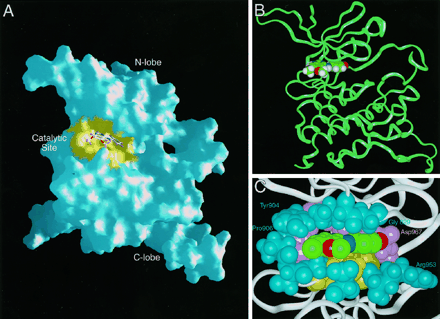
A, model of JAK3 showing zmolecular surface of protein (blue) and catalytic (ATP-binding) site (yellow).B, ribbon representation (Cα backbone) of the homology model of the JAK3 kinase domain.Clin Cancer Res.1999 Jun;5(6):1569-82. |
|---|
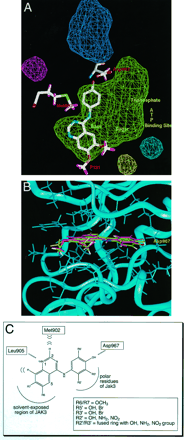
Model of unoccupied space in the catalytic (ATP binding) site of a JAK3 homology model.Clin Cancer Res.1999 Jun;5(6):1569-82. |
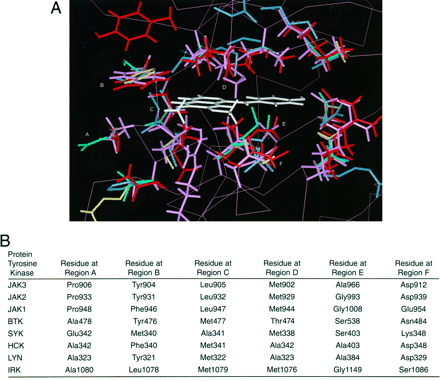
A, structural comparison of nonconserved residues in the catalytic sites of five different PTKs: JAK3 (pink), BTK (red), SYK (light blue), IRK (dark blue), and HCK (yellow). Residues within 5 Å of the docked JAK3 inhibitor, WHI-P131 (white), are shown as rod-shaped side chains.Clin Cancer Res.1999 Jun;5(6):1569-82. |
Products are for research use only; We do not sell to patients
Copyright 2020 InvivoChem LLC | All Rights Reserved


 COA
COA