| Size | Price | Stock | Qty |
|---|---|---|---|
| 10mg |
|
||
| 25mg |
|
||
| 50mg |
|
||
| 100mg |
|
||
| Other Sizes |


| Targets |
5-LOX (IC50 = 2.5 μM); Caspase-11; Apoptosis
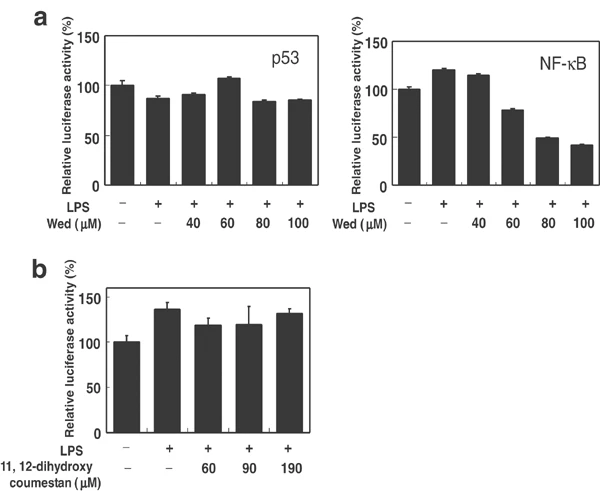
Wedelolactone targets the IκB kinase (IKK) complex, specifically IKKα and IKKβ, acting as an irreversible inhibitor. IKK is critical for the activation of NF-κB by mediating the phosphorylation and degradation of IκBα. By inhibiting IKK, wedelolactone prevents IκBα phosphorylation and degradation, thereby blocking NF-κB nuclear translocation and transcriptional activity. The compound has no effects on p38 MAP kinase or Akt, indicating selectivity for the IKK/NF-κB pathway. Wedelolactone also functions as a potent GPR35 agonist and has been shown to inhibit α-glucosidase with an IC₅₀ of 39.12 μM, acting as a mixed-type inhibitor. It also downregulates METTL3 protein expression, leading to reduced BRD4 protein translation via METTL3-mediated m6A modification. |
|---|---|
| ln Vitro |
Wedelolactone (0-5 μg/mL; 0-21 d) promotes osteoblast differentiation in bone marrow mesenchymal stem cells (BMSCs)[3].
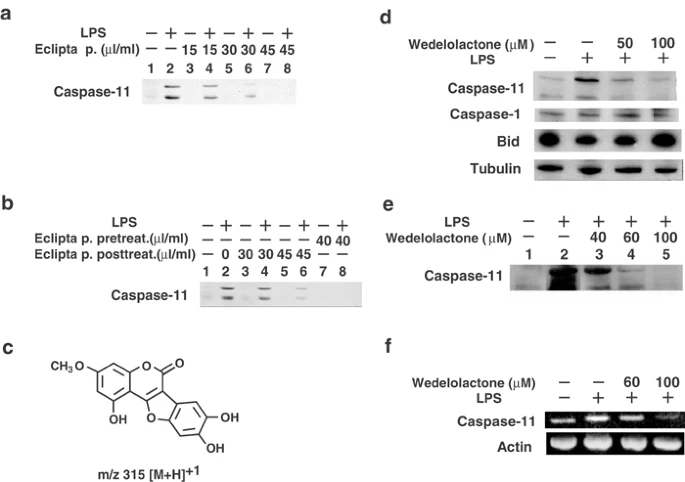
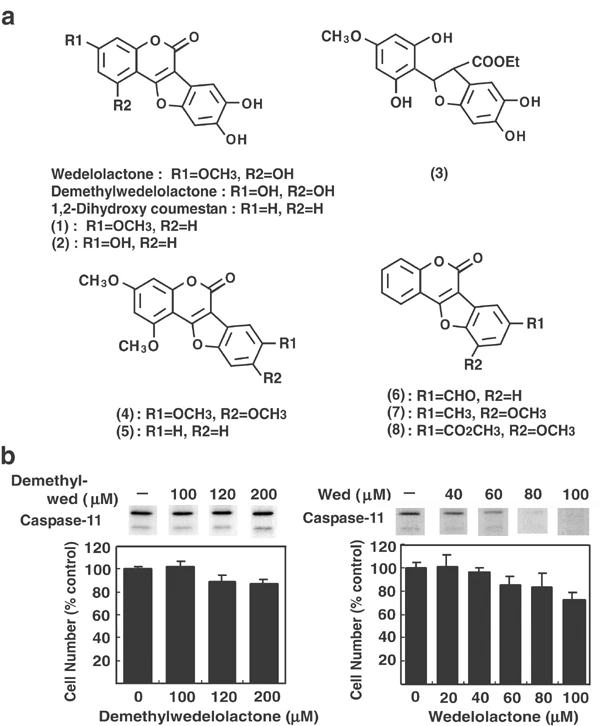
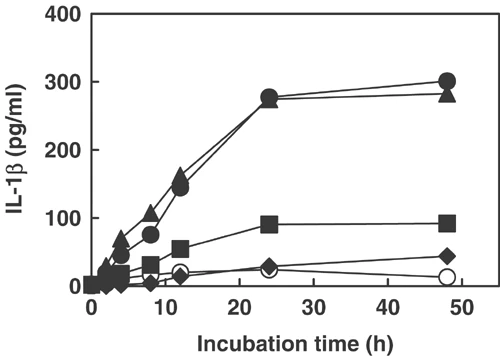
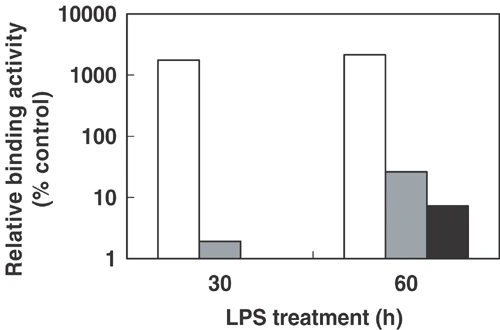
Wedelolactone (0-6 μg/mL; 0-9 d) inhibits GSK3β activity, boosts nuclear accumulation of β-catenin and runx2 in BMSC, and inhibits the action of RANKL[3]. Wedelolactone 0-5 μg/ml; 60 min) inhibits GSK3β activity, demonstrating that GSK3β is the drug's target[3]. Wedelolactone (0-5 μg/ml; 6 d) inhibits the expression of c-src, c-fos, and cathepsin K[3]. In vitro, wedelolactone inhibits NF-κB-mediated gene transcription by blocking the phosphorylation and degradation of IκBα. It suppresses IL-1β-induced inflammation in chondrocytes by reducing COX-2, iNOS, TNF-α, and IL-6 levels. The compound significantly inhibits the activation of LX-2 cells. It also inhibits LPS-induced caspase-11 expression by directly inhibiting the IKK complex. Wedelolactone has been shown to suppress breast cancer growth and metastasis by regulating the TGF-β1/Smad signaling pathway, reversing epithelial-mesenchymal transition (EMT). It also attenuates myocardial ischemia/reperfusion injury through inhibition of ferroptosis via the METTL3/BRD4 axis. |
| ln Vivo |
Wedelolactone (10 mg/kg; i.p. every 2 days for 4 weeks) reduces bone volume and trabecular number at the femur following ovariectomies and prevents VOX-induced bone loss[3].
In vivo, wedelolactone alleviates inflammation and cartilage degeneration by suppressing the NF-κB signaling pathway in osteoarthritis models. It suppresses breast cancer growth and metastasis in animal models by regulating the TGF-β1/Smad pathway. The compound attenuates myocardial ischemia/reperfusion injury through inhibition of ferroptosis. Mechanistic studies suggest that caspase-11 is inhibited by reduction of NF-κB-mediated transcription. These in vivo activities support its therapeutic potential in inflammatory diseases, cancer, and cardiovascular conditions. |
| Enzyme Assay |
Non-cell-based enzyme assays for wedelolactone typically involve IKK kinase activity assays using purified IKKα and IKKβ enzymes. The compound is incubated with the kinase, a substrate (e.g., IκBα peptide), and ATP at varying concentrations. Kinase activity is measured by quantifying substrate phosphorylation using techniques such as radiometric detection, fluorescence-based methods, or Western blotting with phospho-specific antibodies. IC₅₀ values for IKK inhibition are determined from dose-response curves. α-Glucosidase inhibition assays can also be performed using p-nitrophenyl-α-D-glucopyranoside as a substrate.
|
| Cell Assay |
Cellular assays for wedelolactone are performed using various cell lines. Chondrocytes are stimulated with IL-1β to induce inflammation, and the compound's ability to reduce COX-2, iNOS, TNF-α, and IL-6 levels is measured by ELISA or qPCR. LX-2 cells are used to assess inhibition of activation. LPS-stimulated macrophages are used to evaluate inhibition of caspase-11 expression and NF-κB activation. Breast cancer cells (e.g., 4T1) are used to study effects on migration, invasion, and TGF-β1/Smad signaling. Cells are treated with wedelolactone at various concentrations, and endpoints are measured by Western blotting, immunofluorescence, and functional assays.
|
| Animal Protocol |
In vivo animal models for wedelolactone include osteoarthritis models to assess alleviation of inflammation and cartilage degeneration. Breast cancer xenograft models are used to evaluate suppression of tumor growth and metastasis. Myocardial ischemia/reperfusion injury models are used to study attenuation of ferroptosis and cardioprotection. The compound is typically administered orally or intraperitoneally at various doses. Efficacy is assessed by measuring inflammatory markers, tumor growth, histological analysis of cartilage and cardiac tissue, and survival outcomes.
|
| ADME/Pharmacokinetics |
Wedelolactone has a molecular weight of 314.25 g/mol and a molecular formula of C₁₆H₁₀O₇. The compound is soluble in DMSO (14 mg/mL) and methanol, but insoluble in petroleum ether, dichloromethane, and chloroform. It appears as a yellow to brown-beige powder. Melting point is 327-330°C. Storage conditions: 2-8°C for short-term storage. Purity is typically ≥98% (HPLC). The compound has a pKa of 6.90±0.20. Detailed PK parameters such as half-life and bioavailability are not extensively reported.
|
| Toxicity/Toxicokinetics |
Wedelolactone has hazard codes Xn (Harmful) with risk statements R22 (Harmful if swallowed) and R43 (May cause sensitization by skin contact). Safety statements include S36/37 (Wear suitable protective clothing and gloves). The compound is classified as WGK Germany 3 (highly hazardous to water). As a natural product, it is generally considered to have a good safety profile, but thorough toxicological studies would be required for therapeutic development. The compound is intended for research use only and is not for human consumption.
|
| References |
|
| Additional Infomation |
Vidrone lactone belongs to the coumarin family of compounds, with a structure of coumarin containing hydroxyl substituents at positions 1, 8, and 9, and a methoxy substituent at position 3. It possesses antitumor activity and is an EC 5.99.1.3 [DNA topoisomerase (ATP hydrolysis)] inhibitor, apoptosis inducer, hepatoprotective agent, and metabolite. Vidrone lactone belongs to the coumarin family, δ-lactone, aromatic ether, and polyphenolic compounds, and its function is related to coumarin. Vidrone lactone has been reported to exist in St. John's wort, Aconitum carmichaelii, and other organisms with relevant data.
Wedelolactone is also known as IKK Inhibitor II, Wedelia lactone, and 1,8,9-trihydroxy-3-methoxy-6H-benzofuro[3,2-c]chromen-6-one. It is a naturally occurring furanocoumarin isolated from Eclipta prostrata, an herbal medicine used in traditional Chinese medicine to treat septic shock. The compound is a cell-permeable, selective, and irreversible inhibitor of IKKα and IKKβ kinase activities (IC₅₀ <10 μM). It inhibits NF-κB-mediated gene transcription by blocking the phosphorylation and degradation of IκBα. Wedelolactone has no effects on p38 MAP kinase or Akt. It is used in research applications studying inflammation, cancer, and neuroprotection. The compound is for research use only. |
| Molecular Formula |
C16H10O7
|
|---|---|
| Molecular Weight |
314.2464
|
| Exact Mass |
314.042
|
| Elemental Analysis |
C, 61.15; H, 3.21; O, 35.64
|
| CAS # |
524-12-9
|
| Related CAS # |
524-12-9
|
| PubChem CID |
5281813
|
| Appearance |
White to off-white solid powder
|
| Density |
1.7±0.1 g/cm3
|
| Boiling Point |
498.4±45.0 °C at 760 mmHg
|
| Melting Point |
315 °C
|
| Flash Point |
255.2±28.7 °C
|
| Vapour Pressure |
0.0±1.3 mmHg at 25°C
|
| Index of Refraction |
1.759
|
| LogP |
2.75
|
| Hydrogen Bond Donor Count |
3
|
| Hydrogen Bond Acceptor Count |
7
|
| Rotatable Bond Count |
1
|
| Heavy Atom Count |
23
|
| Complexity |
483
|
| Defined Atom Stereocenter Count |
0
|
| SMILES |
O1C2=C([H])C(=C(C([H])=C2C2C(=O)OC3=C([H])C(=C([H])C(=C3C1=2)O[H])OC([H])([H])[H])O[H])O[H]
|
| InChi Key |
XQDCKJKKMFWXGB-UHFFFAOYSA-N
|
| InChi Code |
InChI=1S/C16H10O7/c1-21-6-2-10(19)14-12(3-6)23-16(20)13-7-4-8(17)9(18)5-11(7)22-15(13)14/h2-5,17-19H,1H3
|
| Chemical Name |
1,8,9-trihydroxy-3-methoxy-[1]benzofuro[3,2-c]chromen-6-one
|
| Synonyms |
IKK Inhibitor II; Wedelolactone
|
| HS Tariff Code |
2934.99.9001
|
| Storage |
Powder -20°C 3 years 4°C 2 years In solvent -80°C 6 months -20°C 1 month |
| Shipping Condition |
Room temperature (This product is stable at ambient temperature for a few days during ordinary shipping and time spent in Customs)
|
| Solubility (In Vitro) |
DMSO: 63~125 mg/mL (200.5~397.8 mM)
Ethanol: ~1.5 mg/mL (~4.8mM) |
|---|---|
| Solubility (In Vivo) |
Solubility in Formulation 1: ≥ 2.08 mg/mL (6.62 mM) (saturation unknown) in 10% DMSO + 40% PEG300 + 5% Tween80 + 45% Saline (add these co-solvents sequentially from left to right, and one by one), clear solution.
For example, if 1 mL of working solution is to be prepared, you can add 100 μL of 20.8 mg/mL clear DMSO stock solution to 400 μL PEG300 and mix evenly; then add 50 μL Tween-80 to the above solution and mix evenly; then add 450 μL normal saline to adjust the volume to 1 mL. Preparation of saline: Dissolve 0.9 g of sodium chloride in 100 mL ddH₂ O to obtain a clear solution. Solubility in Formulation 2: ≥ 2.08 mg/mL (6.62 mM) (saturation unknown) in 10% DMSO + 90% Corn Oil (add these co-solvents sequentially from left to right, and one by one), clear solution. For example, if 1 mL of working solution is to be prepared, you can add 100 μL of 20.8 mg/mL clear DMSO stock solution to 900 μL of corn oil and mix evenly. (Please use freshly prepared in vivo formulations for optimal results.) |
| Preparing Stock Solutions | 1 mg | 5 mg | 10 mg | |
| 1 mM | 3.1822 mL | 15.9109 mL | 31.8218 mL | |
| 5 mM | 0.6364 mL | 3.1822 mL | 6.3644 mL | |
| 10 mM | 0.3182 mL | 1.5911 mL | 3.1822 mL |
*Note: Please select an appropriate solvent for the preparation of stock solution based on your experiment needs. For most products, DMSO can be used for preparing stock solutions (e.g. 5 mM, 10 mM, or 20 mM concentration); some products with high aqueous solubility may be dissolved in water directly. Solubility information is available at the above Solubility Data section. Once the stock solution is prepared, aliquot it to routine usage volumes and store at -20°C or -80°C. Avoid repeated freeze and thaw cycles.
Calculation results
Working concentration: mg/mL;
Method for preparing DMSO stock solution: mg drug pre-dissolved in μL DMSO (stock solution concentration mg/mL). Please contact us first if the concentration exceeds the DMSO solubility of the batch of drug.
Method for preparing in vivo formulation::Take μL DMSO stock solution, next add μL PEG300, mix and clarify, next addμL Tween 80, mix and clarify, next add μL ddH2O,mix and clarify.
(1) Please be sure that the solution is clear before the addition of next solvent. Dissolution methods like vortex, ultrasound or warming and heat may be used to aid dissolving.
(2) Be sure to add the solvent(s) in order.
|
|
|
|
|
|
|
|
|
|
Products are for research use only; We do not sell to patients
Copyright 2020 InvivoChem LLC | All Rights Reserved