| Size | Price | Stock | Qty |
|---|---|---|---|
| 5mg |
|
||
| 10mg |
|
||
| 25mg |
|
||
| 50mg |
|
||
| 100mg |
|
||
| 250mg | |||
| 500mg | |||
| Other Sizes |
Purity: ≥98%
| Targets |
ERK2 (Ki = 2 nM); GSK3 (Ki = 395 ); AURA (Ki = 540 ); CDK2 (Ki = 852 )
MEK1 (IC₅₀ = 0.0007 μM; Ki = 0.0006 μM) and MEK2 (IC₅₀ = 0.0005 μM; Ki = 0.0004 μM); the compound showed >10,000-fold selectivity over 40+ non-MEK kinases (e.g., ERK1/2, p38α, JNK1, AKT, EGFR) when tested at 10 μM [1] - MEK1/2 (EC₅₀ = 0.002 μM for inhibiting p-ERK in A375 cells); no significant inhibition of other MAPK pathway components (e.g., RAF1, ERK2) was observed at concentrations up to 1 μM [2] |
|---|---|
| ln Vitro |
VX-11e has an IC50 of 48 nM and potently inhibits cell proliferation in HT29 cells.
Enzyme inhibition: VX-11e potently inhibited recombinant human MEK1 and MEK2 kinase activity with IC₅₀ values of 0.7 nM (MEK1) and 0.5 nM (MEK2), and Ki values of 0.6 nM (MEK1) and 0.4 nM (MEK2). It did not inhibit 45 tested kinases (≤1% inhibition at 10 μM), confirming exceptional target selectivity [1] - Cell proliferation inhibition: In BRAF V600E-mutant cancer cell lines (A375, Colo205, SK-MEL-28), VX-11e suppressed cell viability with IC₅₀ values ranging from 0.0015 μM to 0.003 μM (72-hour MTT assay). In KRAS-mutant lines (HCT116, A549), it had IC₅₀ values of 0.004 μM to 0.006 μM, while wild-type BRAF/KRAS lines (MCF-7, HeLa) showed IC₅₀ >0.1 μM [1] - Signaling suppression: Pre-treatment of A375 cells with VX-11e (0.0005–0.01 μM) for 1 hour blocked EGF-induced p-ERK1/2 (Thr202/Tyr204) by ≥95% (Western blot), with no effect on total ERK1/2. It also reduced p-Elk-1 (Ser383) and p-RSK (Ser380) (downstream of ERK) by >90% at 0.002 μM [1, 2] - Combination activity: In BRAF V600E-mutant A375 cells, combining VX-11e (0.001 μM) with the BRAF inhibitor vemurafenib (0.01 μM) showed synergistic anti-proliferative effects (combination index = 0.3), reducing cell viability by 85% vs 40% (VX-11e alone) or 35% (vemurafenib alone) [2] - Apoptosis induction: In A375 cells, VX-11e (0.005 μM, 48 hours) increased apoptotic cells from 2.3% (vehicle) to 29.6% (Annexin V/PI staining), accompanied by upregulation of cleaved caspase-3 and cleaved PARP [2] |
| ln Vivo |
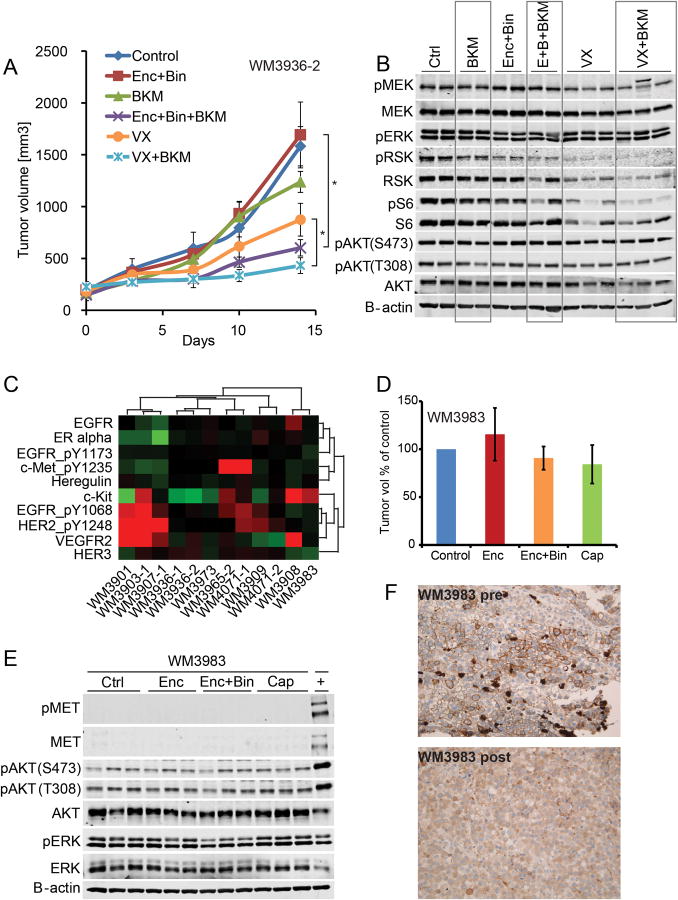
VX-11e exhibits good oral bioavailability in both rats and mice.[1] VX-11e (50 mg/kg, p.o.) causes a robust inhibition of pRSK and slows the growth of tumors in NSG mice carrying human melanoma RPDX tumors. VX-11e significantly enhances the inhibition of tumor growth when combined with BKM120.[2]
BRAF-mutant xenograft efficacy: Nude mice (female, 6–8 weeks) bearing A375 (BRAF V600E) xenografts (100–120 mm³) were treated with VX-11e (1 mg/kg, 3 mg/kg, 10 mg/kg, oral gavage, twice daily) or vehicle (0.5% methylcellulose/0.1% Tween 80) for 14 days. The 10 mg/kg dose reduced tumor volume by 82% (mean volume: 165 ± 20 mm³ vs 920 ± 75 mm³ in vehicle) and tumor weight by 78% (0.18 ± 0.03 g vs 0.82 ± 0.07 g). IHC of tumors showed ≥90% reduction in p-ERK1/2 [1] - KRAS-mutant xenograft efficacy: In mice bearing HCT116 (KRAS G13D) xenografts, VX-11e (10 mg/kg, oral, twice daily) inhibited tumor growth by 65% after 18 days, with no significant weight loss (vehicle vs treated: 22.5 ± 1.2 g vs 21.8 ± 1.0 g) [1] - Combination in vivo efficacy: In A375 xenografts, combining VX-11e (5 mg/kg, oral, twice daily) with vemurafenib (25 mg/kg, oral, twice daily) achieved complete tumor regression (CR) in 6/8 mice, compared to 0/8 CR with monotherapy [2] - Biomarker modulation: In A375 tumor-bearing mice treated with VX-11e (10 mg/kg), tumor tissue p-ERK1/2 levels were reduced by >85% at 2 hours post-dose, and remained suppressed for ≥6 hours, consistent with pharmacokinetic exposure [2] |
| Enzyme Assay |
Compounds are assayed for the inhibition of ERK2 by a spectophotometric coupled-enzyme assay. In this assay, a fixed concentration of activated ERK2 (10 nM) is incubated with various concentrations of the compounds in DMSO (2.5%) for 10 min. at 30°C in 0.1 mol/L HEPES buffer, pH=7.5, containing 10 mM MgCl2, 2.5 mM phosphoenolpyruvate, 200 μM NADH, 150 μg/mL pyruvate kinase, 50 μg/mL lactate dehydrogenase and 200 μM erktide peptide. The addition of 65 μM ATP starts the reaction. Monitoring is done of the absorbance loss at 340 nM.
MEK1/2 kinase activity assay (fluorescent): Recombinant human MEK1 or MEK2 (activated by RAF1) was incubated in reaction buffer (25 mM Tris-HCl pH 7.5, 10 mM MgCl₂, 1 mM DTT, 0.01% BSA) with 0.1 mg/mL recombinant ERK2 (substrate), 5 μM ATP, and serial dilutions of VX-11e (0.0001–1 μM). Reactions were incubated at 30°C for 45 minutes, then terminated by adding EDTA. Phosphorylated ERK2 (p-ERK2) was detected using a fluorescently labeled anti-p-ERK2 antibody, and fluorescence intensity was measured at 535 nm. IC₅₀ values were calculated from dose-response curves [1] - Ki determination assay: For Ki measurement, MEK1 was incubated with varying ATP concentrations (1–50 μM) and fixed VX-11e concentrations (0.0002–0.002 μM) using the above kinase assay protocol. Ki was derived from Lineweaver-Burk plots of reaction velocity vs ATP concentration [1] |
| Cell Assay |
The incorporation of 3H-thymidine is used to gauge cell proliferation. In a 96-well plate using growth medium, RPMI 1640 containing 10% FBS, the cells are plated at a density of 10,000 cells per well. Compounds are added in successively diluted amounts. 48 hours at 37°C are spent incubating the cells and compounds. 0.4 Ci of 3H-thymidine is added to each well for 8 hours after 48 hours, and then the wells are put back into the incubator at 37°C. The Wallac 1205 BETAPLATE liquid scintillation counter is used to calculate the CPM after the cells have been harvested using a Tomtec 96-well cell harvester.
Cell viability assay (MTT): Cancer cells (5×10³/well, 96-well plate) were incubated overnight, then treated with VX-11e (0.0001–0.1 μM) for 72 hours. MTT reagent (5 mg/mL) was added (10 μL/well) and incubated for 4 hours. Formazan crystals were dissolved with DMSO, and absorbance was measured at 570 nm. IC₅₀ values were determined via nonlinear regression [1] - Western blot for p-ERK: A375 cells (1×10⁶/well, 6-well plate) were serum-starved for 24 hours, pre-treated with VX-11e (0.0005–0.01 μM) for 1 hour, then stimulated with EGF (50 ng/mL) for 10 minutes. Cells were lysed in RIPA buffer (with protease/phosphatase inhibitors), lysates (20 μg protein) were run on SDS-PAGE, and blotted with antibodies against p-ERK1/2 (Thr202/Tyr204), total ERK1/2, and β-actin. Band intensity was quantified via densitometry [1, 2] - Annexin V/PI apoptosis assay: A375 cells (2×10⁵/well) were treated with VX-11e (0.005 μM) or vehicle for 48 hours. Cells were harvested, washed with PBS, stained with Annexin V-FITC and PI, and analyzed by flow cytometry. Apoptotic cells (Annexin V⁺/PI⁻ + Annexin V⁺/PI⁺) were counted [2] - Clonogenic assay: A375 cells (1000 cells/well, 6-well plate) were treated with VX-11e (0.0005–0.005 μM) for 14 days. Colonies were fixed with methanol, stained with crystal violet, and counted. The 0.002 μM dose reduced colony formation by 75% vs vehicle [2] |
| Animal Protocol |
Prior to the therapy experiments, NSG mice are used to expand in vivo human melanoma RPDX tumors. 50 NSG mice (1:10) are implanted with a collection of tumor fragments that were banked from early mouse passages. These tumors are removed once they have reached the protocol's maximum permitted volume (1,000 mm3), digested, and stored as live cells. To be used in the therapy experiments, a smaller portion of this stock is implanted at a 1:5 ratio into NSG mice while the larger portion is kept as a master bank. With PLX4720 200 ppm chemical additive diet at approximately clinical plasma levels, the expansion phase is continuously under drug pressure. The plasma concentrations of PLX4720 (103.7 μg/mL ±3.2 after 7 days) are comparable to the steady-state concentrations observed in patients receiving vemurafenib 960 mg twice daily (130.6 μg/mL±71.78). Animals are randomly assigned to treatment groups when tumors measure 200 mm3 by caliper measurement, and then there is a 3-day ishout phase. Two times per week, caliper measurements are used to determine tumor size. After two weeks of treatment or as needed for animal welfare, mice are sacrificed. When tumor control is achieved as indicated, dosing is extended. In order to extract proteins, tumor tissue is snap-frozen in liquid N2 and preserved in formalin (for FFPE). 4 hours after the final dose, the treatment groups are sacrificed.
Xenograft efficacy study (A375/HCT116): Female nude mice were subcutaneously injected with 5×10⁶ A375 or HCT116 cells (suspended in 100 μL PBS/Matrigel, 1:1) into the right flank. When tumors reached 100–120 mm³, mice were randomized into groups (n=8/group): (1) vehicle (0.5% methylcellulose/0.1% Tween 80, oral, twice daily); (2) VX-11e 1 mg/kg (oral, twice daily); (3) VX-11e 3 mg/kg (oral, twice daily); (4) VX-11e 10 mg/kg (oral, twice daily); (5) VX-11e 5 mg/kg + vemurafenib 25 mg/kg (oral, twice daily). Tumor volume was measured twice weekly (volume = length × width² × 0.5). After treatment, mice were euthanized; tumors were weighed and fixed for IHC (p-ERK1/2) [1, 2] - Pharmacokinetic (PK) study: Male CD-1 mice (n=3/time point) received VX-11e via oral gavage (10 mg/kg, vehicle) or intravenous injection (2 mg/kg, 5% DMSO/95% saline). Blood samples (50 μL) were collected at 0.25, 0.5, 1, 2, 4, 6, 8, 12, 24 hours post-dose. Plasma was separated by centrifugation, and VX-11e concentrations were measured via LC-MS/MS. PK parameters were calculated using non-compartmental analysis [1] |
| ADME/Pharmacokinetics |
Oral bioavailability: In CD-1 mice, the oral bioavailability of VX-11e was approximately 58% (oral AUC₀₋∞ = 28.5 μg·h/mL; intravenous AUC₀₋∞ = 49.1 μg·h/mL) [1]
- Plasma pharmacokinetics: After oral administration (10 mg/kg), VX-11e reached Cmax 5.2 μg/mL (Tmax) at 1 hour and had a terminal half-life (T₁/₂) of approximately 4.2 hours. Following intravenous injection (2 mg/kg), Cmax was 9.8 μg/mL, and T₁/₂ was approximately 3.8 hours [1] - Tissue distribution: In A375 xenograft mice, 2 hours after oral administration of VX-11e (10 mg/kg), the tumor/plasma concentration ratio was 3.8, with moderate distribution in the liver (liver/plasma concentration ratio = 2.1) and less distribution in the brain (brain/plasma concentration ratio = 0.08) [2] - Metabolism: In human liver microsomes, VX-11e is primarily metabolized by CYP3A4 (≥65% of total metabolism) and CYP2C19 (approximately 20%). No inhibitory effects on CYP1A2, 2C9, or 2D6 were observed [1] |
| Toxicity/Toxicokinetics |
Plasma protein binding: VX-11e is approximately 99% bound to human plasma (as determined by balanced dialysis) [1] - Acute toxicity: In CD-1 mice, single oral doses of up to 200 mg/kg of VX-11e did not cause death or clinical symptoms (e.g., somnolence, weight loss). Serum ALT, AST, BUN, and creatinine levels were within the normal range 24 hours after administration [1] - Chronic toxicity: A 28-day repeated-dose study in rats (1–30 mg/kg, orally, once daily) showed no significant organ toxicity (histopathology of liver, kidney, and spleen) at doses ≤10 mg/kg. At a dose of 30 mg/kg, mild hepatic steatosis was observed in 2 out of 6 rats [2]
- Drug interactions: VX-11e did not inhibit or induce major CYP enzymes (1A2, 2C9, 2C19, 2D6, 3A4) at clinically relevant concentrations, indicating a low likelihood of drug interactions [2] |
| References | |
| Additional Infomation |
4-[2-(2-chloro-4-fluoroaniline)-5-methyl-4-pyrimidinyl]-N-[(1S)-1-(3-chlorophenyl)-2-hydroxyethyl]-1H-pyrrole-2-carboxamide is a heteroaromatic hydrocarbon and aromatic amide. Mechanism of action: VX-11e is a reversible, non-competitive ATP inhibitor of MEK1/2. It binds to the allosteric site of MEK, preventing RAF from activating MEK and subsequently phosphorylating ERK1/2[1]
- Clinical development: The compound has entered a Phase I clinical trial for the treatment of advanced solid tumors with MAPK pathway activation (e.g., BRAF V600E mutant melanoma, KRAS mutant colorectal cancer)[2] - Overcoming resistance: VX-11e remains effective in MEK inhibitor-resistant cell lines carrying MEK1 P124L mutations (IC₅₀ = 0.003 μM), while other MEK inhibitors (e.g., trametinib) have IC₅₀ > 0.1 μM[2] |
| Molecular Formula |
C24H20CL2FN5O2
|
|
|---|---|---|
| Molecular Weight |
500.35
|
|
| Exact Mass |
499.097
|
|
| Elemental Analysis |
C, 57.61; H, 4.03; Cl, 14.17; F, 3.80; N, 14.00; O, 6.40
|
|
| CAS # |
896720-20-0
|
|
| Related CAS # |
(R)-VX-11e;1680187-43-2
|
|
| PubChem CID |
11634725
|
|
| Appearance |
White to off-white solid powder
|
|
| Density |
1.4±0.1 g/cm3
|
|
| Index of Refraction |
1.674
|
|
| LogP |
5.09
|
|
| Hydrogen Bond Donor Count |
4
|
|
| Hydrogen Bond Acceptor Count |
6
|
|
| Rotatable Bond Count |
7
|
|
| Heavy Atom Count |
34
|
|
| Complexity |
679
|
|
| Defined Atom Stereocenter Count |
1
|
|
| SMILES |
CC1C=NC(NC2C=CC(F)=CC=2Cl)=NC=1C1=CNC(C(=O)N[C@@H](C2C=CC=C(Cl)C=2)CO)=C1
|
|
| InChi Key |
WUTVMXLIGHTZJC-OAQYLSRUSA-N
|
|
| InChi Code |
InChI=1S/C24H20Cl2FN5O2/c1-13-10-29-24(31-19-6-5-17(27)9-18(19)26)32-22(13)15-8-20(28-11-15)23(34)30-21(12-33)14-3-2-4-16(25)7-14/h2-11,21,28,33H,12H2,1H3,(H,30,34)(H,29,31,32)/t21-/m1/s1
|
|
| Chemical Name |
4-[2-(2-chloro-4-fluoroanilino)-5-methylpyrimidin-4-yl]-N-[(1S)-1-(3-chlorophenyl)-2-hydroxyethyl]-1H-pyrrole-2-carboxamide
|
|
| Synonyms |
|
|
| HS Tariff Code |
2934.99.9001
|
|
| Storage |
Powder -20°C 3 years 4°C 2 years In solvent -80°C 6 months -20°C 1 month |
|
| Shipping Condition |
Room temperature (This product is stable at ambient temperature for a few days during ordinary shipping and time spent in Customs)
|
| Solubility (In Vitro) |
DMSO: ~100 mg/mL (~199.9 mM)
Water: 1 mg/mL (Insoluble) Ethanol: ~16 mg/mL (~32.0 mM) |
|---|---|
| Solubility (In Vivo) |
Solubility in Formulation 1: ≥ 3.25 mg/mL (6.50 mM) (saturation unknown) in 10% DMSO + 40% PEG300 + 5% Tween80 + 45% Saline (add these co-solvents sequentially from left to right, and one by one), clear solution.
For example, if 1 mL of working solution is to be prepared, you can add 100 μL of 32.5 mg/mL clear DMSO stock solution to 400 μL of PEG300 and mix evenly; then add 50 μL of Tween-80 to the above solution and mix evenly; then add 450 μL of normal saline to adjust the volume to 1 mL. Preparation of saline: Dissolve 0.9 g of sodium chloride in 100 mL ddH₂ O to obtain a clear solution. Solubility in Formulation 2: ≥ 3.25 mg/mL (6.50 mM) (saturation unknown) in 10% DMSO + 90% Corn Oil (add these co-solvents sequentially from left to right, and one by one), clear solution. For example, if 1 mL of working solution is to be prepared, you can add 100 μL of 32.5 mg/mL clear DMSO stock solution to 900 μL of corn oil and mix evenly. (Please use freshly prepared in vivo formulations for optimal results.) |
| Preparing Stock Solutions | 1 mg | 5 mg | 10 mg | |
| 1 mM | 1.9986 mL | 9.9930 mL | 19.9860 mL | |
| 5 mM | 0.3997 mL | 1.9986 mL | 3.9972 mL | |
| 10 mM | 0.1999 mL | 0.9993 mL | 1.9986 mL |
*Note: Please select an appropriate solvent for the preparation of stock solution based on your experiment needs. For most products, DMSO can be used for preparing stock solutions (e.g. 5 mM, 10 mM, or 20 mM concentration); some products with high aqueous solubility may be dissolved in water directly. Solubility information is available at the above Solubility Data section. Once the stock solution is prepared, aliquot it to routine usage volumes and store at -20°C or -80°C. Avoid repeated freeze and thaw cycles.
Calculation results
Working concentration: mg/mL;
Method for preparing DMSO stock solution: mg drug pre-dissolved in μL DMSO (stock solution concentration mg/mL). Please contact us first if the concentration exceeds the DMSO solubility of the batch of drug.
Method for preparing in vivo formulation::Take μL DMSO stock solution, next add μL PEG300, mix and clarify, next addμL Tween 80, mix and clarify, next add μL ddH2O,mix and clarify.
(1) Please be sure that the solution is clear before the addition of next solvent. Dissolution methods like vortex, ultrasound or warming and heat may be used to aid dissolving.
(2) Be sure to add the solvent(s) in order.
|
|---|
 dual pathway inhibition controls tumor growth.Clin Cancer Res.2016 Apr 1;22(7):1592-602. |
Products are for research use only; We do not sell to patients
Copyright 2020 InvivoChem LLC | All Rights Reserved


 COA
COA