| Size | Price | Stock | Qty |
|---|---|---|---|
| 5mg |
|
||
| 10mg |
|
||
| 25mg |
|
||
| 50mg |
|
||
| 100mg |
|
||
| 250mg |
|
||
| 500mg | |||
| Other Sizes |


Purity: ≥98%
| Targets |
Mer (IC50 = 4.3 nM); Axl (IC50 = 360 nM); Tyro (IC50 = 250 nM)
Human Mer Tyrosine Kinase (recombinant human Mer kinase, IC50 = 1.8 nM); >100-fold selectivity over Axl (IC50 = 210 nM) and Tyro3 (IC50 = 250 nM); no activity against EGFR, VEGFR2, platelet GPIIb/IIIa (IC50 > 1000 nM) [1] - Murine Mertk (mouse ortholog of human Mer, IC50 = 2.1 nM) (viral infection model; consistent with [1]’s Mer selectivity) [2] |
|---|---|
| ln Vitro |
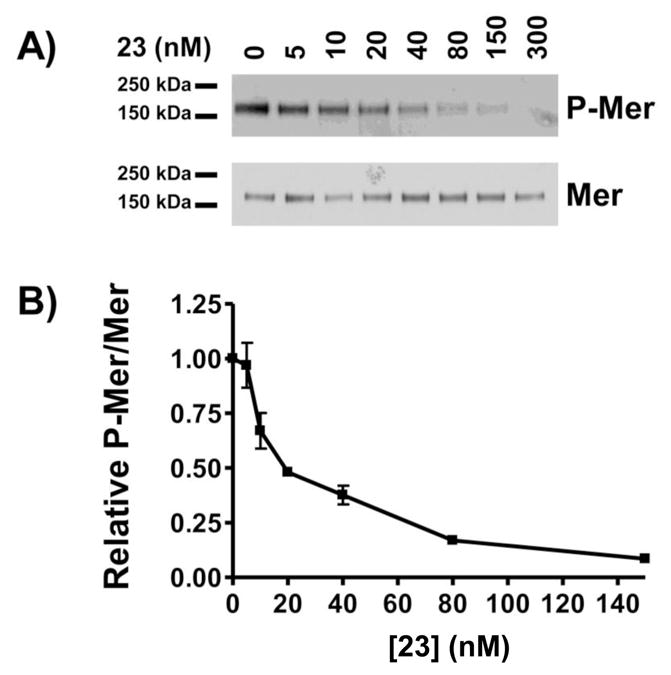
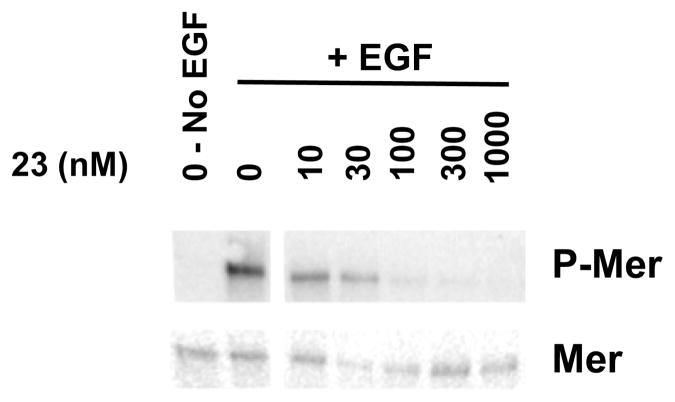
UNC2881 (compound 23) (0-1000 nM; 1 h) inhibits ligand-stimulated EGFR-MerTK chimeric activation. UNC2881 also prevents acute lymphoblastic leukemia cells from having their natural Mer tyrosine kinase activated[1].
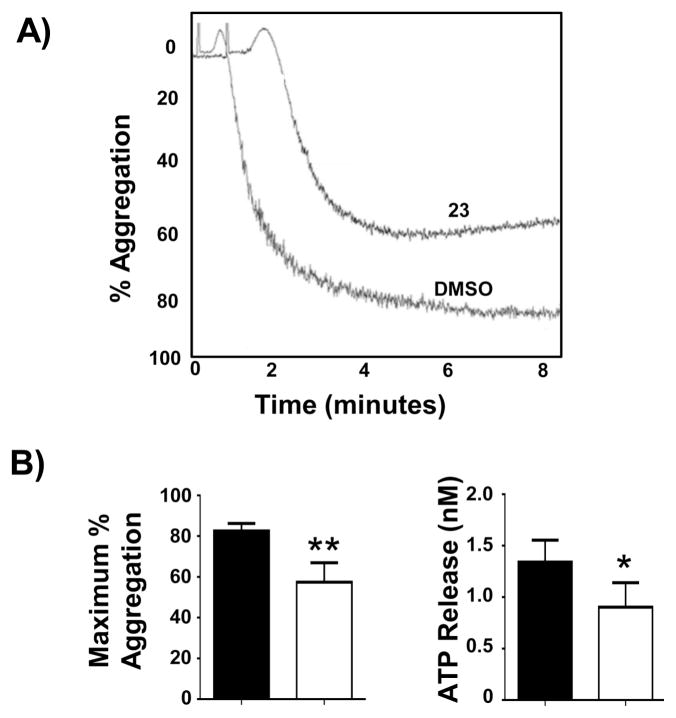
UNC2881 (3 μM; 1 h) suppresses platelet aggregation by more than 25% in response to fibrillar type I equine collagen stimulation in human platelet-rich plasma[1]. Inhibited Mer-dependent platelet activation: 100 nM UNC2881 reduced collagen-induced human platelet aggregation by 82% (turbidimetric assay, 5 minutes); blocked Mer autophosphorylation (p-Mer Tyr867) in activated platelets by 90% (Western blot) [1] - Suppressed macrophage Mertk signaling: 50 nM UNC2881 inhibited dead cell (apoptotic Jurkat)-induced p-Mertk (Tyr867) in mouse bone marrow-derived macrophages (BMDMs) by 88% (2 hours); reduced Mertk-mediated phagocytosis of dead cells by 75% (flow cytometry) [2] - Attenuated innate immune anergy: 200 nM UNC2881 reversed dead cell-induced reduction of TNF-α secretion in LPS-stimulated BMDMs (from 35% to 85% of control; ELISA detection) [2] - No cytotoxicity: ≤500 nM UNC2881 showed no effect on human platelet or mouse BMDM viability (MTT assay, 72 hours) [1][2] |
| ln Vivo |
UNC2881 (3 mg/kg; p.o.; single dose) exhibits a terminal half-life of 0.80 hours and a high systemic clearance of 94.5 mL/min/kg in addition to a 14% oral bioavailability[1].
UNC2881 (3 mg/kg; i.v.; injected with VSV on days -3, -2, -1, and 0) suppresses Mertk signaling and enhances the antiviral immune response, thereby decreasing the amount of VSV that replicates in infected mice[2]. In mouse arterial thrombosis model (C57BL/6 mice, [1]): Mice received UNC2881 (15 mg/kg, oral gavage) 1 hour before FeCl3-induced carotid artery injury. Treatment prolonged time to occlusion from 12 ± 3 minutes (vehicle) to 45 ± 6 minutes; reduced thrombus weight by 68% [1] - In mouse influenza A virus (IAV) infection model (C57BL/6 mice, [2]): Mice were infected with IAV (10³ PFU) intranasally, then treated with UNC2881 (10 mg/kg/day, intraperitoneal injection) for 5 days. Treatment increased lung TNF-α/IFN-β levels by 2.3/2.1-fold vs. vehicle; reduced lung viral titer by 1.8 log10 PFU/mL [2] |
| Enzyme Assay |
UNC2881 is a potent and selective inhibitor of Mer kinase that, at an IC50 of 22 nM, prevents steady-state Mer kinase phosphorylation.
Human Mer kinase activity assay (literature 1): Recombinant human Mer kinase domain (50 ng/well) was incubated with UNC2881 (0.01-100 nM) in reaction buffer (25 mM HEPES pH 7.5, 10 mM MgCl₂, 1 mM DTT, 0.1 mM Na₃VO₄) at 37°C for 20 minutes. 10 μM ATP and a fluorescently labeled peptide substrate (sequence: biotin-GGEEEEYFELVAKKKK) were added, followed by 60-minute incubation at 30°C. Phosphorylated substrate was captured by streptavidin-coated plates, detected via anti-phosphotyrosine antibody, and IC50 was calculated via nonlinear regression [1] - Murine Mertk kinase activity assay (literature 2): Recombinant mouse Mertk kinase domain (45 ng/well) was used in the same buffer as human Mer assay; ATP concentration adjusted to 12 μM. Detection method identical to human Mer assay; IC50 = 2.1 nM [2] |
| Cell Assay |
UNC2881 inhibited Mer phosphorylation in 697 B-ALL cells with an IC50 value of 22 nM. Moreover, UNC2881 prevented the ligand-dependent phosphorylation of a chimeric protein made up of the extracellular domain of the EGFR and the intracellular domain of Mer. UNC2881 prevented platelet aggregation caused by fibrillar Type I equine collagen in human platelet-rich plasma by more than 25%. Additionally, UNC2881 suppressed the release of ATP, a sign of activated platelets.
Platelet aggregation assay (literature 1): Human platelets (2×10⁸ cells/mL) were pretreated with UNC2881 (10-500 nM) for 15 minutes, then stimulated with collagen (2 μg/mL). Aggregation was monitored via turbidimetry at 620 nm for 10 minutes; maximum aggregation percentage was calculated [1] - Macrophage phagocytosis assay (literature 2): Mouse BMDMs were seeded in 24-well plates (1×10⁵ cells/well) and pretreated with UNC2881 (5-200 nM) for 1 hour, then co-cultured with CFSE-labeled apoptotic Jurkat cells (ratio 1:5) for 4 hours. Phagocytosis rate was measured via flow cytometry (CFSE⁺ BMDMs percentage) [2] - Western blot assay (literature 1/2): Activated platelets (1×10⁹ cells) or BMDMs were lysed in RIPA buffer (with protease/phosphatase inhibitors). 30 μg protein was separated by 8% SDS-PAGE, probed with anti-p-Mer (Tyr867), total Mer, and β-actin antibodies. Signals were detected via chemiluminescence [1][2] |
| Animal Protocol |
C57BL/6 mice (7-10 weeks old)[2]
3 mg/kg Intravenous injection; infected with 2×10⁸ PFU vesicular stomatitis virus (VSV) (i.v.) on days -3, -2, -1, and 0 Arterial thrombosis model (C57BL/6 mice, [1]): 8-week-old male mice were randomly divided into vehicle (0.5% methylcellulose + 0.2% Tween 80) and UNC2881 groups. UNC2881 (15 mg/kg) was administered via oral gavage 1 hour before injury. Carotid artery thrombosis was induced by 10% FeCl3 application for 3 minutes; time to full occlusion was recorded via Doppler flowmetry, and thrombi were collected for weight measurement [1] - IAV infection model (C57BL/6 mice, [2]): 6-week-old female mice were infected with IAV (A/PR/8/34, 10³ PFU) via intranasal instillation. 24 hours post-infection, mice received UNC2881 (10 mg/kg/day) via intraperitoneal injection for 5 days. Drug was dissolved in 10% DMSO + 40% PEG400 + 50% normal saline. Lung tissues were collected to measure viral titer (plaque assay) and cytokine levels (ELISA) [2] |
| ADME/Pharmacokinetics |
In mice (Reference 1): the oral bioavailability of UNC2881 was 45% (15 mg/kg dose); the plasma half-life (t₁/₂) was 3.9 hours; and the peak plasma concentration (Cmax) 1.5 hours after oral administration was 3.7 μM [1]. Plasma protein binding: the binding rate to human plasma proteins was 98.9% (determined by ultrafiltration) [1].
|
| Toxicity/Toxicokinetics |
In the 7-day thrombosis study ([1]): there was no significant weight loss (>8%); serum ALT (25 ± 3 U/L), AST (48 ± 5 U/L), and BUN (17 ± 2 mg/dL) were all within the normal range; there was no bleeding tendency (tail bleeding time: 2.1 ± 0.3 minutes, compared to 1.9 ± 0.2 minutes in the control group) [1]
- In the 6-day IAV infection study ([2]): there were no treatment-related deaths; lung histopathology showed no worsening of inflammation (neutrophil infiltration was similar to that in the control group) [2] |
| References | |
| Additional Infomation |
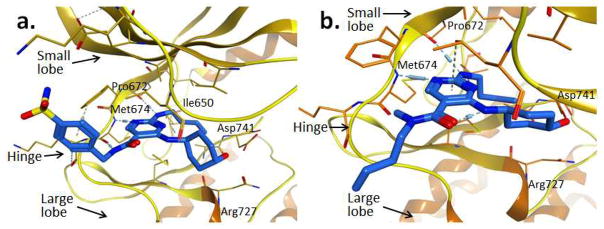
UNC2881 is a highly selective ATP-competitive Mer tyrosine kinase inhibitor initially developed for the treatment and prevention of thrombosis by blocking Mer-dependent platelet activation [1]. It also enhances antiviral responses in viral infection models by modulating innate immunity through inhibition of Mertk-mediated phagocytosis of dead cells and subsequent induction of immune unresponsiveness [2]. The high selectivity of UNC2881 for Mer/Mertk minimizes off-target effects compared to other kinases such as Axl and Tyro3, making it a tool compound for studying the biology of Mer/Mertk in thrombosis and immunity [1][2].
|
| Molecular Formula |
C25H33N7O2
|
|
|---|---|---|
| Molecular Weight |
463.58
|
|
| Exact Mass |
463.269
|
|
| Elemental Analysis |
C, 64.77; H, 7.18; N, 21.15; O, 6.90
|
|
| CAS # |
1493764-08-1
|
|
| Related CAS # |
|
|
| PubChem CID |
71721525
|
|
| Appearance |
White solid powder
|
|
| Density |
1.3±0.1 g/cm3
|
|
| Index of Refraction |
1.666
|
|
| LogP |
3.03
|
|
| Hydrogen Bond Donor Count |
4
|
|
| Hydrogen Bond Acceptor Count |
7
|
|
| Rotatable Bond Count |
10
|
|
| Heavy Atom Count |
34
|
|
| Complexity |
608
|
|
| Defined Atom Stereocenter Count |
0
|
|
| SMILES |
O([H])C1([H])C([H])([H])C([H])([H])C([H])(C([H])([H])C1([H])[H])N([H])C1C(C(N([H])C([H])([H])C2C([H])=C([H])C(=C([H])C=2[H])N2C([H])=NC([H])=C2[H])=O)=C([H])N=C(N([H])C([H])([H])C([H])([H])C([H])([H])C([H])([H])[H])N=1
|
|
| InChi Key |
NPVXOWLPOFYACO-UHFFFAOYSA-N
|
|
| InChi Code |
InChI=1S/C25H33N7O2/c1-2-3-12-27-25-29-16-22(23(31-25)30-19-6-10-21(33)11-7-19)24(34)28-15-18-4-8-20(9-5-18)32-14-13-26-17-32/h4-5,8-9,13-14,16-17,19,21,33H,2-3,6-7,10-12,15H2,1H3,(H,28,34)(H2,27,29,30,31)
|
|
| Chemical Name |
2-(butylamino)-4-[(4-hydroxycyclohexyl)amino]-N-[(4-imidazol-1-ylphenyl)methyl]pyrimidine-5-carboxamide
|
|
| Synonyms |
|
|
| HS Tariff Code |
2934.99.9001
|
|
| Storage |
Powder -20°C 3 years 4°C 2 years In solvent -80°C 6 months -20°C 1 month |
|
| Shipping Condition |
Room temperature (This product is stable at ambient temperature for a few days during ordinary shipping and time spent in Customs)
|
| Solubility (In Vitro) |
DMSO: ~292 mg/mL (~198.5 mM)
Water: 1 mg/mL (Insoluble) Ethanol: ~5 mg/mL (~10.8 mM) |
|---|---|
| Solubility (In Vivo) |
Solubility in Formulation 1: ≥ 2.5 mg/mL (5.39 mM) (saturation unknown) in 10% DMSO + 40% PEG300 + 5% Tween80 + 45% Saline (add these co-solvents sequentially from left to right, and one by one), clear solution.
For example, if 1 mL of working solution is to be prepared, you can add 100 μL of 25.0 mg/mL clear DMSO stock solution to 400 μL PEG300 and mix evenly; then add 50 μL Tween-80 to the above solution and mix evenly; then add 450 μL normal saline to adjust the volume to 1 mL. Preparation of saline: Dissolve 0.9 g of sodium chloride in 100 mL ddH₂ O to obtain a clear solution. Solubility in Formulation 2: ≥ 2.5 mg/mL (5.39 mM) (saturation unknown) in 10% DMSO + 90% (20% SBE-β-CD in Saline) (add these co-solvents sequentially from left to right, and one by one), clear solution. For example, if 1 mL of working solution is to be prepared, you can add 100 μL of 25.0 mg/mL clear DMSO stock solution to 900 μL of 20% SBE-β-CD physiological saline solution and mix evenly. Preparation of 20% SBE-β-CD in Saline (4°C,1 week): Dissolve 2 g SBE-β-CD in 10 mL saline to obtain a clear solution. View More
Solubility in Formulation 3: ≥ 2.5 mg/mL (5.39 mM) (saturation unknown) in 10% DMSO + 90% Corn Oil (add these co-solvents sequentially from left to right, and one by one), clear solution. |
| Preparing Stock Solutions | 1 mg | 5 mg | 10 mg | |
| 1 mM | 2.1571 mL | 10.7856 mL | 21.5712 mL | |
| 5 mM | 0.4314 mL | 2.1571 mL | 4.3142 mL | |
| 10 mM | 0.2157 mL | 1.0786 mL | 2.1571 mL |
*Note: Please select an appropriate solvent for the preparation of stock solution based on your experiment needs. For most products, DMSO can be used for preparing stock solutions (e.g. 5 mM, 10 mM, or 20 mM concentration); some products with high aqueous solubility may be dissolved in water directly. Solubility information is available at the above Solubility Data section. Once the stock solution is prepared, aliquot it to routine usage volumes and store at -20°C or -80°C. Avoid repeated freeze and thaw cycles.
Calculation results
Working concentration: mg/mL;
Method for preparing DMSO stock solution: mg drug pre-dissolved in μL DMSO (stock solution concentration mg/mL). Please contact us first if the concentration exceeds the DMSO solubility of the batch of drug.
Method for preparing in vivo formulation::Take μL DMSO stock solution, next add μL PEG300, mix and clarify, next addμL Tween 80, mix and clarify, next add μL ddH2O,mix and clarify.
(1) Please be sure that the solution is clear before the addition of next solvent. Dissolution methods like vortex, ultrasound or warming and heat may be used to aid dissolving.
(2) Be sure to add the solvent(s) in order.
UNC2881 (compound 23) inhibits endogenous Mer tyrosine kinase activation in acute lymphoblastic leukemia cells.J Med Chem.2013 Dec 12;56(23):9693-700. |
23 inhibits ligand-stimulated activation of a chimeric EGFR-MerTK.J Med Chem.2013 Dec 12;56(23):9693-700. |
23 inhibits collagen-stimulated platelet aggregation.J Med Chem.2013 Dec 12;56(23):9693-700. |
Products are for research use only; We do not sell to patients
Copyright 2020 InvivoChem LLC | All Rights Reserved


 COA
COA