| Size | Price | Stock | Qty |
|---|---|---|---|
| 10mg |
|
||
| 25mg |
|
||
| 50mg |
|
||
| 100mg |
|
||
| 250mg |
|
||
| 500mg |
|
||
| Other Sizes |


Purity: ≥98%
| Targets |
HDAC3 (IC50 = 0.06 μM); HDAC2 (IC50 = 0.1 μM); HDAC1 (IC50 = 0.5 μM); HDAC8 (IC50 = 9.1 μM); HDAC10 (IC50 = 15.3 μM); HDAC11 (IC50 = 44.5 μM)
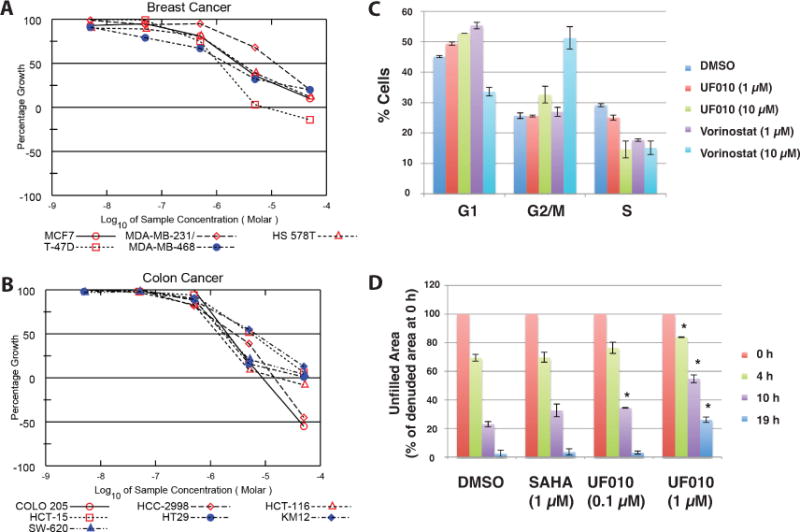
UF010 primarily inhibits the G1/S transition with an increased G1 cell population and a decreased cell population in the S phase in a dose-dependent manner in cell-cycle analysis using MDA-MB-231 cells. In cell culture medium containing 10% fetal bovine serum, UF010 has a half-life of 15.8 hours[1]. |
|---|---|
| ln Vitro |
UF010 primarily inhibits the G1/S transition with an increased G1 cell population and a decreased cell population in the S phase in a dose-dependent manner in cell-cycle analysis using MDA-MB-231 cells. In cell culture medium containing 10% fetal bovine serum, UF010 has a half-life of 15.8 hours[1].
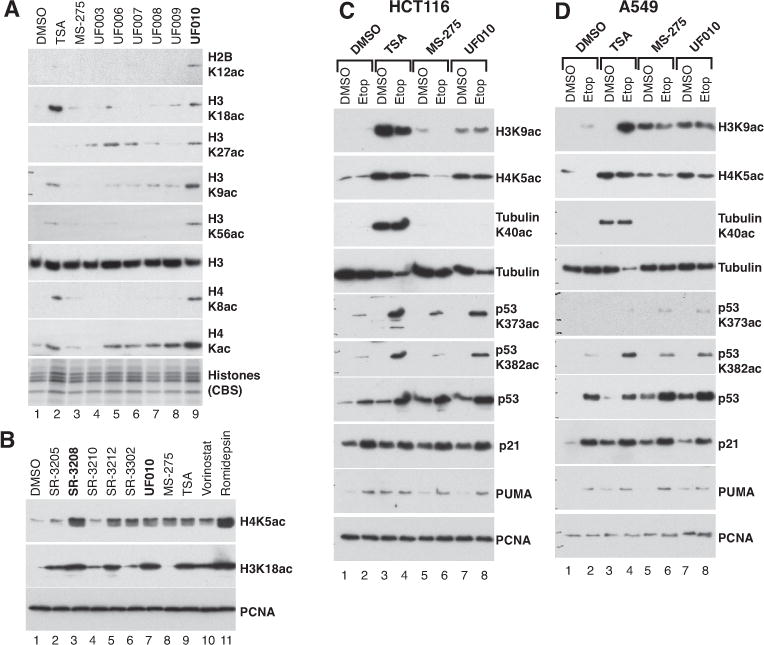
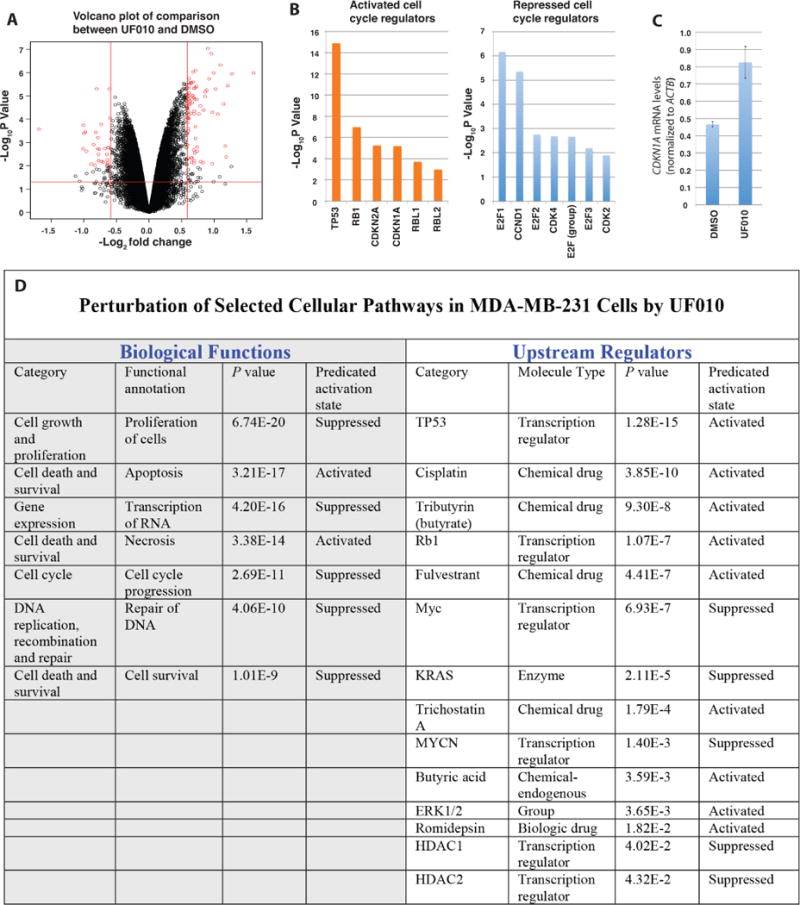
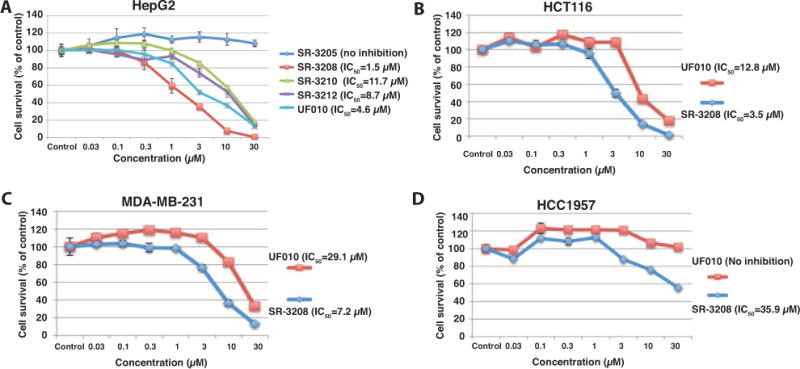
UF010 inhibits proliferation of colon cancer HCT116 cells with an IC₅₀ of 11.2 µM in viability assays. In liver cancer HepG2 cells, UF010 exhibits an IC₅₀ of 4.6 µM for cytotoxicity. UF010 induces accumulation of acetylated histones (H3K18ac, H4K5ac) in HCT116 cells after 1-24 h treatment. UF010 increases acetylation of p53 in HCT116 and A549 cells, especially when combined with etoposide. UF010 does not increase α-tubulin acetylation, indicating selectivity for class I HDACs over HDAC6. UF010 alters global gene expression in MDA-MB-231 cells, upregulating tumor suppressor pathways (p53, Rb) and downregulating oncogenic pathways (MYC, MYCN, KRAS). UF010 induces G1/S cell cycle arrest in MDA-MB-231 cells, shown by increased G1 population and decreased S-phase cells. UF010 inhibits migration of MDA-MB-231 cells in a wound healing assay at 1 µM. The HDAC inhibitory potency of UF010 and its analogs correlates with their cytotoxicity in multiple cancer cell lines (HepG2, HCT116, MDA-MB-231, HCC1957). UF010 was screened against the NCI-60 cancer cell line panel and showed broad antiproliferative activity with a mean GI₅₀ of 2.94 µM. UF010 shows competitive inhibition kinetics against HDAC2. UF010 exhibits a fast-on/slow-off binding mechanism to HDACs in cells, with sustained histone acetylation up to 96 h after washout. In live-cell HDAC inhibition assays, UF010 shows an IC₅₀ of 1.8 µM within minutes of addition. |
| Enzyme Assay |
HDAC inhibition assays were performed using purified HDAC1, HDAC2, and HDAC3 enzymes.
HDAC activity was measured using a luminescence-based assay in which deacetylation of a substrate generates a signal. Compounds were tested in 10-point dose-response format in triplicate. IC₅₀ values were determined using nonlinear regression curve fitting. For inhibition kinetics, HDAC2 was incubated with varying concentrations of substrate and UF010, and data were fitted to the Michaelis–Menten model. |
| Cell Assay |
For six hours, HCT116 and A549 cells are exposed to either DMSO or etoposide (10 μM). One hour prior to cell lysis, TSA (0.2 μM), MS-275, and UF010 (2 μM) are added. Western blotting is performed on the whole cell lysates using antibodies to the specified proteins. It is found that PCNA is a loading control.
For viability assays, cells were seeded in 96-well plates and treated with compounds 24 h later. Cell viability was assessed 96 h after compound addition using a luminescence-based ATP detection assay. For Western blotting, cells were treated with compounds, lysed, and proteins were separated by SDS-PAGE. Antibodies against acetylated histones (H3K18ac, H4K5ac), acetylated p53, acetylated α-tubulin, and loading controls (PCNA) were used. For histone extraction, cells were treated with compounds, histones were acid-extracted, and analyzed by Western blot. For cell cycle analysis, cells were treated, fixed, stained with propidium iodide, and analyzed by flow cytometry. For migration assays, confluent monolayer cultures were scratched, treated with compounds, and images were taken at various time points to quantify wound closure. For gene expression profiling, cells were treated with UF010 or DMSO for 24 h, total RNA was extracted, and microarray analysis was performed. Quantitative real-time PCR was used to validate gene expression changes, using SYBR green detection and specific primers. |
| ADME/Pharmacokinetics |
The half-life of UF010 in cell culture medium containing 10% fetal bovine serum is 15.8 hours.
|
| Toxicity/Toxicokinetics |
According to reports, UF010 has lower cytotoxicity in cancer cell lines than vorinostat and MS-275.
|
| References | |
| Additional Infomation |
UF010 is a first-in-class benzoylhydrazine skeleton HDAC inhibitor discovered through high-throughput screening. It is a competitive inhibitor of class I HDACs, exhibiting nanomolar inhibitory activity against HDAC1, HDAC2, and HDAC3. UF010 can activate tumor suppressor pathways (p53, Rb) and inhibit oncogenic pathways (MYC, MYCN, KRAS). It exhibits a unique acetylation profile compared to known HDAC inhibitors such as vorinostat and MS-275. Structurally modified analogs of UF010 exhibit different HDAC inhibitory activities, supporting its structure-activity relationship. Due to its selectivity and bioactivity, this compound is considered to have potential value for cancer treatment. [1]
|
| Molecular Formula |
C11H15BRN2O
|
|
|---|---|---|
| Molecular Weight |
271.16
|
|
| Exact Mass |
270.036
|
|
| Elemental Analysis |
C, 48.72; H, 5.58; Br, 29.47; N, 10.33; O, 5.90
|
|
| CAS # |
537672-41-6
|
|
| Related CAS # |
|
|
| PubChem CID |
4596836
|
|
| Appearance |
White to off-white crystalline solid
|
|
| Density |
1.3±0.1 g/cm3
|
|
| Boiling Point |
326.7±34.0 °C at 760 mmHg
|
|
| Flash Point |
151.4±25.7 °C
|
|
| Vapour Pressure |
0.0±0.7 mmHg at 25°C
|
|
| Index of Refraction |
1.550
|
|
| LogP |
3.46
|
|
| Hydrogen Bond Donor Count |
2
|
|
| Hydrogen Bond Acceptor Count |
2
|
|
| Rotatable Bond Count |
5
|
|
| Heavy Atom Count |
15
|
|
| Complexity |
191
|
|
| Defined Atom Stereocenter Count |
0
|
|
| SMILES |
BrC1C([H])=C([H])C(=C([H])C=1[H])C(N([H])N([H])C([H])([H])C([H])([H])C([H])([H])C([H])([H])[H])=O
|
|
| InChi Key |
BVQCFCYPFJOOAV-UHFFFAOYSA-N
|
|
| InChi Code |
InChI=1S/C11H15BrN2O/c1-2-3-8-13-14-11(15)9-4-6-10(12)7-5-9/h4-7,13H,2-3,8H2,1H3,(H,14,15)
|
|
| Chemical Name |
4-bromo-N'-butylbenzohydrazide
|
|
| Synonyms |
|
|
| HS Tariff Code |
2934.99.9001
|
|
| Storage |
Powder -20°C 3 years 4°C 2 years In solvent -80°C 6 months -20°C 1 month |
|
| Shipping Condition |
Room temperature (This product is stable at ambient temperature for a few days during ordinary shipping and time spent in Customs)
|
| Solubility (In Vitro) |
|
|||
|---|---|---|---|---|
| Solubility (In Vivo) |
Solubility in Formulation 1: ≥ 2.5 mg/mL (9.22 mM) (saturation unknown) in 10% DMSO + 40% PEG300 + 5% Tween80 + 45% Saline (add these co-solvents sequentially from left to right, and one by one), clear solution.
For example, if 1 mL of working solution is to be prepared, you can add 100 μL of 25.0 mg/mL clear DMSO stock solution to 400 μL PEG300 and mix evenly; then add 50 μL Tween-80 to the above solution and mix evenly; then add 450 μL normal saline to adjust the volume to 1 mL. Preparation of saline: Dissolve 0.9 g of sodium chloride in 100 mL ddH₂ O to obtain a clear solution. Solubility in Formulation 2: ≥ 2.5 mg/mL (9.22 mM) (saturation unknown) in 10% DMSO + 90% (20% SBE-β-CD in Saline) (add these co-solvents sequentially from left to right, and one by one), clear solution. For example, if 1 mL of working solution is to be prepared, you can add 100 μL of 25.0 mg/mL clear DMSO stock solution to 900 μL of 20% SBE-β-CD physiological saline solution and mix evenly. Preparation of 20% SBE-β-CD in Saline (4°C,1 week): Dissolve 2 g SBE-β-CD in 10 mL saline to obtain a clear solution. View More
Solubility in Formulation 3: ≥ 2.5 mg/mL (9.22 mM) (saturation unknown) in 10% DMSO + 90% Corn Oil (add these co-solvents sequentially from left to right, and one by one), clear solution. |
| Preparing Stock Solutions | 1 mg | 5 mg | 10 mg | |
| 1 mM | 3.6879 mL | 18.4393 mL | 36.8786 mL | |
| 5 mM | 0.7376 mL | 3.6879 mL | 7.3757 mL | |
| 10 mM | 0.3688 mL | 1.8439 mL | 3.6879 mL |
*Note: Please select an appropriate solvent for the preparation of stock solution based on your experiment needs. For most products, DMSO can be used for preparing stock solutions (e.g. 5 mM, 10 mM, or 20 mM concentration); some products with high aqueous solubility may be dissolved in water directly. Solubility information is available at the above Solubility Data section. Once the stock solution is prepared, aliquot it to routine usage volumes and store at -20°C or -80°C. Avoid repeated freeze and thaw cycles.
Calculation results
Working concentration: mg/mL;
Method for preparing DMSO stock solution: mg drug pre-dissolved in μL DMSO (stock solution concentration mg/mL). Please contact us first if the concentration exceeds the DMSO solubility of the batch of drug.
Method for preparing in vivo formulation::Take μL DMSO stock solution, next add μL PEG300, mix and clarify, next addμL Tween 80, mix and clarify, next add μL ddH2O,mix and clarify.
(1) Please be sure that the solution is clear before the addition of next solvent. Dissolution methods like vortex, ultrasound or warming and heat may be used to aid dissolving.
(2) Be sure to add the solvent(s) in order.
UF010 Induces the Accumulation of Protein Acetylation. |
Fig. 4. Antiproliferation Effects of UF010. |
Fig. 5. Global Effects of UF010 on Gene Expression.Chem Biol.2015 Feb 19;22(2):273-84. |
Mechanisms of HDAC Inhibition by UF010.Chem Biol.2015 Feb 19;22(2):273-84. |
Suppression of Cancer Cell Viability by UF010 Analogs Correlates with Their HDAC Inhibition Potencies.Chem Biol.2015 Feb 19;22(2):273-84. |
Products are for research use only; We do not sell to patients
Copyright 2020 InvivoChem LLC | All Rights Reserved


 COA
COA