| Size | Price | Stock | Qty |
|---|---|---|---|
| 10mg |
|
||
| 25mg |
|
||
| 50mg |
|
||
| 100mg |
|
||
| 250mg |
|
||
| 500mg |
|
||
| 1g | |||
| Other Sizes |


Purity: ≥98%
| Targets |
The primary target of U-104 is the tumor-associated carbonic anhydrase IX (CA IX), a zinc-dependent enzyme highly expressed in hypoxic tumor cells. For recombinant human CA IX, the IC50 in the carbonic anhydrase activity assay was 1.2 nM [1];
It exhibited high selectivity for CA IX over other CA isoforms: the IC50 for human recombinant CA II (a ubiquitous isoform) was >1000 nM (≈833-fold lower affinity than CA IX), and no significant inhibition of CA I/IV was observed (IC50 > 1000 nM) [1] |
|---|---|
| ln Vitro |
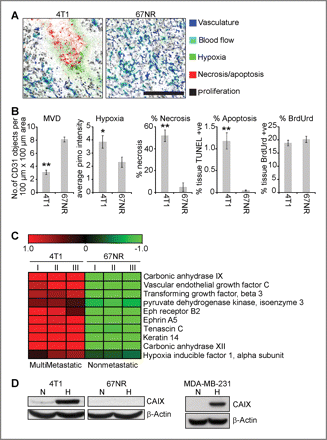
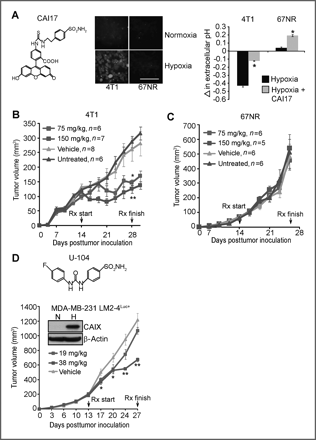
U-104 (SLC-0111) is a strong inhibitor of exosomes[3]. For CA I (Ki=5080 nM) and CA II (Ki=9640 nM), U-104 exhibits modest inhibition[1]. Under hypoxic conditions, U-104 (50 μM) inhibits the mesenchymal phenotype in the population of cancer stem cells in 4T1 cells. This effect lasts for 72 hours. In metastatic MDA-MB-231 LM2 -4Luc+ cells, U-104 (<50 μM) markedly and dose-dependently decreases migration, causing the cells to develop as compact colonies resembling those of the parent MDA-MB-231 cells[2].
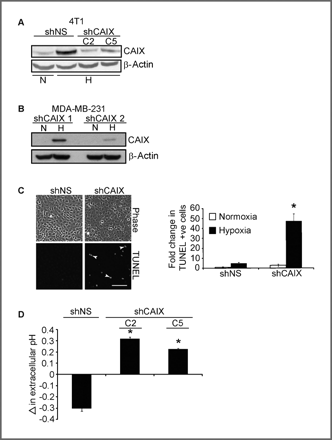
1. Inhibition of CA IX activity in hypoxic breast cancer cells: U-104 dose-dependently inhibited CA IX activity in MDA-MB-231 (triple-negative breast cancer, TNBC) cells cultured under hypoxic conditions (1% O₂, 48 hours). At 10 nM, CA IX activity was reduced by 58% compared to the hypoxic vehicle control; at 20 nM (≈2× IC50), inhibition reached 82%. This inhibition reversed the acidification of the tumor cell microenvironment (extracellular pH increased from 6.5 to 7.2 at 20 nM U-104) [1] 2. Antiproliferative activity against hypoxic breast cancer cells: U-104 selectively inhibited the proliferation of hypoxic breast cancer cells. In the 72-hour MTS assay: - Hypoxic MDA-MB-231 cells: IC50 = 15 nM [1] - Hypoxic MCF-7 (estrogen receptor-positive breast cancer) cells: IC50 = 18 nM [1] - Normoxic (21% O₂) MDA-MB-231/MCF-7 cells: IC50 > 200 nM (no significant antiproliferative effect) [1] 3. Depletion of breast cancer stem cells (BCSCs): In MDA-MB-231 cells, U-104 reduced the proportion of BCSCs (CD44⁺/CD24⁻ phenotype) under hypoxia. At 10 nM, the BCSC proportion decreased from 35% (hypoxic control) to 18%; at 20 nM, it further dropped to 8% (flow cytometry analysis) [2]. U-104 (20 nM) also inhibited BCSC self-renewal: the number of tumorspheres formed in ultra-low attachment plates was reduced by 70% compared to the control, and the expression of stemness-related proteins (Sox2, Oct4, Nanog) was downregulated by 55-65% (Western blot) [2] 4. Inhibition of tumor cell migration and invasion: U-104 (20 nM) reduced the migration of hypoxic MDA-MB-231 cells by 60% (scratch wound assay) and invasion by 55% (Transwell assay with Matrigel) [1]. Western blot showed that U-104 (20 nM) downregulated VEGF (by 65%) and MMP-9 (by 70%)—key mediators of angiogenesis and metastasis [1]. |
| ln Vivo |
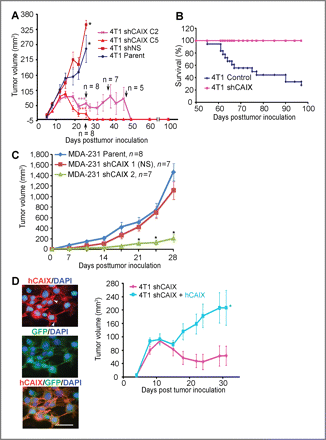
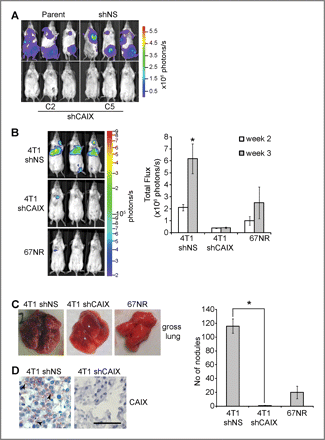
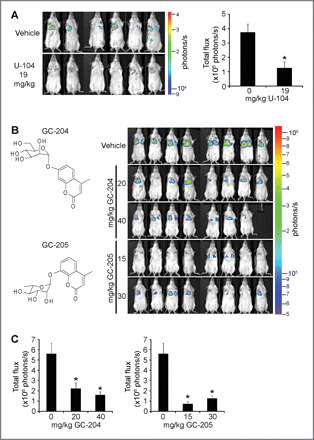
In mice implanted orthotopically with MDA-MB-231 LM2-4Luc+ cells, U-104 (19, 38 mg/kg; daily; for 27 days) suppresses the formation of primary tumors. The 4T1 experimental metastatic mouse model exhibits inhibition of metastasis formation in response to U-104 (19 mg/kg; daily; for 27 days; 5 days)[1]. ?When MDA-MB-231 LM2-4Luc+ cells are orthotopically implanted in NOD/SCID mice, U-104 (38 mg/kg; ip; 11–27 days) dramatically suppresses the number of cancer stem cells and slows the formation of primary tumors[2]. ?Balb/c mice orthotopically implanted with 4T1 cells exhibit a substantial delay in tumor formation when U-104 (50 mg/kg; oral gavage; continuously for 4 days and halted for 1 day; from 10 to 30 days) is administered[2].
1. Inhibition of breast tumor growth in xenograft models: Female nude mice (6-8 weeks old) were subcutaneously injected with 5×10⁶ hypoxic preconditioned MDA-MB-231 cells (0.1 mL PBS mixed with Matrigel at 1:1). When tumors reached ~100 mm³, mice were randomized into 3 groups: - Vehicle control: 0.5% methylcellulose in PBS (oral, once daily for 21 days); - U-104 25 mg/kg: oral, once daily for 21 days; - U-104 50 mg/kg: oral, once daily for 21 days. The 25 mg/kg group showed a tumor growth inhibition (TGI) rate of 65%, and the 50 mg/kg group had a TGI of 80% [1]. Tumor weights in the 50 mg/kg group were 20% of those in the control group, and immunohistochemical (IHC) staining showed a 75% reduction in CA IX-positive cells in tumor tissues [1] 2. Inhibition of breast cancer metastasis: In the MDA-MB-231 lung metastasis model (tail vein injection of 2×10⁶ cells), mice treated with U-104 (25 mg/kg, oral, once daily for 28 days) had 70% fewer lung metastatic nodules (average 5 nodules/mouse) compared to the control group (average 17 nodules/mouse) [1] 3. Depletion of BCSCs in vivo: In nude mice bearing MDA-MB-231 xenografts, oral administration of U-104 (25 mg/kg/day for 14 days) reduced the proportion of CD44⁺/CD24⁻ BCSCs in tumors from 32% (control) to 9% (flow cytometry of dissociated tumor cells) [2]. This depletion was associated with a 2.5-fold extension of tumor recurrence latency (from 20 days to 50 days) after drug withdrawal [2] |
| Enzyme Assay |
1. Recombinant human CA IX activity assay (pH-stat method): The assay was performed at 37°C using a pH electrode. The reaction buffer contained 25 mM Tris-HCl (pH 7.5), 10 mM NaCl, and 10 nM recombinant human CA IX protein. U-104 was serially diluted (0.1-50 nM) in the reaction buffer and pre-incubated with CA IX for 10 minutes. CO₂-saturated water (37°C) was added to initiate the reaction (CO₂ hydration to H₂CO₃, which lowers the solution pH). The rate of pH decrease was recorded for 2 minutes, and CA IX activity was calculated as the percentage of the pH change rate relative to the vehicle control. The IC50 was determined by fitting the inhibition curve to a four-parameter logistic model [1]
2. Selectivity assay for CA II: The assay protocol was identical to the CA IX assay, except that 10 nM recombinant human CA II was used as the enzyme source, and U-104 was tested at concentrations up to 1000 nM. No significant inhibition of CA II activity was observed (inhibition <10% at 1000 nM), confirming the selectivity of U-104 for CA IX [1]. |
| Cell Assay |
1. Hypoxic cell culture and antiproliferation (MTS) assay: MDA-MB-231/MCF-7 cells were seeded in 96-well plates at a density of 5×10³ cells/well and incubated overnight under normoxia (21% O₂, 5% CO₂). The cells were then transferred to a hypoxic chamber (1% O₂, 5% CO₂, 94% N₂) and cultured for 48 hours to induce CA IX expression. U-104 (0.5-200 nM) was added, and cells were cultured for another 72 hours under hypoxia. Twenty microliters of MTS reagent was added to each well, incubated for 2 hours, and absorbance was measured at 490 nm. The IC50 was defined as the concentration of U-104 that inhibited cell proliferation by 50% [1]
2. Breast cancer stem cell (BCSC) detection (flow cytometry): MDA-MB-231 cells were cultured under hypoxia for 48 hours, then treated with U-104 (10-30 nM) for 72 hours. Cells were harvested by trypsinization, washed with cold PBS, and stained with fluorochrome-conjugated antibodies against CD44 (PE-labeled) and CD24 (FITC-labeled) for 30 minutes at 4°C in the dark. Stained cells were analyzed by flow cytometry, and the percentage of CD44⁺/CD24⁻ cells was calculated [2] 3. Tumorsphere formation assay: Hypoxic MDA-MB-231 cells treated with U-104 (10-30 nM) for 72 hours were seeded in ultra-low attachment 6-well plates at a density of 1×10³ cells/well. The culture medium was stem cell medium (DMEM/F12 supplemented with B27, EGF, and bFGF). After 10 days of culture, tumorspheres with a diameter >50 μm were counted, and the sphere formation rate was calculated relative to the control group [2] 4. Western blot analysis: Hypoxic MDA-MB-231/MCF-7 cells were treated with U-104 (10-30 nM) for 24 hours. Cells were lysed in RIPA buffer (supplemented with protease inhibitors), centrifuged at 12,000×g for 15 minutes at 4°C. Thirty micrograms of protein was separated by 10% SDS-PAGE, transferred to PVDF membranes, blocked with 5% non-fat milk in TBST for 1 hour at room temperature. Membranes were incubated with primary antibodies (anti-CA IX, anti-HIF-1α, anti-VEGF, anti-Sox2) overnight at 4°C, then with HRP-conjugated secondary antibodies for 1 hour. Bands were visualized using an ECL detection system and quantified with ImageJ [1, 2]. |
| Animal Protocol |
Dissolved in 55.6% PEG 400, 11.1% ethanol and 33% water; 5 mg/kg; oral gavage
Balb/c mice orthotopically implanted with 4T1 cells. 1. Nude mouse breast cancer subcutaneous xenograft model: Female nude mice (6-8 weeks old, n=6 per group) were anesthetized with isoflurane. A total of 5×10⁶ MDA-MB-231 cells (pre-cultured under hypoxia for 48 hours) were suspended in 0.1 mL of a 1:1 mixture of PBS and Matrigel, then subcutaneously injected into the right flank of each mouse. When tumors reached an average volume of ~100 mm³ (7 days after cell injection), mice were randomly assigned to three groups: - Vehicle control group: 0.5% methylcellulose in PBS, administered orally via gavage once daily for 21 days; - U-104 25 mg/kg group: U-104 was suspended in 0.5% methylcellulose to a concentration of 5 mg/mL, administered orally once daily for 21 days; - U-104 50 mg/kg group: U-104 was suspended in 0.5% methylcellulose to a concentration of 10 mg/mL, administered orally once daily for 21 days. Tumor volume was measured every 2 days using a digital caliper (volume = length × width² / 2), and body weight was recorded weekly. At the end of treatment, mice were euthanized, tumors were excised and weighed, and tumor tissues were collected for IHC staining (anti-CA IX) [1] 2. Nude mouse breast cancer lung metastasis model: Female nude mice (6-8 weeks old, n=6 per group) were injected with 2×10⁶ hypoxic preconditioned MDA-MB-231 cells via the tail vein (0.2 mL PBS). One day after cell injection, mice were treated with U-104 (25 mg/kg, oral, once daily) or vehicle for 28 days. At the end of treatment, mice were euthanized, lungs were removed and fixed with 4% paraformaldehyde, and metastatic nodules on the lung surface were counted under a stereomicroscope [1] 3. BCSC depletion in vivo assay: Female nude mice (6-8 weeks old, n=5 per group) were subcutaneously injected with 5×10⁶ CD44⁺/CD24⁻ MDA-MB-231 cells (purified by flow cytometry). When tumors reached ~100 mm³, mice were treated with U-104 (25 mg/kg, oral, once daily) or vehicle for 14 days. Tumors were excised, dissociated into single cells, and the proportion of CD44⁺/CD24⁻ cells was analyzed by flow cytometry. For recurrence latency analysis, remaining mice were monitored for tumor regrowth after drug withdrawal [2]. |
| Toxicity/Toxicokinetics |
1. Acute toxicity in mice: Female CD-1 mice (6-8 weeks old, n=6 per dose) were orally administered U-104 at doses of 50, 100, and 200 mg/kg. At doses of 50 and 100 mg/kg, no death or significant toxicity was observed (weight loss <4%, normal serum ALT, AST, and creatinine levels). At a dose of 200 mg/kg, one of the six mice died within 7 days, and the surviving mice showed transient weight loss (6%), but no significant changes in liver and kidney function indicators were observed [1]. 2. Chronic toxicity in nude mice: In a 21-day xenotransplantation study, U-104 (25-50 mg/kg, orally, once daily) did not cause significant weight loss (change from baseline <5%) or abnormalities in serum biochemical indicators (ALT, AST, creatinine) [1]. In a 14-day BCSC exhaustion study, no adverse effects on mouse behavior or organ morphology (liver, kidney, spleen) were observed [2].
|
| References |
|
| Additional Infomation |
SLC-0111, a CAIX inhibitor, is a sulfonamide-based carbonic anhydrase inhibitor with potential antitumor activity. After administration, SLC-0111 inhibits tumor-associated carbonic anhydrase IX (CAIX), a hypoxia-induced transmembrane glycoprotein that catalyzes the reversible and rapid conversion of carbon dioxide and water into carbonic acid, protons, and bicarbonate ions. This prevents acidification of the extracellular microenvironment and alkalization of the cytoplasm in tumor cells, thereby increasing the death of hypoxic tumor cells expressing CAIX. CAIX is overexpressed in a variety of tumors and plays a key role in intracellular and extracellular pH regulation, cancer cell progression, survival, migration, and invasion. It is also associated with resistance to chemotherapy and radiotherapy.
1. Chemical Classification and Design Background: U-104 is a synthetic sulfonamide-derived selective carbonic anhydrase IX (CA IX) inhibitor. It is designed to target the unique active site of CA IX (overexpressed in hypoxic tumors) and avoid inhibiting ubiquitous CA isoenzymes (such as CA II), thereby reducing off-target toxicity [1]. 2. Mechanism of action: U-104 works through three key pathways: (1) inhibiting CA IX activity to reverse tumor microenvironment acidification, thereby inhibiting tumor cell proliferation and migration; (2) downregulating the HIF-1α/VEGF signaling pathway to inhibit angiogenesis and metastasis; and (3) clearing CD44⁺/CD24⁻ breast cancer stem cells to reduce the risk of tumor recurrence [1, 2]. 3. Therapeutic potential: U-104 has shown potential in preclinical studies for treating hypoxic breast cancer, particularly triple-negative breast cancer (TNBC). TNBC is a subtype with high CA IX expression, high metastasis rate, and poor prognosis. U-104 can inhibit primary tumor growth and metastasis and clear breast cancer stem cells (BCSC), thus meeting an unmet need in the treatment of TNBC [1, 2]. |
| Molecular Formula |
C13H12FN3O3S
|
|
|---|---|---|
| Molecular Weight |
309.32
|
|
| Exact Mass |
309.058
|
|
| CAS # |
178606-66-1
|
|
| Related CAS # |
|
|
| PubChem CID |
310360
|
|
| Appearance |
White to off-white solid powder
|
|
| Density |
1.5±0.1 g/cm3
|
|
| Melting Point |
242-243℃
|
|
| Index of Refraction |
1.673
|
|
| LogP |
2.12
|
|
| Hydrogen Bond Donor Count |
3
|
|
| Hydrogen Bond Acceptor Count |
5
|
|
| Rotatable Bond Count |
3
|
|
| Heavy Atom Count |
21
|
|
| Complexity |
450
|
|
| Defined Atom Stereocenter Count |
0
|
|
| SMILES |
O=S(C1=CC=C(NC(NC2=CC=C(F)C=C2)=O)C=C1)(N)=O
|
|
| InChi Key |
YJQZNWPYLCNRLP-UHFFFAOYSA-N
|
|
| InChi Code |
InChI=1S/C13H12FN3O3S/c14-9-1-3-10(4-2-9)16-13(18)17-11-5-7-12(8-6-11)21(15,19)20/h1-8H,(H2,15,19,20)(H2,16,17,18)
|
|
| Chemical Name |
1-(4-fluorophenyl)-3-(4-sulfamoylphenyl)urea
|
|
| Synonyms |
|
|
| HS Tariff Code |
2934.99.9001
|
|
| Storage |
Powder -20°C 3 years 4°C 2 years In solvent -80°C 6 months -20°C 1 month |
|
| Shipping Condition |
Room temperature (This product is stable at ambient temperature for a few days during ordinary shipping and time spent in Customs)
|
| Solubility (In Vitro) |
DMSO: 62 mg/mL (200.4 mM)
Water: 1 mg/mL (Insoluble) Ethanol: 1 mg/mL |
|---|---|
| Solubility (In Vivo) |
Solubility in Formulation 1: ≥ 2.08 mg/mL (6.72 mM) (saturation unknown) in 10% DMSO + 40% PEG300 + 5% Tween80 + 45% Saline (add these co-solvents sequentially from left to right, and one by one), clear solution.
For example, if 1 mL of working solution is to be prepared, you can add 100 μL of 20.8 mg/mL clear DMSO stock solution to 400 μL PEG300 and mix evenly; then add 50 μL Tween-80 to the above solution and mix evenly; then add 450 μL normal saline to adjust the volume to 1 mL. Preparation of saline: Dissolve 0.9 g of sodium chloride in 100 mL ddH₂ O to obtain a clear solution. Solubility in Formulation 2: ≥ 2.08 mg/mL (6.72 mM) (saturation unknown) in 10% DMSO + 90% (20% SBE-β-CD in Saline) (add these co-solvents sequentially from left to right, and one by one), clear solution. For example, if 1 mL of working solution is to be prepared, you can add 100 μL of 20.8 mg/mL clear DMSO stock solution to 900 μL of 20% SBE-β-CD physiological saline solution and mix evenly. Preparation of 20% SBE-β-CD in Saline (4°C,1 week): Dissolve 2 g SBE-β-CD in 10 mL saline to obtain a clear solution. View More
Solubility in Formulation 3: ≥ 2.08 mg/mL (6.72 mM) (saturation unknown) in 10% DMSO + 90% Corn Oil (add these co-solvents sequentially from left to right, and one by one), clear solution. Solubility in Formulation 4: 30% PEG400+0.5% Tween80+5% propylene glycol:30mg/mL |
| Preparing Stock Solutions | 1 mg | 5 mg | 10 mg | |
| 1 mM | 3.2329 mL | 16.1645 mL | 32.3290 mL | |
| 5 mM | 0.6466 mL | 3.2329 mL | 6.4658 mL | |
| 10 mM | 0.3233 mL | 1.6164 mL | 3.2329 mL |
*Note: Please select an appropriate solvent for the preparation of stock solution based on your experiment needs. For most products, DMSO can be used for preparing stock solutions (e.g. 5 mM, 10 mM, or 20 mM concentration); some products with high aqueous solubility may be dissolved in water directly. Solubility information is available at the above Solubility Data section. Once the stock solution is prepared, aliquot it to routine usage volumes and store at -20°C or -80°C. Avoid repeated freeze and thaw cycles.
Calculation results
Working concentration: mg/mL;
Method for preparing DMSO stock solution: mg drug pre-dissolved in μL DMSO (stock solution concentration mg/mL). Please contact us first if the concentration exceeds the DMSO solubility of the batch of drug.
Method for preparing in vivo formulation::Take μL DMSO stock solution, next add μL PEG300, mix and clarify, next addμL Tween 80, mix and clarify, next add μL ddH2O,mix and clarify.
(1) Please be sure that the solution is clear before the addition of next solvent. Dissolution methods like vortex, ultrasound or warming and heat may be used to aid dissolving.
(2) Be sure to add the solvent(s) in order.
| NCT Number | Recruitment | interventions | Conditions | Sponsor/Collaborators | Start Date | Phases |
| NCT05025722 | Completed | Other: Non Interventional | Pseudoxanthoma Elasticum | Daiichi Sankyo | August 30, 2021 | |
| NCT04459585 | Completed Has Results | Drug: Dabigatran Etexilate Mesylate Drug: Quizartinib |
Healthy Subjects Drug-drug Interaction |
Daiichi Sankyo Co., Ltd. | August 28, 2020 | Early Phase 1 |
|
|---|
|
|
|
|---|
|
|
Products are for research use only; We do not sell to patients
Copyright 2020 InvivoChem LLC | All Rights Reserved


 COA
COA