| Size | Price | Stock | Qty |
|---|---|---|---|
| 5mg |
|
||
| 10mg |
|
||
| 25mg |
|
||
| 50mg |
|
||
| 100mg |
|
||
| 250mg |
|
||
| 500mg | |||
| Other Sizes |


Purity: ≥98%
| Targets |
HDAC6 (IC50 = 4.6 μM); HDAC8 (IC50 = 1.9 μM); HDAC10 (IC50 = 7.7 μM)
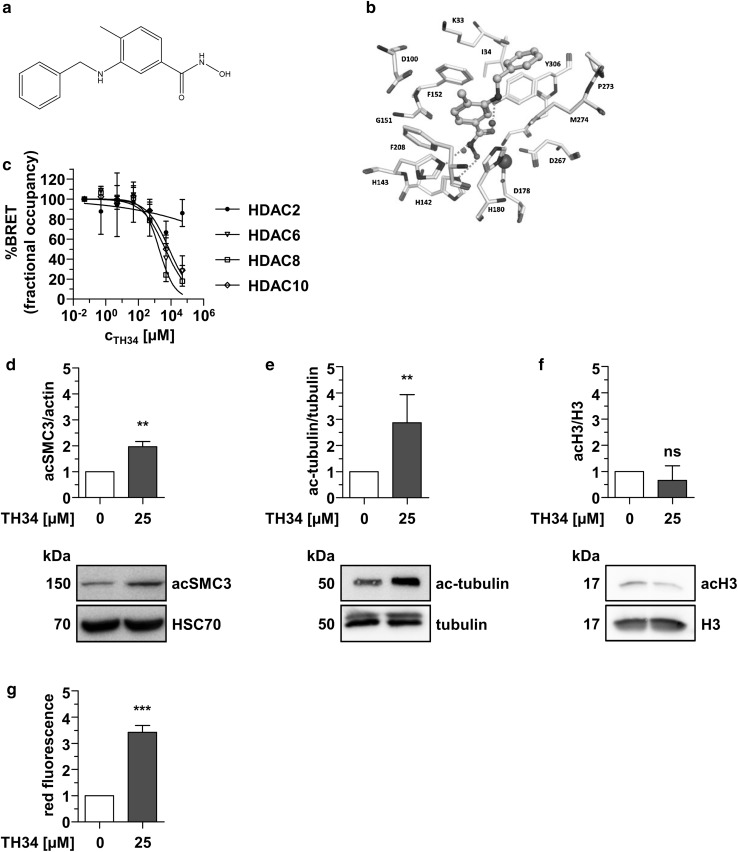
TH34 exhibits no significant affinity for HDAC2 at concentrations up to 50 µM, but it binds strongly to HDAC6, 8, and 10 with low-micromolar IC50 concentrations (HDAC6: 4.6 µM, HDAC8: 1.9 µM, and HDAC10: 7.7 µM). Treatment results in hyperacetylation of SMC3 and tubulin. While protecting non-transformed human cells, TH34 efficiently and selectively destroys high-grade neuroblastoma cells. It significantly damages DNA in neuroblastoma cell lines and primary neuroblastoma cells, which is followed by differentiation and cell cycle arrest in the G2/M phase at later times, ultimately resulting in cell death[1]. |
|---|---|
| ln Vitro |
TH34 exhibits no significant affinity for HDAC2 at concentrations up to 50 µM, but it binds strongly to HDAC6, 8, and 10 with low-micromolar IC50 concentrations (HDAC6: 4.6 µM, HDAC8: 1.9 µM, and HDAC10: 7.7 µM). Treatment results in hyperacetylation of SMC3 and tubulin. While protecting non-transformed human cells, TH34 efficiently and selectively destroys high-grade neuroblastoma cells. It significantly damages DNA in neuroblastoma cell lines and primary neuroblastoma cells, which is followed by differentiation and cell cycle arrest in the G2/M phase at later times, ultimately resulting in cell death[1].
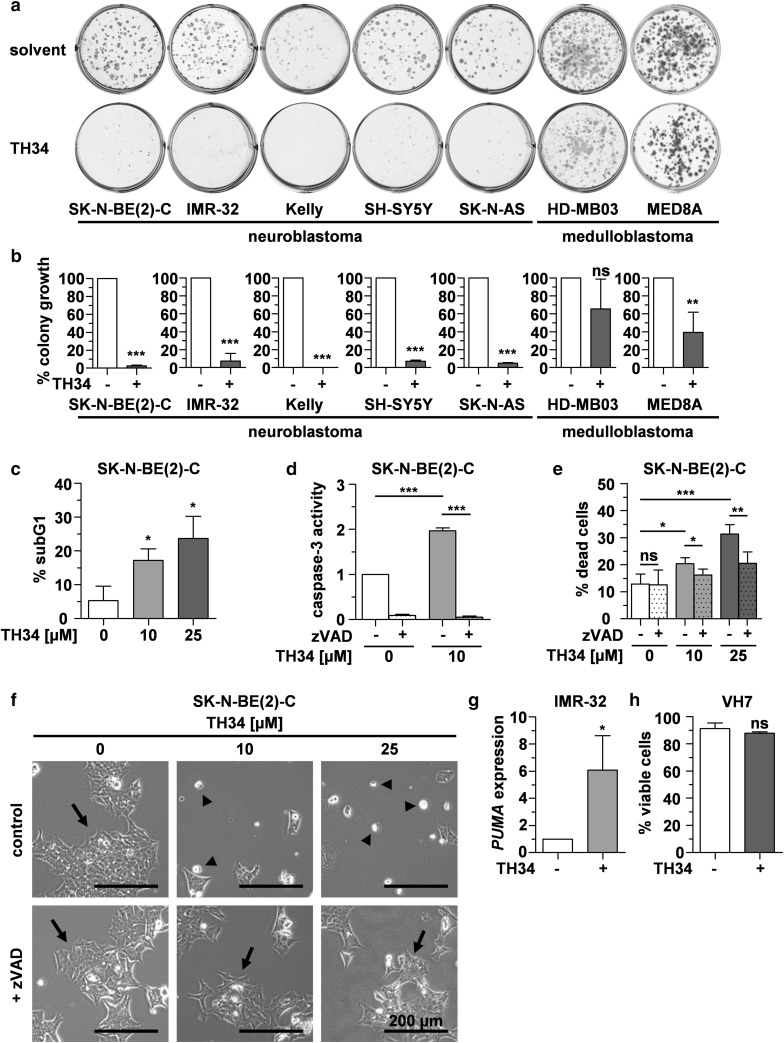
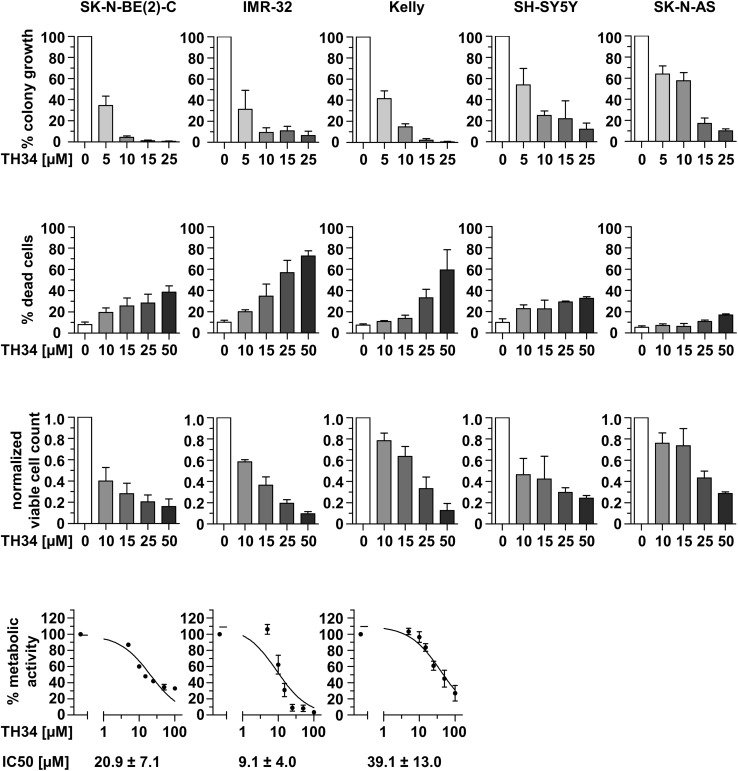
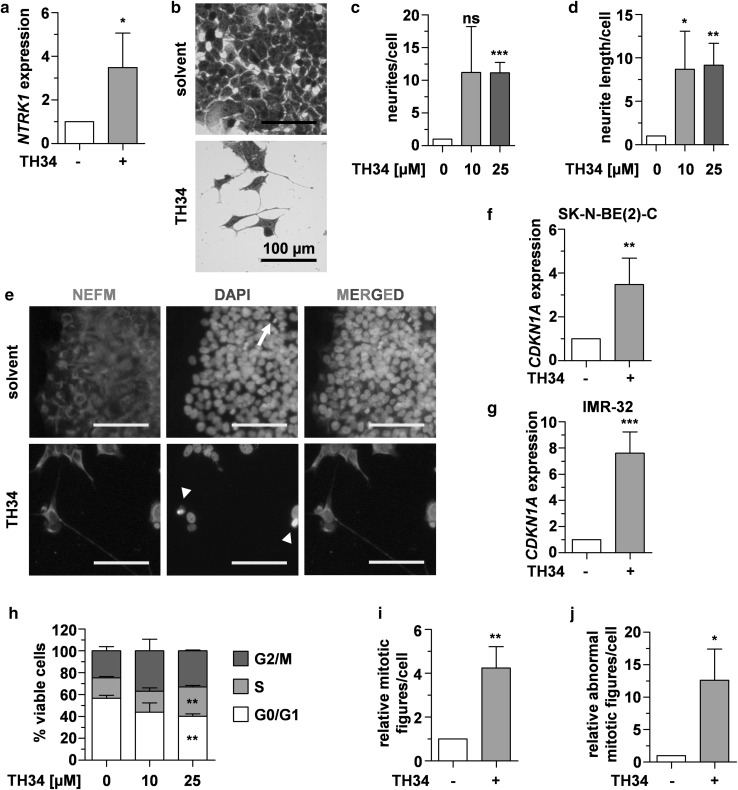
TH34 treatment (25 µM, 6 hours) induced hyperacetylation of SMC3 (a specific HDAC8 substrate) and tubulin (a specific HDAC6 target) in SK-N-BE(2)-C neuroblastoma cells, confirming intracellular inhibition of HDAC8 and HDAC6. [1] TH34 treatment (25 µM, 24 hours) induced strong accumulation of acidic vesicular organelles in SK-N-BE(2)-C cells, a phenotype associated with HDAC10 inhibition. [1] TH34 treatment (25 µM, 4 days followed by 7 days regrowth) abolished colony formation in multiple human neuroblastoma cell lines (SK-N-BE(2)-C, IMR-32, Kelly, SH-SY5Y, SK-N-AS) but had a less pronounced effect on medulloblastoma cell lines (HD-MB03, MED8A). [1] TH34 induced caspase-dependent programmed cell death in SK-N-BE(2)-C neuroblastoma cells in a concentration-dependent manner (10-25 µM, 48-72 hours), as evidenced by increased caspase-3 activity and subG1 fraction, which could be rescued by the pan-caspase inhibitor Z-VAD-FMK. [1] TH34 exhibited limited cytotoxic effects on proliferating non-malignant human foreskin fibroblasts (VH7 cells) at 25 µM for 72 hours. [1] TH34 treatment (10 µM, 72 hours) significantly increased the expression of neuronal differentiation marker NTRK1 in SK-N-BE(2)-C cells. [1] TH34 treatment (10 µM, 6 days) induced morphological differentiation in SK-N-BE(2)-C cells, characterized by the formation of increased numbers of longer, neurite-like structures and positive staining for neurofilament M (NEFM). [1] TH34 treatment (10 µM, 72 hours) induced dose-dependent upregulation of the cell cycle inhibitor CDKN1A (p21) in both TP53-mutated (SK-N-BE(2)-C) and TP53-wild type (IMR-32) neuroblastoma cells. [1] TH34 treatment caused a cell cycle arrest in SK-N-BE(2)-C cells, with a marked shift from G0/G1 to S/G2/M phase after 72 hours, and increased the number of mitotic cells, including those with aberrant features (e.g., multipolar spindles), after 6 days of treatment. [1] TH34 treatment (10-25 µM, 24 hours) induced DNA double-strand breaks in SK-N-BE(2)-C cells in a dose-dependent manner, as shown by a significant increase in γH2AX-positive cells and nuclear foci formation. This DNA damage occurred prior to significant cell death and was independent of caspase activation, as it was not rescued by Z-VAD-FMK co-treatment. [1] TH34 also dose-dependently increased γH2AX-positive cells in primary neuroblastoma cells (NBS) isolated from a patient with MYCN-amplified stage 4 neuroblastoma after 24 hours of treatment. [1] The combination of TH34 with all-trans retinoic acid (ATRA) synergistically inhibited colony growth in SK-N-BE(2)-C cells, with a combination index (CI) of less than 0.1 for 10 µM of each drug. [1] |
| Enzyme Assay |
Biochemical HDAC inhibition assays were performed using specific fluorogenic substrates. For HDAC3 inhibition testing, TH34 was tested in a ten-dose, threefold serial dilution starting at 1000 µM against a specific HDAC3 substrate peptide. IC50 values were calculated using appropriate software. [1]
Class IIa HDAC activity assays were performed as described in a previous methodology. [1] |
| Cell Assay |
For cellular target engagement, a NanoBRET assay was used. HeLa cells stably transfected with NanoLuc-fused HDAC6 or HDAC10 plasmids were seeded. Tracer and serially diluted TH34 were added. After incubation, a NanoGlo substrate was added, and the BRET signal (acceptor/donor signal ratio) was measured to determine the percentage of fractional occupancy versus drug concentration. [1]
For colony formation assays, neuroblastoma and medulloblastoma cells were seeded at low density (500-1000 cells/well) in 6-well plates and treated with TH34 or solvent for 96 hours. Cells were then washed and cultured in fresh medium for 7 additional days before staining viable colonies with crystal violet and quantifying them using image analysis software. [1] Cell viability was measured by automated trypan blue staining using a cell viability analyzer. [1] Caspase-3-like protease activity was analyzed using a fluorometric assay as described in previous methodology. [1] Cell cycle analysis was performed by flow cytometry after staining fixed, permeabilized cells with propidium iodide to quantify DNA content. [1] γH2AX assay for DNA double-strand breaks: After treatment, viable cells were fixed, permeabilized, and incubated with a primary antibody against phospho-histone H2AX (Ser139), followed by a fluorescent secondary antibody. Cells were analyzed by flow cytometry to determine the mean fluorescence and proportion of γH2AX-positive cells. [1] Immunofluorescence staining for γH2AX and NEFM: Cells were seeded on chamber slides, treated, fixed with paraformaldehyde, permeabilized, and blocked. They were then incubated overnight with primary antibodies (anti-γH2AX or anti-NEFM), followed by incubation with fluorescent secondary antibodies and DAPI counterstaining. Images were acquired using fluorescence or confocal microscopy. [1] Acridine orange staining for acidic vesicular organelles: After treatment, cells were stained with acridine orange and analyzed by flow cytometry to quantify the accumulation of acidic vesicles. [1] Quantitative real-time PCR: RNA was extracted, reverse transcribed, and used for qPCR with gene-specific primers (e.g., NTRK1, CDKN1A, PUMA). Gene expression was calculated using the 2^(-ΔΔCt) method and normalized to housekeeping genes (SDHA and HPRT). [1] Cell differentiation assay (neurite outgrowth): Cells plated on 6-well plates were treated for 6 days, stained with crystal violet, and imaged. A semi-automated macro in image analysis software was used to determine the surface area of cell bodies, and the number and length of neurites in multiple fields of view, normalized to solvent control. [1] Cellular metabolic activity assay (CellTiter-Glo): Primary neuroblastoma cells or cell lines were seeded in 96-well plates, treated with TH34 for 72 hours, and then incubated with CellTiter-Glo reagent. The resulting bioluminescence, proportional to the amount of ATP present (an indicator of metabolically active cells), was measured. [1] |
| References | |
| Additional Infomation |
TH34 (3-(N-benzylamino)-4-methylbenzohydroxyxamic acid) is a novel small-molecule histone deacetylase (HDAC) inhibitor. [1] It is claimed to be the first HDAC inhibitor with significant selectivity for HDAC 6, 8, and 10, and high selectivity for HDAC 1, 2, and 3. [1] Its mechanism of action in high-grade neuroblastoma involves inducing DNA double-strand breaks, mitotic abnormalities, cell cycle arrest (G2/M phase), and neuronal differentiation, ultimately leading to caspase-dependent programmed cell death. [1] This study supports the potential efficacy of selective inhibition of HDAC6/8/10 as a targeted therapy for high-grade neuroblastoma. [1]
TH34, in combination with all-trans retinoic acid (ATRA), showed synergistic activity against neuroblastoma cells in vitro. [1] |
| Molecular Formula |
C15H16N2O2
|
|
|---|---|---|
| Molecular Weight |
256.299743652344
|
|
| Exact Mass |
256.12
|
|
| Elemental Analysis |
C, 70.29; H, 6.29; N, 10.93; O, 12.48
|
|
| CAS # |
2196203-96-8
|
|
| Related CAS # |
|
|
| PubChem CID |
134159676
|
|
| Appearance |
White to off-white solid powder
|
|
| LogP |
2.6
|
|
| Hydrogen Bond Donor Count |
3
|
|
| Hydrogen Bond Acceptor Count |
3
|
|
| Rotatable Bond Count |
4
|
|
| Heavy Atom Count |
19
|
|
| Complexity |
290
|
|
| Defined Atom Stereocenter Count |
0
|
|
| SMILES |
CC1=C(C=C(C=C1)C(=O)NO)NCC2=CC=CC=C2
|
|
| InChi Key |
PZBARTUEWCQNSN-UHFFFAOYSA-N
|
|
| InChi Code |
InChI=1S/C15H16N2O2/c1-11-7-8-13(15(18)17-19)9-14(11)16-10-12-5-3-2-4-6-12/h2-9,16,19H,10H2,1H3,(H,17,18)
|
|
| Chemical Name |
3-(benzylamino)-N-hydroxy-4-methylbenzamide
|
|
| Synonyms |
|
|
| HS Tariff Code |
2934.99.9001
|
|
| Storage |
Powder -20°C 3 years 4°C 2 years In solvent -80°C 6 months -20°C 1 month |
|
| Shipping Condition |
Room temperature (This product is stable at ambient temperature for a few days during ordinary shipping and time spent in Customs)
|
| Solubility (In Vitro) |
DMSO: ≥ 50mg/mL
Water: 1mg/mL (Insoluble) Ethanol: N/A |
|---|---|
| Solubility (In Vivo) |
Solubility in Formulation 1: ≥ 2.5 mg/mL (9.75 mM) (saturation unknown) in 10% DMSO + 40% PEG300 + 5% Tween80 + 45% Saline (add these co-solvents sequentially from left to right, and one by one), clear solution.
For example, if 1 mL of working solution is to be prepared, you can add 100 μL of 25.0 mg/mL clear DMSO stock solution to 400 μL PEG300 and mix evenly; then add 50 μL Tween-80 to the above solution and mix evenly; then add 450 μL normal saline to adjust the volume to 1 mL. Preparation of saline: Dissolve 0.9 g of sodium chloride in 100 mL ddH₂ O to obtain a clear solution. Solubility in Formulation 2: ≥ 2.5 mg/mL (9.75 mM) (saturation unknown) in 10% DMSO + 90% (20% SBE-β-CD in Saline) (add these co-solvents sequentially from left to right, and one by one), clear solution. For example, if 1 mL of working solution is to be prepared, you can add 100 μL of 25.0 mg/mL clear DMSO stock solution to 900 μL of 20% SBE-β-CD physiological saline solution and mix evenly. Preparation of 20% SBE-β-CD in Saline (4°C,1 week): Dissolve 2 g SBE-β-CD in 10 mL saline to obtain a clear solution. View More
Solubility in Formulation 3: ≥ 2.5 mg/mL (9.75 mM) (saturation unknown) in 10% DMSO + 90% Corn Oil (add these co-solvents sequentially from left to right, and one by one), clear solution. |
| Preparing Stock Solutions | 1 mg | 5 mg | 10 mg | |
| 1 mM | 3.9017 mL | 19.5084 mL | 39.0168 mL | |
| 5 mM | 0.7803 mL | 3.9017 mL | 7.8034 mL | |
| 10 mM | 0.3902 mL | 1.9508 mL | 3.9017 mL |
*Note: Please select an appropriate solvent for the preparation of stock solution based on your experiment needs. For most products, DMSO can be used for preparing stock solutions (e.g. 5 mM, 10 mM, or 20 mM concentration); some products with high aqueous solubility may be dissolved in water directly. Solubility information is available at the above Solubility Data section. Once the stock solution is prepared, aliquot it to routine usage volumes and store at -20°C or -80°C. Avoid repeated freeze and thaw cycles.
Calculation results
Working concentration: mg/mL;
Method for preparing DMSO stock solution: mg drug pre-dissolved in μL DMSO (stock solution concentration mg/mL). Please contact us first if the concentration exceeds the DMSO solubility of the batch of drug.
Method for preparing in vivo formulation::Take μL DMSO stock solution, next add μL PEG300, mix and clarify, next addμL Tween 80, mix and clarify, next add μL ddH2O,mix and clarify.
(1) Please be sure that the solution is clear before the addition of next solvent. Dissolution methods like vortex, ultrasound or warming and heat may be used to aid dissolving.
(2) Be sure to add the solvent(s) in order.
TH34 inhibits HDACs 6, 8 and 10.Arch Toxicol.2018 Aug;92(8):2649-2664. |
TH34 induces caspase-dependent programmed cell death in neuroblastoma cells.Arch Toxicol.2018 Aug;92(8):2649-2664. |
 TH34 induces DNA damage in high-grade neuroblastoma cells.Arch Toxicol.2018 Aug;92(8):2649-2664. |
TH34 differentially impairs colony formation and cell survival in neuroblastoma cell lines with distinct molecular features.Arch Toxicol.2018 Aug;92(8):2649-2664. |
TH34 induces differentiation and cell cycle arrest in neuroblastoma cells.Arch Toxicol.2018 Aug;92(8):2649-2664. |
Products are for research use only; We do not sell to patients
Copyright 2020 InvivoChem LLC | All Rights Reserved


 COA
COA