| Size | Price | Stock | Qty |
|---|---|---|---|
| 5mg |
|
||
| 10mg |
|
||
| 25mg |
|
||
| 50mg |
|
||
| 100mg |
|
||
| 250mg | |||
| 500mg | |||
| Other Sizes |


Purity: ≥98%
| Targets |
EP2
Prostaglandin E2 receptor subtype EP2 [1] Prostaglandin E2 receptor subtype EP2 (in Neuro-2a cells, the EC50 of butaprost (EP2 agonist) was 80 nM, and in the presence of TG6-10-1 (10 µM), the EC50 of butaprost increased to 710 nM) [2] |
|---|---|
| ln Vitro |
TG6-10-1 is a cell-permeable, highly potent, selective, and competitive antagonist of prostaglandin E2 receptor (EP2) with Kb of 17.8 nM. TG6-10-1 has sufficient pharmacokinetic profiles to be used in vivo. In the mouse pilocarpine model of status epilepticus (SE), systemic administration of TG6-10-1 completely recapitulates the effects of conditional ablation of cyclooxygenase-2 from principal forebrain neurons, namely reduced delayed mortality, accelerated recovery from weight loss, reduced brain inflammation, prevention of blood-brain barrier opening, and neuroprotection in the hippocampus, without modifying seizures acutely. Prolonged SE in humans causes high mortality and morbidity that are associated with brain inflammation and injury, but currently the only effective treatment is to stop the seizures quickly enough with anticonvulsants to prevent brain damage. The results suggest that the prostaglandin receptor EP2 is critically involved in neuroinflammation and neurodegeneration, and point to EP2 receptor antagonism as an adjunctive therapeutic strategy to treat SE.
1. In mouse Neuro-2a cells, TG6-10-1 (10 µM) selectively inhibited EP2 receptor-mediated cAMP production induced by butaprost (EP2 agonist); the EC50 of butaprost for cAMP production was 80 nM, and it increased to 710 nM in the presence of TG6-10-1 [2] 2. In human SH-SY5Y cells, TG6-10-1 (0.1, 1, 10 µM) dose-dependently blocked PGE₂ (10 µM)-induced cAMP production; at 10 µM, it significantly reduced cAMP levels compared with the control group [2] 3. Pretreatment with TG6-10-1 (10, 20 µM) for 15 min significantly attenuated 6-hydroxydopamine (6-OHDA)-induced cytotoxicity in Neuro-2a cells (75 µM 6-OHDA for 24 h, measured by MTT assay) [2] 4. Pretreatment with TG6-10-1 (20 µM) for 15 min significantly improved cell viability in SH-SY5Y cells treated with 150 µM 6-OHDA for 24 h (MTT assay) [2] 5. TG6-10-1 (20 µM) pretreatment did not affect the PGE₂ levels in the culture medium of Neuro-2a and SH-SY5Y cells treated with 6-OHDA [2] |
| ln Vivo |
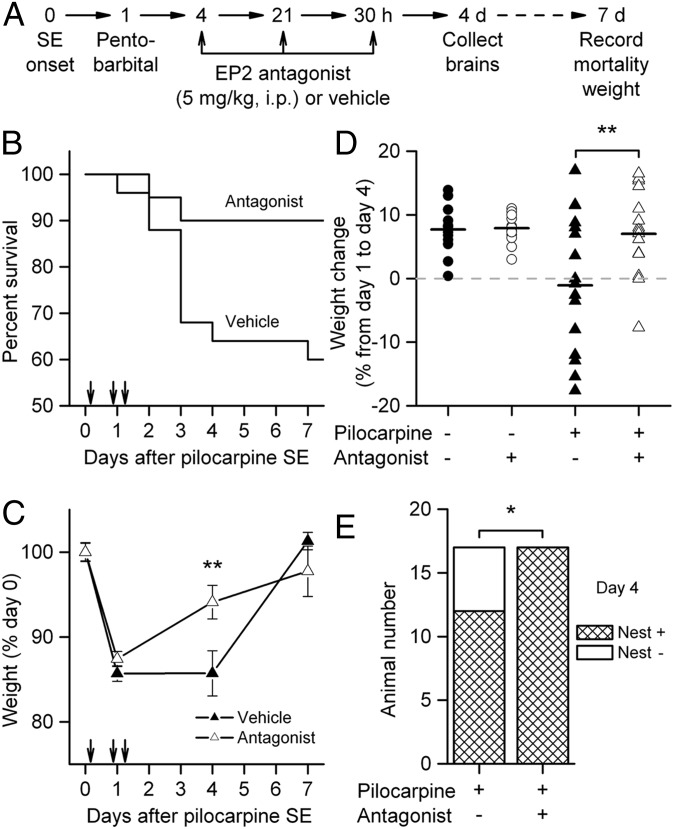
TG6-10-1 (5 mg/kg; i.p.; 4–30 hours) increases survival after status epilepticus (SE), speeds up weight loss recovery, and enhances functional recovery [1].
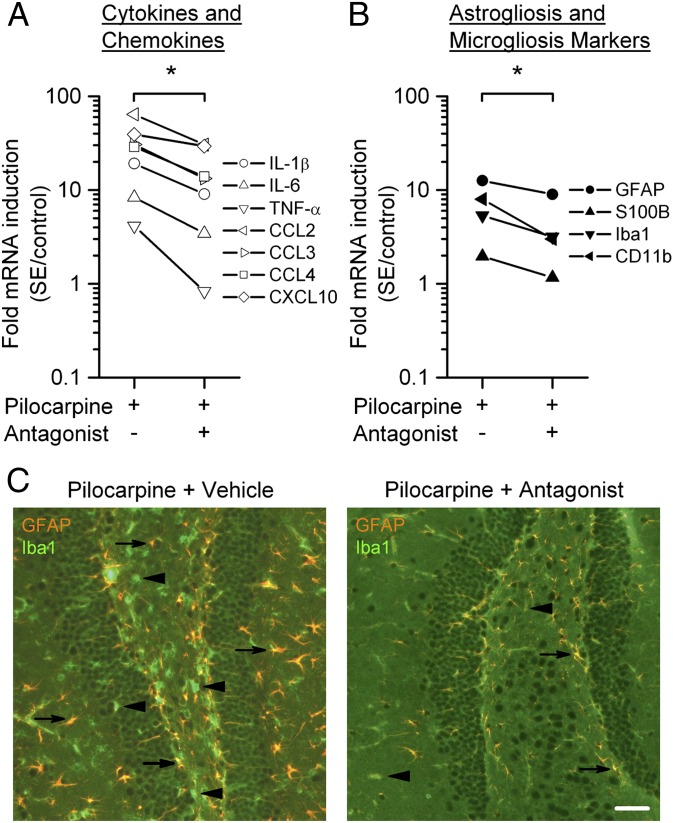
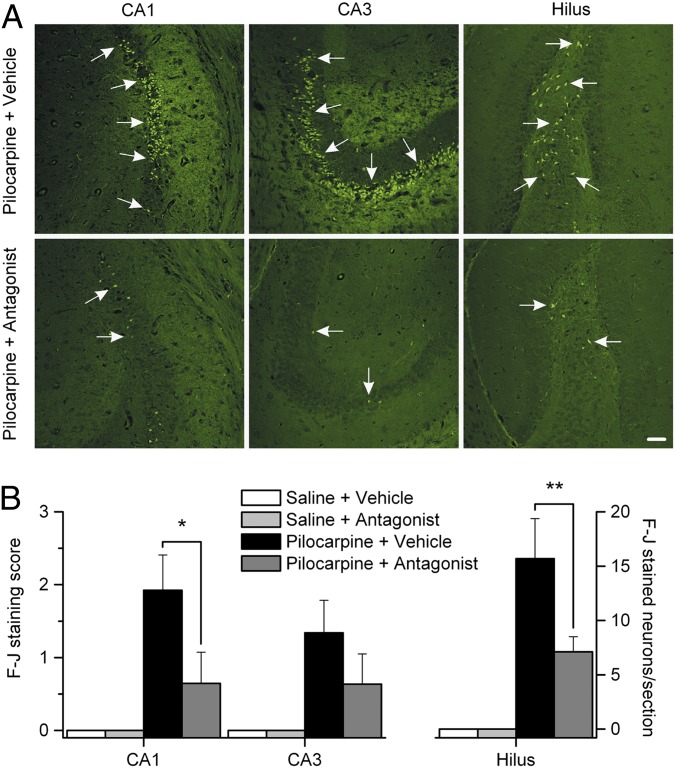
1. Systemic administration of TG6-10-1 (5 mg/kg, i.p.) to mice after status epilepticus (SE) reduced delayed mortality (Kaplan–Meier survival analysis, P = 0.029, n=20 for TG6-10-1 group vs n=25 for vehicle group), accelerated recovery from weight loss (P < 0.01, two-way ANOVA with post hoc Bonferroni test), and improved nest construction behavior at day 4 post-SE (P < 0.05, Fisher’s exact test) [1] 2. TG6-10-1 (5 mg/kg, i.p.) significantly reduced SE-induced brain inflammation in mice, as shown by decreased mRNA levels of seven cytokines/chemokines (IL-1β, IL-6, TNF-α, etc.) in the hippocampus (P < 0.05, two-tailed paired t test), and reduced activation of astrocytes (GFAP/S100B) and microglia (Iba1/CD11b) (P < 0.05, two-tailed paired t test) [1] 3. TG6-10-1 (5 mg/kg, i.p.) maintained the integrity of the blood-brain barrier (BBB) after SE, as evidenced by reduced serum albumin leakage into the cortex (P < 0.01, one-way ANOVA and post hoc Bonferroni test) [1] 4. TG6-10-1 (5 mg/kg, i.p.) reduced neurodegeneration in the hippocampal subregions (CA1, CA3, dentate hilus) of mice after SE, as assessed by Fluoro-Jade staining (P < 0.05, P < 0.01, one-way ANOVA and post hoc Bonferroni test) [1] 5. TG6-10-1 (5 mg/kg, i.p.) did not modify acute seizures in the mouse pilocarpine model of SE; there was no significant difference in behavioral seizure score, latency to SE, or EEG spike rate between TG6-10-1-treated and vehicle-treated mice [1] |
| Cell Assay |
1. cAMP measurement assay in Neuro-2a cells: Cells were treated with PGE₂ (0.1, 1, 10 µM), butaprost (0.1, 1, 10 µM), CAY10598 (0.1, 1, 10 µM), or forskolin (100 µM) for 40 min; for inhibition experiments, cells were pre-treated with TG6-10-1 (10 µM) before butaprost administration, and cAMP levels were detected by time-resolved fluorescence energy transfer (TR-FRET) assay [2]
2. cAMP measurement assay in SH-SY5Y cells: Cells were treated with PGE₂ (10 µM) after pre-incubation with TG6-10-1 (0.1, 1, 10 µM) for 40 min, and cAMP concentrations were quantified by TR-FRET assay [2] 3. MTT cytotoxicity assay in Neuro-2a cells: Cells were pretreated with TG6-10-1 (10, 20 µM) for 15 min, then exposed to 75 µM 6-OHDA for 24 h; cell viability was determined by MTT reduction assay [2] 4. MTT cytotoxicity assay in SH-SY5Y cells: Cells were pretreated with TG6-10-1 (20 µM) for 15 min, then treated with 150 µM 6-OHDA for 24 h; cell viability was measured by MTT assay [2] 5. PGE₂ ELISA assay in cell culture medium: Neuro-2a and SH-SY5Y cells were pretreated with TG6-10-1 (20 µM) for 15 min, followed by 6-OHDA treatment for 24 h; PGE₂ levels in the culture medium were detected by ELISA [2] 6. qPCR assay for cytokine/chemokine mRNA: Hippocampal tissues from mice treated with TG6-10-1 were collected 4 days after SE, and mRNA levels of cytokines (IL-1β, IL-6, TNF-α, etc.) and glial activation markers (GFAP, S100B, Iba1, CD11b) were measured by quantitative real-time PCR [1] 7. Immunostaining for glial activation: Brain sections from TG6-10-1-treated mice were stained with GFAP (astrocytes) and Iba1 (microglia) antibodies, and activated cells were observed under a microscope [1] 8. Fluoro-Jade staining for neurodegeneration: Coronal brain sections from TG6-10-1-treated mice were stained with Fluoro-Jade 4 days after SE, and neurodegenerating neurons in hippocampal subregions (CA1, CA3, dentate hilus) were quantified [1] 9. Western blot for albumin leakage: Cortical tissues from TG6-10-1-treated mice were collected 4 days after SE, and albumin protein levels were detected by Western blot with β-actin as a loading control [1] |
| Animal Protocol |
C57BL/6 mice (pilocarpine-induced SE)
5 mg/kg Intraperitoneal injection; 4, 21, 30 hours 1. Mouse pilocarpine model of SE: Mice were injected with pilocarpine (280 mg/kg, i.p.) to induce SE; after 60 min of SE, pentobarbital (30 mg/kg, i.p.) was administered to terminate seizures. Three hours later (4 h after SE onset), TG6-10-1 (5 mg/kg, i.p.) or vehicle was injected, and two additional doses of TG6-10-1 were given at 21 h and 30 h after SE onset. Brains were collected for neuropathological analysis 4 days after SE, and survival rate was monitored up to day 7 after SE [1] 2. Seizure activity monitoring: Mice were injected with TG6-10-1 (5 mg/kg, i.p.) 1 h before pilocarpine (280 mg/kg, i.p.) administration; behavioral seizure scores were recorded every 5 min, latency to SE was measured, and cortical EEG recordings were performed to quantify spike rate [1] |
| ADME/Pharmacokinetics |
The literature only mentions that TG6-10-1 has sufficient in vivo pharmacokinetic characteristics, but does not provide specific ADME/pharmacokinetic parameters (absorption, distribution, metabolism, excretion, half-life, oral bioavailability, etc.) [1]
|
| References |
|
| Additional Infomation |
1. TG6-10-1 is a potent and selective antagonist of the prostaglandin E2 receptor subtype EP2[1] 2. In a mouse model of status epilepticus (SE), administration of TG6-10-1 reproduced the effect of conditionally ablating cyclooxygenase-2 (COX-2) from major forebrain neurons[1] 3. SE-induced COX-2 increases the level of PGE₂ in the brain, and PGE₂ upregulates inflammatory cytokines (IL-1β, IL-6, TNF-α) through EP2 signaling, forming a positive feedback loop, thereby leading to chronic inflammation after SE; TG6-10-1 blocks this loop[1] 4. TG6-10-1 is a novel selective EP2 antagonist whose inhibitory effect on EP2 receptors is not affected by the EP4 antagonist GW627368X[2]
5. TG6-10-1 is not used as an acute anticonvulsant, but can be used as an adjunctive therapy strategy to treat status epilepticus by reducing neuroinflammation and neurodegeneration[1] 6. COX-2-mediated PGE₂ is produced through EP2 receptors, leading to 6-OHDA-induced neuronal inflammation and damage, while TG6-10-1 blocks this process by inhibiting EP2 signaling[2] |
| Molecular Formula |
C23H23F3N2O4
|
|
|---|---|---|
| Molecular Weight |
448.43
|
|
| Exact Mass |
448.16
|
|
| Elemental Analysis |
C, 61.60; H, 5.17; F, 12.71; N, 6.25; O, 14.27
|
|
| CAS # |
1415716-58-3
|
|
| Related CAS # |
|
|
| PubChem CID |
71499384
|
|
| Appearance |
White to off-white solid powder
|
|
| Density |
1.2±0.1 g/cm3
|
|
| Boiling Point |
631.8±55.0 °C at 760 mmHg
|
|
| Flash Point |
335.9±31.5 °C
|
|
| Vapour Pressure |
0.0±1.9 mmHg at 25°C
|
|
| Index of Refraction |
1.536
|
|
| LogP |
4.49
|
|
| Hydrogen Bond Donor Count |
1
|
|
| Hydrogen Bond Acceptor Count |
7
|
|
| Rotatable Bond Count |
8
|
|
| Heavy Atom Count |
32
|
|
| Complexity |
631
|
|
| Defined Atom Stereocenter Count |
0
|
|
| SMILES |
FC(C1=C([H])C2=C([H])C([H])=C([H])C([H])=C2N1C([H])([H])C([H])([H])N([H])C(/C(/[H])=C(\[H])/C1C([H])=C(C(=C(C=1[H])OC([H])([H])[H])OC([H])([H])[H])OC([H])([H])[H])=O)(F)F
|
|
| InChi Key |
WUYOECAJFJFUFC-CMDGGOBGSA-N
|
|
| InChi Code |
InChI=1S/C23H23F3N2O4/c1-30-18-12-15(13-19(31-2)22(18)32-3)8-9-21(29)27-10-11-28-17-7-5-4-6-16(17)14-20(28)23(24,25)26/h4-9,12-14H,10-11H2,1-3H3,(H,27,29)/b9-8+
|
|
| Chemical Name |
(E)-N-[2-[2-(trifluoromethyl)indol-1-yl]ethyl]-3-(3,4,5-trimethoxyphenyl)prop-2-enamide
|
|
| Synonyms |
|
|
| HS Tariff Code |
2934.99.9001
|
|
| Storage |
Powder -20°C 3 years 4°C 2 years In solvent -80°C 6 months -20°C 1 month |
|
| Shipping Condition |
Room temperature (This product is stable at ambient temperature for a few days during ordinary shipping and time spent in Customs)
|
| Solubility (In Vitro) |
DMSO: ~100 mg/mL (~223.0 mM)
Water: 1 mg/mL (Insoluble) Ethanol: 1 mg/mL |
|---|---|
| Solubility (In Vivo) |
Solubility in Formulation 1: ≥ 3 mg/mL (6.69 mM) (saturation unknown) in 10% DMSO + 40% PEG300 + 5% Tween80 + 45% Saline (add these co-solvents sequentially from left to right, and one by one), clear solution.
For example, if 1 mL of working solution is to be prepared, you can add 100 μL of 30.0 mg/mL clear DMSO stock solution to 400 μL PEG300 and mix evenly; then add 50 μL Tween-80 to the above solution and mix evenly; then add 450 μL normal saline to adjust the volume to 1 mL. Preparation of saline: Dissolve 0.9 g of sodium chloride in 100 mL ddH₂ O to obtain a clear solution. Solubility in Formulation 2: ≥ 3 mg/mL (6.69 mM) (saturation unknown) in 10% DMSO + 90% Corn Oil (add these co-solvents sequentially from left to right, and one by one), clear solution. For example, if 1 mL of working solution is to be prepared, you can add 100 μL of 30.0 mg/mL clear DMSO stock solution to 900 μL of corn oil and mix evenly. (Please use freshly prepared in vivo formulations for optimal results.) |
| Preparing Stock Solutions | 1 mg | 5 mg | 10 mg | |
| 1 mM | 2.2300 mL | 11.1500 mL | 22.3000 mL | |
| 5 mM | 0.4460 mL | 2.2300 mL | 4.4600 mL | |
| 10 mM | 0.2230 mL | 1.1150 mL | 2.2300 mL |
*Note: Please select an appropriate solvent for the preparation of stock solution based on your experiment needs. For most products, DMSO can be used for preparing stock solutions (e.g. 5 mM, 10 mM, or 20 mM concentration); some products with high aqueous solubility may be dissolved in water directly. Solubility information is available at the above Solubility Data section. Once the stock solution is prepared, aliquot it to routine usage volumes and store at -20°C or -80°C. Avoid repeated freeze and thaw cycles.
Calculation results
Working concentration: mg/mL;
Method for preparing DMSO stock solution: mg drug pre-dissolved in μL DMSO (stock solution concentration mg/mL). Please contact us first if the concentration exceeds the DMSO solubility of the batch of drug.
Method for preparing in vivo formulation::Take μL DMSO stock solution, next add μL PEG300, mix and clarify, next addμL Tween 80, mix and clarify, next add μL ddH2O,mix and clarify.
(1) Please be sure that the solution is clear before the addition of next solvent. Dissolution methods like vortex, ultrasound or warming and heat may be used to aid dissolving.
(2) Be sure to add the solvent(s) in order.
EP2 receptor antagonist reduces mortality and weight loss and accelerates functional recovery after SE.Proc Natl Acad Sci U S A.2013 Feb 26;110(9):3591-6. |
|---|
EP2 receptor antagonist relieves brain inflammation after SE.Proc Natl Acad Sci U S A.2013 Feb 26;110(9):3591-6. |
EP2 receptor antagonist reduces neurodegeneration in hippocampus after SE.Proc Natl Acad Sci U S A.2013 Feb 26;110(9):3591-6. |
Products are for research use only; We do not sell to patients
Copyright 2020 InvivoChem LLC | All Rights Reserved


 COA
COA