| Size | Price | Stock | Qty |
|---|---|---|---|
| 2mg |
|
||
| 5mg |
|
||
| 10mg |
|
||
| 25mg |
|
||
| 50mg |
|
||
| 100mg |
|
||
| 250mg | |||
| Other Sizes |


Purity: ≥98%
| Targets |
Smoothened
Patched 1 (PTCH1) receptor (inhibition of Hedgehog signaling pathway) [102] |
|---|---|
| ln Vitro |
In vitro activity: LY2940680 prevents the growth of cancer in cell lines with a mutation in the gene encoding smoothened that scientists had seen in cancer patients who became resistant to vismodegib in the past.[1]
Inhibition of Hedgehog pathway activation: Taladegib potently blocks Hedgehog signaling in vitro, with IC50 values in the low nanomolar range (0.1-1 nM) for inhibition of Gli-luciferase reporter gene activity in Hedgehog-responsive cell lines [102] - Antiproliferative activity: Exhibits dose-dependent inhibition of proliferation in various cancer cell lines with activated Hedgehog pathway, including basal cell carcinoma (BCC), medulloblastoma, and small cell lung cancer (SCLC) cells, with IC50 values ranging from 10 to 100 nM [102][99] - Induction of apoptosis: Triggers caspase-dependent apoptosis in Hedgehog-dependent cancer cells at concentrations ≥100 nM [99] |
| ln Vivo |
LY2940680 possesses superior pharmacokinetic qualities in both rodent and non-rodent species. When given orally to Ptch+/-p53-/-transgenic mice that spontaneously develop medulloblastoma, LY2940680 exhibits remarkable efficacy and significantly increases the mice's survival rate. Via magnetic resonance imaging of these mice, LY2940680 demonstrates the quick kinetics of anti-tumor activity. Additionally, immunohistochemistry analysis of medulloblastoma tumors shows that LY2940680 induces Caspase-3 activity and decreases proliferation. In the subcutaneous xenograft tumor stroma, LY2940680 inhibits Hh regulated gene expression and exhibits strong anti-tumor activity.[2]
Antitumor efficacy in mouse xenograft models: Administration of Taladegib (1-10 mg/kg, oral gavage) significantly inhibits the growth of BCC, medulloblastoma, and SCLC xenografts, with tumor growth inhibition rates of 40-80% compared to vehicle controls [102][105] - Oral bioavailability: Shows good oral absorption with bioavailability >70% in rodent models [102] - Duration of action: Single oral dose results in sustained Hedgehog pathway inhibition for 24-48 hours in tumor tissues [102] |
| Animal Protocol |
Xenograft model establishment: Human cancer cells (e.g., BCC, medulloblastoma) are subcutaneously implanted into immunodeficient mice (e.g., nude or SCID mice)
- Drug administration: Taladegib is formulated in 0.5% methylcellulose/0.1% Tween 80 and administered orally by gavage at doses of 1, 3, or 10 mg/kg, once daily for 14 consecutive days [102] - Efficacy assessment: Tumor volumes are measured twice weekly using calipers, and tumor growth inhibition is calculated relative to vehicle-treated control groups [102] - Pharmacodynamic monitoring: Expression of Hedgehog pathway markers (e.g., Gli1, Ptch1) in tumor tissues is assessed by immunohistochemistry or quantitative RT-PCR after sacrifice [102] |
| ADME/Pharmacokinetics |
Absorption: Rapidly absorbed after oral administration; peak plasma concentration (Cmax) is reached within 1-2 hours in preclinical animal models [102]
- Distribution: High plasma protein binding (>95%) in different species [102] - Metabolism: Primarily metabolized by hepatic cytochrome P450 enzymes, with relatively small contributions from CYP3A4, CYP2C9, and CYP2D6 [102] - Elimination: Terminal half-life (t1/2) is 6-8 hours in preclinical models; primarily cleared by hepatic metabolism, with <5% of the original drug excreted in urine [102] - Drug Interactions: May interact with potent CYP3A4 inhibitors (e.g., ketoconazole) or inducers (e.g., rifampin), potentially leading to increased or decreased plasma concentrations [102] |
| Toxicity/Toxicokinetics |
Maximum tolerated dose (MTD) in rodents: The maximum tolerated dose in mice is 30 mg/kg/day (orally) and in rats is 10 mg/kg/day. Dose-limiting toxicities include hepatotoxicity (elevated transaminases), gastrointestinal disturbances (diarrhea, vomiting) and myelosuppression [102]. - Clinical adverse events: In Phase I clinical trials, common adverse reactions included fatigue (30-50%), nausea (20-40%), diarrhea (15-35%), and alopecia (10-25%) [102][105]. - Laboratory abnormalities: Elevated liver transaminases (ALT, AST) and creatinine were observed in <20% of treated patients, usually mild to moderate and reversible upon discontinuation of the drug [102]. - QT interval prolongation: There is a possibility of dose-dependent QT interval prolongation at high doses. Electrocardiographic monitoring is required during clinical trials [102].
|
| References | |
| Additional Infomation |
Taladegib has been used in clinical trials for various cancers, including solid tumors, colon cancer, breast cancer, advanced cancers, and rhabdomyosarcoma. Taladegib is a small-molecule antagonist of the Hedgehog (Hh) ligand cell surface receptor Smoothened (Smo), which has high oral bioavailability and potential antitumor activity. Taladegib inhibits signaling mediated by the Hh pathway protein Smo, thereby suppressing the Hh signaling pathway and potentially inhibiting the proliferation of tumor cells with aberrant activation of this pathway. The Hh signaling pathway plays a crucial role in cell growth, differentiation, and repair; constitutive activation of this pathway is associated with uncontrolled cell proliferation and has been observed in various cancers. Taladegib (also known as ENV-101) is a small molecule inhibitor of the Hedgehog signaling pathway, developed by Eli Lilly and now licensed to Endeavor BioMedicines.[102][75]
- Mechanism of action: It binds to the PTCH1 receptor, blocking its inhibition of smoothed (SMO), thereby blocking downstream signaling mediated by Gli transcription factors and inhibiting the proliferation of Hedgehog-dependent cancer cells.[99][100] - Clinical development: Phase I clinical trials have been completed, and Phase II clinical trials are currently underway for the treatment of basal cell carcinoma (BCC), medulloblastoma, small cell lung cancer (SCLC), and other malignancies with Hedgehog pathway activation.[102][105] - Combination therapy: It is being investigated for combination therapy with chemotherapy, immunotherapy, and other targeted drugs to enhance anti-tumor efficacy.[102][105] |
| Molecular Formula |
C26H24F4N6O
|
|
|---|---|---|
| Molecular Weight |
512.5
|
|
| Exact Mass |
512.194
|
|
| Elemental Analysis |
C, 60.93; H, 4.72; F, 14.83; N, 16.40; O, 3.12
|
|
| CAS # |
1258861-20-9
|
|
| Related CAS # |
1258861-20-9; 1258861-21-0 (HCl)
|
|
| PubChem CID |
49848070
|
|
| Appearance |
White solid powder
|
|
| Density |
1.4±0.1 g/cm3
|
|
| Boiling Point |
703.5±60.0 °C at 760 mmHg
|
|
| Flash Point |
379.3±32.9 °C
|
|
| Vapour Pressure |
0.0±2.2 mmHg at 25°C
|
|
| Index of Refraction |
1.634
|
|
| LogP |
2.7
|
|
| Hydrogen Bond Donor Count |
0
|
|
| Hydrogen Bond Acceptor Count |
9
|
|
| Rotatable Bond Count |
4
|
|
| Heavy Atom Count |
37
|
|
| Complexity |
794
|
|
| Defined Atom Stereocenter Count |
0
|
|
| SMILES |
CN1N=CC=C1C2=C3C(C=CC=C3)=C(N=N2)N4CCC(CC4)N(C)C(C5=C(C=C(C=C5)F)C(F)(F)F)=O
|
|
| InChi Key |
SZBGQDXLNMELTB-UHFFFAOYSA-N
|
|
| InChi Code |
InChI=1S/C26H24F4N6O/c1-34(25(37)20-8-7-16(27)15-21(20)26(28,29)30)17-10-13-36(14-11-17)24-19-6-4-3-5-18(19)23(32-33-24)22-9-12-31-35(22)2/h3-9,12,15,17H,10-11,13-14H2,1-2H3
|
|
| Chemical Name |
4-fluoro-N-methyl-N-[1-[4-(2-methylpyrazol-3-yl)phthalazin-1-yl]piperidin-4-yl]-2-(trifluoromethyl)benzamide
|
|
| Synonyms |
|
|
| HS Tariff Code |
2934.99.9001
|
|
| Storage |
Powder -20°C 3 years 4°C 2 years In solvent -80°C 6 months -20°C 1 month |
|
| Shipping Condition |
Room temperature (This product is stable at ambient temperature for a few days during ordinary shipping and time spent in Customs)
|
| Solubility (In Vitro) |
DMSO: 5~75 mg/mL (9.8~146.3 mM)
Water: 1 mg/mL (Insoluble) Ethanol: ~2 mg/mL (~3.9 mM) |
|---|---|
| Solubility (In Vivo) |
Solubility in Formulation 1: ≥ 2.5 mg/mL (4.88 mM) (saturation unknown) in 10% DMSO + 40% PEG300 + 5% Tween80 + 45% Saline (add these co-solvents sequentially from left to right, and one by one), clear solution.
For example, if 1 mL of working solution is to be prepared, you can add 100 μL of 25.0 mg/mL clear DMSO stock solution to 400 μL PEG300 and mix evenly; then add 50 μL Tween-80 to the above solution and mix evenly; then add 450 μL normal saline to adjust the volume to 1 mL. Preparation of saline: Dissolve 0.9 g of sodium chloride in 100 mL ddH₂ O to obtain a clear solution. Solubility in Formulation 2: ≥ 2.5 mg/mL (4.88 mM) (saturation unknown) in 10% DMSO + 90% (20% SBE-β-CD in Saline) (add these co-solvents sequentially from left to right, and one by one), clear solution. For example, if 1 mL of working solution is to be prepared, you can add 100 μL of 25.0 mg/mL clear DMSO stock solution to 900 μL of 20% SBE-β-CD physiological saline solution and mix evenly. Preparation of 20% SBE-β-CD in Saline (4°C,1 week): Dissolve 2 g SBE-β-CD in 10 mL saline to obtain a clear solution. View More
Solubility in Formulation 3: ≥ 2.5 mg/mL (4.88 mM) (saturation unknown) in 10% DMSO + 90% Corn Oil (add these co-solvents sequentially from left to right, and one by one), clear solution. |
| Preparing Stock Solutions | 1 mg | 5 mg | 10 mg | |
| 1 mM | 1.9512 mL | 9.7561 mL | 19.5122 mL | |
| 5 mM | 0.3902 mL | 1.9512 mL | 3.9024 mL | |
| 10 mM | 0.1951 mL | 0.9756 mL | 1.9512 mL |
*Note: Please select an appropriate solvent for the preparation of stock solution based on your experiment needs. For most products, DMSO can be used for preparing stock solutions (e.g. 5 mM, 10 mM, or 20 mM concentration); some products with high aqueous solubility may be dissolved in water directly. Solubility information is available at the above Solubility Data section. Once the stock solution is prepared, aliquot it to routine usage volumes and store at -20°C or -80°C. Avoid repeated freeze and thaw cycles.
Calculation results
Working concentration: mg/mL;
Method for preparing DMSO stock solution: mg drug pre-dissolved in μL DMSO (stock solution concentration mg/mL). Please contact us first if the concentration exceeds the DMSO solubility of the batch of drug.
Method for preparing in vivo formulation::Take μL DMSO stock solution, next add μL PEG300, mix and clarify, next addμL Tween 80, mix and clarify, next add μL ddH2O,mix and clarify.
(1) Please be sure that the solution is clear before the addition of next solvent. Dissolution methods like vortex, ultrasound or warming and heat may be used to aid dissolving.
(2) Be sure to add the solvent(s) in order.
| NCT Number | Recruitment | interventions | Conditions | Sponsor/Collaborators | Start Date | Phases |
| NCT05199584 | Active Recruiting |
Drug: ENV-101 (taladegib) |
Solid Tumors With PTCH1 Loss-of-function Mutations |
Endeavor Biomedicines, Inc. | May 24, 2022 | Phase 2 |
| NCT04968574 | Active Recruiting |
Drug: taladegib Drug: placebo |
Idiopathic Pulmonary Fibrosis | Endeavor Biomedicines, Inc. | August 26, 2021 | Phase 2 |
| NCT05817240 | Completed | Drug: taladegib Drug: nintedanib |
Idiopathic Pulmonary Fibrosis | Endeavor Biomedicines, Inc. | May 3, 2023 | Phase 1 |
| NCT01226485 | Completed | Drug: Taladegib | Advanced Cancer | Eli Lilly and Company | September 2010 | Phase 1 |
| NCT02784795 | Completed | Drug: Taladegib Drug: Abemaciclib |
Solid Tumor Breast Cancer |
Eli Lilly and Company | November 4, 2016 | Phase 1 |
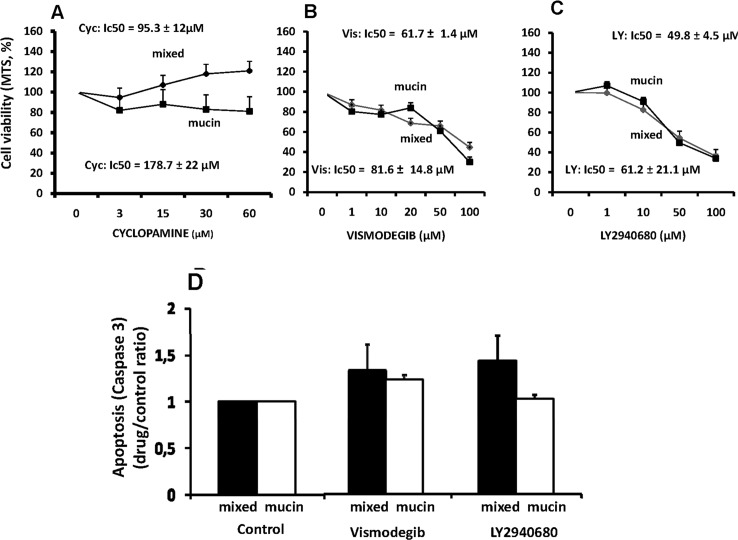
Effect of Sonic Hedgehog (Hg) pathway inhibitors on proliferation and apoptosis of mucin and mixed CCA primary cultures.PLoS One.2015 Nov 16;10(11):e0142124. |
|---|
Products are for research use only; We do not sell to patients
Copyright 2020 InvivoChem LLC | All Rights Reserved


 COA
COA