| Size | Price | Stock | Qty |
|---|---|---|---|
| 50mg |
|
||
| 100mg |
|
||
| 250mg |
|
||
| 500mg |
|
||
| 1g |
|
||
| 2g |
|
||
| 5g | |||
| Other Sizes |


Purity: ≥98%
| Targets |
PDE5 (IC50 = 1.8 nM)
Phosphodiesterase 5 (PDE5): Tadalafil (IC 351; Cialis) is a high-affinity, selective PDE5 inhibitor. It binds to the catalytic site of human recombinant PDE5 with a dissociation constant (Ki) of 0.16 ± 0.02 nM (measured by tritiated ligand binding assay). It shows moderate cross-reactivity with PDE11 (Ki = 3.9 ± 0.4 nM) and minimal inhibition of other PDE subtypes (PDE1–PDE4, PDE6–PDE10) with Ki > 100 nM [1] |
|---|---|
| ln Vitro |
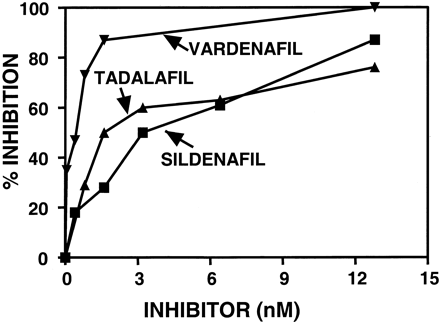
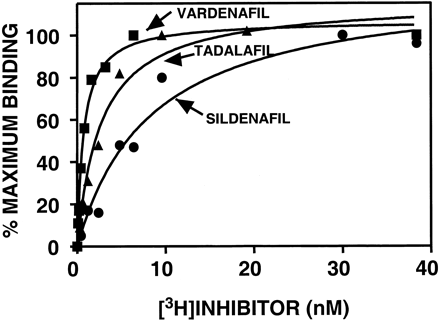
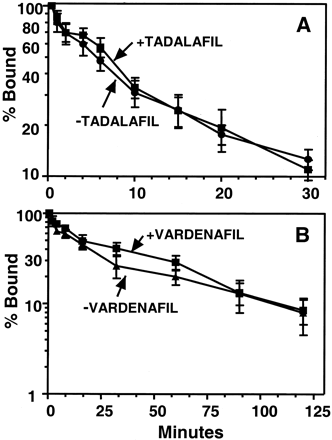
The assays IC (50), K (D) (isotherm), K (D) (dissociation rate), and K (D) ((1/2) EC (50)) were utilized to ascertain the biochemical potency (affinity) of these compounds for PDE5. The results showed that the following compounds met the criteria: sildenafil (3.7 +/-1.4, 4.8 +/-0.80, 3.7 +/-0.29 and 11.7 +/-0.70 nM), Tadalafil (1.8 +/-0.40, 2.4 +/-0.60, 1.9 +/-0.37 and 2.7 +/-0.25 nM); and vardenafil (0.091 +/-0.031, 0.38 +/-0.07, 0.27 +/-0.01 and 0.42 +/-0.10 nM). As a result, each inhibitor has comparable absolute potency values, with vardenafil having the highest relative potency followed by tadalafil and sildenafil [1]. The semen samples were mixed with 0.5 ml of Tadalafil solutions at varying concentrations (0.2, 0.1, 0.05, and 0.025 μg ml-1, respectively). After two hours of incubation, samples treated with 0.2 μg ml-1 Tadalafil demonstrated a significant increase in sperm motility in both groups [2].
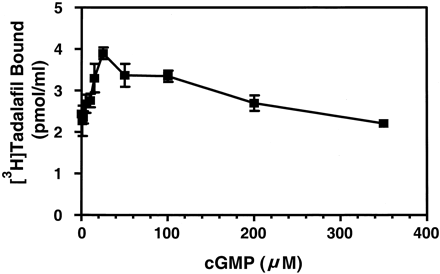
PDE5 Binding & cGMP Modulation (Literature 1): Tritiated Tadalafil ([³H]-Tadalafil) was used to measure binding to human recombinant PDE5. In the absence of cGMP, specific binding was saturable with a Bmax of 0.85 ± 0.05 pmol/mg protein; in the presence of 1 μM cGMP, binding affinity increased (Ki = 0.08 ± 0.01 nM) and Bmax rose to 1.2 ± 0.1 pmol/mg protein, indicating cGMP stimulates Tadalafil-PDE5 binding. Tadalafil (1 nM) inhibited [³H]-cGMP hydrolysis by PDE5 by 90%, confirming potent PDE5 inhibitory activity [1] - Sperm Function Regulation (Literature 2): Human spermatozoa were isolated from healthy donors and treated with Tadalafil (0.1–10 μM) for 4 hours. Computer-assisted sperm analysis (CASA) showed: 0.1 μM had no effect on motility; 1 μM increased progressive motility from 45% (control) to 58%; 10 μM reduced progressive motility to 32%. Acrosome reaction assay (PNA-FITC staining) revealed: 1 μM increased acrosome reaction rate from 12% (control) to 20%; 10 μM had no further increase (21%), suggesting a concentration-dependent biphasic effect [2] |
| ln Vivo |
The Tadalafil-treated group's erectile function (intocavernosal pressure/mean arterial pressure) at 0.3, 0.5, 1, 3, and 5 Hz was higher than the diabetic group's values at comparable frequencies that were near to the control values [3]. Orally administer 20 mg of Tadalafil or 100 mg of Sildenafil. In neither group were there statistically significant variations in the parameters of computer-assisted semen analysis. After taking sildenafil for one hour and tadalafil for two hours, there was no discernible change in the frequency of acrosome preterm response [2].
Diabetic rats demonstrated dilated cavernous spaces, smooth muscles with heterochromatic nuclei, degenerated mitochondria, vacuolated cytoplasm, and negative smooth muscle immunoreactivity. Nerve fibers demonstrated a thick myelin sheath and intra-axonal edema, where blood capillaries exhibited thick basement membrane. Diabetic rats on Td showed improved cavernous organization with significant morphometric increases in the area percentage of smooth muscles and elastic tissue and a significant decrease of fibrous tissue. The Td-treated group showed enhanced erectile function (intracavernosal pressure/mean arterial pressure) at 0.3, 0.5, 1, 3, and 5 Hz compared with diabetic group values at the respective frequencies (P <.05) that approached control values. Conclusion: Chronic low-dose administration of Td in diabetic rats is associated with substantial improvement of the structure of penile cavernous tissue, with increased smooth muscles and elastic tissue, decreased fibrous tissue, and functional enhancement of the erectile function. This raises the idea that the change in penile architecture with Td treatment improves erectile function beyond its half-life and its direct pharmacologic action on phosphodiesterase type 5.[3] For in vivo part, oral administration of tadalafil (20 mg) or sildenafil (100 mg) was given. In both groups, computer-assisted semen analysis parameters showed no significant difference. After the administration of tadalafil (2 h) and sildenafil (1 h), there was no significant difference observed in premature acrosome reaction incidence rate. Taking both in vitro and in vivo results into consideration, acute on-demand administration of tadalafil would have no adverse effect on semen parameters[2]. Rat Sperm Function (Literature 2): Male Wistar rats (8–10 weeks old) were divided into 3 groups (n=6/group): 1. Control: Saline; 2. Tadalafil 1 mg/kg; 3. Tadalafil 5 mg/kg. Drugs were administered via oral gavage once daily for 7 days. On day 8, epididymal sperm were collected: - 1 mg/kg group: Progressive motility increased from 50% (control) to 65%, acrosome reaction rate increased from 15% to 22%; - 5 mg/kg group: Progressive motility (48%) and acrosome reaction rate (17%) were comparable to control, showing no dose-dependent enhancement at higher doses [2] - Diabetic Rat Penile Cavernous Tissue Protection (Literature 3): Male Sprague-Dawley (SD) rats were induced with type 1 diabetes (streptozotocin, 60 mg/kg, i.p.). After 4 weeks, rats were divided into 3 groups (n=8/group): 1. Normal control: Non-diabetic rats; 2. Diabetic control: Diabetic rats + vehicle (0.5% carboxymethyl cellulose, CMC-Na); 3. Diabetic + Tadalafil: Diabetic rats + Tadalafil 0.5 mg/kg/day (oral). Treatment lasted 8 weeks. Results: - Penile cavernous smooth muscle content: Increased from 25% (diabetic control) to 40% (treatment group); - Endothelial nitric oxide synthase (eNOS) protein expression: Upregulated by 60% vs. diabetic control (Western blot); - Cyclic GMP (cGMP) levels: Elevated from 0.8 pmol/mg protein (diabetic control) to 1.5 pmol/mg protein (treatment group) [3] |
| Enzyme Assay |
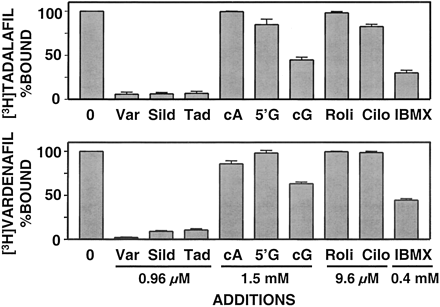
Sildenafil, tadalafil, and vardenafil each competitively inhibit cGMP hydrolysis by phosphodiesterase-5 (PDE5), thereby fostering cGMP accumulation and relaxation of vascular smooth muscle. Biochemical potencies (affinities) of these compounds for PDE5 determined by IC(50), K(D) (isotherm), K(D) (dissociation rate), and K(D) ((1/2) EC(50)), respectively, were the following: sildenafil (3.7 +/- 1.4, 4.8 +/- 0.80, 3.7 +/- 0.29, and 11.7 +/- 0.70 nM), tadalafil (1.8 +/- 0.40, 2.4 +/- 0.60, 1.9 +/- 0.37, and 2.7 +/- 0.25 nM); and vardenafil (0.091 +/- 0.031, 0.38 +/- 0.07, 0.27 +/- 0.01, and 0.42 +/- 0.10 nM). Thus, absolute potency values were similar for each inhibitor, and relative potencies were vardenafil >> tadalafil > sildenafil. Binding of each (3)H inhibitor to PDE5 was specific as determined by effects of unlabeled compounds. (3)H Inhibitors did not bind to isolated PDE5 regulatory domain. Close correlation of EC(50) values using all three (3)H inhibitors competing against one another indicated that each occupies the same site on PDE5. Studies of sildenafil and vardenafil analogs demonstrated that higher potency of vardenafil is caused by differences in its double ring. Exchange-dissociation studies revealed two binding components for each inhibitor. Excess unlabeled inhibitor did not significantly affect (3)H inhibitor dissociation after infinite dilution, suggesting the absence of subunit-subunit cooperativity. cGMP addition increased binding affinity of [(3)H]tadalafil or [(3)H]vardenafil, an effect presumably mediated by cGMP binding to PDE5 allosteric sites, implying that either inhibitor potentiates its own binding to PDE5 in intact cells by elevating cGMP. Without inhibitor present, cGMP accumulation would stimulate cGMP degradation, but with inhibitor present, this negative feedback process would be blocked[1].
Tritiated Tadalafil-PDE5 Binding Assay (Literature 1): The assay was performed in 96-well plates with a 200 μL reaction volume. The mixture contained 50 mM Tris-HCl (pH 7.5), 10 mM MgCl₂, 1 mM DTT, 0.5 μg human recombinant PDE5, serial dilutions of unlabeled Tadalafil (0.01–100 nM), and 0.5 nM [³H]-Tadalafil. For cGMP stimulation experiments, 1 μM cGMP was added to the mixture. After incubation at 4°C for 2 hours, the reaction was filtered through glass fiber filters (pre-soaked in 0.5% polyethyleneimine) to trap bound [³H]-Tadalafil. Filters were washed 3 times with ice-cold 50 mM Tris-HCl (pH 7.5), dried, and radioactivity was measured via liquid scintillation counting. Ki values were calculated using the Cheng-Prusoff equation [1] - PDE Subtype Selectivity Assay (Literature 1): The same binding protocol was used, replacing human recombinant PDE5 with other PDE subtypes (PDE1–PDE11, 0.5 μg/well). Tadalafil (0.01–1000 nM) was tested, and Ki values for each subtype were determined to evaluate selectivity. Only PDE5 and PDE11 showed significant binding (Ki < 10 nM), while other subtypes had Ki > 100 nM [1] |
| Cell Assay |
In vitro[2]
Ten normozoospermic patients and ten asthenozoospermic patients were randomly picked up from our andrological outpatient department respectively. Normozoospermic samples were defined according to the guidelines of World Health Organization (1999): sperm count >20 × 106 ml 1−1, sperm motility >70 per cent, abnormal sperm morphology <70 per cent, vitality >75 per cent and leucocytes<106 ml 1−1. Enrolled patients (age ranged from 26 to 40 years) underwent detailed medical history and physical examination. Patients receiving PDE5 inhibitor treatment, with chronic prostatitis, leucocytospermia or varicocele were excluded. Every participant was asked to keep sexual abstinence for 4–6 days and to refrain from caffeine, alcohol or nicotine-containing agents 12 h before attendance. Ejaculates were obtained by masturbation into a dry wide-mouth sterile plastic container between 8 and 10 AM in the morning. Immediately after liquefaction, routine semen analyses were performed according to WHO recommendations to obtain initial results. Samples were then divided into six equal volumes (0.5 ml each) in 3-ml falcon tubes. One was kept as blank control, and one was added with 1 mg ml−1 pentoxifylline as positive control (Nassar et al., 1999). For the other tubes, 0.5 ml tadalafil solutions with different concentrations were added (0.2, 0.1, 0.05 and 0.025 μg ml−1, respectively). Tadalafil solutions were prepared by dissolving its powder in normal saline, and the maximum concentration (0.2 μg ml−1) was determined by the maximum semen content, 2 h after 20 mg tadalafil intake (the maximum recommended dose). Pentoxifylline solution was prepared by adding its parenteral solution (100 mg 5 ml−1) into 95 ml−1 normal saline to reach a final concentration of 1 mg ml−1. Human Sperm Motility & Acrosome Reaction Assay (Literature 2): 1. Sperm Isolation: Human semen samples (normospermic donors) were centrifuged (300×g, 10 minutes) to separate sperm from seminal plasma, then resuspended in modified Tyrode’s medium (37°C, 5% CO₂) for 1 hour to capacitate. 2. Motility Detection: Capacitated sperm were treated with Tadalafil (0.1–10 μM) for 4 hours. Progressive motility was measured via CASA (parameters: path velocity > 50 μm/s, straightness > 70%). 3. Acrosome Reaction Detection: Treated sperm were stained with fluorescein isothiocyanate-conjugated peanut agglutinin (FITC-PNA) for 30 minutes at 37°C. Acrosome reaction rate was calculated as the percentage of sperm with equatorial PNA binding (observed via fluorescence microscopy) [2] |
| Animal Protocol |
Dissovled in saline; 2 mg/kg; oral gavage
Sham-operated rats The study investigaged 48 adult male albino rats, comprising a control group, sham controls, streptozotocin-induced diabetic rats, and induced diabetic rats that received Td low-dose daily (0.09 mg/200 g weight) for 2 months. The rats were euthanized 1 day after the last dose. Cavernous tissues were subjected to histologic, immunohistochemical, morphometric studies, and measurement of intracavernosal pressure and mean arterial pressure in anesthetized rats.[3] Ten normozoospermic patients and ten asthenozoospermic patients were randomly picked up from our andrological outpatient department respectively. Inclusion and exclusion criteria were the same with in vitro part. Patients were randomly assigned to receive either drug: sildenafil (100 mg) or tadalafil (20 mg). They were then asked to collect semen samples 1 h or 2 h after sildenafil or tadalafil administration respectively. After a washout period for 7 days, each patient was crossed over to receive the other drug. Ejaculates obtain and requirements were the same with in vitro part. Specifically, sperm acrosome status was assessed by fluorescein isothiocyanate labelled peanut agglutinin (FITC-PNA) and propidium iodide (PI) (Sigma, Dorset, UK) staining and flow cytometry.[2] Rat Sperm Function In Vivo Assay (Literature 2): Male Wistar rats (250–300g, n=6/group) were housed under 12h light/dark cycles. Tadalafil was dissolved in 0.5% CMC-Na to concentrations of 0.1 mg/mL (1 mg/kg dose) and 0.5 mg/mL (5 mg/kg dose). Rats received oral gavage once daily for 7 days. On day 8, rats were euthanized by cervical dislocation; epididymides were excised, minced, and sperm were released into modified Tyrode’s medium. Sperm progressive motility (CASA) and acrosome reaction rate (FITC-PNA staining) were measured as described in the Cell Assay section [2] - Diabetic Rat Penile Cavernous Tissue Assay (Literature 3): 1. Diabetes Induction: Male SD rats (200–250g) received a single intraperitoneal injection of streptozotocin (60 mg/kg, dissolved in 0.1 M citrate buffer, pH 4.5). Blood glucose > 300 mg/dL (72 hours post-injection) confirmed diabetes. 2. Treatment Protocol: After 4 weeks of diabetes, rats were divided into groups. Tadalafil (0.5 mg/kg/day) was dissolved in 0.5% CMC-Na (0.05 mg/mL) and administered via oral gavage once daily for 8 weeks. Normal and diabetic control groups received 0.5% CMC-Na alone. 3. Tissue Collection: Rats were euthanized on day 84; penile tissues were excised, fixed in 10% neutral formalin (for histology) or frozen at -80°C (for Western blot and cGMP assay) [3] |
| ADME/Pharmacokinetics |
Absorption, Distribution and Excretion
The time to peak concentration (tmax) of tadalafil in healthy adults ranges from 0.5 to 6 hours, with a median of 2 hours. In patients with pulmonary arterial hypertension (PAH), the tmax ranges from 2 to 8 hours, with a median of 4 hours. Co-administration of tadalafil with food appears to have no significant effect on absorption. Tadalafil is primarily metabolized and excreted via the liver. Its metabolites are mainly excreted in feces (61%), with a small amount excreted in urine (36%). The mean apparent volume of distribution of tadalafil in healthy adults is 63 liters. The mean apparent volume of distribution in patients with pulmonary arterial hypertension (PAH) is 77 liters. The mean apparent oral clearance of tadalafil in healthy adults is 2.5–3.4 L/h. The mean apparent oral clearance in adult patients with pulmonary arterial hypertension has been reported to be 3.5 L/h. Time to peak concentration (Tmax): 30 minutes to 6 hours (median 2 hours). Absolute bioavailability has not been determined; food does not affect the rate and extent of absorption. Volume of distribution: 63 L; indicating drug distribution in tissues. Less than 0.0005% of the administered dose was detected in the semen of healthy subjects. Protein binding was 94%. Tadalafil exposure (AUC) in healthy subjects increased proportionally with dose in the dose range of 2.5 to 20 mg. Steady-state plasma concentrations were reached within 5 days after once-daily administration, with exposure approximately 1.6 times that of a single dose. Elimination: Mean oral clearance: 2.5 L/h. Fecal: 61%. Urine: 36%. For more complete data on absorption, distribution, and excretion of tadalafil (11 types), please visit the HSDB record page. Metabolism/Metabolites Tadalafil is metabolized in the liver by CYP3A4 to catechol metabolites. The catechol metabolite is subsequently methylated and glucuroninated, with the final methyl-glucuronide metabolite becoming the major circulating metabolite. None of the known metabolites are active. Biotransformation: Primarily metabolized in the liver via CYP3A4. Tadalafil is primarily metabolized to catechol metabolites via CYP3A4. These metabolites undergo extensive methylation and glucuronination to form methylcatechol and methylcatechol glucuronide conjugates, respectively. The major circulating metabolite is methylcatechol glucuronide. The concentration of methylcatechol is less than 10% of the glucuronide concentration. In vitro data suggest that at the observed metabolite concentrations, these metabolites are not expected to be pharmacologically active. Biological Half-Life The mean elimination half-life of tadalafil in healthy adults is 15–17.5 hours. The mean elimination half-life in adult patients with pulmonary arterial hypertension (PAH) has been reported to be 35 hours. Terminal Half-Life: 17.5 hours |
| Toxicity/Toxicokinetics |
Hepatotoxicity
Although tadalafil is widely used, only a few reports indicate it can cause elevated serum transaminases and clinically symptomatic liver injury. In one case report, tadalafil was associated with cholestatic hepatitis that developed within days of starting treatment. No immune hypersensitivity features or autoantibodies were observed. The injury was self-limiting, leaving no sequelae of bile duct damage. The associated PDE5 inhibitor sildenafil has also been associated with rare cases of acute cholestatic liver injury with jaundice. Probability score: D (likely a cause of rare, clinically symptomatic liver injury). Effects During Pregnancy and Lactation ◉ Overview of Use During Lactation There is currently no publicly available information regarding the use of tadalafil during lactation. Alternative medications may need to be considered. ◉ Effects on Breastfed Infants As of the revision date, no relevant published information was found. ◉ Effects on Lactation and Breast Milk No published information found as of the revision date. Protein Binding Tadalafil binds to plasma proteins at a rate of 94%. Interactions Concomitant use of antacids (magnesium hydroxide/aluminum hydroxide) and tadalafil reduces the apparent absorption of tadalafil but does not alter the tadalafil exposure (AUC). A significant interaction between tadalafil and nitroglycerin was observed, lasting up to 48 hours; at least 48 hours should be elapsed after the last dose of tadalafil before considering the use of nitrates. Tadalafil is contraindicated in patients who are regularly or intermittently taking any form of organic nitrates; clinical pharmacology studies have shown that tadalafil can enhance the antihypertensive effects of nitrates; this is believed to be due to the combined effects of nitrates and tadalafil on the nitric oxide/cGMP pathway. The safety and efficacy of tadalafil in combination with other drugs for treating erectile dysfunction have not been studied. Combination therapy is not recommended. For more complete data on interactions of tadalafil (15 in total), please visit the HSDB record page. In vivo safety (References 2, 3): - In rat sperm studies (tadalafil 1-5 mg/kg, orally, 7 days): No deaths, weight loss (<5%) or abnormal behavior were observed. Serum biochemical parameters (ALT, AST, BUN, creatinine) were all within the normal range [2]. - In diabetic rat studies (tadalafil 0.5 mg/kg/day, orally, 8 weeks): No increased weight loss (compared to diabetic control groups) or increased liver and kidney weight was observed in diabetic rats. Histopathological examination of liver, kidney and penile tissues revealed no inflammation or necrosis [3] - In vitro sperm toxicity (Reference 2): No significant increase in DNA fragmentation (comet assay) or cell death (eosin-nigrossin staining) was found after 4 hours of treatment of human sperm with tadalafil (0.1–10 μM), indicating no direct sperm toxicity [2] |
| References |
|
| Additional Infomation |
Therapeutic Uses
Tadalafil is indicated for the treatment of erectile dysfunction. /US Product Label Contains/ Drug Warnings The US Food and Drug Administration (FDA) has approved updated labels for Cialis, Levitra, and Viagra to reflect a small number of post-marketing reports of sudden vision loss. These sudden vision losses are attributed to non-arteritis-ischemic optic neuropathy (NAION), a condition where blood flow to the optic nerve is obstructed. The FDA advises patients who experience sudden vision loss or decreased vision in one or both eyes to immediately stop taking these medications and contact their doctor or healthcare provider. Additionally, patients currently taking or considering these products should inform their healthcare professional if they have previously experienced severe vision loss (which may reflect a previous occurrence of NAION). Such patients are at higher risk of recurrence of NAION. The patient's cardiovascular condition should be considered because sexual activity carries certain risks; medications for erectile dysfunction, including tadalafil, should not be used by men who are unable to engage in sexual activity due to underlying heart conditions. The following cardiovascular disease patient groups were not included in clinical safety and efficacy trials of Cialis, and therefore, Cialis is not recommended for these groups until more information is available: patients who have had a myocardial infarction within the past 90 days; patients with unstable angina or angina during intercourse; patients with heart failure classified as NYHA class 2 or higher within the past 6 months; patients with uncontrolled arrhythmias, hypotension (<90/50 mmHg), or uncontrolled hypertension (>170/100 mmHg); and patients who have had a stroke within the past 6 months. Furthermore, patients with known hereditary retinal degenerative diseases (including retinitis pigmentosa) were not included in clinical trials, and this product is not recommended for such patients. In a randomized, double-blind, placebo- and active-drug (IVIG) controlled crossover study, researchers evaluated the effect of a single 100 mg dose of tadalafil on the QT interval at peak plasma concentration in 90 healthy men aged 18 to 53 years. Compared with placebo, the mean change in QTc (Fridericia QT corrected) in the tadalafil group was 3.5 ms (two-sided 90% confidence interval = 1.9, 5.1). Compared with placebo, the mean change in QTc (individual QT corrected) in the tadalafil group was 2.8 ms (two-sided 90% confidence interval = 1.2, 4.4). The 100 mg tadalafil dose (5 times the highest recommended dose) was chosen because this dose covers the exposure observed when tadalafil is used in combination with a potent CYP3A4 inhibitor or in patients with renal impairment. In this study, the mean increase in heart rate after taking this dose of tadalafil was 3.1 beats/min compared with placebo. For more complete data on drug warnings for tadalafil (18 in total), please visit the HSDB record page. Pharmacodynamics Tadalafil exerts its therapeutic effect on erectile dysfunction by increasing the relaxation of penile stimulation-dependent smooth muscle, thereby promoting penile engorgement and erection. Relaxation of pulmonary vascular smooth muscle helps dilate blood vessels in patients with pulmonary hypertension, thus lowering pulmonary artery blood pressure. In benign prostatic hyperplasia (BPH), tadalafil may help reduce smooth muscle cell proliferation, thereby shrinking prostate volume and relieving anatomical obstruction causing urinary symptoms in BPH. Compared with other PDE5 inhibitors, tadalafil has a lower affinity for PDE6, which may explain its lower incidence of visual side effects. Mechanism of Action: - Tadalafil competitively binds to the catalytic site of PDE5, inhibiting cGMP hydrolysis, thereby increasing intracellular cGMP levels. cGMP activates protein kinase G (PKG), which mediates smooth muscle relaxation (e.g., smooth muscle of the corpus cavernosum) and regulates cellular function (e.g., sperm motility) [1,3] - cGMP enhances the binding affinity of tadalafil to PDE5 (Ki is reduced by 50% in the presence of 1 μM cGMP), forming a positive feedback loop that enhances the inhibitory effect of PDE5 [1] - Therapeutic potential: - Erectile dysfunction (ED): Long-term low-dose tadalafil improves the content of smooth muscle in the corpus cavernosum of the penis and enhances the NO-cGMP pathway in diabetic rats, supporting its use in the treatment of diabetic ED [3] - Male fertility: Low-dose tadalafil (1 μM in vitro, 1 mg/kg in vivo) moderately enhances sperm forward motility and acrosome response, suggesting its potential use in the treatment of mild male infertility [2] - Selectivity notes: Moderate cross-reactivity with PDE11 (Ki = 3.9) nM), which may be associated with rare side effects such as muscle pain, but such side effects were not observed in the animal models tested [1] |
| Molecular Formula |
C22H19N3O4
|
|---|---|
| Molecular Weight |
389.4
|
| Exact Mass |
389.137
|
| Elemental Analysis |
C, 67.86; H, 4.92; N, 10.79; O, 16.43
|
| CAS # |
171596-29-5
|
| Related CAS # |
Nortadalafil;171596-36-4;cis-Tadalafil;171596-27-3;ent-Tadalafil;629652-72-8;cis-ent-Tadalafil;171596-28-4;Tadalafil-d3;960226-55-5
|
| PubChem CID |
110635
|
| Appearance |
White to off-white solid powder
|
| Density |
1.5±0.1 g/cm3
|
| Boiling Point |
679.1±55.0 °C at 760 mmHg
|
| Melting Point |
298-300ºC
|
| Flash Point |
364.5±31.5 °C
|
| Vapour Pressure |
0.0±2.1 mmHg at 25°C
|
| Index of Refraction |
1.758
|
| LogP |
1.43
|
| Hydrogen Bond Donor Count |
1
|
| Hydrogen Bond Acceptor Count |
4
|
| Rotatable Bond Count |
1
|
| Heavy Atom Count |
29
|
| Complexity |
702
|
| Defined Atom Stereocenter Count |
2
|
| SMILES |
CN1CC(=O)N2[C@@H](C1=O)CC3=C([C@H]2C4=CC5=C(C=C4)OCO5)NC6=CC=CC=C36
|
| InChi Key |
WOXKDUGGOYFFRN-IIBYNOLFSA-N
|
| InChi Code |
InChI=1S/C22H19N3O4/c1-24-10-19(26)25-16(22(24)27)9-14-13-4-2-3-5-15(13)23-20(14)21(25)12-6-7-17-18(8-12)29-11-28-17/h2-8,16,21,23H,9-11H2,1H3/t16-,21-/m1/s1
|
| Chemical Name |
(6R,12aR)-6-(benzo[d][1,3]dioxol-5-yl)-2-methyl-2,3,6,7,12,12a-hexahydropyrazino[1',2':1,6]pyrido[3,4-b]indole-1,4-dione
|
| Synonyms |
C-351; IC 351; Tadalafil; Cialis; 171596-29-5; Ic351; Tadanafil; ADCIRCA; ICOS 351; IC351; Trade names: Adcirca, Cialis
|
| HS Tariff Code |
2934.99.9001
|
| Storage |
Powder -20°C 3 years 4°C 2 years In solvent -80°C 6 months -20°C 1 month |
| Shipping Condition |
Room temperature (This product is stable at ambient temperature for a few days during ordinary shipping and time spent in Customs)
|
| Solubility (In Vitro) |
DMSO: 78 mg/mL (200.3 mM)
Water: 1 mg/mL (Insoluble) Ethanol: 50 mg/mL (145.6 mM) |
|---|---|
| Solubility (In Vivo) |
Solubility in Formulation 1: ≥ 2.5 mg/mL (6.42 mM) (saturation unknown) in 10% DMSO + 90% Corn Oil (add these co-solvents sequentially from left to right, and one by one), clear solution.
For example, if 1 mL of working solution is to be prepared, you can add 100 μL of 25.0 mg/mL clear DMSO stock solution to 900 μL of corn oil and mix evenly. Solubility in Formulation 2: 30% propylene glycol, 5% Tween 80, 65% D5W:30 mg/mL (Please use freshly prepared in vivo formulations for optimal results.) |
| Preparing Stock Solutions | 1 mg | 5 mg | 10 mg | |
| 1 mM | 2.5681 mL | 12.8403 mL | 25.6805 mL | |
| 5 mM | 0.5136 mL | 2.5681 mL | 5.1361 mL | |
| 10 mM | 0.2568 mL | 1.2840 mL | 2.5681 mL |
*Note: Please select an appropriate solvent for the preparation of stock solution based on your experiment needs. For most products, DMSO can be used for preparing stock solutions (e.g. 5 mM, 10 mM, or 20 mM concentration); some products with high aqueous solubility may be dissolved in water directly. Solubility information is available at the above Solubility Data section. Once the stock solution is prepared, aliquot it to routine usage volumes and store at -20°C or -80°C. Avoid repeated freeze and thaw cycles.
Calculation results
Working concentration: mg/mL;
Method for preparing DMSO stock solution: mg drug pre-dissolved in μL DMSO (stock solution concentration mg/mL). Please contact us first if the concentration exceeds the DMSO solubility of the batch of drug.
Method for preparing in vivo formulation::Take μL DMSO stock solution, next add μL PEG300, mix and clarify, next addμL Tween 80, mix and clarify, next add μL ddH2O,mix and clarify.
(1) Please be sure that the solution is clear before the addition of next solvent. Dissolution methods like vortex, ultrasound or warming and heat may be used to aid dissolving.
(2) Be sure to add the solvent(s) in order.
| NCT Number | Recruitment | interventions | Conditions | Sponsor/Collaborators | Start Date | Phases |
| NCT05709574 | Recruiting | Drug: Tadalafil 20 MG | Gastric Adenocarcinoma | University of Arizona | April 20, 2023 | Phase 2 |
| NCT05195775 | Recruiting | Drug: Tadalafil | Duchenne Muscular Dystrophy | University of Florida | December 14, 2021 | Phase 2 Phase 3 |
| NCT04491773 | Completed | Drug: Tadalafil 20 MG | Erectile Dysfunction Following Radical Prostatectomy |
Federico II University | November 1, 2019 | |
| NCT04164355 | Completed | Drug: Tadalafil 20 MG | Erectile Dysfunction Following Radical Prostatectomy |
Federico II University | July 4, 2020 |
|
|---|
|
|
Products are for research use only; We do not sell to patients
Copyright 2020 InvivoChem LLC | All Rights Reserved


 MDSD
MDSD