| Size | Price | Stock | Qty |
|---|---|---|---|
| 5mg |
|
||
| 10mg |
|
||
| 25mg |
|
||
| 50mg |
|
||
| 100mg |
|
||
| 250mg |
|
||
| 500mg |
|
||
| Other Sizes |


Purity: =99.98%
SW033291 (SW-033291; SW 033291) is a selective and high affinity inhibitor of the prostaglandin-degrading enzyme 15-PGD (15-hydroxyprostaglandin dehydrogenase) with potential kidney and liver protective effects. It inhibits 15-PGDH with an IC50 and Kiapp of 1.5 nM and 0.1 nM, respectively. Inhibition of 15-PGDH by SW033291 could alleviate lipopolysaccharide (LPS)-induced acute kidney injury (AKI) by regulating the apoptosis, autophagy, and oxidative stress rather than inflammation in mice.
| Targets |
15-PGDH (Ki = 0.1 nM); 15-Hydroxyprostaglandin dehydrogenase (15-PGDH)
|
|---|---|
| ln Vitro |
After applying SW033291 to the cells, the activity of the 15-PGDH enzyme is reduced by 85%. Up to 40 μM PGE2, SW033291's inhibition of 15-PGDH was non-competitive when compared to PGE2. PGE2 levels are increased by 3.5 times at 500 nM upon treatment of A549 cells with SW033291, and the EC50 50 is at roughly 75 nM[1].
- SW033291 can inactivate 15-PGDH in vitro. When added to the reaction mixture at a ratio of one-billionth, it can inhibit the activity of 15-PGDH, indicating its strong inhibitory effect on this enzyme [1] - SW033291 exhibits good cell tolerance to muscle-derived stem cells (MDSCs) and can significantly promote MDSCs to produce prostaglandin E2 (PGE2). Through real-time quantitative polymerase chain reaction (qPCR), western blot, and immunocytochemistry experiments, it was shown that SW033291 can upregulate a series of myogenic markers, promote myogenic differentiation of MDSCs and myotube formation, and its mechanism is related to the activation of the PI3K/Akt signaling pathway [2] |
| ln Vivo |
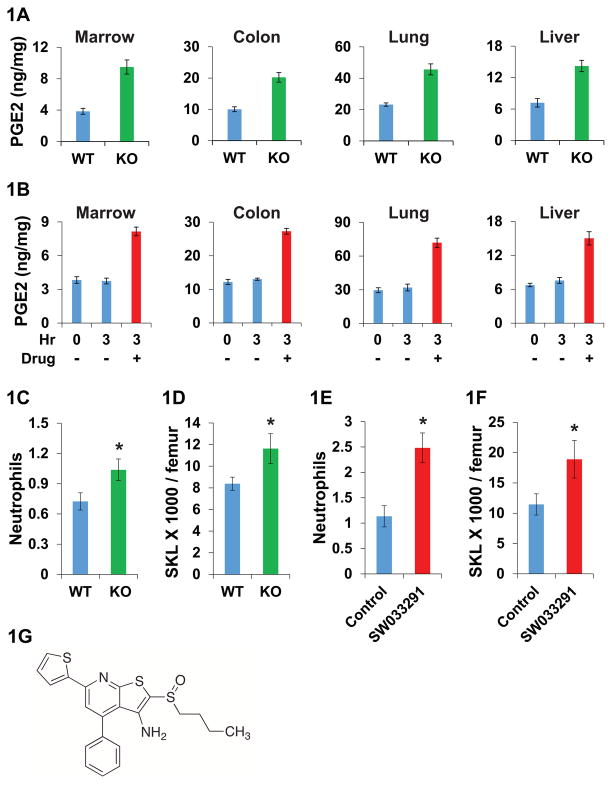
Significant advantages are observed in C57BL/6J mice treated with SW033291 (10 mg/kg; intraperitoneal injection; twice daily; for 3 days) for three days in a row. These include a doubling of peripheral neutrophil counts, a 65% increase in marrow SKL cells, and a 71% increase in marrow SLAM cells[1].
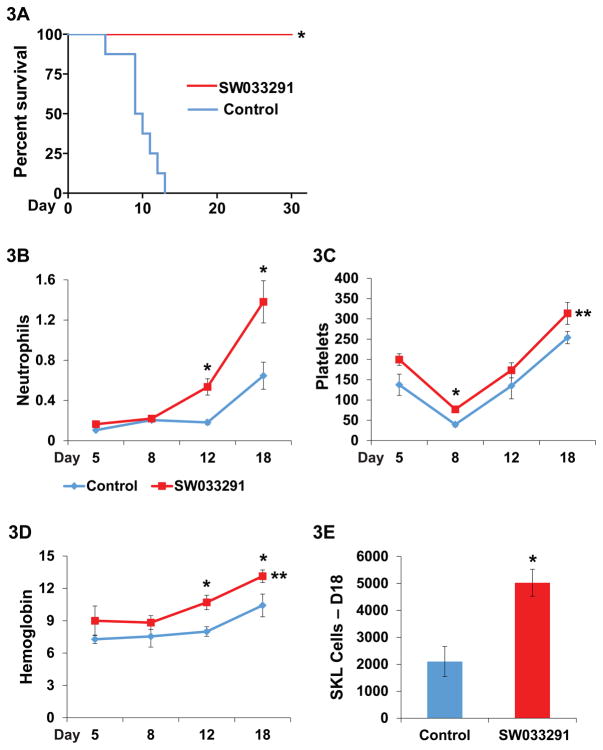
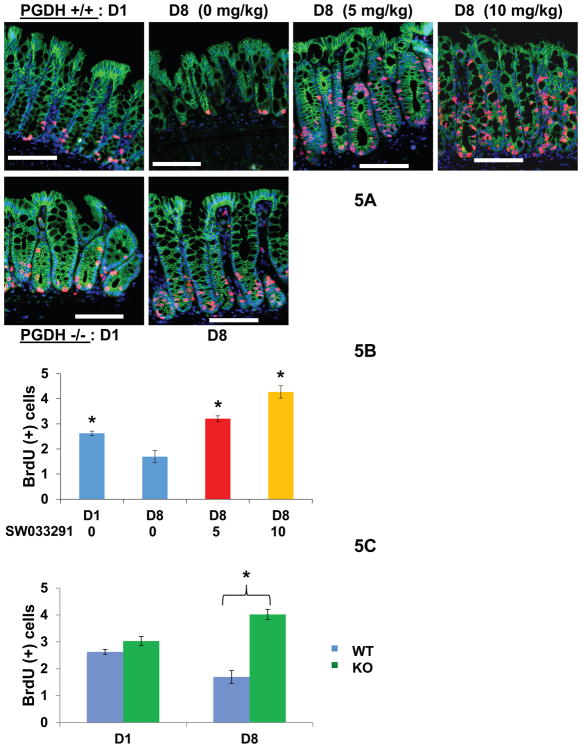
- In mice receiving lethal-dose radiation and subsequent bone marrow transplantation, SW033291 promotes the recovery of the mice. Mice treated with SW033291 restore normal blood cell counts 6 days faster than non-treated mice, and the levels of neutrophils, platelets, and red blood cells recover more quickly. The mechanism may be related to the fact that SW033291 increases the level of prostaglandin E2 (PGE2) in the bone marrow, and then the body produces other substances necessary for the survival of bone marrow stem cells [1] - In a mouse model of ulcerative colitis, SW033291 can promote the recovery of colonic ulcers and prevent the symptoms of enteritis [1] - In a mouse model of two-thirds liver resection, SW033291 can nearly double the speed of liver regeneration [1] - Fibrin gel containing MDSCs and SW033291 was cast in situ to repair tibialis anterior muscle defects. SW033291 can significantly promote the formation of muscle fibers in the defect area, with mild immune response, low fibrosis degree, and sufficient vascularization [2] |
| Enzyme Assay |
Activity assays of recombinant 15-PGDH protein [1]
For initial characterization of inhibition of 15-PGDH enzyme activity by SW033291, reactions were assembled with experiment specific concentrations of 15- PGDH enzyme, and experiment specific concentrations of SW033291, plus 150 µM NAD(+) and 25 µM PGE2 in reaction buffer (50 mM Tris-HCl, pH7.5, 0.01% Tween 20). The reaction mix was incubated for 15 min at 25 ºC in an Envision Reader. Enzyme activity was determined by following generation of NADH as assayed by recording fluorescence at Ex/Em=340 nM/485 nM every 30s for 3 minutes, commencing immediately after addition of PGE2. IC50 values were calculated with GraphPad Prism 5 software (http://www.graphpad.com/scientific-software/prism/) using the sigmoidal dose-response function and plotted against SW033291 concentration. The linear increase in IC50 value with increasing enzyme concentration indicated a tightbinding inhibition with the dependence on 15-PGDH:SW033291 stoichiometry rather than absolute SW033291 concentration. For analysis of initial reaction rates, kinetic reactions containing 10 nM 15-PGDH enzyme, 150 µM NAD(+), 25 µM PGE2, and varying concentrations of SW033291 were assembled in a total volume of 200 µL in reaction buffer (50 mM Tris-HCl pH7.5, 0.01% Tween 20). The generation of 15-keto-PGE2 was calculated by following the change of NADH fluorescence (Ex/Em=340 nM/485 nM) every 15s for 195s) and was plotted versus reaction time. Successive reactions contained SW033291 concentrations of 0, 0.2 nM, 0.25 nM, 0.4 nM, 0.5 nM, 0.8 nM, 1 nM, 1.6 nM, 2 nM, 3.25 nM, 5 nM, 7.5 nM, 10 nM, 15 nM, 20 nM. To derive the KiApp, relative initial reaction velocities were plotted against SW033291 concentration and fitted to the Morrison equation for a tight-binding inhibitor using GraphPad Prism 5 software. This analysis gave an active enzyme concentration value [E]T of 8.52 nM, indicating 85.2% activity in the enzyme preparation, and KiApp=0.10 nM. Determining effect of PGE2 concentration on SW033291 IC50 [1] Assays of 15-PGDH enzyme activity were done at 5 nM 15-PGDH, 150 µM NAD(+), 50 mM Tris-HCl, pH7.5, 0.01% Tween 20, and PGE2 concentrations of 5 µM, 10 µM, 20 µM, 40 µM. Activity was determined as the rate of NADH generation as determined by fluorescence (Ex/Em=340 nM/485 nM) measured every 30s for 15 mins. The IC50 values were calculated with GraphPad Prism 5 software (http://www.graphpad.com/scientific-software/prism/) as described above. 15-PGDH thermal denaturation [1] Thermal denaturation of 15-PGDH was monitored by differential scanning fluorimetry using SYPRO orange dye. Briefly, the protein was diluted to a final assay concentration of 10 µM in 100 mM Tris buffer pH 8.0, containing 0.01% Tween-20 and 1:1000 SYPRO orange dye (Invitrogen). The final assay volume was 20 µL, with or without 100 µM of NADH. SW033291, in assay buffer plus 0.4% (v/v) DMSO, was added to 20 µM final concentration. Heat denaturation curves were recorded using a real-time PCR instrument applying a temperature gradient of 2 C/min. Analysis of the data was performed using default Bio-Rad CFX Manager V3.1 software. Melting temperatures of 15-PGDH were determined by the inflection points of the plots of –d(RFU)/dT. Thermal denaturation of HSD17B10 and BDH2 Specificity of interaction of SW033291 with 15-PGDH was assessed by testing SW033291 effect on melting temperature of HSD17B10 and BDH2, two short chain dehydrogenases that are both closely structurally related to 15-PGDH. Researchers first developed a cell model that can emit light when the 15-PGDH level changes. Then, they screened a library containing 230,000 different chemical drugs. Add different concentrations of SW033291 to the reaction system, and observe the change of cell luminescence. According to the intensity of luminescence, the inhibitory effect of SW033291 on 15-PGDH activity can be determined [1] |
| Cell Assay |
Assay of SW033291 affect on PGE2 level [1]
The A549 cell line was maintained in F12K medium supplemented with 10% fetal calf serum (FBS) and 50 µg/mL gentamicin in a humidified atmosphere containing 5% CO2 at 37° C. Cells were plated in duplicate in a 24-well plate (1 mL per well) at 1X10⁵ cells per well and grown for 24 h before stimulation with IL-1β (1 ng/mL) overnight (16 h) to induce COX2 expression and PGE2 production. Cells were then treated for an additional 8 hours with fresh medium containing the indicated concentration of SW033291. Medium was then collected and the level of PGE2 analyzed using a PGE2 enzyme immunoassay Kit. Data were collected from four independent experiments. Results were tabulated graphically with error bars corresponding to standard error of the means and compared using 2-tailed t-tests. Parallel determinations of cell viability were performed using the CellTiter-Glo® assay Bone marrow colony forming assays [1] To assay for colony forming capacity, whole bone marrow was isolated from 8-12 week old mice. In studies of 15-PGDH knockout and control mice, twenty thousand bone marrow cells from each mouse were directly plated in duplicate 3 cm2 plates coated with complete methylcellulose media containing IL3, IL6, SCF, Epo. In studies from SW033291-treated mice (10 mg/kg injected 5 twice daily IP for 5 doses), twenty thousand bone marrow cells from each treated and control mouse were harvested at 6 hours after the last SW033291 or vehicle injection and then plated in duplicate 3 cm2 plates. After 14 days, colonies were counted, scored, and subtyped, in blinded fashion, by specially trained personal from the Case Comprehensive Cancer Center Hematopoietic Biorepository and Cellular Therapy Core Facility. Bone marrow cellularity was determined at the time of harvest from a 1:100 dilution in PBS by counts performed using a hemocytometer under a light microscope. Using marrow cellularity values, CFU counts were normalized to per femur values. CFU counts were tabulated graphically with error bars corresponding to standard error of the means and different treatments were compared using 2-tailed t-tests. - First, the cell-specific markers and myogenic differentiation potential of rat MDSCs were determined. Then, MDSCs were incubated with SW033291, and the production of PGE2 was detected to evaluate its effect on cell function. At the same time, cytotoxicity experiments were used to evaluate the cell tolerance to the drug. In addition, qPCR was used to detect the expression of myogenic-related genes, western blot was used to detect the expression of myogenic-related proteins, and immunocytochemistry was used to observe the cellular localization and expression level of myogenic markers, so as to evaluate the effect of SW033291 on the myogenic differentiation of MDSCs [2] |
| Animal Protocol |
Animal/Disease Models: C57BL/6J mice[1]
Doses: 10 mg/kg Route of Administration: intraperitoneal (ip)injection; twice (two times) daily; for 3 days (for 5 doses) Experimental Results: demonstrated significant benefits, including a doubling of peripheral neutrophil counts, a 65% increase in marrow SKL cells, and a 71% increase in marrow SLAM cells. Ex Vivo treatment of murine bone marrow with SW033291 [1] Whole bone marrow was isolated from 8-10 week old female littermate FVB mice that were either 15-PGDH wild-type or knockout, and incubated with either 0.5 µM SW033291 or vehicle-control for 2 hours on ice. For assay of colony forming activity twenty thousand cells were plated in 3 cm2 plates coated with complete methylcellulose media containing IL3, IL6, SCF, Epo and scored after 14 days. Marrow from 3 mice were individually treated, and then plated in duplicate into a total of 6 separate wells. CFU counts were tabulated graphically with error bars corresponding to standard error of the means and different treatments were compared using 2-tailed t-tests. [1] Hematopoietic analysis of SW033291-treated mice [1] 8-10 week old female C57BL/6J mice were injected IP with either vehicle or SW033219 (10 mg/kg) twice daily for 5 doses. Peripheral eye blood was taken from mice 6 hours after the last treatment and blood counts were recorded using the Hemavet 950fs. Blood counts were tabulated graphically with error bars corresponding to standard error of the means and compared using 2-tailed t-tests. In addition, mice were sacrificed and marrow flushed 6 hours following the final treatment for SKL and SLAM analysis as described below. Bone marrow homing assays [1] Whole bone marrow from 8 week old female C57BL/6J mice was labeled with 5 µM CellTrace CFSE and transplanted into lethally irradiated recipient mice (of same age, gender, and strain). Mice were irradiated with 11Gy total body irradiation 12 hours prior to transplant. Recipient mice were treated with either vehicle, 10 mg/kg SW033291, or a combination of Indomethacin (5 mg/kg) + SW033291, Plerixafor (10 mg/kg) + SW033291, EP2 Antagonist PF04418948 (10 µg/mouse) + SW033291, or EP4 Antagonist L-161982 (10 µg/mouse) + SW033291 for three doses. The three treatment doses were administered immediately following 11Gy IR, immediately following transplant, and 8 hours post transplant. After 16 hours whole marrow was flushed from recipient mice and the total percentage of CFSE positive bone marrow was analyzed on a BD LSRII flow cytometer. Murine bone marrow transplantation [1] For survival analysis, 8-10 week old female C57BL/6J recipient mice were lethally irradiated at 11 Gy and transplanted with 200,000 whole bone marrow cells from 8-10 week old female C57BL/6J donor mice. Following transplant the recipient mice received twice daily IP injections with either vehicle or 5 mg/kg SW033291. Animal survival was monitored and recorded daily, and displayed graphically. Significance of differences between survival curves was determined using a two tailed Log-rank (Mantel-Cox) test. To follow recovery of blood counts, 8 week old mice were lethally irradiated at 11 Gy 7 and transplanted with 500,000 whole bone marrow cells. Mice received twice daily IP injections with either vehicle or 5 mg/kg SW033291. Animals were sacrificed at days 5, 8, 12, and 18 and blood counts, bone marrow cellularity, and SKL percentage was measured at each time-point using the Hemavet 850fs. Blood counts were tabulated graphically with error bars corresponding to standard error of the means and compared using 2-tailed t-tests. Long term survival following bone marrow transplantation [1] 0.5 million whole bone marrow cells from 8 week old wild-type mice were transplanted into recipient mice lethally irradiated with 11Gy total body irradiation 12 hours prior to transplant. Recipient mice were treated with either vehicle (N=10) or 5 mg/kg SW033291 (twice daily IP) (N=10) for 21 days. Animal survival was recorded in recipient mice at seven months post transplant. Serial Transplantation [1] 1 million whole bone marrow cells from 8 week old wild-type mice were transplanted into recipient mice lethally irradiated with 11Gy total body irradiation 12 hours prior to transplant. Recipient mice were treated with either vehicle or 5 mg/kg SW033291 (twice daily IP) for 21 days. 8 weeks post-transplant recipient mice were sacrificed, marrow harvested, and 1 million whole marrow cells were transplanted into second cohort of lethally irradiated recipient mice. This process was serially repeated to generate 3 successive generations of mice descended from the initial transplant recipients. Animal survival was recorded at each round of transplant. Partial hepatectomy [1] 10-12 week old male FVB mice, or 10-12 week old male 15-PGDH knockout mice on an FVB background, were placed under isoflurane anesthesia and underwent a twothirds partial hepatectomy through resection of the median and left lateral hepatic lobes as described by Mitchell and Willenbring. Mice that were treated with SW033291 received injections in a vehicle of 10% ethanol, 5% Cremaphor EL, 85% D5W, or with vehicle control. The SW033291 injections were commenced at the time of surgery and continued twice daily throughout the study. Following sacrifice, livers were removed, and weights determined for whole mouse and for isolated livers. Liver weights and ratios of liver weight to body weight were tabulated graphically with error bars corresponding to standard error of the means and compared using 2-tailed t-tests. - Use mice receiving lethal-dose radiation and subsequent bone marrow transplantation, mice with ulcerative colitis, and mice with two-thirds liver resection as animal models. The administration route is injection, but the specific injection method, drug dissolution formula, and administration frequency are not described [1] - A tibialis anterior muscle defect model was constructed, and fibrin gel containing MDSCs and SW033291 was cast in situ at the defect site. The muscle regeneration was observed to evaluate the effect of SW033291 on muscle regeneration in vivo [2] |
| Toxicity/Toxicokinetics |
SW033291 No obvious side effects. Even at doses much higher than those required to inhibit 15-PGDH, no toxic reactions were observed [1]
|
| References | |
| Additional Infomation |
Drugs that promote tissue regeneration have potential benefits in a variety of clinical situations, such as promoting the recovery of the hematopoietic system after bone marrow transplantation. Prostaglandin PGE2 is a lipid signaling molecule that supports the expansion of stem cells in a variety of tissues and is a potential therapeutic target for promoting tissue regeneration in vivo. This study showed that inhibition of 15-hydroxyprostaglandin dehydrogenase (15-PGDH), a prostaglandin-degrading enzyme, can enhance tissue regeneration in multiple organs of mice. Through chemical screening, we identified a small molecule inhibitor of 15-PGDH (SW033291) that can increase the level of prostaglandin PGE2 in bone marrow and other tissues. SW033291 can accelerate the recovery of hematopoietic function in mice that have received bone marrow transplantation. In addition, the compound can promote tissue regeneration in mouse models of colon and liver injury. Tissues from 15-PGDH knockout mice also showed similar enhanced regenerative capacity. Therefore, 15-PGDH inhibitors may be an effective therapeutic strategy for promoting tissue regeneration in a variety of clinical situations. [1] 15-PGDH inhibitors, such as SW033291, may also be suitable for the treatment of human ulcerative colitis. Mucosal healing is increasingly considered an important target for the treatment of this disease. The activity of SW033291 in stimulating colonic epithelial regeneration in a mouse DSS colitis model suggests that it may be suitable for meeting this therapeutic need. 15-PGDH inhibitors, such as SW033291, may also be suitable for patients undergoing surgical resection of primary liver tumors or colon cancer that has metastasized to the liver. In both cases, whether a patient is suitable for surgery depends on whether the remaining liver tissue after surgery is sufficient to regenerate enough liver. [1] - The potential of SW033291 is related to PGE2. PGE2 can promote the proliferation of various tissue stem cells, while 15-PGDH can degrade and reduce the amount of PGE2 in the body. SW033291 inhibits 15-PGDH and increases the level of PGE2 in tissues, thereby promoting and accelerating tissue healing. The research team plans to focus on three types of patients, namely those undergoing liver surgery, bone marrow transplantation, or those with ulcerative colitis, to further develop the human application of SW033291 [1]. SW033291 is a small molecule inhibitor that targets 15-PGDH. It promotes myogenic differentiation of muscle-derived stem cells by increasing the production of PGE2, and is expected to become an effective method for repairing large-area skeletal muscle defects [2].
|
| Molecular Formula |
C21H20N2OS3
|
|
|---|---|---|
| Molecular Weight |
412.59
|
|
| Exact Mass |
412.073
|
|
| Elemental Analysis |
C, 61.13; H, 4.89; N, 6.79; O, 3.88; S, 23.31
|
|
| CAS # |
459147-39-8
|
|
| Related CAS # |
|
|
| PubChem CID |
3337839
|
|
| Appearance |
Light yellow to yellow solid powder
|
|
| Density |
1.4±0.1 g/cm3
|
|
| Boiling Point |
670.1±55.0 °C at 760 mmHg
|
|
| Flash Point |
359.0±31.5 °C
|
|
| Vapour Pressure |
0.0±2.0 mmHg at 25°C
|
|
| Index of Refraction |
1.741
|
|
| LogP |
5.47
|
|
| Hydrogen Bond Donor Count |
1
|
|
| Hydrogen Bond Acceptor Count |
6
|
|
| Rotatable Bond Count |
6
|
|
| Heavy Atom Count |
27
|
|
| Complexity |
514
|
|
| Defined Atom Stereocenter Count |
0
|
|
| SMILES |
NC1=C(S(CCCC)=O)SC2=NC(C3=CC=CS3)=CC(C4=CC=CC=C4)=C21
|
|
| InChi Key |
LCYAYKSMOVLVRL-UHFFFAOYSA-N
|
|
| InChi Code |
InChI=1S/C21H20N2OS3/c1-2-3-12-27(24)21-19(22)18-15(14-8-5-4-6-9-14)13-16(23-20(18)26-21)17-10-7-11-25-17/h4-11,13H,2-3,12,22H2,1H3
|
|
| Chemical Name |
2-(Butylsulfinyl)-4-phenyl-6-(2-thienyl)-thieno[2,3-b]pyridin-3-amine
|
|
| Synonyms |
|
|
| HS Tariff Code |
2934.99.9001
|
|
| Storage |
Powder -20°C 3 years 4°C 2 years In solvent -80°C 6 months -20°C 1 month |
|
| Shipping Condition |
Room temperature (This product is stable at ambient temperature for a few days during ordinary shipping and time spent in Customs)
|
| Solubility (In Vitro) |
DMSO: 83 mg/mL (201.2 mM)
Water: 1 mg/mL (Insoluble) Ethanol: 32 mg/mL warmed (77.6 mM) |
|---|---|
| Solubility (In Vivo) |
Solubility in Formulation 1: 2.5 mg/mL (6.06 mM) in 10% DMSO + 40% PEG300 + 5% Tween80 + 45% Saline (add these co-solvents sequentially from left to right, and one by one), suspension solution; with sonication.
For example, if 1 mL of working solution is to be prepared, you can add 100 μL of 25.0 mg/mL clear DMSO stock solution to 400 μL PEG300 and mix evenly; then add 50 μL Tween-80 to the above solution and mix evenly; then add 450 μL normal saline to adjust the volume to 1 mL. Preparation of saline: Dissolve 0.9 g of sodium chloride in 100 mL ddH₂ O to obtain a clear solution. Solubility in Formulation 2: 2.5 mg/mL (6.06 mM) in 10% EtOH + 40% PEG300 + 5% Tween80 + 45% Saline (add these co-solvents sequentially from left to right, and one by one), suspension solution; with ultrasonication. For example, if 1 mL of working solution is to be prepared, you can add 100 μL of 25.0 mg/mL clear EtOH stock solution to 400 μL PEG300 and mix evenly; then add 50 μL Tween-80 to the above solution and mix evenly; then add 450 μL normal saline to adjust the volume to 1 mL. Preparation of saline: Dissolve 0.9 g of sodium chloride in 100 mL ddH₂ O to obtain a clear solution. View More
Solubility in Formulation 3: 2.5 mg/mL (6.06 mM) in 10% EtOH + 90% (20% SBE-β-CD in Saline) (add these co-solvents sequentially from left to right, and one by one), suspension solution; with ultrasonication. Solubility in Formulation 4: ≥ 2.5 mg/mL (6.06 mM) (saturation unknown) in 10% EtOH + 90% Corn Oil (add these co-solvents sequentially from left to right, and one by one), clear solution. For example, if 1 mL of working solution is to be prepared, you can add 100 μL of 25.0 mg/mL clear EtOH stock solution to 900 μL of corn oil and mix well. |
| Preparing Stock Solutions | 1 mg | 5 mg | 10 mg | |
| 1 mM | 2.4237 mL | 12.1186 mL | 24.2371 mL | |
| 5 mM | 0.4847 mL | 2.4237 mL | 4.8474 mL | |
| 10 mM | 0.2424 mL | 1.2119 mL | 2.4237 mL |
*Note: Please select an appropriate solvent for the preparation of stock solution based on your experiment needs. For most products, DMSO can be used for preparing stock solutions (e.g. 5 mM, 10 mM, or 20 mM concentration); some products with high aqueous solubility may be dissolved in water directly. Solubility information is available at the above Solubility Data section. Once the stock solution is prepared, aliquot it to routine usage volumes and store at -20°C or -80°C. Avoid repeated freeze and thaw cycles.
Calculation results
Working concentration: mg/mL;
Method for preparing DMSO stock solution: mg drug pre-dissolved in μL DMSO (stock solution concentration mg/mL). Please contact us first if the concentration exceeds the DMSO solubility of the batch of drug.
Method for preparing in vivo formulation::Take μL DMSO stock solution, next add μL PEG300, mix and clarify, next addμL Tween 80, mix and clarify, next add μL ddH2O,mix and clarify.
(1) Please be sure that the solution is clear before the addition of next solvent. Dissolution methods like vortex, ultrasound or warming and heat may be used to aid dissolving.
(2) Be sure to add the solvent(s) in order.
|
|---|
|
|
|
|---|
|
|
Products are for research use only; We do not sell to patients
Copyright 2020 InvivoChem LLC | All Rights Reserved


 COA
COA