| Size | Price | Stock | Qty |
|---|---|---|---|
| 5mg |
|
||
| 10mg |
|
||
| 25mg |
|
||
| 50mg |
|
||
| 100mg |
|
||
| 250mg |
|
||
| 500mg |
|
||
| 1g | |||
| Other Sizes |
Purity: ≥98%
| Targets |
Btk (IC50 < 0.5 nM)
Bruton Tyrosine Kinase (BTK) (recombinant human BTK, IC50 = 0.8 nM); >250-fold selectivity over EGFR (IC50 = 210 nM), ITK (IC50 = 280 nM), JAK2 (IC50 = 320 nM); no activity against Src, Abl, VEGFR2 (IC50 > 1000 nM) [1] |
|---|---|
| ln Vitro |
Spebrutinib (CC-292) is an oral Btk inhibitor that is covalent, highly selective, and has an IC50 of 0.5 nM. Moreover, spebrutinib exhibits mild inhibitory effects on Yes, c-Src, Brk, Lyn, and Fyn, with corresponding IC50s of 723 nM, 1.729 μM, 2.43 μM, 4.4 μM, and 7.15 μM. A further investigation revealed a close correlation between the cellular EC50 of Spebrutinib inhibition of Btk kinase (EC50=8 nM) and the EC50 of Btk occupancy in Ramos cells in response to the drug's dosage response (EC50=6 nM). Moreover, 35 nM of spebrutinib is the concentration that suppresses 90% of Btk activity in Ramos cells, whereas 39 nM is the concentration needed for 90% Btk occupancy [1].
In this study, researchers first investigated the antitumor effects of CC-292 in five MCL cell lines (REC-1, MINO, UPN-1, MAVER-1 and Z138) after 72 h of treatment. CC-292 (10–1000 nM) had a cytostatic effect in a subset of cell lines, with REC-1, MINO and UPN-1 appearing to be the most sensitive, while MAVER-1 and Z138 were the most resistant to CC-292, following a trend similar to that for ibrutinib (Figure 1A,B). CC-292 induced marginal apoptosis (10–15%) in the most sensitive cell lines (UPN-1 and REC-1) (Online Supplementary Figure S1). Identification of Tyr223 pBTK is considered a surrogate marker for kinase activity.6 MCL cell lines pre-incubated with CC-292 were IgM-stimulated to mimic BCR activation. As displayed in Figure 1C, CC-292 significantly reduced both constitutive and IgM-induced BTK phosphorylation at the Y223 residue in MCL cell lines and primary cells, independently of their sensitivity to the inhibitor.[2] Inhibited B-cell activation: 15 nM Spebrutinib reduced anti-IgM-induced human peripheral blood B-cell proliferation by 90% (72 hours); decreased activation marker CD69 expression by 88% (flow cytometry) [1] - Blocked BTK downstream signaling: 50 nM Spebrutinib reduced p-BTK (Tyr223) by 93% in human Ramos B cells (2 hours); p-PLCγ2 (Tyr759) and p-ERK1/2 (Thr202/Tyr204) downregulated by 87% and 85%, respectively (Western blot) [1] - No cytotoxicity in non-B cells: ≤1 μM Spebrutinib showed no effect on human T-cell or monocytes viability (MTT assay, 72 hours) [1] |
| ln Vivo |
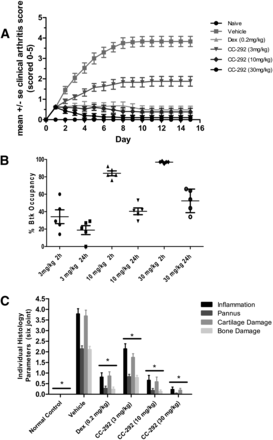
In a collagen-induced arthritis mouse model, AVL-292 (3-30 mg/kg, p.o.) dose-dependently inhibits the clinical signs of inflammatory disease, including reduction in joint and paw swelling and visible redness of the affected paws.
In in vivo studies using the adoptive transfer TCL1 mouse model of CLL, CC-292 reduced tumor load and normalized tumor-associated expansion of T cells and monocytes, while not affecting T cell function. Importantly, the combination of CC-292 and bendamustine impaired CLL cell proliferation in vivo and enhanced the control of CLL progression. Our results demonstrate that CC-292 is a specific BTK inhibitor with promising performance in combination with bendamustine in CLL. Further clinical trials are warranted to investigate the therapeutic efficacy of this combination regimen.[3]
CC-292/bendamustine treatment effectively controls CLL development in vivo. In order to assess the in vivo activity of CC-292 and to validate the in vitro results obtained from its combination with bendamustine, we used the TCL1 AT mouse model of CLL. Leukemic TCL1 AT splenocytes were transplanted into syngeneic immunocompetent C57BL/6 N mice. After 14 days, mice presented mean TL of 50% (Supporting Information Fig. S5a). They were then randomized in four groups (Supporting Information Fig. S5b) and treated for 11 days (Fig. 4a). During the treatment, absolute lymphocyte counts (ALC) in blood were monitored weekly. In all treatment conditions, a decrease was detected, being this more remarkable in the combination treatment (Supporting Information Fig. S6a). Furthermore, untreated mice exhibited low red blood cell and platelet counts, which were improved after treatment with CC-292, bendamustine, or the combination (Supporting Information Fig. S6b and S6c). Untreated mice showed severe splenomegaly and hepatomegaly (Fig. 4b), which were significantly less severe both in CC-292 and bendamustine-treated animals (spleen weight 2.2-fold lower in CC-292 cohort (p < 0.0001) and 2.5-fold lower in bendamustine cohort (p < 0.0001), liver weight 1.6-fold lower both in CC-292 (p < 0.0001) and bendamustine cohorts (p = 0.0002)). Mice treated with the combination showed a markedly lower spleen weight of up to 5-fold less (p < 0.0001) and a 1.7-fold lower liver weight (p < 0.0001) compared to untreated animals.[3] In C57BL/6 mice (B-cell activation model): Oral Spebrutinib (10 mg/kg/day) for 7 days reduced splenic B-cell count by 42% vs. vehicle; serum IL-6 and TNF-α levels decreased by 55% and 52% [1] - In mice with anti-IgD-induced B-cell activation: Single oral dose of Spebrutinib (25 mg/kg) reduced peripheral blood B-cell CD86 expression (activation marker) by 78% at 4 hours post-administration [1] - In healthy human volunteers: Oral Spebrutinib (100 mg, single dose) reduced peripheral blood B-cell p-BTK (Tyr223) by 82% at 2 hours; CD69 expression in anti-IgM-stimulated B cells decreased by 75% at 6 hours [1] |
| Enzyme Assay |
Targeted therapies that suppress B cell receptor (BCR) signaling have emerged as promising agents in autoimmune disease and B cell malignancies. Bruton's tyrosine kinase (Btk) plays a crucial role in B cell development and activation through the BCR signaling pathway and represents a new target for diseases characterized by inappropriate B cell activity. N-(3-(5-fluoro-2-(4-(2-methoxyethoxy)phenylamino)pyrimidin-4-ylamino)phenyl)acrylamide (CC-292) is a highly selective, covalent Btk inhibitor and a sensitive and quantitative assay that measures CC-292-Btk engagement has been developed. This translational pharmacodynamic assay has accompanied CC-292 through each step of drug discovery and development. These studies demonstrate the quantity of Btk bound by CC-292 correlates with the efficacy of CC-292 in vitro.[1]
ELISA cytokine quantification [2] CCL3 and CCL4 levels were assessed in duplicate using ELISA kits in supernatants harvested from cells that had been pretreated with 1µM CC-292 at 37ºC for 1h and subsequently stimulated with 10µg/ml of anti-IgM for 24h. BTK kinase activity assay (literature 1): Recombinant human BTK kinase domain (50 ng/well) was incubated with Spebrutinib (0.01-100 nM) in reaction buffer (25 mM HEPES pH 7.5, 10 mM MgCl₂, 1 mM DTT, 0.1 mM Na₃VO₄) at 37°C for 20 minutes. 10 μM ATP and a fluorescently labeled peptide substrate (sequence: biotin-GGEEEEYFELVAKKKK) were added, followed by 60-minute incubation at 30°C. Phosphorylated substrate was captured using streptavidin-coated 96-well plates, detected with an anti-phosphotyrosine antibody, and kinase activity was quantified via homogeneous time-resolved fluorescence (HTRF; excitation 340 nm, emission 665 nm). IC50 values were calculated using nonlinear regression analysis [1] |
| Cell Assay |
Cell proliferation assay and apoptosis quantification [2]
MCL cells (5x10⁴ ) were treated with Spebrutinib (CC-292), lenalidomide or NIK inhibitors for the times indicated and 0.5 mg/mL MTT (3-(4,5-dimethylthiazolyl-2)-2,5-diphenyltetrazolium bromide) reagent was added for 2–6 additional hrs before spectrophotometric measurement. Each measurement was made in triplicate. Values were represented using untreated control cells as reference. Apoptosis induction was evaluated by flow cytometry in an Attune acoustic focusing cytometer after staining MCL cells with Annexin V-FIT and co-stained with CD19-PE in the case of primary cells. Flow cytometry [2] Cells were pretreated with 1µM Spebrutinib (CC-292) at 37ºC for 1h and subsequently stimulated with 10µg/ml anti-IgM for 24h. Cellular activation was evaluated by co-staining of MCL cells with CD69-PC7/CD86-FITC, including CD19-PE and Annexin V-Pacific Blue in the case of primary cells, followed by cytofluorimetric evaluation in an Attune cytometer. Migration assay [2] SDF-1α/CXCL12-induced migration was evaluated using 24-well chemotaxis chambers containing 5 µm pore size inserts and coated with 1 µg/ml VCAM-1. The lower chamber contained 200ng/ml CXCL12. The cells were pretreated with 1µM Spebrutinib (CC-292) at 37ºC for 1h and deposited in the upper compartment allowing them to migrate for 3h at 37ºC and enumerated by flow cytometry. Human B-cell activation assay (literature 1): Human peripheral blood B cells were isolated and seeded in 96-well plates (4×10³ cells/well). Cells were treated with Spebrutinib (0.1 nM-1 μM) for 1 hour, then stimulated with anti-IgM (10 μg/mL) for 72 hours. Cell proliferation was measured via [³H]-thymidine incorporation assay; CD69 expression (activation marker) was analyzed by flow cytometry using a FITC-conjugated anti-CD69 antibody [1] - Western blot assay (literature 1): Human Ramos B cells were seeded in 6-well plates (2×10⁵ cells/well) and treated with Spebrutinib (10-200 nM) for 2 hours. Cells were lysed in RIPA buffer supplemented with protease and phosphatase inhibitors. 30 μg of total protein was separated by 8% SDS-PAGE, transferred to PVDF membranes, and probed with primary antibodies against p-BTK (Tyr223), total BTK, p-PLCγ2 (Tyr759), p-ERK1/2 (Thr202/Tyr204), and β-actin. Signals were detected using horseradish peroxidase (HRP)-conjugated secondary antibodies and chemiluminescence reagent [1] |
| Animal Protocol |
3-30 mg/kg; p.o
Collagen-induced arthritis (CIA) mouse model TCL1 adoptive transfer (AT) mouse model[3] Eμ-TCL1 (TCL1) mice on C57BL/6 background were used. In this model, the overexpression of TCL1 in B cells under the VH-promoter-IgH-Eμ-enhancer drives a clonal expansion of CD5+ B cells, representing an aggressive form of CLL.24 For treatment studies, adoptive transfer of TCL1 tumors were performed in C57BL/6 WT mice as described before.25 Briefly, 106 splenocytes with more than 95% of viable CD19+CD5+ cells from leukemic TCL1 mice were transplanted in 3-month-old female C57BL/6N wild-type mice via tail vein injection. Mice were housed in pathogen-free conditions, closely monitored for signs of illness. All experiments were performed according to the University of Barcelona animal experimental ethics committee guidelines. When PB tumor load (TL) reached mean values of 50% of CD19+ CD5+ (out of total CD45+ cells), animals were randomized into 4 groups (Vehicle, CC-292, bendamustine and Combination) with equal mean and standard deviation of TL percentage values. Fifteen milligram/kilogram CC-292 were administered twice daily via oral gavage, whereas 25 mg/kg bendamustine were administered intravenously once weekly. Mice were euthanized after 11 days of treatment and single cell suspensions were obtained from BM, inguinal LN and spleen.[3] Murine B-cell activation model (C57BL/6 mice, [1]): 8-week-old female C57BL/6 mice were randomly divided into vehicle and Spebrutinib groups. Spebrutinib was administered via oral gavage at 10 mg/kg/day for 7 days; drug was dissolved in 0.5% methylcellulose + 0.2% Tween 80. On day 8, peripheral blood and spleen samples were collected: peripheral blood B cells were analyzed by flow cytometry (anti-CD19 antibody), and serum cytokines (IL-6, TNF-α) were measured via ELISA [1] - Anti-IgD-stimulated mouse model ([1]): Mice were administered a single oral dose of Spebrutinib (25 mg/kg, dissolved in 0.5% methylcellulose) or vehicle. 1 hour later, mice were injected intraperitoneally with anti-mouse IgD (50 μg/mouse) to activate B cells. Peripheral blood was collected at 4 hours post-anti-IgD injection, and B-cell CD86 expression was detected by flow cytometry [1] - Human volunteer study ([1]): Healthy adult volunteers received a single oral dose of Spebrutinib (100 mg, formulated as capsules). Peripheral blood samples were collected at 0, 2, 6, and 24 hours post-administration. PBMCs were isolated; p-BTK levels in B cells were measured via Western blot, and anti-IgM-stimulated CD69 expression was analyzed by flow cytometry [1] |
| ADME/Pharmacokinetics |
In mice (Reference 1): the oral bioavailability of Spebrutinib was 58% (10 mg/kg dose); the plasma half-life (t₁/₂) was 3.9 hours; the maximum plasma concentration (Cmax) was 4.7 μM 1.3 hours after oral administration [1] - In humans (Reference 1): a single oral dose of 100 mg Spebrutinib resulted in a Cmax of 2.8 μM 1.8 hours; the plasma t₁/₂ was 5.2 hours; the oral absorption rate was >80% (based on urinary excretion of the parent drug) [1] - Plasma protein binding: the binding rate to human plasma proteins was 99.4%, and the binding rate to mouse plasma proteins was 99.2% (determined by ultrafiltration) [1]
|
| Toxicity/Toxicokinetics |
In mice (7-day study, [1]): no significant decrease in body weight (>8%); serum ALT (26 ± 3 U/L), AST (49 ± 5 U/L), and BUN (18 ± 2 mg/dL) were all within the normal range; 1/10 mice experienced mild diarrhea (which resolved on day 5) [1]
- In human volunteers ([1]): no serious adverse events were reported; 2/8 volunteers experienced mild headache (which resolved within 24 hours); no abnormal changes were observed in liver function (ALT, AST) or kidney function (creatinine) [1] |
| References | |
| Additional Infomation |
Spebrutinib has been investigated in clinical trials for the treatment of rheumatoid arthritis, lymphoma, diffuse large B-cell lymphoma, and chronic B-cell lymphoblastic leukemia. Spebrutinib is a highly bioavailable, selective Bruton's agammaglobulinemia tyrosine kinase (BTK) inhibitor with potential antitumor activity. After administration, Spebrutinib targets and covalently binds to BTK, thereby inhibiting its activity. By irreversibly inhibiting BTK, administration of this drug may lead to the inhibition of B-cell receptor (BCR) signaling and may inhibit the proliferation of B-cell malignancies. BTK is a cytoplasmic tyrosine kinase belonging to the Tec kinase family, playing a crucial role in the development, activation, signaling, proliferation, and survival of B lymphocytes.
Spebrutinib (CC292; AVL292) is an irreversible covalent Bruton's tyrosine kinase (BTK) inhibitor that binds to the Cys481 residue of BTK, blocking its activation and downstream signaling in B cells[1]. Based on its ability to inhibit B cell activation and the production of pro-inflammatory cytokines, Spebrutinib has been developed for the treatment of B-cell malignancies (e.g., chronic lymphocytic leukemia (CLL), non-Hodgkin's lymphoma (NHL)) and B-cell-mediated autoimmune diseases (e.g., rheumatoid arthritis)[1]. Early human pharmacodynamic data have confirmed its ability to inhibit BTK activity in peripheral B cells, supporting its entry into clinical trials for B-cell-related diseases[1]. |
| Molecular Formula |
C22H22FN5O3
|
|
|---|---|---|
| Molecular Weight |
423.44
|
|
| Exact Mass |
423.17
|
|
| Elemental Analysis |
C, 62.40; H, 5.24; F, 4.49; N, 16.54; O, 11.34
|
|
| CAS # |
1202757-89-8
|
|
| Related CAS # |
Spebrutinib besylate;1360053-81-1
|
|
| PubChem CID |
59174488
|
|
| Appearance |
White to khaki solid powder
|
|
| Density |
1.3±0.1 g/cm3
|
|
| Index of Refraction |
1.655
|
|
| LogP |
2.95
|
|
| Hydrogen Bond Donor Count |
3
|
|
| Hydrogen Bond Acceptor Count |
8
|
|
| Rotatable Bond Count |
10
|
|
| Heavy Atom Count |
31
|
|
| Complexity |
561
|
|
| Defined Atom Stereocenter Count |
0
|
|
| SMILES |
COCCOC1=CC=C(NC2=NC=C(F)C(NC3=CC=CC(NC(C=C)=O)=C3)=N2)C=C1
|
|
| InChi Key |
KXBDTLQSDKGAEB-UHFFFAOYSA-N
|
|
| InChi Code |
InChI=1S/C22H22FN5O3/c1-3-20(29)25-16-5-4-6-17(13-16)26-21-19(23)14-24-22(28-21)27-15-7-9-18(10-8-15)31-12-11-30-2/h3-10,13-14H,1,11-12H2,2H3,(H,25,29)(H2,24,26,27,28)
|
|
| Chemical Name |
N-[3-[[5-fluoro-2-[4-(2-methoxyethoxy)anilino]pyrimidin-4-yl]amino]phenyl]prop-2-enamide
|
|
| Synonyms |
|
|
| HS Tariff Code |
2934.99.9001
|
|
| Storage |
Powder -20°C 3 years 4°C 2 years In solvent -80°C 6 months -20°C 1 month |
|
| Shipping Condition |
Room temperature (This product is stable at ambient temperature for a few days during ordinary shipping and time spent in Customs)
|
| Solubility (In Vitro) |
DMSO: 85 mg/mL (200.7 mM)
Water: 1 mg/mL (Insoluble) Ethanol: 1 mg/mL |
|---|---|
| Solubility (In Vivo) |
Solubility in Formulation 1: ≥ 2.5 mg/mL (5.90 mM) (saturation unknown) in 10% DMSO + 40% PEG300 + 5% Tween80 + 45% Saline (add these co-solvents sequentially from left to right, and one by one), clear solution.
For example, if 1 mL of working solution is to be prepared, you can add 100 μL of 25.0 mg/mL clear DMSO stock solution to 400 μL PEG300 and mix evenly; then add 50 μL Tween-80 to the above solution and mix evenly; then add 450 μL normal saline to adjust the volume to 1 mL. Preparation of saline: Dissolve 0.9 g of sodium chloride in 100 mL ddH₂ O to obtain a clear solution. Solubility in Formulation 2: ≥ 2.5 mg/mL (5.90 mM) (saturation unknown) in 10% DMSO + 90% Corn Oil (add these co-solvents sequentially from left to right, and one by one), clear solution. For example, if 1 mL of working solution is to be prepared, you can add 100 μL of 25.0 mg/mL clear DMSO stock solution to 900 μL of corn oil and mix evenly. (Please use freshly prepared in vivo formulations for optimal results.) |
| Preparing Stock Solutions | 1 mg | 5 mg | 10 mg | |
| 1 mM | 2.3616 mL | 11.8080 mL | 23.6161 mL | |
| 5 mM | 0.4723 mL | 2.3616 mL | 4.7232 mL | |
| 10 mM | 0.2362 mL | 1.1808 mL | 2.3616 mL |
*Note: Please select an appropriate solvent for the preparation of stock solution based on your experiment needs. For most products, DMSO can be used for preparing stock solutions (e.g. 5 mM, 10 mM, or 20 mM concentration); some products with high aqueous solubility may be dissolved in water directly. Solubility information is available at the above Solubility Data section. Once the stock solution is prepared, aliquot it to routine usage volumes and store at -20°C or -80°C. Avoid repeated freeze and thaw cycles.
Calculation results
Working concentration: mg/mL;
Method for preparing DMSO stock solution: mg drug pre-dissolved in μL DMSO (stock solution concentration mg/mL). Please contact us first if the concentration exceeds the DMSO solubility of the batch of drug.
Method for preparing in vivo formulation::Take μL DMSO stock solution, next add μL PEG300, mix and clarify, next addμL Tween 80, mix and clarify, next add μL ddH2O,mix and clarify.
(1) Please be sure that the solution is clear before the addition of next solvent. Dissolution methods like vortex, ultrasound or warming and heat may be used to aid dissolving.
(2) Be sure to add the solvent(s) in order.
| NCT Number | Recruitment | interventions | Conditions | Sponsor/Collaborators | Start Date | Phases |
| NCT01975610 | Completed | Drug: CC-292 Drug: CC-292 |
Rheumatoid Arthritis | Celgene | October 2013 | Phase 2 |
| NCT02031419 | Terminated | Drug: CC-122 Drug: CC-223 |
Lymphoma, Large B-Cell, Diffuse |
Celgene | December 18, 2013 | Phase 1 |
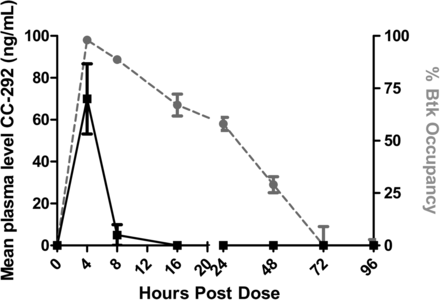
Btk occupancy and Btk protein resynthesis can be detected in mice in vivo. Mice were treated orally once with 50 mg/kg CC-292 to inhibit all Btk protein.J Pharmacol Exp Ther.2013 Aug;346(2):219-28. |
CC-292 is efficacious in an established collagen-induced arthritis model.J Pharmacol Exp Ther.2013 Aug;346(2):219-28. |
Products are for research use only; We do not sell to patients
Copyright 2020 InvivoChem LLC | All Rights Reserved


 COA
COA