| Size | Price | Stock | Qty |
|---|---|---|---|
| 5mg |
|
||
| 10mg |
|
||
| 50mg | |||
| Other Sizes |
| Targets |
(-)-Sotalol targets both beta-adrenergic receptors and the hERG potassium channel. It inhibits the hERG channel with a Kd of 0.60 μM, which is responsible for its Class III antiarrhythmic effects. It is also a non-selective beta-blocker.
|
|---|---|
| ln Vitro |
In HEK-293 cells, (-)-solozol (30-1000 μM) suppresses hERG currents with an IC50 of 288 μM[1].
In vitro, (-)-Sotalol inhibits hERG current in HEK-293 cells with an IC50 of 288 μM. It binds to the hERG channel with a Kd of 0.60 μM. |
| ln Vivo |
In vivo, (-)-Sotalol is used for the research of cardiac arrhythmias. Its dual mechanism of action (beta-blockade and hERG inhibition) contributes to its antiarrhythmic effects.
|
| Enzyme Assay |
The binding affinity of (-)-Sotalol for the hERG potassium channel is determined using radioligand binding assays. The Kd value of 0.60 μM is measured in such cell-free systems.
|
| Cell Assay |
The functional activity of (-)-Sotalol is assessed in cell-based assays, such as measuring its inhibition of hERG current in HEK-293 cells expressing the channel. The IC50 of 288 μM is determined from these electrophysiology studies.
|
| Animal Protocol |
(-)-Sotalol is studied in animal models of cardiac arrhythmias. Its effects on cardiac rhythm and repolarization are assessed to understand its antiarrhythmic properties.
|
| ADME/Pharmacokinetics |
Pharmacokinetic data for (-)-Sotalol is not detailed in the available literature. As the R-enantiomer of sotalol, its properties are likely similar to the racemic mixture, but specific data for the pure enantiomer is not provided.
|
| Toxicity/Toxicokinetics |
Specific toxicity data for (-)-Sotalol is not provided. As an antiarrhythmic agent, its safety profile is well-characterized, but specific data for the R-enantiomer is not detailed here.
|
| References | |
| Additional Infomation |
See also: Right Metrorol (note moved to).
(-)-Sotalol is a research tool for studying cardiac arrhythmias. Its use allows researchers to investigate the specific contributions of the R-enantiomer to the effects of sotalol, particularly its hERG blocking activity, which is responsible for its Class III antiarrhythmic effects. |
| Molecular Formula |
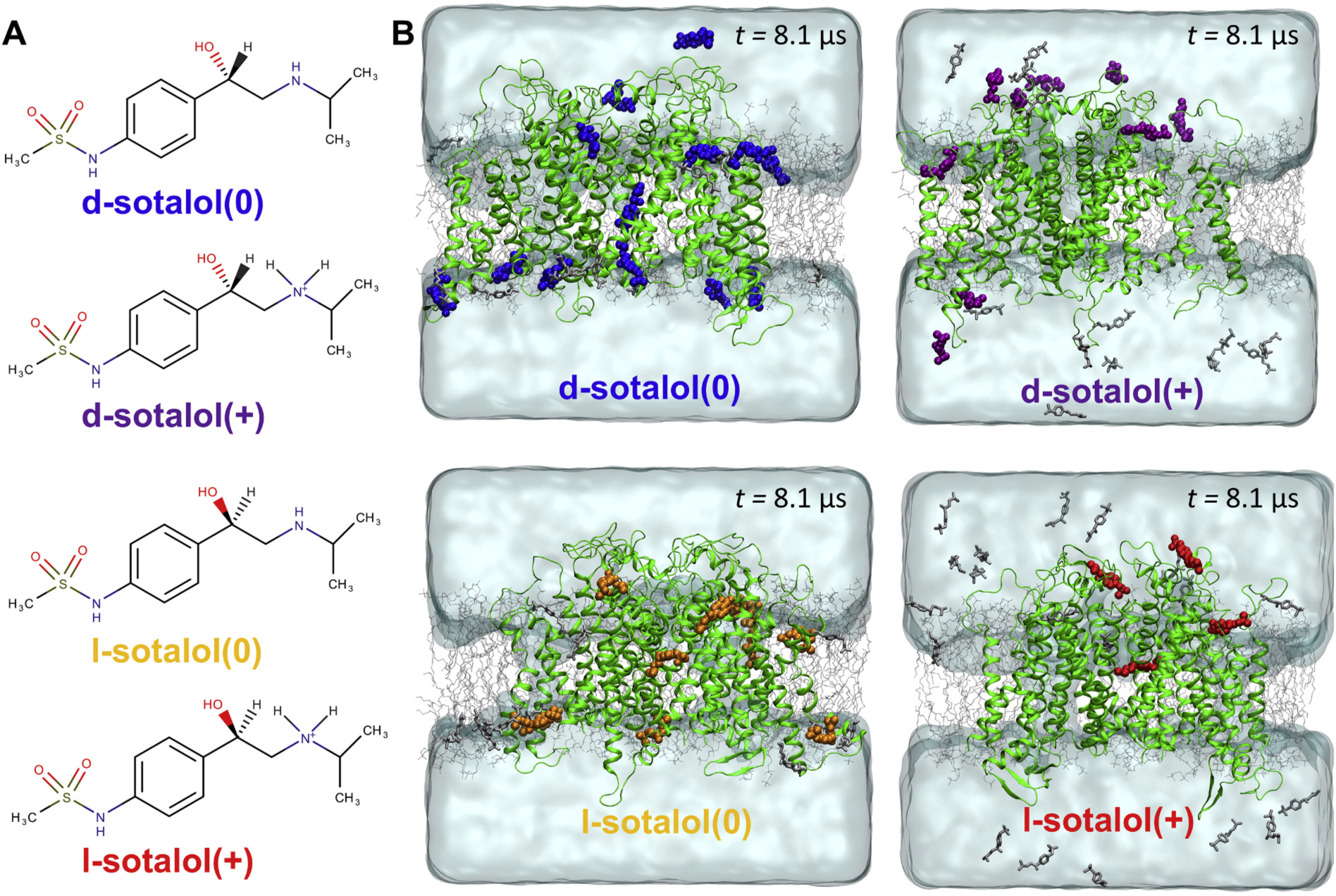
C12H20N2O3S
|
|---|---|
| Molecular Weight |
272.3638
|
| Exact Mass |
272.119
|
| CAS # |
30236-31-8
|
| Related CAS # |
959-24-0 (mono-hydrochloride)
|
| PubChem CID |
6101895
|
| Appearance |
White to off-white solid powder
|
| Density |
1.2±0.1 g/cm3
|
| Boiling Point |
443.3±55.0 °C at 760 mmHg
|
| Melting Point |
206.5 - 207 °C
|
| Flash Point |
221.9±31.5 °C
|
| Vapour Pressure |
0.0±1.1 mmHg at 25°C
|
| Index of Refraction |
1.571
|
| LogP |
0.32
|
| Hydrogen Bond Donor Count |
3
|
| Hydrogen Bond Acceptor Count |
5
|
| Rotatable Bond Count |
6
|
| Heavy Atom Count |
18
|
| Complexity |
330
|
| Defined Atom Stereocenter Count |
1
|
| SMILES |
CC(C)NC[C@@H](C1=CC=C(C=C1)NS(=O)(=O)C)O
|
| InChi Key |
ZBMZVLHSJCTVON-LBPRGKRZSA-N
|
| InChi Code |
InChI=1S/C12H20N2O3S/c1-9(2)13-8-12(15)10-4-6-11(7-5-10)14-18(3,16)17/h4-7,9,12-15H,8H2,1-3H3/t12-/m0/s1
|
| Chemical Name |
N-[4-[(1R)-1-hydroxy-2-(propan-2-ylamino)ethyl]phenyl]methanesulfonamide
|
| HS Tariff Code |
2934.99.9001
|
| Storage |
Powder -20°C 3 years 4°C 2 years In solvent -80°C 6 months -20°C 1 month |
| Shipping Condition |
Room temperature (This product is stable at ambient temperature for a few days during ordinary shipping and time spent in Customs)
|
| Solubility (In Vitro) |
DMSO : ~100 mg/mL (~367.16 mM)
|
|---|---|
| Solubility (In Vivo) |
Solubility in Formulation 1: ≥ 2.5 mg/mL (9.18 mM) (saturation unknown) in 10% DMSO + 40% PEG300 + 5% Tween80 + 45% Saline (add these co-solvents sequentially from left to right, and one by one), clear solution.
For example, if 1 mL of working solution is to be prepared, you can add 100 μL of 25.0 mg/mL clear DMSO stock solution to 400 μL PEG300 and mix evenly; then add 50 μL Tween-80 to the above solution and mix evenly; then add 450 μL normal saline to adjust the volume to 1 mL. Preparation of saline: Dissolve 0.9 g of sodium chloride in 100 mL ddH₂ O to obtain a clear solution. Solubility in Formulation 2: ≥ 2.5 mg/mL (9.18 mM) (saturation unknown) in 10% DMSO + 90% (20% SBE-β-CD in Saline) (add these co-solvents sequentially from left to right, and one by one), clear solution. For example, if 1 mL of working solution is to be prepared, you can add 100 μL of 25.0 mg/mL clear DMSO stock solution to 900 μL of 20% SBE-β-CD physiological saline solution and mix evenly. Preparation of 20% SBE-β-CD in Saline (4°C,1 week): Dissolve 2 g SBE-β-CD in 10 mL saline to obtain a clear solution. View More
Solubility in Formulation 3: ≥ 2.5 mg/mL (9.18 mM) (saturation unknown) in 10% DMSO + 90% Corn Oil (add these co-solvents sequentially from left to right, and one by one), clear solution. |
| Preparing Stock Solutions | 1 mg | 5 mg | 10 mg | |
| 1 mM | 3.6716 mL | 18.3581 mL | 36.7161 mL | |
| 5 mM | 0.7343 mL | 3.6716 mL | 7.3432 mL | |
| 10 mM | 0.3672 mL | 1.8358 mL | 3.6716 mL |
*Note: Please select an appropriate solvent for the preparation of stock solution based on your experiment needs. For most products, DMSO can be used for preparing stock solutions (e.g. 5 mM, 10 mM, or 20 mM concentration); some products with high aqueous solubility may be dissolved in water directly. Solubility information is available at the above Solubility Data section. Once the stock solution is prepared, aliquot it to routine usage volumes and store at -20°C or -80°C. Avoid repeated freeze and thaw cycles.
Calculation results
Working concentration: mg/mL;
Method for preparing DMSO stock solution: mg drug pre-dissolved in μL DMSO (stock solution concentration mg/mL). Please contact us first if the concentration exceeds the DMSO solubility of the batch of drug.
Method for preparing in vivo formulation::Take μL DMSO stock solution, next add μL PEG300, mix and clarify, next addμL Tween 80, mix and clarify, next add μL ddH2O,mix and clarify.
(1) Please be sure that the solution is clear before the addition of next solvent. Dissolution methods like vortex, ultrasound or warming and heat may be used to aid dissolving.
(2) Be sure to add the solvent(s) in order.
|
|
|
Products are for research use only; We do not sell to patients
Copyright 2020 InvivoChem LLC | All Rights Reserved